“Rev War Revelry” Discusses Daniel Morgan

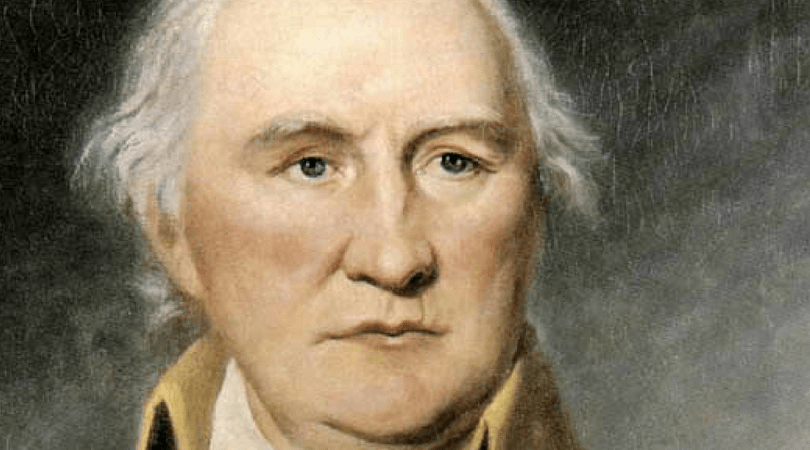
In the pantheon of American military leaders, Daniel Morgan’s place is definitely warranted. Innovative rifleman, heroic actions, backwoodsman, skillful tactician, and charismatic leader. He performed admirably at the Battle of Quebec in the winter of 1775, led the American forces at one of the climatic and complete victories of the war at the Battle of Cowpens in 1781, and distinguished himself in many a field and campaign in between.

For those reasons and a further discussion into the life and career of this American military hero, Emerging Revolutionary War invites you to listen and chime in during the next “Rev War Revelry” this Sunday at 7pm EST on our Facebook page.

In addition to the cadre of Emerging Revolutionary War historians, including Rob Orrison and Travis Shaw, there will be another talking head this weekend.

Joining ERW this Sunday will be historian Nathan Stalvey. He is the Director of the Clarke County Historical Association and a member of the Virginia Association of Museums Council.  He started his 20-year career at the University of South Carolina’s McKissick Museum where he worked as the Curator of Traveling Exhibitions and Design.  Nathan then served as the Director of Exhibitions and Head of Collections at the Louisville Slugger Museum & Factory in Louisville, Kentucky prior to his hiring in 2014 as the Director at CCHA.  As Director, he oversees the operations of both a museum in downtown Berryville, as well as the historic 18th-century Burwell-Morgan Mill in Millwood.

As Daniel would have enjoyed an adult beverage in his day, make sure to bring one to this “Rev War Revelry” Sunday night!

“Rev War Roundatble with ERW” Discusses “The Cabinet” with Dr. Lindsay Chervinksy

George Washington’s first presidential cabinet included many luminaries of the American Revolutionary era; Thomas Jefferson as Secretary of State and Alexander Hamilton as Secretary of the Treasury to just name two. When studying the formation of the present United States government and the creation of cabinets that serve the president, we tend to gloss over it, as a sort of bygone conclusion, that this was a natural product out of this creation.

A closer reading of the United States Constitution, however, does not include the executive branch having a cabinet of secretaries to assist the president. George Washington, as first president, was entirely on his own in creating one, and the first cabinet meeting was not called into session until two and a half years into his first term.

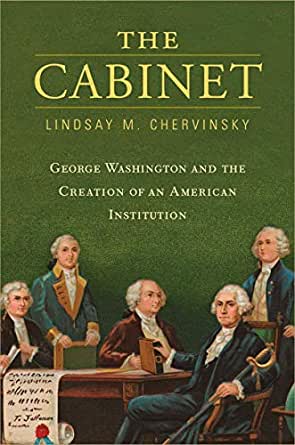
The creation of this American institution is the basis of this week’s “Rev War Revelry” as Emerging Revolutionary War welcomes historian and author Dr. Lindsay Chervinsky as she discusses the history in and surrounding her publication, The Cabinet, George Washington and the Creation of an American Institution.

When discussing the importance of the cabinet, Chervinsky said:

“The best way to better understand the creation of the presidency, presidential leadership, or Washington’s legacy is through the cabinet.”

But this story isn’t just one about the early Founding Era. As Chervinsky writes in her work, “we can’t evaluate the cabinet without examining Washington’s use of councils of war from the Revolution. He developed critical management strategies in the councils that he replicated as president. The war shaped Washington as president.”

Chervinsky is an early American historian and is currently the Scholar-in-Residence at the Institute for Thomas Paine Studies at Iona College and a Senior Fellow at the International Center for Jefferson Studies. In addition, she is teaches courses on the presidency at George Washington University’s School of Media and Public Affairs.

For a sneak peak into the book and its history, click here to access Chervinsky’s talk at the Virginia Historical Society.

“Rev War Roundtable with ERW” Brandywine Campaign

The largest, in terms of military forces deployed, engagement in the American Revolutionary War occurred on September 11, 1777 in southeastern Pennsylvania. The Battle of Brandywine was a pivotal moment in the British campaign that captured the patriot capital in Philadelphia. With the anniversary of the engagement happening the Friday before, the Emerging Revolutionary War crew will make this engagement and campaign the focal point of Sunday’s “Rev War Roundtable with ERW.”

Joining the “Rev War Revelry” this Sunday, at 7pm on Emerging Revolutionary War’s Facebook page will be Michael C. Harris, historian and author of Brandywine: A History of the Battle that Lost Philadelphia but Saved America, September 11, 1777, which was published and is available for purchase by Savas Beatie. Click here to order.

Besides authoring the history mentioned above, Harris has an upcoming release, on another important battle in Pennsylvania, Germantown, fought on October 4, 1777. Rumor on the street has it that he will be joining ERW at a future date to discuss this important battle and talk about his new book.

A bit of a background on Harris. He is a graduate of the University of Mary Washington and the American Military University. He has worked for the National Park Service in Fredericksburg, Virginia, Fort Mott State Park in New Jersey, and the Pennsylvania Historical and Museum Commission at Brandywine Battlefield. He has conducted tours and staff rides of many east coast battlefields. Michael is certified in secondary education and currently teaches in the Philadelphia region. He lives in Pennsylvania with his wife, Michelle and son, Nathanael.

Although the battle lost Philadelphia for the patriots, Harris does not hold back on the culprit for the setback:

“Washington failed the army, the army did not fail Washington.”

To hear the reasoning behind that emphatic quote we hope you join us this Sunday!

“Rev War Roundtable with ERW” Talks Treason & Benedict Arnold

Benedict Arnold, the mere mention of the name seems permanently intertwined with the word “treason.” His name has even made it into popular vernacular, being called a “Benedict Arnold” as an insult. Yet, there is more to the man than just that infamous moment along the banks of the Hudson River in West Point, New York in 1780.

Prior to that turning point, Arnold was one of the greatest battlefield leaders the Americans had at that rank. His inspiring leadership on the field of battle at Saratoga led to a climactic charge and one of the greatest monuments to a leader on any hallowed ground. He survived the cold and assaults in Canada in the winter of 1776 as well.

After being a turncoat he was a menace in Virginia in 1781, raiding in Richmond and the Tidewater of Virginia. One of ERW’s historians will discuss Arnold’s role in the state capital of Virginia.

A lot to unpack and that is why this Sunday, at 7pm, live on our Facebook page, Emerging Revolutionary War historians will be joined by Dr. Powell, who spoke on the French and Indian War with us back in June, to discuss Benedict Arnold. So, bring those pre-conceived notions but an open mind to fully appreciate Arnold. This “Rev War Revelry” will discuss the before reasons for, and the after of his switching allegiances.

“Rev War Roundtable with ERW” Revolutionary Movies

The majority of military history enthusiasts, besides having a rows upon rows of books and publications gracing one room (or multiple rooms) of their dwellings, also house another collection.

Movies, films, documentaries that detail on screen the history of the American Revolution and the founding era of the United States. We can all name a few off the top of our head. We all have debated, either internally, with our significant others and family members, fellow history aficionados, or online about the historical accuracy or portrayal of those events.

This Sunday, join the Emerging Revolutionary War crew of historians in discussing this very same topic. During our historian happy hour, the ERW crew will debate, provide commentary and opinion, or possibly, just remonstrate on how the movie The Patriot is the most smeared film centered on American history that was ever produced.

With the slate of historians on tap for Sunday evening, you never know what will be debated and discussed. A safe bet is the mention of George Washington and who has depicted America’s founding father the most accurately on the big screen.

This Sunday, besides the beverage or choice, one may want to attain or make their favorite movie snack as well and tune in to ERW’s Facebook page for this lively “Rev War Revelry” discussion.

“Rev War Roundtable with ERW” Looks West….

The majority of the study of the American Revolution centers on the main theaters of the war, chiefly east of the Appalachian Mountains and on the high seas. Obviously. Yet, what is considered today the Midwest or Great Lakes region saw action that had an impact on the outcome of the war, American independence, British occupation, and Native American life.

Termed “the west” this area encompassed the future states of Tennessee, Kentucky, Ohio, Missouri, Arkansas, and others along the Mississippi River and Great Lakes.

This area will be the focus of the next “Rev War Revelry” on Sunday, August 23 at 7 p.m. EST on our Facebook page. Join Emerging Revolutionary War historians, historian and Gabe Neville, of the 8th Virginia blog who will return for more discussion and revelry.

Joining us this evening will be another historian making his debut on “Rev War Revelry.” That newcomer is Joe Herron, Chief of Interpretation at George Rogers Clark National Historical Park in Vincennes, Indiana.

So, grab your favorite drink and join us for an evening talking the likes of George Rogers Clark, Daniel Boone, and the personas and campaigns of the American west during the American Revolution.

African Americans Serving in the American Revolution

If you tuned into our “Rev War Revelry” with historian and author John U. Rees on Sunday, you may have heard him mention a few links and a blog where he adds information that did not make it into the book. Or has come to light since the publication of his history “They Were Good Soldiers: African-Americans in the Continental Army, 1775-1783.”

John was nice enough to provide the following as a follow-up for those interested in reading more into the subject.

African Americans Serving in the Armies of the Revolution
(PDF, click here).

Book:

“They Were Good Soldiers”,  

Additional post-publication updates and information: 

List of soldiers and women featured in the book. 

African American soldier-servants. 

African American women with the army. 

Author interviews pertaining to the book. 

Entries for blog:

“More ‘Good Soldiers’”: 

Revised percentages for 1778 army “Return of Negroes.” 

Officers’ observations of black Continental soldiers. 

Ranney’s painting “Cowpens” and black cavalry soldiers. 

List of soldiers and women featured in the book. 

Black Continental soldiers at the Battle of Monmouth. 

Printed 19th century remembrances of black veterans 

Articles

Articles the book was based on including African Americans in Southern Continental regiments plus transcribed pension files used for that study.  

Jeffrey Brace, African slave and Continental soldier 

Other authors:  

Black soldier motivations (Scoggins) 

Loyalist Ethiopian Regiment (Copeland) 

Black soldiers at New Windsor cantonment (Thorenz) 

Hannah Till, wartime servant to Washington (Cole) 

Thomas Carney, Maryland Continental (Calder) 

Black Hessians (Jones) 

Military role of black Loyalists (Braisted) 

Author Discussion ERW Facebook Live:

To watch the interview with John, click over to Emerging Revolutionary War’s Facebook page and click on the “Videos” tab. To access the page, click here.

Continental Soldiers
The two of soldiers on the left, drawn in 1781 by French Sublieutenant Jean-Baptiste-Antoine de Verger, Royal Deux-Ponts Regiment, are a private of the Rhode Island Regiment, and a soldier of Hazen’s Canadian Regiment. The next in line is a Virginia rifleman, while the last man is a Continental artileryman. Howard C. Rice and Anne S.K. Brown, eds. and trans., The American Campaigns of Rochambeau’s Army 1780, 1781, 1782, 1783, vol. I (Princeton, N.J. and Providence, R.I.,: Princeton University Press, 1972), between pages 142-143 (description on page xxi). Anne S.K. Brown Military Collection, Brown University.  

“Rev War Roundtable with ERW” Focuses on African American soldiers during the American Revolution with author and historian, John U. Rees

Baron Ludwig von Closen, aide–de–camp to French General Rochambeau, wrote in July 1781: 

 “I had a chance to see the American Army, man for man. It is really painful to see those brave men, almost naked with only some trousers and little linen jackets, most of them without stockings, but, would you believe it, very cheerful and healthy in appearance … It is incredible that soldiers composed of men of every age, even children of fifteen, of whites and blacks, unpaid and rather poorly fed, can march so fast and withstand fire so steadfastly’.” 

During the American Revolution, African-Americans, both freed and enslaved, fought for the patriots. Some wielded muskets in militia outfits whereas others were part of the Continental army. African-Americans were there from the Siege of Boston through the end of the conflict. In fact, until the Korean War the American Revolution was the last time a United States military force was integrated in time of war.

Although publications have been printed about the 1st Rhode Island or comparative studies between Africans that served for the British or patriots. However, the field needed a dedicated study of African-Americans that served in the Continental army. Enter John U. Rees.

A lifelong Bucks County, Pennsylvanian who has studied and written about the soldiery of the American Revolution for the past three decades. He is published many times over and this Sunday, he will join Emerging Revolutionary War at 7 p.m. on “Rev War Revelry.”

The discussion will include his new book, “They Were Good Soldiers’: African-Americans Serving in the Continental Army, 1775-1783.” Which is now available for purchase online. ‘They Were Good Soldiers’: African Americans Serving in the Continental Army, 1775-1783 begins by discussing the inclusion and treatment of black Americans by the various Crown forces (particularly British and Loyalist commanders, and military units). The narrative then moves into an overview of black soldiers in the Continental Army, before examining their service state by state. Each state chapter looks first at the Continental regiments in that state’s contingent throughout the war, and then adds interesting black soldiers’ pension narratives or portions thereof. The premise is to introduce the reader to the men’s wartime duties and experiences. The book’s concluding chapters examine veterans’ post-war fortunes in a changing society and the effect of increasing racial bias in the late eighteenth and early nineteenth centuries. 

Besides the book dialogue, a general conversation about the roles of African-Americans in the American Revolutionary period. So, find your favorite brew, bring your questions and insights, and join John Rees and ERW on Sunday evening on our Facebook page.

For more articles by our guest historian John Rees, visit https://tinyurl.com/Rees-author-only . An online compendium of articles on African Americans in the Revolutionary era is available at https://tinyurl.com/Afr-Amer-Rev-War . 

“Rev War Roundtable with ERW” Discussing Disease

In Morristown, New Jersey during one of the winters that the Continental army bedded down in that geographically critical hamlet, General George Washington ordered the inoculation of his forces for smallpox. This was the first instituted innoculation of American forces and the requirement proved effective. Smallpox would claim more lives–both British and American–during the American Revolution than any other single cause or disease.

With the world today facing a pandemic, the historians at Emerging Revolutionary War invite you to take a step back into time, to the 18th century, as they discuss diseases during the war, including at such winter encampments as Morristown and Valley Forge, in the southern colonies and the campaigning that traversed the Carolinas and Georgia, along with an outbreak of yellow fever that changed the course of American political history and played a major role in the permanent placement of the United States capital.

Join us at our usual time, 7 p.m. EST, on our Facebook page, as the next installment of “Rev War Revelry” discusses diseases and investigates illnesses of the Colonial America during the American Revolutionary era. Since alcohol was considered medicinal, there is no excuse to not bring your favorite brew as you watch, listen, chime in, and comment.

“Rev War Roundtable with ERW” An Evening with General Muhlenberg

This Sunday, at 7 p.m. EST, Emerging Revolutionary War invites you to a “Rev War Revelry” dedicated to General Peter Muhlenberg. This Continental Army officer is the subject of a new biography, by historian Michael Cecere, who, along with Gabe Neville, will be joining us for the evening.

Gabe Neville, the author of the blog, The 8th Virginia Regiment in the Revolutionary War, returns to “Rev War Revelry” for a second time. General Muhlenberg, at the time a colonel, was the first commanding officer of the 8th Virginia Regiment. Click here to access Gabe’s blog.

Michael Cecere, the author of the biography, is an active American Revolutionary reenactor, author, and high-school history teacher in Virginia. He is making his debut on “Rev War Revelry.” For more information on this and his other works, click here.

We hope you can join us, this Sunday, as we discuss the life and military career of Peter Muhlenberg, the 8th Virginia Regiment, and the broader military history of the American Revolution.