Rev War Revelry: The Battles of Fort Watson and Fort Motte with Dr. Steven Smith

Join us as we welcome back Dr. Steven Smith as he discusses his new book “The Battles of Fort Watson and Fort Motte, 1781.”

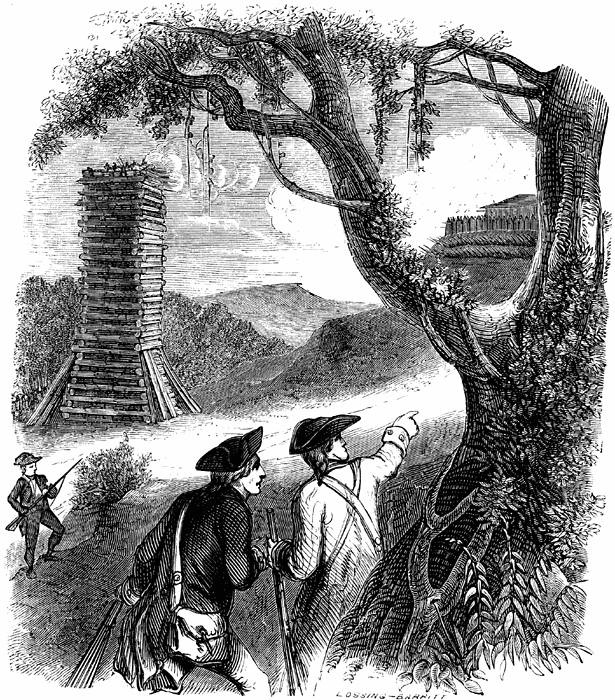
Dr. Smith will discuss the history of four critical weeks from April 12 until May 12, 1781, in which the tide of the Southern Campaign of the Revolutionary War turned in favor of the Americans. Focusing on General Francis Marion’s and Colonel Henry Lee’s capture of two key British forts, Fort Watson and Fort Motte, coordinating with Nathanael Greene in retaking the South Carolina backcountry. These posts defended the supply line between Charleston and the British-occupied villages of Camden and Ninety Six. Although there would be much more fighting to do, once the two forts were lost, the British had to abandon the backcountry or starve. The British would never again be on the strategic offensive and were confined to the Charleston environs until they abandoned the city in December 1782.

Smith will also discuss how archaeological investigations have helped change the interpretation and mythology of both battles. Join us for a livestream on our You Tube channel in what will be a great discussion. The video will be posted to our Facebook page at its conclusion

The Road to Waxhaws: British Moves after the Capture of Charleston

Lieutenant General Henry Clinton, New York Public Library

With the Charleston in British hands, Clinton believed that all he had to do was establish outposts in South Carolina stationed with British regulars. This be believed would put down what was left of the rebellion in the state. These posts assisted the recruitment and training of the thousands of Loyalist troops he believed would now rally around the King’s Colors. To take the best advantage of his Regular troops, Clinton determined to establish three major outposts in the South Carolina backcountry. Clinton established these posts at Augusta (Georgia), Ninety-Six, and Camden. While these posts were to be centers for the British army, the local Loyalist militias were to serve as the pacification forces in South Carolina while the main British force was freed up for larger strategic goals. 

To recruit, enlist, and train the large, expected influx of Loyalist militia, Clinton named Maj. Patrick Ferguson as Inspector of Militia. Ferguson was ordered to enlist younger men, preferably unmarried, into companies that would form battalions. He was instructed to recruit from Georgia to North Carolina and offer short enlistments if necessary. Clinton believed that having the colonists maintain their own law and order (via Great Britain’s authority) would cause less apprehension with those that were mostly undecided about to whom they should throw their support, the Patriots or the British. 

By mid-May, the British army set out for their destinations in the back country. Clinton’s second in command, Lieut. Gen. Charles Lord Cornwallis, marched to Camden while Ferguson moved to Ninety-Six. Without much resistance, Clinton’s plan to conquer South Carolina was working perfectly. Patriot leaders scrambled to find ways to organize their resistance. The only organized Continental force remaining in South Carolina was a small force of Virginians under Col. Abraham Buford that was on its way to Charleston when the city surrendered. Ordered by Brig. Gen Isaac Huger to reverse course and make his way north toward Hillsborough, North Carolina. There along with the North Carolina militia, he could be the core of American defense in North Carolina.  

On May 27, Cornwallis ordered Lieut. Col. Banastre Tarleton with 300 of his dragoons and mounted infantry in pursuit of Buford. Tarleton’s British Legion was mostly composed of Loyalist recruits, so many in his force were from America. Tarleton pushed him men and horses hard, many horses falling out along the way. Buford was aware of a possible British pursuit but underestimated the speed in which Tarleton closed the gap. On May 29, Tarleton caught up with Buford in a region near the South and North Carolina border called the “Waxhaws.”  

Lieutenant Colonel Banastre Tarleton, New York Public Library

The events that took place next are still debated today. Tarleton under a flag of truce tried to get Buford to surrender. Writing to Buford, Tarleton wrote “Resistance being vain, to prevent the effusion of human blood, I make offers which can never be repeated.” Tarleton was already creating an image of himself as an aggressive and brutal fighter. Buford, however, refused, replying, “I reject your proposals, and shall defend myself to the last extremity.” With that, Buford continued his march north towards North Carolina as did Tarleton’s pursuit. Around 3:00 p.m. the lead elements of Tarleton’s force wiped out Buford’s small rearguard, forcing Buford to stop and deal with Tarleton.  

Buford decided to create a single battle line east of the Rocky River Road. Tarleton, ever the aggressive commander, ordered his horsemen to charge the Virginians. Here, Buford made what would be a devastating blunder. He ordered his men to not fire until the British cavalry was within ten yards of the American line. This would not allow the Americans a chance to fire another volley before the British charge was upon them. The Virginians fired, taking out some of the British dragoons and horses (Tarleton himself became briefly trapped under his horse), but most charged through Buford’s line, wielding their sabers and cutting down the Virginians. Total chaos ensued, and many of Buford’s men attempted to flee. Some tried to surrender by throwing their arms to the ground, but American accounts state that the British were offering “no quarter” and killing everyone that tried to surrender. Other accounts report that Buford sent a white flag to Tarleton, but probably because he was injured, it was never received, and the fighting continued. Accounts differ widely between the Americans and British on the fighting, but the fact cannot be argued that Buford’s command was destroyed. 

Waxhaws Grave and Monument, photo and flags courtesy of the author

American casualties were estimated at 350, 113 men killed, 147 wounded, 50 captured, and 2 six-pound artillery pieces and 26 wagons captured. Buford himself was able to escape the field. Tarleton only suffered 5 killed and 12 wounded, a complete victory. What has become known as “Buford’s Massacre” was not referred to as a massacre at all in many period accounts. Tarleton himself blamed the “slaughter” on the fact that his men thought he was killed in the battle and sought revenge. The disparity in numbers and the reports of indiscriminate British slaughter of Americans led to the creation of “Tarleton’s Quarter.” Patriot leaders quickly pounced on this and began to spread stories about Tarleton’s brutal tactics. This proved to be a public relations coup for the Patriot cause, as it energized their side and led to a more robust recruitment of militia and partisan forces to take on the British who now faced no organized opposition in South Carolina or Georgia.

Stay Tuned for the Emerging Revolutionary War Series newest book releases “To the Last Extremity: The Battles for Charleston, 1776-1782” by Mark Maloy and “All That Can Be Expected: The Battle of Camden and the British High Tide in the South, August 16, 1780” by Rob Orrison and Mark Wilcox to learn more abou the 1780 Southern Campaign. Both releases are published by Savas Beatie Publshing: https://www.savasbeatie.com/american-revolution/

Rev War Revelry Tackles the Myth of the Battle of Waxhaws

The Battle of Waxhaws, fought on May 29, 1780, was a lopsided British victory by Lieutenant Colonel Banastre Tarleton’s British cavalry over American Colonel Abraham Buford’s Continental forces in Waxhaws South Carolina. Buford lost 316 of 350 men with the British losing less than 20. Known popularly as “Buford’s Massacre,” Continental leaders used the battle as a propaganda tool against the Crown forces in the south. But, was it really a massacre?

Join us as we welcome historian and author Dr. Jim Piecuch as we discuss his research and theory about the Battle of Waxhaws and its aftermath. Dr. Piecuch has written several books on the Southern Campaign of the American Revolution including his book “Blood Be Upon Your Head: Tarleton and the Myth of Buford’s Massacre.” This Rev War Revelry will be pre-recorded and posted on May 28th at 7pm. Grab a drink and a good seat and enjoy this great presentation on one of the most controversial battles of the American Revolution.

Prelude to Guilford Courthouse: Weitzel’s Mill

This March brings the 241st Anniversary of the pivotal battle of Guilford Courthouse, NC. While this battle is of immense importance to the Southern Campaign, several smaller battles leading up to it have been largely overlooked. Through February and early March of 1781, detachments of the American and British armies maneuvered across the modern-day counties of Alamance, Guilford, Orange, Chatham, and Caswell. The is the third in a series of three articles.  

            The last of the skirmishes occurred at Weitzel’s Mill, also spelled as Wetzel’s, and Wiley’s. Cornwallis was becoming more determined to strike at the Americans to either force a general battle, which he felt his veteran army could win, or destroy the isolated detachments operating near him. 

Continue reading “Prelude to Guilford Courthouse: Weitzel’s Mill”

Prelude to Guilford Courthouse: Clapp’s Mill

This March brings the 241st Anniversary of the pivotal battle of Guilford Courthouse, NC. While this battle is of immense importance to the Southern Campaign, several smaller battles leading up to it have been largely overlooked. Through February and early March of 1781, detachments of the American and British armies maneuvered across the modern-day counties of Alamance, Guilford, Orange, Chatham, and Caswell. The is the second in a series of three articles.  

            Pyle’s Defeat on February 25, 1781 was a public relations disaster for the British. The next skirmish fought between the opposing forces was at Clapp’s Mill on March 2nd and has also been called the Battle of Alamance. On February 27th, Cornwallis’ army moved from Hillsborough to the Haw River, camping on the south side of Alamance Creek at an important crossroads.

Continue reading “Prelude to Guilford Courthouse: Clapp’s Mill”

Prelude to Guilford Courthouse: Pyle’s Defeat

This March brings the 241st Anniversary of the pivotal battle of Guilford Courthouse, NC. While this battle is of immense importance to the Southern Campaign, several smaller battles leading up to it have been largely overlooked. Through February and early March of 1781, detachments of the American and British armies maneuvered across the modern-day counties of Alamance, Guilford, Orange, Chatham, and Caswell. This is the first of a series of three articles.

Having unsuccessfully chased General Nathaniel Greene’s small, ragged army across North Carolina, British forces under Lord Charles Cornwallis moved to the state capital at Hillsborough to announce their liberation of the state and call Loyalists to come forward and support them. Greene’s army retreated across the Dan River into Virginia, where he awaited supplies and reinforcements.

Continue reading “Prelude to Guilford Courthouse: Pyle’s Defeat”

“Rev War Revelry” Battle of Cowpens

On January 17, 1781, General Daniel Morgan and his mixed force of Continental soldiers and militia defeated the British under the command of Lieutenant Colonel Banastre Tarleton. This victory for the patriots in northwestern South Carolina had major implications on the southern theater and the main British force under General Lord Charles Cornwallis. The battle, named after the use of the fields in which it was fought, Cowpens, also included one of the only instances in American history of a successful double envelopment.

On Sunday, at 7 p.m. EDT, Emerging Revolutionary War will be joined by American Battlefield Trust’s Kristopher White, Deputy Director of Education and Daniel Davis, Education Manager, in a discussion about the history and preservation of the Battle of Cowpens.

Round out your January weekend by joining us on our Facebook page for this live historian happy hour.

The First American Civil War

Emerging Revolutionary War welcomes guest historian Sean Chick

On October 7, 1780, Britain’s attempt to regain at least part of the rebellious North American colonies was dealt a major blow at King’s Mountain. The rebels rejoiced, since it was their first major victory since 1777 and it came after the twin disasters at Charleston and Camden. Thomas Jefferson, then governor of Virginia, considered it the decisive battle of the war. Years later, Theodore Roosevelt echoed that sentiment. In 1930, when the site was set to become a national park, Herbert Hoover gave a speech. For the embattled president, it was an attempt to shore up his falling support and vindicate his strategy to peel southern states away from the Democratic Party. Hoover said “This is a place of inspiring memories. Here less than a thousand men, inspired by the urge of freedom, defeated a superior force entrenched in this strategic position. This small band of Patriots turned back a dangerous invasion well designed to separate and dismember the united Colonies.”

Hoover, understandably, never mentioned the atrocities committed. Many were executed after the battle. Nor did he mention that King’s Mountain was not a contest between redcoats and rebels, but brother against brother. The only British man present was Major Patrick Ferguson. His command was made up entirely of Loyalists. His second in command, Captain Abraham de Peyster, was from New York City.

Joseph Galloway
(courtesy of NYPL)

Few groups in American history are as forgotten as the Loyalists and few were as complex. They were a varied lot, often making up the highest in colonial society, including wealthy merchants and colonial officials. They often included the very lowest in the society, such as recent immigrants, slaves, indigenous, and subsistence farmers. Their ideology was in many ways not radically different from those who rebelled. They were generally not in favor of absolute monarchy or the supremacy of Parliament but simply favored union with Britain and slow reform. A few, such as Joseph Galloway, were part of early protests against British colonial policy, but were unwilling to jump into the chasm of revolution. Some, such as South Carolina merchant David Fanning, were merely aggrieved and sought to settle scores. Others were on the margins of society and saw the colonists, or at least the revolutionary colonial elite, as their real oppressors.

The Loyalists were at first spurned by the British high command. Major General William had over 30,000 men under his command in 1776 and Loyalists would have added to the logistical strain. He also thought a soft war policy that he hoped would induce the colonies to return, and therefore it was reasonable to avoid civil war. Yet, by 1777 the British were using some Loyalist regiments. They would fight in John Burgoyne’s ill-fated drive on Albany and served as rangers at Brandywine.

Continue reading “The First American Civil War”

2021 Symposium Highlight: Vanessa Smiley

Over the next few months, we will be highlighting the speakers and topic for our 2021 Symposium, Hindsight is 2020: Revisiting Misconceptions of the Revolution, taking place on May 22nd .

Today we continue with historian Vanessa Smiley who will be covering the myths and misconceptions of the Southern Campaigns during the American Revolution.  

See Vanessa as she discusses an aspect of the Southern Campaign on March 7 at 7p.m. on Emerging Revolutionary War’s Facebook Live as part of the “Rev War Revelry” historian happy hour!

Vanessa Smiley is an historian and interpreter whose roots began at National Park Service Civil War and Rev War sites. Her Rev War park experience includes serving as the Chief of Interpretation at the Southern Campaign of the American Revolution Parks Group in South Carolina, an acting assignment as Superintendent at Guilford Courthouse NMP, and Chief of Interpretation at Morristown NHP. Vanessa is currently the Project Manager of Interpretive Media Development for the National Capital Area at Harpers Ferry Center. She received her undergraduate degree in Historic Preservation from the University of Mary Washington and her Master’s degree in Resource Interpretation from Stephen F. Austin State University.

Outside of her work with the NPS, Vanessa enjoys researching family histories, studying material and social culture of the 18th and 19th centuries, listening to podcasts, reading true crime, drinking craft beer, and attempting to make the perfect sangria. She and her husband live in Morgan County, West Virginia on their small farm where they run a nonprofit animal sanctuary.

She will be presenting her talk From the Bottom Up: Myths and Misconceptions of the Southern Theater at the May symposium.

 Why do you believe the Southern Campaigns were so significant to the outcome of the American Revolution?

The simplest way to describe why I believe the Southern Campaigns were so significant to the War’s outcome is: it was a grassroots effort. What I mean is that while the Continental Army shouldered plenty, it was the combination of local efforts of the militia and determined civilians who turned the tide of the war when the British looked to the southern colonies, especially in the second half of the war. All one has to do is to look at two key battles, Kings Mountain and Cowpens, to see the impact of militia integrity, courage, and resolve.

Some point to the politics of Boston and New York as a driving force behind the start of the war. But the taverns and town halls of Charleston and Savannah were no less significant in adding fuel to the revolutionary fire. There is also the added dichotomy of our first true American civil war that played out in the backcountry of the Carolinas. Here were literal neighbors, brothers, cousins, and friends taking up arms to serve their respective causes and finding themselves on opposite sides. These dynamics were one driving force behind the militias that had such an impact during the Southern Campaigns.

What first attracted you to the study of early American history? What keeps you involved in the study of this history? Do you find these things are the same or different?

I give credit to my love of history to my high school history teacher, who embodied the archetype of the quintessential eccentric and genius history connoisseur striving to bring history alive. He immersed us in the history of the 18th and 19th century through first person accounts, visits to historical sites, and the dramatics of storytelling. He also armed me with the intellectual tool of piecing out the relevancy of events and people of the past, and that’s what has kept me interested in studying history for the past two decades.

While my work at historic sites for the National Park Service provided an easy outlet for my historian brain, I sought those historical connections and resources even outside of work because of that drive to understand the past. It’s a little bit different now than before though. I don’t get to be as immersed as I once was (no traipsing through cemeteries at night to feel the chill and terror of the Underground Railroad) and instead my mind goes to educating the public on the importance of our history. That’s why I’m so appreciative for Emerging Revolutionary War!

What is the biggest myth about the war in the South? How do you think it came about?

That the war was won in the north and not the south! I’ll go into more detail on this one during my presentation, but I’ll tease a little bit here. One part of the answer to the second question might lie with our public education system. In studying the state education curriculums of various states, I found that there is a stronger emphasis on the beginnings of the war than the war’s end. And so the Southern theater gets very little, if any, attention when kids study the war in school. The exception used to be in certain states like South Carolina, where the battles of Cowpens and Kings Mountain were directly referenced in the state standards. Since the standards updated in 2020, this no longer seems to be the case.

You’ll have to wait for my presentation to dive a little deeper into this myth with me!

Do you think there are common misconceptions of the era of the American Revolution among the American people? If so, what are they and have they ever affected your work?

There certainly are, and the ones that have affected my work the most center around that idea of the often-overlooked Southern Campaigns for most Americans. Ask any random person to name a Revolutionary War battle or event and the majority will name something from the northern colonies. Every now and then you get a Charleston, and if you consider Virginia part of the south, then a Yorktown for sure. But as I’m sure has become obvious already, I strive to educate about the rich history of the Rev War in the south.

Why do you think it is important for us to study the Revolutionary Era? 

No matter which political, social, or economic side you’re on nowadays, we can all agree we are living in our own revolutionary time. And we find ourselves looking back to our nation’s founding for understanding and guidance, namely things like our national ideals and governmental processes. But we are a different people and a different nation than what we were then. We should not take everything from 240 years ago at face value. By studying and investigating the past, we can understand how and why decisions were made at the time. And perhaps we can extract an element, or life lesson, that can be applied to our modern times.

I believe that while history does not repeat itself, it does rhyme. By understanding the past, we may know our future.

Join us for our SECOND annual Emerging Revolutionary War Symposium. Due to the COVID 19 pandemic, we postponed the 2020 Symposium to May 22, 2021 with the same topics and speakers. Co hosted by Gadsby’s Tavern Museum, speakers and topics include:


Michael Harris on Misconceptions of Battle of Brandywine
Vanessa Smiley on Myths of the Southern Campaigns
Travis Shaw on American Loyalists
John U Rees on African American Continental Soldiers
Mark Maloy on myths of the Battle of Trenton

Stay tuned as we highlight our speakers and their topics in future blog posts.

UPDATE: The 2021 Symposium will now be virtual. Though conditions with the pandemic are improving, we do not believe we will be able to have the event in person by May, so we have decided to be virtual. Due to this shift, we are also dropping the price! Now the full day symposium is $40 per person and $20 for students. This allows for guests from all across the country to learn about African American soldiers, Loyalists, and Drunken Hessians. Buy your ticket today!

To register visit: https://shop.alexandriava.gov/Events.aspx

“Rev War Revelry” Heads to Kings Mountain

On October 7, 1780, patriot militia, some coming from over the Appalachian Mountains descended on a Loyalist militia force in northwest South Carolina. This pro-British force, commanded by the only British regular on the field that day, Major Patrick Ferguson retreated onto Kings Mountain.

American fought American.

On that hilltop one of the pivotal battles of the American Revolutionary War unfolded. The ramifications reverberated through the southern theater of operations, played a part on the psyche of civilians and militia, and added luster to the burgeoning backwoods, frontier American persona.

Emerging Revolutionary War focuses in on the Battle of Kings Mountain this Sunday, on the next “Rev War Revelry.” Join us on our Facebook page at 7 p.m. EST for a historian happy hour, as we discuss, dissect, imbibe, and provide commentary on this strategic battle, the national park there, and the campaigns that decided this theater of operation.

(courtesy of NC Encyclopedia)