Robert Morris: Founding Father and Revolutionary Financier

Emerging Revolutionary War welcomes back guest historian Michael Aubrecht

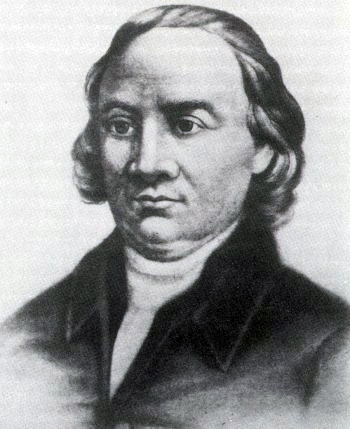
To call Robert Morris “a political renaissance man” would be an understatement. He was vice president of the Pennsylvania Committee of Safety (1775–76) and was a member of the Continental Congress (1775–78) as well as a member of the Pennsylvania legislature (1778–79, 1780–81, 1785–86). Morris practically controlled the financial operations of the Revolutionary War from 1776 to 1783. He was a delegate to the Constitutional Convention (1787) and served in the U.S. Senate (1789–95). Perhaps most impressive is the fact that he signed the Declaration of Independence and the Articles of Confederation and later signed the U.S. Constitution.

At the start of the war Robert Morris was one of the wealthiest men in the colonies, but he would go on to claim bankruptcy after some catastrophic decisions. To fully appreciate the contributions of Robert Morris we must go back and examine him from the beginning.

Robert Morris

Robert Morris was born on January 31, 1734, in Liverpool, England, the son of Robert Morris, Sr., and Elizabeth Murphet Morris. His mother died when he was only two and he was raised by his grandmother. Morris’ father immigrated to the colonies in 1700, settled in Maryland and in 1738 he began a successful career working for Foster, Cunliffe and Sons of Liverpool. His job was to purchase and ship tobacco back to England. Morris Sr. was known for his ingenuity, and he was the creator of the tobacco inspection law. He was also regarded as an inventive merchant and was the first to keep his accounts in money rather than in gallons, pounds, or yards.

In 1750 tragedy would once again strike the Morris family. In July Morris Sr. hosted a dinner party aboard one of the company’s ships. As he prepared to depart a farewell salute was fired from the ship’s cannon and wadding from the shot burst through the side of the boat and severely injured him. He died a few days later of blood poisoning on July 12, 1750. The tragedy had a terrible effect on Morris who became an orphan at the age of 16. Looking for a change he left Maryland for Philadelphia in 1748. He was taken under the wing of his father’s friend, Mr. Greenway, who filled the gap left by the death of Morris’ father. Raised with a tremendous work ethic Morris flourished as a clerk at the merchant firm of Charles Willing & Co. 

Following in his father’s footsteps Morris was also gifted with successful ingenuity. In his twenties he took his earnings and joined a few friends in establishing the London Coffee House. (Today the Philadelphia Stock Exchange claims the coffee house as its origin.) Morris was sent as a ship’s captain on a trading mission to Jamaica during the Seven Years War (1756-1763). He was captured by a group of French Privateers but managed to escape to Cuba where he remained until an American ship arrived in Havana. Only then was he able to secure safe passage back to Philadelphia. 

Shortly after Morris’ return to the colonies Willing retired and handed the firm over to his son Thomas who offered him a partnership. This resulted in the formation of Willing, Morris & Co. The firm boasted three ships that were dispatched to the West Indies and England importing British cargo and exporting American goods. This relationship lasted for over 40 years and was immensely successful. At one point, Morris was ranked by the Encyclopedia of American Wealth, along with Charles Carroll of Carrollton, as the two wealthiest signers of the Declaration of Independence.

As influential merchants, Morris and Willing disagreed with the changes in tax policy. In 1765, the Stamp Act was passed and was met with massive resistance. Morris was at the forefront and led protests in the streets. His fervor was so striking that he convinced the stamp collector to suspend his post and return the stamps back to their origin. The tax collector stated that if he had not complied, he feared his house would have been torn down “brick by brick.” In 1769, the partners organized the first non-importation agreement, which forever ended the slave trade in the Philadelphia region.

Morris married Mary White on March 2, 1769, and they had seven children. In 1770, he bought an eighty-acre farm on the eastern bank of the Schuylkill River where he built a home he named “The Hills.” Due to his growing reputation Morris was asked to be a warden of the port of Philadelphia. Showing his tenacity, he convinced the captain of a tea ship to return to England in 1775.

Later on, Morris was appointed to the Model Treaty Committee following Richard Henry Lee’s resolution for independence on June 7, 1776. The resulting treaty projected international relations based on free trade and not political alliance. The treaty was eventually taken to Paris by Benjamin Franklin who transformed it into the Treaty of Alliance which was made possible by the Continental Army’s victory at Yorktown in 1781. 

Scholars disagree as to whether Morris was present on July 4 when the Declaration of Independence was approved. But when it came time to sign the Declaration on August 2 he did so. Morris boldly stated that it was “the duty of every individual to act his part in whatever station his country may call him to in hours of difficulty, danger and distress.” Until peace was achieved in 1783, Morris performed services in support of the war. His efforts earned him the moniker of “Financier of the Revolution.”

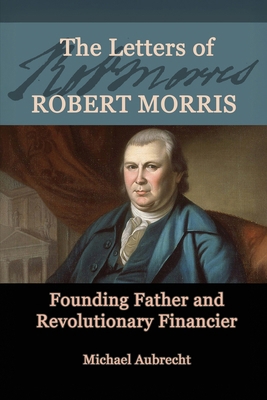
Michael is the author of “The Letters of Robert Morris: Founding Father and Revolutionary Financier.

Was the Battle of Point Pleasant the First Battle of the Revolution?

Emerging Revolutionary War welcomes back guest historian Evan Portman

By the time Ralph Waldo Emerson immortalized the “shot heard round the world” in his 1836 “Concord Hymn”, the battles of Lexington and Concord had already achieved fame as the first engagement of the Revolutionary War. However, in the early twentieth century one West Virginia historian began to argue that the true “shot heard round the world” had occurred six months earlier on October 10, 1774, at the battle of Point Pleasant.

The battle was the culmination of Lord Dunmore’s War, a five-month campaign against the Shawnee and Mingo tribes in an effort to quell the violence along the Ohio frontier.[1] Virginia settlers had begun moving into the Ohio Country following the Treaty of Fort Stanwix, in which the Iroquois Confederacy ceded the territories of present-day Kentucky and West Virginia to the Colony of Virginia. However, the Shawnee had not been consulted regarding the treaty and claimed ancestral hunting rights to the region, responding with violent raids along the frontier to reclaim their land.[2] Virginia Colonial Governor John Murray, 4th Earl of Dunmore sanctioned the colonial militia to wage a campaign against the Native Americans after white settlers began reacting violently, themselves.[3]

Continue reading “Was the Battle of Point Pleasant the First Battle of the Revolution?”

Liberty’s Words Ringing Hollow: Prince Whipple’s 1779 Petition for Freedom in New Hampshire

Emerging Revolutionary War welcomes guest historian Dr Lawrence Howard

Many people have not been taught that slavery was practiced in early America’s northern colonies, later states. Though fewer people were enslaved in the north than in the south, where the plantation economy was highly reliant on enslaved labor, people were also held in bondage in the north. Also not often taught is the contribution such enslaved persons made to the success of America’s Founding, though recent scholarship seeks to amend this. This article explores the 1779 Petition to the New Hampshire Government, written by Prince Whipple – born in Africa in 1750 and purchased by William Whipple of Portsmouth, New Hampshire at a young age. In this petition, twenty black men requested emancipation from slavery. The African American petitioners echoed some of the same political ideas that the delegates to the Second Continental Congress had staked their own lives on just three years earlier in the Declaration of Independence, announcing American political independence from Britain.

Moffatt-Ladd House, Portsmouth, NH, Author’s photo.

Continue reading “Liberty’s Words Ringing Hollow: Prince Whipple’s 1779 Petition for Freedom in New Hampshire”

Early Preservation at Fort Ticonderoga

Emerging Revolutionary War welcomes back guest historian Evan Portman

Most historians credit Ann Pamela Cunningham with kickstarting the historic preservation movement with her purchase of Mount Vernon in 1858. However, preservation of historic sites began long before the Mount Vernon Ladies’ Association. In fact, the storied walls of Fort Ticonderoga became the object of a preservation movement 38 years before the Ladies’ Association purchased George Washington’s ancestral home.

Fort Ticonderoga—known as the Gibraltar of North America—played an integral role in both the French and Indian War and the American Revolution. The fort was originally constructed by the French in 1755 on a portage known to the Iroquois as ticonderoga, meaning a “land between two waters.” Fort Carillon, as it was known to the French, stood strategically between Lake Champlain and Lake George, thereby controlling both the Hudson River Valley and St. Lawrence River Valley. On July 8, 1758, an outnumbered French army successfully defended the fort against British forces in the bloodiest battle of the French and Indian War.[1] However, the following year British General Jeffery Amherst captured the fort and renamed it Fort Ticonderoga.[2]

By the American Revolution, the fort had fallen into disrepair but was still guarded by a small British garrison. In 1775, it was the scene of one of the most famous dramas in American history. On May 10, Col. Benedict Arnold and Col. Ethan Allen led a combined force of the Green Mountain Boys and Massachusetts and Connecticut militiamen across Lake Champlain to capture the fort. “Come out you old Rat!” Allen famously cried to the fort’s commander, Capt. William Delaplace, and demanded he surrender the garrison “in the name of the Great Jehovah and the Continental Congress.”[3] Delaplace agreed, and Ticonderoga quickly fell into American hands.

Continue reading “Early Preservation at Fort Ticonderoga”

William Billings: Patriot, composer, leather-tanner

Emerging Revolutionary War welcomes guest historian David Stowe.

William Billings looked like an oaf, wrote poetry, snuffed small fistfuls of tobacco in company, taught himself to write music, was a street-cleaner, was an artist.

-David McKay and Richard Crawford, William Billings of Boston (1980)

I knew I wanted to write a book about William Billings. I just wasn’t sure which kind would be possible. I’ve been writing about the quirky Boston composer since my second book, How Sweet the Sound (2004) and always find more to say about him. His colorful adaptation of a Hebrew psalm to the American Revolutionary cause helped fuel my interest in what became Song of Exile: The Enduring Mystery of Psalm 137 (2016).

So how did I come to write a historical novel about him? 

Partly because I came to the end of my sources and didn’t have nearly enough to tell the story I thought he deserved. There were many parts of Billings’s experience, including the most important ones, I’d never have access to. But his life was too rich and interesting to leave alone. So I was left with no choice but to make it up.

There were some other, possibly better reasons. One had to do with audience. 

Continue reading “William Billings: Patriot, composer, leather-tanner”

An Englishman’s Journal of the Revolutionary War: The Journals of Nicholas Cresswell 1774-1777

Emerging Revolutionary War welcomes guest historian Kenneth Bancroft

“Nothing but War is talked of…This cannot be redressing grievances, it is open rebellion…1

250 years ago on October 20, 1775 a 25 year old Englishman wrote these words in Alexandria, Virginia, noting that “everything is in confusion…soon they will declare Independence.”2.Nicholas Cresswell had arrived in America a year and a half prior to that entry in a journal that he kept to chronicle his venture to “shape his course in the world” and set up a new life inVirginia, “as I like the situation of that Colony the best.”3 He was aware of grumblings from colonials, but his focus was on land and his adventure had him traveling and trading with the Native Americans in the Ohio country and experiencing the slave culture in the colonies, especially the horrific sugar plantations in Barbados.

But what his journal is most known for is his observations and critique of the revolutionary world from Virginia to New York in 1774 through 1777. Cresswell’s misfortune, among others, was that he arrived in America seeking opportunity just as the Imperial Crisis over the Intolerable Acts had began. News of, and reaction to the closure of the port of Boston frequently disrupted his schemes and social life. As an Englishman still loyal to the Crown, his Revolutionary War journal offers a unique outsider look at the costs of the conflict in the country and towns as opposed to the more common tomes of soldier life.

“No prospect of getting home this winter, as I am suspected of being a Spy.”4 Cresswell’s tenure in America was tenuous. Unsuccessful in trying to establish himself with land and basically broke, he blamed his misfortune on the “Liberty Mad”5 political climate that considered him a ‘Tory’ who would not commit to the cause. His penchant for getting into drunken political arguments did not help and kept getting him in trouble with local Committees of Safety.

“Am determined to make my escape the first opportunity.”6 By that point Cresswell knew it was time to forgo his quest and return to England, but the question was how, especially with non- importation measures and the war closing ports. What followed next for Cresswell was an amazing account of encounters with revolutionary notables and locations such as Thomas Jefferson, Patrick Henry, and British General Howe in Philadelphia, Williamsburg, and New York respectively. Ultimately, Cresswell was able to secure passage back to England where he reluctantly picked up where he left off by order of his father to “shear or bind corn.”7

1 Nicholas Cresswell, The Journals of Nicholas Cresswell, 1774-1777, (North Charleston, South Carolina: reprinted 2024), 97.

2 Ibid, 97.

3 Ibid, 3.

4 Ibid, 101.

5 Ibid, 47.

6 Ibid, 143.

7 Ibid, 214.

The Journals of Nicholas Cresswell was first published in 1924 and offers a candid account of the American Revolution from a viewpoint not typically explored. Its accounts of mustering militia, salt shortages, political pulpits, and anti-Tory riots and fights add color to our revolutionary origins. Add to that Cresswell’s experiences with the Native Americans in the Ohio country and the plantations in Barbados which further inform our understanding of our colonial past. Join Cresswell’s journey! To read more about Cresswell’s journey click here. The blog is an online platform and resource to follow his daily posts as they occurred 250 years ago. Keyword search features and research links are featured as well. Follow along on Facebook, too, at Nicholas Cresswell Journals.

Sovereign Love: Remembering Major Andre

Emerging Revolutionary War welcomes back guest historian Avellina Balestri

As I have increased research and work on my American Revolution trilogy All Ye That Pass By, I have noticed a trend towards making this particular season between the anniversary of Nathan Hale’s hanging (September 22, 1776) and John Andre’s hanging (October 2, 1780) into a strange sort of macabre festival I have dubbed “Hangemtide.” I suppose one could consider it a sort of Halloween for historical enthusiasts, as the autumnal chill starts to creep into the air, greenery dies, and horror releases hit the market. But a strange pseudo-religious reality I have observed is a tendency to treat these hangings as secular passion plays of a kind, connected by a secular Advent calendar of daily memorials, with the overarching takeaway being a strange sense of catharsis for the salvation of a newborn nation.

As a Catholic, I very well know the thematic beats, and I can sense them in an unsettling way in these commemorations. We must have our scapegoat; a man, or two, must die so the nation might live in our origin myth. But though the narrative may comfortably place Hale as the first Christ-figure, it uncomfortably assures that Andre is the second. We as the audience, while intended to shed tears for the first, are meant to bay for the blood of the second. Perhaps we may pity him in passing moments, but never so much that we truly desire him to be spared. His death is a foregone conclusion of the ritual which must be affirmed. We are recalling the traditional readings on Passion Sunday, and hardly realize it. We have, perhaps, lost the much greater plot of Christianity, that in the death of each, the other perishes, and in every death, we partake, in the killing and the dying, and in every human catastrophe, there is planted the original Passion Tree, no less in the past than in the present. History is not safe from our iniquity, nor from grace breaking in upon it, oftentimes painfully.

Touching back upon the historical events being remembered according to our national needs, I have often gently chided friends involved in “Hangentide” that I am ever on call to be the defense lawyer Major Andre never got should they wish to shuttle me into the past on circuit. I do not intend to make that defense the core of my current thesis, but put simply, I believe that if he had received a proper legal defense, Andre may well have had his sentence reduced based on extenuating circumstances. But that was not to be, because it could not be, not in the narrative as it is presented to us over and over again. This was a necessary death; a payment to Justice itself. It is language used to mask what was essentially a revenge hanging for both Hale’s execution at the hands of Crown forces and Arnold’s betrayal of the revolution for hard cold coin. The true foundation stone of “Hangemtide” is a satisfaction we are meant to share in nearly 250-year-old retribution. It is meant to, in some way, bring the country together through our most primal tribal instinct. But does it?

Continue reading “Sovereign Love: Remembering Major Andre”

Founders and Drinkers

Emerging Revolutionary War welcomes back guest historian Michael Aubrecht

As someone who enjoys the occasional cocktail I am admittedly curious as to the rumored excessive-drinking habits of our Founding Fathers.

After conducting a casual examination, I think it would be fair to say that their wealth, power, and the period in which they lived in made alcohol a mainstay in their daily lives. Most of these gentlemen were the political playboys of their day and we already know that many of them had a penchant for wine, women and song. Today most people assume that the common table wine was the preferred beverage of colonial times and that most folks simply enjoyed it as a compliment to meals.

According to research conducted by Stanton Peele, the Founders had a much broader palette when it came to engaging in the Spirit of ‘76. Simply put, these boys liked to party:

How do we know the Founding Fathers as a group drank a lot? Well, for one thing, we have records of their imbibing. In 1787, two days before they signed off on the Constitution, the 55 delegates to the Constitutional Convention partied at a tavern.

According to the bill preserved from the evening, they drank 54 bottles of Madeira, 60 bottles of claret, eight of whiskey, 22 of porter, eight of hard cider, 12 of beer and seven bowls of alcoholic punch. That’s more than two bottles of fruit of the vine, plus a few shots and a lot of punch and beer, for every delegate. Clearly, that’s humanly impossible.

Continue reading “Founders and Drinkers”

Sacred Honor: The Conundrum of Oaths during the American Revolution

Emerging Revolutionary War welcomes guest historian Avellina Balestri

My American Revolution historical fiction trilogy, “All Ye That Pass By,” is thematically centered upon the pros and cons of oath-taking. Although the topic has been very much on my mind during the researching and writing process, I think many people who engage with the American Revolution on a popular level forget about the profound moral quandary of making
and breaking solemn declarations before God and Man.


When the signers of the Declaration of Independence pledged their “lives, fortunes, and sacred honor” to the cause of rebellion, there could not help but be an element of contradiction, for they
were committing an act of treason against the King to whom they had previously sworn fealty. Too often we reduce this decision to a test of courage, necessary to take the risks and face the consequences that accompany defying one’s sovereign. We get a certain thrill from the idea of
defiance because it fits a certain popularized narrative framework. But perhaps this is partly because we have forgotten the rubrics of more religious ages in which hierarchies represented divine realities that dignified mankind.


Swearing oaths to kings and queens was a grave matter in both a spiritual and interpersonal sense. Most oath-taking rituals involved placing one’s hand (and often lips) upon the Cross on the Holy Bible, the symbol of salvation, and in the old rendering of such vows, wishing that one’s heart be cut out if proven false to the liege lord or lady, who would henceforth be held higher than family ties or even one’s own life. Calling down the heart-cutting curse was both a literal reference to execution and a symbolic statement of self-destruction, for what was a man’s heart if his word was worthless to the one you had sworn to defend by your life or death?


By contrast, unwavering zeal for one’s royal master may lead to one’s early demise, but that is not merely tolerable, but glorious, indeed, the most glorious hour of one’s life (as Major John Andre declared before minutes before his own life was taken), because it proved the depths of
one’s ability to be a good and faithful servant, and what is a man without a lord to serve? What
liberty can a knight enjoy if he will not swear his sword and be chained? These perennial
questions hearken back to the Anglo-Saxon epic of the Men of Maldon, who preferred death to
abandoning their lord, even as he lay slain by Norsemen upon the field. It is no small irony that
one of Maldon’s other famous sons was General Horatio Gates, whose trajectory runs in quite a
different direction.

Duke of Marlborough


On that note, it is worth turning to the various figures in the long history of the British Isles and her overflowing empire who chose to break their oaths to reigning sovereigns by way of rebellion, from Lord Brooke (who fought in The English Civil War against Charles I), to the
Duke of Marlborough (who took part in The Glorious Revolution against James II), to Lord Murray (who fought in The Second Jacobite Rebellion against George II). To justify themselves under God and before Man, they usually appealed exception clauses based on a higher religious
obligation or a superior royal claim. For Brooke and Marlborough, it was because the kings were leaning too Catholic for their Protestant convictions; for Murray, it was because the Stuarts were the rightful rulers, unlawfully sent into exile.


Even in these cases, however, there is a sense that the participants never fully managed to
escape the shadow over their broken oaths. Yes, they might appeal to those “rare cases” brought
forward by philosophers and theologians from Thomas Aquinas to Samuel Rutherford, but they
had still committed what Dante deemed the most mortal of sins in the depths of his inferno.
Bearing that weight is exhausting for any mortal man, doomed to make constant self-defenses
while knowing the world will never truly trust them again. It is, in effect, to be branded by the
mark of Caine, for one who breaks his oaths has murdered the worth of his own word, a nearer
thing than even his own brother.


Jumping forward in time, the American Revolution is a unique case in that it was not fundamentally grounded in either a doctrinal nor a dynastic dispute. One would have to squint
incredibly hard to make the arguments of either Aquinas or Rutherford translate neatly into a
stamp of approval for the American Revolution. This is not to say the revolutionaries did not
borrow from the rhetoric of past uprisings, especially regarding the curbing of royal prerogative
(albeit colonial complaints were more directed at Parliament than at the King, even though the
King upheld his Parliament). But humanistic philosophies that flourished during the
Enlightenment introduced rubrics for revolution based on the will of the people. This, in turn,
started the domino effect that established the modern consensus of Democracy being inherently
positive, even though General Thomas Gage’s warning about the effects of “democratic
despotism” is perhaps more relevant than we wish to admit.


Coming back to my own literary exploration, I strive to cast a particular light upon the experiences of Catholic recusants in the British Isles and North America from the 16th-18th centuries, who found themselves between a rock and a hard place in terms of oath-taking. This was especially the case for English Catholics of prominent lineage, who were forced to pay taxes
and tithes for refusing to conform to the Anglican Church, leaving their resources drained and their status diminished. By the latter part of the 18th century, following multiple failed Jacobite risings in favor of Catholic claimants, most were eager to dispel accusations of cowardice at best
and treason at worst for the old faith they keep against the odds. Even the pope acknowledged the House of Hanover by 1766. But in order to participate fully in British society, it was mandatory to take the Test Act, an oath acknowledging the King as Governor of the Church in England, a claim inherently repugnant to Catholic consciences.


Some resisted this temptation; others yielded to it. One of the most famous cases of apostasy in the period pertains to General Gage’s father and his father’s cousin, both coming from a staunchly Catholic lineage, who took the Test Act ostensibly to save their racing horses from being confiscated. That was the tip of the iceberg, of course; Catholics were not only forbidden from owning horses, but also bearing arms, voting, holding most offices, attending universities, serving in the military, and much more.


The decision to conform to the religion of the state often haunted those who made it. Oaths were understood religiously by society as whole, but for noble families there was a particular weight involved, since the Test Act was a successor of ancient chivalric vows taken by their ancestors. By taking it, Catholics would have sworn their souls to something which they believed put them in a state of mortal sin. Yet…would not breaking that oath be a mortal sin too?

St. Thomas More

In this quandary, whatever they did would be a slap in the face to saints and martyrs most highly praised in their tradition, such as Thomas More and Edmund Campion, who preferred to die rather than sign the Oath of Supremacy. Nevertheless, they met their fates praying for the King and Queen who killed them, embodying fidelity under fire. Another case honored by the oppressed Catholic community was Lord Derwentwater, who rose up in the first Jacobite Rebellion of 1715, and preferred beheading to either recanting his faith or swearing an oath to the House of Hanover which he deemed to be illegitimate. Interestingly, it was said Derwentwater’s heart remained incorrupt, in counteraction to the curse of having it cut out.


Again, we see the crushing effects of previous failed rebellions, and cannot help but compare
them to the effects of the American Revolution. The rebellion, predicted to be a flash in the pan
by the British establishment, proves more successful than most imagined, shattering old
structures in a manner which some will find terrifying and others liberating. In this new world,
many hope to enjoy a chance to start over with a clean slate. But for those who have taken the
Test Act, going down such a path would require trekking into uncharted territory, calling into
question every aspect of loyalty and identity, on earth as it is in heaven. Embracing the
revolutionary cause would inherently be a process of unbecoming, shedding one’s understanding
of past obligations and hoping the gamble would pay in the end.


For Catholic recusants, the experiences of Charles Carroll of Carrollton served as an example of what might be possible in America. His claim was that King George is a traitor to them rather than them being a traitor to him, and that having been placed under religious suppression, his fellow Catholics had the right to seek alternative options for their own betterment as a community of faith. The outcome of the revolution might have been a risk, but he had proven that it was already disrupting the old order and causing the disabilities placed upon Catholics to crumble. Prejudice might remain, but Carroll has already overcome various civil obstacles against his faith in Maryland, the one-time Catholic colony laid low, and George Washington, commander-in-chief of the Continental Army, who once took the Test Act himself, had demonstrated his willingness to uphold religious toleration in his army.


And yet…the question of an oath’s weight still bore down on those confronted with such a choice, raised with the conviction that even an oath with questionable aspects was considered worthy of adhering to “as far as the law of God allows.” The way in which each man and woman wrestled with their conscience when it came to such heavy matters was as complex and fascinating as the war itself, and my experience of bringing that inner conflict to life as a writer has been one of the most rewarding aspects of the creative process.

Avellina Balestri is a Catholic author and editor based in the historic borderlands of Maryland and Pennsylvania. She represented the state of Maryland at The Sons of the American Revolution National Orations Contest and is the author of the American Revolution historical fiction trilogy “All Ye That Pass By,” the first installment of which, “Gone for a Soldier,” is available on Amazon. Avellina is also the Editor-in-Chief of Fellowship & Fairydust, a magazine inspiring faith & creativity and exploring the arts through a spiritual lens. 

For more information about the author and her various projects, please visit the following websites:

www.fellowdustmag.com www.avellinabalestri.com

Book Review: “Making the Presidency: John Adams and the Precedents That Forged the Republic” by Lindsey Chervinsky

Emerging Revolutionary War welcomes guest historian and reviewer Al Dickenson

No president has an easy job. But imagine holding the position of president immediately after undoubtedly the best president the United States has ever had.

That was John Adams’ conundrum. Additionally, it is the subject of renowned historian Lindsey Chervinsky’s new book, Making the Presidency: John Adams and the Precedents That Forged the Republic. Initially released last year, in the midst of a politically fraught election season, Chervinsky places the modern world into a context we should all understand better: the history of the 1790s.

After a brief introduction regarding the Revolutionary War, the early republic, and George Washington’s presidency, readers are thrown into John Adams’ presidency. Federalists opposing Democratic-Republicans (commonly referred to as simply “Republicans” in Chervinsky’s text, as they referred to themselves), the Americans opposing the French, the North opposing the South, Federalists opposing Federalists: it seemed there could be no peace in the nation so split apart. Yet the nation stood for another 220 years. Why is that?

Chervinsky argues that the reason we are a nation today relies on how John Adams served his presidency, specifically the power sharing he enacted in his cabinet amongst Republicans (like Vice President Thomas Jefferson), Federalists (like Secretary of State Timothy Pickering), and Archfederalists (like Secretary of War James McHenry), the successful navigation of foreign affairs (see the ongoing French Revolution, specifically the XYZ Affair), and the peaceful transfer of power.

The final focus of Chervinsky’s book, Adams’ loss in the 1800 election, perhaps offers the most original outlook on Adams’ presidency. Being the loser of the election, and being the first incumbent president to lose an election, historians have often treated Jefferson a little kindlier than Adams. Where Chervinsky’s work shines, however, is in showing how these great, powerful men, the leaders of their respective parties, differed in how they saw power, and in how they wielded it.

Little scholarship focuses on Jefferson’s machinations to gain the presidency. Rarely researched are his Virginia and Kentucky Resolutions, which called for nullifying federal law, even though these ideas were eventually adapted into various Confederate causes and mentalities in the following decades. Nor are the essentially political and emotional blackmail Jefferson laid on Federalist members of Congress who refused to vote for him over Aaron Burr. Jefferson threatened the members of Congress with, in essence, secession of Republican states if they did not pick a president soon, given that this was the only election in American history where the House of Representatives made the presidential selection. The dirty tricks of politics manifested themselves in this election, including smear campaigns against Adams and unfounded warnings that the Federalist Party would forego the will of the people and simply appoint a new, Federalist president.

Compare this to John Adams, who, while certainly desirous of a second term, largely laid low during the turmoil occurring on the other side of the Capitol. When presented with suggestions to keep himself as president, he refused. When asked to annul the election, Adams refused. When asked to stand for himself and campaign in the final months of the election season, and during the contingent election in the House between Jefferson and Burr, Adams refused and stayed silent. He did not cling to power, nor did he view his opinion better than that of the American people who voted for a Republican and the House members who would choose the next presidency. Though he was a lame duck president in every sense of the word, he held true to his convictions of propriety in politics, though privately he fumed.

In this way, though history often sheds more light on the winner, makes historians wonder what other ways “losers” of an election may have impacted our politics and history. An interesting study question for any intrigued historian, but one that Chervinsky shows is vital to understanding American history and modern politics alike.