ERW Weekender: Battle of King’s Mountain

On October 7, 1780, one of the most pivotal battles of the American Revolution fought in the South occurred on a hillside in northwest South Carolina.The engagement brought militia from both sides; those loyal to the British and those adhering to the independence movement against each other. In fact, only one regular British soldier was present on that autumn day; the British commander Major Patrick Ferguson.

How did Ferguson and his militia end up on King’s Mountain? This was due to the campaign being waged by British General Lord Cornwallis in the Southern colonies.

Ferguson’s role was to protect the flank of Cornwallis’ force as it turned north from South Carolina. After issuing a call of bravado, where Ferguson gave Patriot militia an ultimatum; lay down your weapons or suffer the consequences, the British officer began to move through the South Carolina countryside. This decree emboldened the Patriot militia, some of which would come from across the Appalachian Mountains–or “Overmountain”–to join in the fight against Ferguson. This combined force would gather around Sycamore Shoals in present day Tennessee.

Word quickly reached Ferguson near Gilbert Town, North Carolina by way of deserters that a large force of Virginia, Carolinas, and militia from the area of Tennessee had arrived and were planning to march toward his encampment.

Still showing a high degree of disdain for the Patriot militia, Ferguson did not act immediately on the intelligence. Three days later, the Loyalist militia and the British officer started their retrograde movement toward Charlotte and Lord Cornwallis’s main army.

By October 4, 1780 now joined by a sprinkling of Georgia militia, the Patriots had reached Ferguson’s old encampment site. Two days later the militia forced marched through the Cowpens of South Carolina, which had not witnessed the hard hand of battle yet. Just a day’s march ahead was Ferguson’s forces.

SANYO DIGITAL CAMERA
Colonial Road trace near Kings Mountain (author collection)

At this juncture, Ferguson made a fateful decision. Instead of continuing his retreat and he was less than a full-days march away from the main British army, the British officer held up his forces on a forested hill just inside South Carolina and laid out his camp on the highest point; Kings Pinnacle.

Realizing that time was of the essence, the Patriot force, now numbering 900 men, found plentiful horseflesh to mount up and close the gap between the two sides. Riding through the rain and darkness of the night of October 6, the fifteen-mile gap between forces was erased and by late morning the Patriot militia was reining up within striking distance of Kings Mountain.

By mid-afternoon, at approximately 3:00 p.m. the fighting erupted. The Patriot militia broke into smaller commands, numbering between 100-200 men and started to ascend the slopes. Luckily for the Patriots, Ferguson had not detected just how close the enemy was and had also neglected to fortify his encampment. His force though, outnumbered the Patriots by approximately 200 men.

Some of the Loyalist militia did not realize that the enemy had arrived until the Patriot militia came hollering and yelling up the slope of the hillside. With the conglomerate of various militia, there was no unified command of the Patriot forces and the fight quickly boiled down to independent maneuvering and fighting. Using the terrain, the Patriot militia fired from behind trees and boulders. Answering this tactic, Ferguson ordered a bayonet charge down the hill. This caused the Patriot force to retreat to the base of the hill as most of the men were carrying rifles which did not accommodate the bayonet.

Virginia militia Colonel William Campbell and North Carolinian militia Colonel John Sevier helped rally the militia that had broken and sent the force back up the hillside. This back and forth would happen a few more times; Ferguson’s force charging down hill with bayonets, the militia backtracking, than reforming, and charging back up after the Loyalist momentum had waned.

Finally, after an hour of combat the Patriot militia forced their way to the crown of the hill and was able to flank the Loyalist force and attack in rear of their position. This maneuver forced the Loyalists back into their encampment where numbers of them began to surrender.

SANYO DIGITAL CAMERA
Marker to the memory of Major Patrick Ferguson (author collection)

Ferguson sensing the tide turning against the Loyalists, tried to rally his troops, supposedly yelling, “Hurrah,brave boys, the day is ours!” Gathering a few stalwarts, Ferguson made a desperate move to fight his way out of the encircling Patriot militia. A volley from Colonel Sevier’s militia force unhorsed Ferguson who fell entangled in his stirrups. Unfortunately, the horse, spooked with the musketry and smell of gunpowder dragged Ferguson through the Patriot line. After getting untangled from the straps on the horse, Ferguson lay prone on the ground, where a Patriot officer demanded his surrender. Still with some fight in him, Ferguson shot and killed the man. Other Patriot militia responding to the scene fired a collective volley at the downed British officer, killing Ferguson.

Some of the Patriot militia were opposed to accepting the Loyalist surrender, as they remembered the massacres and atrocities committed to their brethren in arms by the infamous Banastre Tarleton. Cooler heads prevailed and the firing died down.

By the time the second white flag was sent out by Captain Abraham DePeyster, Patriot militia officers were finally able to reign in their commands and over 600 Loyalist soldiers surrendered.

Within the one-hour and five minute engagement, Ferguson’s force ceased to exist. Total casualties for the Loyalist force was 290 killed, 163 wounded, and 668 captured. The Patriots suffered a total of 87 casualties; 29 killed and 58 wounded.

The Patriots, with the close proximity of Cornwallis’s forces, who the day after the battle would finally get the request for reinforcements from his slain subordinate, quickly retreated back into the safety of the South Carolina countryside.

However, the Battle of Kings Mountain would become a critical turning point, not only in the Southern Campaign of the American Revolution, but in the entire war itself. The victory, which demolished the Loyalist militia force covering his flank, forced Cornwallis to altere his strategy for the campaign. He would be forced to return to South Carolina, giving up advancing further than Charlotte into North Carolina in order to re-solidify control of territory in his rear. When Cornwallis finally returned to the Tar Heel State the following year, he would suffer eventually suffer a Pyrrhic victory at Guilford Court House in March 1781.

All that was in the future and so is your visit to this battlefield of the American Revolution.
SANYO DIGITAL CAMERA
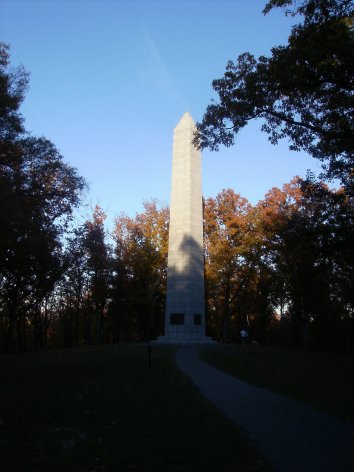
Kings Mountain Battle Monument commemorating the Patriot victory (author collection)

On March 3, 1931, Kings Mountain National Military Park was formed by an act of Congress and placed under the control of the United States War Department. Two years later, in March 1933, the property was transferred to the National Park Service by an executive order. At this juncture, the entire land mass of the park was comprised of 40 acres that had been originally donated by the Kings Mountain Battlefield Association. The park has grown since that time and now preserves slightly under 4,000 acres.

For further details on how to visit the battlefield, which includes trails, a visitor center, exhibits, and a bookstore, click here. The park is open daily 9:00 a.m. to 5:00 p.m. with extended hours on the weekend between Memorial and Labor Days. Even better there is no fee to access this national military park!

*All the photos taken for this post was done by the author during a visit to the battlefield in autumn.*


1st Maryland’s 2nd Last Stand

I was recently reading the superb book by Patrick O’Donnell on Washington’s Immortals, which brought me back to a talk I did about the same Marylanders in the American Revolution a few years back. Below is an excerpt of that talk and highlights the second last stand for a regiment with a tradition of being steadfast when deadly duty called.

On March 15, 1781, approximately 20 men stood in the 1st Maryland Continental Regiment staring at the an eerie and familiar scene. It must have seemed that history was cruelly repeating itself once again. These men had survived the forlorn assault in New York in 1776, the ugly repulse at Camden in 1780, and now stood on third line of General Nathanael Greene’s defense at Guilford Court House.

Battle of Guiliford Courthouse 15 March 1781.jpg
Famous painting of the 1st Maryland at the Battle of Guilford Court House by H. CHarles McBarron, Jr. 

Besides the 20 men who could be traced back to that fateful day in New York, the men that shouldered muskets in line with them were all veterans of indefinite periods of service as well.

The 1st Maryland and the men they confronted, 2nd Guards Battalion of Guards, were very similar, according to historian Lawrence Babits, who states that “the 1st Maryland was arguably one of the finest regiments produced by the Continental Army.

What ensued next was the defining moment of the battle and in essence the campaign. As the Guards officers gathered their men into a new line, the Marylanders came on at a rush. The Guards responded largely without specific commands…facing the oncoming Continentals, who fired several platoon volleys as they came. At a range of less than 12 yards, both lines fired again, so close that muzzle flashes overlapped into a wide sheet of flame and the heat from the volley could be felt.

Casualties mounted and at close range the musket balls shattered bone and even passed through the bodies of their targets.

SANY2634.JPG
Modern view from the location of Greene’s Third Line which the 1st Maryland held. Coming up the slight rise toward the photo was how the British approached. 

The two sides then resorted to the bayonet and Williams recounted “the first Regiment embraced the opportunity…bayoneted and cut to pieces a great number of the British.”

Although the melee only lasted a few minutes, the Marylanders had checked the advance and with the dragoons of William Washington, allowed for Greene to begin to pull back and start the retreat. In another important position, Williams helped lead the rear-guard away from Guilford C.H. The Marylanders lost 15 killed, 42 wounded and 97 missing. Most of the missing could have came from the 2nd Maryland which broke in disorder on the left flank of the 1st Maryland.

Not only did the Marylanders suffer on that fateful March day in 1781, they did so with a lack of, well, everything. According to one inventory report, the entire regiment, numbering little over 300 men had not a single jacket, two-thirds were without proper footwear, and every man was destitute of a full complement of clothing. In addition, the men had served, fought courageously, and bled tremendously, without receiving one cent as pay.

A remarkable “band of brothers” that “held the line for independence.”

Which, in case you were wondering, was the name of the talk.


*Guilford Court House National Military Park is now preserved by the National Park Service, to plan your visit, click here.

*For information on Mr. O’Donnell’s book, click here.

Six Signers Signing

Part Three of Six

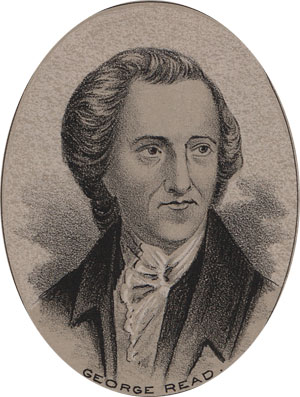
His name might not be too familiar, but he has the distinction of signing three of the most important documents of the American Revolutionary period; the petition to King George III of 1774, the Declaration of Independence, and the United States Constitution. His name?

George Read.read


Born in the colony of Maryland on September 18, 1733 in the county of Cecil, the young Read was shortly thereafter on the move. His family, while George was an infant, resettled in New Castle, Delaware. When of school age, he attended Reverend Francis Allison’s Academy in New London, Pennsylvania, and one of his classmates was Thomas McKean, a future Signer of the Declaration of Independence as well. George moved on to study law in Philadelphia under the tutelage of John Moland. In 1753, George was admitted to the bar and the next year had settled back in New Castle, Delaware to practice. Continue reading “Six Signers Signing”

Six Signing Signers

Part Two of Six
(for part one, click here)

The financier. Those two words explain the importance of Robert Morris, the Liverpool, England born Pennsylvanian transplant. As George Washington engineered the pivotal campaign that culminated in the actions at Trenton on Christmas Day 1776 and Princeton in early January, Robert Morris was the man who made it happen.

Born on January 20, 1734, Morris was a 13-year old lad when he sailed for the British North American colonies. He was headed to Oxford, Maryland where his father had emigrated prior to. While living on his father’s tobacco-growing plantation, Morris was afforded the opportunity to have a tutor and showed his mental prowess, advancing rapidly in his studies.

Outgrowing his tutor, Morris was sent to a family friend in Philadelphia where it was arranged the young man would become an apprentice in the shipping and banking of future Philadelphia mayor Charles Willing. When Willing died in 1754, Morris was made partner. He was only 24 years old at the time.

After the establishment of Willing, Morris, and Company on May 1, 1757, Morris was set about establishing himself firmly in the upper society of Philadelphia, the largest city in the 13 British colonies. Yet, it was not until he was 35 years old in 1759 when he wed Mary White, who hailed from a prominent Maryland family. In time, the family grew to include five sons and two daughters. That same year, Morris and his partner Thomas Willing organized the first non-importation agreement in which the slave trade was ended for good in the Philadelphia region.

Robert-Morris-213x300
Robert Morris (courtesy of our friends at The Society of the Descendants of the Signers of the Declaration of Independence, http://www.dsdi1776.com)

Even before his marriage, Morris was active in politics. In 1765 he had served on a committee comprised of local merchants. Formed in protest to the Stamp Act, Morris was chosen to mediate a mass town meeting of protesters. Even though he personally felt the new acts were unconstitutional, Morris was remained steadfastly loyal to Great Britain. Continue reading “Six Signing Signers”

Six Signing Signers

Part One of Six

On August 2, 1776, in Philadelphia, Pennsylvania, the majority of the 56 men who would forever be known as the “Signers of the Declaration of Independence” placed quill to ink and affixed their signature.

On September 17, 1787, the men who persevered, haggled, and agreed on the United States Constitution, dipped a quill into ink and placed their signatures on that famous document.

If one looks closely and reads the names of the signers, six gentlemen’s names would appear on both documents. If one hazarded a quick guess, Thomas Jefferson, John Hancock, John or Samuel Adams, George Washington, and Benjamin Franklin would most likely be the first names to spill off the tongue.

Only one of those names would be correct; Benjamin Franklin. This post, the first in the series, will shed light on whose these men were, who had the great fortune–or luck?–to sign both famous political documents. The first of the “Six Signing Signers” is…..

29aa0f03f572a6bf876557dca1c4db16

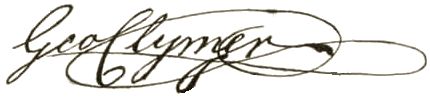
George Clymer. Continue reading “Six Signing Signers”

A Tribute to Robert Treat Paine

The city of Boston, Massachusetts is steeped in American Revolutionary War history. The city has designed an entire trail–the “Freedom Trail”–a footpath that leads interested visitors around the city to the areas of most importance.

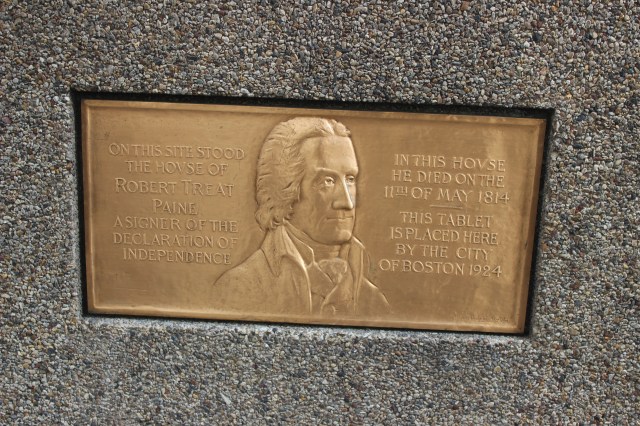
Yet, some history, is just, literally, stuck right on the walls of Boston. On the side of a modern office building, is situated the plaque below:

IMG_7075

One of the 56 men that affixed his signature to the Declaration of Independence, Paine was born in Boston on March 11, 1731 and was actually given a middle name, a family tribute. His family legacy was well-established in the colonies and Paine himself was counted as an early advocate for the patriotic cause.

Yet, like the more famous John Adams, Paine also was a lawyer and dedicated to the law and order. He was the second attorney, along with the aforementioned Adams, to represent the British soldiers in the “Boston Massacre” trial. He continued to hope for reconciliation, hoping when he ventured to the Second Continental Congress, that the resolve of the colonies would bring the British Parliament to negotiate. On that same vein, Paine also put his signature on the Olive Branch Petition–the final attempt by the colonies to reach King George III and give their side of the story. When the king outright rejected the petition and did not even lay eyes on the document, Paine saw there was no hope and firmly planted himself in the camp of those clamoring for independence.

He became a vocal and valuable member of the Continental Congress and signed the Declaration of Independence on August 2, 1776. Returning to Massachusetts near the end of 1776, he became the Speaker of the Massachusetts House of Representatives the following year. In 1780 he was a member of the committee that drafted the state constitution and as attorney general he prosecuted members of Shays’ Rebellion in 1787.

His last public role was a justice of the Massachusetts Supreme Court from 1790 until his retirement in 1804. He was 83 years old when he died in the house that the plaque mentions. He was buried in the Granary Burying Ground in his native Boston, Massachusetts.

Another great patriot of the American cause, whose last house where his last days were spent, has a lasting memorial for those to discover. So, many historical treasures are just hanging there, waiting to be discovered in Boston.

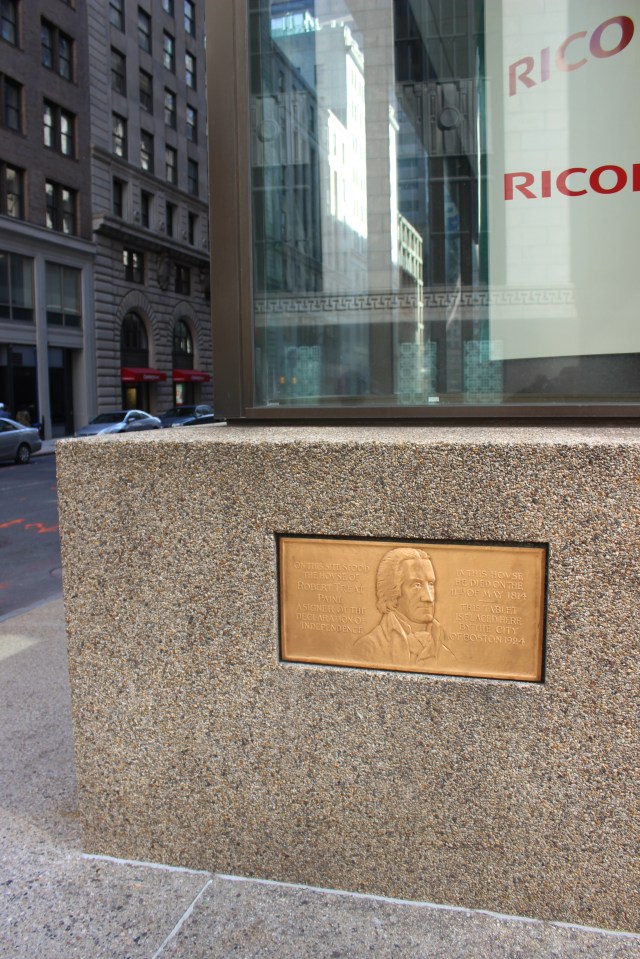
IMG_7076
Another view of the Robert Treat Paine plaque in Boston

Continue reading “A Tribute to Robert Treat Paine”

The Second of July’s Importance

This year, July 4th, which falls on a Monday, and will be celebrated as America’s Independence Day around the country. Americans remember that date, in 1776, as the day that John Hancock, as president of the Second Continental Congress, put quill to ink and then parchment, to affix his signature in a bold stroke at the bottom of the Declaration of Independence. Interestingly, only one other person signed their name to the document that day, secretary to the Second Continental Congress, Charles Thompson.

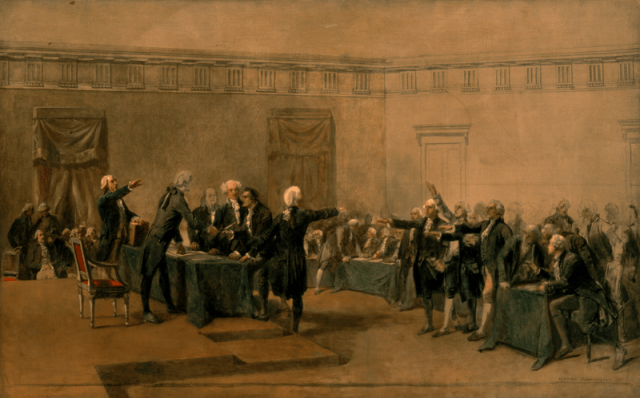
However, the important date to remember, is today, July 2. On this date in 1776, the Second Continental Congress will adopt Virginia delegate Richard Henry Lee’s resolution to declare independence from Great Britain. This document, crafted by another Virginia, Thomas Jefferson, was originally brought up for debate in June. By June 28th, Jefferson, chosen by a sub-committee to write the declaration, had presented it to Congress assembled in Philadelphia for review.

800px-Signing_of_Declaration_of_Independence_by_Armand-Dumaresq,_c1873
Artist Charles E. A. Dumaresq’s rendition of the Second Continental Congress signing the Declaration of Independence

Continue reading “The Second of July’s Importance”

War of Jenkins’ Ear and the Washington Connection

Propaganda, imperial ambitions, and one small ear caused a flare-up in the New World between the European powers of Great Britain and Spain. In one of the most comical, bewildering, and interesting causes for war, the conflict known as the War of Jenkins’ Ear began eight years after the incident itself. The connections that this conflict would have with the successful outcome of the American Revolutionary War is what is most striking. Continue reading “War of Jenkins’ Ear and the Washington Connection”

Dorchester Heights

On a recent trip to Boston, I was shown by fellow Emerging Revolutionary War historian Rob Orrison, Dorchester Heights. One of my favorite quotes of the entire American Revolutionary War was in reference to the Continental Army’s move to fortify the very heights at Dorchester.

IMG_0093

“My God, these fellows have done more work in one night than I could make my army do in three months.” Uttered by General William Howe the morning after the Americans had used the night to build an entire fortification network on the commanding hillsides of Dorchester.

This move, conducted in the secrecy of the night, led to the British evacuation of Boston, after an aborted offensive by the British do a providential snowstorm. Less than two weeks after that influential night, on March 17, 1776, the British evacuated Boston, never to return.

I did not get to spend too much time on the heights but I was able to snap a few pictures, shown below. But, I did have the great fortune to be on the heights at night, looking out over Boston, which has grown just slightly since 1776. A few moments of silence ensued, where I had the chance to mull over what that view must have looked like and what the soldiers who hurriedly dragged the fascines and gabions, and shoveled dirt that night must have worried about as they feverishly tried to finish their duties.

IMG_0101
Stone monument marking the spot where the cannon that Henry Knox brought from Fort Ticonderoga to Boston stood. You can see the lights of Boston in the background with the reflection of the lights on the water past the first row of houses in the foreground.

The cannon that bore down on Boston from the heights of Dorchester Heights were a product of one of the greatest feats of the entire war. Former Boston bookseller turned artillerist extraordinaire had brought the heavy armament on an arduous trek, through the late stages of winter from upstate New York to the Continental Army besieging Boston.

Henry Knox was the man behind the delivery and he would serve as George Washington’s Chief of Artillery before the war was over. Afterwards, Knox would become the first Secretary of War in Washington’s Administration.  At Dorchester Heights, with Washington’s planning and Knox’s delivery the city of Boston was liberated without firing a shot.

IMG_0096
A view of the monument


The heights retained its military importance through the end of the War of 1812. By the end of the 19th century, in 1898, the General Courts of Massachusetts had commissioned a monument to stand on what remained of the heights. The white marble Georgian revival tower that stands 115 feet, commemorates that night in 1776 that American soldiers did what British soldiers would take months to complete. By 1978, after a listing on the National Register of Historic Places, the monument and remaining hill site was handed to the National Park Service by the city of Boston. Dorchester Heights became part of Boston National Historical Park which was established in 1974.

When planning a visit to Boston National Historical Park and to Dorchester Heights, which is open to visitation, both during the day and at night please consult the website for the national park here. That way you can familiarize yourself with the regulations and how to make the most of your visit.

IMG_0092


American Revolution Round Table of Richmond, Virginia

Richmond, Virginia, when mentioned in terms of United States military history usually conjures up images of the American Civil War. However, at the University of Richmond, every other month of the year, there is a dedicated history round table to another, earlier conflict in American history.

Founded in 2007, the eight round table dedicated to the American Revolutionary War era, the Richmond American Revolution Round Table is “devoted to the study of all aspects of the Revolutionary period.”

Their meetings include dinner and a guest speaker, once a year a day-long field trip that covers an aspect of the revolutionary era is available to its 75 members and guests. Each year the round table selects a national author to receive  its book award.

The group, described by Bill Welsch, president of the round table, are a “group of eclectic, yet historically-minded individuals.” Furthermore, “all are welcome to participate in this enlightening and enjoyable pursuit, regardless of knowledge level.”

So, next time in the Richmond area, check out the American Revolution Round Table of Richmond, Virginia and stop in for to listen to a great presentation. Check out their website, via the link above (American Revolutionary War Round Tables on the top bar of this page) or send Mr. Bill Welsch an email at wmwelsch@comcast.net.

arrt richmond