The Greatest Leaders of the American Revolution You Have Never Heard Of

Sitting under a tree in north-central New York, suffering from a painful and mortal leg wound, yet still managing a successful defense after a powerful ambush, is a characteristic of a great military leader. All the while nonchalantly smoking his pipe!

OCHSherkimer200pix
General Nicholas Herkimer (courtesy of the NPS/Fort Stanwix and Oneida County (NY) Historical Society)

Nicholas Herkimer was the epitome of a successful militia commander. The Battle of Oriskany was a turning point. Herkimer, sitting on a once innocuous hillside, was a major reason why.

Even George Washington recognized the importance of Herkimer and made mention of his decision to not seek a commission in anything more than the militia of his home state. Not only that simple fact of service recognized by the commander-in-chief, but also his pivotal role in the Northern campaign of 1777.

“It was Herkimer who first reversed the gloomy  scene of the Northern campaign. The hero of the Mohawk Valley served from love of Country, not for reward. He did not want a Continental command or money.”

Herkimer would succumb to the mortal leg wound ten days after the battle, but his role in what was described as “one of the bloodiest battles of the war” solidified his place in the category of “greatest leaders of the American Revolution you have never heard of.”

Born in the Mohawk Valley of New York to Palatinate immigrants, Nicholas was described as a slender built, dark complexioned, dark haired individual. When he was finished growing, he stood near six feet tall, a rather tall height in 18th century Colonial America. He could also boast of being multilingual, fluently speaking English, German, and Iroquois.

He saw action in the French and Indian War, helping to repel the French and Native American attack on German Flatts, New York on November 12, 1757. Although a disastrous day for the German community, as many were taken prisoner by the French and Native Americans, Herkimer’s role led to his promotion to captain in the militia within two months of the fighting on January 5, 1758. Thirty-years after his promotion to captain the town would be renamed “Herkimer” for the actions of this New Yorker during the subsequent war.

In April of 1758, Herkimer was present and assisted in the successful repulse of the French and Indian force.

With peace established in 1763, Herkimer looked toward personal matters, building a house on the south side of the Mohawk River in 1764. He married two ladies, both named Maria. One died and the other would remarry and move north of the border to Canada, after Herkimer’s death in 1777.

With tensions increasing in the 1770s between Great Britain and the colonies, Herkimer led the Tryon County, New York Committee of Safety and was elected colonel of the local militia. The Provincial Congress on September 5, 1776 promoted him to brigadier general of the militia. One of his first roles was to meet with Joseph Brant, a Mohawk military and political leader in an effort to try and keep the Native Americans neutral in the conflict between the colonies and Great Britain. He was unsuccessful.

During the Northern Campaign of 1777, with the thrust southward by British General John Burgoyne being the main column on its way to its destiny at Saratoga, a secondary column entered the Mohawk Valley under British General Barrimore”Barry” St. Leger. The combined British, German, Loyalist, and Native American force laid siege to Fort Stanwix, in present-day Rome, New York.

Herkimer heard about this and marched his militia to help raise the siege. His force was ambushed on August 6, as they were nearing Fort Stanwix. After the initial surprise, in which Herkimer received his wound, the militia responded well and a drawn out battle ensued.

Part of the reason that the majority of the militia recovered from the shock and endured the ensuing bloody carnage was directly related to the inspired leadership of Colonel Samuel Campbell who led one of the militia regiments in the force and Herkimer himself.

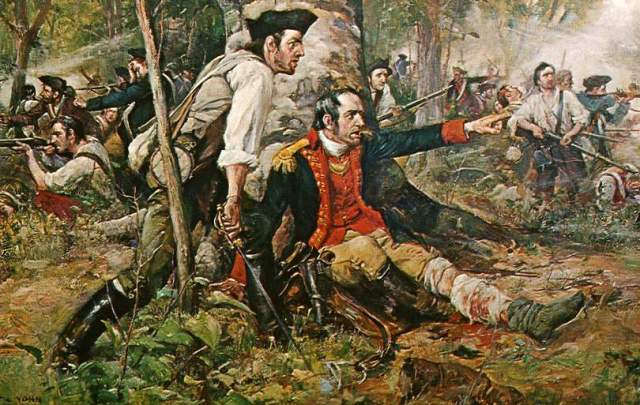
Herkimer, after having his horse shot and receiving his mortal wound in the opening shots of the engagement asked to be propped under a tree on the hillside his forces had utilized for their defensive stand He then calmly lit a pipe and with a continued cool demeanor directed the rest of the engagement.
Herkimer_at_oriskany
Famous painting depicting the mortally wounded General Nicholas Herkimer directing his militia from his position seated under a tree, during the Battle of Oriskany on August 6, 1777. (Painting by Frederick C. Yohn)

After the day-long battle, Herkimer ensured he was the last to leave the field, after all the wounded that could be collected had been removed.

Although his wound was dressed on the field, the injury became infected and amputation was the only course of action. In the woods of western New York, the surgeon doing the operation was inexperienced and the wound bled tremendously. Herkimer would succumb to the wound on August 16, at the age of 49. He was buried near Little Falls, where he had built his home in the 1760s. The cemetery today is known as the “Herkimer Home Burial Ground.”


*Nicholas Herkimer’s role in the war and the Battle of Oriskany and the St. Leger campaign is described wonderfully by Michael O. Logusz in Volume 2 of “With Musket and Tomahawk” published by Savas Beatie LLC in March 2012.*


Reflections of April 19, 1775

On this date, 241 years ago, the first salvo of what would become the American Revolutionary War, was fired on Lexington Green and North Bridge in Concord.

Historian John Galvin once wrote about the Battles of Lexington and Concord that they were the “least known of all American battles.” I never really understood what Galvin meant, as I had read extensively about April 19, 1775 and thought I understood the details of that day in history.

Yet, until this past weekend, when I spent the better part of four days touring the sites and walking the trails, talking to the historians around the towns, I did not realize how much more there is to what actually happened on that April day.

For starters, did you realize that Paul Revere did not go town-to-town calling out, “The British are Coming” to homesteads and roadside taverns? Instead, he was the catalyst that started a chain reaction of messengers and runners to different towns throughout the countryside that cast the alarm in a wide net.

He also would have told farmsteads and meetinghouses along the way that the “Regulars are Coming,” since the colonists still thought of themselves as British.

Or that the unofficial birth of the United States Army is attributed to the militia that followed Colonel James Barrett and Colonel John Buttrick down the hill toward the British at the North Bridge?

IMG_6903
The field where the militia under Colonel James Barrett and Colonel John Buttrick began their advance from toward the North Bridge. The militia would be coming toward us to descend toward the span.

That was the first time that men, formed in regiments with officers, made an advance against what they perceived as an enemy force, and did so in a “very military manner.”

What prompted the various militia companies, which came from other towns than just Concord, to sally forth from the hill toward the now infamous North Bridge? The main reason was what was happening in Concord was the mistaken reason behind the smoke emanating from the town?

In the town, the British were burning military supplies and the wooden gun carriages found in the hamlet. Sparks landed one of the nearby dwellings and British soldiers actually put down their muskets to form a bucket brigade, with civilians, to help put out the flames. The smoke that billowed from the doused fires is what prompted the militia and minutemen response.

With water being dumped on the flames, smoke billowed up, which prompted milita Adjutant Joseph Hosmer to ask the officers; “Will you let them burn the town down?” That prompted the forward movement of the militia down the hill and against the British.

Or did you realize that some of the militia, from the nearby town of Acton, suffered some of the first casualties at North Bridge, including their militia captain, Isaac Davis, who was one of the first killed in the engagement?

IMG_0087
View of the Old Manse, built in 1770 for Reverend William Emerson. View from the Concord River/North Bridge direction.

Somewhere in the midst of the action in Concord was Reverend William Emerson, the grandfather of Ralph Waldo Emerson who would later write that the action on April 19, would be known as the “shot heard round the world” years later.

These are just a few of the interesting tidbits that I picked up this past weekend. Altogether, they reinforce the historic events that I knew unfolded on this day in American History. However, along with reflecting on what transpired in my visit to Massachusetts, these new tidbits of valuable information underscore the important stories and accounts that shape this spring day that are beckoning to be told.

There is so much to be gained by walking the grounds, talking to the historians and historical enthusiasts of the area, and just taking time to appreciate what this day, April 19th, meant to the future of the United States and the era it was leaving behind as part of the British Empire.

Southern Campaigns American Revolutionary War RoundTable

Emerging Revolutionary War is dedicated to promoting the continued learning and interest in the American Revolutionary War era. Starting this month, the blog will highlight one American Revolutionary War Round Table. So, continue to check back for a round table, historical society, and/or history study group near your neck of the woods.

scarban

Founded in 2004 with a “magnificent seven” men that were interested in visiting the hallowed fields of the American Revolution and having a forum to discuss the events that unfolded on those grounds.

However, unlike the majority, if not all, of military round tables around the country, the Southern Campaigns American Revolutionary War Roundtable (SCARWRT) does not have the traditional “dinner-speaker” setup for their meetings. Their meeting happens semi-annually at historic sites in Georgia and the Carolinas and constitutes an all-day Saturday gathering with numerous speakers and a field trip to sites to conclude.

There are no member dues, by-laws, or even a round table constitution and one can be a novice student in the era of American history or a life-long enthusiast. More information can be found on the Southern Campaigns of the American Revolution website; http://www.southerncampaigns.org.

One caveat, the website mentioned above does not belong to the SCARWWT but there has been a strong connection over the years between the two.

Check the website above or the “American Revolutionary War Round Table” link at the top of this page to get in contact with the SCARWRT.

Civil War Trust Park Day

Logo
Civil War Trust / Campaign 1776 “Park Day.”

For the last nineteen years, the Civil War Trust has done their own sort of “spring cleaning.” On the first weekend of April, the Trust has promoted clean-up at various battlefields and historic sites across the nation. Officially called “Park Day” this year’s date is April 2nd.

This year, the Civil War Trust is expanding their park clean up day to include American Revolution and War of 1812 battlefields, as part of their “Campaign 1776” initiative. Hallowed ground such as Guilford Court House and River Raisin Battlefield are just two of the battlefields on the list.

Volunteer activities include everything from picking up trash to building trails to painting. All ages are welcome and even groups, such as Boys Scout packs, Lions Club members, and like-minded groups are encouraged to seek out the opportunities close to their home.

In return for volunteering, a free t-shirt commemorating your work in Park Day along with the chance to hear local historians describe the history that unfolded on that sacred ground.

For more information on participating in this “annual hands-on preservation event” and to find a historic site and/or battlefield near you, click the link below.

Civil War Trust Park Day


*Information kindly provided by Civil War Trust/Campaign 1776 and Chris Mackowski*

The Greatest Leaders of the American Revolution You Have Never Heard Of

When a historian, author, or student of the American Revolutionary War mentions the following three words, “Green Mountain Boys” there is usually one name that comes to the forefront.

Seth Warner is usually not that name. Yet, he is one of the two names that should be forever linked with the great history of the “Green Mountain Boys.”

For those that are drawing a blank, the other name usually associated with this famous unit is Ethan Allen.

aseth
Seth Warner Statue (courtesy of The Monument & Markers of Vermont; http://historicsites.vermont.gov/)

Warner, born in hilly Woodbury, Connecticut on May 17, 1743, the fourth of ten children to Dr. Benjamin Warner and Silence Hurd Warner. The young Seth was a product of the western frontier, growing up on the fringes of the English world, and thus learning from an early age to live and survive in the woods, rivers, and hills of Connecticut and what would become Vermont.

He did attend what limited schooling was available and from his father, rudimentary medical practice. In an 18th century biography, Warner was remembered to have vast information on the nature and uses of indigenous plants.

During the French and Indian War, Warner served two summers fighting in the cause of the British and would serve as a captain in the “Green Mountain Boys” following the French and Indian War. One biography states that Warner was part of the famous ranger outfit known as Major Roger’s Rangers, yet there is no primary evidence that supports this biographical claim.

With war on the horizon following the action at Lexington and Concord, Warner was elected third in command, with Ethan Allen being elected in top command, on May 8, 1775 for the task of capturing Fort Ticonderoga in western New York.

Born where Native American still threatened the westward-minded colonists, with the training during two summers in the last major war on the American Continent, Warner would now play a major role in the upcoming American Revolution.

With that, Seth Warner and the “Green Mountain Boys” marched off to help make the dream of American independence a reality. Following Ethan Allen, Warner found himself embroiled in the first campaign outside the environs of Boston when on May 10, 1775 he took part in the American capture of Fort Ticonderoga in western New York. Following up the next day, Warner, serving as second-in-command, attacked and captured the British garrison at Crown Point, approximately 13 miles away from Fort Ticonderoga.  When news broke of the exploit, the “Green Mountain Boys” and subsequently Warner quickly became a household name for the patriot cause.

With the turn of the season to summer, Allen and Warner appeared in Philadelphia to appeal directly to the Continental Congress. Their aim was to achieve recognition as a regiment for the “Green Mountain Boys.” On June 23, 1775, the day the two men appeared in front of the governing body of the American cause, the Congress agreed and sent the endorsement to the state of New York. After some debate in provincial Congress of the Empire State, the endorsement was finally agreed upon.

With the ensuing vote of officers, surprisingly, Allen was not elected as commander, but Warner survived in an officer capacity, garnering 41 of 46 votes for lieutenant colonel. No reason or notes from this convention, held on July 6, 1775 has ever surfaced.

Before 1775 was out, Warner, who would lead the command, found themselves on the way to Canada. Initially stationed along the St. Lawrence River on the way to Montreal and near the end of October, Warner’s men repulsed an amphibious landing and attack by Sir Guy Carleton, the British Governor-General of Canada. With the repulse, at the Battle of Longeuill led to the surrender of Fort St. John on November 3, 1775.

Ten days later Montreal fell to the American forces and Warner and his “Green Mountain Boys” entered the fallen city later that same day. The American commander, General Richard Montgomery wanted this crack unit to continue with him by canoe to Quebec but because of the lack of winter clothing, the command was forced to head south, for supplies.

Not to stay in a support role for long, Warner’s men marched north shortly after the turn of the year in January 1776 to reinforce the Americans laying siege to Quebec. While there Warner showed the depth of his concern for the welfare of his men. With the smallpox epidemic ravaging the American ranks–in fact more American soldiers would die of that disease than any single other cause–Warner allowed his men to be inoculated, which was not not akin to what inoculations are like today.

Click this link, courtesy of Mount Vernon, on what smallpox inoculation was like in Colonial America.

After the return from Canada, on July 5, 1776, Warner was elevated to the rank of colonel and tasked with raising another regiment from the New Hampshire Grants (the area now comprising Vermont). Yet, it was one year and one day later that Warner showed how valuable his role as a general officer was.

During the Battle of Hubbardton, Warner oversaw the rearguard of General Arthur St. Clair’s retreating American forces. Outside this frontier settlement, Warner’s men suffered more casualties and eventually yielded the field to the British, but the toll extracted from the British (over 200 killed, wounded, and captured) was high enough to cause the British to stop their pursuit of the retreating American army.

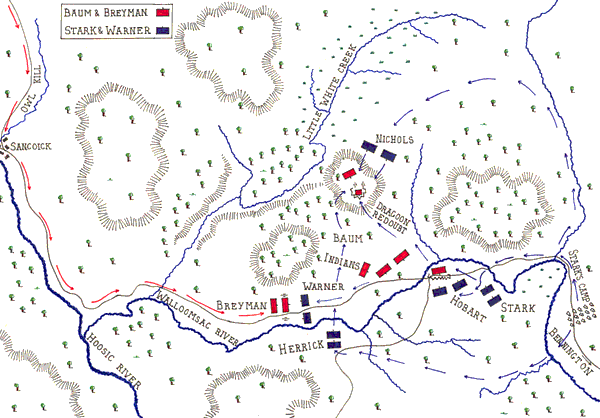
A month later, on August 16, 1777, Warner played another critical role in the American victory at Bennington. Under the overall command of General John Stark–another of the fiery, yet competent, and overlooked American general officers–Warner provided invaluable assistance because of his familiarity with the region. His home was a scant few miles from where the engagement would unfold.

Warner would oversee the left wing of the American assault and have as his goal the “Tory Redoubt” that fell on the east side of the Walloomsac River, which would be a dominant feature in the ensuing battle.

benington
Battle of Bennington (courtesy of British Battles)

The Americans routed the German, British, and Loyalist forces, even halting a 600-man reinforcement column under German Lieutenant Colonel Heinrich Breymann who arrived on the field in the latter stages.

Stark reported to Congress that Warner showed “superior skill in the action.”

Unbeknownst to Warner at the time, the campaign that culminated with British General John Burgoyne’s surrender at Saratoga, was the defining moment in Warner’s American Revolutionary War career. Warner would stay in the service, reaching the rank of brigadier general, bestowed upon him in 1778 by the new state of Vermont courtesy of the state legislature. That made him the only brigadier general in the newly formed state. On September 6, 1780 Warner received his only wound of the war, in an ambush by Native Americans outside Fort George in New York.

Unfortunately for the old “Green Mountain Boys” commander, the years after his retirement in 1780 were not kind. He fell out of favor with his former commander, Ethan Allen which led Warner to confront him in 1781 about contact with the British when Allen was a prisoner-of-war. This was all in conjunction with some contact Vermont had with British Canada about possible negotiations in reunifying Vermont with the British Empire. The extent of the negotiations and the seriousness of the idea has been in question by historians ever since.

Regardless, Warner, in failing health in 1784, returned to Woodbury, where he died on December 26, 1784, at the age of 41. Warner’s remains lay in Roxbury, Connecticut.


*For more information on the campaigns of New York in which Warner played a role in, consult Michael O. Logusz’s two-volume “With Musket and Tomahawk” series published by Savas Beatie LLC. at http://www.savasbeatie.com*

The Boston Massacre

The night was chilly, snow laid on the streets and walks of Boston, and the cold air kept people bundled up around the port town of Massachusetts colony.

Yet, the cold air could not dampen was the seething resentment a growing number of Bostonians were feeling toward the occupying British military. Minor brawls and exchanges had taken place in the various taverns and around the bustling harbor; common places where alcohol and/or hard work created short tempers.

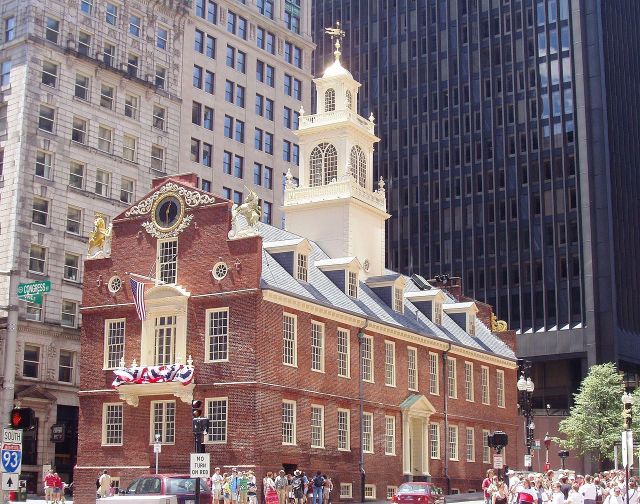
However, on this night, March 5, 1770, outside the Custom House on King Street a British redcoat infantrymen, the sentry, kept his post. Private Hugh White, whose shift it was to stand guard, would have noticed the approach of Edward Garrick, who had come calling for a British officer who owed Garrick’s boss money for his wig services. Unbeknownst to Garrick, the apprentice, the debt had been paid, so no response from the field officer was forthcoming.

old state house
Old State House (Custom House) scene of the Boston Massacre on March 5, 1770

A response from White was forthcoming, who admonished the young man to have a more respectful tone when speaking to an officer in His Majesty, the King’s service. Garrick did not take too kindly to this tone and responded with an insult of his own toward White.

This prompted White to leave his post and literally knock some sense into Garrick by way of a musket strike to the side of the head. Garrick yelped in agony and a companion took up the verbal barrage toward the British soldier.

The cacophony created by the yelling of insults and as the colonial version of a game of telephone spread the message about what was transpiring at the Customs House. Church bells were rung, a telltale sign that something was afoot, led to the crowd surging past 50 in number by the evening.

White, prudently, had left his post and retreated up onto the steps of the Customs House summoned a runner (messenger) to race to the local barracks for extra manpower.As was custom, there was an officer of the watch, in this case, Captain Thomas Preston and seven soldiers responded.

En route, Henry Know, destined to become chief of artillery for the Continental Army in the American Revolution urged Preston, “For God’s sake, take care of your men, if they fire, you must die.”

Against this sage advice, shouts of “Fire” were emanating from the crowd, which had also resorted to throwing snowballs and spitting in the direction of the red-coated soldiers. Other derogatory names for British soldiers, like “lobsterbacks” which took into account the red uniforms adorned by the British infantry were also heard being shouted.

The British soldiers, with loaded muskets, and Captain Preston reached White’s station, the British officer ordered the large crowd to disperse. Preston had taken a position in front of his soldiers and had told a member of the crowd that his soldiers would not fire unless ordered.

No order was ever given.

Shortly after Preston spoke those words to a Bostonian, a foreign object hurtled toward Private Hugh Montgomery and knocked the infantryman off his feet. His musket clattered onto the steps. Standing up, Montgomery reportedly yelled “Damn you, fire!” and pulled the trigger of his musket. The accompanying “bang” reverberated in the square.

download
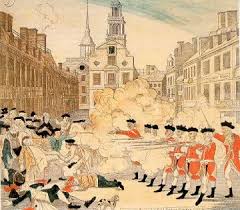
Copy of the lithograph by Paul Revere on the Boston Massacre

And then there was a pause of an uncertain length.

This silence was broken by the staccato of other muskets being fired. A few rounds belched forth from the British soldiers. Screams and shouts along with deafening echo of the discharge of black-powder muskets in an enclosed city square mixed with the sickening thud of lead impacting bone and body.

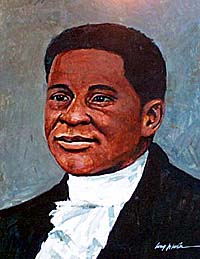
All told, eleven colonists were hit from the volley fire. Three were killed outright; Samuel Gray, James Caldwell, and Crispus Attucks. One more, Samuel Maverick, who was struck by a ricocheting round would die later that same evening. One more, a recent immigrant from Ireland, Patrick Carr, would succumb to his wounds a fortnight later.

CrispusAttucks-portrait3
Early portrait of Crispus Attucks (courtesy of http://crispusattucks.org/)

In the immediate aftermath, Preston would call the majority of his unit, the 29th Regiment of Foot to the scene. With the mob spilling out of the Customs House Square, Governor Thomas Hutchinson, the acting governor, was able to temporarily restore a semblance of tranquility with the promise that a fair trial of what transpired that March 5th evening would happen.

The trial would be a major event for the city of Boston, but, that was in the near future. With the shots fired and the citizens struck, the burgeoning independence movement had a rallying point. Lives were lost that night, but, the events that followed would, to the proponents of American independence, make them martyrs for the cause.


HMS Invincible

A good friend, knowing my interest in military history brought me a very unique artifact, which led me to discover more about where this piece of history originated from. Here is what I discovered.

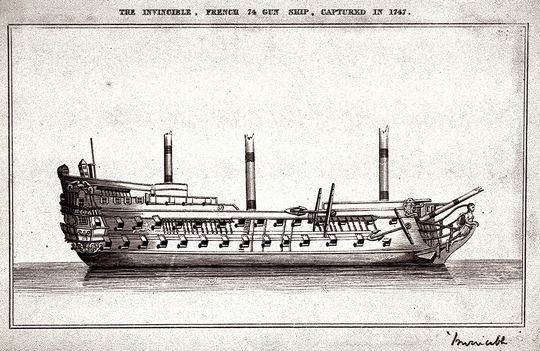
Launched in 1741 by the French as L’Invincible, this 74-gun French ship of line was captured by the British during the First Battle of Cape Finisterre on May 14, 1747.

The engagement during the War of the Austrian Sucession, was a five-hour engagement in the Atlantic Ocean, off the coast of northwest Spain. The British admiral, George Anson struck the 30-ship convoy of the French, which was under the command of Admiral de la Jonquiere and captured four ships of the line. One of those ships of the line was the L’Invincible.

The L’Invincible sacrificed itself to allow some of the convoy to escape and tried in vain to fend off six British warships.

L_Invincible_vaisseau_de_74_canons_capture_en_1747
A depiction of L’Invincible after being captured by the British in 1747

Given its more Anglicized name; HMS Invincible, the ship’s design was larger than the usual 74-gun vessels of the time. Her greater draft and lower center of gravity allowed her to carry much more sail. This allowed the ship to gain more speed.

Altogether her design helped revolutionize British warship making as she was the first 74-gun ship in the British Navy. By the time of the crucial Battle of Trafalgar in 1805, over three-fourths of the entire British Navy were line ships toting 74-guns.

In February 1758 while part of a large sailing of warships and transports, the HMS Invincible that left from St. Helens Roads near the Isle of Wight in England. The ship struck Horse Tail Sandbank and got stuck. Yet with the rising tide she was able to free herself.

Unfortunately, fate had it in for the ship, as the wind suddenly changed direction and increased in intensity and she dragged her anchor on the sandbank. A failed attempt to lighten her cargo and load of armament and putting her under full sail did not work either. She was marooned on the sandbar and began to take on water.

For the next three days, the majority of her cannons and stores were removed and on February 22, 1758 she rolled onto her side and was lost.

HMS Invincible laid wrecked, covered, and largely forgotten until the 20th century, when in May 1979 a local fisherman snagged his nets on the timbers. Local divers found more of the ship and has been investigated and parts recovered ever since.

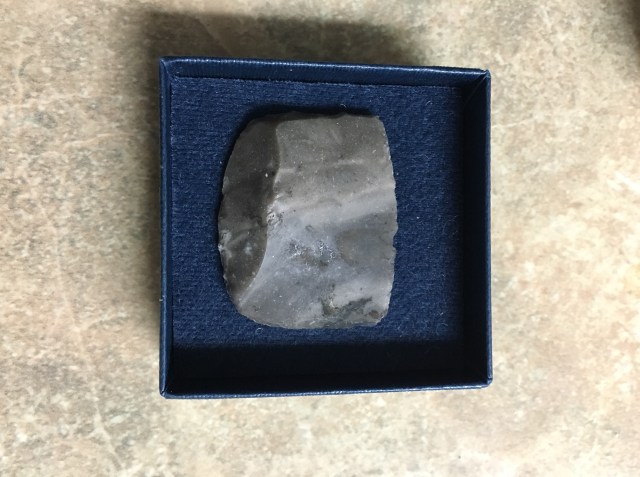
One of the interesting finds was the experimental flintlocks of the cannons of the HMS Invincible. Rather large, the nicely knapped flints were believed to be used in the canon locks. Canon locks and subsequent flints among the gunnery stores were considered a “unique find.”

IMG_1669
A “Large Wedge Type Gun Flint” from the HMS Invincible (author collection)

Fore more information about the ship, the wreck, and the discovery, check out Brian Lavery’s The Royal Navy’s First Invincible. Link to the book via Amazon is here.

Author Interview & Review: Otho Holland Williams in the American Revolution by John Beakes

ERW Book Reviews (1)

Numerous biographies grace the shelves of book stores, museum shops, and the personal libraries of American Revolutionary Era history enthusiasts. Yet, until 2015, not a single dedicated biography was written about an extraordinary American general that rose from the ranks during the war to assume such a lofty position by the successful conclusion of the conflict.

That unintentional omission has now been filled with the excellently detailed oriented and primary source driven biography entitled Otho Holland Williams in the American Revolution by John Beakes. The author is a graduate of the United States Naval Academy in Annapolis, Maryland and a resident of Ellicott City, Maryland.

I had a chance to interview the author via email and one of the questions I asked him was if there was one takeaway you wanted your readers or those interested in the book to know, what would it be? His answer is below and sums up the importance of Williams and soldiers like him:

“Otho Holland Williams was a vibrant, healthy young man with distinctive intellectual gifts and leadership capabilities when he joined the army at age 26 in 1775.  Had there been no War of Independence, he might well have lived a long life enjoying the family relationships that he cherished so deeply, and have risen to a position of prominence and wealth.

Instead, Williams died at age 45, spitting up blood and much weakened in body and spirit from the tuberculosis that he had contacted while a prisoner-of-war in New York after the Battle of Fort Washington.

We owe much to the young men like Williams who gave so much in the fight for our nation’s independence, and yet he is largely forgotten.

Here, truly, was a life laid in sacrifice on the altar of our freedom.”

This biography is part of an ongoing effort by The Nautical and Aviation Publishing Company of America to publish a biography on the chief lieutenants that served under and with George Washington and were instrumental in winning American Independence. Previous volumes in the series include titles on John Eager Howard and Henry “Light-Horse” Lee. The series is entitled, “George Washington’s Best Officers Book Series” and definitely worth the read for the enthusiastic and/or serious student of the American Revolution.

otho-holland-williams-american-revolution

So, why was Otho Holland Williams chosen as the third installment? I asked the author and his response is below;

“Otho Holland Williams kept appearing in all of the key moments of the story of the war in the South, but always tantalizingly just beneath the surface, hidden in the shadow of larger figures like Nathanael Greene and Daniel Morgan.  Williams was a compelling writer, and his descriptions of battles like Camden and Eutaw Springs are superbly written and deeply insightful observations of a first-hand participant.  His leadership of the Screening Force during the Race to the Dan displayed combat leadership skills of the first order, but his life story was largely untold.”

Furthermore, the reader will glean that Williams is the quintessential depiction of the American soldier, rising from the ranks to one of the top positions in the Southern theater by war’s end. The process, superbly told by Beakes, winds the reader from the early days of the revolutionary movement in western Maryland to the Siege of Boston, to the defeats of the New York Campaign. Those achievements and setbacks combined to give Williams the invaluable training as a military officer. For Williams, like a majority of the men who would hold rank in the American forces;

“Military knowledge and experience were scant commodities in the colonies at the start of the Revolutionary War, and young men like Howard, Lee and Williams joined the army in their twenties with virtually no prior military experience.  There were no institutions such as military academies, officer candidate schools, or ROTC to help them learn.  They read all the available military literature.  They observed leaders like Washington, and took in the written guidance that he provided, often in General Orders, for how to develop into effective officers. And most importantly, they learned by experience in the daily rigor of military discipline and in their various combat engagements.  

Starting with such “bare bones” learning opportunities, in the short years between 1775 and 1780, when the Southern Campaigns began, these young officers had become exceptional military leaders, and the army that they led was as fine a combat organization as any on earth.  It is a story of grit and determination and persistence that brought these young civilians to such a high state of military capability.”

During this early part of the war, Williams also became a prisoner-of-war after the fall of Fort Washington during the New York Campaign of 1776. After being exchanged, Williams would feel the affects of his imprisonment which would eventually cause his death in 1794 from tuberculosis.

Yet Williams, like many other junior officers, are still worth studying in history, as Beakes claims, because,

“With the resources available today, we have a powerful opportunity to take a fresh look at these stories. Unfortunately, our fresh look at original sources sometimes reveals that writers along the way have perpetuated false information, sometimes from honest mistakes, but also sometimes from blatant political motives. 

We have an important opportunity to correct the record. Stories like those of Otho Holland Williams give readers a look at the War of Independence from the front-lines and from ground level, a perspective that fills out and enriches the more strategic insights of the well-known works on the Founders.”

This book, like two previous volumes in the series, is definitely a worthy addition to any avid reader of the American Revolutionary Era. If these great in-depth biographies already grace your private library, don’t worry there is more biographies in the works. Beakes is currently working on research for a volume on Baron de Kalb.

Stay tuned and enjoy the read!


*Book Information*

Publisher: The Nautical and Aviation Publishing Company of America
Published Date: November 5, 2015
346 pages, including appendices, bibliography, notes, and index

Click here to view the website where further information, including how to purchase the book, is available.

Winter, 1777

Part Three

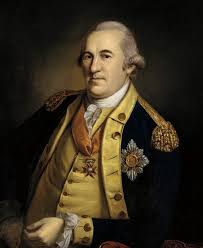
On February 23, 1778, Baron Friedrich Wilhelm von Steuben arrived at the Continental Army encampment at Valley Forge.  He quickly ingratiated himself with George Washington and the commanding general’s cadre of staff officers. John Laurens would write a fortnight later;

baron von steuben
Baron von Steuben

“The Baron Steuben has had the fortune to please uncommonly….All the genl officers who have seen him, are prepossessed in his favor, and conceive highly of his abilities… The General [Washington] seems to have a very good opinion of him, and thinks he might be usefully employed in the office of inspector general…”

Steuben would assume the “acting” inspector general position three days after John Laurens penned the above letter, on March 12, 1778. Five days later, Steuben’s plan to train the Continental Army was approved by Washington. The transformation could begin.

Who was this “acting” soon-to-be permanent inspector general of the Continental Army? Steuben was born on September 17, 1730 in the Duchy of Magdeburg, in what is now eastern Germany. He journeyed with his father at age 14 on his first military campaign and joined the military at the young age of 17.

The last thirteen years before coming to America he had served in an administrative capacity for the Furst Josef Friedrich Wilhelm of Hohenzollern-Hechingen and was made a baron in 1771.

The baron arrived on American soil on December 1, 1777 and two months later arrived in York, Pennsylvania where he met with the Continental Congress on February 5, 1778. He found his way quickly to Washington’s encampment at Valley Forge.

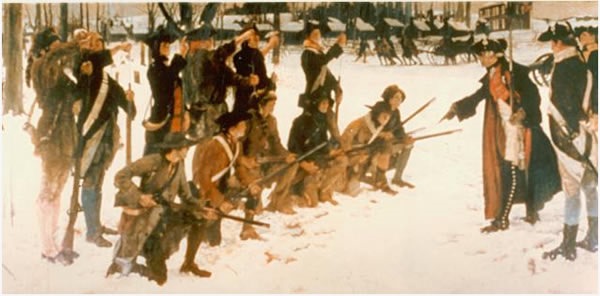
On March 19, 1778, the first squad of men from the Continental Army undertook their first lesson with the baron. After learning the English words needed, von Steuben tasked each soldier of the 100 man squad to mirror him. The selected squad would follow the different maneuvers while listening to the baron “singing out the cadence.” While the squad went through their drills, another selected squad of onlookers studied the movements and then carried the drills to others.

von-steuben-drilling-troops
Edwin Austin Abbey painting of von Steuben and the drilling of American soldiers at Valley Forge

The baron’s unique training regimens showed almost instant results, as von Steuben attested within a fortnight of the start of training. The soldiers “were perfect in their manual exercise; had acquired a military air; and knew how to march, to form column, to deploy, and to execute some little maneuvers with admirable precision.”

By the end of March, with Washington’s blessing, the entire army went under the drill regimen as instructed by von Steuben. The Prussian “acting” inspector general put his mark on all aspects of camp life as evidenced by the routine the soldiers adhered to while becoming acquainted with the manual of arms. “At nine a.m….new commands explained to each regiment at parade, then practice. By late afternoon, regiments were practicing by brigades.”

When a soldier fumbled a maneuver or the squad was not crisply moving through the drills, the baron’s temper would get the best of him and he would unleash a slew of epithets that was a unique blend of French and German with a few words of English sprinkled in for good measure.

The silver lining in these outbursts occurred when the baron would politely and calmy ask one of his assistant to translate into English the curse word of the moment. A light-hearted moment came when von Stueben asked his translator one time to, “come and swear for me in English, these fellows won’t do what I bid them.”

However, von Steuben won the trust of his trainees, as he instilled a sense of pride, of soldierly bearing, and when he did have his outbursts, those moments just underscored his similarities to the men he was training. As one biographer accurately summed up these occasions, the outbursts “humanized him” in the eyes of the rank-and-file.

There was one little secret that only the baron and his small staff were privy too; von Steuben was making up the drill and routine practices employed each day as he went along!

After the drilling of that day was completed and the baron snatched a quick bite to eat, von Steuben was off to his quarters where he scribbled out the lessons to be taught the following day.

Along with drill, camp life even improved, as von Steuben mandated changes that improved camp sanitation, which in turn, reduced sickness among the rank and file. By the end of the encampment, von Steuben controlled, according to historian Herman O. Benninghoff II, “the Valley Forge soldier’s introduction to command and control.”

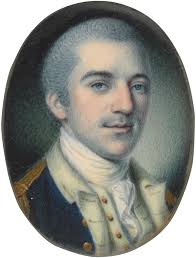
On April 1, 1778, John Laurens wrote to his father and president of the Continental Congress, Henry Laurens about the major impact of von Steuben.

john laurens
John Laurens, aide to George Washington during the Valley Forge encampment

“Baron Steuben is making sensible progress with our soldiers. The officers seem to have a high opinion of him…It would enchant you to see the enlivened scene [of camp at Valley Forge]…If Mr. [Sir William] Howe opens the campaign with his usual deliberation, we shall be infinitely better prepared to meet him than we have ever.”

By May 1778 a Board of War member, a committee formed by the Continental Congress the previous year, wrote to a fellow board member the following lines, “America will be under lasting Obligations to the Baron Steuben as the Father of it. He is much respected by the Officers and beloved by the Soldiers themselves…I am astonished at the Progress he has made with the Troops.”

A fitting compliment came from the pen of George Washington who wrote to von Steuben near the end of the encampment at Valley Forge that “the army has derived every advantage from the institution under you, that could be expected in so short a time.”

Before von Steuben could finish the drilling of the soldiery that winter, the British stirred from their perch in Philadelphia and the lessons on the snowy plains of Valley Forge would be put to the test.

The Greatest Leaders of the American Revolution You Have Never Heard Of

A fisherman by trade before the war, the savior of the American Continental Army during the war on two occasions, and returned to civilian life with personal, physical, and economic hardships because of the war.

John Glover
John Glover

That one line could simply sum up John Glover of Marblehead, Massachusetts. Unfortunately, Glover has received scant attention; a few lines here, a page in this publication, or a reference in passing when talking about the engagements around New York or the Crossing of the Delaware.

Daniel Glover is more than well deserving of the epithet, “one of the greatest leaders of the American Revolution you have never heard of.”

Born on November 5, 1732 in what is now Danvers, Massachusetts, where he lived until the death of his father when he was just four years old. His mother Tabitha Bacon Glover moved young Daniel to Marblehead, on the coast of Massachusetts where he would apprentice, when he came of age, as a shoemaker. He eventually looked toward the sea and made a living as a merchant.

Daniel became well-entrenched in Marblehead society, he joined the local militia in 1759 and entered politics, aligning himself with the Whig party in 1760. By the time of the first shots on the Green of Lexington and the North Bridge at Concord, Glover was a colonel of militia in the Marblehead Regiment.

Although his regiment made the march to Boston and took part in the siege, Glover was away on detached duty when the Battle of Bunker (Breed’s Hill) was fought. When George Washington rode into Cambridge, Massachusetts and assumed command of the American forces, Glover lost his headquarters. A product of Glover’s fine taste, the Marblehead sailor had picked the home of a loyalist as his own command post. Washington chose the mansion, which now is a national historic site, as his own. Yet, a company of Glover’s Marblehead soldiers was also chosen to be the guard of Washington’s new headquarters.

Showing his importance and marshaling his background in shipping, Glover donated one of his own ships, the Hannah, named after his spouse, to build a hodgepodge navy for use by the Americans. One of the ships that made this volunteer navy actually captured a British ship, the brig HMS Nancy in which held as its cargo, 2,000 muskets, 30,000 rounds of artillery ammunition, and one brass mortar amongst other crucial military supplies much in need by Washington’s army.

After the siege of Boston was lifted with the evacuation of the British, Glover, with the rest of the Continental Army, headed south to New York City where another campaign and another chance to show his worth to the cause awaited.

On the night of August 29 and into the early morning hours of August 30, Colonel Glover and his able Marblehead regiment sailed the majority of Washington’s forces from Brooklyn across the East River to safety. Altogether, approximately 9,000 soldiers, plus artillery and supplies escaped from under British General Sir William Howe’s command. With Marylanders under Lord William Stirling launching ferocious rear-guard suicidal charges, Glover’s men saved Washington’s army that late August night.

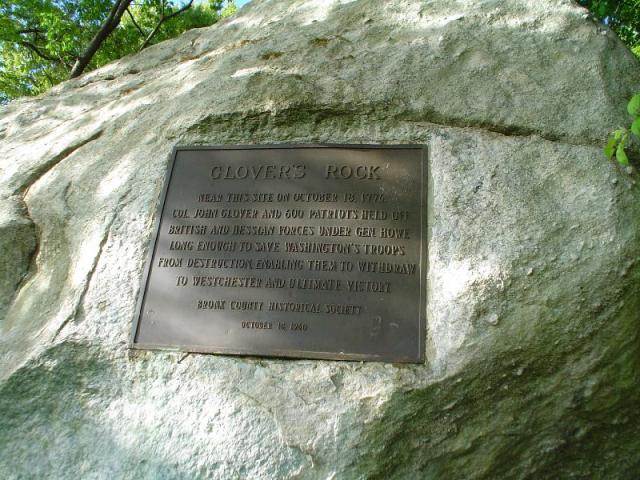
A month and a half later, on October 18th, Glover’s Brigade of Massachusetts soldiers held off a large contingent of British and Hessian mercenaries as Washington’s army retreated to safety. With approximately 750 men at his disposal, Glover’s rearguard action held over 4,000 enemy soldiers from threatening the retreat of the American forces.

glover rock
Glover’s Rock, commemorating the action at Pell’s Point

Showing his humility, Glover would write about seeing the enemy come ashore before the engagement at Pell’s Point, that his first inkling was to give “a thousand worlds to have General [Charles] Lee or some other experienced officer present.” Luckily for the Americans, Glover did not get his wish and led admirably.

Glover’s command stuck with Washington’s forces during their retreat across New Jersey and into Pennsylvania and eventually to the banks of the Delaware River. In the prelude to the pivotal “Crossing of the Delaware” the former Marblehead sailors and their 43-year old commander would prove crucial.

To complete the surprise, Washington had to get his men across the ice-clogged Delaware River and to Trenton, New Jersey. Washington laid his eyes on Glover and outlined his thoughts and the big issue at hand; how to ferry his men across?

The response to his commander in chief was simple; to “not be troubled about that, as his boys could manage it.” Another primary account said that Glover and his command showed “perseverance…accomplished what at first seemed impossible.”

With Washington’s daring plan and Glover’s practicality, the “impossible” happened and the Americans scored a cause rallying victory at Trenton on December 26, 1776 and another equally important victory at Princeton, New Jersey on January 3, 1777.

After these winter battles, Glover went home to care for his gravely ill wife, Hannah, but there was nothing he could do. After a year long struggle, Hannah died on November 13, 1778 leaving John with eight children, including the oldest John who was a captain in his father’s Marblehead regiment.

While at home, George Washington petitioned the Continental Congress to promote Glover to brigadier general. Congress agreed and on February 21, 1777 the former Marblehead merchant became a general in the Continental Army.

When Glover returned to active duty, he was given the task of escorting the British and Hessian prisoners captured at the Battle of Saratoga and also took part in the unsuccessful attempt to expel the British from Newport, Rhode Island in 1778.

The end of the war saw him still in service in the Hudson Highlands where most notably he was on the board of officers that sentenced British spy Major John Andre to death. At the very end of the war, on September 30, 1783, Glover received a brevet to major general.

800px-Glover-statue Boston
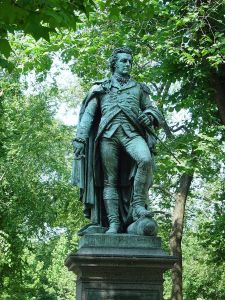
John Glover Statue Commonwealth Avenue, Boston

With the war over, Glover and his second wife, Francis Fosdick resided in Marblehead. However, Glover’s health and family were devastated by the war. Glover’s health was impaired by years of hard campaigning, including struggling with malaria in 1777. He lost his first wife Hannah during the war and his oldest son, John, disappeared as a prisoner-of-war while being transported over the Atlantic Ocean. Even his pre-war career, as a merchant, was greatly impacted by the seven-year conflict.

Glover rebounded as best he could and did serve in a few political positions, including in the Massachusetts State Legislature and as a Selectman for Marblehead.  One highlight of the post-war years was when President George Washington stopped over in Marblehead and was entertained by his former subordinate.

On January 30, 1797, Glover passed away from hepatitis at the age of 64 and became one of the greatest leaders of the American Revolution you have never heard of.