The Journal of Nicholas Cresswell, Part 6


Vale of Edale (Photo by Atomviz, Wikimedia Commons)
Vale of Edale, Cresswell’s Home, the Beginning and End of His Adventures.  (Photo by Atomviz, Wikimedia Commons)

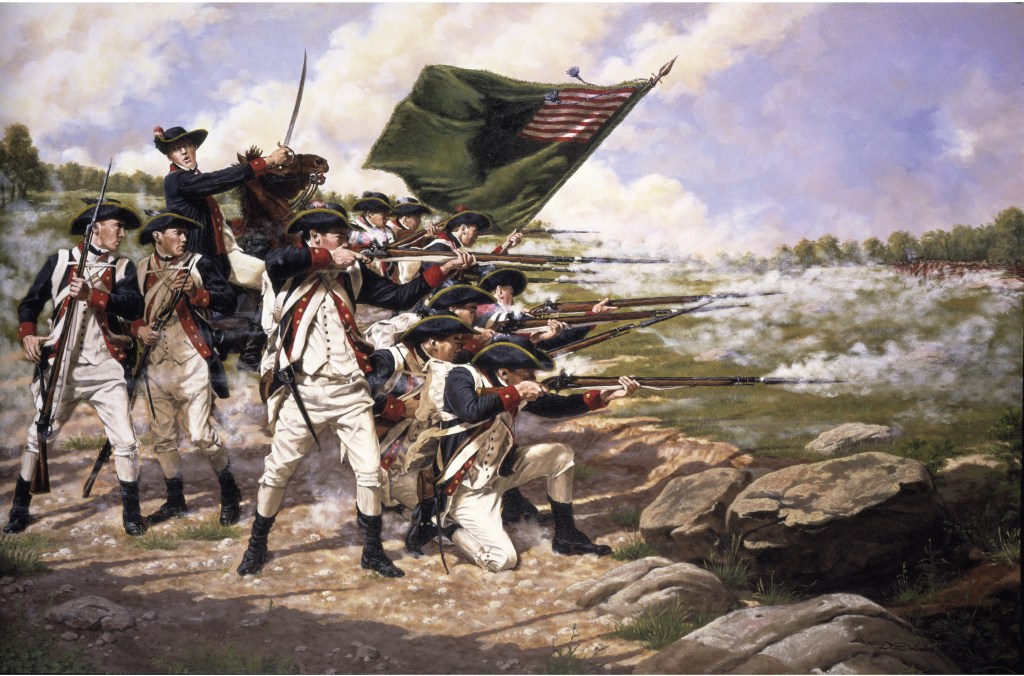
Skirmish in New Jersey

Cresswell found cheap lodging in New York and reunited with Joseph Brewer, who had fled Philadelphia himself, leaving his wife behind.  “The persecution against the friends of Gorvernment was too violent for a man of his warm temper to stay any longer amongst them with safety either of person or property.”[1]  While in New York, he watched the buildup of forces that Howe would later take on the Philadelphia campaign, but his focus remained on securing passage home.  It would take months, but Cresswell found ways to kill time, including watching a skirmish with the Americans he had so frequently cursed.

Continue reading “The Journal of Nicholas Cresswell, Part 6”

ERW Weekender: Ninety Six, The Site That Has It All

Emerging Revolutionary War welcomes historian Vanessa Smiley to the blog.

The thing about Ninety Six National Historic Site is that it’s unassuming exterior hides a wealth of history. It’s also nowhere near a major highway, meaning you have to want to get there if you’re thinking of visiting. And when you do get there, you will realize that there’s more history per acre than its demur entrance lets on. Located in the back country of South Carolina, Ninety Six has a history that speaks to the stories of Native Americans, the American frontier of the 18th century, and the American Revolution.

Entrance to the park
(courtesy of Ninety Six NHS, NPS)

The site at Ninety Six holds a treasure trove of study on these subjects. Native American, mostly Cherokee, activity was heavy in the area long before European settlers arrived. One of the earliest backcountry trading posts, established by Robert Gouedy in 1759, made Ninety Six a hotbed of trading activity thanks to its location at the crossroads of twelve different roads and paths, linking the area to nearly all parts of the colonies.

Continue reading “ERW Weekender: Ninety Six, The Site That Has It All”

ERW Weekender: Wheeling

Emerging Revolutionary War welcomes guest historian Jon-Erik Gilot. A short bio is attached at the bottom of this post.

Though perhaps more widely known as the birthplace of West Virginia during the Civil War, Wheeling and its environs retains several significant sites associated with the Revolutionary War. The name itself is translated from the Delaware language meaning “place of the skull,” legend having that the severed head of a white settler was placed on a pole by local Native Americans as a warning to others to stay away.

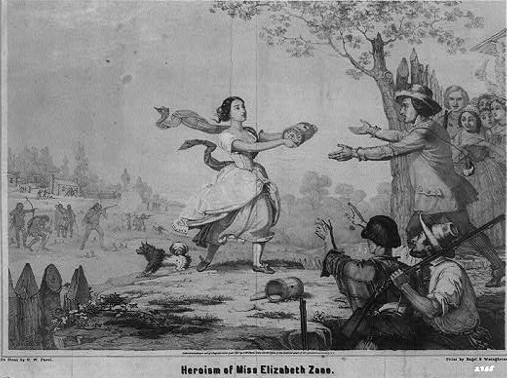
Betty Zane’s Run for Gunpowder during Second Battle of Fort Henry–1782
(image courtesy of Library of Congress)

Wheeling was founded in 1769 by Colonel Ebenezer Zane and his brothers Jonathan and Silas. Five years later in 1774 Fort Henry (originally called Fort Fincastle) was built overlooking the Ohio River to protect the growing numbers of settlers from attack. The fort was twice attacked during the Revolutionary War, first in 1777 and again on September 11 – 13, 1782, when a force of British loyalists (Butler’s Rangers) and Native Americans (under the command of outlaw Simon Girty) attacked the fort’s 47 defenders. The fort was besieged over two days, culminating in Betty Zane’s heroic run for gunpowder in a nearby cabin. The British and natives broke off the battle with the arrival of Virginia militia reinforcements. Fort Henry is acknowledged as one of the final battles of the Revolutionary War.

Continue reading “ERW Weekender: Wheeling”

62nd Foot at Freeman’s Farm

Emerging Revolutionary War welcomes guest historian Kevin Pawlak. A short bio follows the post below.

On May 25, 1775, the 62nd Regiment of Foot stood for review. The line of men, clad in their redcoats with buff facings, did not impress the reviewing officer. He called the regiment “very much drafted” and “very indifferent.” Despite the disparaging grade, in just over two years, the 62nd Foot commendably fought in one of the fiercest actions of the War for Independence.

John Anstruther
courtesy of 62ndregiment.org

Scottish military man Lt. Col. John Anstruther led the 62nd Foot in the campaign of 1777. Anstruther faced no easy task; the 62nd was the junior British regiment in John Burgoyne’s army and most of its men were inexperienced in campaigning and battle. To make the situation even worse, roughly one-quarter of the 62nd Foot’s soldiers were German. Language barriers likely prevented complete cohesion within the unit. However, with a war on, nothing could be done to rectify the regiment’s defects as it marched south into New York.

Anstruther’s regiment was present for the operations around Fort Ticonderoga in early July 1777. After American forces abandoned the fort, the conglomerate and inexperienced 62nd remained behind to man Mount Independence overlooking Lake Champlain. As the rest of Burgoyne’s army continued campaigning, the men of the 62nd Foot spent time guarding themselves against rattlesnakes rather than the enemy. Their time came to rejoin the main army before the Battle of Saratoga commenced.

Continue reading “62nd Foot at Freeman’s Farm”

War on the Pennsylvania Frontier: Part 4 of 5: Hanna’s Town

Just north of Greensburg, PA, about twenty five miles from Pittsburgh, is the site of the Westmoreland County Courthouse at Hanna’s Town. The settlement included a few log buildings and was a gathering point for militia throughout the Revolution.

Robert Hanna settled here in 1773 and the first county court for Westmoreland County met here that April. It is thought to be the first courthouse west of the Allegheny Mountains. The village that sprung up straddled the 1758 Forbes Road, built by British troops during the French and Indian War and now a major route for settlers to the region.

Continue reading “War on the Pennsylvania Frontier: Part 4 of 5: Hanna’s Town”

ERW Weekender: Remember Paoli!

On the night of September 20, 1777, while encamped in Chester County, PA just outside Philadelphia, a division of American soldiers was defeated in a swift surprise attack by a slightly smaller British force. American propagandists, in an effort to galvanize Patriot support, would make the most of this encounter to show the British Army as overly brutal and bloodthirsty. On the foggy morning of December 9, 2019, members of the ERW paid a call on this battle site; Paoli Battlefield Historical Park.

American Camp
Paoli Battlefield Historical Park

Continue reading “ERW Weekender: Remember Paoli!”

War on the Pennsylvania Frontier: Part 2 of 5: Captain Phillips Monument

Along the wooded ridges of central Pennsylvania, a brutal war raged that was far removed from the orderly movements of large armies in the east. The attack on Phillip’s Rangers is a good example of this warfare.

Native Americans, supplied and encouraged by the British, raided far and wide on the frontier. These included Seneca, Shawnee, Delaware, and Mingo peoples. By the 1780s, many of these groups had been pushed out of their traditional homes to the east, and many viewed war with the Americans as the only way to protect what land they had left.

ERW in the Hudson Valley: 4th Annual ERW Trip

73515593_10157426708611343_3821591423862439936_n
Billy Griffith, Kevin Pawlak, Rob Orrison and Mark Maloy at George Washington’s HQ in Newburgh, NY

Just over two weeks ago, ERW historians Billy Griffith, Phillip Greenwalt, Mark Maloy, Rob Orrison and Kevin Pawlak took a long weekend trip up to upstate New York. This was the fourth year that ERW authors have gotten together to take a “field trip” to see sites related to the French and Indian War and the American Revolution.

The trips not only serve as chances for research, but also to make new connections with public historians working in the American Revolution era. Along the way, we posted several videos from locations to give our followers an idea of some of the great places to visit out there. Again, our goal is to not just share this history, but to get people to visit these great sites.

Sites visited on the first day included the Stony Point Battlefield, where Americans under Gen. Anthony Wayne over ran a surprised British outpost. Reading about this action almost rings empty until you stand on the ground. Looking at the steep terrain that Wayne’s men climbed after traversing through a wetland, it is hard to imagine how the Continentals were able to take the British fort with so few casualties. Later that day we made a quick stop at George Washington’s headquarters in Newburgh. Here Washington lived from April 1782 to August 1783 and where he learned of the cease fire with the British, wrote his now famous circular letter to the colonial governors on his vision for the new government. Most importantly, here Washington responded to the Newburgh Conspiracy of his officers looking to possibly over throw the civil government. This site is also important in the history of the museum field as it is the first publicly owned historic site in the United States, opened in 1850 as a museum. A worthwhile nearby site, the New Windsor Cantonment site, preserves the camp site of the Continental Army during the 1782-1783 time period. Several of the buildings are rebuilt, including the Temple of Virtue, where Washington made his impassioned speech to his officers (with the assistance of his glasses) to diffuse their discontent with Congress.

The morning of the second day of the trip was spent visiting sites around Lake George, NY, including some much over looked French and Indian War sites. That afternoon sites along the upper Hudson including the site of the murder of Jane McCrea, Fort Edward and sites in Albany.

73515782_10157426695236343_5408864994043363328_n
Park Interpreter Bob Hoar explains the terrain of the battlefield

Early Sunday morning, a quick trip to the Bennington Battlefield State Park was highlighted with a great personal tour by Bob Hoar. The battlefield is well preserved and interpreted. Bob also shared some of his research into reinterpreting the battlefield using first person accounts and the landscape. Again, understanding the landscape of these places creates such a better understanding.

The majority of the day on Sunday was spent at Saratoga National Historical Park, posting several Facebook Live videos from various points across the battlefield. Also a special visit to the surrender site in Schuylerville which was recently preserved and opened as a memorial by the Friends of Saratoga Battlefield. A great preservation victory that adds to the overall story of Saratoga.

One of the highlights of the trip took place on Monday, where we received a behind the

77017756_10157426686486343_6006429566371889152_n
Curator Matthew Keagle gave a behind the scenes tour of Fort Ticonderoga’s amazing collection storage.

scenes tour by Fort Ticonderoga staff. We started by learning about the military interpretive program by Ron Vido, Military Programs Supervisor. Anyone who has visited Fort Ticonderoga knows about their quality interpretive staff and programs. Ron also shared with us their plans to slowly restore the Carillon Battlefield (1758), which will be a great addition to the understanding of North America’s bloodiest battle before the Civil War. That afternoon we were treated to a behind the scenes tour of Fort Ticonderoga’s collections storage by Curator Matthew Keagle. The Fort has been collecting 18th century items for nearly 100 years. Their collection is one of the largest collection of 18th century military artifacts in the United States. From a Continental knapsack to an original copy of Baron von Steuben’s drill manual, the collection on display is only a small portion of what the museum owns. Matt also shared the museum’s ongoing work to digitize their collection for the purpose of research. The day was capped off by a visit to one of the best preserved battlefields in the United States, Hubbardton. Fought as part of the Saratoga Campaign, this is Vermont’s only battlefield. The landscape at the foot of the Green Mountains is amazing and the viewsheds are near pristine. A nice state park and visitor center are there to help explain the events of July 7, 1777.

Thank you to all the people that assisted us in this trip and all the sites that were nice enough to host us. We will be posting more on the blog in the future focusing on some of the stories around these amazing sites. Again, we encourage you to take the time to visit all these places. History books are great, but there is no substitute for being in the footsteps of history

To check out the Facebook Live videos and photos from the trip, please visit our Facebook page at https://www.facebook.com/emergingrevwar/ .

74670649_10101885389915367_7190293784905646080_n.jpg
Bill Griffith, Kevin Pawlak, Phill Greenwalt, Mark Maloy and Rob Orrison at Saratoga, over looking the Hudson River.


The Ring Fight and the Emergence of Andrew Pickens

While the Second Continental Congress met in the early summer of 1776, colonists in the far away backcountry of South Carolina faced a threat from a perennial foe, the Cherokees. While delegates debated a declaration of independence, war parties struck settlements between the Broad and Saluda Rivers in the Ninety Six District. In response to these raids, militia Major Andrew Williamson mustered his Ninety Six regiment. Augmented by militia from the Carolinas and Virginia, he commenced a campaign against the Cherokee villages along the eastern face of the Blue Ridge.

General Andrew Pickens of South Carolina

Williamson struck at Esseneca on August 1. The colonials sustained twenty casualties but forced the warriors to abandon the village. Over the course of the next week, Williamson moved further into enemy territory. Rather than engage his force, the Cherokees retreated before the advance. Williamson burned a number of towns including Oconee, Estatoe and Toxaway.

The regiment reached Tamassee on August 12. Once again, Williamson found the village abandoned. He decided to send out scouting parties to examine the nearby hills. One of the patrols was led by a company commander from the Long Canes region of South Carolina, Captain Andrew Pickens. He took with him about sixty men. To cover more ground, Pickens divided his group and continued on with thirty five militiamen.