The Battle of Kings Mountain, From Those Who Were There

Emerging Revolutionary War welcomes back historian Bert Dunkerly. The accounts below come from Mr. Dunkerly’s book on the battle.

9e68818e-8f86-4871-83ad-e24e9f58afb9
“The Battle of Kings Mountain, Eyewitness Accounts” by Bert Dunkerly  (Acadia Publishing)

The battle of Kings Mountain was an intense, one-hour battle fought just below the North Carolina-South Carolina border.  The October 1780 engagement pitted about 900 American militia from five states (Virginia, the two Carolinas, Georgia, and modern-day Tennessee) against 1,100 Loyalists under Maj. Patrick Ferguson.  With Ferguson’s wounding late in the action, command fell to his subordinate, Captain Abraham DePeyster.  As the Americans closed in, the Loyalists surrendered.

Eyewitness accounts provide details of the battle, especially its lesser known aspects like the conclusion of the battle and subsequent Loyalist surrender.  Here are a few detailed accounts, presented with original spelling and grammar.

Virginia militiaman Leonard Hice had quite an experience in the battle, being wounded four times.  He would spend two years recovering:

“I was commanded by Captain James Dysart where I was dreadfully wounded, I received two bullets in my left arm and it was broken.  We were fighting in the woods and with the assistance of my commander who would push my bullets down, I shot 3 rounds before I was shot down.  I then received a bullet through my left leg.  The fourth bullet I received in my right knee which shattered the bone by my right thigh and brought me to the ground.  When on the ground I received a bullet in my breast and was bourne off the ground to a doctor.”

Andrew Cresswell was a militiaman from Virginia who found himself too far in front during the final phase of the battle.  He also was fortunate to witness the surrender and provided one of the only accounts of Captain Abraham DePeyster surrendering to Colonel William Campbell.  His account also speaks to the brutal nature of the fighting between Loyalist and Whig.

“I saw the smoke of their guns and as I saw but one man further round than myself I  spoke to him and told him we had better take care least we might make a mistake.  I retreated about ten paces where I discharged my gun. About that moment they began to run.  I waited for nobody.  I ran without a halt till I came to the center of their encampment at which moment the flag was raised for quarters.  I saw Capt. DePeyster start from amongst his dirty crew on my right seeing him coming a direct course towards me.  I looked round to my left I saw Col. Campbell of Virginia on my left DePeyster came forward with his swoard hilt foremost.  Campbell accosted him in these words “I am happy to see you Sir.  DePeyster, in answer swore by his maker he was not happy to see him under the present circumstances at the same time delivered up his sword – Campbell received the sword, turned it round in his hand and handed it back telling him to return to his post which he received.  Rejoining these words, God eternally damn the Tories to Hell’s Flames and so the scene ended as to the surrender.”

Lt Anthony Alliare was a New York Loyalist in Ferguson’s command.  He recounts the experience of the New York detachment, which launched a series of unsuccessful bayonet charges early in the battle.  His reference to the “North Carolina regiment” refers to local Loyalist troops fighting alongside his men.

“The action continued an hour and five minutes, but their numbers enabled them to surround us.  The North Carolina regiment seeing this, and numbers being out of ammunition, gave way, which naturally threw the rest of the militia into confusion.  Our poor little detachment, which consisted of only seventy men when we marched to the field of action, were all killed and wounded by twenty, and those brave fellows were soon crowded as close as possible by the militia.’

Ensign Robert Campbell of Virginia also witnessed the close of the battle, and recounts a white flag being raised.

“It was about this time that Colonel Campbell advanced in front of his men, and climbed over a steep rock close by the enemy’s lines to get a view of their situation and saw they were retreating from behind the rocks that were near to him.  As soon as Captain Dupoister observed that Colonel Ferguson was killed, he raised flag and called for quarters.  It was soon taken out of his hand by one of the officers on horseback, and raised so high that it could be seen by our line, and the firing immediately ceased.  The Loyalists, at the time of their surrender, were driven into a crowd, and being closely surrounded, they could not have made any further resistance.”

Isaac Shelby, from the Carolina frontier (modern Tennessee) was a militia commander in the battle.  He also provides insights in the battle’s final moments.

“They were ordered to throw down their arms; which they did, and surrendered themselves prisoners at discretion.  It was some time before a complete cessation of the firing, on our part, could be effected. Our men, who had been scattered in the battle, were continually coming up, and continued to fire, without comprehending in the heat of the moment, what had happened; and some, who had heard that at Buford’s defeat the British had refused quarters to many who asked it, were willing to follow that bad example.  Owing to these causes, the ignorance of some, and the disposition of other to retaliate, it required some time, and some exertion on the art of the offices, to put an entire stop to the firing.  After the surrender of the enemy, our men gave spontaneously three loud and long shouts.”

In one hour, the entire Loyalist force of 1,100 was killed, wounded, or captured.  October 7 marks the anniversary of this battle which, in the words of Thomas Jefferson, was the “turn of the tide of success.”

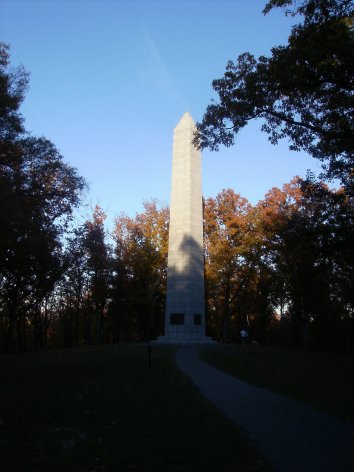
SANYO DIGITAL CAMERA
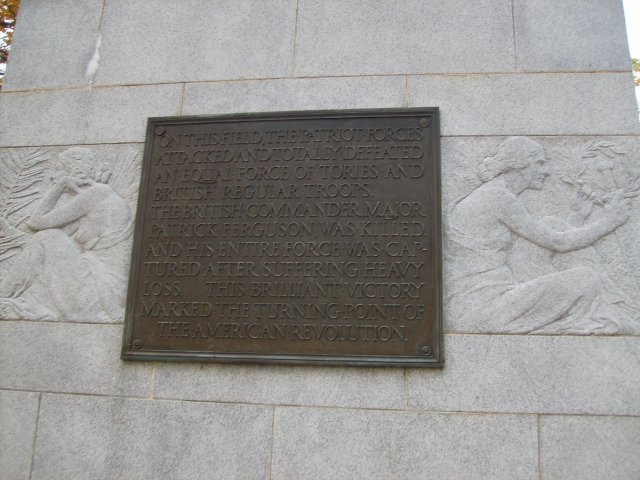
Plaque at Kings Mountain National Military Park


Robert M. Dunkerly (Bert) is a historian, award-winning author, and speaker who is actively involved in historic preservation and research. He holds a degree in History from St. Vincent College and a Masters in Historic Preservation from Middle Tennessee State University. He has worked at nine historic sites, written eleven books and over twenty articles. His research includes archaeology, colonial life, military history, and historic commemoration. Dunkerly is currently a Park Ranger at Richmond National Battlefield Park. He has visited over 400 battlefields and over 700 historic sites worldwide. When not reading or writing, he enjoys hiking, camping, and photography.

1st Maryland’s 2nd Last Stand

I was recently reading the superb book by Patrick O’Donnell on Washington’s Immortals, which brought me back to a talk I did about the same Marylanders in the American Revolution a few years back. Below is an excerpt of that talk and highlights the second last stand for a regiment with a tradition of being steadfast when deadly duty called.

On March 15, 1781, approximately 20 men stood in the 1st Maryland Continental Regiment staring at the an eerie and familiar scene. It must have seemed that history was cruelly repeating itself once again. These men had survived the forlorn assault in New York in 1776, the ugly repulse at Camden in 1780, and now stood on third line of General Nathanael Greene’s defense at Guilford Court House.

Battle of Guiliford Courthouse 15 March 1781.jpg
Famous painting of the 1st Maryland at the Battle of Guilford Court House by H. CHarles McBarron, Jr. 

Besides the 20 men who could be traced back to that fateful day in New York, the men that shouldered muskets in line with them were all veterans of indefinite periods of service as well.

The 1st Maryland and the men they confronted, 2nd Guards Battalion of Guards, were very similar, according to historian Lawrence Babits, who states that “the 1st Maryland was arguably one of the finest regiments produced by the Continental Army.

What ensued next was the defining moment of the battle and in essence the campaign. As the Guards officers gathered their men into a new line, the Marylanders came on at a rush. The Guards responded largely without specific commands…facing the oncoming Continentals, who fired several platoon volleys as they came. At a range of less than 12 yards, both lines fired again, so close that muzzle flashes overlapped into a wide sheet of flame and the heat from the volley could be felt.

Casualties mounted and at close range the musket balls shattered bone and even passed through the bodies of their targets.

SANY2634.JPG
Modern view from the location of Greene’s Third Line which the 1st Maryland held. Coming up the slight rise toward the photo was how the British approached. 

The two sides then resorted to the bayonet and Williams recounted “the first Regiment embraced the opportunity…bayoneted and cut to pieces a great number of the British.”

Although the melee only lasted a few minutes, the Marylanders had checked the advance and with the dragoons of William Washington, allowed for Greene to begin to pull back and start the retreat. In another important position, Williams helped lead the rear-guard away from Guilford C.H. The Marylanders lost 15 killed, 42 wounded and 97 missing. Most of the missing could have came from the 2nd Maryland which broke in disorder on the left flank of the 1st Maryland.

Not only did the Marylanders suffer on that fateful March day in 1781, they did so with a lack of, well, everything. According to one inventory report, the entire regiment, numbering little over 300 men had not a single jacket, two-thirds were without proper footwear, and every man was destitute of a full complement of clothing. In addition, the men had served, fought courageously, and bled tremendously, without receiving one cent as pay.

A remarkable “band of brothers” that “held the line for independence.”

Which, in case you were wondering, was the name of the talk.


*Guilford Court House National Military Park is now preserved by the National Park Service, to plan your visit, click here.

*For information on Mr. O’Donnell’s book, click here.

ERW Weekender: Brandywine & Valley Forge

Emerging Revolutionary War is honored to welcome guest historian Daniel Welch to the blog. A brief biography of Mr. Welch is at the bottom of the post. 

Several weeks ago I decided to take my usual weekend off of visiting American Civil War battlefields to take a moment to explore some American Revolutionary War historic sites just several hours down the road. Since it was a rather last minute decision, I was not completely prepared before visiting other than some basic historical context and a vague idea of operating hours and things to do while at these historic sites. So, if you want to follow the Continental Army during their experiences in the fall and winter of 1777-1778 read on to help plan a great weekend day trip.

Battle of Brandywine

IMG_1356
Sandy Hollow, Brandywine Battlefield

If you want to follow these events as they happened, and in chronological order, began your day at the Brandywine Battlefield Park Associates site. Walking the site is free, but there is a charge if you want to go through the museum or on a tour of one of two historic homes on the property. Their hours are constantly changing so make sure you check their website. (click here), before you plan your visit. To go on a house tour, view the film, and go through the museum there is an $8.00 charge; the museum and film alone is $5.00. I would suggest, if you have the time, to take in the film and museum. The film lasts approximately twenty minutes while a thorough look of the museum could take one an additional forty minutes. Between the film and museum, a firm foundation to the events of September 11, 1777 will be in place before you head out to other locations associated with the battle.  The house tour is a guided tour through Washington’s headquarters on the property and is conducted by a volunteer at the site. The tour took over an hour and a half, and considering that the home had burned to the ground nearly 100 years ago and has been rebuilt and filled with modern reproductions, your time would be better spent going to other sites associated with the battle.

IMG_1351
Birmingham Friend’s Meeting House plaque

Before leaving, make sure you pick up driving directions from the employees at the counter to get to Birmingham Friend’s Meeting House, and Sandy Hollow, the American’s second line of defense during the battle. Also, make sure to purchase the driving tour map of the battle of Brandywine. This map will take you to numerous other historic sites and homes within the Brandywine Valley that witnessed the events of that day. The cost is a mere $2.95. Plan an additional three to four hours to complete the driving tour.

Ultimately the battle proved to be an American defeat. Although he was defeated on the field, Washington and his generals were able to get large portions of the army to the rear through Polish General Pulaski’s assistance in covering the retreat. Despite the best maneuvers to save his army, Washington was unable to save Philadelphia and the city fell to the British just two weeks later on September 26, 1777. The British remained until June 1778.

Lunch

By now a late lunch would be in order.  A great spot is the Black Powder Tavern. A tavern since 1746, it has a great Revolutionary War history, including a supposed visit by Washington himself. The restaurant’s name is related to a historical legend that none other than Von Steuben had ordered the tavern turned into a secret black powder magazine during the army’s pivotal winter at Valley Forge. The food here was great, as was the service and beer selection.

Valley Forge National Historical Park

Following the defeat at Brandywine in September, and another engagement at White Marsh in early December, General Washington looked to put his army into a more secure camp for the coming winter. Active military campaigning for 1777 in Pennsylvania was over.  Just twenty miles northwest of Philadelphia, the Continental Army faced numerous challenges here including a lack of food and shelter. Disease also spread during their time at Valley Forge.  By February 1778, approximately 2,500 soldiers had perished.

IMG_1397
General Anthony Wayne Statue, Valley Forge National Historical Park

To begin your visit here, start at the visitor center. The museum has its challenges. There is no discernible narrative to the exhibits; rather, numerous cases with laminated pieces of paper hanging on the side with corresponding images and item descriptions.  Although there are some unique items on display, if it is busy you could wait at a particular case for the laminated cards to know what you are looking at. After a perusal of the museum, take in the free film. Although it is rather dated it provides a great overview of the winter encampment, its challenges, and outcomes. Between the film and museum, plan on spending an hour at the visitor center.

If you have additional time, take in the one and only National Park Service Ranger program offered. It is a rather short program, in length and walking distance, from the visitor center to the reconstructed Muhlenberg Hut sites. The program also echoes what is presented in the film. Before leaving the visitor center, I recommend getting the auto tour cd, as well as any updates on road closures. The park is currently under a significant amount of construction that has closed some roads and altered the driving tour route. The suggested driving tour cd is two hours in length. This would be a time allotment for those visitors who do not stop at each site, get out of the car, and explore all the stops along the route. You will want to get out and explore monuments such as those to the New Jersey troops, National Memorial Arch, von Steuben, and Patriots of African American Descent. You will also want to explore the several historic homes within the park that were used during the encampment, such as Varnum’s Quarters, Washington’s Headquarters, and the Memorial Chapel.  My explorations, coupled with the driving tour cd, lasted nearly five hours.

IMG_1421
George Washington’s Headquarters (Isaac Potts House) at Valley Forge National Historical Park

Although it would be a long day, it can be done in one; however, if you wish to slow the pace of your visit, each site could be done on a separate day during your weekend. There is plenty of lodging in the area to accommodate this schedule. By visiting both of these historic areas and learning about the events of the fall through early spring 1777-1778, a greater picture can be viewed gleaned of military situation during the time period, as well as the tough composition of the Continental Army despite their defeats.


*Dan Welch currently serves as a primary and secondary educator with a public school district in northeast Ohio.  Previously, Dan was the education programs coordinator for the Gettysburg Foundation, the non-profit partner of Gettysburg National Military Park, as well as a seasonal Park Ranger at Gettysburg National Military Park for six years. During that time, he led numerous programs on the campaign and battle for school groups, families, and visitors of all ages.

Welch received his BA in Instrumental Music Education from Youngstown State University where he studied under the famed French Hornist William Slocum, and is currently finishing his MA in Military History with a Civil War Era concentration at American Military University. Welch has also studied under the tutelage of Dr. Allen C. Guelzo as part of the Gettysburg Semester at Gettysburg College. He currently resides with his wife, Sarah, in Boardman, Ohio.


Defense in Depth as a Revolutionary War Battlefield Tactic

Part 4
(click here for first three parts)

DanielMorgan
General Daniel Morgan,

As we have seen, two untrained, amateur, but very effective soldiers perfected the concept of the defense in depth during the campaigns of 1781. Morgan was the first to experiment with the concept, and he did so with great effect at Cowpens, thoroughly defeating Tarleton’s Legion and sending “Bloody Ban” flying in a wild panic. Greene then adopted the tactic and applied it on a much larger scale at Guilford Courthouse. Even though he lost the battle, he scored a major strategic victory by punishing Cornwallis’ army and inflicting enormous losses on it for little gain—Greene’s army escaped to fight another day. His stand at Guilford Courthouse set the stage f Continue reading “Defense in Depth as a Revolutionary War Battlefield Tactic”

Defense in Depth as a Revolutionary War Battlefield Tactic

Part Three (click here for first two installments)

Determined to avenge his embarrassing defeat at Cowpens, Lt. Gen. Charles Lord Cornwallis set his army out in a determined pursuit of the American army. Knowing that he was too weak to face Cornwallis in a pitched battle, Maj. Gen. Nathanael Greene, the Southern Department commander, retreated northeastward from Salisbury, North Carolina toward the Virginia state line, where he hoped that additional militia troops would reinforce his army and he would receive supplies. The British chased Greene to the Dan River, near the Virginia border, but Greene wisely put the river between his army and the enemy. Cornwallis and his weary soldiers arrived at the rain-swollen river on February 15, too late to catch Greene’s army, which had finished crossing earlier that day. Frustrated, Cornwallis withdrew to Hillsborough, North Carolina.

LC
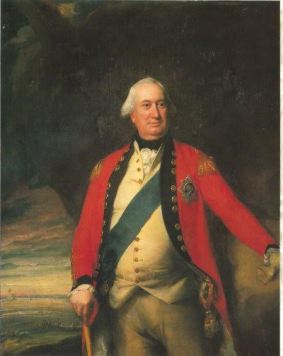
Lord Charles Cornwallis

After receiving both the expected supplies and reinforcements, and after an opportunity to rest his command, Greene soon marched back into North Carolina to face Cornwallis’ tired and poorly supplied army, which now numbered less than 2000 men. After several weeks of skirmishing with Loyalist militiamen and a great deal of maneuvering Greene assumed a defensive position around Guildford Courthouse (near modern Greensboro, North Carolina) on March 14, 1781. Greene had more than 4000 Continentals, militiamen and cavalry, meaning that his army outnumbered Cornwallis’ by more than twice their strength. Continue reading “Defense in Depth as a Revolutionary War Battlefield Tactic”

“The whole story soon became known to the corps” The Unknown Legend of John Champe

Part I of III

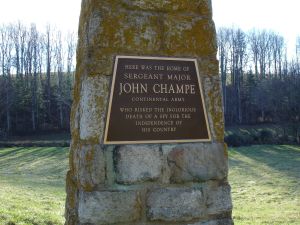
Sergeant Major John Champe Monument

Along Route 50, west of Aldie, Virginia is a small obelisk in the middle of a cow pasture. Thousands of car drive by the marker, not knowing what it is or who it is for. Most people that come to this area of Virginia for history are interested in the American Civil War. In this region of Virginia the legendary John S. Mosby operated behind Union lines for two years. Also here were the hard fought cavalry battles that preluded the Battle of Gettysburg.  But this monument doesn’t refer to anything in the Civil War.  This monument commemorates a local American Revolutionary War hero.  A man that has been mostly forgotten until recently.

John Champe was born in ca. 1755 from a family that was well established on Virginia’s Northern Neck. His family owned substantial land in King George, Stafford and Prince William Counties. At some point, his family moved to the Aldie region of Loudoun County, where John was born. The men of the Champe family were involved in the local militia and civil office as road builders. Though the family had substantial land holdings and slaves, John was one of many siblings and sought out his future with the military at the outbreak of the American Revolution.

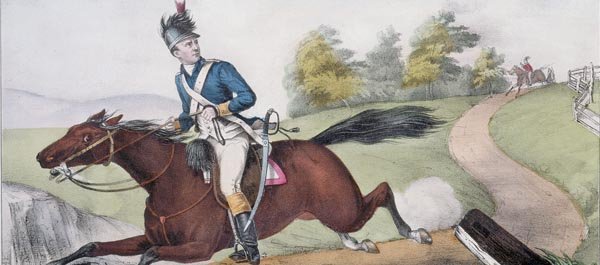
John Champe enlisted as a private in the 1st Regiment, Virginia Light Dragoons in December 1776. Champe’s abilities were quickly noticed and saw himself promoted to corporal by 1778 and then a sergeant by 1779. Champe’s abilities were quickly noticed by his commander, Major “Lighthorse” Harry Lee. Lee described Champe as “rather above the common size – full of bone and muscle; with a saturnine countenance, grave, thoughtful and taciturn – of tried courage and inflexible perseverance.” [i] Though Champe might have quickly risen in the non-commissioned ranks, he desired more.  His opportunity for promotion and a date with history came on September 27, 1780 at West Point, NY.

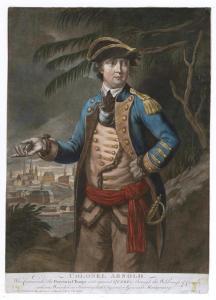
The treachery that took place on September 24th at West Point by once beloved American General Benedict Arnold is well documented.  Arnold planned on turning over the fortress at West Point to the British (thus giving up the vital Hudson River).  Arnold, receiving command of the post at West Point in August 1780, quickly reduced the viability of the fortifications by neglecting repairs and sending troops away from the post.  Arnold’s treachery was not exposed until British officer, Major John Andre was captured, carrying on him copies of letters and Arnold’s plans.  Luckily for Arnold, he learned on the morning of September 24th of Andre’s capture and he quickly fled to the HMS Vulture then on to safety in New York City.

Benedict_Arnold_1colorWashington also learned of Arnold’s treason on September 24th during his planned visit to West Point.  Washington reportedly took the news calmly and began to investigate the depth of treason in his officer corps.  Maj. Lee assisted Washington in his investigation, and both found no evidence of other American officers involved in the plot.  Washington then turned to the capture of Arnold, and that is where our “hero” comes into the story.

In October of 1780, Washington looked to Lee to find someone in his talented cavalry command that could “defect” to the British and carry out an elaborate plan to capture Arnold. Calling Lee to his headquarters, Washington and Lee discussed the proposition of capturing Arnold and how to carry out such a plan.  Lee was tasked with finding someone in his command that could successfully carry out the plan. Lee soon wrote to Washington that he had two men in mind, but his top choice was a sergeant in his cavalry unit

“The chief of the two persons is a sergeant in my Cavalry; to him I have promised promotion…if your Excellency approves of what is done, the sergeant will desert from us tomorrow; the sergeant is a very promising youth of uncommon taciturnity and inflexible perseverance…I have incited his thirst for fame by impressing on his mind the virtue and glory of the act.” [ii]

Washington quickly responded and agreed to Champe’s terms of promotion and soon the mission was hatched. Champe would desert to the British and only Lee and Washington would know about it.  He would be labeled a traitor and his family name tarnished.  If he was captured by the Americans, he would be executed and if he was exposed as an American spy to the British, he would also be executed.  Champe accepted the risk and on the night of October 21st, Champe mounted his horse and made way for the Hudson River where he hoped to find either a British picket line or ship. With him Champe carried his orderly book, saddle bags and five guineas (provided to him by Lee).

Quickly Champe was challenged by an American patrol and he quickly fled,.  This is exactly what Champe and Lee wanted, for the British to believe him, his desertion had to seem real.  Soon the patrol reported to Lee about Champe’s departure.  Lee delayed the pursuit, by first inquiring with other patrol members.  Surely a man of Champe’s stature was not defecting. Soon though Lee knew he had to order a pursuit, he just hoped Champe had put enough distance between him and the Americans to make his escape.

H-Lee-10_11_07-600
“Light Horse” Harry Lee


Though Lee’s delay allowed Champe some time, it was not enough to break away cleanly. As Champe was making his way to the Hudson River, the American patrol was on his heels and calling for his halt. In front of him were British warships in the Hudson River and a British patrol on the banks for the river.  Now was the time of decision, he could be shot dead by the British or captured and executed by the Americans.  The plan to capture Arnold and punish the traitor was already at its first “Rubicon.”


[i] The Revolutionary War Memoirs of General Henry Lee; DeCapo Press, 1998, pg. 396.

[ii] “Sergeant John Champe and Certain of His Contemporaries”; William and Mary College Quarterly, April 1937, pg. 153.

The Virginia Capes, Jutland, and American Destiny

At the end of last month and the beginning of this, I was in Britain marking the centennial of the Battle of Jutland, World War I’s largest naval battle. My great-grandfather was there as part of the Royal Navy, and it was meaningful in the extreme for me to be present at the commemorations.800px-BattleOfVirginiaCapes

The National Museum of the Royal Navy interpreted Jutland as “The Battle that Won the War,” and based its argument on the fact that the battle’s outcome led directly to German resumption of unrestricted submarine warfare, which in turn brought the United States into the war, with all the resulting titanic effects. In other words, a naval battle which didn’t feature a single American had a profound impact on U.S. history.

If that sounds familiar to Revolutionary War scholars, that’s because the same description applies to the 1781 Battle of the Virginia Capes. Let me explain.

Continue reading “The Virginia Capes, Jutland, and American Destiny”

Immediate: Concord (MA) Museum Signs Historic Agreement to Operate the Wright Tavern

On Wednesday, June 8, a signing ceremony marked the beginning of an agreement between First Parish in Concord, owner of the Wright Tavern, and the Concord Museum. Starting this fall, the Concord Museum will provide educational programming to school groups in the Wright Tavern and open the historic building to the public for commemorative events in October and April each year. On hand for the signing were representatives of the Concord Museum and First Parish as well as members of the Wright Tavern Exploratory Committee (WTEC), appointed last fall to develop a sustainable, strategic plan to showcase the Wright Tavern as a National Historic Landmark.

IMG_0075
Plaque on the Wright Tavern (ERW collection photo)

“Opening the historic Wright Tavern to public and educational access will provide a true sense of place when learning about the historical events of the American Revolution,” said Mel Bernstein, member of WTEC and Chairman of the American Revolution Round Table of the Minute Man National Historical Park.

No building in this historic community was of greater consequence to the beginnings of the American Revolution than the Wright Tavern, built in 1747. The First Provincial Congress met in Concord at the Wright Tavern in October 1774, electing John Hancock as the Congress’s president and making provision for the collection of taxes. The Second Provincial Congress met there again in March and April 1775. Presided over by John Hancock with Samuel Adams and Dr. Joseph Warren in attendance, the Provincial Congress met in defiance of Royal and Parliamentary authority — creating a Massachusetts army, raising taxes, and performing other roles necessary to form its own government, independent of British authority.  Then, in the early hours of April 19, 1775, Concord’s Minute Men assembled in the Wright Tavern before setting off to repel the advancing British troops at the North Bridge.

Since 1886, First Parish in Concord has owned and maintained this historic structure. “The Wright Tavern is certainly one of the most important Revolutionary War-era buildings in Concord,” explained Tim Jacoby, Chair of the First Parish Trustees of Parish Donations. “Although the building is owned by the church, we truly feel it belongs to the people of Concord and to the American people. This agreement with the Concord Museum will establish greater public accessibility to the Tavern.”

In 1961, the Wright Tavern was designated a National Historic Landmark by U.S. Secretary Fred Seaton, declaring it “an historical site of exceptional value in commemorating and illustrating the history of the United States.”

Margaret Burke, Executive Director of the Concord Museum, said: “The Museum is thrilled with this partnership to bring the importance of the Wright Tavern to the fore. Concord is home to invaluable historical and cultural resources, and this is a wonderful example of how organizations within the town are working together to promote this history and make it relevant to residents and visitors.”

Leah Walczak, the Concord Museum’s Director of Education and Public Programs, explained the role the Wright Tavern will play in educating visiting school groups:  “The Museum currently provides specialized programming to over 10,000 school children each year. Along with hands-on history education using objects from the Museum’s collections, this agreement will allow us to provide programs within the setting of one of the finest historic buildings in Concord.”

This partnership was brought about through the work of the Wright Tavern Exploratory Committee, which convened from September 2015 through January 2016.  Members included:  John Boynton, Chair of the Exploratory Committee and a First Parish Trustee; Doug Baker, Sacristan and Curator of First Parish; Mel Bernstein, Chair of the American Revolution Round Table of Minute Man National Historical Park; Jim Cunningham, Project Manager for Barrett Farm Restoration, and Treasurer of Save Our Heritage; Sue Gladstone, Director of Development for the Concord Museum; Jayne Gordon, Public Historian for Robbins House, Thoreau Farm, and the Concord Museum; Tim Jacoby, Chair of the First Parish Trustees; Bob Morris, Chair of the Friends of Minute Man National Historical Park; and Tom Wilson, First Parish Treasurer.

A generous gift to the Museum from John and Johanna Boynton is funding this historic partnership.

*About the Concord Museum
The Concord Museum is where all of Concord’s remarkable past is brought to life through an inspiring collection of historical, literary, and decorative arts treasures.  Renowned for the 1775 Revere lantern and Henry Thoreau’s Walden desk, the Concord Museum is home to a nationally significant collection of American decorative arts, including clocks, furniture, and silver. Founded in 1886, the Museum is a gateway to historic Concord for visitors from around the world and a vital cultural resource for the town and the region.  Visit www.concordmuseum.org.*

*For More Information, contact:

Barbara Rhines, Director of Marketing and Public Relations
978-369-9763, ext. 229
Email: brhines@concordmuseum.org

Part 2: The Defense in Depth as a Revolutionary War Battlefield Tactic

For part one, click here

Brig. Gen. Daniel Morgan, the “Old Wagoner,” as he was known, commanded a light infantry corps assigned to Maj. Gen. Nathanael Greene’s southern army. Morgan met with Greene in Charlotte, North Carolina on December 3, 1780.  Implementing a Fabian strategy, Greene split his army to harass the British while buying time to recruit additional soldiers. Greene ordered Morgan to use his 600-man command to forage and harass the enemy in the back country of South Carolina while avoiding battle with Lt. Gen. Charles Lord Cornwallis’ British army.

Once Cornwallis realized what was going on he dispatched Lt. Col. Banastre Tarleton’s British Legion to track down Morgan’s command and bring it to battle. Tarleton commanded a combined force of Loyalist American troops. The Legion consisted of fast-marching light infantry and dragoon units. At its peak strength, the Legion numbered approximately 200 infantry and 250 dragoons. It was known for its rapid movements and for its ruthless policy of giving the enemy no quarter. Patriot forces feared Tarleton and his Legion, and for good reason.

By January 12, Tarleton’s scouts had located Morgan’s army in the South Carolina back country, and Tarleton began an aggressive pursuit. Morgan hastily retreated to a position at the Cowpens, a prominent crossroads and pasturing grounds for cattle. The field was about 500 yards long and about as wide, dotted with trees, but devoid of undergrowth, which served as a food source for grazing battle.

Once Morgan learned that Tarleton was pursuing him, he spread the word for local militia units to rendezvous with him at the Cowpens. Through the night, South Carolina militiamen drifted into camp. Morgan visited their camps, encouraging them to stand and fight. Morgan’s words were particularly effective; the grizzled veteran knew how to motivate these men. They would need to be prepared, because they faced a stern task the next day.

January 17, 1781 dawned clear and very cold. After his scouts reported Tarleton’s approach, Morgan rode among his men, crying out, “Boys, get up! Benny’s coming!” Morgan designed a defense in depth that was intended to draw the British Legion in and then defeat them by pouncing on their exposed flanks. He knew that his militia had a reputation of being unreliable, and his ability to maneuver was limited, so he elected to design and implement a defense in depth that took advantage of the terrain features of the Cowpens.

Banastre Tartleton, British commander at Cowpens

Tarleton was overconfident. He believed that Morgan’s command was hemmed in by the nearby Broad River and also believed that the cleared fields of the Cowpens were ideal ground for his dragoons, and concluded that Morgan must be desperate to fight in such a place.

Morgan had prepared three defensive positions. Selected sharpshooters out front and hiding behind trees manned the first line. They picked off a number of Tarleton’s dragoons as they advance, specifically targeting officers. Traditional accounts indicate that they downed 15 of Tarleton’s dragoons this way. Confused, the dragoons retreated.

Having accomplished their initial goal, the sharpshooters then fell back about 150 yards or so to join the second line, which consisted of Brig. Gen. Andrew Pickens’ militiamen. Morgan asked these men to stand long enough to fire two volleys, after which they were to fall back to the third—and main line—manned by Col. John Eager Howard’s Continentals, another 150 yards or so in the rear of the second line. Thus, Morgan had designed a textbook example of a defense in depth.

Andrew Pickens, commanded some of the South Carolina militia at Cowpens

Some of the militia got off two volleys and then most of the militia fell back to a spot behind the third line. Tarleton orders his dragoons to pursue the retreating militiamen, and as the dragoons bore down on them with their sabres drawn, Col. William Washington’s Continental cavalry suddenly thundered onto the field, seemingly from nowhere. They routed the surprised Loyalist dragoons, who fled the field with heavy losses.

The infantry then engaged. With their drums beating and their fifes shrilling, the British infantry advanced at a trot. Recognizing that the moment of crisis had arrived, Morgan cheered his men on, rode to the front and rallied the militia, crying out, “form, form, my brave fellows! Old Morgan was never beaten!”

William Washington, commander of American cavalry at Cowpens and a distant relation to George Washington

Tarleton’s 71st Highlanders, a veteran unit made of Scotsmen, which had been held in reserved, now charged the Continental line, their skirling bagpipes adding to the cacophony of battle. Howard ordered his right flank to face slight right to counter a charge from that direction, but in the noise and chaos, was misunderstood as a call to retreat. As other companies along the line began to pull out, Morgan rode up to ask Howard if he had been beaten. Howard pointed at the orderly ranks of his retreat and assured Morgan that they had not been beaten. Morgan then put spurs to his horse and ordered the retreating units to face about and, on his order, to fire in unison. Their deadly volley dropped numerous British soldiers, who, sensing victory, had broken ranks in a determined charge. The combination of this volley and a determined bayonet charge by the Continentals turned the tide of battle in favor of the Americans.

At the moment, the rallied and re-formed militia and Washington’s cavalry attacked, leading to a double envelopment of the British, who began surrendering in masses. Tarleton and some his men fought on, but others refused to obey orders and fled the field in a panic. Finally, Tarleton realized that he had been badly beaten and fled down the Green River Toad with a handful of his men. Racing ahead of his cavalry, William Washington dashed forward and engaged Tarleton and two of his officers in hand-to-hand combat. Only a well-timed pistol shot by his young bugler saved Washington from the upraised saber of one of the British officers. Tarleton and his remaining forces escaped and galloped off to Cornwallis’ camp to report the bad news.

And bad news it was: Tarleton’s Legion lost 110 dead, over 200 wounded and 500 captured. By contrast, Morgan lost only 12 killed and 60 wounded. His perfectly designed and perfectly implemented defense had worked even beyond the Old Wagoner’s wildest dreams and highest hopes.

Knowing that Cornwallis would pursue him, Morgan buried the dead and then withdrew to the north to live and fight another day. Morgan reunited with Greene’s army and the combined force headed for North Carolina. Morgan, whose health was fragile, soon retired from further duty in the field, but he had left his mark. Cowpens was his finest moment, and set a precedent for Greene to follow two months later at Guilford Courthouse.

Battle of Cowpens (Courtesy of Campaign 1776/CWT)
Battle of Cowpens
(Courtesy of Campaign 1776/CWT)

*Suggestions for additional reading: for a superb book-length microtactical treatment of the Battle of Cowpens, see Lawrence E. Babits, A Devil of a Whipping: The Battle of Cowpens (Chapel Hill: University of North Carolina Press, 1998). This book is the primary resource consulted in drafting this article.

“Raise the Alarm”!

We are happy to share this post from our friends at The Friends of Minute Man National Historical Park

Minute Man National Historical Park needs your help.logo-sm

The Friends of Minute Man National Park have a chance to win $250,000 to preserve the 1775 Parker’s Revenge battle site and to transform the adjacent, historic Hargrove Barn for classroom use.

Twenty national park units – out of more than 400 – have been selected to compete for funding in a nationwide, online voting campaign which just kicked off. This effort – “Partners in Preservation: National Parks” –  is a partnership between the National Trust for Historic Preservation and American Express. We are competing against other National Parks such as, Yosemite, Grand Canyon and Zion.

We are asking our supporters to register and vote by going to the National Geographic voting portal:   www.voteyourpark.org/minuteman and cast their votes every day between now and through July 5.

All voters will be entered in a sweepstakes to win a trip to Yellowstone National Park courtesy of National Geographic.

It is a tremendous honor to have been selected as one of the 20 participating national park areas.  NOW, WE ARE URGENTLY REQUESTING THAT YOU VOTE FOR MINUTE MAN EVERY DAY THROUGH JULY 5th.

And, please, “Spread the Alarm” by forwarding this message to your family, friends and associates to maximize our impact.

Many, many thanks for your help and perseverance through July 5!


Bob Morris                                                                                                          Nancy Nelson

President                                                                                                            Superintendent

Friends of Minute Man National Park                                                     Minute Man National Historical Park