As we have seen, two untrained, amateur, but very effective soldiers perfected the concept of the defense in depth during the campaigns of 1781. Morgan was the first to experiment with the concept, and he did so with great effect at Cowpens, thoroughly defeating Tarleton’s Legion and sending “Bloody Ban” flying in a wild panic. Greene then adopted the tactic and applied it on a much larger scale at Guilford Courthouse. Even though he lost the battle, he scored a major strategic victory by punishing Cornwallis’ army and inflicting enormous losses on it for little gain—Greene’s army escaped to fight another day. His stand at Guilford Courthouse set the stage f Continue reading “Defense in Depth as a Revolutionary War Battlefield Tactic”→
Part Three (click here for first two installments)
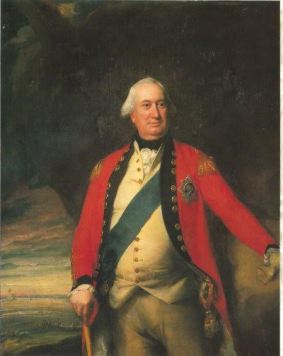
Determined to avenge his embarrassing defeat at Cowpens, Lt. Gen. Charles Lord Cornwallis set his army out in a determined pursuit of the American army. Knowing that he was too weak to face Cornwallis in a pitched battle, Maj. Gen. Nathanael Greene, the Southern Department commander, retreated northeastward from Salisbury, North Carolina toward the Virginia state line, where he hoped that additional militia troops would reinforce his army and he would receive supplies. The British chased Greene to the Dan River, near the Virginia border, but Greene wisely put the river between his army and the enemy. Cornwallis and his weary soldiers arrived at the rain-swollen river on February 15, too late to catch Greene’s army, which had finished crossing earlier that day. Frustrated, Cornwallis withdrew to Hillsborough, North Carolina.
Lord Charles Cornwallis
After receiving both the expected supplies and reinforcements, and after an opportunity to rest his command, Greene soon marched back into North Carolina to face Cornwallis’ tired and poorly supplied army, which now numbered less than 2000 men. After several weeks of skirmishing with Loyalist militiamen and a great deal of maneuvering Greene assumed a defensive position around Guildford Courthouse (near modern Greensboro, North Carolina) on March 14, 1781. Greene had more than 4000 Continentals, militiamen and cavalry, meaning that his army outnumbered Cornwallis’ by more than twice their strength. Continue reading “Defense in Depth as a Revolutionary War Battlefield Tactic”→
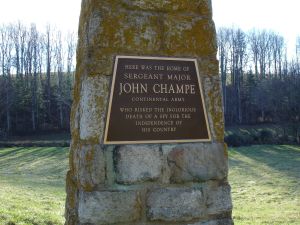
Along Route 50, west of Aldie, Virginia is a small obelisk in the middle of a cow pasture. Thousands of car drive by the marker, not knowing what it is or who it is for. Most people that come to this area of Virginia for history are interested in the American Civil War. In this region of Virginia the legendary John S. Mosby operated behind Union lines for two years. Also here were the hard fought cavalry battles that preluded the Battle of Gettysburg. But this monument doesn’t refer to anything in the Civil War. This monument commemorates a local American Revolutionary War hero. A man that has been mostly forgotten until recently.
John Champe was born in ca. 1755 from a family that was well established on Virginia’s Northern Neck. His family owned substantial land in King George, Stafford and Prince William Counties. At some point, his family moved to the Aldie region of Loudoun County, where John was born. The men of the Champe family were involved in the local militia and civil office as road builders. Though the family had substantial land holdings and slaves, John was one of many siblings and sought out his future with the military at the outbreak of the American Revolution.
John Champe enlisted as a private in the 1st Regiment, Virginia Light Dragoons in December 1776. Champe’s abilities were quickly noticed and saw himself promoted to corporal by 1778 and then a sergeant by 1779. Champe’s abilities were quickly noticed by his commander, Major “Lighthorse” Harry Lee. Lee described Champe as “rather above the common size – full of bone and muscle; with a saturnine countenance, grave, thoughtful and taciturn – of tried courage and inflexible perseverance.” [i] Though Champe might have quickly risen in the non-commissioned ranks, he desired more. His opportunity for promotion and a date with history came on September 27, 1780 at West Point, NY.
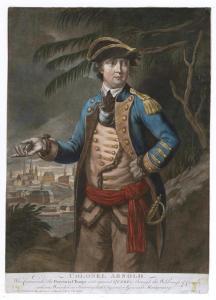
The treachery that took place on September 24th at West Point by once beloved American General Benedict Arnold is well documented. Arnold planned on turning over the fortress at West Point to the British (thus giving up the vital Hudson River). Arnold, receiving command of the post at West Point in August 1780, quickly reduced the viability of the fortifications by neglecting repairs and sending troops away from the post. Arnold’s treachery was not exposed until British officer, Major John Andre was captured, carrying on him copies of letters and Arnold’s plans. Luckily for Arnold, he learned on the morning of September 24th of Andre’s capture and he quickly fled to the HMS Vulture then on to safety in New York City.
Washington also learned of Arnold’s treason on September 24th during his planned visit to West Point. Washington reportedly took the news calmly and began to investigate the depth of treason in his officer corps. Maj. Lee assisted Washington in his investigation, and both found no evidence of other American officers involved in the plot. Washington then turned to the capture of Arnold, and that is where our “hero” comes into the story.
In October of 1780, Washington looked to Lee to find someone in his talented cavalry command that could “defect” to the British and carry out an elaborate plan to capture Arnold. Calling Lee to his headquarters, Washington and Lee discussed the proposition of capturing Arnold and how to carry out such a plan. Lee was tasked with finding someone in his command that could successfully carry out the plan. Lee soon wrote to Washington that he had two men in mind, but his top choice was a sergeant in his cavalry unit
“The chief of the two persons is a sergeant in my Cavalry; to him I have promised promotion…if your Excellency approves of what is done, the sergeant will desert from us tomorrow; the sergeant is a very promising youth of uncommon taciturnity and inflexible perseverance…I have incited his thirst for fame by impressing on his mind the virtue and glory of the act.” [ii]
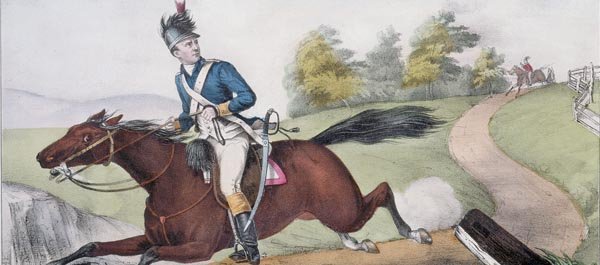
Washington quickly responded and agreed to Champe’s terms of promotion and soon the mission was hatched. Champe would desert to the British and only Lee and Washington would know about it. He would be labeled a traitor and his family name tarnished. If he was captured by the Americans, he would be executed and if he was exposed as an American spy to the British, he would also be executed. Champe accepted the risk and on the night of October 21st, Champe mounted his horse and made way for the Hudson River where he hoped to find either a British picket line or ship. With him Champe carried his orderly book, saddle bags and five guineas (provided to him by Lee).
Quickly Champe was challenged by an American patrol and he quickly fled,. This is exactly what Champe and Lee wanted, for the British to believe him, his desertion had to seem real. Soon the patrol reported to Lee about Champe’s departure. Lee delayed the pursuit, by first inquiring with other patrol members. Surely a man of Champe’s stature was not defecting. Soon though Lee knew he had to order a pursuit, he just hoped Champe had put enough distance between him and the Americans to make his escape.
“Light Horse” Harry Lee
Though Lee’s delay allowed Champe some time, it was not enough to break away cleanly. As Champe was making his way to the Hudson River, the American patrol was on his heels and calling for his halt. In front of him were British warships in the Hudson River and a British patrol on the banks for the river. Now was the time of decision, he could be shot dead by the British or captured and executed by the Americans. The plan to capture Arnold and punish the traitor was already at its first “Rubicon.”
[i]The Revolutionary War Memoirs of General Henry Lee; DeCapo Press, 1998, pg. 396.
[ii] “Sergeant John Champe and Certain of His Contemporaries”; William and Mary College Quarterly, April 1937, pg. 153.
At the end of last month and the beginning of this, I was in Britain marking the centennial of the Battle of Jutland, World War I’s largest naval battle. My great-grandfather was there as part of the Royal Navy, and it was meaningful in the extreme for me to be present at the commemorations.
The National Museum of the Royal Navy interpreted Jutland as “The Battle that Won the War,” and based its argument on the fact that the battle’s outcome led directly to German resumption of unrestricted submarine warfare, which in turn brought the United States into the war, with all the resulting titanic effects. In other words, a naval battle which didn’t feature a single American had a profound impact on U.S. history.
If that sounds familiar to Revolutionary War scholars, that’s because the same description applies to the 1781 Battle of the Virginia Capes. Let me explain.
On Wednesday, June 8, a signing ceremony marked the beginning of an agreement between First Parish in Concord, owner of the Wright Tavern, and the Concord Museum. Starting this fall, the Concord Museum will provide educational programming to school groups in the Wright Tavern and open the historic building to the public for commemorative events in October and April each year. On hand for the signing were representatives of the Concord Museum and First Parish as well as members of the Wright Tavern Exploratory Committee (WTEC), appointed last fall to develop a sustainable, strategic plan to showcase the Wright Tavern as a National Historic Landmark.
Plaque on the Wright Tavern (ERW collection photo)
“Opening the historic Wright Tavern to public and educational access will provide a true sense of place when learning about the historical events of the American Revolution,” said Mel Bernstein, member of WTEC and Chairman of the American Revolution Round Table of the Minute Man National Historical Park.
No building in this historic community was of greater consequence to the beginnings of the American Revolution than the Wright Tavern, built in 1747. The First Provincial Congress met in Concord at the Wright Tavern in October 1774, electing John Hancock as the Congress’s president and making provision for the collection of taxes. The Second Provincial Congress met there again in March and April 1775. Presided over by John Hancock with Samuel Adams and Dr. Joseph Warren in attendance, the Provincial Congress met in defiance of Royal and Parliamentary authority — creating a Massachusetts army, raising taxes, and performing other roles necessary to form its own government, independent of British authority. Then, in the early hours of April 19, 1775, Concord’s Minute Men assembled in the Wright Tavern before setting off to repel the advancing British troops at the North Bridge.
Since 1886, First Parish in Concord has owned and maintained this historic structure. “The Wright Tavern is certainly one of the most important Revolutionary War-era buildings in Concord,” explained Tim Jacoby, Chair of the First Parish Trustees of Parish Donations. “Although the building is owned by the church, we truly feel it belongs to the people of Concord and to the American people. This agreement with the Concord Museum will establish greater public accessibility to the Tavern.”
In 1961, the Wright Tavern was designated a National Historic Landmark by U.S. Secretary Fred Seaton, declaring it “an historical site of exceptional value in commemorating and illustrating the history of the United States.”
Margaret Burke, Executive Director of the Concord Museum, said: “The Museum is thrilled with this partnership to bring the importance of the Wright Tavern to the fore. Concord is home to invaluable historical and cultural resources, and this is a wonderful example of how organizations within the town are working together to promote this history and make it relevant to residents and visitors.”
Leah Walczak, the Concord Museum’s Director of Education and Public Programs, explained the role the Wright Tavern will play in educating visiting school groups: “The Museum currently provides specialized programming to over 10,000 school children each year. Along with hands-on history education using objects from the Museum’s collections, this agreement will allow us to provide programs within the setting of one of the finest historic buildings in Concord.”
This partnership was brought about through the work of the Wright Tavern Exploratory Committee, which convened from September 2015 through January 2016. Members included: John Boynton, Chair of the Exploratory Committee and a First Parish Trustee; Doug Baker, Sacristan and Curator of First Parish; Mel Bernstein, Chair of the American Revolution Round Table of Minute Man National Historical Park; Jim Cunningham, Project Manager for Barrett Farm Restoration, and Treasurer of Save Our Heritage; Sue Gladstone, Director of Development for the Concord Museum; Jayne Gordon, Public Historian for Robbins House, Thoreau Farm, and the Concord Museum; Tim Jacoby, Chair of the First Parish Trustees; Bob Morris, Chair of the Friends of Minute Man National Historical Park; and Tom Wilson, First Parish Treasurer.
A generous gift to the Museum from John and Johanna Boynton is funding this historic partnership.
*About the Concord Museum The Concord Museum is where all of Concord’s remarkable past is brought to life through an inspiring collection of historical, literary, and decorative arts treasures. Renowned for the 1775 Revere lantern and Henry Thoreau’s Walden desk, the Concord Museum is home to a nationally significant collection of American decorative arts, including clocks, furniture, and silver. Founded in 1886, the Museum is a gateway to historic Concord for visitors from around the world and a vital cultural resource for the town and the region. Visit www.concordmuseum.org.*
*For More Information, contact:
Barbara Rhines, Director of Marketing and Public Relations
978-369-9763, ext. 229
Email: brhines@concordmuseum.org
Brig. Gen. Daniel Morgan, the “Old Wagoner,” as he was known, commanded a light infantry corps assigned to Maj. Gen. Nathanael Greene’s southern army. Morgan met with Greene in Charlotte, North Carolina on December 3, 1780. Implementing a Fabian strategy, Greene split his army to harass the British while buying time to recruit additional soldiers. Greene ordered Morgan to use his 600-man command to forage and harass the enemy in the back country of South Carolina while avoiding battle with Lt. Gen. Charles Lord Cornwallis’ British army.
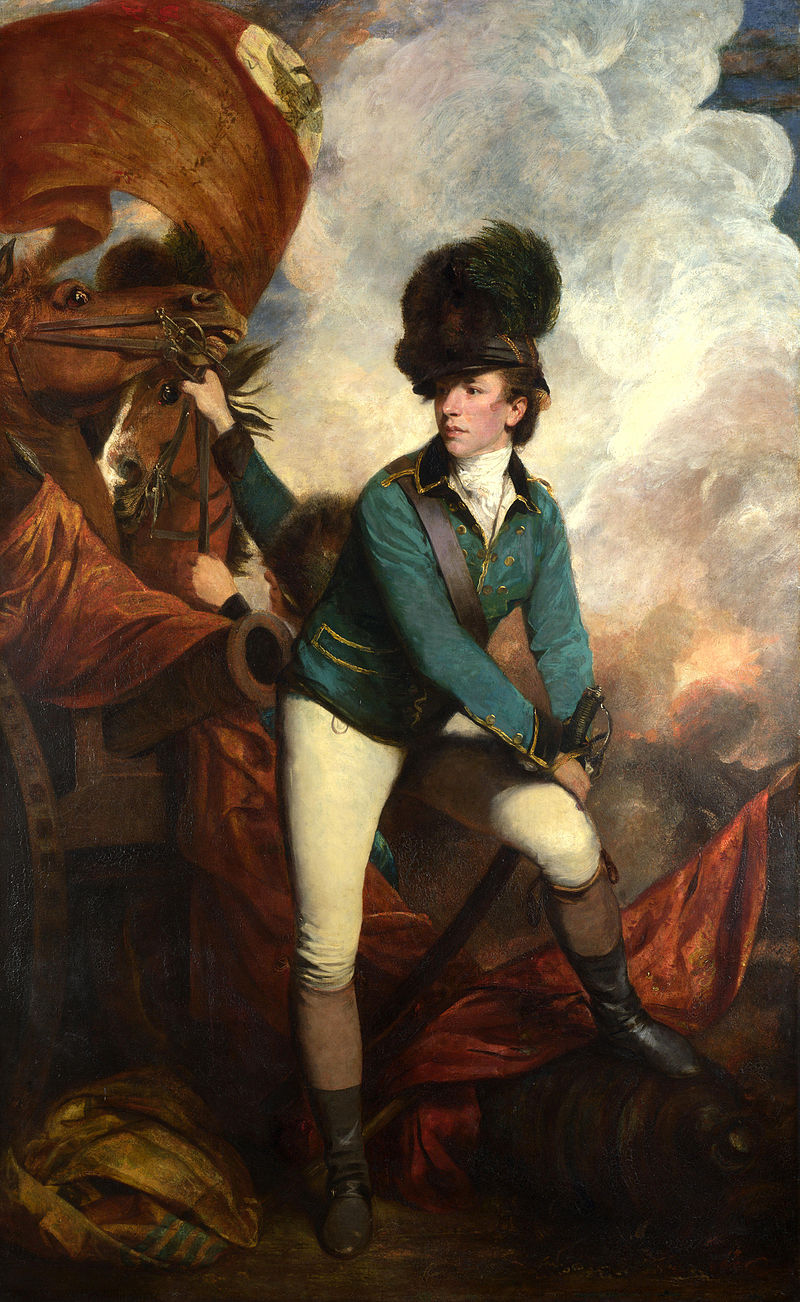
Once Cornwallis realized what was going on he dispatched Lt. Col. Banastre Tarleton’s British Legion to track down Morgan’s command and bring it to battle. Tarleton commanded a combined force of Loyalist American troops. The Legion consisted of fast-marching light infantry and dragoon units. At its peak strength, the Legion numbered approximately 200 infantry and 250 dragoons. It was known for its rapid movements and for its ruthless policy of giving the enemy no quarter. Patriot forces feared Tarleton and his Legion, and for good reason.
By January 12, Tarleton’s scouts had located Morgan’s army in the South Carolina back country, and Tarleton began an aggressive pursuit. Morgan hastily retreated to a position at the Cowpens, a prominent crossroads and pasturing grounds for cattle. The field was about 500 yards long and about as wide, dotted with trees, but devoid of undergrowth, which served as a food source for grazing battle.
Once Morgan learned that Tarleton was pursuing him, he spread the word for local militia units to rendezvous with him at the Cowpens. Through the night, South Carolina militiamen drifted into camp. Morgan visited their camps, encouraging them to stand and fight. Morgan’s words were particularly effective; the grizzled veteran knew how to motivate these men. They would need to be prepared, because they faced a stern task the next day.
January 17, 1781 dawned clear and very cold. After his scouts reported Tarleton’s approach, Morgan rode among his men, crying out, “Boys, get up! Benny’s coming!” Morgan designed a defense in depth that was intended to draw the British Legion in and then defeat them by pouncing on their exposed flanks. He knew that his militia had a reputation of being unreliable, and his ability to maneuver was limited, so he elected to design and implement a defense in depth that took advantage of the terrain features of the Cowpens.
Banastre Tartleton, British commander at Cowpens
Tarleton was overconfident. He believed that Morgan’s command was hemmed in by the nearby Broad River and also believed that the cleared fields of the Cowpens were ideal ground for his dragoons, and concluded that Morgan must be desperate to fight in such a place.
Morgan had prepared three defensive positions. Selected sharpshooters out front and hiding behind trees manned the first line. They picked off a number of Tarleton’s dragoons as they advance, specifically targeting officers. Traditional accounts indicate that they downed 15 of Tarleton’s dragoons this way. Confused, the dragoons retreated.
Having accomplished their initial goal, the sharpshooters then fell back about 150 yards or so to join the second line, which consisted of Brig. Gen. Andrew Pickens’ militiamen. Morgan asked these men to stand long enough to fire two volleys, after which they were to fall back to the third—and main line—manned by Col. John Eager Howard’s Continentals, another 150 yards or so in the rear of the second line. Thus, Morgan had designed a textbook example of a defense in depth.
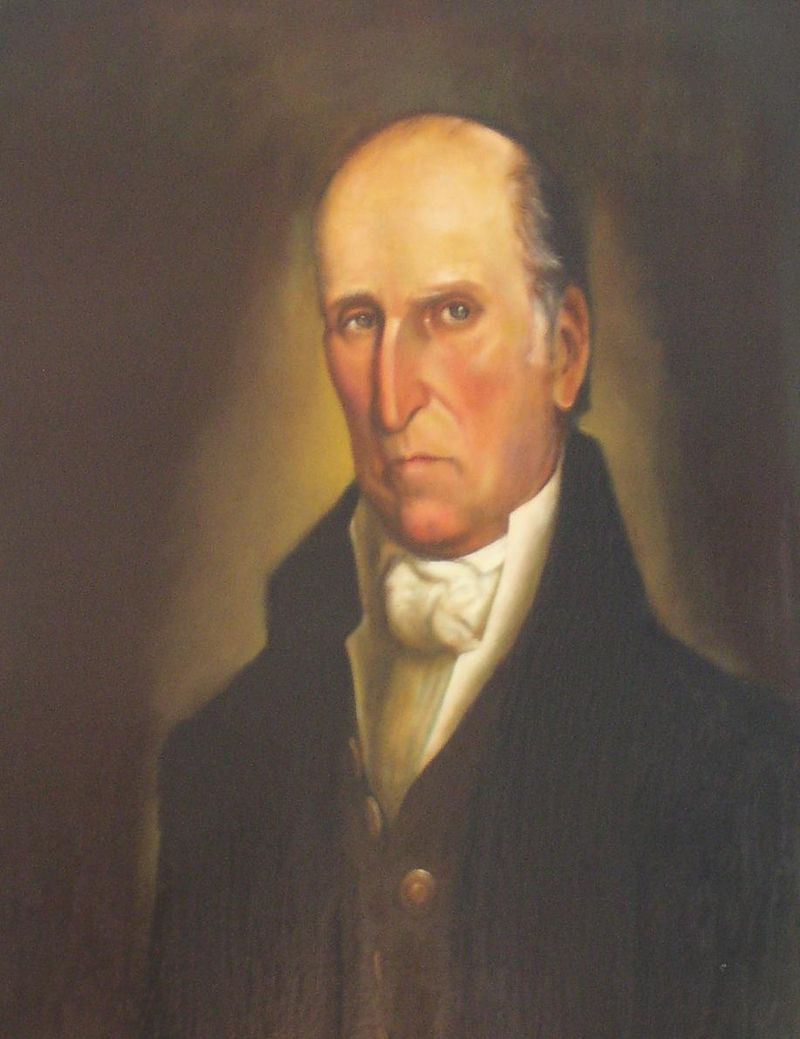
Andrew Pickens, commanded some of the South Carolina militia at Cowpens
Some of the militia got off two volleys and then most of the militia fell back to a spot behind the third line. Tarleton orders his dragoons to pursue the retreating militiamen, and as the dragoons bore down on them with their sabres drawn, Col. William Washington’s Continental cavalry suddenly thundered onto the field, seemingly from nowhere. They routed the surprised Loyalist dragoons, who fled the field with heavy losses.
The infantry then engaged. With their drums beating and their fifes shrilling, the British infantry advanced at a trot. Recognizing that the moment of crisis had arrived, Morgan cheered his men on, rode to the front and rallied the militia, crying out, “form, form, my brave fellows! Old Morgan was never beaten!”
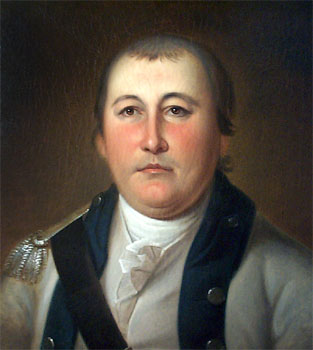
William Washington, commander of American cavalry at Cowpens and a distant relation to George Washington
Tarleton’s 71st Highlanders, a veteran unit made of Scotsmen, which had been held in reserved, now charged the Continental line, their skirling bagpipes adding to the cacophony of battle. Howard ordered his right flank to face slight right to counter a charge from that direction, but in the noise and chaos, was misunderstood as a call to retreat. As other companies along the line began to pull out, Morgan rode up to ask Howard if he had been beaten. Howard pointed at the orderly ranks of his retreat and assured Morgan that they had not been beaten. Morgan then put spurs to his horse and ordered the retreating units to face about and, on his order, to fire in unison. Their deadly volley dropped numerous British soldiers, who, sensing victory, had broken ranks in a determined charge. The combination of this volley and a determined bayonet charge by the Continentals turned the tide of battle in favor of the Americans.
At the moment, the rallied and re-formed militia and Washington’s cavalry attacked, leading to a double envelopment of the British, who began surrendering in masses. Tarleton and some his men fought on, but others refused to obey orders and fled the field in a panic. Finally, Tarleton realized that he had been badly beaten and fled down the Green River Toad with a handful of his men. Racing ahead of his cavalry, William Washington dashed forward and engaged Tarleton and two of his officers in hand-to-hand combat. Only a well-timed pistol shot by his young bugler saved Washington from the upraised saber of one of the British officers. Tarleton and his remaining forces escaped and galloped off to Cornwallis’ camp to report the bad news.
And bad news it was: Tarleton’s Legion lost 110 dead, over 200 wounded and 500 captured. By contrast, Morgan lost only 12 killed and 60 wounded. His perfectly designed and perfectly implemented defense had worked even beyond the Old Wagoner’s wildest dreams and highest hopes.
Knowing that Cornwallis would pursue him, Morgan buried the dead and then withdrew to the north to live and fight another day. Morgan reunited with Greene’s army and the combined force headed for North Carolina. Morgan, whose health was fragile, soon retired from further duty in the field, but he had left his mark. Cowpens was his finest moment, and set a precedent for Greene to follow two months later at Guilford Courthouse.
Battle of Cowpens (Courtesy of Campaign 1776/CWT)
*Suggestions for additional reading: for a superb book-length microtactical treatment of the Battle of Cowpens, see Lawrence E. Babits, A Devil of a Whipping: The Battle of Cowpens (Chapel Hill: University of North Carolina Press, 1998). This book is the primary resource consulted in drafting this article.
We are happy to share this post from our friends at The Friends of Minute Man National Historical Park
Minute Man National Historical Park needs your help.
The Friends of Minute Man National Park have a chance to win $250,000 to preserve the 1775 Parker’s Revenge battle site and to transform the adjacent, historic Hargrove Barn for classroom use.
Twenty national park units – out of more than 400 – have been selected to compete for funding in a nationwide, online voting campaign which just kicked off. This effort – “Partners in Preservation: National Parks” – is a partnership between the National Trust for Historic Preservation and American Express. We are competing against other National Parks such as, Yosemite, Grand Canyon and Zion.
We are asking our supporters to register and vote by going to the National Geographic voting portal: www.voteyourpark.org/minuteman and cast their votes every day between now and through July 5.
All voters will be entered in a sweepstakes to win a trip to Yellowstone National Park courtesy of National Geographic.
It is a tremendous honor to have been selected as one of the 20 participating national park areas. NOW, WE ARE URGENTLY REQUESTING THAT YOU VOTE FOR MINUTE MAN EVERY DAY THROUGH JULY 5th.
And, please, “Spread the Alarm” by forwarding this message to your family, friends and associates to maximize our impact.
Many, many thanks for your help and perseverance through July 5!
Bob Morris Nancy Nelson
President Superintendent
Friends of Minute Man National Park Minute Man National Historical Park
Robert Morris explaining the recent archaeological investigations at Parker’s Revenge along Battle Road.
Recently, ERW members Phil Greenwalt and Rob Orrison spent the 241st anniversary of the opening of the American Revolution in the outskirts of Boston in Concord, Massachusetts. It was a whirlwind trip of research, photos and most importantly meeting the stakeholders in historic preservation and public history in the region. We already knew how active Concord was in promoting and preserving its history, but each time you visit you are blown away by their efforts and their appreciation for their past.
While in Concord, our more than gracious host was Jayne Gordon. Jayne has been involved in almost every public history project or initiative in the Concord area. A native of the area, everyone in Lexington and Concord knows Jayne. Jayne took the time to introduce us to many people and organizations in the area. I wanted to focus on two organizations that are doing great work in the region to promote local history with a national impact.
The Robbins House
Formerly the Drinking Gourd Project, The Robbins House is introducing people to the story of African Americans in the region. The all-volunteer board and staff are breaking new ground. Facing misconceptions of slavery in 18th century Concord head on, Robbins House President Maria Madison has led the charge to change the narrative.
The Robbins House is an early 19th century house that was inhabited by the first generation
The Robbins House
of descendants of formerly enslaved African America Revolutionary War veteran Caesar Robbins. Using the story of Caesar Robbins as a base, Maria and her fellow volunteers interpret the role of African Americans in 18th and 19th century Concord. Most forget that 18th century Massachusetts was a colony that supported and practiced slavery. The Robbins House also interpret stories of how literary icons, such as Ralph Waldo Emerson and David Henry Thoreau, dealt with slavery and prejudice. Again, most visitors (including me!) have their preconceived notions challenged. The Robbins House also provides exhibits on other aspects of African American history of Concord, as well as lectures, programs and self-guided tours of Concord.
The Robbins House’s location next to the famous North Bridge provides an interesting juxtaposition on freedom and liberty. Just a few hundred yards away the dream of American freedom and independence began and the Robbins House is filling the void of how that liberty equated to a large portion of the American population. On your next visit to Concord, it is a worth your time and support. I really enjoyed my time meeting with Maria and look forward to future conversations and visits. Visit their website at for more information www.robbinshouse.org.
Friends of Minuteman National Park
Many of our readers are aware of the recent “Parker’s Revenge” project and preservation project with the Civil War Trust’s “Campaign 1776.” Also, I bet all of our readers are aware of Minuteman National Historical Park, but how many know about the great efforts of the Friends of Minuteman National Historical Park? I must admit, until my recent visit I include myself if that “unknowing” category. Jayne introduced us to Robert Morris, President of the “Friends,” and Bob spent a morning going over the organization and their recent efforts to promote new historic research, archaeology and restoration of the area known as “Parker’s Revenge” along the Battle Road.
This ridge is now considered where Capt. Parker and his Lexington militia attacked the British on their retreat back to Boston
“Parker’s Revenge” occurred on the afternoon of April 19, 1775 along the road between Concord and Lexington. Captain Parker, who earlier that day confronted the British on the Lexington Green, regrouped his militia and prepared for an attack on the British column as it made its way back to Boston. As they marched through Lincoln and approached Fiske Hill, Parker’s men opened up a deadly fire from behind rocks. Up until last year, historians have always interpreted the event to take place along the Battle Road next to the modern Minuteman National Historical Park Visitor Center. But now, thanks to fundraising and manpower efforts of the “Friends”, the history of “Parker’s Revenge” is being rewritten. With new archaeology, the area of “Parker’s Revenge” will be reinterpreted a few hundred yards west of the current location. Bob and his team of volunteers also plan to work with the National Park Service to assist in restore the historic landscape in the area.
The “Friends” also fundraise to support interpretation projects, grounds projects, and support the large volunteer corps at the park. One of the most important tasks for the organization is advocating on behalf of the national park. My morning spent with Bob and Jayne walking the newly discovered “Parker’s Revenge” battlefield was a highlight of my trip. Being one of the first people to walk the “new” battlefield and hear how the project developed was a special treat.
I highly recommend you follow along the many projects the “Friends” have on going to support Minuteman National Historic Park. They are always looking for new members, no matter where you may live. Visit their website at www.friendsofminuteman.org
Again, I cannot thank Jayne Gordon enough for showing me around Concord and sharing her passion for history. I appreciated my short time with Maria Madison of the Robbins House and Robert Morris of the Friends of Minuteman National Park. Both are breaking new ground and supporting preservation and interpretation of the events surrounding spring 1775. These are the people on the front lines and that meshes well with one of the established goals of Emerging Revolutionary War is to share and promote these public history organizations. They are instrumental in telling the story of the American Revolution.
On a recent trip to Boston, I was shown by fellow Emerging Revolutionary War historian Rob Orrison, Dorchester Heights. One of my favorite quotes of the entire American Revolutionary War was in reference to the Continental Army’s move to fortify the very heights at Dorchester.
“My God, these fellows have done more work in one night than I could make my army do in three months.” Uttered by General William Howe the morning after the Americans had used the night to build an entire fortification network on the commanding hillsides of Dorchester.
This move, conducted in the secrecy of the night, led to the British evacuation of Boston, after an aborted offensive by the British do a providential snowstorm. Less than two weeks after that influential night, on March 17, 1776, the British evacuated Boston, never to return.
I did not get to spend too much time on the heights but I was able to snap a few pictures, shown below. But, I did have the great fortune to be on the heights at night, looking out over Boston, which has grown just slightly since 1776. A few moments of silence ensued, where I had the chance to mull over what that view must have looked like and what the soldiers who hurriedly dragged the fascines and gabions, and shoveled dirt that night must have worried about as they feverishly tried to finish their duties.
Stone monument marking the spot where the cannon that Henry Knox brought from Fort Ticonderoga to Boston stood. You can see the lights of Boston in the background with the reflection of the lights on the water past the first row of houses in the foreground.
The cannon that bore down on Boston from the heights of Dorchester Heights were a product of one of the greatest feats of the entire war. Former Boston bookseller turned artillerist extraordinaire had brought the heavy armament on an arduous trek, through the late stages of winter from upstate New York to the Continental Army besieging Boston.
Henry Knox was the man behind the delivery and he would serve as George Washington’s Chief of Artillery before the war was over. Afterwards, Knox would become the first Secretary of War in Washington’s Administration. At Dorchester Heights, with Washington’s planning and Knox’s delivery the city of Boston was liberated without firing a shot.
A view of the monument
The heights retained its military importance through the end of the War of 1812. By the end of the 19th century, in 1898, the General Courts of Massachusetts had commissioned a monument to stand on what remained of the heights. The white marble Georgian revival tower that stands 115 feet, commemorates that night in 1776 that American soldiers did what British soldiers would take months to complete. By 1978, after a listing on the National Register of Historic Places, the monument and remaining hill site was handed to the National Park Service by the city of Boston. Dorchester Heights became part of Boston National Historical Park which was established in 1974.
When planning a visit to Boston National Historical Park and to Dorchester Heights, which is open to visitation, both during the day and at night please consult the website for the national park here. That way you can familiarize yourself with the regulations and how to make the most of your visit.
Emerging Revolutionary War is honored to welcome back historian Robert “Bert” Dunkerly.
During a trip to Mobile, Alabama for some Civil War research, I came across a fascinating and lesser-known aspect of the American Revolution. When I travel, I always keep my eye out for unusual finds and hidden history. I was rewarded on my trip to Mobile with a great discovery.
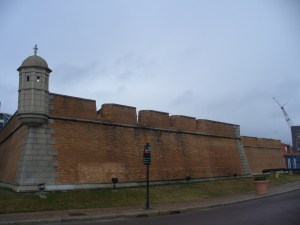
Fort Conde (author collection)
One of the main historic sites in downtown Mobile is the reconstructed Fort Conde. This brick fort interprets the early history of Mobile and the region under the flags of France, Spain, and the United States. Just outside the fort is a marker discussing the battle of Fort Charlotte.
Mobile was originally the capital of the French Louisiana Territory until the close of the French and Indian War. As part of the settlement of that conflict in 1763, this French territory passed to the British. Fort Conde, built in 1723, was renamed Fort Charlotte by its new owners.
Map of Ft. Conde superimposed over modern Mobile streets, (photo by author)
Most of us know that the French were anxiously watching the American Revolution when the conflict broke out, hoping to score revenge against their English adversaries. Also watching with interest were the Spanish.
The British garrisons along the Gulf of Mexico coast (Pensacola, Mobile, Baton Rouge) were quite small and vulnerable. The Spanish had been providing material aid and funds to the Americans, but finally declared war on Britain in 1779. The Spanish were ambivalent about American independence, and unlike the French, did not recognize the United States, but did agree to help militarily.
Even before Spain’s entry into the war, New Orleans was a source of aid smuggled in for the American effort. The Crescent City, and all the land west of the Mississippi, had been awarded to Spain at the close of the French and Indian War. From here, supplies moved up the Mississippi to Fort Pitt at Pittsburgh, PA. And from New Orleans, Governor Bernardo de Galvez attacked British posts up the Mississippi and along the Gulf Coast.
General Bernardo de Galvez, (artist unknown)
A statue of the Spanish general who did much to wrest the Mississippi and Gulf coast areas away from the British stands near the World Trade Center in New Orleans. A gift from Spain to the city of New Orleans, the statue is a reminder of this important but neglected aspect of the war. A group known as Granaderos y Damas de Galvez are dedicated to preserving his memory and that of the Spanish role in the Revolution.
Oliver Pollock was a Philadelphia merchant with close ties in Cuba and New Orleans. When the war broke out, he used his connections to aid the Revolutionary cause from the Crescent City. In 1777 he was appointed “commercial agent of the United States at New Orleans” and used his fortune to finance American operations in the west, such as General George Rogers Clark. When Spain entered the war he served as an aide to General Bernardo de Galvez.
Moving up from New Orleans, a force under General de Galvez, that included Spanish troops, American volunteers, Acadian settles, and free blacks, attacked and captured the British outpost of Fort Richmond at Baton Rouge on September 21, 1779. Today a memorial with plaques and a cannon marks the site.
In February, 1780, Spanish troops and American volunteers under Governor Bernardo de Galvez laid siege to the 300 British in Fort Charlotte at Mobile. The siege lasted a month. The garrison’s surrender gave the Spanish control of this important site, and removed all English military forces from the Gulf region.
This was one of the few actions of the war in which Spanish and American troops fought side by side. Spain declared war on Britain but did not recognized the United States, their primary interest being to settle scores with the British.
For more information on these fascinating events, check the following websites:



 Washington also learned of Arnold’s treason on September 24th during his planned visit to West Point. Washington reportedly took the news calmly and began to investigate the depth of treason in his officer corps. Maj. Lee assisted Washington in his investigation, and both found no evidence of other American officers involved in the plot. Washington then turned to the capture of Arnold, and that is where our “hero” comes into the story.










 Emerging Revolutionary War Era