North Carolina’s Regulators, the Battle of Alamance, and Public Memory

Emerging Revolutionary War welcomes guest historian Jeremiah DeGennaro, Historic Site Manager for Alamance Battleground

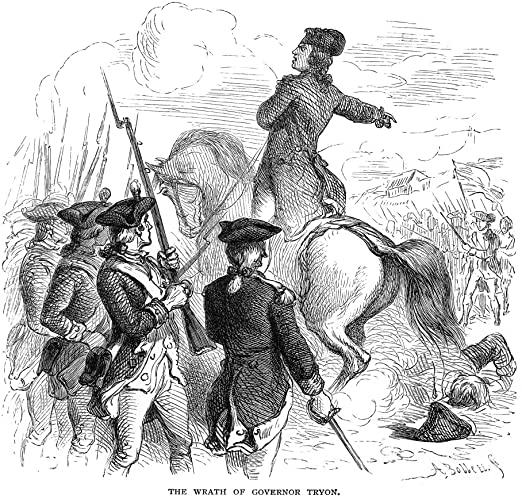
In the summer of 1773, Josiah Quincy made a trip to North Carolina. A well-known lawyer and Son of Liberty in Boston, Quincy headed south with the aim of gauging support for a coming revolution, and establishing correspondence with those who were “warmly attached to the cause of American freedom.” Quincy was received by many of the movers and shakers of North Carolina politics. The same men who hosted him—Cornelius Harnett, William Hooper, Robert Howe, and others—later became influential figures in the American Revolution. But upon his arrival, Quincy was quite curious about a different group of North Carolinians: the Regulators. Years before, this group of poor and middling farmers in backcountry North Carolina organized a grassroots movement that called for an end of government corruption, reformation of the rigged justice system controlled by elite “courthouse rings,” and progressive taxation in which citizens paid according to their wealth. At their peak they had thousands of supporters. Their detractors called it a rebellion. In 1773, it had been less than two years since they had been defeated at the Battle of Alamance by Governor William Tryon and his volunteer militia, the movement abruptly crushed. Quincy must have been curious about the motives of former Regulators as potential allies to what he called the “Cause of America.” How warmly attached to the cause of American freedom were they?

He spoke to three different sources, all with firsthand knowledge of events. He sat through a 3-hour lecture against the Regulators by Robert Howe, who commanded the artillery that devastated the Regulators at Alamance. The next day, Quincy met Colonel William Dry for breakfast. Quincy identified Dry as “a friend to the Regulators…he gave me an entire different account of things.” After hearing a few different accounts of the now-defunct Regulators, Quincy abandoned the topic, noting in his journal: “I am now left to form my own opinion.”

Continue reading “North Carolina’s Regulators, the Battle of Alamance, and Public Memory”

“This Sudden Expedition”: The Capture of Fort Ticonderoga – 246 Years Later

On this date in 1775, an early victory was secured for the American cause along the western shore of Lake Champlain in New York. Led by Colonel Benedict Arnold and Ethan Allen, over eighty men surprised and overwhelmed Fort Ticonderoga’s garrison, capturing the strategic stronghold and much needed supplies and cannon for the Americans. On May 22, the Pennsylvania Packet reported on the news received from the north:

On Wednesday evening last arrived here, John Brown, Esq; from Ticonderoga, express to the General Congress, from whom we learn, that on the beginning of this instant, a company of about fifty men, from Connecticut, and the western part of Massachusetts, and joined by upwards of one hundred from Bennington, in New-York government, and the adjacent towns, proceeded to the eastern side of Lake Champlain, and on the night before the 11th current, crossed the Lake, with 85 men, (not being able to obtain craft to transport the rest,) and about daybreak invested the fort, whose gate, contrary to expectation, they found shut, but the wicker open, through which, with the Indian war whoop, all that could, entered one by one, others scaling the wall on both sides of the gate, and instantly secured and disarmed the sentries, and pressed into the parade, where they formed the hollow square;  but immediately quitting that order, they rushed into the several barracks on three sides of the fort, and seized on the garrison [commanded by Captain William Delaplace], consisting of two officers, and upwards of forty privates, whom they brought out, disarmed, put under guard, and have since sent prisoners to Hartford, in Connecticut. All this was performed in about ten minutes, without the loss of a life, or a drop of blood on our side, and but very little on that of the King’s troops.

In the fort were found about thirty barrels of flour, a few barrels of pork, seventy odd chests of leaden ball, computed at three hundred tons, about ten barrels of powder in bad condition, near two hundred pieces of ordnances of all sizes, from eighteen pounders downwards, at Ticonderoga and Crown Point, which last place, being held only by a corporal and eight men, falls of course into our hands.

By this sudden expedition, planned by some principal persons in the four neighboring colonies, that important pass is now in the hands of the Americans, where we trust the wisdom of the Grand Continental Congress, will take effectual measures to secure it….

The story of the capture of Fort Ticonderoga is as confusing as it is epic. Arnold, a Connecticut man, held a colonel’s commission to take the fort from the Massachusetts Committee of Safety, but he rode ahead to be part of the action without the men he was ordered to raise for the expedition; and Ethan Allen and his Green Mountain Boys of the Hampshire Grants were anti-New York and in search of their own glory after being asked to join a separately organized assault on the fort by Colonel Edward Mott sanctioned by Connecticut.

Ethan Allen demands the surrender of Fort Ticonderoga in this dramatized illustration. NYPL

The irony of all of this is that each plan formulated by those involved was done entirely without the advice or consent of New York, the very colony whose boundaries the fort was within. This occurred all during the commencement of the Second Continental Congress when New York was still weary of escalating hostilities with the King. Regardless of the awkward and unconcerted circumstances, it is undeniable that the fort’s capture helped secure victory for the Americans during the siege of Boston when fifty-eight pieces of ordnance were transported to assist General Washington in driving the British out of the city. Whether or not Allen heroically demanded Capt. Delaplace to surrender, “In the name of the Great Jehovah and the Continental Congress!” as is remembered (he almost definitely did not), is an entirely different question.

North Carolina’s Response to the 1775 Battle of Lexington and Concord

Emerging Revolutionary War welcomes guest historian Travis Copeland

Rumors roared throughout the Colonies in the Spring of 1775. From Watertown, Massachusetts with an earnest pen, a letter was taken down at 10am on Wednesday Morning, April 19, 1775. Reports had been sent to New London, Rhode Island, and we’re beginning to extend south to the Carolinas. There were reports that, “action had happened between the King’s Troops and the inhabitants of Boston.” The shot fired in Lexington, Massachusetts on April 19 was “heard around the world,” and North Carolina would be no exception. The above, brief sentence recount of the battle was enclosed with the expanded statement,

To All Friends of American Liberty let it be known,

That this morning before break of day a [British] Brigade consisting of about one thousand or twelve hundred men landed at Phipp’s farm in Cambridge, and marched to Lexington, [Massachusetts] where they found a Company of our Colony Militia in arms upon whom they fired without any provocation and killed six men and wounded four others. By an Express from Boston we find that other Brigades are upon their march from Boston supposed to be about one thousand…I have spoken with several who have seen the dead and wounded.[1]

In the age of foot-speed news, a letter penned on April 19 could take weeks to reach the inhabitants of North Carolina. From the Massachusetts committee of safety, the letter was dispatched with earnest haste to Worcester and then beyond the Massachusetts borders. Connecticut, New York, and British Canada were given a recount of the events by April 25, although news by mouth spread as rapid as fire.[2] In the last week of April, no news had yet reached deep South. New Jersey and Maryland were informed by pen just before April became May, but the southern colonist was still much in the dark. Finally, on Friday, April 28th at 8pm colonists from Alexandria, Virginia sent the statement and letter to Fredericksburg and from there to Surry County, Chowan, and Onslow, North Carolina. A flurry of exchange between Virginia and North Carolina created a clamor. War! 

Each county repeated to the next, “disperse the material passages through all your parts.”[3] On May 3, Edenton and Chowan passed-on the news of the clash with his Majesty’s troops.[4] The delegates at Craven County received the news on May 6th. It was ordered that they, “in haste have sent to request you will pursue the enclosed papers and you will do by opening the packet herewith sent the moment it comes your house.”[5] No more important news than the coming of the Revolution, although unknown in the fullest sense, could create such an exasperated command. Yet, the Bath delegates were not done with their orders. They further demanded that Craven county, “get three or four of your Committee to write a line and send the whole enclosed to the next Southward Committee with the utmost dispatch.”[6]

The clamor of excitement came from a colony that was thought to be deeply sympathetic to the British. Regards for the crown were certainly present in the Southern colonies, but the circular letter’s earnest nature displays the patriotic fervor that ran through the colonists. Finally, the letter was directed to Abner Nash, who represented the provision rebel government in North Carolina. As the news reached the upper echelons of society, directions were given to extend the news to anyone using a horse or bearer.[7] Cornelius Harnett, prominent Patriot politician in Wilmington, directed those who would receive the letter to, “for God’s sake send the man on without the least delay and write…to forward it by night and day.”[8] Others shared Harnett’s tone, writing, “Pray don’t neglect a moment in forwarding” and “I cannot avoid writing to you to beg you to forward the Paper containing such important news and pray order the express you send to ride night and day.”[9] Finally, directions were given to move the letter to South Carolina, “to be forwarded to Charlestown.”[10]

Several weeks after the initial fury of letter exchange, another letter was written from Lieutenant Governor Bull of South Carolina to the Earl of Dartmouth. The provisional governor allied with the Crown reflected on the disposition of the Carolinas. Despite the growing desire to show British force against the rebellious colonists, Lt. Gov. Bull stated plainly that, “The account of the Skirmish or Engagement between the King’s Troops and the Provincials of Massachusetts near Lexington on the 19th of last month, seems to produce effects here [the Carolinas] very different from intimidation.”[11] The southern colonist of North and South Carolina would not be thrown back or made afraid by the acts of British commanders and their regulars in the North.

The Continental Congress would not be intimated. It’s North Carolina representatives William Hooper, Joseph Hewes, and Richard Casewell issued a circular letter which shared the tone of Lt. Gov. Bull’s correspondence. They stated plain, with the April 19, 1775 battles of Lexington and Concord in mind, 

Heaven seems to have assumed the protection of the injured insulted Colonists and signally to have appeared in their Favour: when in the last Battle at Lexington six hundred raw, undisciplined Provincials defeated eighteen Hundred regular Troops and pursued them into their Camp…It becomes the duty of us in whom you have deposited the most sacred trusts to warn you of your danger and of the most effectual means to ward it off. It is the Right of every English Subject to be prepared with Weapons for his defense. We conjure you by the Ties of Religion Virtue and Love of your Country to follow the Example of your sister Colonies and to form yourselves into a Militia. The Election of the officers and the Arrangement of the men must depend upon yourselves. Study the Art of Military with the utmost attention, view it as the Science upon which your future security depends.[12]

The colony of North Carolina and its leadership was moved by the initial recount of battle and the circular letter’s news of Massachusetts. The waters of Revolution were rising and the Patriot leaders were beginning to call for more than just a uniform exchange of words. They desired for the state to take its formidable place in as rebels in the South. Further, the flurry of response to the Lexington engagement shows the prominent place of North Carolina in the revolution from the earliest days. Leaders in the South did not wait until the war moved South in 1779, 1780, and 1781 to throw their pens, support, and persons behind the cause of Gen. Washington, the Continental Congress, and the New England colonies. North Carolina was revolutionary from the start.

Sources:

[1] “Letters Concerning the News of the Battle of Lexington in Massachusetts, April 20 – May 9, 1775,” Colonial and State Records of North Carolina, vol. 9, p. 1234.

[2] “Letters Concerning the News of the Battle of Lexington in Massachusetts, April 20 – May 9, 1775,” Colonial and State Records of North Carolina, Documenting the American South, https://docsouth.unc.edu/csr/index.php/document/csr09-0412. vol. 9, p. 1230-31.

[3] “Letters Concerning the News of the Battle of Lexington in Massachusetts, April 20 – May 9, 1775,” Colonial and State Records of North Carolina, vol. 9, p. 1236.

[4] “Letters Concerning the News of the Battle of Lexington in Massachusetts, April 20 – May 9, 1775,” Colonial and State Records of North Carolina,. 9, p. 1237.

[5] “Letters Concerning the News of the Battle of Lexington in Massachusetts, April 20 – May 9, 1775,” Colonial and State Records of North Carolina, vol. 9, p. 1237.

[6] “Letters Concerning the News of the Battle of Lexington in Massachusetts, April 20 – May 9, 1775,” Colonial and State Records of North Carolina, vol. 9, p. 1237.

[7] “Letters Concerning the News of the Battle of Lexington in Massachusetts, April 20 – May 9, 1775,” Colonial and State Records of North Carolina, vol. 9, p. 1238.

[8] “Letters Concerning the News of the Battle of Lexington in Massachusetts, April 20 – May 9, 1775,” Colonial and State Records of North Carolina, vol. 9, p. 1238.

[9] “Letters Concerning the News of the Battle of Lexington in Massachusetts, April 20 – May 9, 1775,” Colonial and State Records of North Carolina, vol. 9, p. 1238.

[10] “Letters Concerning the News of the Battle of Lexington in Massachusetts, April 20 – May 9, 1775,” Colonial and State Records of North Carolina, vol. 9, p. 1239.

[11] “Letter from William Bull to William Legge, Earl of Darmouth, May 15, 1775,” Colonial and State Records of North Carolina, Documenting the American South, https://docsouth.unc.edu/csr/index.php/document/csr09-0426. vol. 9, p. 1258-1260.

[12] “Letter from William Hooper, Joseph Hewes, and Richard Casewell to the Inhabitants of North Carolina, June 19, 1775,” Colonial and State Records of North Carolina, Documenting the American South, https://docsouth.unc.edu/csr/index.php/document/csr10-0011. vol. 10, p. 20-23.

Travis Copeland is a North Carolina native with a love for early American history. He holds a B.A in History and Humanities and is studying for a postgraduate history degree. His research interests include North Carolina history and the early southern United States from the Revolutionary War to the Civil War with a particular interest in military conflict, political-social integration, and local history. When not researching and writing, he enjoys teaching, the outdoors, gardening, and good food and beer. Travis lives and teaches in North Carolina.



The First American Civil War

Emerging Revolutionary War welcomes guest historian Sean Chick

On October 7, 1780, Britain’s attempt to regain at least part of the rebellious North American colonies was dealt a major blow at King’s Mountain. The rebels rejoiced, since it was their first major victory since 1777 and it came after the twin disasters at Charleston and Camden. Thomas Jefferson, then governor of Virginia, considered it the decisive battle of the war. Years later, Theodore Roosevelt echoed that sentiment. In 1930, when the site was set to become a national park, Herbert Hoover gave a speech. For the embattled president, it was an attempt to shore up his falling support and vindicate his strategy to peel southern states away from the Democratic Party. Hoover said “This is a place of inspiring memories. Here less than a thousand men, inspired by the urge of freedom, defeated a superior force entrenched in this strategic position. This small band of Patriots turned back a dangerous invasion well designed to separate and dismember the united Colonies.”

Hoover, understandably, never mentioned the atrocities committed. Many were executed after the battle. Nor did he mention that King’s Mountain was not a contest between redcoats and rebels, but brother against brother. The only British man present was Major Patrick Ferguson. His command was made up entirely of Loyalists. His second in command, Captain Abraham de Peyster, was from New York City.

Joseph Galloway
(courtesy of NYPL)

Few groups in American history are as forgotten as the Loyalists and few were as complex. They were a varied lot, often making up the highest in colonial society, including wealthy merchants and colonial officials. They often included the very lowest in the society, such as recent immigrants, slaves, indigenous, and subsistence farmers. Their ideology was in many ways not radically different from those who rebelled. They were generally not in favor of absolute monarchy or the supremacy of Parliament but simply favored union with Britain and slow reform. A few, such as Joseph Galloway, were part of early protests against British colonial policy, but were unwilling to jump into the chasm of revolution. Some, such as South Carolina merchant David Fanning, were merely aggrieved and sought to settle scores. Others were on the margins of society and saw the colonists, or at least the revolutionary colonial elite, as their real oppressors.

The Loyalists were at first spurned by the British high command. Major General William had over 30,000 men under his command in 1776 and Loyalists would have added to the logistical strain. He also thought a soft war policy that he hoped would induce the colonies to return, and therefore it was reasonable to avoid civil war. Yet, by 1777 the British were using some Loyalist regiments. They would fight in John Burgoyne’s ill-fated drive on Albany and served as rangers at Brandywine.

Continue reading “The First American Civil War”

The Battle of Moores Creek Bridge: How Three Minutes Affected Three Years of War Strategy

Did the Battle of Moores Creek Bridge help keep the British away from the southern colonies during the first half of the war?

Months before its colonies officially adopted their Declaration of Independence, the British army was reaching a critical juncture in its war strategy: with the colonies in rebellion, where should they focus their attentions? The war was picking up steam and the British were looking for a stronghold in the colonies that would gain them resources such as men and supplies. They turned their eyes south.

The general impression of the southern colonies was that they were poorer and weaker than their sister colonies in the north. They also had been receiving word of heavy Loyalist sympathies in both the backcountry of South Carolina and the coastal areas of North Carolina, where large populations of German and Scottish immigrants had settled. Indeed, by the fall of 1775, Loyalist recruitment seemed to be quite successful. One evidence of this was at the First Battle of Ninety Six in November 1775, when nearly 2,000 Loyalists met a paltry force of not quite 600 patriots. Though this first Revolutionary War battle south of New England ended in a truce, British confidence was high.

The Royal Governor of South Carolina, Lord William Campbell, had fled the colonies by September 1775, leaving the colony mostly in the hands of the Patriots. That made the ultimate goal at this point in the southern colonies to capture the wealthy and strategic port of Charleston, South Carolina. Meanwhile, the Royal Governor of North Carolina, Josiah Martin, convinced British commanders to target key points along their route through his colony as they advanced on their mission. And as 1775 turned into 1776, plans were set in motion.

On January 10, Martin issued a proclamation calling on all subjects loyal to the Crown to take up arms against the rebellion in the colony. Authority was given to Loyalist leaders throughout the colony to recruit militia and gather all necessary provisions to muster in Brunswick, NC.

A copy of Josiah Martin’s Proclamation from January 10, 1776.
Library of Congress.

By mid-February, a contingent of several thousand loyalists was gathered at Cross Creek, NC, preparing to march towards their goal. Among those recruited were the famed Scotch Highlanders. Though not all joined the Loyalist cause, the Highlanders’ reputations as fierce warriors preceded the impending war in the colonies. This reputation may have stemmed from the Jacobite rebellion in the 1740s as well as British assumptions at the time that the HIghlands were a lawless land due their clan-based culture.

Loyalists weren’t the only militias stirring along the Carolina coast. Patriot militias had begun forming at the first news of Loyalists gathering as early as August 1775. In fact, some of those militias formed in Wilmington, NC became the foundation of the 1st North Carolina Regiment of the Continental Army and in February 1776, they were led by Colonel James Moore. At that time, they were joined by additional militiamen from the surrounding area, led by Alexander Lillington and Richard Caswell. Their goal was two-fold: protect Wilmington and prevent the Loyalist forces from reaching the coast.

By February 20, 1776, a clash between the British and Patriot forces was inevitable. British commander Donald MacDonald began to move his 1,600 men from Cross Creek towards his rendezvous point at Brunswick, only to find his way impeded along the Black River by Caswell’s blockade. On February 25, MacDonald had managed to get across the river and Caswell moved his 1,000 Patriots back to Moores Creek Bridge. There they set up defensive earthworks, prepped their two artillery pieces, and prepared for battle.

A map of the Moores Creek campaign, February 1776.
NPS/Moores Creek National Battlefield.

At 1:00 am on February 27, 1776, MacDonald’s second-in-command, Donald McLeod, led the British troops on their march towards the Patriot position. Arriving at an abandoned camp on the west side of the bridge around 5:00 am, a brief exchange of fire alerted the Loyalists to the Patriot sentries guarding the bridge, and ultimately, the Patriot forces lying in wait. 

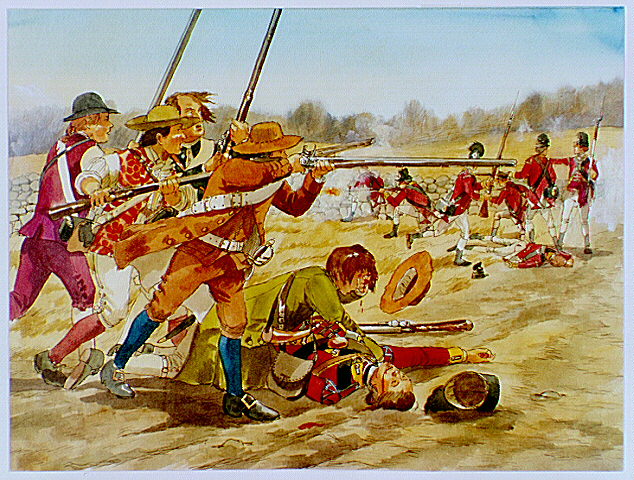
McLeod with 50 men attempted to cross the bridge and attack the Patriot defensive position, but the attempt was futile and disastrous. Heavy musket fire coupled with a barrage of two artillery units killed 30 almost immediately, including McLeod. The remaining Loyalists quickly retreated and the battle was over almost as quickly as it had begun.

Bill Ballard’s drawing of the decisive moment during the Battle of Moores Creek Bridge.
NPS/Moores Creek National Battlefield.

So how important were these three approximate minutes of battle? This Patriot victory struck a huge blow to Loyalist recruitment in North Carolina – so much so that two months later, North Carolina’s delegates to Continental Congress were the first to vote for independence. And it created a rippling effect throughout the southern colonies, as one by one the royal governors were displaced and revolution took hold. 

No longer could the British see the Carolinas as easy targets. They abandoned this initial southern strategy to focus their resources on the war in the northern colonies. For the next three years, significant battles and events that we learn about today took place, thanks in part to the dominating Patriot showing at the Battle of Moores Creek Bridge.


If you’re interested in learning more about the Battle of Moores Creek Bridge, I strongly encourage you to visit Moores Creek National Battlefield’s website as well as their very active Facebook page. Both offer a wealth of information and additional resources for folks to explore.

Lieutenant CFighting between soldiers from Tarleton's Legion (British) and Morgan's Army (American Continental).

Life Lessons from the Battle of Cowpens

Two hundred and forty years ago, January 17, 1781, Brigadier General Daniel Morgan strategically manuevered his Colonial forces to defeat the British, led by Lieutenant Colonel Banastre Tarleton, at the Battle of Cowpens.

What can we learn from the Battle of Cowpens? Military strategy, yes. Historical knowledge, absolutely. But as we near the 250th commemoration of the American Revolutionary War, how do we turn the battle into relevancy for today’s modern society?

As historians, we can find meaning and connection to places and events at their face value. It’s a natural ability we have ingrained in our knowledge-seeking souls. What about those that can’t and don’t? How do we make them relevant to them so that our history is not forgotten?

The answers lie in the stories we tell and how we tell them. Instead of rehashing the specific details of the Battle of Cowpens, I’m going to try something a little different: think of a time when you were able to not only prove that someone’s opinion of you was wrong, you used it to your advantage to achieve a goal. Go ahead, I’ll wait.

Now recall that a key element of Morgan’s strategy was his use of the British underestimation of the Colonial militia forces. Before the Battle of Cowpens, Tarleton, like many British commanders, believed that the militia were mostly untrained or inexperienced civilians that would flee in face of a real battlefield. To be fair, this was witnessed at several battles (Battle of Camden on August 16, 1780 immediately comes to mind) so it’s a fair assessment.

Using this knowledge to his advantage, Morgan set a trap. Putting his militia front and center of his second battle line, he ordered them to fire off two volleys at the oncoming British before falling back. The perspective fueled the British assumption that the militia were fleeing the battlefield, and Tarleton drove his men forward… and right into Morgan’s trap.

Fighting between soldiers from Tarleton’s Legion (British) and Morgan’s Army (American Continental)
by Don Troiani. NPS Commissed Artwork.

Perhaps if Tarleton had not underestimated the militia, he would not have found himself in the only successful double envelopment in the American Revolution. But more to the point, Morgan took strategic advantage of the British perception of the militia’s capabilities.

While this battle’s lessons learned are easily applied to modern military education, how can we apply them to our everyday civilian life, particularly the lesson that comes from Tarlton’s mistake and Morgan’s strategy relating to the militia? The motto “never assume” comes to mind first. At the very least, it compels the message “Don’t let what other people may or may not think of you prevent you from achieving what matters most to you.” I personally like the potential of “If someone doesn’t see value in your abilities, prove them wrong.”

What life lesson do you pull from the battle’s story?

The third Artillery Engagement at the Battle of Trenton: December 26, 1776

Emerging Revolutionary War welcomes back guest historians Karl G. Elsea and William W. Welsch for the final installment of their three part series

1770 drawing of Hessian three-pounder gun and limber
(courtesy of Kriegskarten from Hessisches Staatsarchiv Marburg, Germany at
http://www.digam.net/?str=177)

The v. Lossberg Artillery detachment:

Bombardier Conrad Volprecht was about 44 years old with over 27 years of service. He led the v. Lossberg artillery detachment consisting of another bombardier, 13 gunners and 3 matrosses, with two three-pounder guns and associated horses, harness, and limber.[i]

Over two years after the battle and being a prisoner Bombardier Volprecht gave testimony that indicated the sequence of battle for his detachment was roughly as follows: First went to field, second fired north, third ordered south, and fourth got stuck in the mud till the end of the battle. There is a problem though, the sequence that better fits the data from the battle was as follows: first went to field, second ordered south, third fired west, and fourth got stuck in the mud.

 John Adams wrote “Facts are stubborn things. They cannot be altered by our wishes, our inclinations, or the dictates of our passions.” In studying firsthand accounts of the battles in the Revolutionary War they are sometimes not correct or even true. For example, there is an enjoyable firsthand account (written many years later) by a patriot Sergeant White (The Good Soldier White) that is often quoted in accounts of the battle. Parts of his story are no doubt true. The problem is that when Sgt. White states he was with “Lieut. Munroe, our late President of the U. States” and “I was the first that reach them [cannons],” and “They had all left it, except one man tending vent,” those specific parts of the story cannot be true. Hessian Lt. Englehardt would not have time to do all that he did and then cross the Assunpink bridge before the Jagers if artillery men from Sullivan’s column were that far up King Street. Facts from the battle mean that part of that story does not work.

The most important place in all the 13 states fighting for independence on December 26, 1776 from 8:00 am to 9:00 am was the long, narrow bridge over the Assunpink creek. It was held by Hessian Sergeant Muller and 18 men. Sgt. Muller was about 50 years old with about 32 years of service. The importance of this place was not fully realized by the Hessians, but the Patriots knew it had to be closed, and General Washington had two full brigades, Sargent’s and Glover’s, tasked with taking, as quickly as possible, and then holding the bridge.

At about 8:03 am Patriot General Sullivan was about one mile from Trenton center along the River road when he attacked the outlying Jager pickets. General Sullivan had the artillery fire several canister shots at the Jagers. This firing also served as a signal to General Washington so he would know his other wing was attacking. It was to be recalled that General Washington started his attack about 8:00 am on the Pennington road and he also was about a mile from Trenton center. This cannon firing was also a signal to General Ewing so he knew when to start his distraction. General Ewing heard the three cannon shots and he quickly followed with his guns and howitzers firing ten shots from across the Delaware River. General Ewing kept up his firing until he could make out that Patriots were approaching. The v. Knyphausen regiment was forming on Second Street and was the logical unit to resist any attack coming from the River Road.

Volprecht’s detachment with its two guns followed Lt. Fischer’s detachment east on Fourth Street from the Methodist church into the field north and east of the Quaker lane. Lt. Fischer’s detachment was falling back from its earlier engagement and picked up the v. Lossberg detachment as it passed by. It took longer for the v. Lossberg artillery detachment to prepare for the battle because the horses had to be collected, harnessed, hitched, and the guns limbered. Fischer testified that the “cannon were unhorsed, and the horses unharnessed and brought back again into the stable” from the cancelled early morning patrol.[ii] For the morning patrol the horses had been hitched and guns limbered at 4:00 am but the patrol was cancelled so the men/horses/limber/guns were brought back to the Methodist church and waited for sunrise to unhorse.  

The infantry of the v. Lossberg and Rall regiments followed Volprecht’s detachment into the field. It was in this field that these two regiments would form a line for battle. While waiting for the v. Lossberg regiment to form Volprecht was ordered by Lt. Weiderhold, “Artillery men, come here with the cannon” meaning they were to join the v. Knyphausen regiment.[iii]  The v. Knyphausen regiment was on Second Street heading to the open field just east of Trenton and away from the Assunpink bridge. Volprecht and his v. Lossberg artillery detachment moved south on Quaker lane, linked up with the v. Knyphausen regiment, and set up his gun position facing threats coming from Trenton. The following map presents Trenton as it was in 1776.[iv]

While this was happening on the Hessian side, the right wing of the Patriot forces was moving east on River Road. General Sullivan rushed two of his brigades toward the Assunpink bridge. Neil’s battery with Sargent’s brigade and Sargent’s battery with Glover’s brigade made it to the bridge and across. Glover’s brigade with Sargent’s battery continued along the Assunpink creek to cut off possible exits for the v. Knyphausen regiment. St Clair’s brigade was moving east on Second Street with Moulder’s (three four-pounders) and Hugg’s artillery (two three-pounders).

Hessian Bombardier Volprecht testified that he fired his gun five times and the other gun fired one time.[v] One of those six shots hit the fore horse of one of Hugg’s three-pounder guns as they advanced in support of Patriot St. Clair‘s brigade. John Greenwood, a fifer in the 15th Continental, recorded that one of Hugg’s guns had the fore horse shot by a Hessian three-pounder gun, ”the ball from which struck the fore horse that was dragging our only piece of artillery, a 3-pounder. The animal, which was near me … was struck in its belly and knocked over on its back. While it lay there kicking the cannon was stopped.”[vi]  That was the only hit scored by the Hessian artillery that day. St. Clair’s brigade with Col. Stark’s infantry in the lead applied great pressure causing the v. Knyphausen regiment to pull back farther east. Volprecht’s artillery detachment pulled back with the regiment.

As the Hessian artillery detachment pulled back east disaster struck both guns. Volprecht had been ordered into a valley without the ground being checked. Both guns got stuck in the mud. The rest of the battle the men of the artillery, with some aid from nearby infantry, was spent trying to extract the guns from the mud. One gun was extracted just before the surrender, the other gun was extracted after the battle was over.

Mud ended the third artillery engagement. The battle at Trenton was over. The Patriots had a great victory. What is shocking was the limited number of shots from the Hessian artillery. The Rall artillery detachment fired twelve solid shot and one grape, the v. Knyphausen artillery detachment fired “seven or eight shots,” and the v. Lossberg artillery detachment fired six shots.[vii] These few shots lend support for how quickly the Patriots won the Battle of Trenton.

Sources:

[i] William S. Stryker, The Battles of Trenton and Princeton (The Riverside Press, Cambridge, 1898), 388

[ii]Hessian Documents of the American Revolution, Morristown National Historical Park, ML, The Affair at Trenton Dec. 26, 1776, English Translation, ML 337

[iii] Hessian Documents of the American Revolution, Morristown National Historical Park, ML, The Affair at Trenton Dec. 26, 1776, English Translation, ML 277

[iv] Information taken from The Trenton Mapping Project located at www.trentonhistory.org/Documents/Trentonin1775.pdf  With the information available it is likely more buildings are shown rather than less.

[v] Hessian Documents of the American Revolution, Morristown National Historical Park, ML, The Affair at Trenton Dec. 26, 1776, English Translation, ML 277

[vi] John Greenwood, Revolutionary Services of John Greenwood of Boston and New York, 1775-1783, 40-41. “the first intimation I received of our going to fight was the firing of a 6- pound cannon at us, the ball from which struck the fore horse that was dragging our only piece of artillery a 3-pounder.” Retrieved from https://archive.org/details/revolutionaryser00gree/page/38/mode/2u

[vii] Hessian Documents of the American Revolution, Morristown National Historical Park, ML, The Affair at Trenton Dec. 26, 1776, English Translation, ML 341

The second Artillery Engagement at the Battle of Trenton: December 26, 1776

Emerging Revolutionary War welcomes back guest historians Karl G. Elsea and William W. Welsch

1778 sketch-map drawing of Battle of Trenton by Lt. Fischer
(courtesy of William S. Stryker, The Battles of Trenton and Princeton, Riverside Press, Cambridge, 1988, page128)

The v. Knyphausen artillery detachment:

Lieutenant Friedrich Fischer was about 37 years old and had about 20 years military experience. He was the senior artillery officer in Trenton. For administrative purposes he saw to the needs of the men, and horses, and equipment for the artillery in Trenton. However, for tactical considerations he was a detachment commander to two three-pounder field guns and crews and horses and equipment assigned to support the v. Knyphausen Regiment. He was to follow their orders unless overridden by the Brigade leader, Colonel Rall. Lt. Fischer never made it to his assigned regiment. The reason was the rapid advance by the Patriots on all fronts.

Each regiment of the Hessians as they came to Trenton in mid-December was assigned a significant building, usually a church, to form its “center of gravity.” The v. Knyphausen regiment was assigned the Presbyterian church, the Jagers were assigned the Old Stone Barracks, the v. Lossberg regiment the English church, the dragoons were assigned the Quaker meeting house, and the Rall regiment several taverns. The Artillery was assigned the Methodist church at the northeast corner of Queen Street and Fourth Street. Thus, the artillery horses, harness, and limbers were at the Methodist church for the three detachments. Three of the neighboring houses to the Methodist church each contained the men for an artillery detachment.

Continue reading “The second Artillery Engagement at the Battle of Trenton: December 26, 1776”

The first of three Artillery Engagements at the Battle of Trenton: December 26, 1776

Emerging Revolutionary War welcomes back guest historians Karl G. Elsea and William M. Welsch.

Part I

1770 drawing of Hessian three-pounder barrel
(Drawing of Hessian three-pounder gun, dated 1770, at Kriegskarten from Hessisches Staatsarchiv Marburg, Germany at http://www.digam.net/?str=177)

The Rall Artillery Detachment:

It is well known that the Battle of Trenton saved the American Revolution from defeat. What is not well known is the story of two of the three Hessian artillery detachments and the description of their field guns. This series of articles tells the story of the three Hessian artillery engagements at the First Battle of Trenton. These three fights largely determined the victory for the patriots.

The field guns used by the patriots in the artillery engagement at Trenton were fairly well documented. The Patriots used British Armstrong design M1736 six-pounders, British commercial iron four-pounder barrels on Patriot designed carriages, and the Common Pattern British designed three-pounders (looked like scaled down six-pounders).

The Hessian three-pounder field guns were primarily designed to be beautiful, symmetric and fill both the roles of field (light) artillery and garrison (medium) artillery. The “brass” barrel was one caliber (caliber was equal to 3.01 English inch) thick at the breech, one half caliber thick at the muzzle, and was twenty calibers long from breech ring to muzzle. This symmetry came at a price, namely, the barrel alone weighted over 700 pounds. As a comparison, the 1776 designed British Congreve three-pounder barrel had a weight of 212 pounds and was 12.4 calibers long while the “Common” pattern three-pounder barrel used by the Patriots was 287 pounds and 14.5 calibers long.[i] This flaw in the Hessian guns concerning the weight required four horses to pull each gun and made each gun more vulnerable to sinking in mud. Field guns were supposed to be” light,” something these Hessian guns were not.

Continue reading “The first of three Artillery Engagements at the Battle of Trenton: December 26, 1776”

Christmas Night, 1776: How Did They Cross? The Horses:

Part II.

Part 1 of this article showed that a total of 23 ferry trips were required to move all of Knox’s artillery men, guns, horses, and carts across the Delaware River. In addition, there were other horses needed for the march to Trenton. Many of the likely 35 horses associated with senior officers and aids could fit in with the above 23 trips at a rate of a couple per trip, especially the ferry with only one cart. 

There were six ferries operating to move the Continental Army across the river at McKonkey’s ferry site. Each of the six ferries could likely carry a maximum weight of roughly 8,750 pounds. That weight estimate comes from the intelligence report from Capt. Losbiniere on 22 December 1776 concerning the “7 flat-bottom boats which may carry about 50 men each and two ferry Boats, which may carry the like number” that were with Col. Cadwalader at Bristol ferry.[i]  There is no reason to believe those ferries were different from those at used at McKonkey’s. If it is assumed a man weighed 150 pounds plus 25 pounds of musket and gear, then the weight for 50 men comes to 8,750 pounds. With those capabilities the Philadelphia Light Horse needed 3 ferries for their unit (8 horses and riders per ferry).

Possibly one more ferry trip for any leftover senior officers and aids horses was necessary.  That is 27 trips total needed. With six ferries working that is four trips for all with three additional trips required. Those five round trips by the ferries were estimated by Washington in his plan to require six hours; however, it actually took a nine-hour period (6 pm to 3 am). The additional hours required for the crossing was likely explained by the floating ice and the increased river current driving the ferries out of position.

The question was raised about how difficult it would have been to transport the horses across the river. The somewhat surprising answer may be that it was not as difficult as many assume. No doubt a few horses were a problem; however, the majority of the horses probably presented few problems. How we surmise this is as follows:

Firstly, we can safely speculate that at least some of the horses had participated in earlier ferry crossings during the army’s previous movements and retreats. Those horses would remember that nothing was amiss in the crossing.  Secondly, many of the farm horses transferred to pull guns had previous experience pulling carts and wagons across ferries to take produce to market. Thirdly, each team had a driver who knew the horses and he could strategically place the lead horse with a horse who had experience. As for the cavalry, each horse rider likely slowly leads his horse onto the ferry. Horses who see a previous horse move onto a ferry without incident generally lose their fear.

The following picture of a contemporary ferry crossing (1779) shows a typical crossing.[ii] This period ferry appears to measure about 48 feet long (without the two four-foot ramps) by eight feet wide. If one replaces the carriage in the painting with a field gun and limber then the person holding the reins would be the driver. Note the horses are in a pair; whereas, on a gun team there would be a thill horse in front of the limber and additional horse(s) in front of the thill horse.


Many of the campaigns and battles of the Revolutionary War are better understood if a study of horses was included in the analysis. Often, it was all about horses, or the lack thereof. Both General Burgoyne’s march south in the Saratoga campaign and General de Kalb’s march toward South Carolina show that the lack of horses was very important. As for the crossing of the Delaware, General Washington showed his skill in planning. More important, Washington was lucky. It was not the horses that drove the outcome but rather the bad weather and severe river conditions. These bad conditions set in place the delay that assisted the surprise attack.


[i] William S. Stryker, The Battles of Trenton and Princeton (The Riverside Press, Cambridge, 1898), 338

[ii] Camden County Historical Society, Drawing of the ferry done in 1779 in Lower Delaware River. Image retrieved https://www.living-in-the-past.com/ferry.html