Join us as we welcome back Dr. Steven Smith as he discusses his new book “The Battles of Fort Watson and Fort Motte, 1781.”
Dr. Smith will discuss the history of four critical weeks from April 12 until May 12, 1781, in which the tide of the Southern Campaign of the Revolutionary War turned in favor of the Americans. Focusing on General Francis Marion’s and Colonel Henry Lee’s capture of two key British forts, Fort Watson and Fort Motte, coordinating with Nathanael Greene in retaking the South Carolina backcountry. These posts defended the supply line between Charleston and the British-occupied villages of Camden and Ninety Six. Although there would be much more fighting to do, once the two forts were lost, the British had to abandon the backcountry or starve. The British would never again be on the strategic offensive and were confined to the Charleston environs until they abandoned the city in December 1782.
Smith will also discuss how archaeological investigations have helped change the interpretation and mythology of both battles. Join us for a livestream on our You Tube channel in what will be a great discussion. The video will be posted to our Facebook page at its conclusion
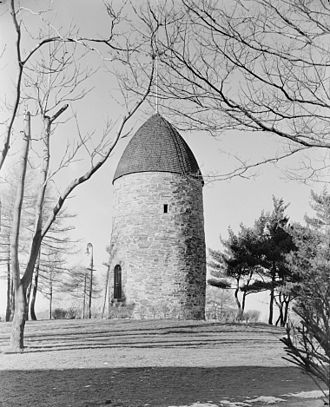
The Charlestown, now Somerville, Powder Magazinewas the focus of the September 1, 1774 Powder Alarm. The historic structure still stands today.
Join ERW this Sunday at 7pm as we welcome back historian and author J.L Bell. We will discuss the events in Boston and Massachusetts in 1774 after the passing of the now popularly called “Intolerable Acts” in response to the Boston Tea Party. A time of political, social and economic upheaval for everyone in the colony, the events that transpired had big impacts across all the colonies and set the stage for April 19, 1775. J.L. Bell is a renowned historian who operates a very comprehensive blog focused on Boston 1775 (https://boston1775.blogspot.com/ )
Grab a drink and sit back and learn about the events that rapidly progressed during 1774 towards warfare and bloodshed. J.L. Bell will provide a great insight into how things quickly deteriorated in Massachusetts and how that impacted all the colonies as a whole. Unlike previous revelries, this revelry will run live on our You Tube channel at: https://www.youtube.com/@emergingrevolutionarywar8217 . Due to new rules and regulations with Facebook, we can no longer stream our revelries live on Facebook. We hope that will change in the future. We will post the You Tube video to our Facebook page after the live broadcast. We hope to see you this Sunday, June 9, 2024 at 7pm on our You Tube Channel!
Join us this Sunday at 7 pm as we welcome Saratoga historian Lauren Roberts. Lauren will discuss with us the upcoming as we discuss their upcoming Women in War Symposium and Bus Tour hosted by the Saratoga County 250th Commission. The third Annual Women in War Symposium will be held on May 4, from 8:15 a.m. to 3:30 p.m. at the Old Saratoga American Legion Post, located at 6 Clancy St. As an enhancement to the Symposium, a bus tour of historic sites will be offered on May 5.
Lauren will also discuss some of the topics being covered at the Symposium and some of the diverse history in Saratoga that relates to the American Revolution. We all know about the Battle of Freeman’s Farm and Bemis Heights, but how many know about the “witch of Saratoga”? Grab a drink and join us this Sunday night at 7pm on our Facebook page for a fun and insightful discussion into the great work that Saratoga County is doing to commemorate “America’s Turning Point.”
On September 20, 1777 an American force under General Anthony “Mad Anthony” Wayne was surprised and routed by British forces under General Charles Grey. Wayne’s entire division was put to flight losing nearly 300 men (with the British losing just a dozen). Called by many the “Massacre at Paoli”, the fight was one of many that was part of the 1777 Philadelphia Campaign.
Join ERW on Sunday, April 14th at 7pm on our Facebook page as we welcome back historian and author Michael C. Harris, expert on the Philadelphia Campaign, we will discuss the battle, its role in the campaign, the personalities and the myths around Paoli. Harris is now working on his third volume in his much acclaimed Philadelphia Campaign trilogy, that will include the Battle of Paoli. If you can not make the livestream, the Revelry will be posted to our You Tube and Spotify channels.
Reverend John Gano served as a pastor of a Baptist Church in New York City before the Revolution. When the British occupied the city, his congregation split and dispersed. Although he resisted attempts to recruit him as a chaplain, the minister accepted an invitation to preach to a Continental regiment on Sundays until the Royal Navy cut him off from Manhattan. Recalled Gano, “I was obliged therefore, to retire, precipitately, to our camp.”[1] The preacher would become a chaplain after all. Gano joined Colonel Charles Webb’s Connecticut Regiment and followed it.
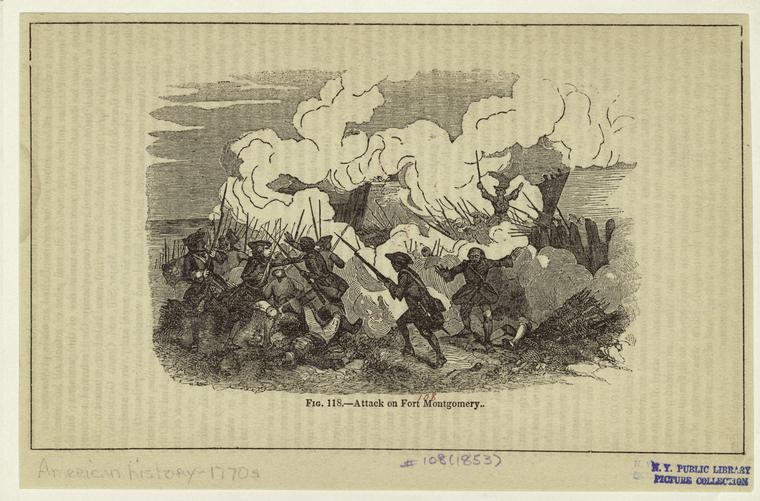
Gano stayed with the army, was there during the battles in New York and mistakenly found himself in front of his regiment at White Plains. He remained with the unit until enlistments expired at the beginning of 1777. The minister pledged to rejoin if Webb and his officers raised a new regiment, but instead found himself at Fort Montgomery on the Hudson, eventually succumbing to arguments from General James Clinton and Colonel “Dubosque” to join the men stationed there as a chaplain. (This was probably Colonel Lewis Dubois of the 5th New York.) He remained there until Sir Henry Clinton launched his autumn attack into the Hudson Highlands to support General Burgoyne’s campaign to Albany. Allowing for the uncertainties and errors of first-hand experiences and perspectives, the happenstance-chaplain provided an excellent first-hand account of the battles for Fort Montgomery and Fort Clinton on October 6, 1777.
“We had, both in Fort Montgomery, and Fort Clinton, but about seven hundred men. We had been taught to believe, that we should be reinforced, in time of danger, from the neighbouring militia; but they were, at this time, very inactive. We head of the approach of the enemy, and that they were about a mile and a half from Fort Clinton. That fort sent out a small detachment, which was immediately driven back. The British army surrounded both our forts, and commenced universal firing. I was walking on the breastwork, viewing their approach, but was obliged to quit this station, as the musquet balls frequently passed me. I observed the enemy, marching up a little hollow, that the might be secured from our firing, till they came within eighty yards of us. Our breast-work, immediately before them, was not more than waist-band high, and we had but a few men. The enemy, kept up a heavy firing, till our men gave them a well directed fire, which affected them very sensibly. Just at this time, we had a reinforcement from a redoubt, next to us, which obliged the enemy to withdraw. I walked to an eminence, where I had a good prospect, and saw the enemy advancing toward our gate. This gate, faced Fort Clinton, and Captain Moody, who commanded a piece of artillery at that fort, seeing our desperate situation, gave the enemy a charge of grape-shot, which threw them into great confusion. Moody repeated his charge, which entirely dispersed them for that time.
About sun-set, the enemy sent a couple of flags, into each of our forts, demanding an immediate surrender, or we should all be put to the sword. General George Clinton, who commanded Fort Montgomery, returned for answer, that the latter was preferable to the former, and that he should not surrender the fort. General Hames Clinton, who commanded in Fort Clinton, answered the demand in the same manner. A few minutes after the flags had returned, the enemy commenced a very heavy firing, which was answered by our army. The dusk of the evening, together with the smoke, and the rushing in of the enemy, made it impossible for us to distinguish friend, from foe. This confusion, have us an opportunity of escaping, through the enemy, over the breastwork. Many escaped to the water’s side and got on board a scow, and pushed off.”[2]
In his recent history of the Saratoga Campaign, Kevin Weddle cites General Clinton’s estimate of 350 American casualties: 70 killed, 40 wounded, and 240 captured, roughly half of the combined garrison of both forts. (Weddle estimates the American garrison at 700, not the 800 Gano believed). British losses amounted to forty killed and 150 wounded out of 2,150 in the assaulting forces.[3]
Gano spent the remainder of his service in the northeast, accompanying the men during General Sullivan’s campaign against the Iroquois, but otherwise spending the time in encampents. He finally returned to New York and reoccupied his house after war: “My house needed some repairs, and wanted some new furniture; for the enemy plundered a great many articles.”[4] After the war, the minister rebuilt his congregation in New York before relocating to Kentucky, where he died in 1804.
[1]Biographical Memoirs of the Late Rev. John Gano (New York: Printed by Southwick and Hardcastle for John Tiebout, 1806), 93.
This article by ERW’s William Griffith first appeared on the American Battlefield Trust’s websiteon January 4, 2021.The original link can be found here.
The French and Indian War was in its fifth full year, and the tables had turned in Britain’s favor. As the larger conflict, the Seven Years’ War, raged throughout the globe, in North America, the British were one swift strike away from conquering the continent. The French in the Ohio River Valley, Great Lakes region, and Upstate New York had been thrown back on their heels and sent scurrying north into Canada leaving the road open for a British thrust against Montreal and Quebec. For the summer of 1759, the latter city, the capital of New France, would be placed in the crosshairs by an army commanded by Major General James Wolfe. If Quebec, situated along the most important water highway in Canada, the Saint Lawrence River, should fall, the French in North America would be squeezed into the region around Montreal. Pending any catastrophic failures by Britain’s army and navy and their allies elsewhere in the world, it would only be a matter of time than before New France was conquered.
James Wolfe and His Army
Thirty-two year old James Wolfe had served in the British Army for almost eighteen years when he was given command of the roughly 9,000-man force that was tasked with defeating the French in and around Quebec City in 1759. He was hard-nosed and did not always get along with his subordinate generals, Robert Monckton, George Townshend, and James Murray. The previous year he had been a brigadier general under Jeffry Amherst during the successful siege and capture of the fortress city of Louisbourg in Nova Scotia, and afterward led a campaign of destruction against the fishing villages of the Gulf of Saint Lawrence. He then returned to England and secured a major generalship and command of the Quebec expedition. He arrived in Halifax in April 1759 and began training his force and preparing plans for his campaign.
Wolfe’s army was composed predominantly of professional British soldiers. Several hundred North American ranger units also complimented his force, which he described as, “… the worst soldiers in the universe.” He did not have much respect for colonial troops. On June 26, Wolfe’s men began landing at Ile d’Orleans in the middle of the Saint Lawrence River just to the east of Quebec City. Across the river, the French commander, the Marquis de Montcalm, prepared to oppose them.
The Marquis de Montcalm and Quebec’s Defenders
Louis-Joseph, Marquis de Montcalm, had been in command of France’s regular troops in North America since 1756. During that time he had put together an impressive string of victories at places like Fort Oswego, Fort William Henry, and Fort Carillon. As the attack on Quebec loomed, he was given command of all military forces on the continent, including the Canadian militia and marines. The previous harvest had not been good in Canada, and his army and the civilians in the city were on short rations, but relief came during the spring of 1759 when ships arrived carrying food and supplies. With this, Montcalm was determined to hold onto the city at all costs. He dug trenches outside the city and along the Saint Lawrence’s northern shoreline extending for nearly ten miles, welcoming a frontal assault from Wolfe. His army, consisting of over 3,500 French regular troops, included thousands more Native American allies and Canadian militiamen who were not accustomed to fighting in open fields against professional enemy soldiers. This important disadvantage would play a large part in Montcalm’s ultimate defeat.
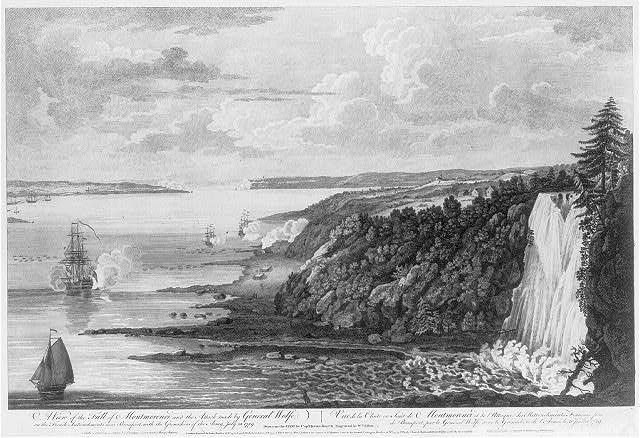
An engraving of General James Wolfe’s failed attack on the Montmorency River, July 31, 1859. Library of Congress
The Campaign
When General Wolfe’s army began landing at Ile d’Orleans and subsequently Point Levis (directly across the river from the city) to the east of Quebec, he had initially hoped to force a landing on the northern shore just a few miles downstream at Beauport. However, he quickly discovered that Montcalm had heavily fortified the landing site, throwing a monkey wrench into his plans. This did not deter Wolfe, however, and by July 12, he had placed ten mortars and cannon at Point Levis and began bombarding the city itself. More guns were brought up and the bombardment continued for weeks in an effort to demoralize those within Quebec City.
The best chance to defeat Montcalm was to force him out of his defenses and into an open field battle. Wolfe understood that his vigorously trained and superior disciplined regular troops would have the upper hand against lesser-numbered French regulars and their militia. His first attempt to accomplish this occurred on July 31, when he landed a force of grenadiers, light infantry, and rangers near Montmorency Falls further downstream from Beauport hoping to ford the Montmorency River and reach a position in the rear of the French lines. It failed miserably. Montcalm guessed correctly that an attack was coming from that direction and rushed men there to meet the enemy. The river’s tide prevented Wolfe from getting all of his troops in position on time and frontal assaults launched from the beach were beaten back with heavy losses. The British retreated, leaving behind 443 men killed and wounded. The first attempt to force a landing on the Quebec side of the river had failed, but it would not be the last. Wolfe turned his attention further upriver, where he hoped his prospects for victory would be more fruitful.
The Plains of Abraham
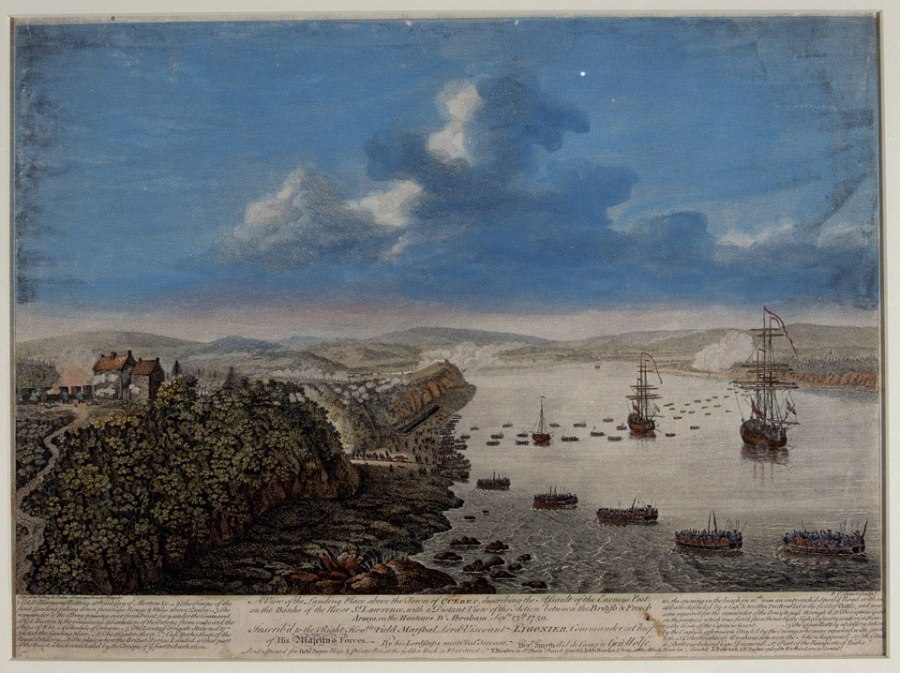
As the weeks passed following the debacle at Montmorency, the British probed the northern shore west of Quebec for a secure landing spot. During this time, Wolfe grew sick with a severe fever and kidney stones and believed his days were numbered. He recovered enough, however, to begin moving his army upriver about eight miles from the city not far across from Cap Rouge. It was decided that the landing would be made at Anse au Foulon, where a narrow gap and trail led to the top of the cliffs just two miles west of the city.
At four in the morning, September 13, Lieutenant Colonel William Howe (who would serve as the commander of the British Army in America during the Revolutionary War) came ashore with the light infantry and surprised and overwhelmed the enemy outpost above the landing site. The conditions for rowing the army into position that early morning had been perfect for Wolfe. Montcalm was caught off guard.
After securing the landing zone, Wolfe began moving his attack force of roughly 4,400 regulars onto the Plains of Abraham, an open field about a mile wide and a half a mile long in front of the city’s western defenses. Responding to the threat as quickly as could be done, Montcalm rushed some 1,900 French regulars and 1,500 militiamen and Native Americans to meet the British line. This was the open field fight that Wolfe had been yearning for ever since the campaign began.
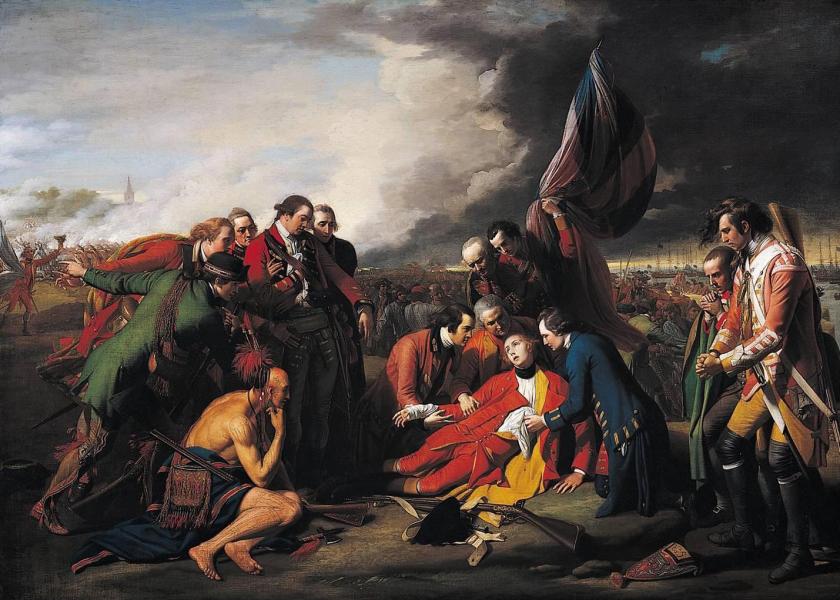
Benjamin West’s depiction of the death of British General James Wolfe during the Battle of Quebec, painted in 1770. Wikimedia Commons
As the French commander formed his men up in a line of battle, the British waited patiently across the field to receive their attack. Montcalm ordered his troops forward, and almost immediately his militiamen’s lack of experience and training in open combat became apparent as their formations wavered and some failed to advance close enough to the enemy line to fire effectively. One British participant described what happened next:
The French Line began … advancing briskly and for some little time in good order, [but] a part of their Line began to fire too soon, which immediately catched throughout the whole, then they began to waver but kept advancing with a scattering Fire.—When they had got within about a hundred yards of us our Line moved up regularly with a steady Fire, and when within twenty or thrity yards of closing gave a general [fire]; upon which a total [rout] of the Enemy immediately ensued.
The battle was over in just fifteen minutes as the British swept forward, claiming the field and capturing hundreds of prisoners. Both sides each lost over 600 men killed and wounded, including both respective commanders. Wolfe was mortally wounded and died a hero on the field. Montcalm, too, was hit by grapeshot in the abdomen and died the next morning. Five days later, Quebec surrendered. The French retreated further downstream to Montreal, attacked and failed to retake Quebec the next spring, and surrendered in whole on September 8, 1760, effectively ending all major military operations in North America during the French and Indian War. The battle for the continent between Britain and France was over.
We are excited to announce our 2024 (fourth annual!) bus tour location will be Lexington and Concord on October 11-13, 2024. Join historians Phillip Greenwalt, Rob Orrison and Alex Cain as we tour the sites associated with the beginning of the American Revolution on April 19, 1775. The tour will cover events in Lexington, Concord and sites along the “Battle Road.” Tickets are $250 per person and includes a Friday night lecture, all day tour on Saturday and half day tour on Sunday (bus tour transportation and Saturday lunch included in cost).
Join us for our FOURTH annual tour as we take on the beginning of the American Revolution just a few months before the 250th anniversary. Learn about the dramatic events that led to the first shots for the Revolution and the bloody aftermath. We will visit Lexington Green, Buckman’s Tavern, North Bridge in Concord, Battle Road including Merriam’s Corner, Parker’s Revenge and the Jason Russell House. There is no better way to experience history than to stand in the footsteps of where it happened!
The frontier is inextricably tied to the early development of the United States under its 1789 Constitution. In The Treaty of Paris ending the Revolution, Britain legally ceded its territories north of the Ohio and east of the Mississippi Rivers up to the borders of Canada to the United States—the very same territory it had claimed from France at the end of the Seven Years War. While European states might redraw borders, they did not consult the people actually living in the area. Congress proclaimed the area the Northwest Territory and in the following years, native people, particularly the Native nations living in modern Ohio, Indiana, and Michigan fought a lengthy war with the new Unites States, inflicting one of its worst defeats on the United States Army and coming closer than any other Native American coalition to halting, or at least slowing, the spread of white society beyond the Appalachians.
Steven P. Locke, in his new book, War Along the Wabash, chronicles the first major campaign of the United States Army in what has become known as the War of the Northwest Territory. In 1791, frustrated by Indian attacks on frontier settlements that had not stopped after the American Revolution, Congress authorized the Washington Administration to raise an army and conduct a campaign against the Ohio Indians, the Miami, Seneca/Cayuga, Shawnee, Wyandot, Odawa, Ojibwe, Potawatomi, and Delaware. Major General Arthur St. Clair, a veteran of the Revolutionary War, was Governor of the Northwest Territory and took personal command of the army created for the campaign. His objective was simple enough, to launch his army from Fort Washington in modern Cincinnati to Kekionga, a cluster of Native American villages at the portage between the Maumee and Wabash Rivers in modern Fort Wayne. Presumably, Americans ensconced in such a fort would be able to readily overawe the local tribes in their homes, force a Native American recognition of American “ownership” of the Ohio Country, and stop Indian raids along and across the Ohio River. St. Clair received command on March 4, 1791 and was expected to march out of Fort Washington by July 10, hardly sufficient time to recruit, organize, train, and equip an army large enough for the task before him, particularly on the sparsely populated frontier. Federal troops and supplies had to come all the way from the east coast by way of Pittsburgh and the Ohio River, while Kentucky provided militia and filled out some provisional levies.
Despite his intimate experience with the connection between military operations and logistical support, Secretary of War Henry Knox pressed St. Clair all summer to get his troops moving. St. Clair, of course, could not. The Americans had already launched mounted raids into Native American territory, which generally resulted in burned villages and despoiled crops. According to Locke, the speed with which those raids proceeded highlights the cross-purposes under which St. Clair’s campaign would take place. He could either move quickly with a largely mounted force over existing trails or take a more deliberate, plodding approach through the wilderness by building a road, which necessitated infantry and engineers. St. Clair chose the latter, but the pressure from Knox and President Washington never ceased. St. Clair responded by marching the army out of Fort Washington in September and slowly moving northward, building a road, camps, and forts as it moved a little over two miles a day, even before the army had fully assembled at Fort Washington. Indeed, in the first month, St. Clair was not usually with the army, consumed by logistical duties as he shuttled back and forth from Fort Washington or Kentucky gathering supplies and militia and then moving them forward over the newly built, yet still primitive, road.
By November 3, 1791, St. Clair had rejoined his army and reached the headwaters of the Wabash River with one regular infantry regiment, two levy regiments, and assorted militia, artillery, dragoons, teamsters, and camp followers. Altogether, it was about 1,400 men. Mistakenly believing he was closer to Kekionga than was the case and that the Indians would not attack, he did not build breastworks that night, but deployed his army in two lines with some militia thrown across a creek and various outposts scattered around his position. He had detached his best federal regiment and sent it back down the trail to escort a supply train coming up to feed the army. Thus, the United States Army was at its weakest point during the campaign when the Indians of the emerging Ohio Indian Confederacy struck early the next morning.
The Confederacy force of 1,100 warriors applied traditional tactics, quickly routing the forward militia and then moving along the flanks to the rear, essentially surrounding St. Clair and then pressing ever tighter. Sniping from cover, the Indians seemed immune to American fire while inflicting heavy losses on the defenders. St. Clair launched two bayonet charges to restore his lines. As usual, the Native Americans gave way to the bayonet charges and then moved around the charging unit’s flanks as it separated from the main army, bringing each under a withering cross-fire. In a sense, St. Clair carved up his own army and dished out pieces for the Confederacy to consume. By the time St. Clair launched a third bayonet charge to clear his route of retreat, his army had collapsed. He escaped with 500 men, leaving 900 dead, dying, or wounded on the battlefield, including dozens of women and children among his camp followers. (Estimates of American losses vary widely among historians.) The disaster was worse than General Braddock’s defeat on the Monongahela in 1755, or Custer’s in 1876. War Along the Wabash is at its strongest when relating and analyzing the battle.
Locke tells the entire tale well, discusses the difficulties of raising an army from virtually nothing, includes small biographies of major “characters” as he introduces them, pays careful attention to logistics, which are often overlooked in campaign histories and were critical in the unfolding of St. Clair’s campaign, analyzes decisions and strategies, and discusses the fallout after St. Clair returned to Philadelphia to defend his decision-making. While most of the story is from the American perspective, which is better documented, Locke makes a serious effort to address Native American perspectives and experiences as they assembled and fought the American army.
All that said, he lapses into odd, avoidable errors from time to time. In my Kindle edition, Locke writes on page 397 that there were approximately 400 commissioned officers in the army (nearly 1 in 3 of the total force) at the beginning of the battle, just 150 of whom remained at the end, meaning 250 commissioned officers were killed during the battle. Yet, on page 429 he notes 69 out of 124 commissioned officers being killed or wounded during the three-hour battle. Collectively—and there are more eyebrow-raising moments—such errors or inconsistencies distract from the book’s overall strengths, which are considerable.
In 1793, during his campaign against the Ohio Indian Confederacy, Major General Anthony Wayne led his army up St. Clair’s trace and built a fort near the battlefield, identifiable by the large number of human remains and camp detritus, which he named Fort Recovery. A town, still named Fort Recovery, grew up there, and the site of the battle largely lies under Wayne Street. (Museums and parks around town commemorate both St. Clair’s defeat and Wayne’s subsequent campaign). War Along the Wabash is an excellent starting point to understand St. Clair’s campaign and the defeat that often bears his name. It will not be the last word, but it sets a high bar that future historians will have to work hard to surpass.
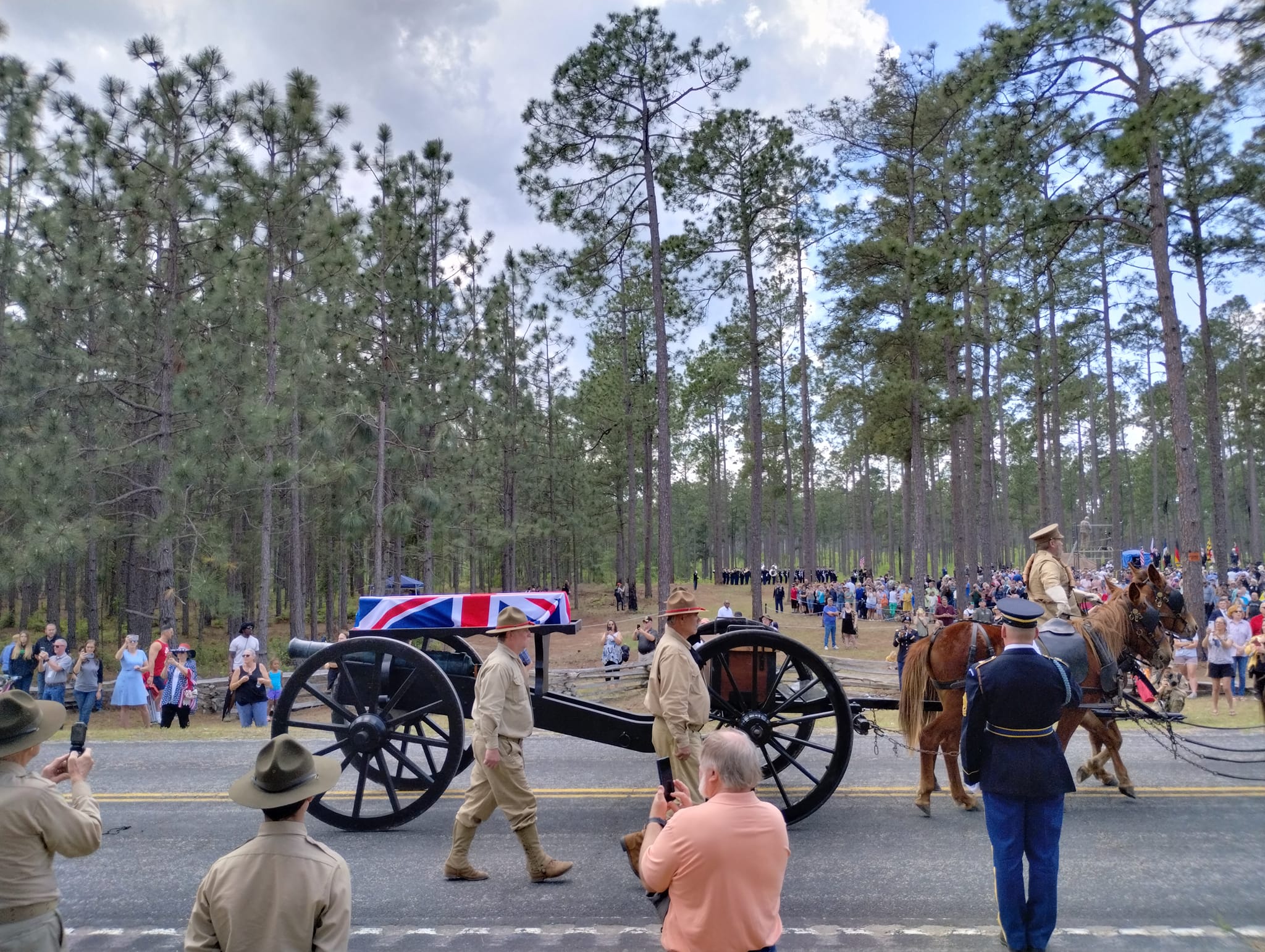
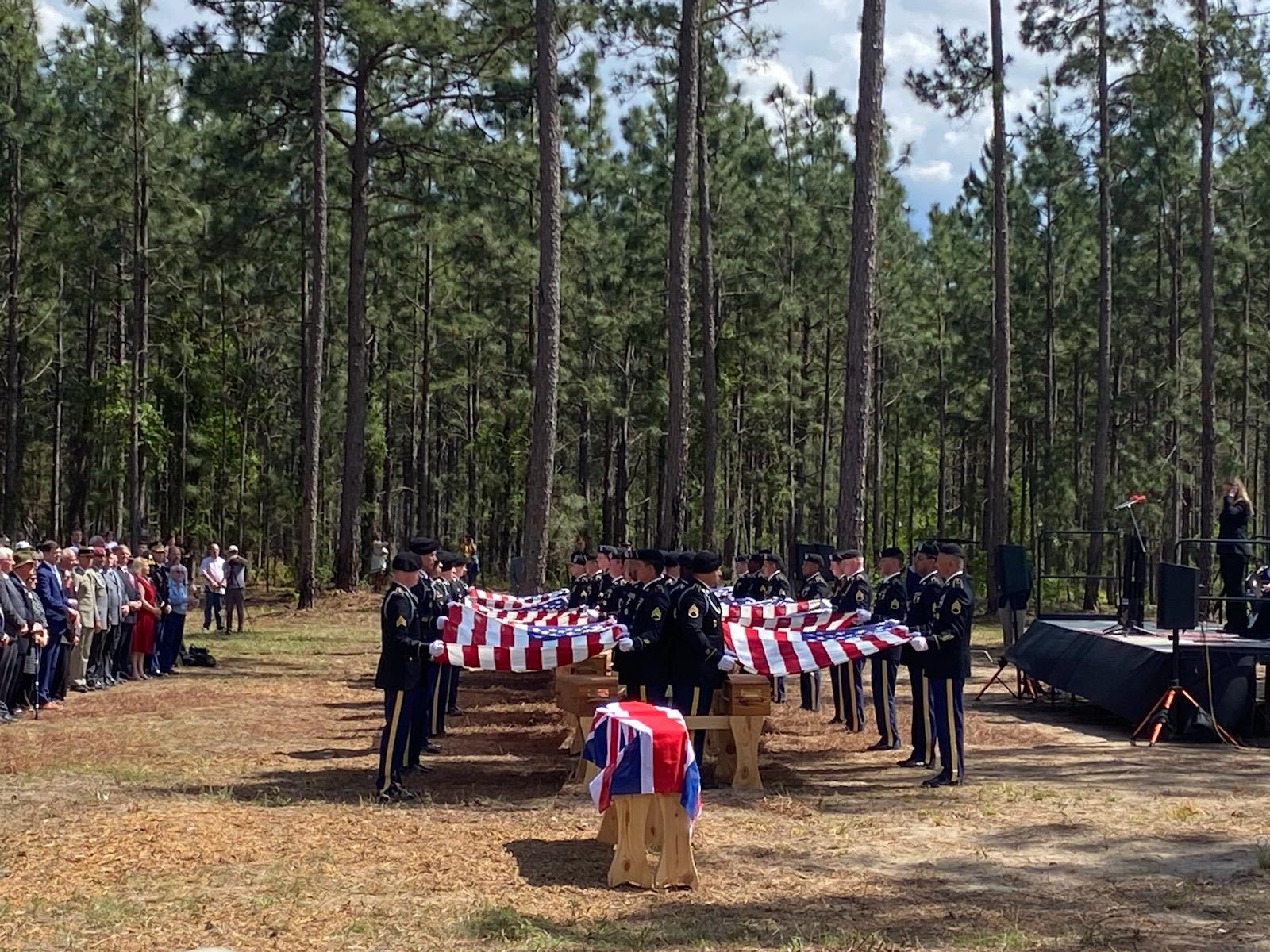
Join us as we discuss the excavation and successful recovery of the remains of 14 veterans of the August 16, 1780, Battle of Camden with James Legg and Steven Smith, Ph.D., the lead archeologists of the Camden Re-Burial Project which began in September 2022. We will discuss the indepth research conducted and the precise archaeological work that was done on the battlefield. Also learn about the reburial ceremony and where the soldiers were finally laid to rest.
This is a great opportunity to learn about a rare discovery on a American Revolutionary War battlefield. The Camden battlefield is a great archaeological site that is revealing multiple stories and helping historians piece together a better understanding of the battle. Grab a drink and join us on our Facebook page for a great evening of archaeology and history!
Major General Horatio Gates, “Hero of Saratoga” was tasked with saving the American effort in the south. Credit NPS
On August 15, Maj. Gen. Horatio Gates began to finalize his plans to move against Camden, SC. Gates, appointed as the new commander of the Southern Department the previous month, believed the British garrison in Camden was weak. Gates was receiving intelligence gathered by partisan commander Thomas Sumter who was acting in and around Camden. He informed Gates that the American army outnumbered the British post and that a large portion of the men at Camden were taken ill and not fit for duty (on this account, Sumter was correct). Sumter did not provide the intelligence that Lord Cornwallis was now in Camden with reinforcements and was taking personal command of the British force in Camden.
Modern day image of the area at Rugeley’s Mills, with modern day Flat Rock Road following the historic trace of the Great Wagon Road. Credit Rob Orrison
With this information, Gates felt confident in his ability to take on the British in Camden. He developed a plan that involved a three-part movement. He would leave his force south to Saunder’s Creek (about six miles north of Camden) and establish a strong defensive position. He also ordered Francis Marion and his men to the southeast. Gates wanted Marion to take command of the Williamsburg militia, watch the British movements, and destroy boats in the Santee River that a defeated Cornwallis might need to retreat from Camden to Charleston. The third prong he ordered a few days earlier on August 13. Gates, under the encouragement of Thomas Sumter, decided to send 100 Maryland Continentals and 300 Carolina militiamen (as well as two brass three pounders) to join Sumter and move down the western side of the Wateree. From this location Sumter could attack supplies and reinforcements going into Camden from Ninety Six to the west. Gates’s confidence was evident.
South Carolina militia Brig. Gen Thomas Sumter. Credit New York Public Library
As Gates made his final disposition to move south, Sumter’s militia along with his Continental detachment met some success west of Camden. The Wateree River flowed south just one mile west of Camden. Near the important Wateree Ferry that served the major route west from Camden, Loyalist Lt. Col. James Cary built a small fort on his farm near the ferry. Sumter was aware of the fort and decided to see if he could capture it. When Col. Thomas Taylor of Sumter’s command launched the attack, most of the defenders inside were asleep, and the others were deceived by Patriot militia dressed just like those occupying the fort. The Loyalists immediately surrendered. Sumter reported that his men killed 7 and captured 30 prisoners, including Cary. Also included in the loot were 38 wagons of supplies and nearly 300 head of cattle. After capturing Cary’s Fort, Sumter was also able to attack and capture a relief column from Ninety Six to Camden. Sumter’s spoils from this attack numbered nearly 70 prisoners and numerous wagons. Sumter also reaffirmed his earlier intelligence to Gates by writing that the British in Camden “do not exceed two thousand, and not as many as one thousand of the militia, who aregenerally sickly, and much dispirited.” Sumter’s intelligence, though not accurate, gave Gates encouragement on the upcoming movement toward Camden. At 10pm on August 15, Gates had his army on the road south towards Camden.
Gates was flush with optimism, at that same time Cornwallis had his army on the road north. Though the British forces were about half the size of Gates, they were more than Gates expected and consisted of some of the best men in the British army led by one of their most accomplished generals. Soon, due to a twist of fate, these two armies collided along the Great Wagon Road in the long life pine forest of South Carolina. The result was one of the worst days in the history of the United States Army.
Authors Rob Orrison and Mark Wilcox’s new book “All That Can Be Expected: The Battle of Camden and the British High Tide in the South, August 16, 1780” is due out August, 2023 and available at: https://www.savasbeatie.com/








 Emerging Revolutionary War Era