Robert Morris: Founding Father and Revolutionary Financier

Emerging Revolutionary War welcomes back guest historian Michael Aubrecht

To call Robert Morris “a political renaissance man” would be an understatement. He was vice president of the Pennsylvania Committee of Safety (1775–76) and was a member of the Continental Congress (1775–78) as well as a member of the Pennsylvania legislature (1778–79, 1780–81, 1785–86). Morris practically controlled the financial operations of the Revolutionary War from 1776 to 1783. He was a delegate to the Constitutional Convention (1787) and served in the U.S. Senate (1789–95). Perhaps most impressive is the fact that he signed the Declaration of Independence and the Articles of Confederation and later signed the U.S. Constitution.

At the start of the war Robert Morris was one of the wealthiest men in the colonies, but he would go on to claim bankruptcy after some catastrophic decisions. To fully appreciate the contributions of Robert Morris we must go back and examine him from the beginning.

Robert Morris

Robert Morris was born on January 31, 1734, in Liverpool, England, the son of Robert Morris, Sr., and Elizabeth Murphet Morris. His mother died when he was only two and he was raised by his grandmother. Morris’ father immigrated to the colonies in 1700, settled in Maryland and in 1738 he began a successful career working for Foster, Cunliffe and Sons of Liverpool. His job was to purchase and ship tobacco back to England. Morris Sr. was known for his ingenuity, and he was the creator of the tobacco inspection law. He was also regarded as an inventive merchant and was the first to keep his accounts in money rather than in gallons, pounds, or yards.

In 1750 tragedy would once again strike the Morris family. In July Morris Sr. hosted a dinner party aboard one of the company’s ships. As he prepared to depart a farewell salute was fired from the ship’s cannon and wadding from the shot burst through the side of the boat and severely injured him. He died a few days later of blood poisoning on July 12, 1750. The tragedy had a terrible effect on Morris who became an orphan at the age of 16. Looking for a change he left Maryland for Philadelphia in 1748. He was taken under the wing of his father’s friend, Mr. Greenway, who filled the gap left by the death of Morris’ father. Raised with a tremendous work ethic Morris flourished as a clerk at the merchant firm of Charles Willing & Co. 

Following in his father’s footsteps Morris was also gifted with successful ingenuity. In his twenties he took his earnings and joined a few friends in establishing the London Coffee House. (Today the Philadelphia Stock Exchange claims the coffee house as its origin.) Morris was sent as a ship’s captain on a trading mission to Jamaica during the Seven Years War (1756-1763). He was captured by a group of French Privateers but managed to escape to Cuba where he remained until an American ship arrived in Havana. Only then was he able to secure safe passage back to Philadelphia. 

Shortly after Morris’ return to the colonies Willing retired and handed the firm over to his son Thomas who offered him a partnership. This resulted in the formation of Willing, Morris & Co. The firm boasted three ships that were dispatched to the West Indies and England importing British cargo and exporting American goods. This relationship lasted for over 40 years and was immensely successful. At one point, Morris was ranked by the Encyclopedia of American Wealth, along with Charles Carroll of Carrollton, as the two wealthiest signers of the Declaration of Independence.

As influential merchants, Morris and Willing disagreed with the changes in tax policy. In 1765, the Stamp Act was passed and was met with massive resistance. Morris was at the forefront and led protests in the streets. His fervor was so striking that he convinced the stamp collector to suspend his post and return the stamps back to their origin. The tax collector stated that if he had not complied, he feared his house would have been torn down “brick by brick.” In 1769, the partners organized the first non-importation agreement, which forever ended the slave trade in the Philadelphia region.

Morris married Mary White on March 2, 1769, and they had seven children. In 1770, he bought an eighty-acre farm on the eastern bank of the Schuylkill River where he built a home he named “The Hills.” Due to his growing reputation Morris was asked to be a warden of the port of Philadelphia. Showing his tenacity, he convinced the captain of a tea ship to return to England in 1775.

Later on, Morris was appointed to the Model Treaty Committee following Richard Henry Lee’s resolution for independence on June 7, 1776. The resulting treaty projected international relations based on free trade and not political alliance. The treaty was eventually taken to Paris by Benjamin Franklin who transformed it into the Treaty of Alliance which was made possible by the Continental Army’s victory at Yorktown in 1781. 

Scholars disagree as to whether Morris was present on July 4 when the Declaration of Independence was approved. But when it came time to sign the Declaration on August 2 he did so. Morris boldly stated that it was “the duty of every individual to act his part in whatever station his country may call him to in hours of difficulty, danger and distress.” Until peace was achieved in 1783, Morris performed services in support of the war. His efforts earned him the moniker of “Financier of the Revolution.”

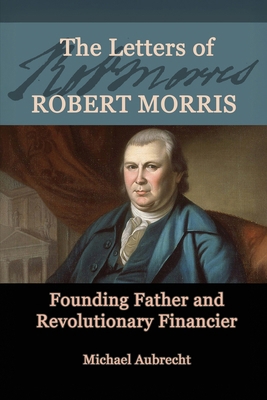
Michael is the author of “The Letters of Robert Morris: Founding Father and Revolutionary Financier.

Rev War Revelry: The 1775 Canadian Campaign

Join us this Sunday, December 14th at 7pm as we return LIVE for this Rev War Revelry on the Canadian Campaign of 1775. We will discuss Arnold, Montgomery, Morgan and others on America’s attempt to capture Montreal, Quebec and create a “14th state.” From Arnold’s arduous march to Quebec through the wilds of Maine to Montgomery’s capture of Montreal, our historians Alex Cain and Mike Cecere will cover the entire campaign and answer the question “was the capture of Canada possible?”

This fall and winter mark the 250th anniversary of the campaign and the battles of Montreal and Quebec, and both of our speakers have taken part in the commemorative events. Grab a drink and watch live on our Facebook page, also add questions in the chat.

A Letter from William Prescott to John Adams

Approximately two months after waging the defense of Breed’s Hill, on the Charlestown peninsula, against the British, Colonel William Prescott put quill to paper to write to John Adams. In this communique, he discussed the action at Breed’s Hill, known as the Battle of Bunker Hill, fought on June 17, 1775, to his fellow Massachusetts native. Take note that he even wrote his account about the orders he received and which hill that missive directed him to. Since the waft of smoke has drifted from the battle on that June day, veterans, officers, and historians have debated why Prescott and company chose Breed’s Hill instead of Bunker Hill. This letter is just another wrinkle in that timeless debate.

Camp at Cambridge August 25.1775

Sir

I have recd. a Line from my Brother which informs me
of your desire of a particular Account of the Action at
Charlestown, it is not in my Power at present to give so
minute an Account as I should choose being ordered to decamp
and march to another Station.

On the 16 June in the Evening I recd. Orders to march to Breeds
Hill in Charlestown with a party of about one thousand
Men consisting of 3 hundred of my own Regiment, Coll.
Bridge & Lieut Breckett with a Detachment of theirs, and
two hundred Connecticut Forces commanded by Capt.
Nolten, We arrived at the Spot the Lines were drawn by
the Enginier and we began the Intrenchmant about 12, o Clock
and plying the Work with all possible Expodition till Just
before sun rising, when the Enemy began a very heavy
Canonading and Bombardment, in the Interin [Interim] the
Enginier forsook me, having thrown up a small Redout,
found it necessary to draw a Line about 20 Rods in length
from the Fort Northerly, under a very Warm Fire from
the Enemys Artilary, About this Time the above Field
Officers being indisposed could render me but Little Service,
and the most of the Men under their Command deserted the
Party. The Enemy continueing an incessant Fire with their Artilary.
about 2, o Clock in the afternoon on the seventeenth the Enemy
began to land a northeasterly Point from the Fort, and I orderd
the Train with 2 field Pieces to go and oppose them and the
Connecticut Forces to support them but the Train marched
a different Course & I believe those sent to their support
followd, I suppose to Bunkers Hill, another party of
the Enemy landed and fired the Town, There was a party of
Hampshire in conjunction with some other Forces Lined
a Fence at the distance of three score Rods back of the Fort
partly to the North, about an Hour after the Enemy landed
they began to march to the Attack in three Columns,
I commanded my Lieut Coll. Robinson & Majr. Woods
Each with a detachment to flank the Enemy, who I
have reason to think behaved with prudence and Courage.

I was now left with perhaps 150 Men in the Fort, the Enemy
advanced and fired very hotly on the Fort and meating
with a Warm Reception there was a very smart firing
on
both sides. after a considerable Time finding our
Amunition was almost spent I commanded a sessation
till the Enemy advanced within 30 yards when we gave
them such a hot fire, that the [y] were obliged to retire
nearly 150 yards before they could Rally and come again
to the Attack. Our Amunition being nea [r ]ly exaustid could
keep up only a scattering Fire. The Enemy being numerous
surrounded our little Fort began to mount our Lines and
enter the Fort with their Bayonets, we was obliged to
retreat through them while they kept up as hot a fire
as it was possible for them to make we having very few
Bayonets could make no resistance, we kept the fort
about one hour and twenty Minutes after the Attack with
small Arms, This is nearly the State of Facts tho’ imperfect &
too general which if any ways satisfactory to you will
afford pleasure to your most obedient humble Servt.

William Prescott
To the honble John Adams Esqr.

Image of original letter from Prescott to Adams, courtesy of Massachusetts Historical Society

William Billings: Patriot, composer, leather-tanner

Emerging Revolutionary War welcomes guest historian David Stowe.

William Billings looked like an oaf, wrote poetry, snuffed small fistfuls of tobacco in company, taught himself to write music, was a street-cleaner, was an artist.

-David McKay and Richard Crawford, William Billings of Boston (1980)

I knew I wanted to write a book about William Billings. I just wasn’t sure which kind would be possible. I’ve been writing about the quirky Boston composer since my second book, How Sweet the Sound (2004) and always find more to say about him. His colorful adaptation of a Hebrew psalm to the American Revolutionary cause helped fuel my interest in what became Song of Exile: The Enduring Mystery of Psalm 137 (2016).

So how did I come to write a historical novel about him? 

Partly because I came to the end of my sources and didn’t have nearly enough to tell the story I thought he deserved. There were many parts of Billings’s experience, including the most important ones, I’d never have access to. But his life was too rich and interesting to leave alone. So I was left with no choice but to make it up.

There were some other, possibly better reasons. One had to do with audience. 

Continue reading “William Billings: Patriot, composer, leather-tanner”

An Englishman’s Journal of the Revolutionary War: The Journals of Nicholas Cresswell 1774-1777

Emerging Revolutionary War welcomes guest historian Kenneth Bancroft

“Nothing but War is talked of…This cannot be redressing grievances, it is open rebellion…1

250 years ago on October 20, 1775 a 25 year old Englishman wrote these words in Alexandria, Virginia, noting that “everything is in confusion…soon they will declare Independence.”2.Nicholas Cresswell had arrived in America a year and a half prior to that entry in a journal that he kept to chronicle his venture to “shape his course in the world” and set up a new life inVirginia, “as I like the situation of that Colony the best.”3 He was aware of grumblings from colonials, but his focus was on land and his adventure had him traveling and trading with the Native Americans in the Ohio country and experiencing the slave culture in the colonies, especially the horrific sugar plantations in Barbados.

But what his journal is most known for is his observations and critique of the revolutionary world from Virginia to New York in 1774 through 1777. Cresswell’s misfortune, among others, was that he arrived in America seeking opportunity just as the Imperial Crisis over the Intolerable Acts had began. News of, and reaction to the closure of the port of Boston frequently disrupted his schemes and social life. As an Englishman still loyal to the Crown, his Revolutionary War journal offers a unique outsider look at the costs of the conflict in the country and towns as opposed to the more common tomes of soldier life.

“No prospect of getting home this winter, as I am suspected of being a Spy.”4 Cresswell’s tenure in America was tenuous. Unsuccessful in trying to establish himself with land and basically broke, he blamed his misfortune on the “Liberty Mad”5 political climate that considered him a ‘Tory’ who would not commit to the cause. His penchant for getting into drunken political arguments did not help and kept getting him in trouble with local Committees of Safety.

“Am determined to make my escape the first opportunity.”6 By that point Cresswell knew it was time to forgo his quest and return to England, but the question was how, especially with non- importation measures and the war closing ports. What followed next for Cresswell was an amazing account of encounters with revolutionary notables and locations such as Thomas Jefferson, Patrick Henry, and British General Howe in Philadelphia, Williamsburg, and New York respectively. Ultimately, Cresswell was able to secure passage back to England where he reluctantly picked up where he left off by order of his father to “shear or bind corn.”7

1 Nicholas Cresswell, The Journals of Nicholas Cresswell, 1774-1777, (North Charleston, South Carolina: reprinted 2024), 97.

2 Ibid, 97.

3 Ibid, 3.

4 Ibid, 101.

5 Ibid, 47.

6 Ibid, 143.

7 Ibid, 214.

The Journals of Nicholas Cresswell was first published in 1924 and offers a candid account of the American Revolution from a viewpoint not typically explored. Its accounts of mustering militia, salt shortages, political pulpits, and anti-Tory riots and fights add color to our revolutionary origins. Add to that Cresswell’s experiences with the Native Americans in the Ohio country and the plantations in Barbados which further inform our understanding of our colonial past. Join Cresswell’s journey! To read more about Cresswell’s journey click here. The blog is an online platform and resource to follow his daily posts as they occurred 250 years ago. Keyword search features and research links are featured as well. Follow along on Facebook, too, at Nicholas Cresswell Journals.

Sovereign Love: Remembering Major Andre

Emerging Revolutionary War welcomes back guest historian Avellina Balestri

As I have increased research and work on my American Revolution trilogy All Ye That Pass By, I have noticed a trend towards making this particular season between the anniversary of Nathan Hale’s hanging (September 22, 1776) and John Andre’s hanging (October 2, 1780) into a strange sort of macabre festival I have dubbed “Hangemtide.” I suppose one could consider it a sort of Halloween for historical enthusiasts, as the autumnal chill starts to creep into the air, greenery dies, and horror releases hit the market. But a strange pseudo-religious reality I have observed is a tendency to treat these hangings as secular passion plays of a kind, connected by a secular Advent calendar of daily memorials, with the overarching takeaway being a strange sense of catharsis for the salvation of a newborn nation.

As a Catholic, I very well know the thematic beats, and I can sense them in an unsettling way in these commemorations. We must have our scapegoat; a man, or two, must die so the nation might live in our origin myth. But though the narrative may comfortably place Hale as the first Christ-figure, it uncomfortably assures that Andre is the second. We as the audience, while intended to shed tears for the first, are meant to bay for the blood of the second. Perhaps we may pity him in passing moments, but never so much that we truly desire him to be spared. His death is a foregone conclusion of the ritual which must be affirmed. We are recalling the traditional readings on Passion Sunday, and hardly realize it. We have, perhaps, lost the much greater plot of Christianity, that in the death of each, the other perishes, and in every death, we partake, in the killing and the dying, and in every human catastrophe, there is planted the original Passion Tree, no less in the past than in the present. History is not safe from our iniquity, nor from grace breaking in upon it, oftentimes painfully.

Touching back upon the historical events being remembered according to our national needs, I have often gently chided friends involved in “Hangentide” that I am ever on call to be the defense lawyer Major Andre never got should they wish to shuttle me into the past on circuit. I do not intend to make that defense the core of my current thesis, but put simply, I believe that if he had received a proper legal defense, Andre may well have had his sentence reduced based on extenuating circumstances. But that was not to be, because it could not be, not in the narrative as it is presented to us over and over again. This was a necessary death; a payment to Justice itself. It is language used to mask what was essentially a revenge hanging for both Hale’s execution at the hands of Crown forces and Arnold’s betrayal of the revolution for hard cold coin. The true foundation stone of “Hangemtide” is a satisfaction we are meant to share in nearly 250-year-old retribution. It is meant to, in some way, bring the country together through our most primal tribal instinct. But does it?

Continue reading “Sovereign Love: Remembering Major Andre”

ERW Reviews Ken Burns “The American Revolution” via Live Stream nightly

Starting on Sunday, November 16, 2025 PBS will air the much anticipated “The American Revolution” documentary. The 12 hour documentary will run every night from 8pm-10pm, Sunday through Friday (November 21st). Years in the making, the documentary coincides with the 250th anniversary of the American Revolution and the birth of our nation.

We are excited to announce that every night during the documentary at 10pm, Emerging Revolutionary War will live stream a discussion on our Facebook page with ERW historians discussing that night’s episode. You can join in via the online chat to ask questions and respond to our reviews of each episode. There will be different historians on each night, so tune in and join the lively discussion!

A Peculiar Beginning to the Canadian Campaign: Benedict Arnold and the Great Awakening at Newburyport – September 20, 1775

Modern view of the “Old South
Presbyterian Church, Newburyport, MA

As Benedict Arnold assembled his small army of 1,100 men in Newburyport for his bold cooridinated strike on Canada (with General Richard Montgomery attacking via Montreal), there was one last stop before the men boarded the boats in the Merrimack River. From here they would hug the coast on their way to Maine, then overland to Quebec. It was a bold strategy for the inexperienced army and army commander. Though the was just started in April, and peace was still spoken by many political leaders, Washington approved this first American offensive. Strike the British forces in the Canadian colonies, with the hope of encouraging their northern colonial neighbors to join their cause.

Arnold felt it was appropriate that his mission have the blessing of God, so hundreds of men squeezed into the First Presbyterian Church (now called Old South Presbyterian Church). One of the largest churches in the city, it was the spiritual home of the Great Awakening in New England. Here, evangelist preacher George Whitefield, preached from when the church was built in 1756 until his death in 1770. Whitefield was buried in the crypt of the church. His fame was well known to Arnold and others, Whitefield is considered one of the founders Methodism and a great public speaker.

What men could not fit into the church pressed up against the doors and windows. Today’s service, held on Wednesday, September 20, was a dedication service. To bless the men and their task at hand. Reverand Samuel Spring, a popular orator in his own right, and he was now to serve as chaplain of Arnold’s small army on its way to Canada.

The scene was recounted in J. T. Headley’s, 1864 “The Chaplains and Clergy of the Revolution“:

Reverand Samuel Spring

“There sat the fearless Arnold, the bold rifleman, Morgan, and a host of other brave men, who, notwithstanding their dauntless courage, felt that the perils of the untrodden, mysterious wilderness, they were about to penetrate, might be too great for human energy and endurance, and the hour come, that their only hope would rest in the God whose spirit the chaplain [Samuel Spring] invoked as their guide and stay. The citizens, who crowded the gallery, never forgot that sermon. It became the talk of the place, and was the cause of his eventually settling over them as their pastor.”

After the sermon, a surreal experience took place. Soon, someone on Arnold’s staff wanted to go to the crypt and see the tomb of Whitefield. Headley quoted Rev. Spring:

“I preached over the grave of Whitefield. After the service the general officers gathered around me. Some one requested a visit to Whitefield’s tomb. The sexton was hunted up, the key procured, and we descended to his coffin. It had lain in the tomb six years, but was in good preservation. The officers induced the sexton to take off the lid of the coffin. The body had nearly all returned to dust. Some portions of his grave-clothes remained. His collar and wristbands, in the best preservation, were taken and carefully cut in little pieces, and divided among them.”

A modern view of the crypt of Rev.
George Whitefield

Headley continued; “The chaplain, with the haughty Arnold, the chivalrous Morgan, and group of officers, gathered in the dark vault around the tomb of Whitefield, formed a scene worthy of a painter. The clank of steel had a strange sound around the sainted sleeper, while the hallowed atmosphere filled all hearts with solemn awe and reverence.”

Now, with their good luck token from the grave of Whitefield, Arnold and his staff made their way to the shore where his men were boarding their boats in the Merrimack River. Arnold and his men saw their mission blessed by God, and wanted to tie their cause with that of the Great Awakening. They believed their cause was right and just. The process of visiting a tomb and taking pieces of a dead man’s clothing may seem a tad bit of “macbre” to us today, to Arnold it was a way to bless his mission. One that he believed would bring him and his men glory.

Founders and Drinkers

Emerging Revolutionary War welcomes back guest historian Michael Aubrecht

As someone who enjoys the occasional cocktail I am admittedly curious as to the rumored excessive-drinking habits of our Founding Fathers.

After conducting a casual examination, I think it would be fair to say that their wealth, power, and the period in which they lived in made alcohol a mainstay in their daily lives. Most of these gentlemen were the political playboys of their day and we already know that many of them had a penchant for wine, women and song. Today most people assume that the common table wine was the preferred beverage of colonial times and that most folks simply enjoyed it as a compliment to meals.

According to research conducted by Stanton Peele, the Founders had a much broader palette when it came to engaging in the Spirit of ‘76. Simply put, these boys liked to party:

How do we know the Founding Fathers as a group drank a lot? Well, for one thing, we have records of their imbibing. In 1787, two days before they signed off on the Constitution, the 55 delegates to the Constitutional Convention partied at a tavern.

According to the bill preserved from the evening, they drank 54 bottles of Madeira, 60 bottles of claret, eight of whiskey, 22 of porter, eight of hard cider, 12 of beer and seven bowls of alcoholic punch. That’s more than two bottles of fruit of the vine, plus a few shots and a lot of punch and beer, for every delegate. Clearly, that’s humanly impossible.

Continue reading “Founders and Drinkers”

Rev War Revelry: The Last Men Standing, Book chat with author and historian Gabe Neville

Join us this Sunday at 7pm on our Facebook page as we welcome historian and author Gabe Neville back to Rev War Revelry. Gabe has just finished and published one of the most comprehensive Revolutionary War unit histories ever written. Focusing on the Eighth Virginia Regiment, Neville’s book titled “The Last Men Standing, The Eighth Virignia Regiment” is a must have for anyone’s library. We will talk with Gabe about his research, interesting tidbits of his book and what let him to this project.

This presentation witll be LIVE at 7pm on Sunday, August 24th. Tune in and share any thoughts or questions in the chat. Gabe is always a fun chat, so grab a drink and enjoy learning about his in depth research on the 8th Virginia Regiment.