By the spring of 1781, British military forces under the able command of General Charles, Lord Cornwallis, were moving north. It was clear that the southern campaign had not gone quite the way it was planned. Though successful initially in South Carolina in 1780 with the capture of Charleston and the subsequent battles of Camden and Hobkirk’s Hill, the British had been handed some setbacks by the end of the year. Twice had Lord Cornwallis lost his left wing through defeats at Kings Mountain in October and Cowpens in January 1781. In March, a contentious battle at Guildford Courthouse in North Carolina left the British in control of the field but badly mauled by American forces under General Nathaniel Green. By April, Cornwallis had devised a plan to move north, into Virginia, to conquer that province which he believed would be critical to achieving ultimate success and ending the war in favor of His Britannic Majesty.
Lord Charles Cornwallis
By June 1781, Cornwallis was in Richmond. Joined by forces under the American turncoat Benedict Arnold and General Alexander Leslie, Cornwallis commanded a fighting force of around 7,000. To counter this threat were fewer than 1500 American soldiers under the young Marque de Lafayette.
While encamped near Hanover Courthouse, Cornwallis learned that Virginia Governor Thomas Jefferson and the General Assembly had relocated to Charlottesville, around 50 miles west of Richmond. He decided to send the brash Colonel Banastre Tarleton there with a small strike force to bag the whole lot. On June 3, Tarleton’s force set out.
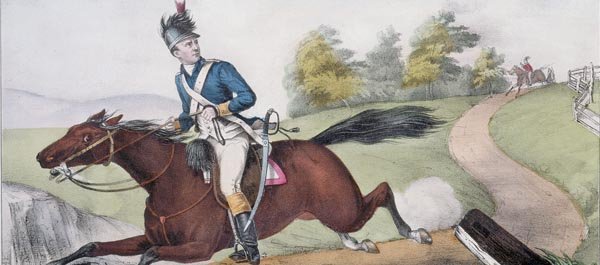
Today, as it was 235 years ago, June in Central Virginia is hot and almost unbearably humid. To avoid the extreme heat of the day, Tarleton decided to rest his men and resume the march after dark. His route would take him through Louisa County via modern Route 33. Just before halting for the night, Tarelton passed by Cuckoo Tavern, a small and out-of-the-way place that got its name from the cuckoo clock that once ticked off the minutes inside the tavern. Slumped against the picket fence in the tavern yard, trying to catch some sleep after a long day of work and a few drinks in the taproom, was a local lad by the name of Jack. John “Jack” Jouett, Jr., known as Captain Jack due to the military coat he was fond of wearing, routinely freighted produce from his family’s farm in Louisa to the tavern his father kept in the town of Charlottesville. The Swan Tavern was certainly a going concern and, at that moment, was playing host to several of the lawmakers of the Virginia General Assembly.
Captain Jack, 26 years old, had just returned to Louisa after a long round trip to the tavern. Sitting out in the yard that night, he was aroused by the sound of marching feet. He stood and there saw Tarleton’s column moving along to Louisa Courthouse. It wasn’t difficult for Jouett to figure the destination of these midnight marchers and he knew he couldn’t let them get to Charlottesville and capture the government. So once the soldiers had marched past, he saddled up his horse “Sally” and lit out for town.
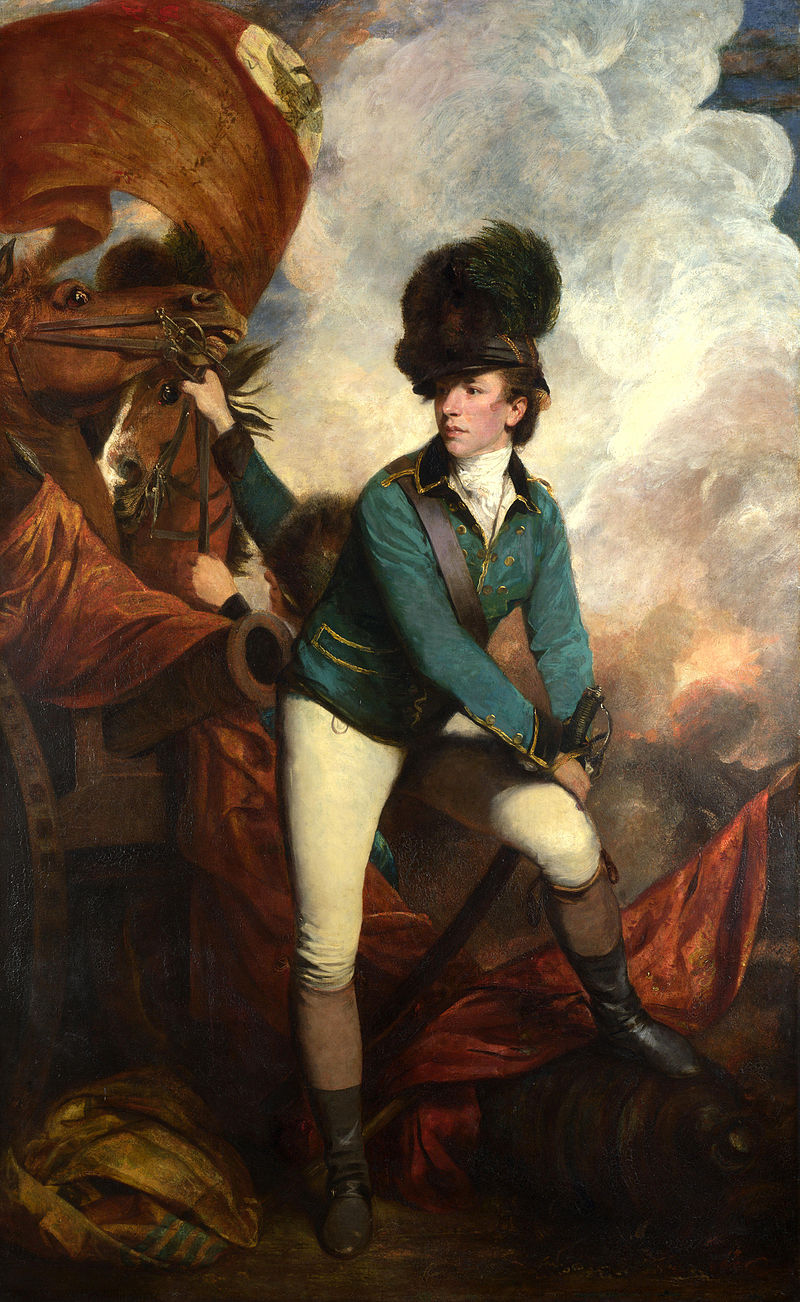
Banastre Tarleton
He rode all night, covering the 40 plus miles to Charlottesville ahead of the British. He traveled by narrow, little-used roads under low-hanging tree branches; paths certainly unknown by most save a few locals. By the time Jouett reached Charlottesville, his face and arms were scratched and bloody. He rode first to Monticello and warned Thomas Jefferson, although Jefferson took such a long time getting himself together that he narrowly escaped capture by Colonel Tarleton’s forces who came trotting up onto the west lawn of Monticello only minutes after Jefferson had finally departed.
Jouett went on to his father’s tavern where he warned several of the delegates staying there of Tarleton’s approach. The British were only 3 hours behind Jouett by the time he splashed across the Rivanna River and into Charlottesville. Even with this warning, several of the legislators were captured by Tarleton including a representative from Kentucky County by the name of Daniel Boone.
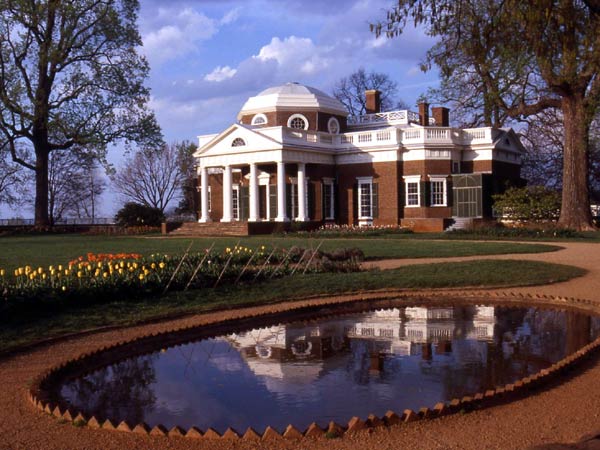
Monticello
Only a year after his ride, Jack Jouett left Louisa County and moved west to the Kentucky territory where he later flourished as a horse breeder and influential member of society for the rest of his life. Jouett died in Kentucky in 1821.
Today, Cuckoo is little more than a dot on a Virginia roadmap. The tavern is long gone; only an empty field now. Across the road stands Cuckoo, the brick, federal style home built by a family of physicians in 1819. Hard to believe that such a quiet place could have once been the scene of such high drama.
Last week marked the 235th anniversary of the Battle of Green Spring, which occurred near historic Jamestown in Virginia. A couple months ago, historians form many different Civil War battlefield parks went to Jamestown, Virginia to get a tour of the Green Spring battlefield. For many of these public historians, it was their first visit to the battlefield. The battlefield is very sparsely marked, has no interpretative trail, no formal or regular tours and not usually given much thought. However, with new initiatives like the Civil War Trust’s “Campaign 1776,” there has been a surge of Civil War historians looking to learn more about the War for Independence and the efforts to preserve its history and battlefields.
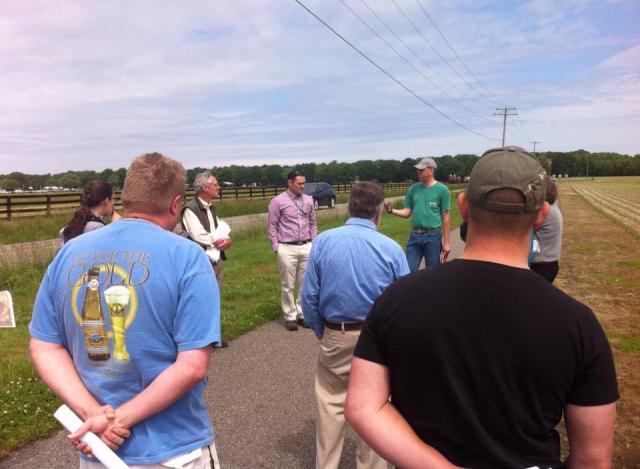
NPS historians Kirby Smith and Chris Bryce along with representatives of James City County lead a tour at the Battle of Green Spring battlefield in May 2016.
The Battle of Green Spring, while it is a little known footnote in the history of the Revolutionary War, was the largest open field battle of that war in the state of Virginia. The battle was fierce and bloody, and part of a chain of events that ultimately resulted in the George Washington’s victory at Yorktown.
On July 6, 1781, General Marquis de Lafayette was looking for an opportunity to catch General Charles Cornwallis’ army unaware. Cornwallis and his army of nearly 7,000 troops was near Jamestown Island and was looking to cross the James River. Lafayette with his much smaller army of only about 4,000 men was looking to attack and raise morale in the invaded state. He wanted to wait until Cornwallis’ army was in the middle of crossing the river, with half his force on the opposite side, and then launch an attack on the much smaller and cut off force.
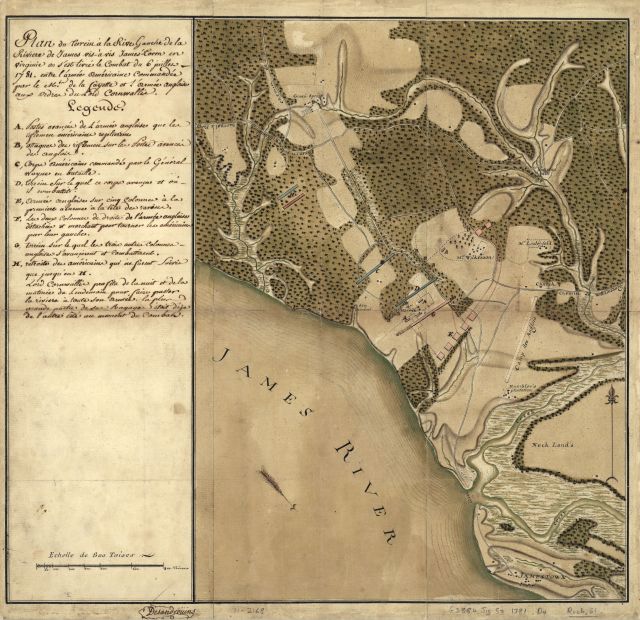
This map shows where the battle occurred near the James River and you can see marked the battle lines of the British and American troops. Historic Jamestown Island is at the bottom of the map.
Cornwallis, though was no fool and went about setting up a trap to deal with this annoying force of American troops that had been trailing him now for months. He planned to lure Lafayette’s army into bringing on an engagement with his entire British force. Lafayette took the bait.
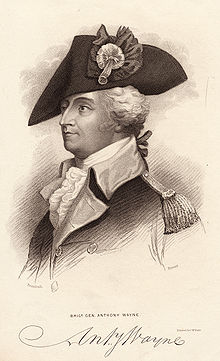
On July 6, 1781, Lafayette sent forward his army in a column formation with General “Mad” Anthony Wayne’s Pennsylvania regiments and Virginia militia (about 900 men) in the van. They began to engage British pickets on the road to Jamestown and pursued them towards the James River for a few miles, crossing over the 17th century Green Spring plantation. Wayne’s men made it to the Harris farm at about 5:00 in the afternoon. The 900 Pennsylvanians and Virginians were far in the advance of the rest of the American column when the British finally launched a withering counterattack on the heavily outnumbered American troops.
General “Mad” Anthony Wayne led the vanguard of the American force.
At this point, rather than fall back, General Wayne, in a very unconventional and bold decision ordered his outnumbered force to fix bayonets and advance on the British line. This advance momentarily stunned the British officers. Did Wayne know something they did not?
For the next few minutes the British line and the American line stood about 50 yards apart and fired volley after volley of musket fire into each other. With an effective range of 80 yards, this part of the battle became the most intense and most bloody. The skilled British regulars aimed low at the legs of the American. This way, when the musket fired and kicked back, the musket ball would go slightly higher and hit the enemy in the body. To have stood and fought in an open field at that range would have been an absolutely terrifying ordeal. But there they stood and fought. One contemporary later called it “Madness!” Troops after the battle could actually tell how close the lines stood based on bodies of the men killed and the torn cartridge tops that littered the field.
After a few minutes of this close fighting, the American troops were forced to fall back quickly, leaving two cannon on the field. The impromptu advance Wayne ordered though succeeded in stalling the British advance and allowing American reinforcements to cover their retreat. Lafayette successfully disengaged and fell back that night. Cornwallis chose not to give chase, and crossed successfully over the James River.
The battle was technically a British victory, but once again, as on many fields in the Revolution, the young American army had gone toe to toe and proved it was on par with British regulars. Lafayette and the American press heralded the bravery of the American troops and viewed Cornwallis’ movement as a retreat. Cornwallis would ultimately be forced to surrender that October at nearby Yorktown.
On July 6, 1781, the British suffered about 75 men killed and wounded and the American army suffered about 150 men killed and wounded. The battle and the land it was fought on soon became forgotten. Today, though, through the efforts of James City County, easements have been placed on much of the historic land and they and other organizations have bought and preserved much of the land where the fighting occurred. Work continues to ensure the hallowed ground is preserved for the future.
However, the site contains very little interpretation, with really only a state historic marker. Hopefully the site will get more attention in the coming years as an important historic site in a very historic area of Virginia. Just this year there have been a few events to mark that bloody battle.
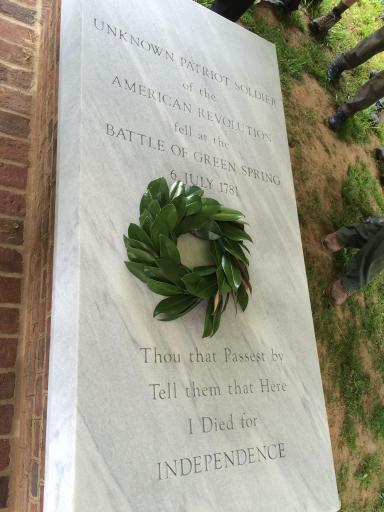
New tombstone for an unknown Revolutionary War soldier that was recently buried at the Church on the Main in May 2016. (Photo by Drew Gruber)
A couple months ago, archaeologist Dr. Alan Outlaw led a re-internment ceremony for one of the Pennsylvania continentals that was killed in action at Green Spring. His bones had been recovered over thirty years ago in the Harris farm. After being studied by the Smithsonian Institution and being properly identified as one of the Pennsylvania continentals, he was re-interred with a proper Christian burial near the battlefield in the graveyard of the Church on the Main.
Also this past Saturday, the National Park Service and the Friends of Green Spring held a Revolutionary War living history program at the Green Spring Plantation about the retreat of the American troops and the aftermath of the battle.
Next time you find yourself in historic area of Williamsburg, Yorktown or Jamestown, make a trip out to the Green Spring battlefield or the Church on the Main and reflect on the sacrifices that occurred there to secure our independence.
No military engagement fought in America prior to the Civil War was bloodier or more costly than the Battle of Carillon (Ticonderoga). For over four hours during the afternoon of July 8, 1758, British and French forces ruthlessly clashed in upstate New York atop the heights west of Fort Carillon, producing over 2,400 casualties – nearly 2,000 of them English. In a year of such memorable British triumphs this was truly an incredible and most tragic disaster. By nightfall, Major General James Abercromby’s army was in full retreat up Lake George, and the Marquis de Montcalm’s courageous Frenchmen remained behind their earthworks, celebrating one of the most miraculous victories ever won on the continent.[1]
It had been over four years since George Washington ordered his small detachment of Virginians and Mingo warriors to open fire on the French-Canadian party encamped within Jumonville Glen, and England’s military efforts against the French in North America were still abysmal. Seventeen fifty-eight was meant to turn the tide in favor of King George II. With William Pitt’s ascension to Secretary of State for the Southern Department, it became his duty to prosecute the war in earnest, sparing no expense. After the failed operation against Fortress Louisbourg and the capitulation of Fort William Henry the previous year, plans for a four-pronged offensive in North America began to formulate. These large-scale movements were directed against Forts Duquesne and Frontenac (located along the eastern shore of Lake Ontario), Louisbourg (yet again), and finally Fort Carillon atop the promontory between Lakes Champlain and George. The effort against the French at Carillon was to be led by the newly instated Commander-in-Chief of His Majesty’s Forces in North America, Major General James Abercromby.
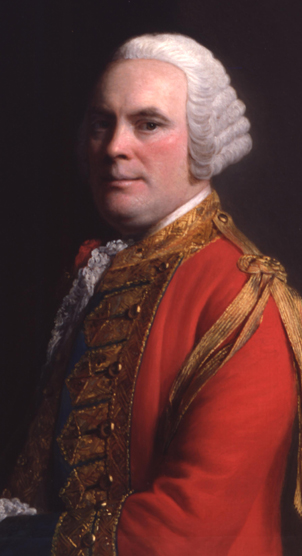
Major General James Abercromby
James Abercromby was born in 1706 in Glassaugh, Scotland and received his first commission as an ensign in 1717 with the 25th Regiment of Foot. He saw action and was wounded during the War of Austrian Succession, and by 1756 he held the rank of major general, serving under Lord Loudoun in North America. By December of the following year he was officially commissioned to replace Loudoun after his recall. To compliment Abercromby during his offensive against Fort Carillon, Brigadier General George, Viscount Howe (the older brother of Richard and William) was given the role of second-in-command for the expedition.[2]
During June 1758, Abercromby’s army of British Regulars and colonial provincials gathered along the southern shore of Lake George beside the still present ruins of Fort William Henry, which was burned by Montcalm following its capitulation the previous August. By July 5, when the army began its embarkation down Lake George, the British could count a total of 16,000 men amassed to assault Carillon – it was the largest military force ever assembled for a campaign on the North American continent. Nearly 10,000 provincials from New England, New Jersey, and New York had joined ranks with eight regiments of British Regulars. To oppose them over thirty-two miles to the north, Montcalm had roughly 3,500 men at his disposal with another 500 that would join him before the battle commenced.[3]
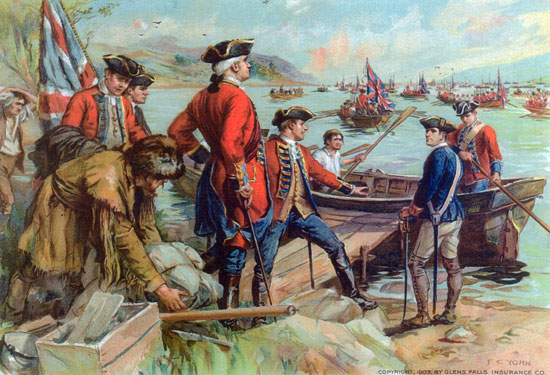
Embarkation of Abercromby’s Army, July 5, 1758
On July 5, nearly one-thousand small boats and other crafts departed from the shore of Lake George and headed north. The spectacle must have been amazing. Extending seven miles in four rows covering shoreline to shoreline, Abercromby’s army rowed towards its destiny, arriving at its debarkation point the following day around 10:00am. The landing party, consisting of Rogers’ Rangers, Thomas Gage’s 80th Light Infantry, and Phineas Lyman’s 1st Connecticut Regiment, staggered ashore with George Howe at the head of the advance. The men were immediately met with resistance and a running battle commenced that ran several miles to the north near Bernetz Brook. Leading on foot at the head of an advancing force is no place for the second-in-command of an army, but Howe was not your typical general and that is why his men adored him. At 4:00pm the fighting became the hottest it was all afternoon as the French continued their hasty withdraw back to Montcalm’s lines. During this contest, Howe lost his life. With their beloved leader now dead, confusion amassed and the British left the field and returned to the landing site. While the skirmishing yielded no true tactical significance, Montcalm was alerted of Abercromby’s landing and began to fortify the heights west of Fort Carillon, choosing to face the British in the field rather than defend against a siege with his army so outnumbered.[4]
The following day, Abercromby’s army marched to within a mile and a half or so of the French at Carillon and encamped for the evening. From this position near a saw mill the commander-in-chief added the finishing touches to his battle plan on the morning of July 8 – it was from here as well that he would observe the engagement, staying far behind the frontlines. With the loss of his trusted subordinate, Howe, and the information newly at hand that a large body of French reinforcements numbering 3,000 men was approaching Fort Carillon, Abercromby seemingly lost his wit. Rather than sending an experienced engineer such as Major William Eyre of the 44th Regiment of Foot to observe the French position, he instead ordered two of his personal aides, Captains James Abercrombie and Matthew Clerk to ride forward and report the situation. The two officers returned and suggested to the commanding general that the French earthworks were incomplete and that the position could easily be carried with a frontal assault. Abercromby accepted the report as gospel and began preparations for an attack.[5]
Truth be told, by the morning of July 8, the French had indeed completed their defensive works a half-mile to the northwest of the fort. The series of fallen logs – stacked some six to seven feet high with loopholes cut into them to fire out of from behind cover – extended from the lowland near the La Chute River to the south across the peninsula to Lake Champlain to the north. The area in front of the earthworks was cleared for about one-hundred yards, and a line of abatis was erected in front of the line to hinder the enemy’s advance. The earthworks were defended by seven regiments of French Regulars, each manning roughly a hundred yards of entrenchment. To the right of the line a company of Troupes de La Marine (Canadian Regulars) was positioned and a battery of six cannon was placed in a redoubt constructed on the left. Canadian militia defended the lowland near the La Chute River. This area was the weak point in Montcalm’s line, but Abercromby failed to exploit it. A battalion of the Regiment de Berry was left behind to man the fort and run ammunition to the front. While Montcalm had selected the best ground near the fort to make his stand, his position was nevertheless dangerous. His army was bottled up on a peninsula and if his defensive measure should fail his force would be trapped and surrounded by the overwhelming numbers of the British. Things could all begin tumbling down for Montcalm if his earthworks were blasted to splinters by the might of the English artillery before a frontal attack commenced. Lucky for him, however, Abercromby opted that an artillery barrage to precede the assault was unnecessary, and in fact, that no cannon would be needed at all to assist in carrying the French position.[6]
Louis-Joseph, Marquis de Montcalm
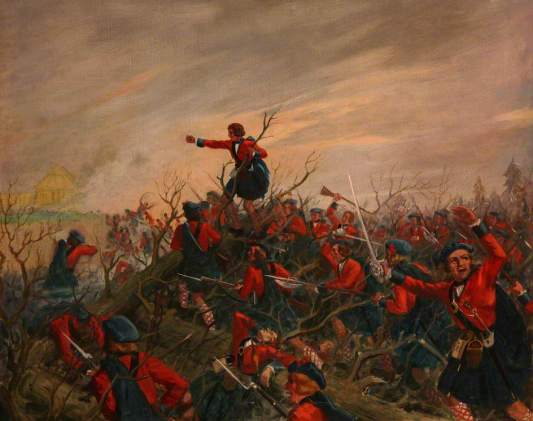
At half past noon, July 8, 1758, the 80th Light Infantry, Rogers’ Rangers, and a battalion of Massachusetts light infantrymen advanced forward to the abatis in a long skirmish line, driving the French pickets before them back to the earthworks. With the ground in front of the French position clear it was time to launch the grand European-style assault. Stepping out from the tree line at the base of the heights, over six-thousand men garbed in scarlet red moved forward in a line three ranks deep. The beating of drums and the shrill of the fifes pierced the air, and the wale of Scottish bagpipes reverberated from the musicians amongst the 42nd Regiment of Foot – the “Black Watch” – near the center of the line. Forward they went with undaunted courage only to be cut to pieces by French small arms fire upon reaching the abatis. There the dead and dying lay tangled amidst the branches as their comrades struggled to press forward. “The fire was prodigiously hot,” Captain Charles Lee (yes, that Charles Lee) of the 44th Regiment of Foot vividly remembered, “the slaughter of officers very great, almost all wounded, the men still furiously rushing forwards without any leaders.” Staring through the smoke up towards the French line, only the tops of the regimental standards were visible above the earthworks.[7]
The devastating effect of the French musketry forced the British lines to waiver. They could not obtain enough momentum to make their way into the enemy entrenchments, let alone even climb near them. Abercromby was no help during all of this. He remained behind at the sawmill camp delegating orders as his men were being sent into a meat grinder a mile and a half away. His decision to not order up his artillery to bombard the French or support his infantry’s attack was beginning to show how costly it truly was.
Again and again the regulars were ordered to advance, only to be met with the same result each attempt. Nearly four hours had passed since the initial line had stepped off and the situation was beginning to become desperate. In a last-ditch effort to pierce the French earthworks and turn the tide of the battle, the 42nd Regiment of Foot emerged from the abatis and with a terrible cry the “Ladies from Hell,” charged forward. As the “Black Watch” advanced up the heights, an officer of the 55th Regiment of Foot watched in admiration:
With a mixture of esteem, grief, and envy, I am penetrated by the great loss and immortal glory acquired by the Highlanders engaged in the late bloody affair. Impatient for the fray, they rushed forward to the entrenchments, which many of them actually mounted. Their intrepidity was rather animated and damped by witnessing their comrades fall on every side. They seemed more anxious to avenge the fate of their deceased friends than careful to avoid a like death….[8]
The “intrepidity” of the 42nd Regiment was not enough to carry the works. Their dedication and valor that day cost them tremendously. Of the 900 or so men that the regiment took into the field with them that bloody day, 647 were casualties – 314 of that number dead on the field. In any other battle of any other war fought in North America, only one other regiment, the 1st Maine Heavy Artillery at Petersburg on June 18, 1864, suffered a near greater loss of life in a single engagement. This is a sacrifice that needs to be better remembered.[9]
Assault of the 42nd Regiment of Foot “The Black Watch”
Around 5:00pm, Abercromby called off the attack and ordered his army to retire from the field. The men, battered and bruised, made their way back to the sawmill camp and later that night were led back down to the landing site from two days before. Rumors that Montcalm was following closely in pursuit to destroy the English army spread rapidly and the retreat became extremely hasty – if not an actual rout. The campaign was over.
Montcalm’s victory against the British at Carillon was nothing short of a miracle. His army was outnumbered four-to-one and had essentially trapped itself on the Ticonderoga peninsula in order to meet the English army in open combat to avoid a siege. Abercromby made zero use of his artillery to weaken or destroy the French defenses – which were somehow complete in less than two days and conveniently during the morning of the battle – and he failed to exploit any of the weak points on Montcalm’s flanks.
The British had failed to bag the French army at Fort Carillon and therefore left the enemy in possession of the crucial north-south waterway of Lake Champlain that offered direct access into the Richelieu River and henceforth Canada. The bloody defeat had cost Abercromby nearly 2,000 men with upwards of 800 of that number killed. Montcalm on the other hand incurred just fewer than 400 casualties – still roughly ten percent of his army present on the field that day. In the history of military conflict in America prior to the Civil War, only the Battles of Long Island and New Orleans come close to the 2,400 lost July 8, 1758.
The “Black Watch” Monument today on Carillon Battlefield (notice the position of the French earthworks in the rear of the photograph)
The Battle of Carillon was England’s most humiliating defeat of the French and Indian War. At no other battle during the conflict did a British/Provincial army outnumber its foe so greatly in both manpower and artillery, only to be beaten as terribly as Abercromby’s army was before the French entrenchments at Carillon. This defeat should not be put upon the shoulders of the brave men who fought with such rigor that July afternoon though. Their commanding general let them down. Abercromby’s failure to conduct proper reconnaissance and utilize his army’s artillery cost him the day. If George Howe had not been killed two days before, maybe things would have been different. But who knows? Lucky for Abercromby, the other three British offensives on the continent succeeded, so his defeat only cost him his job and not the war for his countrymen. He was replaced by Jeffrey Amherst two months later. The following year, another effort was made to take Fort Carillon with Sir Jeffrey at its head. The French ignited their powder supplies and abandoned the fort, blowing it up before a shot was fired in anger. France’s attention in North America had turned solely to defending Canada as James Wolfe’s army was threatening Quebec.
[1] William R. Nester, The Epic Battles of Ticonderoga, 1758 (Albany, NY: State University of New York Press, 2008), 156.
[3] Rene Chartrand, Ticonderoga 1758: Montcalm’s Victory against All Odds (New York: Osprey Publishing Ltd., 2000), 29.
[4] Fred Anderson, Crucible of War: The Seven Years’ War and the Fate of Empire in British North America, 154-1766 (New York: Vintage Books, 2000), 240-241; Nester, The Epic Battles of Ticonderoga, 1758, 126-131.
[6] Anderson, Crucible of War, 242; Nester, 139-140.
[7] Anderson, 243-244; Quoted in Stephen Brumwell, Redcoats: The British Soldier and War in the Americas, 1755-1763 (New York: Cambridge University Press, 2002), 28.
[8] Quoted in Archibald Forbes, The History of the Black Watch (N/A: Leonaur, 2010), 44.
Both the American Revolutionary War and the French and Indian War (as it was called in North America) have been the subject of many history books. The original American sources have been pretty much culled through, as have many of the British sources. But French sources have not received the same scrutiny. Why this is the case, is not clear. Of course, the French language is a barrier to English-speaking historians. I believe another factor is that French historians have not shown much interest in either war, and when they have, they have failed to use adequate footnotes, making it difficult for other historians to follow up on the sources they have used and confirm their credibility. In the French and Indian War and the Conquest of New France, William R. Nester, a professor at St. John’s University in New York City, helps to address this imbalance. His history of the French and Indian War (called the Seven Years’ War in Europe), which was fought from 1754 to 1763, is from the French perspective and he has relied on many original French sources. Interestingly, despite the title of the book, about half of the book, if not more, occurs in France and the rest of Europe. This decision is understandable; paraphrasing one contemporary, Canada was lost on the battlefields of Germany.
“The French and Indian War and the Conquest of New France”
Nester starts his history by explaining the disorganized and weak state of the French political system. One might believe that because France had a monarchial system, its government was efficient, but the contrary was true. For one, the French legislature, dominated by merchants, lawyers and the middling classes who suffered the burden of heavy taxation (aristocrats were not taxed), frequently hesitated or refused King Louis XV’s constant requests for more funds to fight his wars and pay for his extravagant lifestyle. As a result, his administration was constantly deep in debt and always short of funds it needed to fight.
Whether you are about to enjoy a firework display, finishing up a family barbecue, or enjoying this holiday in some other form, the historians here at Emerging Revolutionary War wish all our readers and fellow historians a “Happy Independence Day.”
For those protecting our country on this day, around the world, a big “thank you” to go along with this July 4th, to you as well.
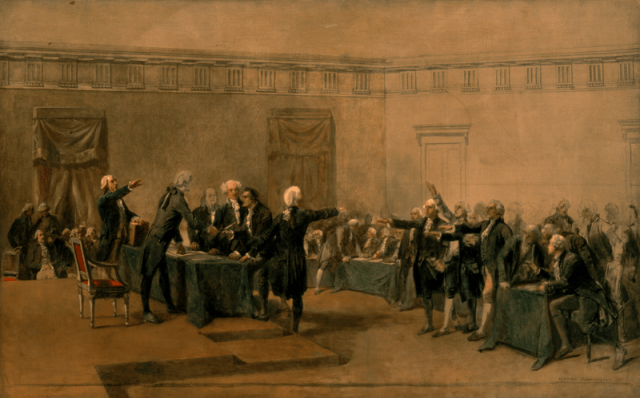
But, let’s not forget the true meaning of this day. When, in 1776, in Philadelphia, Mr. John Hancock, as president of the Second Continental Congress, affixed his signature to the document below, which declared to the world the break from Great Britain.
Declaration of Independence
From the words of Richard Henry Lee, “Resolved, That These United Colonies are, and of right ought to be, free and independent states,” to the quill of Thomas Jefferson, “When in the course of human events it becomes necessary for one people to dissolve the political bands which have connected them,” let us truly remember the history behind this day and the build-up to that fateful decision in Philadelphia.
This year, July 4th, which falls on a Monday, and will be celebrated as America’s Independence Day around the country. Americans remember that date, in 1776, as the day that John Hancock, as president of the Second Continental Congress, put quill to ink and then parchment, to affix his signature in a bold stroke at the bottom of the Declaration of Independence. Interestingly, only one other person signed their name to the document that day, secretary to the Second Continental Congress, Charles Thompson.
However, the important date to remember, is today, July 2. On this date in 1776, the Second Continental Congress will adopt Virginia delegate Richard Henry Lee’s resolution to declare independence from Great Britain. This document, crafted by another Virginia, Thomas Jefferson, was originally brought up for debate in June. By June 28th, Jefferson, chosen by a sub-committee to write the declaration, had presented it to Congress assembled in Philadelphia for review.
Artist Charles E. A. Dumaresq’s rendition of the Second Continental Congress signing the Declaration of Independence
By year’s end in 1755 the perils of war had blanketed the North American landscape as the battle for the continent raged between England and France. The opening years of conflict in what would come to be known as the French and Indian War were fought during a time of peace between the two mighty European powers in which no declaration of war would be announced until 1756. However, King George II and Louis XV had assembled the largest armies ever seen on the North American continent up to that time to defend and expand their respective colonial possessions. These measures were far from peaceful, and it was evident that after blood had been spilled in New York, Pennsylvania, and Nova Scotia, a declared war was inevitable.
The story of the campaigns of 1755 begins the previous year when tension in the Ohio River Valley boiled over, precipitating armed conflict. Colonial expansion (England moving west, France moving south) forced these two super powers on a collision course that culminated in May 1754 when a detachment of Virginians under the command of George Washington opened fire on a party of French colonial troops that were on a “diplomatic” mission to order all Englishmen out of the Ohio River Valley. These were the first shots fired in what eventually evolved into the French and Indian War. Although the only territory disputed over in 1754 was the land surrounding present day Pittsburgh, by the following year England’s eyes turned to French military strongholds in Nova Scotia, the Great Lakes region, and upstate New York.
The plan orchestrated by England’s Captain General, the Duke of Cumberland (George II’s son), for 1755 was to be carried out on four fronts in order to counter all of France’s military gains the previous year. Placed in command of the British regular troops being sent to the colonies, as well as the colonial provincial units then being raised for the coming campaigns, was Major General Edward Braddock. Meeting in Alexandria, Virginia in April with the royal governors of Maryland (Horatio Sharpe), Massachusetts (William Shirley), New York (James De Lancey), Pennsylvania (Robert Morris), and Virginia (Robert Dinwiddie), Braddock laid out Cumberland’s plans and what was to be expected of the colonies taking part in the various expeditions. Also present at the conference was William Johnson of New York, who was personally appointed by the general as Superintendent of Indian Affairs for the northern colonies.
Maj. Gen. Edward Braddock
William Johnson was given command of the provincial force that was to move north from Albany, NY and capture the French stronghold at Crown Point astride Lake Champlain. Using his close ties with the Iroquois, it fell upon his shoulders to muster Native American support and recruit warriors for his expedition as well as William Shirley’s thrust against Fort Niagara at the southwestern end of Lake Ontario. A clash of personality and interests between the two men would eventually lead to Shirley being denied of Indian support for his offensive and Johnson obtaining all that was offered from the Mohawks.
William Johnson
Along with these two armies moving through New York, efforts to secure the Chignecto Isthmus in Nova Scotia by capturing Fort Beauséjour, as well as a major push to take Fort Duquesne at the Forks of the Ohio River were also formulated. Robert Monckton was given overall command of the force that would advance from New England and capture Beausejour, and Edward Braddock himself would lead a large 2,400 man army of regulars and provincials that would oust the French from the Ohio River Valley. Upon capturing Duquesne, Braddock was then set to move north and link up with Shirley to assist in the capture of Fort Niagara. On paper the plan appeared clear and simple, and the men believed all the objectives could be taken with ease. By winter 1755, North America should belong to George II.
More times than none, plans that appear perfect on paper are hardly ever executed properly. This was the case for England’s grand scheme to capture the continent in 1755 before a large scale conflict with France could be forced upon them. On July 9, Braddock’s force made it to within several miles of the French at Fort Duquesne before it was attacked and defeated, suffering nearly 900 casualties, including the general who suffered a mortal wound. He later died during his army’s retreat to Fort Cumberland, Maryland four days later. By the end of the month, Colonel Thomas Dunbar, Braddock’s successor, had his men marching eastward towards Philadelphia where they would enter winter quarters in the middle of summer.
Battle of the Monongahela
With Edward Braddock’s demise, William Shirley was elevated to the position of Commander-in-Chief. Mourning the loss of his son, who served as a secretary to Braddock and was killed during the fighting along the Monongahela River, he was given the task of trying to avoid another disaster. Good news arrived from Nova Scotia later that summer as Monckton reported that his expedition had been a success. Fort Beauséjour and Gaspereau had fallen and the Chignecto Isthmus was secure. This British victory then in part led to the first ever ethnic cleansing to occur in the modern world. Thousands of French Acadians were deported out of the country to prevent any possible uprisings that might hinder British colonial expansion and military efforts against New France.
Lt. Col. Robert Monckton
The victory in Nova Scotia was the only successfully executed expedition of the four-pronged movement against the French in North America. Although Shirley and Johnson would not meet any sort of battlefield defeat in their efforts, Monckton’s campaign was the only one that captured its main objective.
Arriving at Fort Oswego at the southeastern corner of Lake Ontario, William Shirley was determined to repair and strengthen the old fortification before advancing any further. His time spent there went by wasted as he just simply could not get his army properly supplied or moving to capture Fort Niagara. He returned east to New York City and left his army at Oswego hoping to resume the offensive the following summer. As William Shirley failed to capture Fort Niagara, so too did William Johnson fail to capture Crown Point. However, Johnson’s army was able to secure the southern end of Lake George and defend New York from a French advance into the colony’s interior.
William Shirley
Among the dead and dying of Braddock’s command along the Monongahela River in July 1755, wagons filled with the general’s personal and official military correspondence were captured by the French-Canadians and their Native allies. Within these papers were the plans for the British offensives against New France. Freshly arrived from France and now having the knowledge of his enemy’s intentions, Jean Armand, Baron de Dieskau, the newly appointed General-in-Chief of regular troops in the colonies, sought to move against Johnson’s force south of Lake George from Crown Point, and then move west to deal with Shirley. On September 8, 1755, roughly three thousand British and French troops clashed south of and at the base of Lake George. When the day finally came to an end, Dieskau’s army had been repulsed and was sent retreating north towards Ticonderoga. With the southern shore of the lake now securely in British hands, Johnson’s army began construction of what would become Fort William Henry. Had Dieskau succeeded in dislodging Johnson’s men from the lake, it is quite possible that he could then have overrun Fort Lyman (Edward) fourteen miles to the south, and then marched his victorious army against Albany where he could have captured a major supply base and cut New England off from the rest of the colonies.
Battle of Lake George, September 8, 1755
Even though Johnson failed to capture his objective, he still claimed the only battlefield victory over France for England in a year of military disasters. Braddock was dead and his army mauled by the French outside Duquesne; Shirley was bogged down at Oswego and refused to go any further; Johnson was recovering from a wound received at Lake George while his army erected defenses; and Monckton’s men were deporting Acadians following their successful siege. Britain had failed to expel the French from North America before a full-scale war could be declared. As tension grew in Europe over alliances and territorial possessions, the world went to war in May 1756. Ultimate control of North America would be determined by how much attention could be placed on defending the British colonies and New France without risking defeat elsewhere throughout the world’s battlefronts.
The past few months of John Champe’s life were probably the most memorable. In the fall he was asked to go on a mission to capture the recent traitor Benedict Arnold. The mission was ordered by George Washington himself and only known to Washington and “Lighthorse” Harry Lee. Champe, a trusted member of Lee’s Legion, was promised a promotion for undertaking the daring mission. He successfully fled from the American camp, gained the trust of British General Sir Henry Clinton and Arnold and was given a commission in Arnold’s Loyalist regiment. He worked with patriots in New York and recruited others to help him in his plan to kidnap Arnold. Now it was December and the next day was the day to kidnap Arnold and return him to Washington.
Then the day before the kidnapping was planned, Clinton set into motion a plan to finally use Arnold militarily. Arnold would take his Loyalist troops and some British regulars and invade the Virginia Capes. Virginia had largely dodged the hardships of war and Clinton believed this would be a great opportunity for Arnold to prove himself. With only Virginia militia located in the colony, Arnold should have no problem wreaking havoc on the Commonwealth.
These new developments ruined Champe and Lee’s plans. When Arnold got orders from Clinton, he moved his headquarters – one day before Champe was to carry out his plan. Furthermore, Champe was also moved to another part of New York and was not able to get word to Lee that the plan was off. Lee and his dragoons waited and waited at Hoboken with no sight of Champe. Soon Lee returned to camp without any word on what happened to Champe. Lee and Washington worried that the worst had happened and Champe was “discovered.”[i]
Grave at John Champe, Prickett Cemetery, Fairmont, WV
Champe soon found himself on a transport in New York harbor with Arnold’s “American Legion.” The destination was unknown to most of the men. Soon though Champe learned that he was to be part of an invasion force against his native state! The thoughts that must have gone through his mind; he had risked everything to capture Arnold – labeled a deserter and now he would have to go into battle against his fellow Virginians. The two week trip to the Virginia Capes must have afforded Champe plenty of time to ponder how close he was coming to succeeding and now what he was called upon to do.
Champe was involved in most of Arnold’s campaign against Virginia. He was part of the force that captured Richmond and found himself in several battles and skirmishes against his fellow Virginians. Arnold was replaced by Gen. William Philips and soon Cornwallis’s army joined Philips in Virginia in May 1781. Sometime after this, Champe was able to “escape” the British army and headed west to the Blue Ridge Mountains. Champe then worked his way south and finally by July he was back with Lee who was then with Nathaniel Greene’s army in the Carolinas. Lee was delighted to see his devoted cavalryman. Surely Champe and Lee had a lot to discuss.
Though Champe was promised a promotion, it was believed by Lee and Washington that it would be too dangerous for Champe to take the field again. If he was captured, the British would surely execute him as a spy. Champe was offered an unknown sum for a reward and headed back home to Loudoun County. His legendary adventure was over.
Sergeant Major John Champe Memorial, Aldie, VA
After the war, Champe did not seek fortune or fame from his exploits. He led a simple life and was a middle class farmer. He struggled to support his family and continuously looked for cheaper and more fertile land to the west. It was due to his desire for new land that he was on a trip looking at land near Morgan Town (modern day Morgantown, WV) in 1798 where he became ill and died. Washington did not forget Champe. In 1798 Washington was appointed by President John Adams commander of the American army in preparation for war with France. Washington called on Champe to be an officer in his army, only finding out that he had recently died.[ii]
Though Champe disappeared mostly from the history books in 1781, his family fought for nearly 100 years to gain the compensation that was due to Champe. Champe was never paid a pension nor given bounty lands that were owed to him for his service. Plus, his promised promotion was never given and they argued that the owed pension should be based off of the rank that was promised him personally by Washington. Unfortunately, the mission was so secret, that very few could confirm it. In petitions filed with Congress in 1818 and 1839, Champe’s widow was finally given a life time pension, though in an amount not reflecting his rank. Finally in 1847, a Congressional act provided for compensation in the amount of $1,200 to the heirs of John Champe and granted him the promotion that was promised to him by Washington. [iii]
Champe has remained a local hero in Loudoun County. In 1861, a local Confederate unit went off to war as the “Champe Rifles” (8th VA Infantry). In the early 20th century, the location of his home was marked with a small obelisk (reportedly made by stone from the foundation of the home). Today the monument sits on the south side of Route 50 a few miles west of Aldie.
In 2001, his grave was finally properly marked with a head stone and a full ceremony. Most recently Champe has been bestowed the highest honor a local hero can be given, a high school in his honor. John Champe High School was opened in Aldie in 2012 and one hopes that his name and legacy will be no longer be forgotten.
Lyrics from Sergeant Champe, ca. 1781
Come sheathe your swords! My gallant boys, And listen to the story, How Sergeant Champe, one gloomy night, Set off to catch the tory
[i]The Revolutionary War Memoirs of General Henry Lee; DeCapo Press, 1998, 409.
Emerging Revolutionary War is honored to share the open letter below from the Society of Cincinnati. This open-letter has not been shared with the public. Thank you to Meg Martin, of Civil War Trust / Campaign 1776 for passing it to ERW.
Symbol of the Society of the Cincinnati, est. 10 May 1783, by Continental officers of the American Revolution. (Courtesy of the George Washington Papers).
Members of the Society of the Cincinnati — the nation’s oldest historical society, whose members are descendants of the officers of the American and French forces that won the Revolutionary War — are calling on the Institute for Advanced Study of Princeton, New Jersey, to halt the development of a critical part of the Princeton battlefield. They are appealing to the Institute to work with the Society and the Civil War Trust, which are working together to preserve the remaining battlefields of our War for Independence.
Eight hundred and fifty members of the Society have signed an Open Letter to the Board of Trustees of the Institute for Advanced Study appealing for the Institute to halt construction that will destroy the site of the charge personally led by George Washington that won the battle. The victory was a turning point in the Revolutionary War.
The signers of the Open Letter include descendants of George Washington, Nathanael Greene and other generals, colonels and other officers of the Continental Army.The signers include men whose ancestors were killed at the Battle of Princeton and others who were wounded in that turning point of the Revolutionary War.
The Institute for Advanced Study, an independent scholarly organization, owns the land over which George Washington led the charge that won the battle and saved the American cause from imminent defeat. “Defeat at Princeton would probably have spelled the end for Washington’s army and with it, our bid for independence,” says Jonathan Woods, president general of the Society of the Cincinnati. “The Declaration of Independence, which the nation will celebrate in a few weeks, would have become a footnote in the history of the British Empire.”
The Society of the Cincinnati, which has its international headquarters in Washington, DC, has allied itself with the Civil War Trust and other members of the Save Princeton Coalition in an effort to save the Princeton battlefield and the other endangered battlefields of the Revolutionary War. The Civil War Trust has made repeated overtures to the Institute for Advanced Study to discuss the purchase of the land by the Trust for a price well in excess of its appraised value. More than 20,000 concerned citizens have signed petitions and sent letters to Institute officials and Governor Chris Christie, urging that the Institute for Advanced Study find alternatives to destruction of this hallowed battlefield site. A copy of the Open Letter is attached.
CONTACT: Jack D. Warren, Jr. Executive Director, The Society of the Cincinnati Office: 202-785-1716 Cell: 202-531-9278 jwarren@societyofthecincinnati.org
The rectitude of the decision John Champe made on that October night to “desert” his men and “join” the British must have weighed heavily on his mind as he approached the Hudson River. The mission, offered by “Lighthorse” Harry Lee, to capture the traitor Benedict Arnold was a serious one. The only hesitation Champe felt was how his reputation and honor would be injured by his desertion. No one but Lee and Washington could know the truth, the success of the mission counted on secrecy.[i]
As Champe reached the Paulus Hook area of the Hudson River, the details are murky. Some accounts have Champe jumping into a boat along the shore and pushing off into the river and rowing to a British war ship. Other claims have Champe clearing a British patrol along the river and escorted by the patrol to a nearby ship. [ii] Either way, Champe eluded his American pursuers and accomplished the first goal of his mission, to reach the British lines.
Lee, already having established a spy network, lined up a system of couriers to communicate with Champe. By October 25th, Lee had heard from Champe and wrote to Washington that “my friend got safe to New York; he was before Sir Henry Clinton and has passed all the forms of the garrison; he accidentally met General Arnold in the street which has paved a natural way for further acquaintance; the party entertains high hope of success…”[iii]
Clinton and Arnold expected many other American officers to be inspired by Arnold and
Sir Henry Clinton
join the British army. Champe, a modest officer in a fabled unit was just the kind of man that Clinton wanted to attract. The fact that Champe was fleeing his own men who were in hot pursuit of him made the deception complete. Clinton questioned Champe about the condition of the American army and morale. Champe informed Clinton that other officers were sure to desert and Washington’s ranks were thinning with men heading home. Clinton soon trusted him to be a deserter and attached him to a unit of Loyalists that Arnold was raising.[iv]
Champe became close to Arnold and spent a lot of time with him. Champe spent a lot of time at Arnold’s headquarters at the King’s Arms Tavern on Broadway in New York City. He would take the next several weeks to study Arnold and his habits. Champe also watched for other deserters joining the British army in New York. The fear by Washington was that Arnold was acting with other American officers in defecting. Soon Champe realized that Arnold had acted alone in his treason.
Finally in early December Champe informed Lee that his plan was to kidnap Arnold one night as Arnold took his nightly walk in a garden next to his headquarters. Champe was even able to recruit fellow patriots to assist him in the kidnapping of Arnold. On the selected night, Champe would have a boat waiting for him at a nearby landing. He also had loosened some of the fence boards around the garden area so he could sneak Arnold out of the garden. After getting Arnold onto the boat, Champe would take him to Hoboken (western side of the Hudson River). There Lee and three of his dragoons would wait for Champe and his cargo. Washington insisted to Lee and then to Champe that Arnold was not to be harmed. Champe was sure of his success and spent days and weeks in planning the capture of Arnold. [v]
As the evening approached, everything was in place. He had earned the confidence of Clinton and Arnold. He was now a sergeant in the British army and spent countless hours preparing and making the necessary connections to fellow patriots in New York. The boat was prepared and waiting, Lee would be at Hoboken with his dragoons. Everything was in place to bring home the traitor Arnold.
[i]The Revolutionary War Memoirs of General Henry Lee; DeCapo Press, 1998, pg. 399.
[ii] “Sergeant John Champe and Certain of His Contemporaries”, William and Mary College Quarterly, April 1937, pg. 153.













 went off to war as the “Champe Rifles” (8th VA Infantry). In the early 20th century, the location of his home was marked with a small obelisk (reportedly made by stone from the foundation of the home). Today the monument sits on the south side of Route 50 a few miles west of Aldie.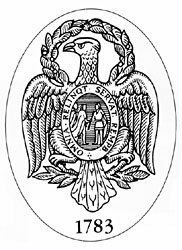


 Emerging Revolutionary War Era