“The Old Wagoner”

Part One

The last battle of the Revolutionary War was fought in 1951 in Winchester, Virginia. Daniel Morgan, the “Old Wagoner” or ‘Old Morgan” as he was known to his soldiers, was front and center of the maelstrom once again just as he was on many a battle field from Quebec to South Carolina during the War for Independence.

Daniel Morgan Statute in Winchester, Virginia (courtesy of Winchester Star)
Daniel Morgan Statute in Winchester, Virginia
(courtesy of Winchester Star)

Residents of Cowpens, South Carolina, a small town near Spartanburg named for Morgan’s dramatic and strategically critical victory of 1781, arrived in Winchester, Virginia to claim the earthly remains of their revered hero. Morgan’s grave was overgrown and in decrepit condition. In Winchester, only one out of forty people queried by the Carolinians knew who Morgan was. Armed with shovels, a mortician, and a letter of authorization from Morgan’s great-great granddaughter, the Carolinians showed up at Mount Hebron Cemetery to dig up the general, take him “home” and reinter him at the site of his greatest victory. There he could rest among a populace that revered his name and cherished his significant contributions toward American independence. However, word of the Carolinians’ attempted exhumation of Morgan quickly spread through town and a contingent of devoted local admirers quickly headed to Mt. Hebron to stop the Carolinians initiative. In the end, a court ruled that the “Old Wagoner” would remain interred at Mt. Hebron in Winchester. Not only did he stay, but this episode kindled a reverence for the General’s legacy and place in history among Winchester’s populace.

Seventeen year-old Daniel Morgan moved into the Shenandoah Valley in 1753, with nothing but sheer determination to carve out a life for himself in the rugged frontier of western Virginia. His early years are shrouded in mystery that Morgan himself kept secret from even his closest associates throughout his life. He was born of Welsh parentage in 1836 in Bucks County Pennsylvania or Hunterdon County, New Jersey, the fifth of seven children. It was a hard life of work on the family farmstead with no opportunity for even a rudimentary education. His time was spent chopping wood, hoeing fields and other taxing physical labor. His mother died when he was young, and his father remarried. A dispute with his father prompted the fiery Morgan to head west on the Great Wagon Road to Carlisle, Pennsylvania where he worked briefly during the winter of 1752-53, before continuing south to the Shenandoah.

Although Morgan lacked an education, the work on the family farm had hardened his six-foot, two-hundred pound frame into a powerful and muscular young man who was well suited for the physicality of life on the frontier. The blue-eyed youth initially obtained employment as a farm laborer in eastern Frederick County in what is now Clarke County. He worked hard and soon earned an offer of better employment. In spite of his youth, Morgan eared employment as the overseer of a saw mill where he learned to manage older and more experienced men, developing his leadership ability. Morgan’s energy and work ethic impressed Robert Burwell who offered Morgan a position as a teamster hauling valley produce across the Blue Ridge to Fredericksburg and other towns in the Virginia Piedmont and carrying badly needed supplies back to the frontier that was the Shenandoah Valley of the 1750’s.

Morgan enjoyed the freedom of the open road and in less than two years had earned enough money to buy his own team and Conestoga wagon. During this time, Morgan had become close friends with fellow teamster John “Captain Jack” Ashby, grandfather of the Virginia Civil War cavalryman. Ashby was noted for his “horsemanship, marksmanship and daring exploits.” Ashby taught Morgan to shoot, hunt, ride and live in the wilderness along the Blue Ridge.  The two men were kindred spirits and became good friends.

In 1755, the French and Indian War came to the Shenandoah Valley when British Maj. Gen. Edward Braddock’s column passed through the Winchester area on its way to wrest Fort Duquesne from the French at the “Forks of the Ohio,” now the site of Pittsburgh. Morgan signed on the haul supplies to Fort Cumberland in western Maryland and soon found himself as a teamster with the army, rolling into western Pennsylvania. When the French and Indians routed Braddock at the battle of the Monongahela in July, the teamsters emptied their wagons of supplies and carried wounded soldiers back to Fort Cumberland. At some point in this campaign, Morgan’s actions or words angered a British officer who violently chastised the young teamster and struck him with the flat of his sword. Morgan’s temper exploded, and the young wagoner knocked the officer out with one strong punch. A court martial sentenced Morgan to 500 lashes, a punishment that often killed its recipients. The stout Morgan endured the suffering and noted that the drummer miscounted and he had only received 499 lashes. He would proudly wear the scars suffered at the hands of the British for the rest of his life.

Depiction of Daniel Morgan on the frontier (courtesy of Fort Edwards)
Depiction of Daniel Morgan on the frontier
(courtesy of Fort Edwards)

With Braddock’s devastating defeat, the French and Indians went on the offensive raiding into western Virginia. Morgan enlisted in a Ranger Company commanded by his friend, “Captain Jack” Ashby. Morgan spent much of his time patrolling the wilds of the Allegheny Mountain posts of Hampshire County and building stockades to defend against the marauding French and Indians. On one occasion while carrying messages to one of the forts along with two other men, Indians waylaid his party at Hanging Rock on the Cacapon River, killing his comrades. They shot Morgan in the neck, but he raced away on his horse, narrowly escaping the tomahawk of a pursuing Indian. Morgan lost consciousness from blood loss, but luckily the horse had the path to fort ingrained in her memory and carried him back to safety. Morgan remained in the Ranger Company until Col. George Washington disbanded it in October. Morgan began a period of multiple pursuits. He sojourned himself in the wilds for several months trying his hand as a hunter. He likely spent time as a militiaman in Frederick County. By 1758, however, he almost instinctively returned to the open road, hauling wheat, tobacco and hemp across the Blue Ridge to eastern Virginia commercial centers such as Alexandria, Dumfries or Fredericksburg. In driving the wagons, Morgan had found his calling. The harsh life of the teamster suited his rough and tumble personality. He quickly gained a reputation as on the leading pugilists of the Shenandoah Valley. He could often be found at Berry’s Tavern in what is now Berryville but at the time was known as Battletown because of the constant brawling that occurred at the tavern. These were brutal affairs that included wrestling, punching, choking and gouging of eyes, but Morgan reigned as the champion. Although not always victorious, the stout teamster made sure there was a rematch which he usually won. In spite of his reputation for drinking and fighting, Morgan prospered as a successful teamster, even if his brawling occasionally landed him on the docket of the Frederick County Circuit Court. In 1762, he found love with Abigail Curry who became his common-law wife, introduced him to the Presbyterian religion and bore him two girls. At her request, he cut back on drinking and brawling. He also rented a tract of land began farming marketable crops. Morgan had finally found the good life he sought in the Valley of Virginia.

With talk of independence in the air in 1774, Morgan participated in Lord Dunmore’s War. He was part of a column that operated in the Wheeling, Virginia area. They attacked Indians along the Muskingum River in the Ohio Country and drove them off, but he did not participate in that war’s decisive action at Point Pleasant. As the war drew to a close, word of the troubles in Boston circulated among the men, and Morgan was among those who committed to solidarity with the Massachusetts patriots.

Part Two will cover Morgan in the opening years of the American Revolution, so check back next week.

A life-long student of military history, Scott C. Patchan is a graduate of James Madison University in the Shenandoah Valley. He is the author of many articles and books, includingThe Forgotten Fury: The Battle of Piedmont (1996),Shenandoah Summer: The 1864 Valley Campaign (2007), andSecond Manassas: Longstreet’s Attack and the Struggle for Chinn Ridge (2011).

Patchan serves as a Director on the board of the Kernstown Battlefield Association in Winchester, Virginia, and is a member of the Shenandoah Valley Battlefield Foundation’s Resource Protection Committee.
Last Home of Jefferson Davis, Last Resting Place of Samuel Emory Davis

Over the Thanksgiving holiday my wife and I visited friends along the Mississippi Gulf Coast. The mutual friends knew about my keen interest in American history and had planned an excursion accordingly.

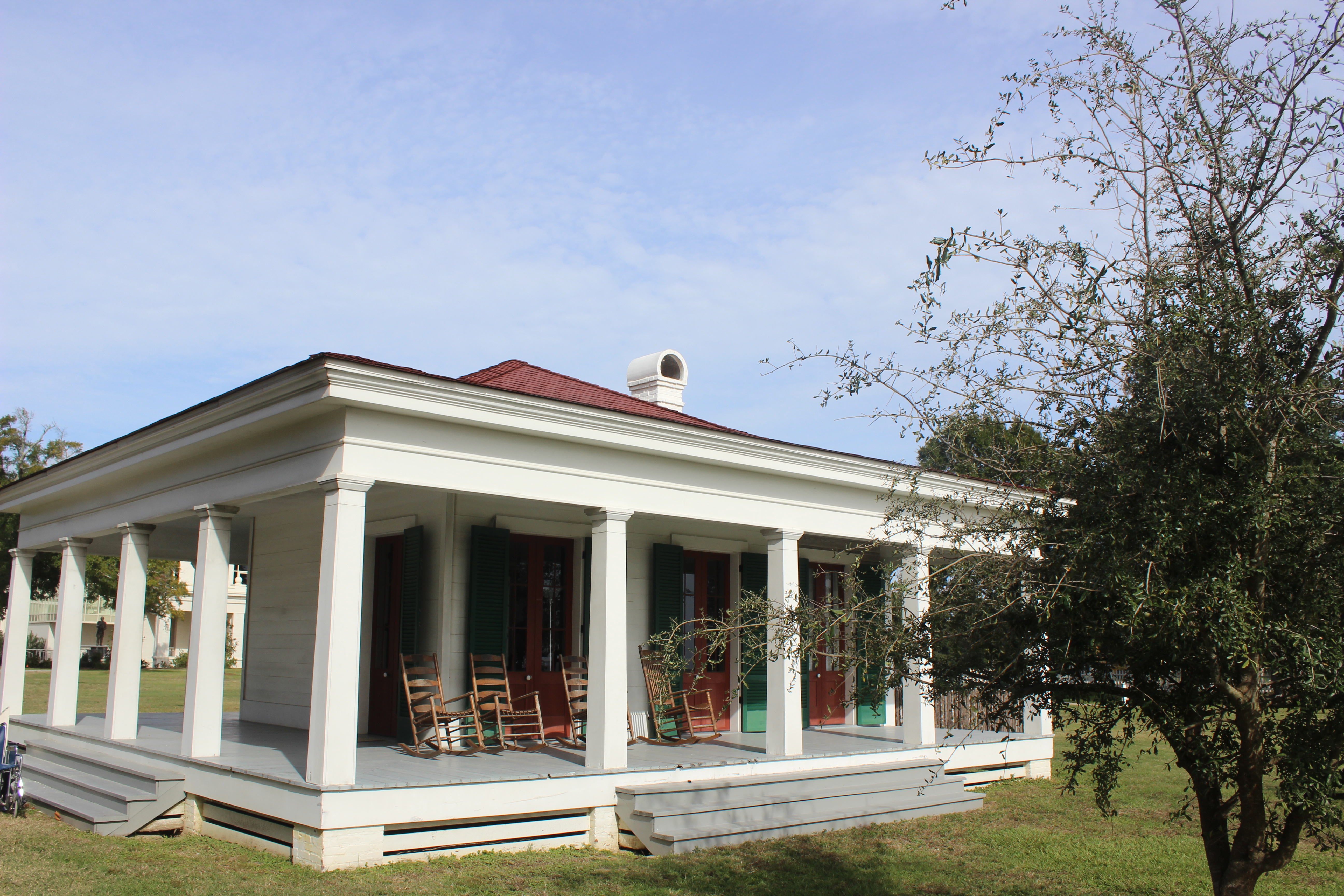
Within a fifteen-minute drive of where we were staying, sits Beauvoir, the last home of Confederate President Jefferson Davis. In 1877, the ex-Confederate president, looking for a quiet place to write his memoirs  of the Confederate cause in the  American Civil War, paid $50 a month to rent what is known as the “Library Pavilion” on the property. Davis became enamored with the property and purchased the house and grounds from the owner, a Mrs. Dorsey for the price of $5,500 in 1879.

The restored "Library Pavilion" The original was damaged by Hurricane Katrina.
The restored “Library Pavilion”
The original was damaged by Hurricane Katrina.


In the “Library Pavilion” Davis would write the majority of, The Rise and Fall of the Confederate Government. Ten years after purchasing Beauvoir, Davis was dead.

Although not buried on the property, hundreds of former Confederate soldiers are. Yet, there is one Davis is interred on the property now.

The Davis that is buried there is what struck my interest. With no surprise, according to my wife, I had researched what history sites were in that area of Mississippi and had circled Beauvoir as a place of interest. I did not realize that the friends we were visiting had also planned to take me there because they also knew I am a history nerd, err, enthusiast.

What had caught my attention and serves as the basis of this post is the other Davis.

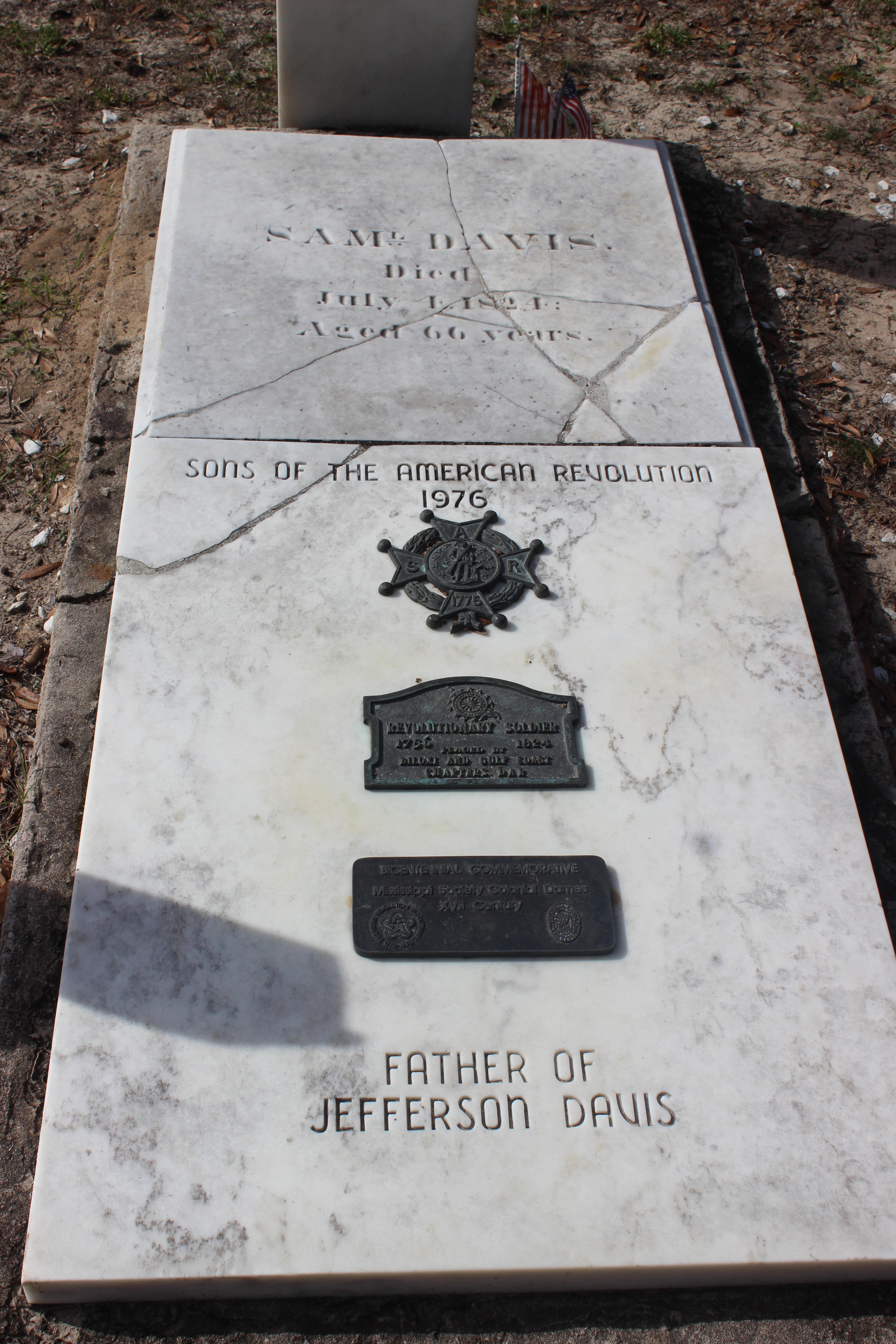
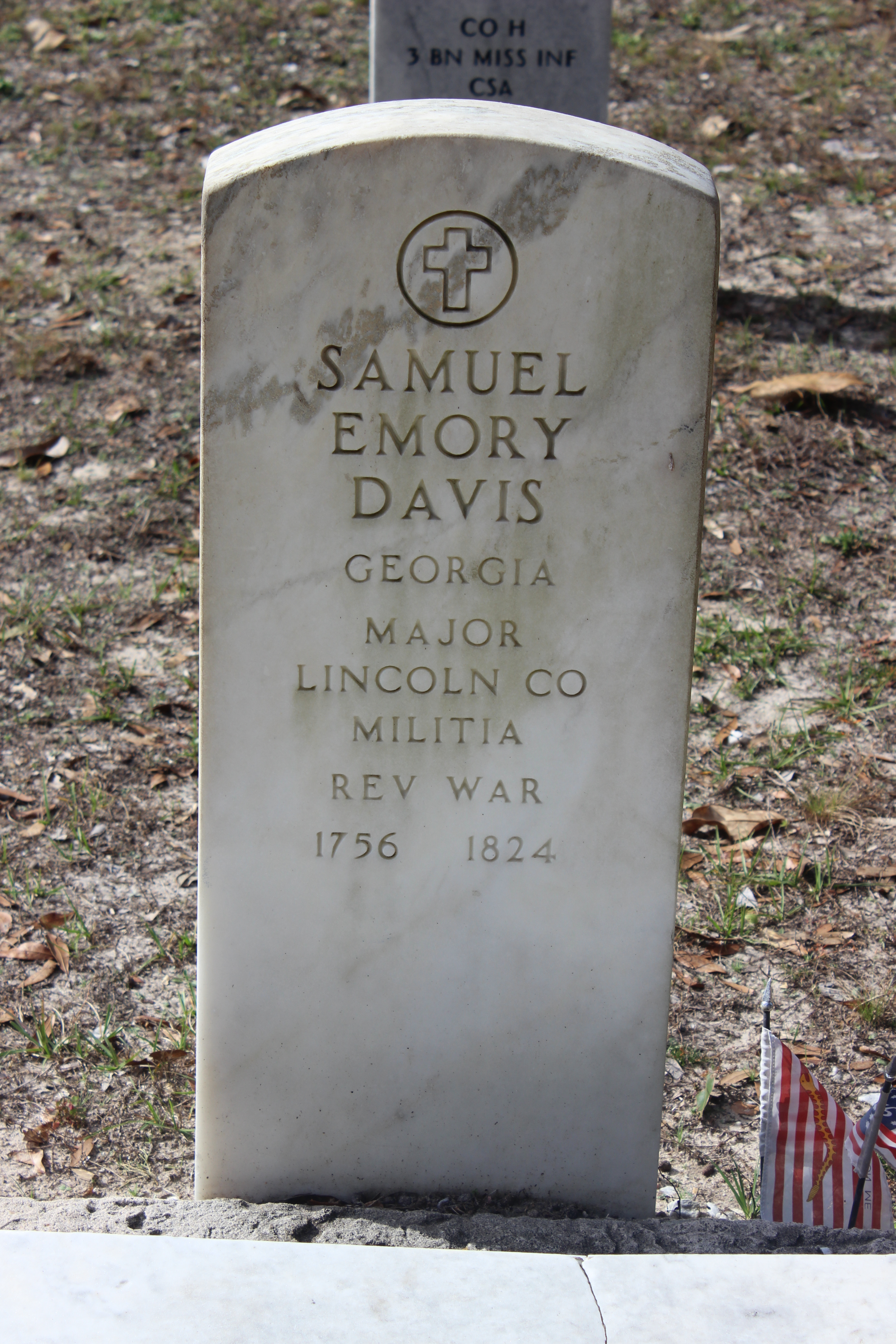
Samuel Emory Davis's Toombstone
Samuel Emory Davis’s Toombstone

Samuel Emory Davis.

Samuel, the father of Jefferson Davis, lies buried in the cemetery. Originally buried below Vicksburg, Mississippi, the elder Davis’s remains were brought to the Gulf Coast to lie at rest at Beauvoir after the course of the Mississippi River was slightly altered.

The Sons of the American Revolution were responsible for saving the remains and having them re-interred.

Samuel Emory Davis, born sometime around 1756, served, like his half-brothers in the militia of Georgia. However, the records available lead to the fact that he served most of the war in South Carolina militia forces.

Furthermore, accounts, gathered by Rice University in conjunction with the Jefferson Davis Papers, have him serving in some of the major engagements of the American Revolution in Georgia, including the Battle of Kettle Creek on February 14, 1779 and the Siege of Savannah from September to October 1779, and lastly the Siege of Augusta between April and June 1781.

A little more research led to the fact that Samuel Davis might have even raised his own mounted force which may have led to the rank listed on his tombstone; major.

After independence, Davis moved his family to Kentucky, where Jefferson Davis was born, then to Mississippi, and finally to Louisiana. While visiting his oldest son, the old patriot died on July 4, 1824.

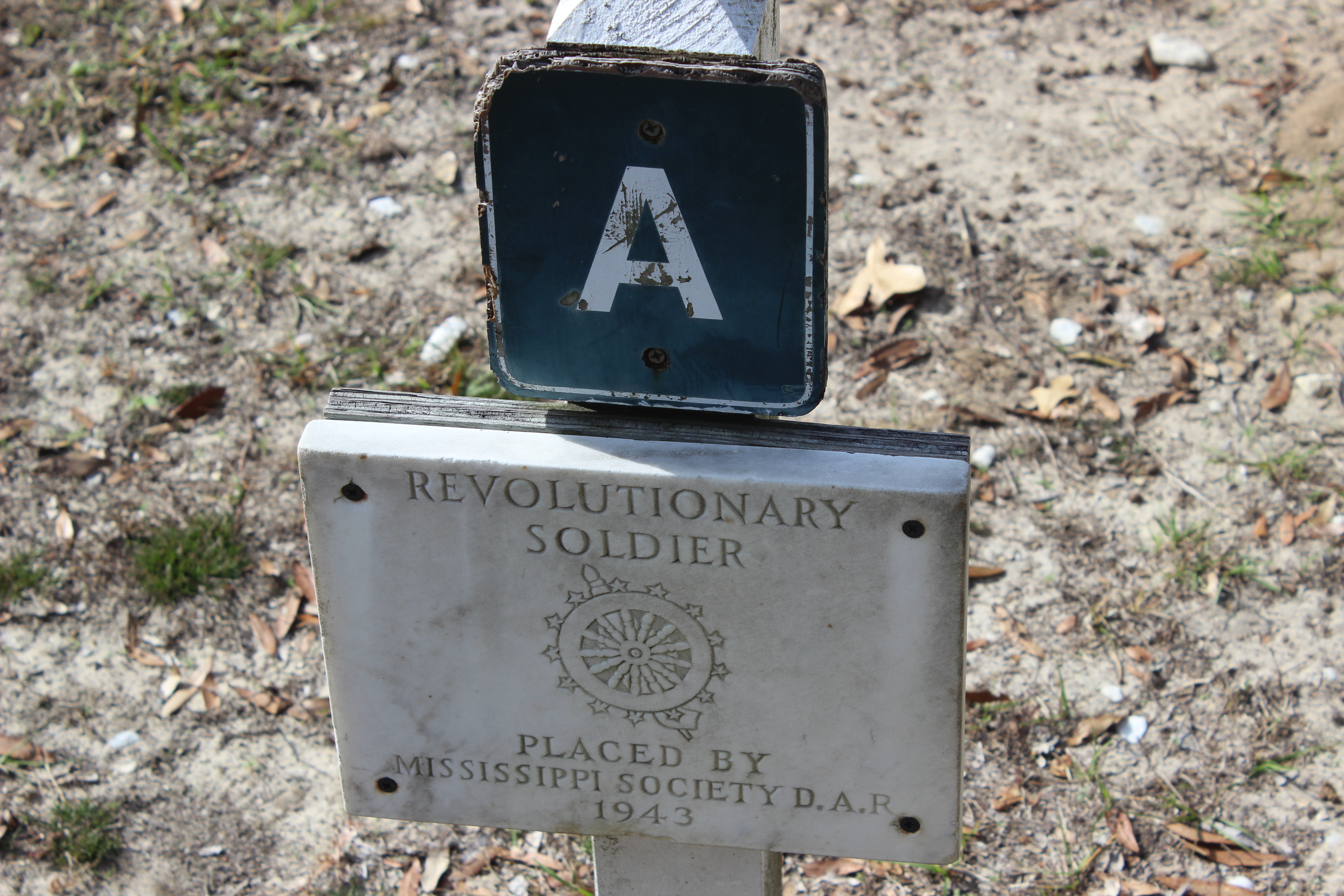
Marker beside Samuel Davis's grave stone.
Marker beside Samuel Davis’s grave stone.

And from 1943 to this present day the former militia officer and father of the only Confederate president, lies in the Beauvoir Confederate Cemetery.

Thus, the visit, which I am thankful for friends who coordinated it on a holiday weekend that Americans celebrate what we are thankful for, now leads to another thankful opportunity.

More reading and research into the American Revolution.

As I came to Beauvoir for the Civil War history connection. I left wanting to know more about the Davis that fought in the American Revolution.

IMG_6437

Emerging Revolutionary War Wishes You a Happy and Safe Thanksgiving Holiday

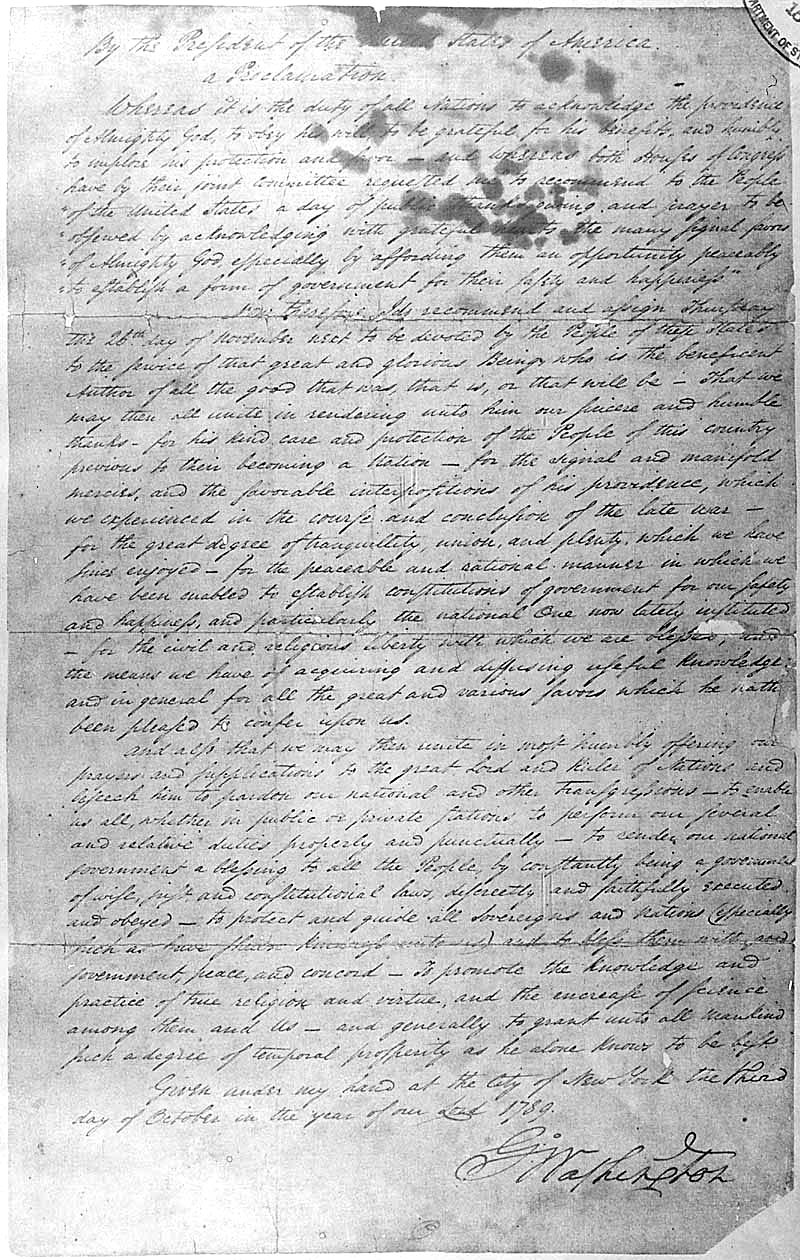
George Washington's Thanksgiving Proclamation, 1789. (courtesy of archives.gov)
George Washington’s Thanksgiving Proclamation, 1789.
(courtesy of archives.gov)

As president of the United States, George Washington wrote the following Thanksgiving Proclamation that was published and designated Thursday, November 26, 1789, as a national day of thanks.

Although the official holiday came later when the sixteenth president, Abraham Lincoln that made the national day of thanks as a national holiday.

Yet, Washington’s words, in their entirety below, still resonate today and give us a chance for reflection this Thanksgiving holiday.

Thanksgiving Proclamation

Issued by President George Washington, at the request of Congress, on October 3, 1789

By the President of the United States of America, a Proclamation.

Whereas it is the duty of all nations to acknowledge the providence of Almighty God, to obey His will, to be grateful for His benefits, and humbly to implore His protection and favor; and—Whereas both Houses of Congress have, by their joint committee, requested me “to recommend to the people of the United States a day of public thanksgiving and prayer, to be observed by acknowledging with grateful hearts the many and signal favors of Almighty God, especially by affording them an opportunity peaceably to establish a form of government for their safety and happiness:”

Now, therefore, I do recommend and assign Thursday, the 26th day of November next, to be devoted by the people of these States to the service of that great and glorious Being who is the beneficent author of all the good that was, that is, or that will be; that we may then all unite in rendering unto Him our sincere and humble thanks for His kind care and protection of the people of this country previous to their becoming a nation; for the signal and manifold mercies and the favor, able interpositions of His providence in the course and conclusion of the late war; for the great degree of tranquillity, union, and plenty which we have since enjoyed; for the peaceable and rational manner in which we have been enabled to establish constitutions of government for our safety and happiness, and particularly the national one now lately instituted; for the civil and religious liberty with which we are blessed, and the means we have of acquiring and diffusing useful knowledge; and, in general, for all the great and various favors which He has been pleased to confer upon us.

And also that we may then unite in most humbly offering our prayers and supplications to the great Lord and Ruler of Nations, and beseech Him to pardon our national and other trangressions; to enable us all, whether in public or private stations, to perform our several and relative duties properly and punctually; to render our National Government a blessing to all the people by constantly being a Government of wise, just, and constitutional laws, discreetly and faithfully executed and obeyed; to protect and guide all sovereigns and nations (especially such as have shown kindness to us), and to bless them with good governments, peace, and concord; to promote the knowledge and practice of true religion and virtue, and the increase of science among them and us; and, generally, to grant unto all mankind such a degree of temporal prosperity as He alone knows to be best.

Given under my hand at the City of New York the third day of October in the year of our Lord 1789.

Go. Washington”

Besides reflection, there are events going on at historic places, this Thanksgiving weekend, that will help you experience the American Revolutionary Era.

A few to note:

At Mount Vernon Estate & Gardens, the home of George Washington situated sixteen miles below Washington D.C., in Virginia, candlelight programs are scheduled for Friday and Saturday. Click here to learn more.

Check out what is going on at Plimoth Plantation in Plymouth, Massachusetts over the holiday weekend by clicking here.

At the Jamestown Settlement, in the Historic Triangle; Jamestown, Williamsburg, and Yorktown, a “Food and Feasts of Colonial Virginia” event begins on Thanksgiving Day. Click here to learn more about this event. On the same trip, Colonial Williamsburg has a plethora of activities ongoing over the weekend as well and can be discovered here.

Whether you head out to one of these events or enjoy your holiday weekend with friends and family, the ERW community wishes you and yours a “Happy Thanksgiving!”

Review: The Spirit of ’74, How the American Revolution Began by Ray and Marie Raphael

ERW Book Reviews (1)Why did Boston’s act of political vandalism lead to a British military expedition against small towns in Massachusetts sixteen months later?

How, exactly did evolving political tensions result in actual warfare?

How did Lexington and Concord become, as Ralph Waldo Emerson wrote, “the shot heard around the world.”

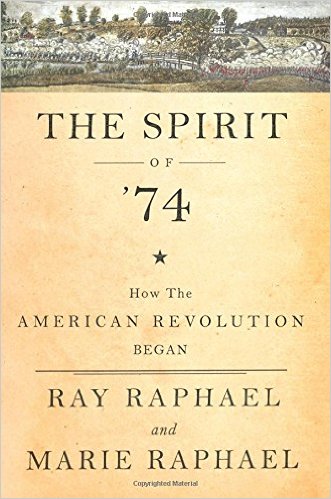
The Spirit of '74, How the American Revolution Began by Ray Raphael and Marie Raphael
The Spirit of ’74, How the American Revolution Began by Ray Raphael and Marie Raphael

In a much-needed narrative, historians Ray and Marie Raphael fill in the movement toward those first shots at Lexington and Concord. In a primary source driven, easy to read history of that year before and leading up to 1775. However, “our story slows, pausing at additional markers that are often bypassed or slighted” (x).

Therein lies “only in a full telling is war a plausible outcome” (x).

The Raphael duo fluidly walks the reader through the build-up to that fateful April 1775 day. The book sheds light on developments in towns and counties across the colony of Massachusetts. A timeline in the beginning provides a good resource to remember the important dates as you read.

With the British response to the Boston Tea Party of December 1773, committed activists perceived that Britain had handed them a blueprint for disenfranchisement (44). What would be seen in the colony as the Coercive Acts, which, among other changes nullified the Charter of 1691 which colonists in Massachusetts held as sacrosanct. When the news of what the British government had did, which arrived in the harbor of Boston in May 1774 until the following April 1775, “resistance would mount, coalesce, and manifest itself in armed, relentless rebellion (44).

That coalescing would resemble an accordion, with Boston being one end and the countryside of Massachusetts the other end of the instrument. Both ends would reverberate the bellows as ideas, exchanges of opinions, passive and aggressive action, all marred the intervening months of 1774. Until as Abigail Adams wrote many months before April 1775, the”flame is kindled and like lightening it catches from soul to soul” (192).

The Raphael duo capture what the farmers in Berkshire set in motion, in accordance with capturing the attitude of townspeople in Worcester, Massachusetts at the same time. These various local uprisings, which put an emphasis on peaceful activities coalesced into the call for committees and eventually into the need for the Provincial Congress. This Congress acted as the de-facto governing body of Massachusetts in response to British measures to subdue and punish the intransigent rebels.

When viewed through the prism of the preceding years, what happened on the green of Lexington or the North Bridge at Concord becomes clearer as the pivot in which the simmering resentment in Massachusetts finally boiled over and led to the “shot heard around the world.”

Every once in a while a monograph is written that fills a necessary void in the field of early American Revolutionary history. This history is definitely one of those as it fills in that critical, yet overlooked, time period in the build-up to the fighting between British-American colonists and the redcoats that represented the mother country.

One cannot hope to understand the events of 1775 and beyond without knowing how the colonists of Massachusetts, so many that have unfortunately been lost to the passing of time, began the protests that led to independence, beginning in the years before.

Or as the authors more succinctly state; “and so begins a story we know” (214).


Book Information:

Publisher: The New Press, New York, NY

Pages: 219 pages plus acknowledgements, bibliography, index, and, timeline


The Greatest Leaders of the American Revolution You Have Never Heard Of

Part Two
(for part one click here)

For the next year and a half, until he was exchanged for a British officer captured in the Battle of Saratoga, Williams faced an ordeal that would continue to haunt him for the rest of his life. Initially treated as a gentleman because of his officer status, the first few months of his imprisonment passed in relative ease. The ease of the beginning months of his captivity was the norm for officers taken in civilized 18th century viewed warfare. Williams’ early imprisonment showed the gentleman status he had attained through his rise in the military ranks. During this time, an anecdote reinforces this point.

While in prison in New York, he became acquainted with a Major Ackland of the British military. The two became fast friends. Williams, under the auspices of his imprisonment, was able to move freely through the city of New York with this new friend.The friendship was confirmed when after dining with Major Ackland he was invited to attend an assembly. This was the term used to describe a fashionable ball of the period. When arriving at the ball, the reception that Major Williams received was so contemptuous and full of scorn that it attracted the attention of Major Ackland who replied: “Come, Williams, this society is to ill-bred for you and me; let us go home.” The account shows the personable demeanor and gentlemanly qualities that Williams espoused. This quote only tells half the story. The other half of the account transpired after Major Ackland returned to England that makes this story so worthy.

Upon Ackland’s return to England attended a mass dinner and one of the topics broached was the questionable courage of the American military. The major defended Americans so vehemently that he was issued a duel by a fellow British officer. This led to his demise, with a fatal gunshot wound to the head. To defend the abilities of Americans to such an extreme depicted the immense respect and valued friendship that blossomed between the two officers. Along with showing the respect and admiration that constituted the friendship was the fact that Williams reached a level where he could fraternize with gentlemen of pre-war higher social classes. In addition he was an amiable companion and a worthy military adversary in the views of British counterparts.

A sketch of one of the prison complexes used in New York City by the British to house American soldiers.

The imprisonment of Williams took a drastic turn to the worse when an accusation of espionage surfaced against him. According to the General Phillips, the commandant of New York, Major Williams was in the habit of communicating to General Washington all the information to be collected from the British camp by means of emissaries employed for that purpose. Williams was seized as soon as the accusation was leveled against him and was denied a chance to provide a defense or refutation of the charges. He was placed in the provost jail in New York, in a room about sixteen square feet. The prison cell had poor ventilation and was best described as “disgustingly filthy.”Here Williams languished for approximately eight months; the last of the fifteen months he was a prisoner of war. Although the spying was never verified and for all intents probably a false accusation, Williams’ “naturally fair constitution…was much impaired” by this ordeal.

After his exchange in January 1778, Williams took command of the 6th Maryland Regiment and Williams would see action at Monmouth Court House in the summer of that same year.

Williams headed south with the Maryland Continentals to aid the Southern Department and relieve the American garrison at Charleston, South Carolina. Unfortunately, the American reinforcements arrived too late to lift the siege.

The reinforcements did make it in time for another American military disaster; the Battle of Camden. Plucked as adjutant general for Horatio Gates, the American commander, Williams was powerless to stop the route of march that Gates chose to move the American army from North Carolina to South Carolina.

The condition of the troops, fatigued from the march along with other difficulties, mixed with very limited rations would prove fatal tomorrow to the American effort at Camden. What ensued the following day was the death of General Kalb, the lost of over 1,000 American soldiers, and the ruin of Gates military career as a field commander. The way the battle unfolded would haunt Williams for the rest of his life, which was recorded in a written component for the Papers of Nathanael Greene. He remembered how the “great majority of the militia fled without firing a shot.” This was a significant issue because the militia comprised two-thirds of the total force of Gates! Williams, along with the survivors were left to question the reasons behind the campaign, the strenuous marching, and the condition they were led into battle with.

Williams took part in the strategic move north across the Dan River in Southern Virginia, part of Nathanael Greene’s strategic maneuvering in the face of British Lord Charles Cornwallis’ British forces. Able to recuperate and refit his army across the watery boundary from the British, Greene planned the strategy that would lead Williams and the rest of the Americans back to North Carolina and to a place called Guilford Court House.

After serving a stint as a commander of light infantry, Williams played a pivotal role in the March 15, 1781 Battle of Guilford Court House. Serving in the last line, where other Marylanders of the 1st Maryland Continentals played a decisive role in saving Nathanael Greene’s American army, Williams helped lead the rear-guard away from Guilford Court House.

Williams  would continue to serve admirable in future engagements at Hobkirk’s Hill and Eutaw Springs.  In the later stages of 1781 Williams was given command of the 1st Maryland Regiment, the same unit that the famous painting below depicted at the Battle of Guilford Court House.

1st Maryland Continentals at Battle of Guilford Court House

In January 1783, Williams received notice that Congress had approved his promotion to brigadier general on account of his merit and service in the Southern Theater Campaigns.

Approimately halfway through that same month, on the 16th, Williams retired from the army.

After almost eight years of arduous service, Williams, like the nation he helped create by his service was a changed being. The changes were numerous, first being the obvious, that he had shown tremendous progress in climbing the officer ranks, from lieutenant in 1775 to brigadier general in 1783. Secondly, and possibly the most important he had endured through numerous campaigns and some of the bloodiest battles of the war, from Fort Washington in New York to Camden in South Carolina.

Williams return to civilian life saw him appointed as commissioner of the Port of Baltimore and he was active in the Society of Cincinnati, the society created to preserve the fellowship of former officers of the American army during the Revolution.

In 1786 Williams married Mary Smith and became a father to four sons, settling on the banks of the Potomac River where he tried his hand at farming.

Springfield Farm, home of Otho Holland Williams (courtesy of HMDB.org)
Springfield Farm, home of Otho Holland Williams
(courtesy of HMDB.org)

With his friendship to George Washington, Williams had his appointment as commissioner of the Port of Baltimore renewed and then in 1792 was approached by Henry Knox, Secretary of War in Washington’s administration (and at the behest of Washington) to see whether he would accept a commission as brigadier general in the regular army.

Although the position would have made Williams the second highest ranking officer in the military, he declined the position because he had no ambition for the position and also his health was poor.

Williams died on July 15, 1794.  He was 45 years old. His health never recovered from the strains of imprisonment and the fatigues of war.

The town of Williamsport, Maryland, which would play a prominent role in the Gettysburg Campaign of 1863 was named after him and where he was laid to rest.


The Signal

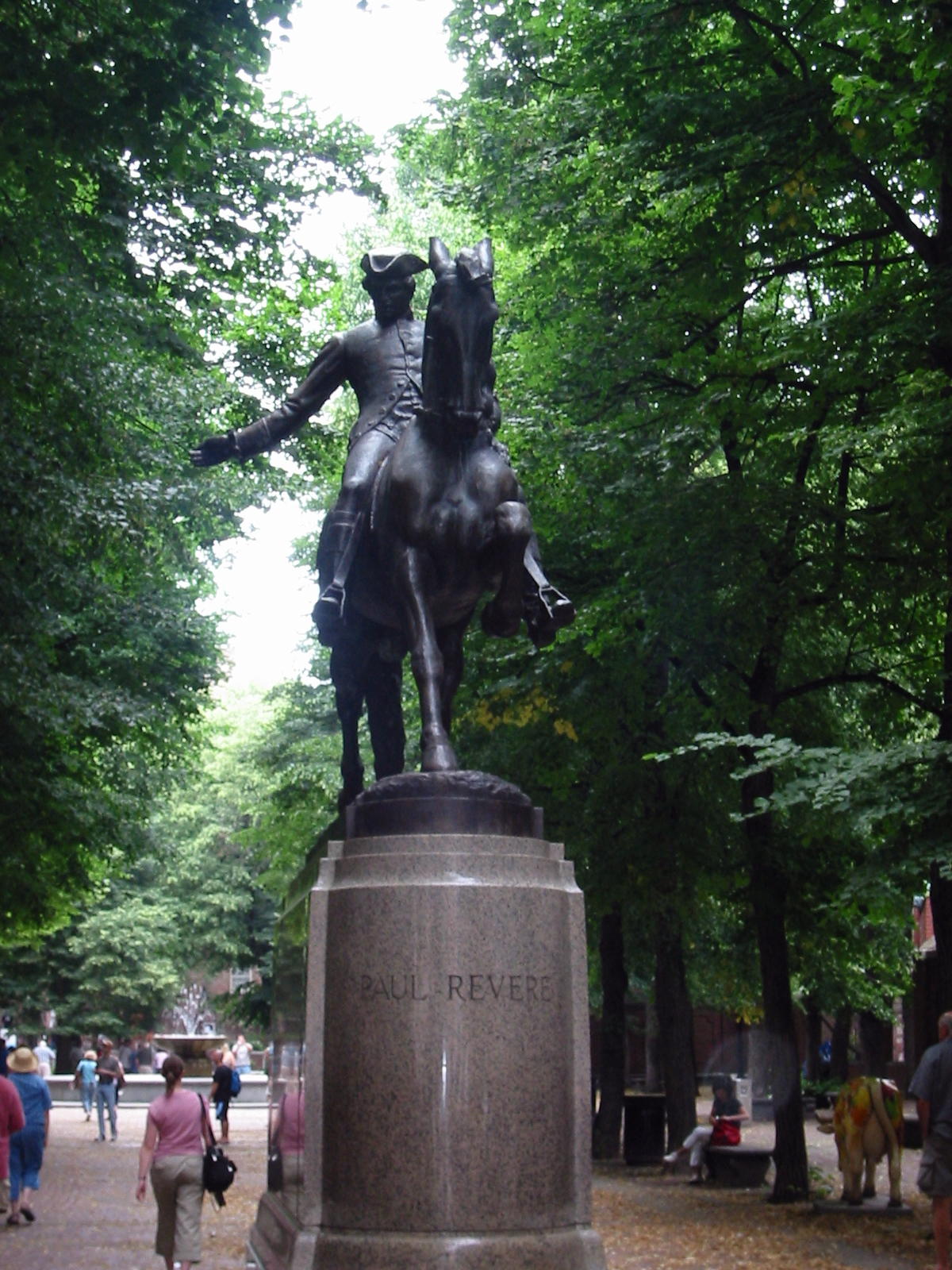
“One if by land, two if by sea; and I on the opposite shore will be, ready to ride and spread the alarm through every Middlesex village and farm, for the country folk to be up and to alarm.”  When I was a boy, these words from Henry Wadsworth Longfellow’s poem “The Midnight Ride of Paul Revere” truly stirred within me an excitement that I don’t think has ever really left me.  I hadn’t visited Boston mind you, but I could still envision the outline of that brave horseman as he paced along the shore of the Charles River, “booted and spurred” and wearing his cocked hat and long riding cloak.  He waited and he watched.  He was waiting for the signal in the belfry of the Old North Church that would tell him which direction the Lobsterbacks would be taking that night on their march to Concord.

Paul Revere
Paul Revere

Yes sir, Paul Revere was a hero of mine early on.  Right up there with Daniel Boone and Davy Crockett.  It would be years, though, before I would learn the real story of what happened that night, April 18, 1775.  During my first visit to Boston a few years ago, I crossed the bridge that spans the Charles River, near where the USS Constitution is now moored.  Longfellow’s poem has fooled many since its publication in 1861.  It’s true, Paul Revere, Boston silversmith, member of the Sons of Liberty, and Messenger of the Revolution, crossed the river near that spot.  He met up with local militia leaders on the Charlestown side.  The steeple of Christ Church in Boston’s North End, the Old North Church it was also called, did indeed shine forth with the light of two lanterns, hung there by its young sexton Robert Newman.  It was a message alright but Longfellow got it backwards.  It wasn’t a message to Paul Revere but, rather, it was a message from Paul Revere!

One of the Lanterns
One of the Lanterns

The North End of Boston is still what we would today call a blue collar place.  Its streets are narrow and the buildings are close-packed.  The Paul Revere House, at 19 North Square, is surrounded by modern buildings and businesses.  Didn’t matter to me though as I strolled through the house on a self-guided tour.  I found myself struck as I exited from the back door and walked down the back steps; probably the same exit route taken by Revere himself that night as he left home and headed down to the water to retrieve the small boat he kept hidden there.  Like a lot of historic areas, you sometimes have to use your “mind’s eye” to envision what things were really like.  As I looked around North Square, I envisioned how Mr. Revere’s world would have looked.  At last, on that first trip to Boston, I was following in the footsteps of Paul Revere!

Paul Revere House
Paul Revere House

Over on Salem Street stands Christ Church; the Old North Church from history.  The sanctuary is still beautiful.  If it were allowed, I surely would’ve climbed to the top of the steeple as Robert Newman did on April 18th.  Revere and may other members of the Sons of Liberty had already learned, through mysterious sources, of the secret plans of British General Thomas Gage to march a hand-picked force of light infantry troops and a handful of Royal Marines to the village of Concord, some 20 miles west of Boston to seize the colony’s powder stores.   By all accounts, General Gage was a good and virtuous man; a veteran of the fight on Braddock’s Field in 1755.  He arranged his plans to secretly snatch up the colony’s stores of powder and shot in order to help stop any further bloodshed should tensions continue to boil over into violence.  But it was not to be.

Old North Church
Old North Church

Many of the troops who would be making the march later that evening were quartered in buildings near the Old North Church.  In fact, Mr. Newman’s signal lights were actually seen by the regulars.  As an officer banged hard on the wooden doors in the front of the church, wanting to know what was going on; Robert Newman stole silently through a rear window to make his escape.  As he was known to carry about his person a set of keys to the church he would later be arrested and detained.

Back Window of the Old North Church
Back Window of the
Old North Church

By the same token, Revere knew the risks he himself would be taking in having friends row him across the Charles River after the hour when no further civilian traffic was allowed.  They would pass under the guns of the HMS Somerset, the man-of-war that was posted in the river to block all nocturnal travel between Boston and Charlestown.  Hence, the signal.  In case Revere was stopped, he had arranged for Robert Newman to make the signal of two lanterns in the belfry, to communicate to the Patriots in Charlestown that the regulars would be crossing Boston’s Back Bay, near Cambridge, on their march.  “Two if by sea.”

The signal was sent and Revere made it to Charlestown.  He borrowed a horse, Brown Beauty, and galloped off but not to Concord; he was heading for Lexington.  Down to the south, along Boston Neck, passed another rider, by the name of William Dawes.  The mission for both men was the same: reach Lexington in time to warn patriots Sam Adams and John Hancock that the regulars were out!  Both men made it to Lexington, with Revere arriving first.  They delivered their message.

As for Concord, well…that’s another story.

Revere Statue
Revere Statue
Steeple of Christ Church

The Revolutionary War’s “Gettysburg”

How time and memory have not been kind to the most important campaign in American history.

Nearly a million people visit Gettysburg every year.  Those visitors stand at Little Round Top or on Cemetery Ridge and reflect on what happened there in the summer of 1863.  They go to Gettysburg because it is remembered as a major turning point in the Civil War and where the fate of the entire nation hung in the balance for a few days.  How would the world have been different had General Meade’s left flank collapsed on July 2nd or had Robert E. Lee’s desperate frontal assault on July 3rd been successful?  Gettysburg is a place where one can ponder this and the sheer number of books, articles, monuments and visitors prove how important this narrative is to the American people.

Not too far away in New Jersey is the location of another major turning point in American history that does not draw millions of tourists.  Often termed “the ten crucial days”, the Battles of Trenton and Princeton during the American Revolution saved the United States from imminent destruction during the Revolutionary War, but the actions do not hold the same mantle of importance that Gettysburg holds in American public memory.

Washington_Crossing_the_Delaware_by_Emanuel_Leutze,_MMA-NYC,_1851
The most iconic reminder in public memory of the 1776 winter campaign is the famous Emmanuel Leutze painting Washington Crossing the Delaware. The actual location of the crossing was actually preserved and are now state parks, but unfortunately many people don’t know about the context of the crossing nor the intense battles that followed.

The idea of a free and independent United States of America never came closer to complete collapse than in December of 1776.  General George Washington’s military campaign that winter ultimately changed everything.  Washington’s starving, freezing, and disintegrating army dramatically crossed an ice-choked Delaware River on Christmas night, marched nine miles and then attacked and defeated a Hessian garrison in Trenton.  A few days later the British army descended on Washington’s force, nearly captured them all, but a daring night flank march moved Washington’s men around the British flank and struck the British rearguard at Princeton. Then they quickly escaped to western New Jersey, forcing the British back to New York City.  These engagements electrified the colonies and the world and secured an immortal place in history for George Washington and his small, ragged Continental Army.  British historian G.M. Trevelyan even stated “it may be doubted whether so small a number of men ever employed so short a space of time with greater or more lasting results upon the history of the world.”[1]


Death of Rall
John Trumbull’s painting of the Surrender of Colonel Rall at Trenton. Trenton was Washington’s most lopsided victory, having only lost a couple men to wounds and death, while crushing and forcing the surrender of most of Rall’s force.

While the Battles of Trenton and Princeton were exponentially smaller in size and scale than the Battle of Gettysburg, the impact of the battles (and the campaign) could be placed on the same or higher importance than Gettysburg.  So why is this 1776 turning point not remembered on the same scale as the 1863 turning point?  There are probably many reasons for this, though none of them though fully justify this contrast in public memory.

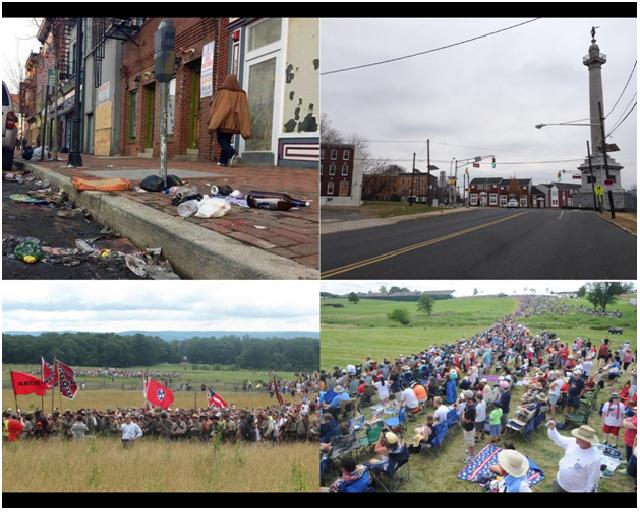
While the Revolutionary War overall is not as popular as the Civil War, a major reason one could argue is the lack of a well-interpreted battlefield.  The Battle of Trenton is memorialized today only by a 19th century monument to Washington and the victors and a few small bronze plaques located throughout the modern city.  A small state-run museum, the Old Barracks, is the only facility that interprets the history of the campaign in the city.  Needless to say, one million visitors are not making pilgrimages to this museum and honestly, most would not want to walk the ground where the soldiers fought since those former town roads are now crime ridden city streets.  Every year a small reenactment takes place in the city, but it is little advertised and sparsely attended, the largest having been in 2001 for the 225th anniversary which included thousands of reenactors.  Nearby in Princeton, a small state park preserves a portion of the battlefield land, while other parts of the battlefield are about to be developed by a research institute.

trenton2
Compare the upper images of modern downtown Trenton, site of the major turning point in the Revolutionary War (upper left), and Trenton’s monument to the victors located where Washington was positioned during the battle (upper right) with the lower images of visitors walking the ground of Pickett’s Charge at Gettysburg battlefield (lower left) and the tens of thousands of visitors who paid to watch a Gettysburg reenactment in 2013. (lower right)

This is as an excellent example of the importance of battlefield preservation.  Trenton, with no interpreted battlefield park land, no National Park Service presence, nor even a city trail (i.e., Boston’s Freedom Trail), doesn’t have much to entice visitors to explore the ground where the battle actually happened.  This seems to be a problem with many Revolutionary War battlefields.  While some battlefields like Cowpens, Guilford Courthouse, Saratoga and Yorktown are preserved by the National Park Service and have staff working to interpret their place in history, these are in the minority.  Battlefields like Brandywine, Green Springs, Camden, and Eutaw Springs are only partially preserved and minimally interpreted.  Many significant Revolutionary War battlefields like White Plains, Brooklyn, Kip’s Bay, Fort Washington, Charleston, and Savannah are all places where development have obscured the memory of the battles that occurred there.  Unfortunately, many people incorrectly believe that all the battlefields of the Revolution have all been totally lost because of development.  The Revolutionary War then has become more about the ideals and thoughts that have been interpreted at historic homes and in Philadelphia, than as a major, bloody, painful war in which thousands paid the ultimate sacrifice and in which the fortunes of the nation moved with the military.

Rev-War_PrincetonWB.28
Washington rallies his troops at Princeton. In one of his greatest acts of personal bravery he rode to within 30 yards of British troops, exclaimed “Parade with us, my brave fellows! There is but a handful of the enemy and we shall have them directly!”[2] This helped raise the morale of the American troops and turned the tide of the battle.
 Thankfully, the Civil War Trust has launched a nation-wide effort to preserve remaining Revolutionary War battlefields (Campaign 1776).  But we must go beyond just saving battlefield land.  We must spread the word of these amazing deeds and build excitement and interest in these places.  And while it truly helps to have a well-preserved battlefield, it is just as important to stand on the modern city streets and remember that it was at these locations, beneath the modern concrete, that patriots fought and bled to create an independent American nation.

[1] Trevalyan, George Otto.  The American Revolution: Part III.  London: Longmans, Green, and Company, 1907.  113.

[2] Fisher, David Hackett.  Washington’s Crossing.  New York: Oxford University Press, 2004.  334.

Tragedy After Success

On October 19, 1781, General George Washington had one of the ultimate highs in his military career. With the help of the French army and navy, Washington forced the surrender of British Lord Charles Cornwallis’ forces at Yorktown, Virginia.

To best sum up the impact of this momentous victory for the Americans in their cause for independence, British Prime Minister Lord Frederick North exclaimed when receiving the news:

“Oh God, it’s all over.”

But, weeks before North learned of the calamity in the Tidewater of Virginia, Washington dealt with his own calamity. One very personal. The death of his stepson.

John Parke Custis, affectionately known as “Jackie” or “Jack” as he got older, was one of two children that Martha Custis Washington brought into the marriage with George Washington on January 6, 1759.

Jack Parke Custis
John Parke Custis

The other child, Martha Park Custis, known as “Patsy” had died in 1773 of an epileptic seizure.

Now, seventeen days after the successful completion of the Siege of Yorktown, Jack Custis would be dead.

Custis had joined his stepfather as a volunteer aide-de-camp for the Yorktown Campaign and contracted “camp fever” a catch-all term for a whole litany of illnesses. With the disease quickly causing his health to fail, Custis had one last wish before leaving the lines at Yorktown. He wanted to see the surrender, so faithful attendants lifted Custis in a stretcher to the top of one of the redoubts.

From there Custis had a complete view of the proceedings, the crowning achievement of his stepfather.

To remove him from the scene of pestilence and in a hopeful attempt to save 26-years old life, Custis was moved 30 miles up the Tidewater Peninsula of Virginia to Eltham Landing, where his uncle, Burwell Bassett owned a plantation. His mother, Martha and wife, Eleanor Calvert Custis was summoned to his bedside.

Before Washington could arrive at the bedstead, Jack died on November 5, 1781. He was the last of five children Martha had given birth too. Martha was, understandably, slipped into a “deep and solemn distress.” Even the general exhibited some rarely seen emotion, And”clasping his [Jack’s] bereaved widow to his bosom and proclaiming that henceforth he regarded Jacky’s two youngest children as his own.”

Jack was buried in the family plot near Williamsburg, Virginia at Queen’s Creek.

The funeral was a week later and afterward Washington accompanied Martha and Eleanor back to Mount Vernon. George and Martha Washington would spend considerable energy in the pursuing years raising their late son/stepson’s children. Jack’s widow, Eleanor, would leave the two youngest children in the care of the Washington’s and by war’s end had remarried to a Dr. David Stewart of Alexandria in which the couple would have 16 more children.

But, all that was in the future. In the meantime, after leaving Mount Vernon in mid-November, George Washington had a revolution to see through to its successful conclusion.

The loss of his stepson, whose limited service in the war does not diminish the anguish felt by his family, put Washington in the company of countless parents whose sons had given their lives in the same cause.

And the war had approximately two years left in America.


Sources Used:

Ron Chernow’s “Washington, A Life”

George Washington’s Mount Vernon website – http://www.mountvernon.org – accessed October 18, 2015

Where An Army Was Born

When most Americans think of Valley Forge the image of a cold, harsh and bleak winter landscape tends to spring to mind.  They remember from their history books that this was the place where Gen. George Washington’s rag-tag Continental Army suffered greatly from the harsh elements.  While Pennsylvania winters are rarely mild, the winter of 1777-1778 was not as harsh as what the army would later endure at Morristown, NJ.  What truly plagued Washington’s army that winter at the Forge was a want of supplies:  food, medicine, blankets, shoes, clothing, etc…  If there was ever a time in the life of this army when the boys could have called it quits, when they could have disbanded and just gone home…..then Valley Forge would have been the place for it.

National Memorial Arch

I took my family to visit Valley Forge National Historical Park near the Schuylkill River, west of Philadelphia not long ago.  Out of season, of course.  It was a warm day in July when the five of us meandered through the little visitor’s center and museum and then drove along the park roads trying to take in everything this immense site had to offer.  Entertaining three teenagers packed in a minivan isn’t always the easiest thing to do on a history tour but they seemed impressed with the National Memorial Arch, standing majestically alone on its green hilltop.

My attention, not surprisingly, was drawn to the restored cabins where the soldiers spent their winter days and nights and by the beautiful stone Potts House in which Washington lived and, along with his military “family”, used as headquarters.  But this trip would prove to be an eye-opener for me.

Restored Cabins
Restored Cabins

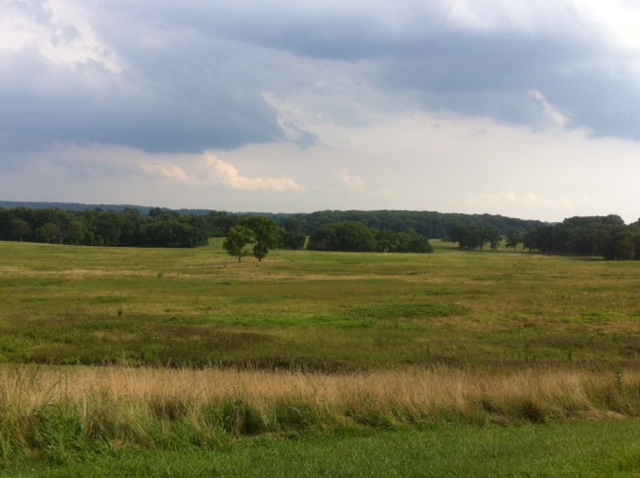
As we cruised along the park roads, through beautiful rolling hills, we came upon what is called The Grand Parade.  It’s a large, grassy, open field bordered by trees that stands nearly in the center of the park.  At first glance it appears no different than any other large, grassy, open field bordered by trees, but there is something extra special about this one.  For this was the scene where, some 238 years ago, Washington’s regiments and battalions marched and drilled during that long winter.

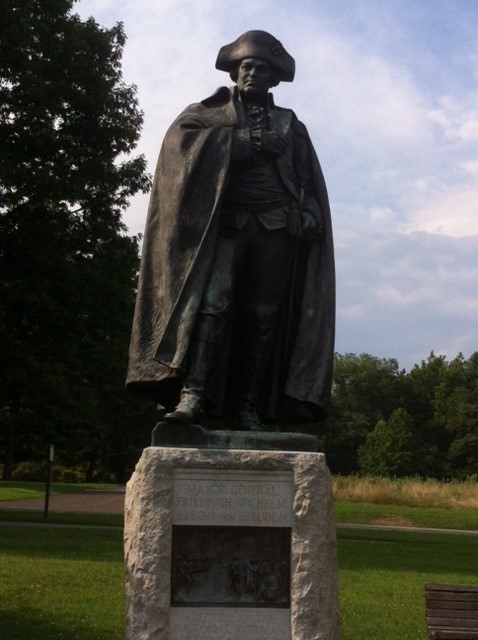
Baron Von Steuben
Baron Von Steuben

Standing on one side of the field is a statue; the man who’s responsibility it would become to train these men in the European military fashion.  Friedrich Wilhelm August Heinrich Ferdinand Steuben, known as Baron von Steuben, came to America on the recommendation of none other than Benjamin Franklin.  He was a veteran of the Prussian Army, he said; had attained the rank of Lieutenant General and served directly under the military genius Frederick the Great.  At Valley Forge that winter, he would serve as a volunteer and would be appointed temporary Inspector General.  As the historical record would later show, Steuben did serve as aide-de-camp to Frederick the Great but never attained a rank higher than that of captain.  While his claim to rank and privilege was questionable at best and downright false at worst, Baron van Steuben would nonetheless prove invaluable to the United States.  As an officer of the Prussian Army, he had the knowledge and skill necessary for training men in the art of war.  He was the right man, for the right job, at just the right time.

The Baron spoke not a word of English; his orders had to be translated, but the manual of training he would compose was such that it turned a hungry, tattered, exhausted mass of farm boys and mechanics into a well-disciplined fighting force.  He would mold them into an army.

Potts House
Potts House

Unlike his British counterparts, George Washington  was never to have a fully veteran army.   Indeed, there were some men who served for the duration of the war but, by and large, enlistments expired and men returned to their homes, farms and families.  But because of the training provided by this somewhat eccentric European who spoke and swore in German, the soldiers of the Army of the United States would go on to match the best in the world.  On the field at Monmouth Courthouse in 1780, these men would prove their mettle.  While the initial attack stalled, due mainly to poor leadership, the defensive position they would establish, under the watchful eye of their Commander-In-Chief, would prove the worth of their training.  These lads stood off the best army in the world.  And it all came together right here, on The Grand Parade at Valley Forge.

The Grand Parade
The Grand Parade

As I stood beside that statue on a warm day in July and gazed out on this wide open space, in my mind’s eye I could see those boys drilling; first by squad, then by company, then by regiment.  I could see it all unfolding before me on this unassuming field.  It looks like any other field you may pass on a drive in the country, but this field is where the war would change for the United States.  This field, by God, was the birthplace of the American Army.

ERW Weekender – In the Footsteps of Young George Washington

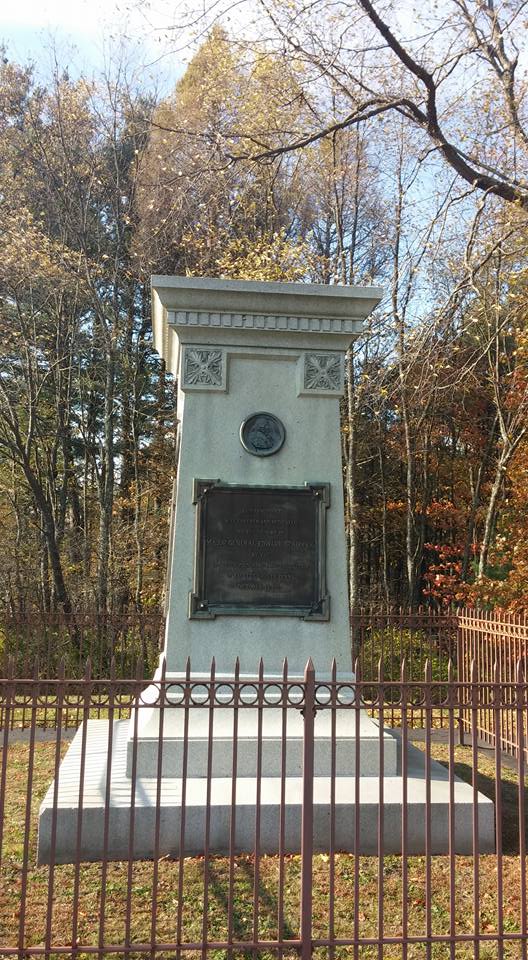
General Edward Braddock's grave, near Fort Necessity
General Edward Braddock’s grave, near Fort Necessity

Recently myself and two other Emerging Rev War authors took a trek to the mountains of western Virginia, Maryland and Pennsylvania to follow in the footsteps of George Washington in 1754-1758.  Washington played a significant role in the beginning of the French and Indian War.  These were the developmental years for Washington, here he learned lessons of leadership, military command and gained the experience that earned him the future Commander in Chief of the Continental Army in 1775.


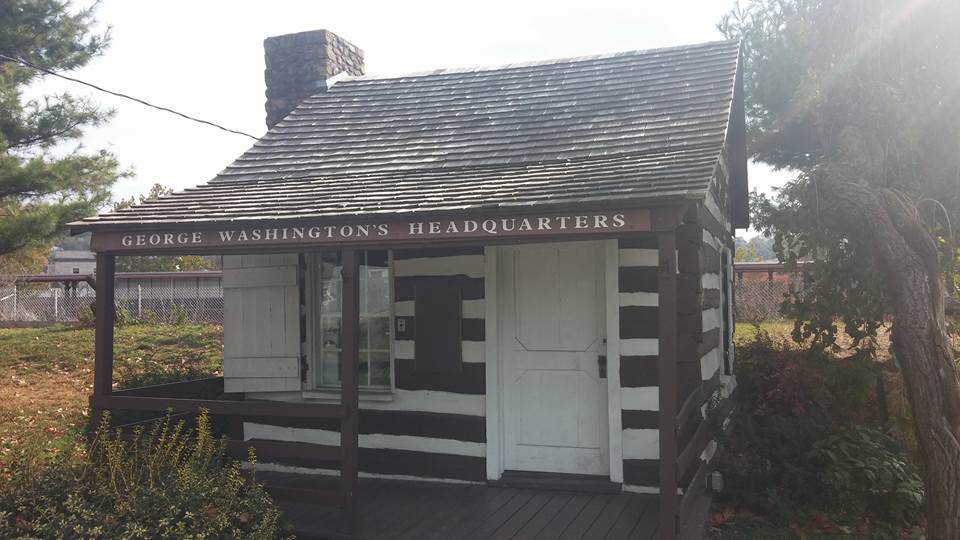
Rebuilt cabin from Fort Cumberland

One of the best ways to follow in the footsteps of Washington during this time period is to   start in Cumberland, MD.  Here, Fort Cumberland served as the stepping off point for many expeditions to the frontier.  Today, the fort is gone but the location is well marked and interpreted.  The City of Cumberland has established a walking trail and outlined the boundaries of the fort.  Also, a restored cabin interprets Washington’s time at Fort Cumberland.  From here, one can easily follow the famous “Braddock Road” by taking Rt. 40 west (the National Road).

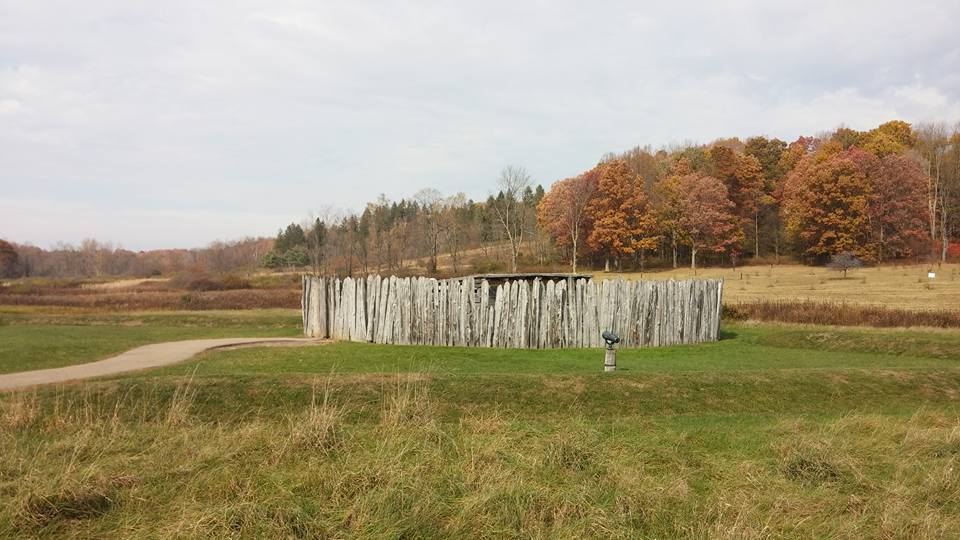
Washington's "fort" at Fort Necessity National Battlefield
Washington’s “fort” at Fort Necessity National Battlefield

A must see site along Braddock’s Road is Fort Necessity National Battlefield Park.  Here the young and inexperienced George Washington found himself in July 1754 surrounded by French and their Native American allies.  As one gazes across the ‘Great Meadows” and see the small fort Washington built, one has to ask themselves “what was HE thinking?!”  The newly built visitor center and museum is excellent and worth the small fee.  The park preserves the site of the July 1754 battle, portions of the original Braddock Road and the early 19th century Mount Washington Tavern (that was built along the old National Road).  Nearby is Braddock’s Grave (buried after the disaster near Fort Pitt where he was mortally wounded).  Further north is Jumonville Glen.  Of all the places I have been, this place represents the most pristine historic spot.  Here in June 1754, Washington started the French and Indian War.  When one views the spot today, it is easy to take yourself back to 1754 and there is a real sense of history here.  Here Washington led his first command, here Washington set the stage that would lead him to command the Continental Army in 1775.
 

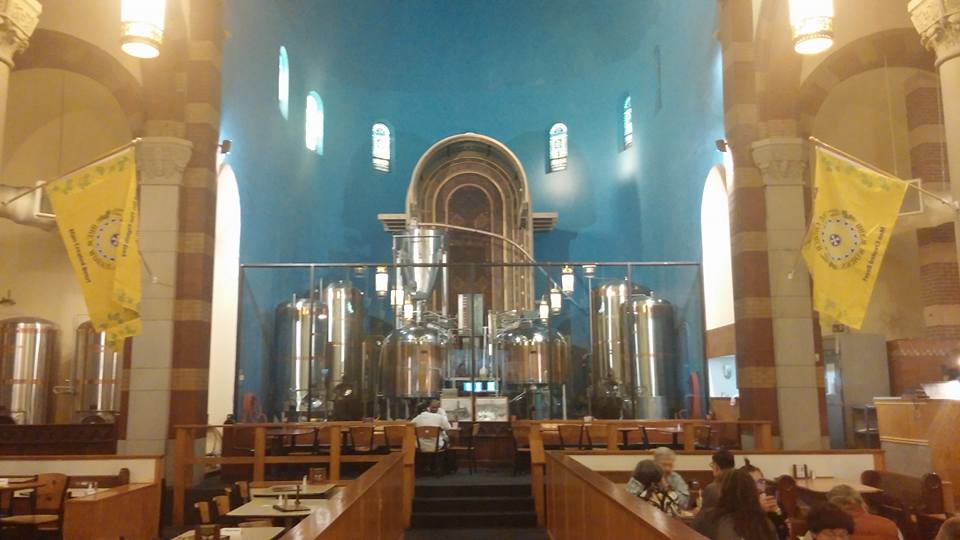
The Church Brew Works

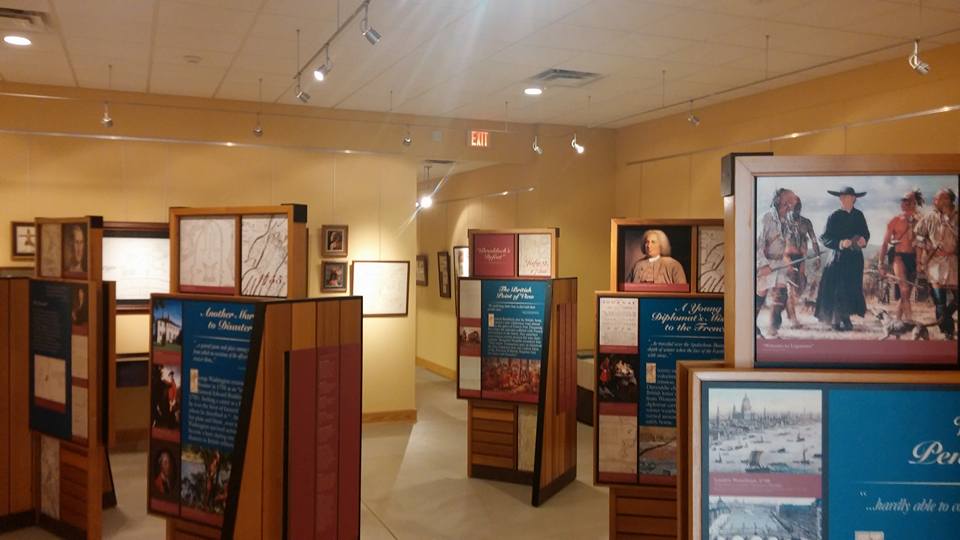
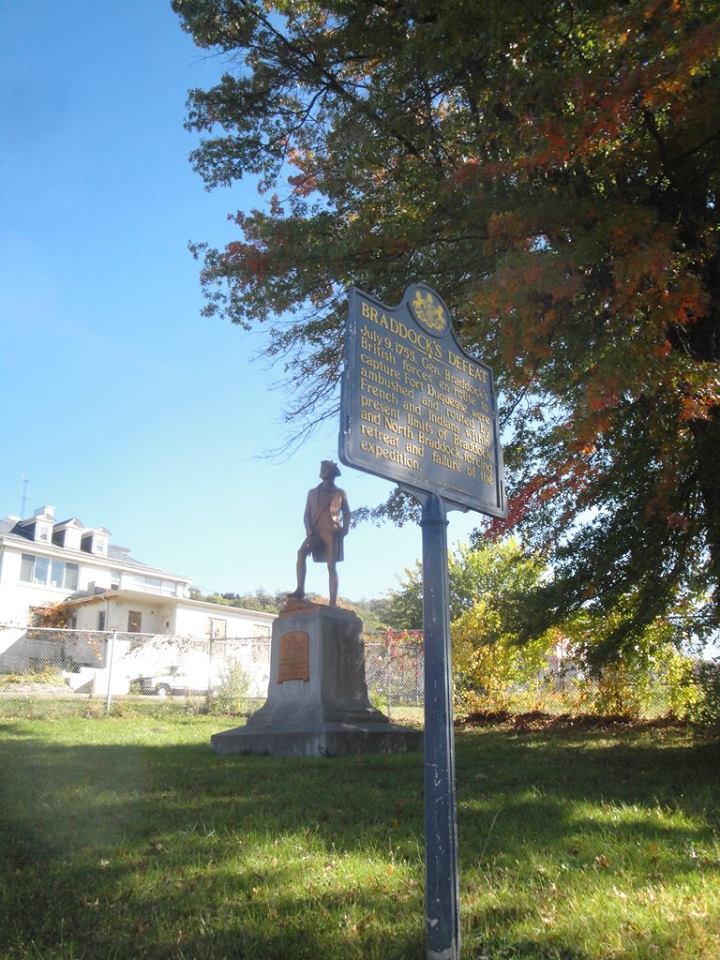
The Fort Pitt Museum, now managed by the Heinz History Center, provides a great timeline and history of the “forks of the Ohio” and also includes a rotating exhibit space.  Since we had followed the route of Braddock all the way from Cumberland, Maryland we decided to visit North Braddock, PA.  Here is where the French and Indians virtually destroyed the British force sent to capture Fort Duquesne under General Edward Braddock (Washington served as one of his aides).  The battlefield is gone today to major development in the early 20th centuries with local steel mills.  Unfortunately for the town, the collapse of the steel industry has left this once thriving town very much depressed.  But, one new bright spot is the Braddock’s Battlefield History Center.   Finally the story of Braddock and the battle along the Monongahela is being told.  The museum is worth a visit and the building is a testament to the efforts of an all volunteer organization led by Robert T. Messner.  While in Pittsburgh, a great place for a bite to eat or drink, a visit to Church Brew Works.  This local brew pub/restaurant is located in a former 1902 Roman Catholic Church.  The food and beer are excellent.

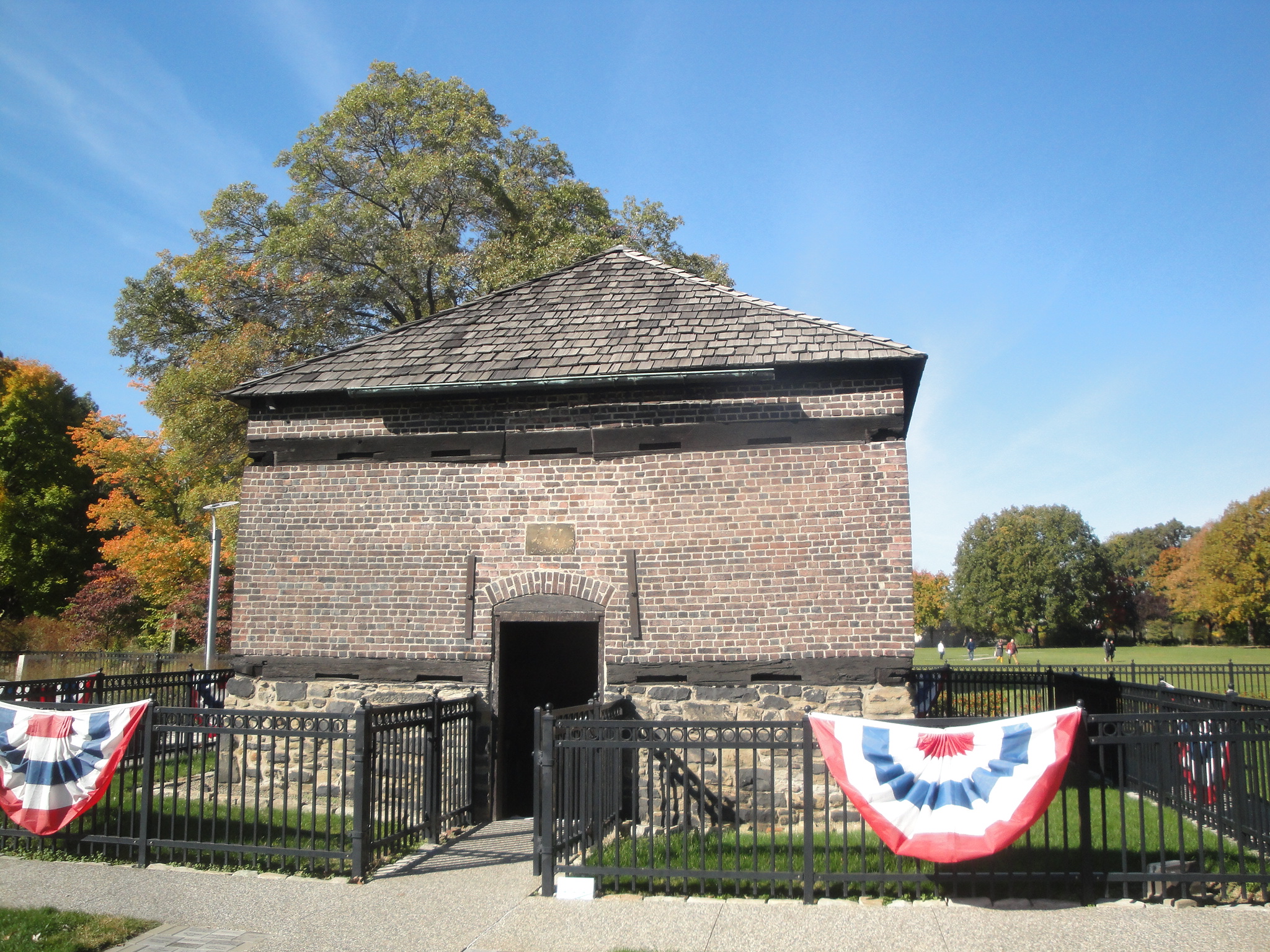
Fort Pitt blockhouse, only remaining structure from Fort Pitt
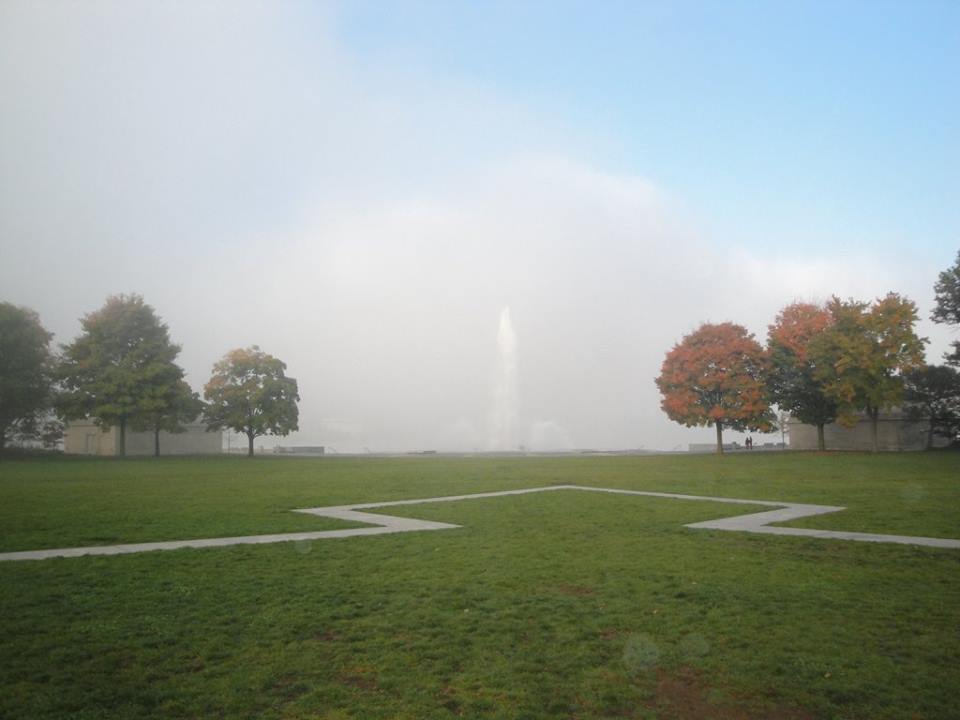
Outline of the French Fort Duquesne, with the Forks of the Ohio in the distance


The Braddock's Battlefield Visitor Center
The Braddock’s Battlefield Visitor Center
This Washington Statue is near where the British were attacked
This statue of Washington is near where the British were attacked by the French near Fort Pitt


The Bushy Run Battlefield is a hidden gem near the historic “Forbes Road” (modern day Rt. 30).  This much over looked battle of “Pontiac’s War” between the British and Native American warriors is well preserved and interpreted through great museum exhibits.

Bushy Run Battlefield
Bushy Run Battlefield, where the British made their “Flour Bag Fort”
New monument at Bushy Run Battlefield


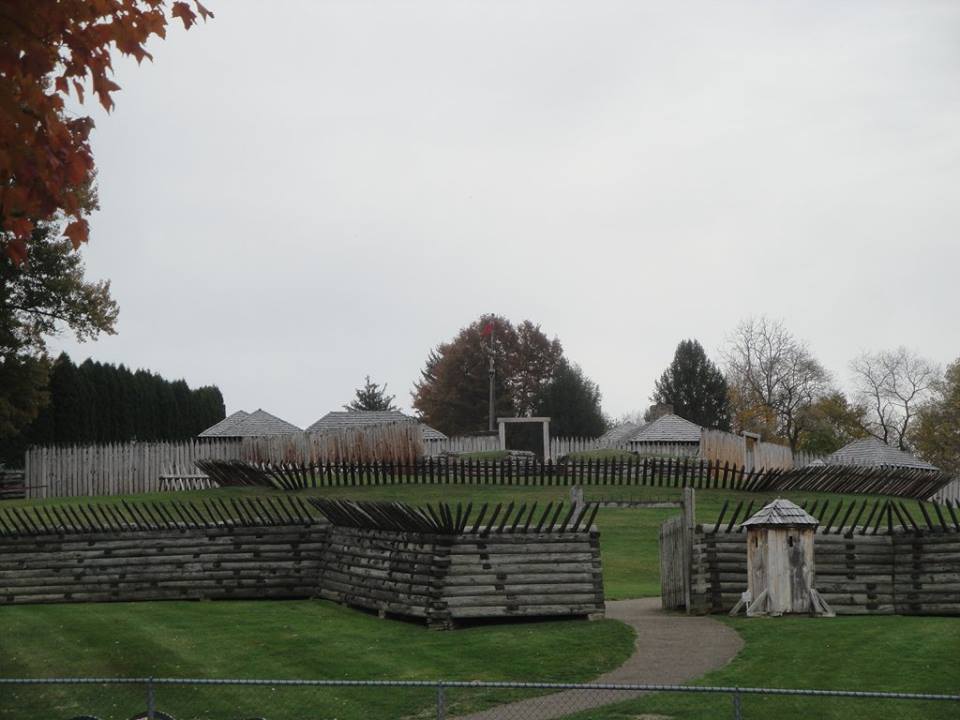
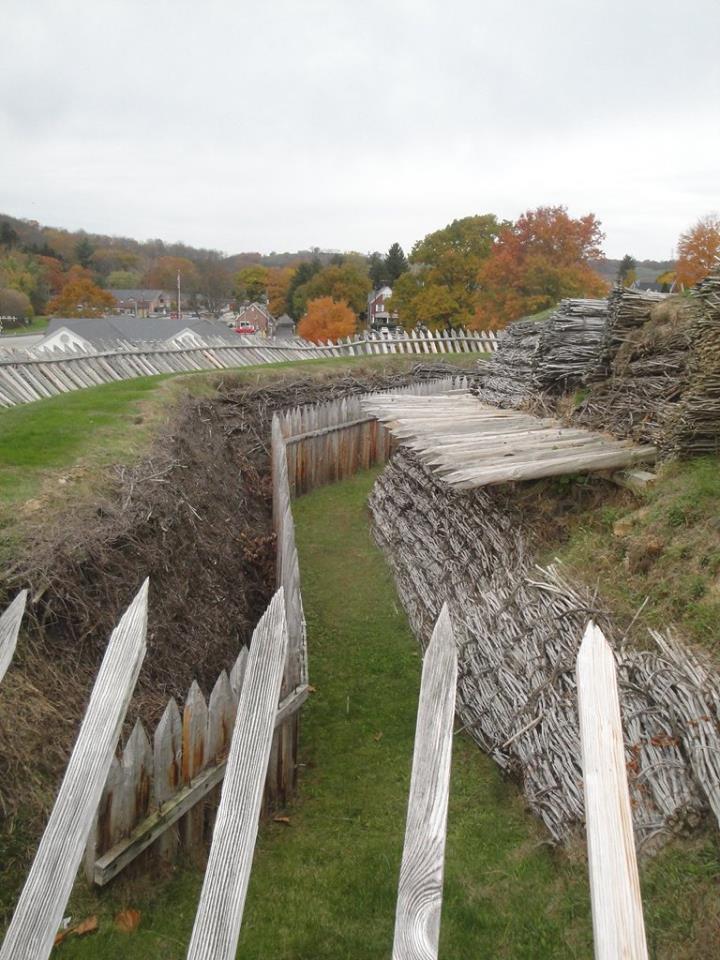
Finally, the highlight of the trip was Fort Ligonier.  I have read about the fort and the historic site, but was pleasantly surprised by what I consider THE best museum on the French and Indian War.  The museum attached to the reconstructed fort has a full exhibit on the history of Fort Ligonier and also a large exhibit on the entire French and Indian War.   Artifacts range from Prussian firearms to Indian chain mail armor (yes, from Delhi, India!).  All nations that fought in this “first” world war are represented.  It is an exhibit that one would not expect at a small historic site.  The reconstructed fort itself is an excellent representation of 18th century fortifications.  The fort is fully interpreted, with all the buildings recreated on their original locations.  If you are within 100 miles of Ligonier, PA…this is a MUST see museum/historic site.

Fort Ligonier
Fort Ligonier
Fort Ligonier
Fort Ligonier


For more information to take your own “French and Indian War Trek”, see the websites below.

Braddock Road: braddockroadpa.org

Fort Necessity/Jumonville Glen:  http://www.nps.gov/fone

Fort Pitt Museum:  http://www.heinzhistorycenter.org/fort-pitt

Braddock’s Battlefield Visitor Center: http://www.braddocksbattlefield.com

The Church Brew Works: www.churchbrew.com

Bushy Run Battlefield:  http://www.bushyrunbattlefield.com

Fort Ligonier:  http://www.fortligonier.org