“Given the order to defend the American withdrawal from Long Island, the Maryland Line saved the Continental Army from annihilation in the first major battle of the war.” wrote historian Ryan Polk.
Tench Tilghman, staff officer to George Washington and a native Marylander wrote about his fellow soldiers, “bore the palm…by behaving with as much Regularity as possible.”
Furthermore, if you Google “Battle of Guilford Court House” the image used by Wikipedia depicts an artist’s rendition of the 1st Maryland defending Nathanael Greene’s last line during the March 1781 engagement. The particular image is below.
The Continental Maryland Line was one of the preeminent stalwarts of the American army, both in the northern and southern theaters of the war. Join Emerging Revolutionary War historians in a discussion about the men from the Old Line State and their military acumen during the American Revolutionary War. The discussion will also highlight their memory and memorialization. We hope you can join us Sunday at 7 p.m. EST on the Facebook page of Emerging Revolutionary War.
Emerging Revolutionary War is open to submissions from our readership. Guest submissions can also lead to membership. Articles of varied length and photo essays are welcome. Please be advised that we do not pay for any article submissions. Emerging Revolutionary War is 100% non-profit. We do offer to promote you and your work to the best of our ability, while offering an outlet to explore new ideas and improve as a writer/historian.
We are looking to establish long-term relationships with writers who conduct excellent research and provide a fresh look at an old subject. Any articles that the author submits should offer a new interpretation of or newly discovered information on significant events.
Guest submissions are subjected to a blind peer review process. Members of our editorial board, whose identities are kept anonymous, read and comment on posts. However, they do not necessarily offer a simple up-or-down judgment. In keeping with our mission to provide a platform for emerging voices, our board sees its role as a developmental entity. The board’s general approach is to try and find a way their way to “yes.” This often involves several rounds of revisions based on feedback provided by the board. While there is no guarantee of publication, if an author is willing to put in the time and make a good-faith effort at incorporating feedback, the board is willing to continue helping authors develop pieces.
Word count should be in the 800-1500 range for consideration. Please submit guest posts as Word Document attachments by email to emergingrevolutionarywar@gmail.com with “Guest Post Submission” in the subject line.
Authors will receive an e-mail acknowledgment when their submission has been received. The review process may take up to two/three weeks. Once the process is complete, an editor will contact the author to report the outcome. Just because you submit an article does not mean we will post the article. If your writing is accepted for publication, you will be asked to sign a form stating that the article is your own work and allowing Emerging Revolutionary War to retain first digital rights.
To be considered for authorship, please keep in mind the following guidelines:
Any and all topics on the broadly-defined Revolutionary War era are welcomed (French and Indian War, colonial era, American Revolution, War of 1812).
If submitting a proposal, be specific about what your article will focus on. Include an outline of the story idea and a professional biography.
Any first-time article should be no more than 1,500 words.
All works must contain footnotes or endnotes in either Chicago or MLA format or a section citing works referenced.
All work must be original by the submitting author.
Articles should not be of a general nature but should be written to be enjoyed by a general audience.
Articles should have strong leads. The first few paragraphs must capture readers, hold on to them, and then propel them into a story.
Article submissions must contain an author’s brief professional biography.
Submissions are subject to modification and editorial board review, with the editors having final approval.
Previously published work may be considered as long as the author owns the copyright. Previously published submissions must be identified as such at the time of submission.
We request authors send at least one image for use in the article, whether taken themselves, within public domain, or from elsewhere with clear publication permission. Any photos or photo essays should set the scene, showing specific items of interest as they relate to your narrative. They must come with captions and photo credits.
Please submit all articles in a titled Word or Google Docs document (not PDF). Be sure to put the author’s name at the beginning of the piece.
If you have a passion and love for early American history and an interest in research and writing, we love the opportunity for ERW to help you share that passion!
In an age where the names of Franklin, Jefferson, and Washington are household, the names of Wilkinson, Kemper, and Bowles seem to be consigned to the fringes of histories of the early American republic. With the formation of the fledgling United States of America, both the honorable and not-so-honorable helped shape the direction of expansion, and diplomacy, and reinforce societal values of the 18th and early 19th centuries. This collection of essays is akin to watching a true crime television documentary.
With a collection of essays, editors David Head and Timothy C. Hemmis, historians, and biographers provide snippets into the lives of these scoundrels of the early Republic. A few of the names are well known, including Benedict Arnold and Aaron Burr, a few will conjure up memories from the fringes of other histories, such as James Wilkinson, whereas others have escaped the main avenues of historical exploration. Throughout the various essays, “this collection seeks to reexamine the Founding generation” to “replace the hagiography of the Founding Fathers with something more realistic” (pg. xx).
First, an examination of the word “scoundrel” is needed. According to usage at the time and the 1755 dictionary of Samuel Johnson’s authoring, that word meant “a mean rascal; a low petty villain” (pg. xiii). Through 12 individuals, the various authors explain how each earned the moniker “scoundrel” and how that affected the development of the United States. Especially interesting was the role of various individuals in Western expansion and the domino effect on international diplomacy. Individuals such as Aaron Burr and James Wilkinson are better known but Philip Nolan and Thomas Green are not so much.
Others, such as Benedict Arnold and Charles Lee get a fresh look from two great Revolutionary-era historians, James Kirby Martin and Mark Edward Lender. Included in those discussed, William Augustus Bowles and Diego de Gardeoqui show how international actors played prominent roles in providing heartburn to the national government. One theme, the west and south of the original thirteen states provided the arena for scheming, opportunity, and risk.
In conclusion, the editors examine three main reasons a study like this is important, that the “unintended result of the American Revolution” was “many men decided they had their own ideas about what was important” (pg. 266). Secondly, the “vital importance of the American West as a zone of territorial expansion, economic opportunity, and foreign intrigue” and lastly simply “early America was…a time and place for scoundrels…” (pgs. 267-268).
Overall this essay-comprised book is a fun, fresh read that looks at those scoundrels that sought an opportunity to change the landscape of the early American republic and potentially change the course of United States history. Who does not like to read about plots, scheming, and resultant escapades?
Since our next scheduled Rev War Revelry will land on Christmas Eve (Dec 24th) we have decided to give the team the night off. Plus, we are still recovering from a GREAT trip to Boston covering all the great events around the Boston Tea Party 250th (be sure to stay tuned, we will be placing all our live videos in a playlight on our You Tube page). In lieu of not having a Rev War Revelry on Dec 24th, please commemorate the Christmas holiday by watching our “The Crossing Watch Party” from two years ago. ERW historians provide historic commentary and critique of this popular movie that depicts the events on December 25-26, 1776 of Washington crossing the Deleware and the Battle of Trenton.
We hope everyone enjoys their Christmas and New Years and hope Santa brings you a great history book (we have some recommendations at: https://www.savasbeatie.com/american-revolution/ ). We will see you again live on Sunday, January 7th as we welcome our good friend Tom Hand, founder of Americana Corner, as he talks about his new book. Cheers!
With three ships sitting at Griffins Wharf in Boston Harbor laden with tea, the Sons of Liberty were quickly running out of time on December 16, 1773. At the stroke of midnight, twenty days would have past since the first ship arrived in the harbor. At that time, customs officials would seize the cargo, the tax would be paid, and the British government would have been successful in forcing the colonists to pay a tax they did not consent to. The British would have demonstrated their power over the colonists. The colonists’ rights as Englishmen were at stake. Whereas the tea cosignees had resigned in New York and Philadelphia, the ones in Boston refused to resign and the Governor was refusing to allow the ships to leave the harbor.
On December 16, the leaders of Boston held a meeting they referred to as the “Body of the People.” Because of the large amount of interest in the issue, more than 5,000 people attended this meeting at the Old South Meeting House in Boston (the largest venue in the city). At the meeting was William Rotch, the owner of the ship Dartmouth which was the first ship to enter the harbor and would be the first to be seized by the customs officials on December 17. Rotch wanted to protect his property and see if the Governor would allow him to sail out of the harbor. The meeting recessed to let him go to the Governor outside of Boston and request the ability to leave the Harbor. Governor Hutchinson said he could not allow the Dartmouth to leave. After the meeting had reconvened in the Old South Meeting House, Rotch returned to Boston at about 6 p.m. and told the crowd that the Governor would not let the tea return. This news was responded to with loud cries and shouting.
At that moment, Samuel Adams declared “This meeting can do nothing further to save the country.” After saying this, people heard Indian war whoops coming from the crowd and outside the building. Another person declared “Boston Harbor a teapot this night!” The people then began exiting the building and heading down to Griffins Wharf a few blocks away. Down at the wharf, men (some disguised as Mohawk Indians) began boarding the three ships. Approximately one hundred men boarded the ships and quickly got to work pulling up the large tea chests to the decks and dumping the tea into the cold water below. Crowds gathered and watched the men work for nearly two hours as they methodically worked to destroy all the tea on board the ships.
The men were careful to not destroy any other property except the tea. They also refused to steal any of the tea, punishing anyone who made an attempt. It was low tide and the tea started to pile up out of the water and needed to be mashed down into the water and mud.
British regulars were stationed at nearby Castle William, but they were not called down to the ships out of fear of insitigating a similar event as the Boston Massacre that occurred three years earlier. The British navy, posted in the harbor also made no attempt to stop the destruction. Some Royal Navy sailors watched the events on Griffins Wharf with some trepidation.
Once all 342 chests of tea had been tossed overboard, the destroyers left and the crowd dispersed. In all, they had destroyed 46 tons of tea on the ships.
The event would have major repurcussions as the British determined to repsond to the event with brute force and would ultimately result in the Revolutionary War less than two years later. John Adams wrote: “This Destruction of the Tea is so bold, so daring, so firm, intrepid and inflexible, and it must have so important Consequences, and so lasting, that I cant but consider it as an Epocha in History.”
Learn more about the events happening to commemorate the 250th anniversary of the Boston Tea Party by visiting https://www.december16.org/.
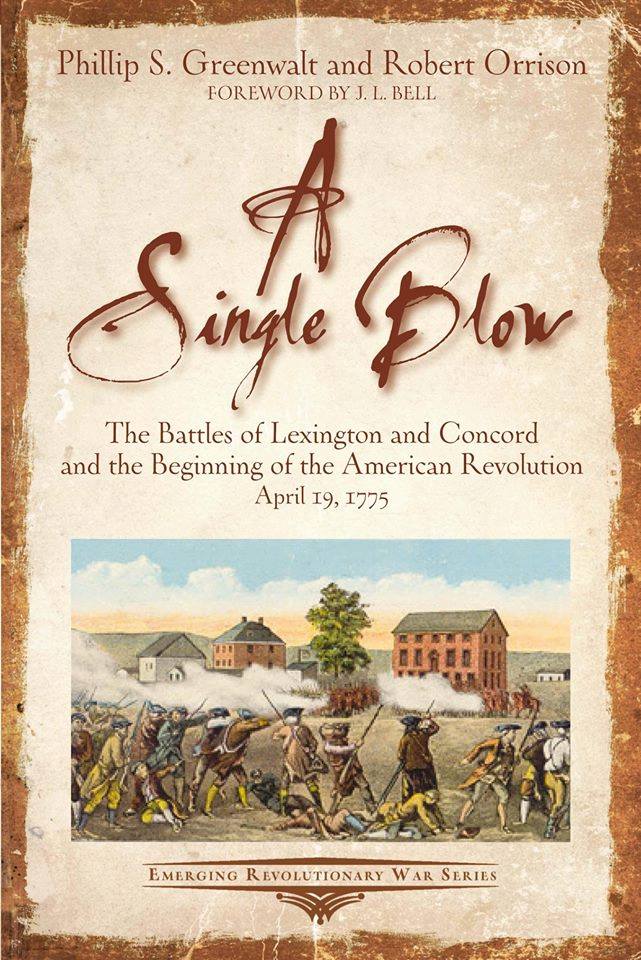
You can learn more about Boston in the Revolutionary War by reading Rob Orrison and Phill Greenwalt’s book A Single Blow, part of the Emerging Revolutionary War book series.
Join us via our Facebook page (https://www.facebook.com/emergingrevwar ) starting next Thursday, December 14th as ERW travels to Boston for the Boston Tea Party 250th commemoration. We will be posting videos from historic sites throughout Boston focusing on the events around December 16, 1773. We will interview historians, authors and museum professionals from all over Boston. We will also bring you live to the “destruction of the tea” reenactment on Saturday and of course visits to surprise historic sites all over Boston…and maybe a few pubs along the way!
If you miss one of our live videos, don’t worry…we will post all our content to our You Tube channel as well (https://www.youtube.com/@emergingrevolutionarywar8217 ). If you happen to be in Boston, be sure to send us a message and we would love to have you join in on the fun. The Boston Tea Party is one of the most important events in the history of our nation and the beginning of the push to revolution. ERW will be your home for all events with the 250th of the American Revolution!
For more on the events in Boston from 1773 – 1775, be sure to get a copy of “A Single Blow: The Battle of Lexington and Concord and the Beginning of the American Revolution”
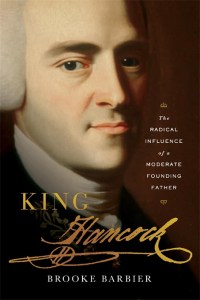
Join us on Sunday, November 26th at 7pm for a pre-recorded conversation with Dr. Brooke Barbier. As we edge closer to the 250th anniversary of the Boston Tea Party, there were many personalities who played major roles in the revolution movement in Boston. One of those key figures was John Hancock, one of the richest men in the North American colonies. Hancock played critical roles in the Sons of Liberty and the Masons to leverage his influence.
We are excited to welcome author and historian Dr. Brooke Barbier, who takes a new look at John Hancock in her new book “King Hancock The Radical Influence of a Moderate Founding Father.” Dr. Barbier dispells some myths and adds new insight into the life of Hancock. Join us for a great discussion on all things King Hancock!
This is a great way to cap off a week turkey, football and shopping!
During the second half of the 18th century, the Forks of the Ohio, where the Monongahela and Allegheny Rivers come together to form the Ohio River, were a vortex of conflict that dramatically influenced the course of events in North America and the unfolding of a young United States. In his latest book, The Whiskey Rebellion: A Distilled History of an American Crisis, historian Brady J. Crytzer adds to his already substantial body of work exploring the critical role the region played in American history. It is a must read.
In 1791, Congress passed a whiskey tax to raise revenue and pay off war debts. Treasury Secretary Alexander Hamilton, whose brainchild the whiskey tax was, designed the tax to help consolidate capital for investment in the country’s infrastructure. Small farmers, who constituted the bulk of distillers on the frontier, rebelled. Their resentment of the tax was not driven merely by its existence, but also by its structure, which they argued discriminated against small farmers. They had a point. Whiskey, not just as commodity, was a medium of exchange because hard currency was scarce on the frontier. Thus, in some ways, the whiskey tax resembled the stamp tax; one had to pay it to engage in normal commerce. The tax could be levied both on stills and the amount of whiskey each distiller produced. Large enterprises who ran their stills year-round could pay the tax. Small farmers, however, primarily ran their stills for brief periods in order to convert grain crops to more readily transportable whiskey. Moreover, the tax had to be paid in cash, which was scarce on the frontier. As a result, the tax was regressive and more difficult for smaller farmer to pay than for large the large distillers.
Rebellion was in some ways the predictable outcome. By 1791, the frontier was populated by people with a tradition of resisting governments they believed were run for the benefit of others. Whether those elites were in far-off London or distant Philadelphia was immaterial. Pittsburgh might be a federalist outpost as a frontier center for exercising the authority of the newly-established United States government, but the more populous surrounding countryside was dominated by small farmers and small communities. They responded much in the same way Americans had before the Revolution: community meetings and remonstrances, isolated attacks on officials, intimidation of those cooperating with distant governments, destruction of property, the creation of new political institutions, and the old stand-by: tarring and feathering. Events culminated in a two-day battle for General John Neville’s home and a large muster of rebels at the site of British Major General Edward Braddock’s defeat on the Monongahela River.
Few areas have such a concentration of Revolutionary War history, and natural beauty, as New York’s Hudson Highlands. Just twenty miles above the upper reaches of New York City, a traveler enters a different world, one of rugged mountains, spectacular views, and the mighty Hudson River.
The Hudson Highlands were a key area during the Revolution, linking New England to the rest of the states. Supplies, troops, and information flowed through here throughout the conflict. Both sides endeavored to control it. Journeying north a traveler finds several important historic sites from the Revolution.
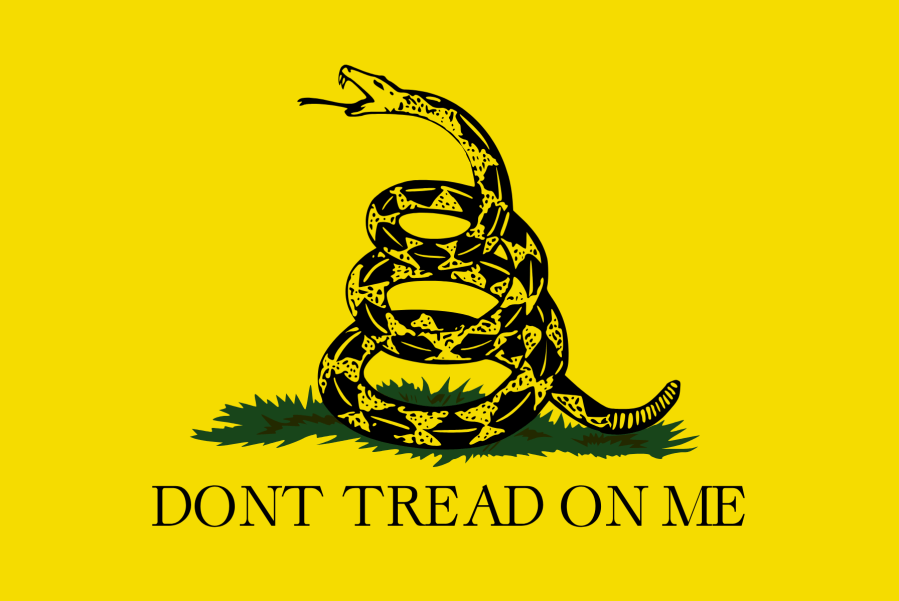
Every so often news stories arise about popular symbols of the American Revolutionary War that are used by various people to promote modern political agendas. One prominent symbol is the yellow flag with a coiled rattlesnake and the words “Don’t Tread on Me” below it. This flag, often referred to as the Gadsden flag, has a fascinating history dating back to the Revolutionary War.
The first real use of the snake representing the colonies begins before the Revolutionary War, during the French and Indian War, when Benjamin Franklin created a cartoon using a snake to represent the various colonies each separated from one another with the words “Join, or Die” under the image. This was an effort to get the various colonies to unite for common defense during that time period.
By the time of the Revolutionary War in 1775, the symbol had become a solitary rattlesnake, coiled and ready to strike often accompanied by the warning “Don’t Tread on Me.” Christopher Gadsden, a prominent South Carolina patriot, served in the Continental Congress and designed the yellow flag as a naval ensign. Beginning in 1776 the flag was hung up in the room where Congress met in Philadelphia and because it was designed by Gadsden, it became known as the Gadsden flag.








 Emerging Revolutionary War Era