Was the Battle of Point Pleasant the First Battle of the Revolution?

Emerging Revolutionary War welcomes back guest historian Evan Portman

By the time Ralph Waldo Emerson immortalized the “shot heard round the world” in his 1836 “Concord Hymn”, the battles of Lexington and Concord had already achieved fame as the first engagement of the Revolutionary War. However, in the early twentieth century one West Virginia historian began to argue that the true “shot heard round the world” had occurred six months earlier on October 10, 1774, at the battle of Point Pleasant.

The battle was the culmination of Lord Dunmore’s War, a five-month campaign against the Shawnee and Mingo tribes in an effort to quell the violence along the Ohio frontier.[1] Virginia settlers had begun moving into the Ohio Country following the Treaty of Fort Stanwix, in which the Iroquois Confederacy ceded the territories of present-day Kentucky and West Virginia to the Colony of Virginia. However, the Shawnee had not been consulted regarding the treaty and claimed ancestral hunting rights to the region, responding with violent raids along the frontier to reclaim their land.[2] Virginia Colonial Governor John Murray, 4th Earl of Dunmore sanctioned the colonial militia to wage a campaign against the Native Americans after white settlers began reacting violently, themselves.[3]

Continue reading “Was the Battle of Point Pleasant the First Battle of the Revolution?”

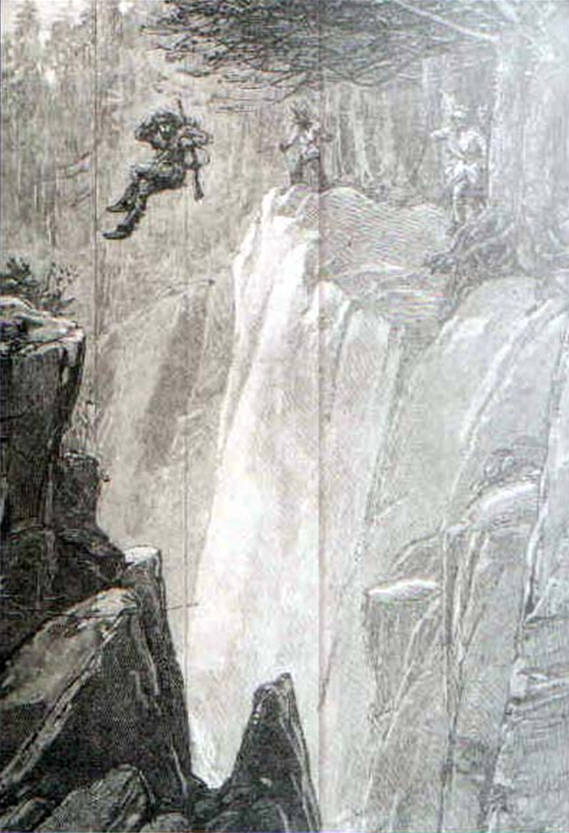
When the Legend Becomes Fact: Brady’s Leap?

Brady’s Leap. Unknown. (Wikipedia Commons)

The American Revolution on the frontier produced its share of stories and legends.  In many ways, the heroes in those tales were more relatable than the men who led the war east of the Appalachians. They were not land-owning generals like George Washington, political organizers like Sam Adams, world-renowned scientists like Benjamin Franklin, inspiring speakers like Patrick Henry, or political philosophers like Thomas Jefferson.  Instead, they were farmers turned amateur soldiers, trappers and hunters turned scouts, family men turned avenging marauders.  In at least one case, even a quasi-fugitive from the law could become a symbol of protection and security.

By the 19th century, names like Daniel Boone, Simon Kenton, Ebenezer Zane, Lewis Wetzel, Issac Shelby, and Samuel Brady were known to every schoolboy west of the Appalachians. Some of their reputations faded with time as the frontier moved west onto the Great Plains and into the Rocky Mountains.  Still, the stories remained, mostly to sit in in aging volumes on a library bookshelf, but occasionally to be dusted off for works of historical fiction.  Like most stories, they occasionally morphed and evolved over time in the retelling.   Sometimes they hold up quite well on close examination and can be verified.  

Sometimes a little more skepticism may be in order.  Samuel Brady’s leap over a river is one such story.  There are two versions of the story.  In one he leaped to the opposite side of a rocky Cuyahoga River chasm.  In the other, he leaped entirely across a deep ravine through which Slippery Rock Creek ran.

Continue reading “When the Legend Becomes Fact: Brady’s Leap?”

“Rev War Revelry” “Till the Extinction of this Rebellion…” with Author Eric Sterner

For this week’s “Rev War Revelry” Emerging Revolutionary War ventures to the west to discuss the recently published book, “Till the Extinction of this Rebellion, George Rogers Clark, Frontier Warfare, and the Illinois Campaign of 1778-1779.” The author, Eric Sterner, is a contributor to the Emerging Revolutionary War, along with the author of An Anatomy of a Massacre: The Destruction of Gnadenhutten, 1782. When not writing history, Sterner had a career in government and public policy besides contributing to the literature and study of the American Revolutionary War era.

This book, published by Westholme Publishing, examines the viewpoints of the American, British, and Indigenous perspectives and illustrates the wide impact of the American Revolution on the peoples west of the Appalachian Mountains. What happened with Clark’s movements and campaign will lay the foundation for American expansion and the “opening of the West” following the American Revolution.

We hope you can join us for this historian happy hour this Sunday at 7 p.m. on our Facebook channel. If you miss it, we will post the revelry on our YouTube channel. Just search “Emerging Revolutionary War” to subscribe.

The Brief Siege of Logan’s Fort

Kentuckians knew 1777 as the “Bloody Sevens” due to the severity and frequency of Native American attacks.  Those raids were difficult in the spring, but only intensified after June, when Henry Hamilton, a Detroit-based lieutenant governor of Quebec, executed his orders to actively promote and support Native American offensives across the Ohio River.  In particular, war parties from the Ohio and Great Lakes Indian nations allied with Britain crossed the Ohio and struck the region’s three largest towns: Harrodsburg, Boonesborough, and St. Asaph’s/Logan’s Fort.   Of the three, the last was the smallest by far, and yet it was the scene of some of the year’s most dramatic moments.

In the spring of 1775, Benjamin Logan led a surveying party into Kentucky and established a “town” of sorts—mostly surveyor’s huts—that they dubbed St. Asaph’s.  For his part, Logan built a log cabin and planted a corn crop that later established his land claim.  Logan’s group did not remain long as Kentucky was already under attack, but he and several others, including his family, eventually returned in March 1776.[1]  A raid on Boonesborough that summer prompted the St. Asaph’s residents to begin fortifying their town.  Logan’s family left for the additional safety of Boonesborough, but he remained behind with several enslaved people to continue working on the fort.

Fortified towns were typically established by building two lines of cabins in parallel lines with their fronts face one another.   Windows were limited to the front and perhaps the sides, but the rear wall was solid with narrow firing slits.   Gaps in between cabins were then closed by digging a trench and standing cut posts in them upright, then filling in the trench and creating a wall.  It was a fast means of quickly building a fort.  More robust defenses would include blockhouses at the corners with overhanging rooms on a second story enabling defenders to fire down and along walls.  There would be a substantial gate on one side and then perhaps a sally port or two along the walls or in a corner blockhouse.  The common area between the rows of cabins would often have common buildings and facilities, such as a smithy, herb gardens, a powder magazine, etc.  Several buildings, ranging from cabins to storehouses and horse stalls, might remain outside the walls.   Residents of the community would then retreat into town when concerned about attack.  Logan moved his family back to the fortifying town in February.[2]  Logan took the additional step of digging a trench to a nearby spring to create a secure water supply.  He then covered it and it was sometimes referred to as a tunnel, even though it was not completely underground.[3]  The fort at St. Asaph’s, now more widely known as Logan’s Fort, was completed just in time.

Book Review: The Whiskey Rebellion: A Distilled History of an American Crisis (Yardley, PA: Westholme Publishing, 2023)

During the second half of the 18th century, the Forks of the Ohio, where the Monongahela and Allegheny Rivers come together to form the Ohio River, were a vortex of conflict that dramatically influenced the course of events in North America and the unfolding of a young United States.  In his latest book, The Whiskey Rebellion: A Distilled History of an American Crisis, historian Brady J. Crytzer adds to his already substantial body of work exploring the critical role the region played in American history.  It is a must read.

            In 1791, Congress passed a whiskey tax to raise revenue and pay off war debts.  Treasury Secretary Alexander Hamilton, whose brainchild the whiskey tax was, designed the tax to help consolidate capital for investment in the country’s infrastructure.  Small farmers, who constituted the bulk of distillers on the frontier, rebelled.  Their resentment of the tax was not driven merely by its existence, but also by its structure, which they argued discriminated against small farmers.   They had a point.  Whiskey, not just as commodity, was a medium of exchange because hard currency was scarce on the frontier.   Thus, in some ways, the whiskey tax resembled the stamp tax; one had to pay it to engage in normal commerce.  The tax could be levied both on stills and the amount of whiskey each distiller produced.  Large enterprises who ran their stills year-round could pay the tax.  Small farmers, however, primarily ran their stills for brief periods in order to convert grain crops to more readily transportable whiskey.   Moreover, the tax had to be paid in cash, which was scarce on the frontier.  As a result, the tax was regressive and more difficult for smaller farmer to pay than for large the large distillers.  

            Rebellion was in some ways the predictable outcome.  By 1791, the frontier was populated by people with a tradition of resisting governments they believed were run for the benefit of others.  Whether those elites were in far-off London or distant Philadelphia was immaterial.  Pittsburgh might be a federalist outpost as a frontier center for exercising the authority of the newly-established United States government, but the more populous surrounding countryside was dominated by small farmers and small communities.  They responded much in the same way Americans had before the Revolution: community meetings and remonstrances, isolated attacks on officials, intimidation of those cooperating with distant governments, destruction of property, the creation of new political institutions, and the old stand-by: tarring and feathering.  Events culminated in a two-day battle for General John Neville’s home and a large muster of rebels at the site of British Major General Edward Braddock’s defeat on the Monongahela River.

Continue reading “Book Review: The Whiskey Rebellion: A Distilled History of an American Crisis (Yardley, PA: Westholme Publishing, 2023)”

Book Review: Steven P. Locke, War Along the Wabash: The Ohio Indian Confederacy’s Destruction of the U.S. Army, 1791 (Havertown, PA: Casemate Publishers, 2023).

The frontier is inextricably tied to the early development of the United States under its 1789 Constitution.  In The Treaty of Paris ending the Revolution, Britain legally ceded its territories north of the Ohio and east of the Mississippi Rivers up to the borders of Canada to the United States—the very same territory it had claimed from France at the end of the Seven Years War.  While European states might redraw borders, they did not consult the people actually living in the area.  Congress proclaimed the area the Northwest Territory and in the following years, native people, particularly the Native nations living in modern Ohio, Indiana, and Michigan fought a lengthy war with the new Unites States, inflicting one of its worst defeats on the United States Army and coming closer than any other Native American coalition to halting, or at least slowing, the spread of white society beyond the Appalachians.

            Steven P. Locke, in his new book, War Along the Wabash, chronicles the first major campaign of the United States Army in what has become known as the War of the Northwest Territory.  In 1791, frustrated by Indian attacks on frontier settlements that had not stopped after the American Revolution, Congress authorized the Washington Administration to raise an army and conduct a campaign against the Ohio Indians, the Miami, Seneca/Cayuga, Shawnee, Wyandot, Odawa, Ojibwe, Potawatomi, and Delaware.  Major General Arthur St. Clair, a veteran of the Revolutionary War, was Governor of the Northwest Territory and took personal command of the army created for the campaign.  His objective was simple enough, to launch his army from Fort Washington in modern Cincinnati to Kekionga, a cluster of Native American villages at the portage between the Maumee and Wabash Rivers in modern Fort Wayne.  Presumably, Americans ensconced in such a fort would be able to readily overawe the local tribes in their homes, force a Native American recognition of American “ownership” of the Ohio Country, and stop Indian raids along and across the Ohio River.  St. Clair received command on March 4, 1791 and was expected to march out of Fort Washington by July 10, hardly sufficient time to recruit, organize, train, and equip an army large enough for the task before him, particularly on the sparsely populated frontier.   Federal troops and supplies had to come all the way from the east coast by way of Pittsburgh and the Ohio River, while Kentucky provided militia and filled out some provisional levies. 

            Despite his intimate experience with the connection between military operations and logistical support, Secretary of War Henry Knox pressed St. Clair all summer to get his troops moving.  St. Clair, of course, could not.   The Americans had already launched mounted raids into Native American territory, which generally resulted in burned villages and despoiled crops.  According to Locke, the speed with which those raids proceeded highlights the cross-purposes under which St. Clair’s campaign would take place.  He could either move quickly with a largely mounted force over existing trails or take a more deliberate, plodding approach through the wilderness by building a road, which necessitated infantry and engineers.  St. Clair chose the latter, but the pressure from Knox and President Washington never ceased.  St. Clair responded by marching the army out of Fort Washington in September and slowly moving northward, building a road, camps, and forts as it moved a little over two miles a day, even before the army had fully assembled at Fort Washington. Indeed, in the first month, St. Clair was not usually with the army, consumed by logistical duties as he shuttled back and forth from Fort Washington or Kentucky gathering supplies and militia and then moving them forward over the newly built, yet still primitive, road. 

            By November 3, 1791, St. Clair had rejoined his army and reached the headwaters of the Wabash River with one regular infantry regiment, two levy regiments, and assorted militia, artillery, dragoons, teamsters, and camp followers.  Altogether, it was about 1,400 men.  Mistakenly believing he was closer to Kekionga than was the case and that the Indians would not attack, he did not build breastworks that night, but deployed his army in two lines with some militia thrown across a creek and various outposts scattered around his position.  He had detached his best federal regiment and sent it back down the trail to escort a supply train coming up to feed the army.  Thus, the United States Army was at its weakest point during the campaign when the Indians of the emerging Ohio Indian Confederacy struck early the next morning.  

            The Confederacy force of 1,100 warriors applied traditional tactics, quickly routing the forward militia and then moving along the flanks to the rear, essentially surrounding St. Clair and then pressing ever tighter.  Sniping from cover, the Indians seemed immune to American fire while inflicting heavy losses on the defenders.   St. Clair launched two bayonet charges to restore his lines.  As usual, the Native Americans gave way to the bayonet charges and then moved around the charging unit’s flanks as it separated from the main army, bringing each under a withering cross-fire.  In a sense, St. Clair carved up his own army and dished out pieces for the Confederacy to consume.  By the time St. Clair launched a third bayonet charge to clear his route of retreat, his army had collapsed.   He escaped with 500 men, leaving 900 dead, dying, or wounded on the battlefield, including dozens of women and children among his camp followers.  (Estimates of American losses vary widely among historians.)  The disaster was worse than General Braddock’s defeat on the Monongahela in 1755, or Custer’s in 1876.  War Along the Wabash is at its strongest when relating and analyzing the battle.  

            Locke tells the entire tale well, discusses the difficulties of raising an army from virtually nothing, includes small biographies of major “characters” as he introduces them, pays careful attention to logistics, which are often overlooked in campaign histories and were critical in the unfolding of St. Clair’s campaign, analyzes decisions and strategies, and discusses the fallout after St. Clair returned to Philadelphia to defend his decision-making.  While most of the story is from the American perspective, which is better documented, Locke makes a serious effort to address Native American perspectives and experiences as they assembled and fought the American army.  

All that said, he lapses into odd, avoidable errors from time to time.  In my Kindle edition, Locke writes on page 397 that there were approximately 400 commissioned officers in the army (nearly 1 in 3 of the total force) at the beginning of the battle, just 150 of whom remained at the end, meaning 250 commissioned officers were killed during the battle.  Yet, on page 429 he notes 69 out of 124 commissioned officers being killed or wounded during the three-hour battle.  Collectively—and there are more eyebrow-raising moments—such errors or inconsistencies distract from the book’s overall strengths, which are considerable.  

In 1793, during his campaign against the Ohio Indian Confederacy, Major General Anthony Wayne led his army up St. Clair’s trace and built a fort near the battlefield, identifiable by the large number of human remains and camp detritus, which he named Fort Recovery.  A town, still named Fort Recovery, grew up there, and the site of the battle largely lies under Wayne Street.   (Museums and parks around town commemorate both St. Clair’s defeat and Wayne’s subsequent campaign).  War Along the Wabash is an excellent starting point to understand St. Clair’s campaign and the defeat that often bears his name.  It will not be the last word, but it sets a high bar that future historians will have to work hard to surpass.  

Serendipity, Genealogy, and the 241st Anniversary of the Battle of Upper Sandusky

We interact with history at a personal level in many ways.  We enjoy careers in the field, read, tour locations, work as living historians (or interact with them), dig through archives, trace our roots, visit museums, or simply stumble across some connection in the course of living our daily lives.  But, a fortuitous bit of family history struck on a recent weekend, just shy of the 241st anniversary of a battle.  

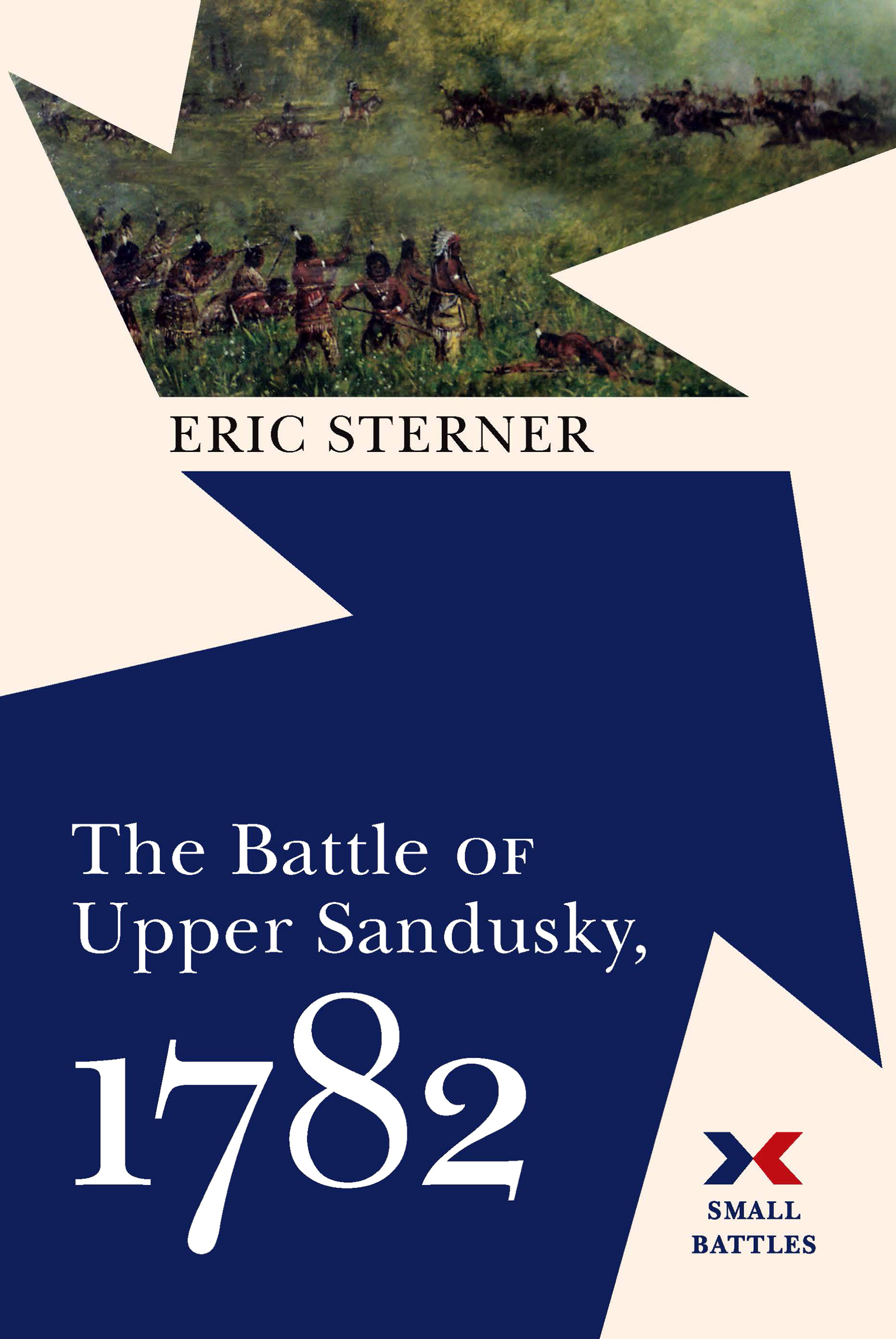
My wife and oldest daughter spent a Sunday morning with my in-laws to visit and record some family stories and memories.  They came back with a box of material.  The first document they perused was a 19thcentury application for membership in the Daughters of the American Revolution.  I was in a different room and suddenly heard yelling as my wife came to find me.  I assumed a snake had gotten into the house or we’d won the lottery without playing.  It turned out that the DAR applicant, a direct forebear of both my wife and daughter, was descended from Nicholas Dawson, who had fought in the Crawford Campaign, which happened to be the subject of my second book, The Battle of Upper Sandusky, 1782.  (Shameless bit of self-promotion: it just went on sale).  Talk about coincidence.

Many volunteer actions on the frontier during the American Revolution lacked troop rosters.  But, to stimulate volunteering for the Crawford campaign the county lieutenants for Pennsylvania’s Washington and Westmoreland counties offered to count the time on campaign against a volunteer’s legal militia obligations. So, they created rosters, some of which partially survived.  The Pennsylvania Archives published that material.  Sure enough, Nicholas Dawson shows up as a miscellaneous volunteer, meaning only that the roster didn’t include his company assignment.  The ever-helpful Fold3 database also holds pension debt certificates issued to Dawson on January 18 and 20, 1785.

Continue reading “Serendipity, Genealogy, and the 241st Anniversary of the Battle of Upper Sandusky”

The American Revolutionary War in the West History Conference – October 27-29, 2023

This conference will focus on the military, political, social and material culture history of the western theater of the American Revolutionary war, featuring scholars from across the U.S. and from Spain.

Location: The Sheraton Westport Plaza Hotel, St. Louis County, Missouri

Speakers and Topics:

Larry L. Nelson—”George Rogers Clark, the Illinois Campaign, and American Ambitions in the West”

Robert M. Owens – “Jean Baptiste Ducoigne, the Kaskaskias, and Pragmatic Patriotism in the Revolutionary Era”

José Manuel Guerro Acosta – “Spain and the Support for the American Revolution”

Friederike Baer – “’O, how the Mississippi is costing us many a good man!’: German Soldiers in West Florida, 1779-1781”

Frances Kolb Turnbell – “Indian Politics and the American Politics in the Lower Mississippi Valley”

Stephen L. Kling, Jr. – “An Opportunity to be Seized: The British Grand Plan to Conquer the Entire Mississippi River Valley”

Alexander S. Burns – “The Worst Looking Soldiers and the Drunkest Men to Ever Carry a Musket?: The 8th Regiment and the War in the West”

Kristine L. Sjostrom – “Valentía y Visión: Lt. Governor Fernando de Leyba and the Defense of St. Louis” 

Kimberly Alexander – “O What Can These Things Tell Us: Material Culture at Revolutionary War St. Louis”

Jim Piecuch – “Fighting from Horseback: A Comparison of Revolutionary War Cavalry in the Eastern and Western Theaters”

Paul Douglas Lockhart – “For Want of a Good Musket and a Sharp Knife: Weaponry and Wilderness Warfare”

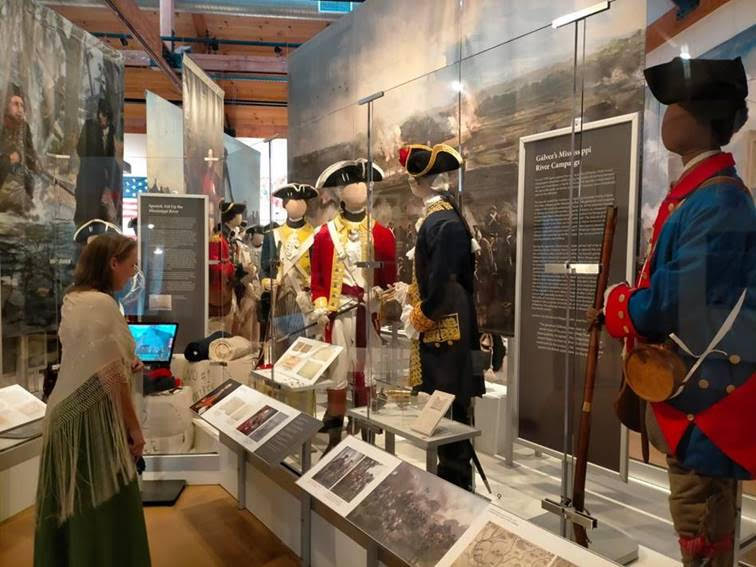
Evening Events: A cocktail reception will be held on Friday evening at 6:00pm at the Sheraton Westport Plaza Ballroom. A private party on Saturday evening at 6:30pm at the St. Charles County Heritage Museum will include a private tour of The American Revolutionary War in the West museum exhibit.

Registration:  Conference registration cost including evening events: $75.00. Registration can be made through the St. Charles County Historical Society by 1) mailing a check to The St. Charles County Historical Society, 101 S. Main St., St. Charles, MO 63301, Attn: Joan Koechig; 2) credit card or PayPal by calling at (636) 946-9828 MWF, 10am-3pm; or 3) online at scchs.org. Registrations are limited and will be filled on a first come, first served basis. Questions, call Melissa at: (314)-561-5077. NOTE, online registration will be available starting April 19, 2023.

Isaac Shelby State Historical Site

Entry to Traveler’s Rest. (Author Photo)

The American Revolution in the east has its share of founding fathers while war in the west has its share of legendary characters.  Few could claim to be both.  Isaac Shelby was born in western Maryland in 1750 and migrated with his family farther south and west in 1770, near Bristol Tennessee.  Shelby in Lord Dunmore’s War and became a surveyor for North Carolinian Richard Henderson’s Transylvania Company, created to secure land west of the Appalachians just before the American Revolution.  (Daniel Boone was the best known of Henderson’s surveyors).  

            When the Revolution broke out, Shelby served first with the Virginians and then accepted roles handling logistics for Virginians, Continentals, and North Carolinian units operating along the frontier. Organizational structures were fluid along the Appalachians, more often centered around communities and available manpower than formal state boundaries, and Shelby participated in a variety of actions against British and Loyalist forces in North and South Carolina.  The personal nature of the partisan conflict eventually led Shelby and others on the frontier, including John Sevier, to organize the so-called “Overmountain Men” in a pursuit of Loyalists led by British Major Patrick Ferguson.  The two sides eventually clashed in the Battle of King’s Mountain, a resounding victory for American forces in October 1780.

Continue reading “Isaac Shelby State Historical Site”

This Sunday’s Rev War Revelry: Battle of the Upper Sandusky, A Chat with historian and author Eric Sterner

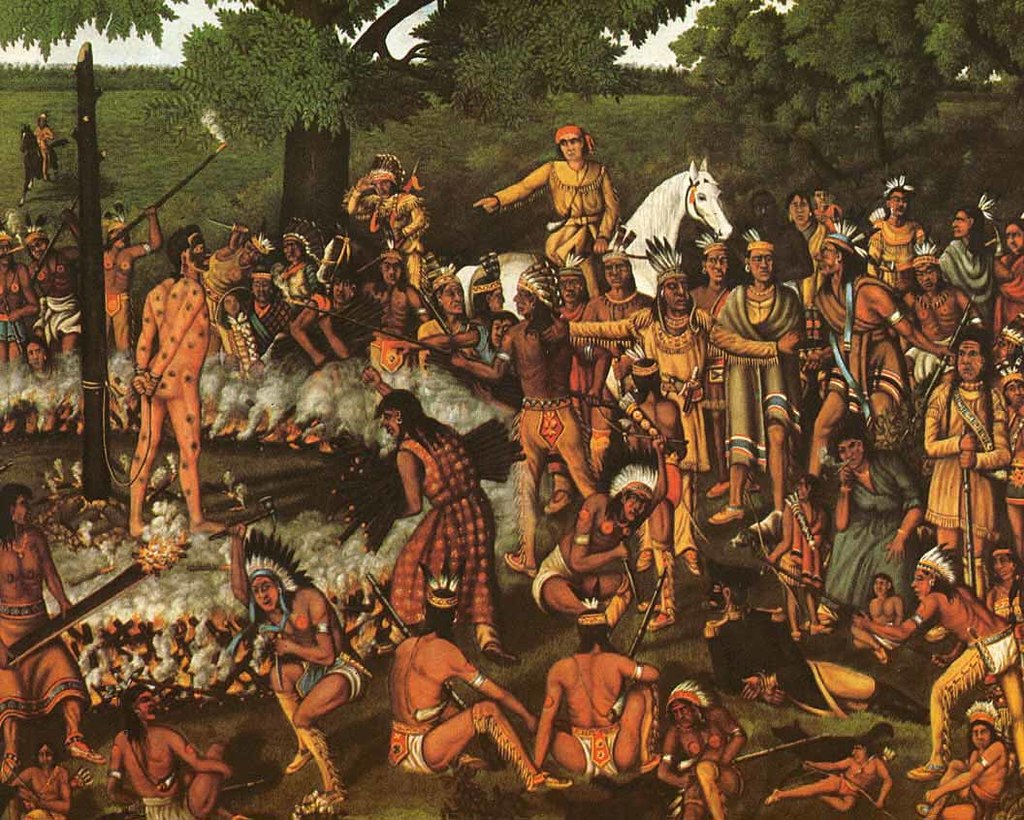
In May 1782, Colonel William Crawford led over 450 volunteers across Ohio to attack British-allied Native Americans who had been raiding the frontiers of Pennsylvania and Virginia for years. An experienced yet reluctant commander, Crawford and his men clashed with a similarly sized force of British Rangers and Wyandot, Delaware, and Shawnee Indians on the Sandusky River in early June. After three days, the Americans were routed in one of the worst defeats American arms suffered on the frontier during the American Revolution. During the retreat, Native American warriors captured dozens of men, including Colonel Crawford. Many were horrifically tortured to death in revenge for the Gnadenhutten massacre earlier that spring, when American volunteers bludgeoned nearly one hundred unarmed and unresisting Delaware Indians to death.

Join us on our Facebook page this Sunday at 7pm for a recorded talk with historian and author Eric Sterner as he discusses Crawford’s Campaign and his new book “The Battle of Upper Sandusky, 1782” due out this spring. The talk will be availble on our You Tube page next week.