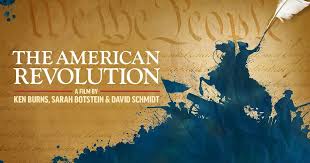
Starting on Sunday, November 16, 2025 PBS will air the much anticipated “The American Revolution” documentary. The 12 hour documentary will run every night from 8pm-10pm, Sunday through Friday (November 21st). Years in the making, the documentary coincides with the 250th anniversary of the American Revolution and the birth of our nation.
We are excited to announce that every night during the documentary at 10pm, Emerging Revolutionary War will live stream a discussion on our Facebook page with ERW historians discussing that night’s episode. You can join in via the online chat to ask questions and respond to our reviews of each episode. There will be different historians on each night, so tune in and join the lively discussion!
Where do our rights come from? The answer to this question is at the heart of the pine tree flag that was flown by soldiers and sailors during the Revolutionary War. The Founding Fathers were very clear about where they believed rights came from. In the Declaration of Independence, the Founders say that their “unalienable rights” were “endowed by their Creator”. This was a distillation of hundreds of years of religious and enlightenment thought and writing. Because their rights came from God, the role of government was not to provide rights, but to protect their natural rights from people or governments that would infringe them.
If a government were to attempt to subvert a people’s natural rights, who could the people appeal to for justice? At that point, the only recourse is an appeal to God or Heaven to protect their natural rights.
The actual phrase comes from a passage in John Locke’s Second Treatise of Government (1689): “And where the body of the people, or any single man, is deprived of their right, or is under the exercise of a power without right, and have no appeal on earth, then they have a liberty to appeal to heaven, whenever they judge the cause of sufficient moment . . . And therefore, though the people cannot be judge, so as to have, by the constitution of that society, any superior power, to determine and give effective sentence in the case; yet they have, by a law antecedent and paramount to all positive laws of men, reserved that ultimate determination to themselves which belongs to all mankind, where there lies no appeal on earth, viz. to judge, whether they have just cause to make their appeal to heaven.” [emphasis added]
As war between American colonists and British regulars began in 1775, the colonists stressed that the need for war was to defend their natural rights, or the “rights of Englishmen.” Supporters of the patriot cause developed numerous flags and banners that highlighted the cause for which they were fighting. These banners which flew from ships, forts, and carried into battle often included symbols and motifs as well as words and phrases. There were rattlesnake flags with the words “Don’t Tread on Me”. There were regimental flags with Latin phrases. Many included stars and stripes, though a standard American national flag was not developed by the Congress until 1777. Among the banners and flags created in the early days of the conflict that demonstrated the justice of their cause, was an “Appeal to Heaven” flag.
This popular flag that was flown by the colonists was a white flag with a green pine tree in the center and the words “An Appeal to Heaven” (sometimes it would say “An Appeal to God”) scrawled across it. No version of this flag still exists today, but descriptions from the time tell us what it looked like. This flag had much symbolism beyond the important phrase.
The pine tree symbolized the New England colonists’ home. The pine tree had long been used as a symbol of Massachusetts during the colonial period. The eastern white pine was very common to the area and New Englanders adopted the tree as a symbol of their land as early as the 17th century. As the colonies went to war with Great Britain in 1775, many Massachusetts troops carried flags with pine trees on them. New England Continental army units used pine tree flags in battle, such as at Bunker Hill. The colonial leader Dr. Jospeh Warren used the phrase “appeal to Heaven” in a letter he penned to the people of Great Britain after the first battles at Lexington and Concord in which he noted that “to the persecution and tyranny of his cruel Ministry we will not tamely submit; appealing to Heaven for the justice of our cause, we determine to die or be free.” He lived up to his words. In one account, at the Battle of Bunker Hill, just before being shot in the head, Dr. Jospeh Warren pointed to one of the “Appeal to Heaven” flags and asked his men to remember what they were fighting for.
Following the incredibly bloody Battle of Bunker Hill, and following George Washington’s arrival as commander-in-chief of the Continental Army, the Continental Congress published a declaration of “the Causes and Necessity of their taking up Arms.” In this declaration the Congress asserts that they had no “ambitious Designs of separating from Great Britain, and establishing Independent States”, but that they were “resolved to die Freemen rather than to live Slaves.”
This declaration reached the army encamped outside Boston in mid-July. General Israel Putnam had his division paraded at Prospect Hill on July 18, 1775 where the declaration was read to the troops. A flag had been sent to Putnam from Connecticut and it was unfurled after reading the declaration and a prayer. As the flag was raised, the wind caught it and unfurled it. On one side was emblazoned “An Appeal to Heaven” and on the other side “Qui Transtulit Sustinet” which is Latin for “He Who Transplanted Still Sustains.” Included on this banner was the Connecticut armorial bearings.
By October of 1775, not just army units were using this banner, but also American floating batteries and ships were flying it. Col. Joseph Reed wrote to two other officers: “Please to fix upon some particular colour for a flag, and a signal by which our vessels may know one another. What do you think of a flag with a white ground, a tree in the middle, the motto “Appeal to Heaven”? This is the flag of our floating batteries.” By January of 1776, British newspapers were reporting the flag flying from American privateers. In April of 1776, the Massachusetts government directed that their naval forces use the banner.
Ultimately, the Patriots’ appeal was answered, and the United States won its freedom from British rule. Today, the flag symbolizes a central aspect our Revolution: that our rights come from God and when tyrannical governments attempt to deny those rights, we have a right and a duty to appeal to the highest level.
One of the first infamous miltiary units in Virginia during the American Revolution was the Culpeper Minute Men. Remebered and memorialized throughout the years, we welcome James Bish back to discuss the history of the men, the unit and what role they played in the early days of the Revolution in Virginia.
Jim will also talk about some of the upcoming commemorative events planned around the 250th anniversary of the formation of the Culpeper Minutemen. To learn more about the events, visit: https://culpepermuseum.com/culpeper-minutemen-250th-anniversay-week/ . This Rev War Revelry is recorded and will be posted to our Facebook page on Sunday, October 5th at 7pm. It will also be posted to our You Tube and Spotify channels.
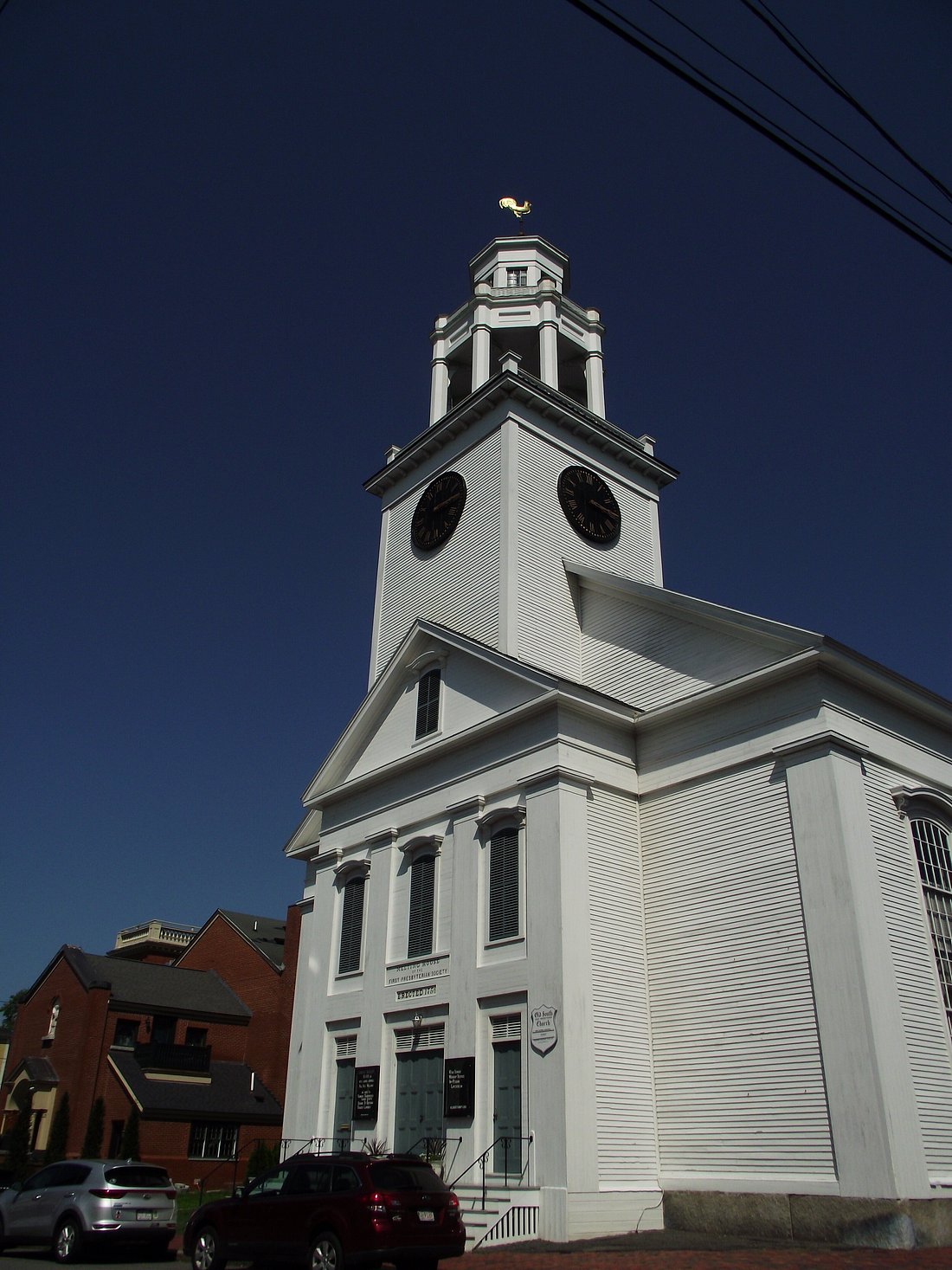
Modern view of the “Old South Presbyterian Church, Newburyport, MA
As Benedict Arnold assembled his small army of 1,100 men in Newburyport for his bold cooridinated strike on Canada (with General Richard Montgomery attacking via Montreal), there was one last stop before the men boarded the boats in the Merrimack River. From here they would hug the coast on their way to Maine, then overland to Quebec. It was a bold strategy for the inexperienced army and army commander. Though the was just started in April, and peace was still spoken by many political leaders, Washington approved this first American offensive. Strike the British forces in the Canadian colonies, with the hope of encouraging their northern colonial neighbors to join their cause.
Arnold felt it was appropriate that his mission have the blessing of God, so hundreds of men squeezed into the First Presbyterian Church (now called Old South Presbyterian Church). One of the largest churches in the city, it was the spiritual home of the Great Awakening in New England. Here, evangelist preacher George Whitefield, preached from when the church was built in 1756 until his death in 1770. Whitefield was buried in the crypt of the church. His fame was well known to Arnold and others, Whitefield is considered one of the founders Methodism and a great public speaker.
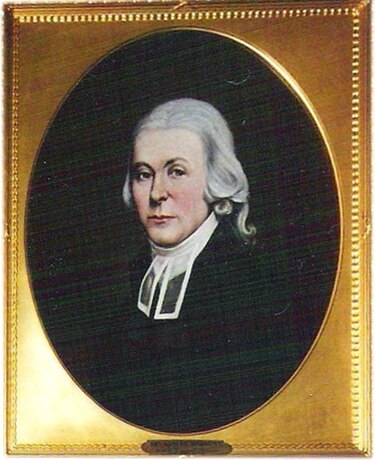
What men could not fit into the church pressed up against the doors and windows. Today’s service, held on Wednesday, September 20, was a dedication service. To bless the men and their task at hand. Reverand Samuel Spring, a popular orator in his own right, and he was now to serve as chaplain of Arnold’s small army on its way to Canada.
The scene was recounted in J. T. Headley’s, 1864 “The Chaplains and Clergy of the Revolution“:
Reverand Samuel Spring
“There sat the fearless Arnold, the bold rifleman, Morgan, and a host of other brave men, who, notwithstanding their dauntless courage, felt that the perils of the untrodden, mysterious wilderness, they were about to penetrate, might be too great for human energy and endurance, and the hour come, that their only hope would rest in the God whose spirit the chaplain [Samuel Spring] invoked as their guide and stay. The citizens, who crowded the gallery, never forgot that sermon. It became the talk of the place, and was the cause of his eventually settling over them as their pastor.”
After the sermon, a surreal experience took place. Soon, someone on Arnold’s staff wanted to go to the crypt and see the tomb of Whitefield. Headley quoted Rev. Spring:
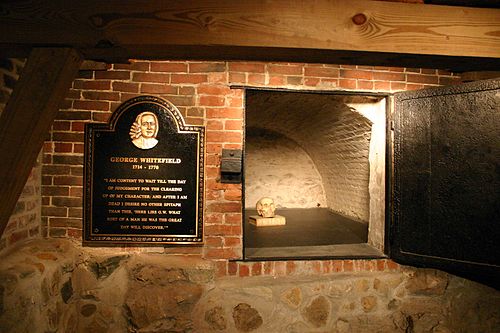
“I preached over the grave of Whitefield. After the service the general officers gathered around me. Some one requested a visit to Whitefield’s tomb. The sexton was hunted up, the key procured, and we descended to his coffin. It had lain in the tomb six years, but was in good preservation. The officers induced the sexton to take off the lid of the coffin. The body had nearly all returned to dust. Some portions of his grave-clothes remained. His collar and wristbands, in the best preservation, were taken and carefully cut in little pieces, and divided among them.”
A modern view of the crypt of Rev. George Whitefield
Headley continued; “The chaplain, with the haughty Arnold, the chivalrous Morgan, and group of officers, gathered in the dark vault around the tomb of Whitefield, formed a scene worthy of a painter. The clank of steel had a strange sound around the sainted sleeper, while the hallowed atmosphere filled all hearts with solemn awe and reverence.”
Now, with their good luck token from the grave of Whitefield, Arnold and his staff made their way to the shore where his men were boarding their boats in the Merrimack River. Arnold and his men saw their mission blessed by God, and wanted to tie their cause with that of the Great Awakening. They believed their cause was right and just. The process of visiting a tomb and taking pieces of a dead man’s clothing may seem a tad bit of “macbre” to us today, to Arnold it was a way to bless his mission. One that he believed would bring him and his men glory.
Ecelbarger’s original research revises the history of this crucial period, presenting for the first time Washington’s aggressive plan to attack Philadelphia soon after arriving at Valley Forge and the fact that the encamped army was much larger than previously understood.
This video will be posted on our Facebook page and then later go up on our YouTube page and audio podcast.
We write about serious topics all the time here, which we should. But sometimes its nice to have some fun. This one will be fun. One of the things that stands out to me as I read about upcoming events and programs going on across the nation are graphics and illustrations. Logos. There’s nothing like a great logo. It can capture the spirit of the team/place/group. One of my favorite logos is this one (I sure hope Rob Orrison is reading):
The Bicentennial produced what I think is a great, classy looking logo:
By comparison, the official 250 logo for the nation’s commission is bland and boring to me:
As we’ve entered the 250th commemoration, I’ve noticed the various logos for state 250 commissions. Some I really like, some are o.k., and some are just plain . . . boring. I’ll run down my opinion on the various state 250th logos. There are many state commissions, so to keep this manageable I’ll just focus on those of the original thirteen states. And I’ll go through them in alphabetical order so as to avoid any sense of favoritism.
Connecticut I’ll just say it: it’s boring. I love the Nutmeg State and it has some great historic sites. But the logo falls flat. Just the state name, with the ‘C’ in blue to set it off.
Massachusetts It’s ok. The state abbreviation and ‘250’ look very 70s to me. I honestly expected more from a state with such rich Revolutionary history.
Come on, Granite State! New Hampshire currently has no state 250th Commission. Let’s hope the state addresses that soon.
New Jersey The Garden State’s logo features an illustration representing the state’s role as the Crossroads of the Revolution. I’m not crazy about the colors, though.
Pennsylvania The Keystone State has used its state abbreviation with the numbers ‘250.’ It reminds me of money. Simple, but it works. I do wish it had more to it, though.
Rhode Island Spot on. Nice logo, with the anchor, a symbol of the state, and abbreviation and ‘250.’ It’s easy to read, sharp, and captures the state’s history.
South Carolina I think the Palmetto State could’ve done better. It’s not awful, but not inspiring either. The letters and wording could really use an image or graphic to go with them. How about a palmetto?
Virginia I like the use of red, white, and blue in the Old Domion’s logo, as well as the thick font for the letters and numbers. It’s a good one. I wish it was a bit more visual, with maybe a state outline or something, but overall, I like it.
What do you think? What do you like best? Do you live in another state with a great logo? Share it.
This is not in any way meant to criticize any state’s commemorative efforts. Every state is doing great programming. Check out their websites and support their programs. And be sure to check out the national 250 website:
Two hundred fifty years ago Culpeper residents were uneasy. Virginians were in a war of words with their mother country, as evidenced by the published Culpeper Resolves of 1774 against England’s abuses. Little did they know that by the end of 1775 fighting men from Culpeper would be at the forefront to depose the British government from Virginia forever.
On March 23, 1775 Patrick Henry rose to speak at the Second Virginia Revolutionary Convention held at Richmond’s Saint John’s Church. The Convention’s presiding officer, Peyton Randolph, gave Henry the floor as debate swirled concerning approving a resolution forming and arming of Virginia Patriot militia forces. In attendance were Culpeper’s representatives Henry Pendleton and Henry Field Jr. as were Fauquier County’s representatives, and future Culpeper Minutemen, Thomas Marshall and James Scott. Henry stated:
Romanticsized version of Henry’s speech at St. John’s Church
“Gentlemen may cry, Peace, Peace but there is no peace. The war has actually begun! The next gale that sweeps from the north will bring to our ears the clash of resounding arms! Our brethren are already in the field! Why stand we here idle? What is it that gentlemen wish? What would they have? Is life so dear, or peace so sweet, as to be purchased at the price of chains and slavery? Forbid it, Almighty God! I know not what course others may take; but as for me, give me liberty or give me death!
Thomas Marshall later told his son, also future Culpeper Minutemen and U.S. Chief Justice John Marshall, that the speech was “one of the boldest, vehement, and animated pieces of eloquence that had ever been delivered.”
As Henry predicted a gale did come down from the north in the form of British troops trying to control arms and gunpowder stockpiles on April 19 in Lexington and Concord, Massachusetts, resulting in the first bloodshed of what Henry predicted as “the clash of resounding arms.” Just weeks earlier, William Legge, Earl of Dartmouth, Britain’s Secretary of State for the colonies, issued a warning to the Royal Governors and suggested they take control of such gunpowder and weapon strongholds. He especially targeted the governors of Massachusetts and Virginia.
News of the events in Massachusetts was still over a week away in Virginia when early in the morning of April 21, colonists in Williamsburg awoke to find royal marines removing the gunpowder from the public powder magazine. Virginia’s Royal Governor, John Murray, Earl of Dunmore, ordered the aggression respecting Dartmouth’s warning. This “Gunpowder Incident”, ignited the already simmering spark of discontent and suspicion between Dunmore and the patriot colonists.
Henry quickly formed some local militias into companies near Williamsburg and requested militia’s throughout the colony to muster. In northern Virginia, Fredericksburg became the rendezvous location for local militias. In Culpeper County men from throughout the area quickly assembled in their traditional muster and drilling location of Major Philp Clayton’s field by Mountain Run, today’s Yowell Meadow Park. Once organized, Culpeper Captain Edward Stevens marched his Culpeper militiamen to Fredericksburg joining other county militias.
Dunmore was well aware that Henry was actively recruiting militias to march on Williamsburg. Henry publicly called for Dunmore to return the powder or pay for its value, £330 (near $18,000 today) or patriot forces would march against him. As the situation escalated, Dunmore reportedly said, “I have once fought for the Virginians, and by God I will let them see that I can fight against them.” On May 3, after over ten days of maneuvering, Dunmore agreed to Henry’s monetary demands as peace was preserved. Militia’s throughout the colony, including those of Culpeper in Fredericksburg, were ordered to return to their home counties. The Gunpowder Incident proved to be a milestone event in Virginia’s turn towards revolution. As 1775 moved into summer open rebellion against royal authority began and Culpeper residents prepared for the upcoming conflict.
Earlier, in March 1775, Culpeper County representatives, Henry Field Jr. and Henry Pendleton, attended the Second Virginia Convention where Peyton Randolph, Richard Henry Lee, George Washington, Patrick Henry, Richard Bland, Benjamin Harrison, and Edmund Pendleton were selected as delegates representing Virginia at the Second Continental Congress. Field and Pendleton knew the representatives well from their years in the House of Burgesses. They especially knew George Washington who earlier served as Culpeper County’s first surveyor and Edmund Pendleton was Henry Pendleton’s uncle. On May 10, 1775, the Second Continental Congress convened in Philadelphia.
After the Battles of Lexington and Concord and Virginia’s gunpowder incident, the first order of business for the Congress was to prepare for war. On June 14, 1775, Congress voted to establish the Continental Army which incorporated patriot forces already in place in Massachusetts and New York while also raising the first ten companies of Continental Army troops on a one-year enlistment. These included two regiments of Virginia riflemen, one raised from Berkeley County (now in West Virginia) led by Captain Hugh Stephenson and the other from Frederick County led by Daniel Morgan, along with rifle regiments from Pennsylvania and Maryland. The very next day, Congress unanimously elected George Washington as commander-in-chief of the Continental Army and he immediately departed for Boston.
Meanwhile, Boston area patriots learned that the British were planning to fortify the unoccupied hills surrounding the city, which, if successful, would give the British control of Boston Harbor. Patriot leader William Prescott quickly responded, utilizing his 1,200 troops to occupy and build defense works on Bunker and nearby Breed’s Hill. At daybreak on June 17, the British mounted an attack against them. The Boston patriots fought gallantly, and enacted tremendous casualties upon the British, but eventually they ran out of ammunition allowing the British to control the high ground of the Peninsula. Newly assigned commander, George Washington, had just arrived in New York on his way to Boston when he received news of the battle and the death of patriot Major General Joseph Warren (for whom Warrenton, Virginia was later named).
Monument dedicated to the Culpeper Minute Men muster site in Yowell Meadow Park, Culpeper, VA
On July 8th, 1775, Congress directed each of the colonies to start forming land and naval military units. Virginia’s Third Convention assembled in Richmond on July 17, 1775 and began drafting legislation for the defense of Virginia titled, “An Ordinance for raising and embodying a sufficient force for the defense and protection of this Colony.” Following the guidance of Congress, an ordinance was worked upon to create a Committee of Safety to govern Virginia and to prepare for war. Although the details of the legislation took over a month to form, the earliest specifics created 16 military districts from Virginia’s 62 counties. Each military district was to support a 68-man regular, or rifle, company and a ten-company minute battalion of 500 men in preparation for war.
On August 21, 1775 “An Ordinance for raising and embodying a sufficient force for the defense and protection of this Colony.” was read for a third and final time and then passed unanimously by the delegates of Virginia’s Third Convention. On August 25th Alexander Purdie’s Virginia Gazette published the ordinance as directed by the Convention. Delegates worked strenuously on the ordinance for over five weeks before getting passage. George Mason wrote, “I have not since I came to this place, except the fast-day of Sunday, had an hour which I could call my own – this is hard duty.” This was by far the largest ordinance produced by any of the Conventions as it contained over 13,000 words and took up six pages of Purdie’s eight-page Gazette. Earlier readings of the ordinance alerted many leaders throughout Virginia to begin the process of recruiting, possibly as early as late July and certainly by the first week of August, to fulfill the legislation’s manpower needs. The ordinance created 16 military districts including the Culpeper District, which also included Orange and Fauquier County.
This legislation meant that the Culpeper Military District was now tasked with providing manpower of almost 600 men including officers. In August, the local delegates, Thomas Marshall and James Scott from Fauquier County, Field and Pendleton from Culpeper, and Thomas Barbour and James Taylor from Orange returned home to aid in the recruitment throughout their district. For the first time, Fauquier, Culpeper, and Orange County men were recruiting for war, not against the Native Americans, the French, or the Spanish. This time they were recruiting for war against their own British empire.
Each military district was to raise one 68-man regular or rifle company in addition to the 500 man minute battalion, rank and file, from the age of 16 to that of 50, to be divided into ten companies plus officers. Every man enlisted was required to “furnish himself with a good rifle, if to be had, otherwise a tomahawk, common firelock bayonet, pouch, or cartouche box, and three charges of powder and ball.” If the minute-man was not able to furnish his arms, they were to be supplied at public expense. Six privates were allowed one shared tent from the public supply. For pay, the Battalion Colonel was allowed 15 shillings per day, Lt. Colonel 12 shillings, and a Major 10 shillings. The pay for Captains and lower ranks was the same as Culpeper’s Regular Company at 6 shillings per day, Lieutenants at 4 shillings, Ensigns at 3 shillings and Privates earning one shilling and four pence per day. The difference in pay came from days a year in service. Both privates for the regular rifle company and the minute battalion were enlisted for a year’s service. However there was certainty that the rifle company would be away from home during the year while the minute battalion might not get called up, meaning that they would be paid for local drilling of 76 days per year instead of 360. As a result, the regular rifle company recruits expected to earn a yearly pay of 480 shillings/year while a minute battalion privates were guaranteed 101 shillings, that is of course unless the minute company was activated, which the Culpeper Minute Battalion was.
In the newly formed Culpeper Military District local leaders met and made commitments for recruiting individual companies and decided to meet on September 1st in the central county of Culpeper at the traditional militia muster site of Philip Clayton’s property just west of Culpeper Court House. It seems clear that some of the most experienced riflemen and former militia veterans would make up the district’s needs for the 68-man rifle company that would be incorporated into either Patrick Henry’s 1st Virginia Regiment or William Woodford’s 2nd Second Virginia Regiment. Certainly military district rifle competitions pushed the expert riflemen toward the rifle company. However, some expert riflemen appreciating the idea of remaining at home most of the time, chose to stay in the minute battalion. Because of its size, recruitment for the manpower needs for the ten-company minute battalion was going to be the greatest challenge.
In Fauquier County, Delegates Thomas Marshall and James Scott began recruiting officers and in turn, those officers were charged with recruiting the needed manpower for each company to fulfill Fauquier’s obligations. Besides Marshall and Scott, officers placed in charge of recruiting their own companies included William Pickett, John Chilton, William Blackwell, George Johnston, Elias Edmunds, Francis Triplett, and William Payne. Orange County leaders Lawrence Taliaferro, Richard Taylor, Joseph Spencer, John Williams, and Willliam Taliaferro began recruiting their own companies. In Culpeper County, highest ranking militia officers, John Green and Edward Stevens, took the lead in recruitment efforts. Other Culpeper leaders recruiting included Abraham Buford, John Jameson, William McClanahan, George Slaughter, Philip Clayton, and James Slaughter. Their upcoming muster on September first at Clayton’s Field would determine how effective their August recruitment efforts were.
As the September first rendezvous approached, recruiting captains from each of the three counties of Orange, Culpeper, and Fauquier made plans to meet at Clayton’s muster field along Mountain Run. It appears that the many recruitment captains had their specific areas in the region they had recruited. In Culpeper, Abraham Buford recruited in southwestern Culpeper County (today’s Madison County), John Jameson recruited close to the village of Culpeper Courthouse, William McClanahan northwestern Culpeper County into present day Rappahannock County. James Slaughter recruited in the area of Culpeper Courthouse and south and east to the Rapidan River. John Green recruited the northeastern areas of the county.
In Orange County Joseph Spencer recruited in southeastern Orange. His recruits journey to Clayton’s muster field has been recorded. Spencer made an initial rendezvous location of his recruits at “Porter’s Old Courthouse” probably on August 31st. In 1775 this property was owned by Charles Porter and it had been the site of the first Orange County Courthouse from 1738 until 1749 before the courthouse was moved to near present-day Orange. The first courthouse location today is on the eastern side of Route 522 just northeast, and on the hill, from E.V. Baker’s Store. From that location it is roughly 12 miles to Clayton’s muster field, roughly a half-day march. It is assumed that other recruiters made rendezvous in a similar fashion, however many of the recruits in Culpeper County probably just sent word to directly meet at Clayton’s field.
Most of the Culpeper Military District recruits likely arrived by September 1, but some probably lingered into the next few days. There the recruited men would have been sworn in, given rank, and told their paygrade. The Committee of Safety would have also been involved fulfilling the officer ranks and in reducing the number of minute battalion companies and captains to ten. Some of the recruiting captains filled senior officer ranks and their recruits were assimilated into other companies to complete their needed numbers. Certainly rifle competitions were held and most of those who were most skilled filled into John Green’s Rifle Company. There appears to have been enough good riflemen above the 68 needed for the rifle company and they were placed in a variety of the battalion companies. John Green of Culpeper County led the rifle company as Captain with Richard Taylor of Orange 1st Lt. and John Eustice of Fauquier as 2nd Lt. The senior leaders of the Minute Battalion were Col. Lawrence Taliaferro from Orange, Lt. Col. Edward Stevens from Culpeper, and Major Thomas Marshall from Fauquier. The 10 Battalion Company Captains included Abraham Buford, John Jameson, William McClanahan, and John Williams, all from Culpeper; William Blackwell, John Chilton, William Pickett, and James Scott from Fauquier; and William Payne and Joseph Spencer of Orange.
Sixteen year old recruit, Philip Slaughter penned a diary account of which we get an image as to what Clayton’s muster site appeared. According to Slaughter,
Modern interpretation of the Culpeper Minute Men Flag, courtesy of the Sons of the American Revolution
“Some had tents, and others huts of plank, etc. The whole regiment appeared according to order in hunting shirts made of strong, brown linen, dyed the color of the leaves of the trees, and on the breast of each hunting shirt was worked in large white letters the words, ‘Liberty or Death’ and all that could procure for love or money bucks’ tails, wore them in their hats. Each man had a leather belt around his shoulders, with a tomahawk and scalping knife. The flag had in the center a rattlesnake coiled in the act to strike. Below it were the words, ‘Don’t tread on me.’ At the sides, ‘Liberty or Death’ and at the top, ‘The Culpeper Minute Men.’
The According to Culpeper’s Ensign David Jameson, the Culpeper Battalion “was raised in less than three weeks.” The men on Clayton’s field proved to be special in liberating Virginia from the British. Leadership on the field was not in shortage. On that field was a brother (Ambrose Madison) to a future president (James Madison), a father (Richard Taylor) to a future president (Zachary Taylor) and future Chief Justice of the U.S. Supreme Court (John Marshall) among countless other state leaders. Slaughter also stated, “During out encampment an express arrived from Patrick Henry, commandant of the First Virginia Continental Regiment, by order of the committee of safety, then sitting in the city of Williamsburg, requesting the Minute Men to march immediately to that city. The Minute Men immediately made ready.” It is not known for sure when the Virginia’s Committee of Safety issued the request to “March immediately,” but John Green’s Regular Rifle Company certainly left Culpeper in late September for the 140-mile march of roughly six days arriving by October 4. The Culpeper Minute Battalion followed a few weeks later and arrived in Williamsburg by October 23.
Between late September and mid-October 1775, over 600 Culpeper Military District recruits marched from the muster and drilling site of “Clayton’s Old Field” in response to Patrick Henry’s request of immediate mobilization to Williamsburg for the protection of Virginia. The Culpeper deployment proved to be by far the largest deployment from any location in Virginia in 1775-76 to answer the call of defending the Commonwealth from the British. While every Virginia Military District fulfilled their requirements for a regular company, Culpeper’s “Minutemen” were Virginia’s only fully-manned minute battalion to respond in Virginia’s critical hour of need. After arriving at Williamsburg, Culpeper’s expert riflemen immediately moved into action against Lord Dunmore’s Royal and Loyalists forces. The rifle company was immediately pressed into action guarding James River crossings while the minute battalion was immediately ordered to protect the local magazine, and like the rifle company, James River crossings. Upon arriving Slaughter continued to tell about their arrival in Williamsburg stating, “Many people hearing that we were from the backwoods, near the Indians, and seeing out dress, were as much afraid of us for a few days as if we had been Indians; but finding that we were orderly and attentive in guarding the city, they treated us with great respect.”
Although there were many “riflemen” in the battalion, Slaughter also stated, “The Minute Men were chiefly armed with fowling-pieces and squirrel-guns.” Upon arrival, Col. William Woolford designated Captain Abraham Buford, and a hand-selected company of minute battalion riflemen, to move immediately, marching through the night of October 26, to defend Hampton from attack by a British naval squadron. Hampton would be there first of several weeks of fighting Lord Dunmore and his mixed force of Regulars, Loyalists and former slaves.
For more information on commemorative events this fall commemorating the Culepeper Minute Men, visit the Culpeper Museum at https://culpepermuseum.com/
Emerging Revolutionary War welcomes back guest historian Michael Aubrecht
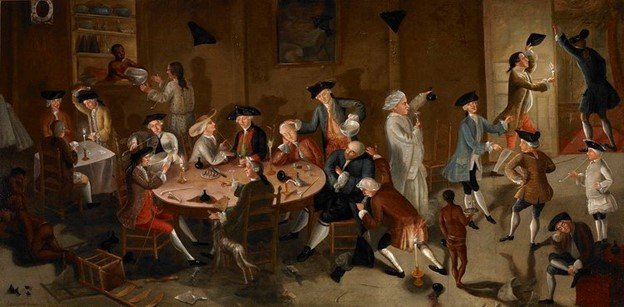
As someone who enjoys the occasional cocktail I am admittedly curious as to the rumored excessive-drinking habits of our Founding Fathers.
After conducting a casual examination, I think it would be fair to say that their wealth, power, and the period in which they lived in made alcohol a mainstay in their daily lives. Most of these gentlemen were the political playboys of their day and we already know that many of them had a penchant for wine, women and song. Today most people assume that the common table wine was the preferred beverage of colonial times and that most folks simply enjoyed it as a compliment to meals.
According to research conducted by Stanton Peele, the Founders had a much broader palette when it came to engaging in the Spirit of ‘76. Simply put, these boys liked to party:
How do we know the Founding Fathers as a group drank a lot? Well, for one thing, we have records of their imbibing. In 1787, two days before they signed off on the Constitution, the 55 delegates to the Constitutional Convention partied at a tavern.
According to the bill preserved from the evening, they drank 54 bottles of Madeira, 60 bottles of claret, eight of whiskey, 22 of porter, eight of hard cider, 12 of beer and seven bowls of alcoholic punch. That’s more than two bottles of fruit of the vine, plus a few shots and a lot of punch and beer, for every delegate. Clearly, that’s humanly impossible.
Join us this Sunday at 7pm on our Facebook page as we welcome historian and author Gabe Neville back to Rev War Revelry. Gabe has just finished and published one of the most comprehensive Revolutionary War unit histories ever written. Focusing on the Eighth Virginia Regiment, Neville’s book titled “The Last Men Standing, The Eighth Virignia Regiment” is a must have for anyone’s library. We will talk with Gabe about his research, interesting tidbits of his book and what let him to this project.
This presentation witll be LIVE at 7pm on Sunday, August 24th. Tune in and share any thoughts or questions in the chat. Gabe is always a fun chat, so grab a drink and enjoy learning about his in depth research on the 8th Virginia Regiment.
Emerging Revolutionary War welcomes guest historian Avellina Balestri
My American Revolution historical fiction trilogy, “All Ye That Pass By,” is thematically centered upon the pros and cons of oath-taking. Although the topic has been very much on my mind during the researching and writing process, I think many people who engage with the American Revolution on a popular level forget about the profound moral quandary of making and breaking solemn declarations before God and Man.
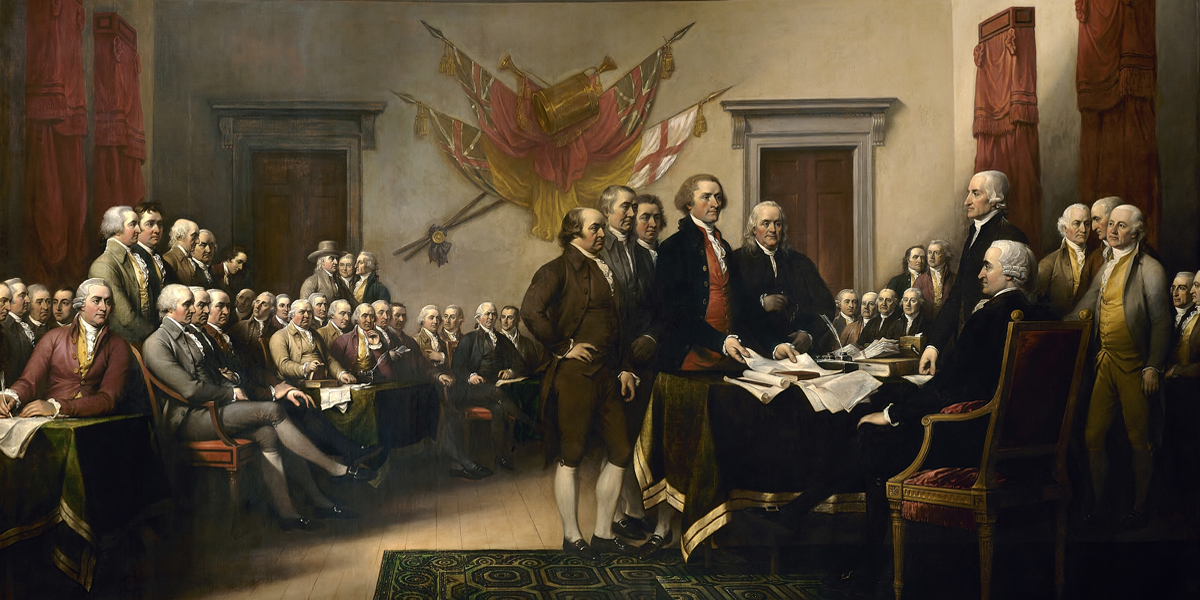
When the signers of the Declaration of Independence pledged their “lives, fortunes, and sacred honor” to the cause of rebellion, there could not help but be an element of contradiction, for they were committing an act of treason against the King to whom they had previously sworn fealty. Too often we reduce this decision to a test of courage, necessary to take the risks and face the consequences that accompany defying one’s sovereign. We get a certain thrill from the idea of defiance because it fits a certain popularized narrative framework. But perhaps this is partly because we have forgotten the rubrics of more religious ages in which hierarchies represented divine realities that dignified mankind.
Swearing oaths to kings and queens was a grave matter in both a spiritual and interpersonal sense. Most oath-taking rituals involved placing one’s hand (and often lips) upon the Cross on the Holy Bible, the symbol of salvation, and in the old rendering of such vows, wishing that one’s heart be cut out if proven false to the liege lord or lady, who would henceforth be held higher than family ties or even one’s own life. Calling down the heart-cutting curse was both a literal reference to execution and a symbolic statement of self-destruction, for what was a man’s heart if his word was worthless to the one you had sworn to defend by your life or death?
By contrast, unwavering zeal for one’s royal master may lead to one’s early demise, but that is not merely tolerable, but glorious, indeed, the most glorious hour of one’s life (as Major John Andre declared before minutes before his own life was taken), because it proved the depths of one’s ability to be a good and faithful servant, and what is a man without a lord to serve? What liberty can a knight enjoy if he will not swear his sword and be chained? These perennial questions hearken back to the Anglo-Saxon epic of the Men of Maldon, who preferred death to abandoning their lord, even as he lay slain by Norsemen upon the field. It is no small irony that one of Maldon’s other famous sons was General Horatio Gates, whose trajectory runs in quite a different direction.
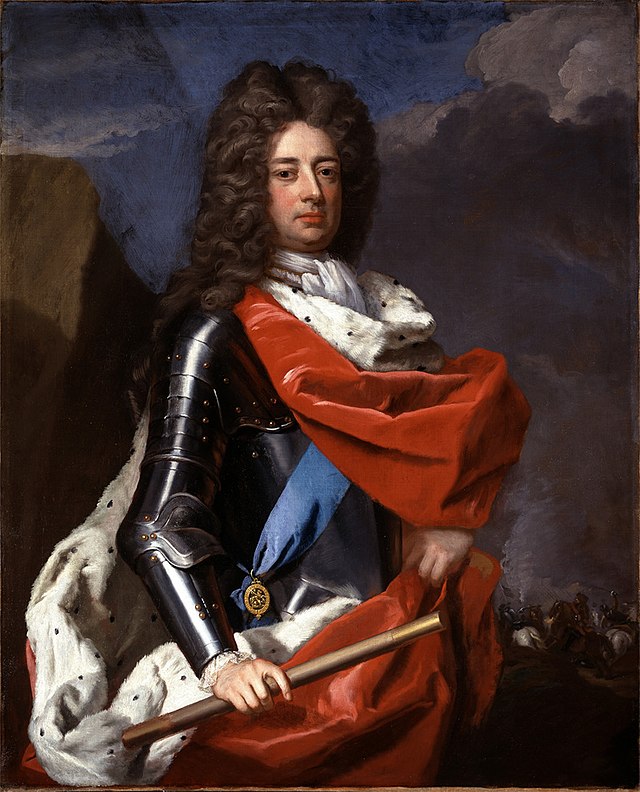
Duke of Marlborough
On that note, it is worth turning to the various figures in the long history of the British Isles and her overflowing empire who chose to break their oaths to reigning sovereigns by way of rebellion, from Lord Brooke (who fought in The English Civil War against Charles I), to the Duke of Marlborough (who took part in The Glorious Revolution against James II), to Lord Murray (who fought in The Second Jacobite Rebellion against George II). To justify themselves under God and before Man, they usually appealed exception clauses based on a higher religious obligation or a superior royal claim. For Brooke and Marlborough, it was because the kings were leaning too Catholic for their Protestant convictions; for Murray, it was because the Stuarts were the rightful rulers, unlawfully sent into exile.
Even in these cases, however, there is a sense that the participants never fully managed to escape the shadow over their broken oaths. Yes, they might appeal to those “rare cases” brought forward by philosophers and theologians from Thomas Aquinas to Samuel Rutherford, but they had still committed what Dante deemed the most mortal of sins in the depths of his inferno. Bearing that weight is exhausting for any mortal man, doomed to make constant self-defenses while knowing the world will never truly trust them again. It is, in effect, to be branded by the mark of Caine, for one who breaks his oaths has murdered the worth of his own word, a nearer thing than even his own brother.
Jumping forward in time, the American Revolution is a unique case in that it was not fundamentally grounded in either a doctrinal nor a dynastic dispute. One would have to squint incredibly hard to make the arguments of either Aquinas or Rutherford translate neatly into a stamp of approval for the American Revolution. This is not to say the revolutionaries did not borrow from the rhetoric of past uprisings, especially regarding the curbing of royal prerogative (albeit colonial complaints were more directed at Parliament than at the King, even though the King upheld his Parliament). But humanistic philosophies that flourished during the Enlightenment introduced rubrics for revolution based on the will of the people. This, in turn, started the domino effect that established the modern consensus of Democracy being inherently positive, even though General Thomas Gage’s warning about the effects of “democratic despotism” is perhaps more relevant than we wish to admit.
Coming back to my own literary exploration, I strive to cast a particular light upon the experiences of Catholic recusants in the British Isles and North America from the 16th-18th centuries, who found themselves between a rock and a hard place in terms of oath-taking. This was especially the case for English Catholics of prominent lineage, who were forced to pay taxes and tithes for refusing to conform to the Anglican Church, leaving their resources drained and their status diminished. By the latter part of the 18th century, following multiple failed Jacobite risings in favor of Catholic claimants, most were eager to dispel accusations of cowardice at best and treason at worst for the old faith they keep against the odds. Even the pope acknowledged the House of Hanover by 1766. But in order to participate fully in British society, it was mandatory to take the Test Act, an oath acknowledging the King as Governor of the Church in England, a claim inherently repugnant to Catholic consciences.
Some resisted this temptation; others yielded to it. One of the most famous cases of apostasy in the period pertains to General Gage’s father and his father’s cousin, both coming from a staunchly Catholic lineage, who took the Test Act ostensibly to save their racing horses from being confiscated. That was the tip of the iceberg, of course; Catholics were not only forbidden from owning horses, but also bearing arms, voting, holding most offices, attending universities, serving in the military, and much more.
The decision to conform to the religion of the state often haunted those who made it. Oaths were understood religiously by society as whole, but for noble families there was a particular weight involved, since the Test Act was a successor of ancient chivalric vows taken by their ancestors. By taking it, Catholics would have sworn their souls to something which they believed put them in a state of mortal sin. Yet…would not breaking that oath be a mortal sin too?
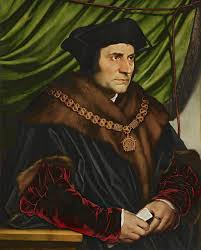
St. Thomas More
In this quandary, whatever they did would be a slap in the face to saints and martyrs most highly praised in their tradition, such as Thomas More and Edmund Campion, who preferred to die rather than sign the Oath of Supremacy. Nevertheless, they met their fates praying for the King and Queen who killed them, embodying fidelity under fire. Another case honored by the oppressed Catholic community was Lord Derwentwater, who rose up in the first Jacobite Rebellion of 1715, and preferred beheading to either recanting his faith or swearing an oath to the House of Hanover which he deemed to be illegitimate. Interestingly, it was said Derwentwater’s heart remained incorrupt, in counteraction to the curse of having it cut out.
Again, we see the crushing effects of previous failed rebellions, and cannot help but compare them to the effects of the American Revolution. The rebellion, predicted to be a flash in the pan by the British establishment, proves more successful than most imagined, shattering old structures in a manner which some will find terrifying and others liberating. In this new world, many hope to enjoy a chance to start over with a clean slate. But for those who have taken the Test Act, going down such a path would require trekking into uncharted territory, calling into question every aspect of loyalty and identity, on earth as it is in heaven. Embracing the revolutionary cause would inherently be a process of unbecoming, shedding one’s understanding of past obligations and hoping the gamble would pay in the end.
For Catholic recusants, the experiences of Charles Carroll of Carrollton served as an example of what might be possible in America. His claim was that King George is a traitor to them rather than them being a traitor to him, and that having been placed under religious suppression, his fellow Catholics had the right to seek alternative options for their own betterment as a community of faith. The outcome of the revolution might have been a risk, but he had proven that it was already disrupting the old order and causing the disabilities placed upon Catholics to crumble. Prejudice might remain, but Carroll has already overcome various civil obstacles against his faith in Maryland, the one-time Catholic colony laid low, and George Washington, commander-in-chief of the Continental Army, who once took the Test Act himself, had demonstrated his willingness to uphold religious toleration in his army.
And yet…the question of an oath’s weight still bore down on those confronted with such a choice, raised with the conviction that even an oath with questionable aspects was considered worthy of adhering to “as far as the law of God allows.” The way in which each man and woman wrestled with their conscience when it came to such heavy matters was as complex and fascinating as the war itself, and my experience of bringing that inner conflict to life as a writer has been one of the most rewarding aspects of the creative process.
Avellina Balestri is a Catholic author and editor based in the historic borderlands of Maryland and Pennsylvania. She represented the state of Maryland at The Sons of the American Revolution National Orations Contest and is the author of the American Revolution historical fiction trilogy “All Ye That Pass By,” the first installment of which, “Gone for a Soldier,” is available on Amazon. Avellina is also the Editor-in-Chief of Fellowship & Fairydust, a magazine inspiring faith & creativity and exploring the arts through a spiritual lens.
For more information about the author and her various projects, please visit the following websites:







 Emerging Revolutionary War Era