Daniel Boone

Full disclosure: Mr. Brown is a fan of the reviewer’s blog and I received a copy of the DVD for review purposes.

Kent Masterson Brown is likely known to many readers as an author and historian of the War Between the States. But Mr. Brown’s knowledge, interest and expertise in the field of American history is much broader than just his study of the Civil War. This is evident in his recent film project, Daniel Boone and the Opening of the American West. I recently viewed the film for the purpose of this review.

daniel boone coverThe docudrama is an in-depth look at Boone’s life and his impact on the American frontier and the settlement of Kentucky. There is also detailed information regarding the geography and natural history of Kentucky which I found quite fascinating. The DVD comes packaged as a 2 disc, 112 minute DVD and was produced by Witnessing History, LLC – a company led by Brown. This is the first full-length film on the life of Daniel Boone ever produced for television broadcast. The film includes an original score by composer Clark D. Cranfill which provides a perfect backdrop for the narrative. Numerous Boone scholars consulted on the film. Included in the film are original Boone documents and works of art.

Let me begin by stating that I thought I knew a little bit about one of the American frontier’s best known icons until I viewed this documentary. Born in 1958, I had the privilege of being introduced to Daniel Boone by the popular 1960’s TV series, “Daniel Boone.” I watched the show so many times growing up (and still on occasion) that I can still sing the show’s theme song! Though the 1964-1970 television production took quite a bit of literary license the series was, nonetheless, responsible for instilling an interest in, and love of, American history in many a young boy during that time period. I rarely missed an episode growing up and have purchased the series for my own grandsons.

While watching this latest production, I couldn’t help but chuckle about some of the misconceptions many Americans have about Boone due, perhaps, to that old TV series. Brown explodes some of those misconceptions in this project: Boone was not the first white man to explore or settle Kentucky (then part of Virginia). He did not care for coonskin caps and never wore one. He was court-martialed, refused an attorney, defended himself, was acquitted and then promoted. He never used tobacco and though he did not totally abstain from alcohol, he was never known to abuse its use. He was red-headed and fair-skinned. He had a deep and abiding faith in God. His reading and writing skills were largely self-taught. And he was, as Brown notes, “one of America’s most authentic and remarkable men.”

This effort by Witnessing History is the first documentary film of its kind about the life of one of America’s best known historical figures. Brown describes some aspects of this project:

The filming of action scenes of Boone’s early explorations of Kentucky, his first attempt at settlement, the Treaty of Sycamore Shoals, the opening of the Wilderness Road, the Revolutionary War in Kentucky and the Ohio Valley (including the sieges of Boonesborough, Ruddle’s Station and Bryan’s Station and the disastrous Battle of Blue Licks), and Boone’s later life as a surveyor, tavern keeper and even a legislator in Virginia were planned.

More than 100 actors and actresses were specially contacted to appear. The production was designed to be studded with magnificent scenes filmed in Pennsylvania, Virginia, Tennessee, North Carolina, Kentucky and Missouri, as Boone would have seen them, the traces, caves, springs, rivers, creeks, hills, and even dwellings and cemeteries.
Born in Reading, Pennsylvania in 1734 and (like so many of America’s early pioneers), of Scots-Irish stock, the film traces Boone’s life through America’s founding era, with the American Revolution as the backdrop, to his death in 1820 in Missouri. The film reveals that Boone was an intensely religious man and grew up in a Quaker family.

In addition to being instrumental in the settlement of Kentucky, Boone also helped establish Kentucky as the dominant horse-breeding state by presenting a bill in May of 1775 to “encourage the breeding of fine horse flesh.” To this day, horse-breeding and Kentucky are synonymous.

The film reminded me of the many hardships endured by the men, women and families that settled the American frontier—something so easy for modern Americans to forget. Particularly heart-wrenching is the film’s recounting of the death of Boone’s oldest son, James. Just 16, James and some companions were ambushed by a party of Shawnee Indians. Most of the party was killed, but James and one other member of the group were both paralyzed by the attack. They were then tortured for hours by the Shawnee. Their screams and cries could be heard for miles. Daniel Boone soon discovered the sad carnage and buried his son where he had been killed. Boone’s efforts to settle Kentucky had cost him his first-born son. It would not be his last sorrow as his brother would suffer a similar fate.

Daniel Boone Escorting Settlers through the Cumberland Gap (1851–52) by George Caleb Bingham.

I found much of the scenery in the film breathtakingly beautiful, particularly the landscape of “the inner bluegrass” with its “sinks, sinkhole topography, sinking springs, sinking creeks and subterranean streams.” Much of that particular scenery, with its limestone formations, reminded me of my native Shenandoah Valley to which, interestingly enough, Boone also has a connection.

Brown’s knowledge of and love for his native Kentucky comes through in his narration of the film. This, in my mind, only makes the film more compelling and I found myself feeling as though I was actually standing in the landscape Brown so expertly and passionately describes.

Explorer, pioneer, folk hero, woodsman, frontiersman, militia officer during the Revolutionary War and surveyor; Daniel Boone was most assuredly, as Brown describes him, “one of America’s most authentic and remarkable men.”

The documentary was written, narrated and directed by Kent Masterson Brown. Full of historical nuggets and surprises, the film is as entertaining as it is educational. And though the documentary is 112 minutes, it moves along at a quick pace and it kept me interested the whole time I was watching. The closing few minutes of the film are quite poignant as Brown summarizes Boone’s life in few, but profound words. This is the way that history films should be done. In June of 2015, Daniel Boone and the Opening of the American West, won the coveted Telly Award. 

If you are, as I am, a fan of Brown’s work or if you’re interested in learning something about Daniel Boone you didn’t know, I highly recommend this film and give it 5 out of 5 stars. It really is that good.

Note: If you are an Amazon Prime member, you can watch several of Witnessing History’s other projects for free, as part of your membership. Unfortunately, the Boone project is not one of them. 

Richard G. Williams Jr., is a writer and the author of four books and numerous articles and essays related to the Civil War. His latest, The Battle of Waynesboro, (The History Press, 2014), was part of The History Press’s Sesquicentennial Series. He’s also written three essays for The Essential Civil War Curriculum which is an online Sesquicentennial project at the Virginia Center for Civil War Studies at Virginia Tech. Williams serves on the Board of Trustees for the National Civil War Chaplains Museum in Lynchburg, VA and blogs at oldvirginiablog.blogspot.com. He writes from the Shenandoah Valley.

Washington’s Charge

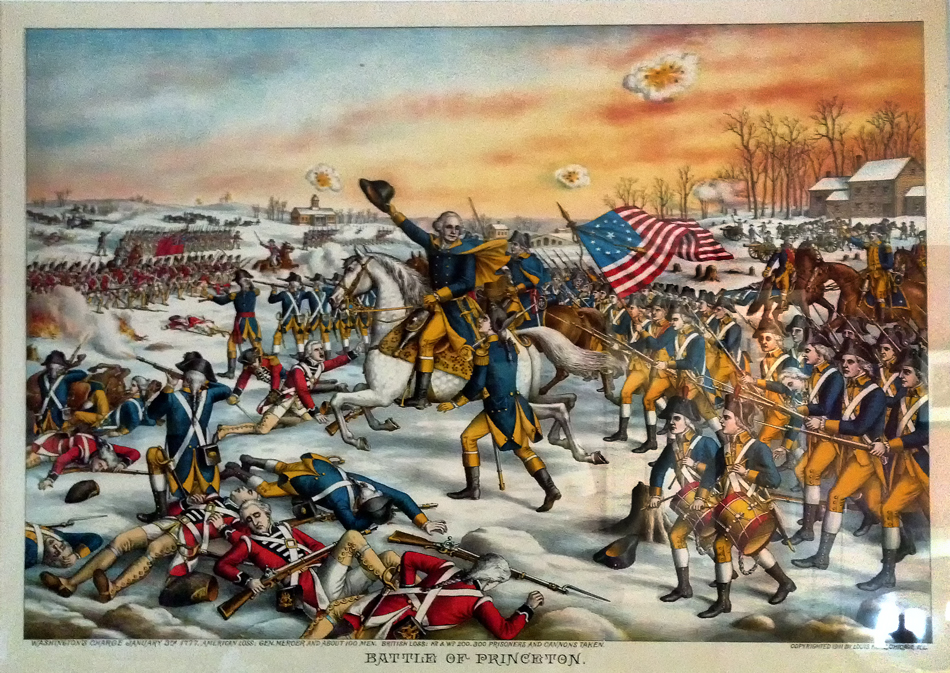
The battle was going poorly for the Patriots.  It was January 3, 1777 and after having been pinned against the banks of the Delaware River by a very large British army the day before, the Continental army made a risky night march around the British army’s flank to escape certain doom.  General George Washington’s small ragged army had nearly reached the small village of Princeton, NJ when they noticed across some open fields British soldiers marching on a different road going the opposite way.  The British soldiers were part of the larger army’s rearguard.  The two forces immediately headed to clash in the open fields just south of the town.  General Hugh Mercer led his Continental brigade to meet the British threat.

The_Death_of_General_Mercer_at_the_Battle_of_Princeton_January_3_1777
This painting by John Trumbull shows the climatic moment of the Battle of Princeton as General Mercer is killed (on the ground next to his horse) and Washington rides to save the day.

The morning was icy cold.  The soldiers began the action in earnest.  The British regulars made short work of Mercer’s brigade.  After engaging in a firefight, the British lunged forward with a bayonet charge.  The American troops were thrown back in confusion.  General Mercer, thought by the British troops to be Washington, was surrounded and bayoneted seven times and left for dead.  The fleeing men from Mercer’s brigade started to create a panic among other brigades in Washington’s army as they ran pell-mell through the reserves under General John Cadwalader.  Many of Cadwalader’s men began to flee as well.  At this moment, the victories at Trenton, the night march, and in many respects, the war itself, were all in the balance.  If Washington’s small force were to be crushed here at Princeton, popular support for the Revolution could potentially be siphoned away, and the American cause could be lost.  The stakes may have never been higher.

Battle-of-PrincetonWEB
In this scene you can see the snow that was on the ground at the time of the battle. Survivors remember seeing blood from dead and wounded men pool on the frozen ground.

And it was at that moment when none other than General Washington arrived on the field personally.  What an amazing sight it must have been to see.  Washington, renowned as one of the country’s best horse riders, riding up to the front lines of battle to direct the movements of his men in a time period where generals of his rank were more properly positioned in the rear to direct movements.  Washington saw the potential collapse and determined to personally appeal to the bravery of his men.

Washington also brought with him more troops that he immediately placed on the line.  Then, as Continental artillery kept the British as bay, he rode into the panicking and retreating soldiers.  Sergeant Nathaniel Root with the 20th Continental Regiment remembered this moment vividly: “At this moment Washington appeared in front of the American army, riding towards those of us who were retreating, and exclaimed, ‘Parade with us, my brave fellows! There is but a handful of the enemy, and we will have them directly.’”  Inspired by his courage and reassured by his presence, the men halted their retreat and reformed their lines.

Washington then rode with the soldiers as he ordered an advance.  The Continentals closed to within thirty yards of the British line.  Washington, in the front line, gave the order to fire.  At the same moment, the British soldiers unleashed a volley into the American line.  Washington’s aides feared with the crossfire Washington would have assuredly been shot down, but he came through the smoke of battle unscathed.  James Read, an officer with the Pennsylvania Associators remembered: “I shall never forget
what I felt at Princeton on his account, when I saw him brave all the dangers of the field and his important life hanging as if it were by a single hair with a thousand deaths flying around him. Believe me, I thought not of myself.”

battle-of-princeton
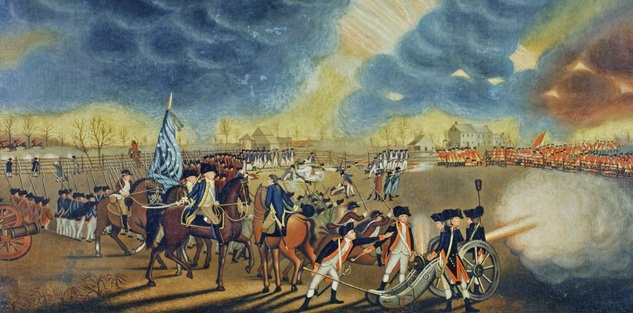
This image of the Battle of Princeton was actually painted by the deaf son of the slain General Hugh Mercer, William Mercer.

The American line overlapped the British line, and the superior British soldiers were forced to retreat in the face of the American rebels.  Washington spurred his horse after the retreating British exclaiming, “It is a fine fox hunt, my boys!”

After defeating the British at Princeton, the American army went into winter quarters in Morristown, NJ.  The result of Washington’s brilliant victories at Trenton and Princeton was a huge boost to American morale.  The militia in New Jersey rose up, enlistments in the army rose, and foreign powers took note as the vastly superior British army was forced back to the city of New York, showing they were unable to conquer New Jersey.  The war would continue for another five bloody years, but Washington had saved the American Revolution from being killed in the crib.

The ground where this battle occurred truly should be remembered as some of America’s most hallowed ground.  Some of it was saved and made into Princeton Battlefield State Park. To learn more about this momentous battle and the crucial ten day campaign it capped, check out one of the inaugural Emerging Revolutionary War books, “Victory or Death: The Battles of Trenton and Princeton, December 25, 1776 – January 3, 1777.”

Winter, 1777

Part One, of a series on the importance of Valley Forge in the American Revolution

On December 19, 1777, the Continental Army, under the command of General George Washington, marched into Valley Forge, Pennsylvania. Located approximately 20 miles from Philadelphia, which had fallen to the British that autumn, Washington’s army would spend the next five-plus months in this soon-to-be iconic place in the quest for American independence.

Yet, the accounts of how desperate the condition of the American forces were emanates throughout the centuries and strikes awe and amazement at the level of perseverance that the soldiers committed to. The winter of Valley Forge was just one of many cold, bleak, and destitute winters that the Continental Army faced during the seven-year conflict.

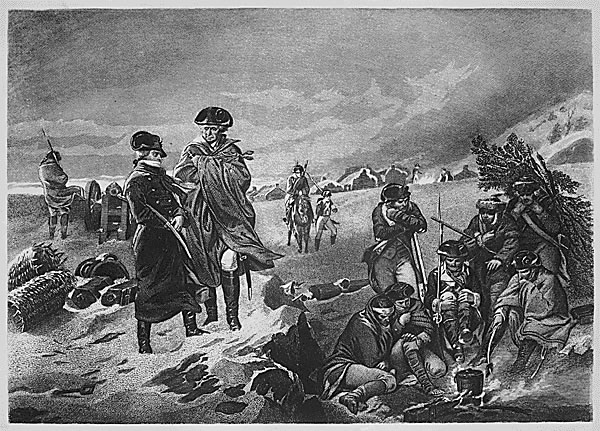
Artist depiction of the encampment at Valley Forge. George Washington and the Marquis de Lafayette are the two horsemen
Artist depiction of the encampment at Valley Forge. George Washington and the Marquis de Lafayette are the two horsemen depicted prominently

However, that does not take away from the conditions of that winter. Especially when written from the ink and quill or pencil of the common soldier. Especially with what that winter cantonment did in the transformation of that Continental Army.

One of the best remembrances of that cold winter comes from Joseph Plumb Martin, whose Memoir of a Revolutionary Soldier, is still in print today.

Upon arrival at Valley Forge, Martin would write:

“We were now in a truly forlorn condition,–no clothing, no provisions, and as disheartened as need be. We arrived, however, at our destination a few days before christmas. Our prospect was indeed dreary.”

Just a short time after his arrival, Martin continued the plight of himself (and most likely many a soldier in that encampment) when he wrote;

“I lay here two nights and one day, and had not a morsel of any thing to eat all the time, save half a pumpkin, which I cooked by placing it upon a rock, the skin side uppermost, and making a fire upon it; by the time it was heat through I devoured it with as keen an appetite as I should a pie made of it at some other time.”

Martin’s account is supported by General James Varnum, who reported on December 20, 1777, “that his division had eaten no meat during 48 hours and had been three days without bread.”

Suffering at Valley Forge

Yet, during that winter, the experience of Valley Forge, according to another veteran of that harsh winter, “added iron to their souls.”

More than “iron souls” would be needed to defeat the British in the American Revolution. Winter, 1777, would see to that as well.

Christmas, 1776

On Christmas, 1776, George Washington took the greatest gamble of the American Revolution, up to that date. On that cold and snowy night, with an ice-clogged river, and an army teetering on the verge of disintegration, the American commander led his command toward a signature, morale-improving, improbable victory.

He defeated Hessian soldiers, in the service of the British, at Trenton, New Jersey. The call sign –used to enter and exit the American camp– leading up to the offensive movement was “victory or death.”

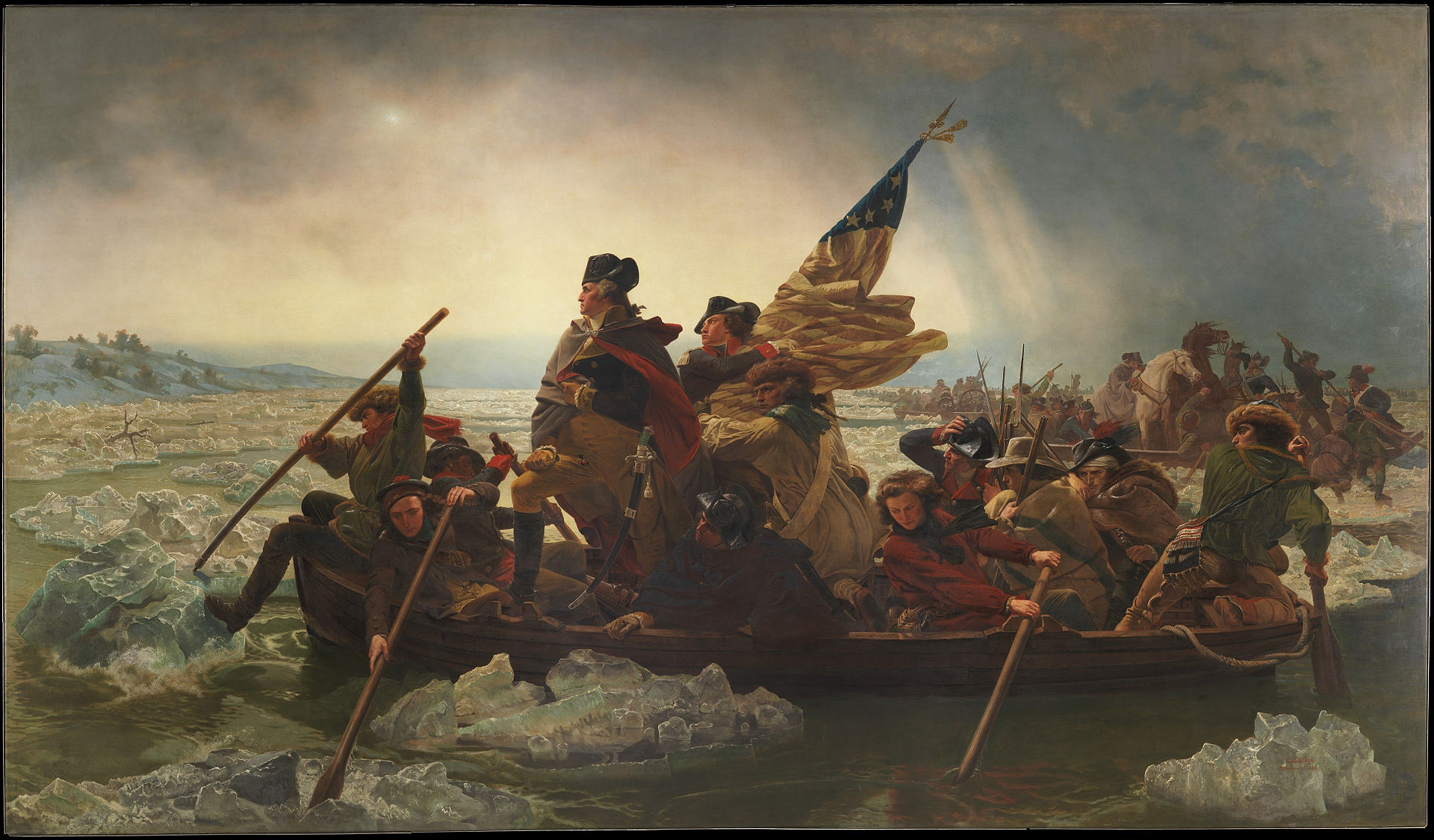
That was quite an accurate statement to summarize the dire straits the American cause of independence had become by winter 1776. The heroics of that night lent itself to the painting by Emanuel Leutze in 1851 that is chock full of historical inaccuracies. But the painting conjured up images of that noble band of American patriots that followed George Washington across the frozen waterway in 1776.

Emmanuel Leutze's painting, 1851
Emanuel Leutze’s painting, 1851

[Did you know that James Monroe, who would be wounded at the Battle of Trenton, is painted in holding the flag? There is no primary account that puts both men in the same boat that night, though.]

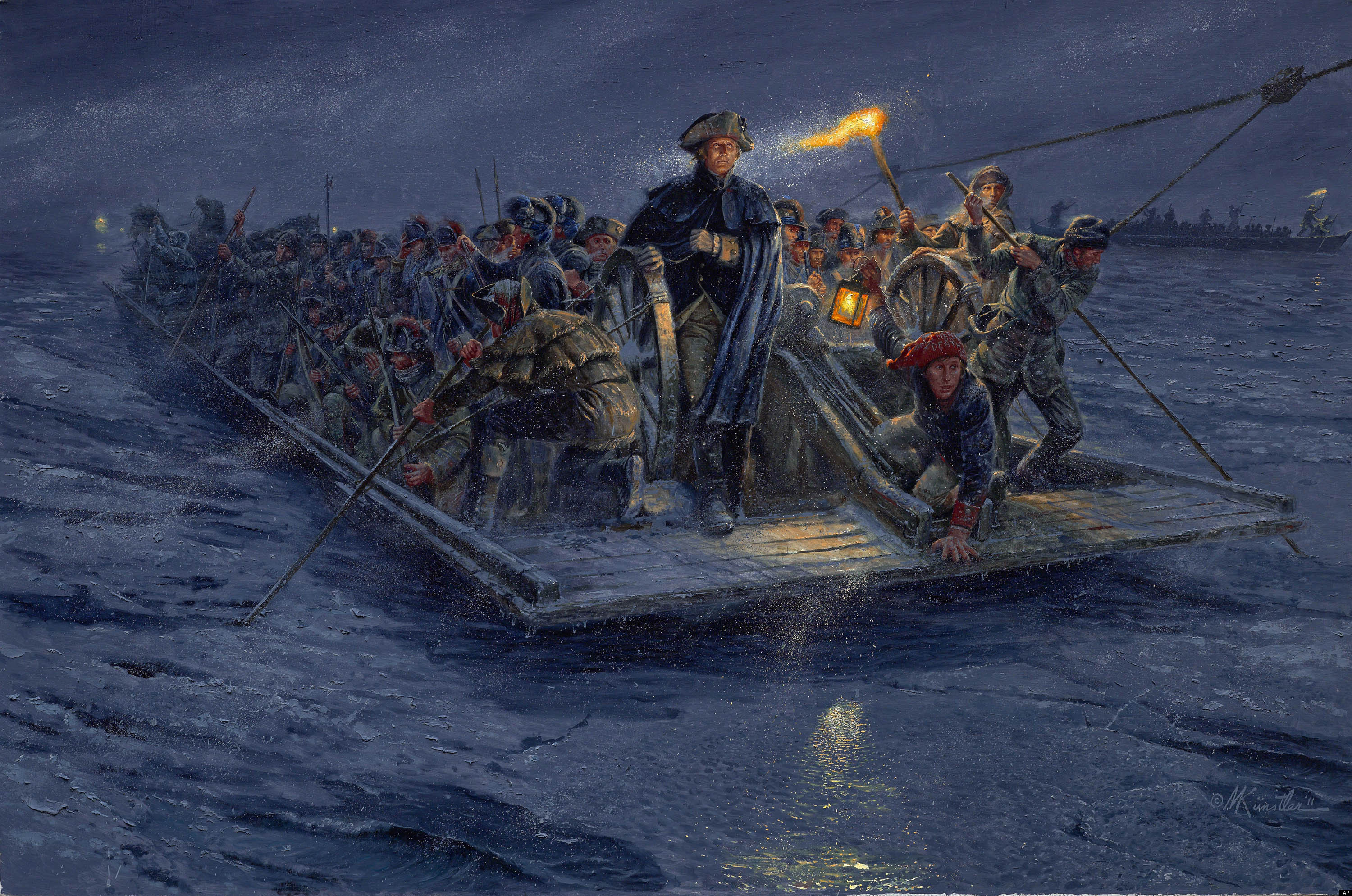
Luckily, famous historical artist Mort Kunstler, took a look at Leutze’s famous painting and decided to make it more historically accurate. Although initially reluctant to tackle the project given the popularity of the previous work, Kunstler studied, tackled history books, and diligently sought such information like the type of boats that would have been used, in the process of creating a more historically accurate depiction.

He succeeded.

Mort Kunstler painting of the "Crossing of the Delaware"
Mort Kunstler painting of the “Crossing of the Delaware”

So, as you celebrate the holidays, you now need a little more space on the wall for a second painting of Washington and his army crossing the Delaware.

Whether you have the space or not on your wall for two paintings, one thing these great illustrations have in common is showing the fortitude of the American soldier.

That fortitude is still on display to this very date. On Christmas Day 2015 thousands of men and women, in the service of America, will serve around the world, where the call sign of “victory or death” is not a mere anecdote from years past, unfortunately.

Thank you to all the men who crossed that icy river many cold nights ago to help win our independence and to the men and women who keep watch tonight on another cold night around the world.

To the readers of Emerging Revolutionary War, I wish you a Merry Christmas and Happy Holidays. Thank you for reading!


*Great article on Kunstler and the painting can be found here.

**Link to Mort Kunstler’s website can be found here.

Review: Washington’s Revolution by Robert Middlekauf

ERW Book Reviews (1)

The name Robert Middlekauf is very familiar to enthusiasts of the American Revolutionary War era. Twenty-three years ago, Middlekauf, Preston Hotchkiss Professor of American History, Emertius, at California-Berkeley, published A Glorious Cause. The book was a finalist for the Pulitizer Prize and was a thorough introduction to the build-up to and through the American Revolution.

Washington's Revolution, the Making of America's First Leader by Robert Middlekauff
Washington’s Revolution, the Making of America’s First Leader by Robert Middlekauff

For fans of Middlekauf, his most recent publication, Washington’s Revolution, the Making of America’s First Leader, will not disappoint.

Washington was the American Revolution according to Middlekauf, whom in the second sentence of the prologue writes that his title “emphasizes his [Washington’s] enormous importance for its course and outcome” (xv).  Middlekauf then takes the reader on a very concise, quick-paced, blend of biography and history, journey through Washington’s early years to the culmination of the American Revolution.

“All the time that he served as commander of the Continental Army, he was in fact also the leader of the Revolution” (304). A tall order for a tall man–both literally and figuratively–but Washington was able to succeed because “he understood that the Revolution represented a rare opportunity”

To evaluate, examine, and explain Washington, one has to do a series of reading between the lines and looking at other primary sources of the compatriots. Washington was meticulous in reviewing what he left for posterity about his life achievements.

Middlekauf’s skill blends the reasons Washington embodied the American Revolution–from his daring in the winter of 1776 that culminated in the twin victories of Trenton and Princeton to literally holding the Continental Army together every winter–the Virginian insisted, cajoled, pressured, and through his own strong determination saw the war through.

That success, was due “in large part because he understood the Revolution represented a rare opportunity–something quite new, in fact–to lead a people in defense of principle long honored in conceptions of liberty” (304).

Not only was Washington a military leader, he also understood the political ramifications of his actions and the need to keep the army subjected to the rules of Congress. Even if that body was the cause of his soldiers going hungry and bereft of other necessities.

His “grand imagination, a vision of his new country….set him apart and made him a great leader” (306). Not too bad for just “a general” (306).

This book is a welcome addition to any military historian’s library. The blending of biography and historical monograph allows one to learn about the entire American Revolution and then from the Notes on the Sources have a road-map to delve into longer narratives on specific subjects.

Book Information

Publisher: Alfred Knopf, 2015.

358 pages, including maps, acknowledgments, notes, and sources


“The Old Wagoner” and the Beginning of the American Revolution

Part Two

We welcome back guest historian Scott Patchan as he continues his series on Daniel Morgan.

When the situation deteriorated to outright rebellion against the crown, Morgan raised a regiment of crack riflemen from Frederick County, and marched them to Boston in twenty-one days to take part in the siege of Boston. There, he served under his former commander from the French and Indian War, General George Washington. Morgan learned the hard way that orders must be followed. He once allowed his riflemen to exceed orders in firing upon British positions at Boston. Washington called Morgan on the disobedience, and Daniel thought that he would be cashiered from the army. Washington, however, relented the next day, but Morgan had learned a valuable lesson about following orders.

Daniel Morgan in the American Revolution

In the fall of 1775, Washington sent Morgan as commander of three companies of Continental riflemen on a mission to capture Quebec from the British. Morgan’s command marched with the column of Colonel Benedict Arnold. They traversed the Maine wilderness, rowing up stream to the “Great Carrying Place,” where carried their canoes and bateaux for great distances overland to another series of streams and lakes that took them to Quebec. As the cold weather set in, sickness and hunger overtook the column and Arnold sent those unfit for duty back to the rear. After covering 350 miles, the American arrived in front of Quebec in early November, surprising the British.

Although Morgan wanted to attack immediately and utilize the element of surprise, he was overruled and the small American force besieged Quebec, waiting for another column under General Richard Montgomery to arrive from the Hudson Valley. When a British party sallied forth and captured one of Morgan’s riflemen on November 18, Arnold believed the British would come out and fight in the open. As such, Arnold drew up his army in front of the fortifications to meet them. They declined his offer and instead looked down on the ragamuffin Americans from the ramparts and exchanged taunts and catcalls. The overall situation frustrated the irascible Morgan, and when his men complained that Arnold was not giving the riflemen their fair share of rations, the “Old Wagoner” violently argued with Arnold, and nearly came to blows with the future traitor. Morgan departed Arnold, leaving him with angry warning about poor treatment of the riflemen. From that time forward, Morgan’s command always received their fair share of the army’s rations.

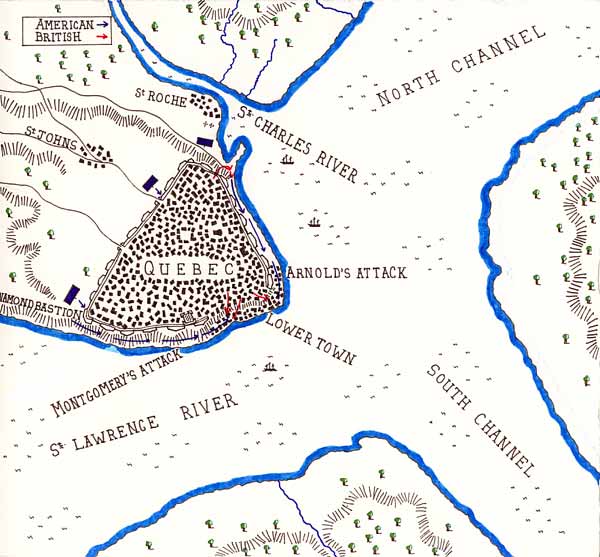
Montgomery’s column arrived on December 5, and the Americans commenced setting up his mortars and artillery outside of Quebec. The Americans finally attacked during a snowstorm in the early morning darkness of December 31, but their force numbered only 950 men. Arnold’s column came under fire as it moved toward the ramparts of Quebec, and a musket ball struck Arnold taking him out of action. Although Morgan was not the senior officer, the others insisted that he take command, having seen actual combat which they had not. Morgan later noted that this “reflected credit on their judgment.” At Morgan’s order, his riflemen rushed to the front, armed with both their Pennsylvania rifles and a spontoon for the assault while some carried ladders to storm the walls. They quickly drove a small force of British away and closed in on the walls.

Map of Battle of Quebec, 1775 (courtesy of British Battles)
Map of Battle of Quebec, 1775
(courtesy of British Battles)

Morgan ordered the men up the ladders and first one gingerly began the climb. Morgan sensed his hesitancy, pulled him down and scaled it himself, shouting, “Now boys, Follow me!” The men instantly complied, and Morgan reached the top of the wall where a volley of musketry exploded, knocking him back to the snow-covered ground. The burst burnt his hair and blackened his face; one ball grazed his cheek and another pierced his hat; but Morgan was otherwise unhurt. Stunned he laid motionless on the ground for a moment, and the attack stopped, his men thinking him dead. But he soon stirred and clambered up the ladder to the cheers of his men who followed suit. This time he stopped before reaching the top, and hurtled himself over the rampart into the midst of the enemy. He landed on a cannon and injured his back and found British bayonets levelled at him from all directions. While the British focused on Morgan, his riflemen poured over the wall and came to his rescue, driving off Morgan’s would-be impalers.  Morgan kept up a close pursuit of the British who offered weak resistance to the attacking riflemen. Although Morgan had broken into Quebec, the main body of Arnold’s division failed to follow the riflemen over the wall and exploit the opportunity at hand. Morgan captured much of the lower portion of Quebec with only two companies of his riflemen. He later described the breakdown that occurred:

“Here, I was ordered to wait for General Montgomery, and a fatal order it was. It prevented me from taking the garrison, as I had already captured half of the town. The sally port through the (second) barrier was standing open; the guard had left it, and the people were running from the upper town in whole platoons, giving themselves up as prisoners to get out of the way of the confusion which might shortly ensue. I went up to the edge of the upper town with an interpreter to see what was going on, as the firing had ceased. Finding no person in arms at all, I returned and called a council of war of what few officers I had with me; for the greater part of our force had missed their way, and had not got into the town. Here I was overruled by sound judgment and good reasoning. It was said in the first place that if I went on I should break orders; in the next, that I had more prisoners than I had men; and that if I left them they might break out and retake the battery we had just captured and cut off our retreat. It was further urged that Gen. Montgomery was coming down along the shore of the St Lawrence, and would join us in a few minutes; and that we were sure of conquest if we acted with caution and prudence. To these good reasons I gave up my own original opinion, and lost the town.”

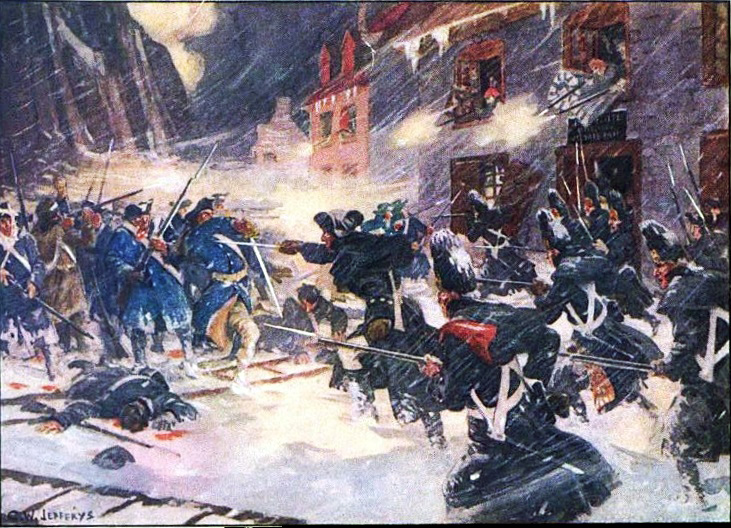
Montgomery never arrived; he had been killed in the first blast of musketry against his column, and his command broke. As time went on, the British regained their composure and pushed back against Morgan’s command. Morgan went back and brought up 200 New Englanders who joined the riflemen as they attempted to renew the attack. Now, the previously undefended point, was well manned, and daylight illuminated the paucity of Morgan’s numbers. Nevertheless, Morgan pressed them back further into the town to an interior fortification. A brave British officer led a counterattack, but Morgan personally shot him dead and disrupted the assault. Nevertheless, the time for action had passed. The British had become aware that Morgan’s was the only active American force in the city and closed in around him. In the meanwhile, additional British forces reoccupied the gates Morgan had initially taken and trapped him in the city. Morgan had no choice but to surrender his small command.

One artist's depiction of the Battle of Quebec, 1775. Both forces are wearing blue overcoats. (courtesy of British Battles)
One artist’s depiction of the Battle of Quebec, 1775. Both forces are wearing blue overcoats.
(courtesy of British Battles)

Morgan and the other officers enjoyed a liberal captivity with generous quarters in a seminary. The British officers visited them often and remained on friendly terms with the Americans. Morgan developed a dislike for some of his fellow officers whom he regarded as dishonest and scheming, and his fighting skills were brought to bear on at least one occasion when several men teamed up against big Dan Morgan. The imprisonment ended when the British returned the American officers on September 24, 1776, in New Jersey. Morgan returned to his wife and two daughters at his home outside of Battletown or Berryville, where he awaited his proper exchange. While there, he named his home “Soldier’s Rest,” as he recuperated from the trials of the taxing expedition to Quebec.  The war was still young, and the Continental Army would soon be calling upon his services again. A special command of riflemen was being organized and Morgan would be its commander.

Emerging Revolutionary War in Civil War Trust’s Hallowed Ground

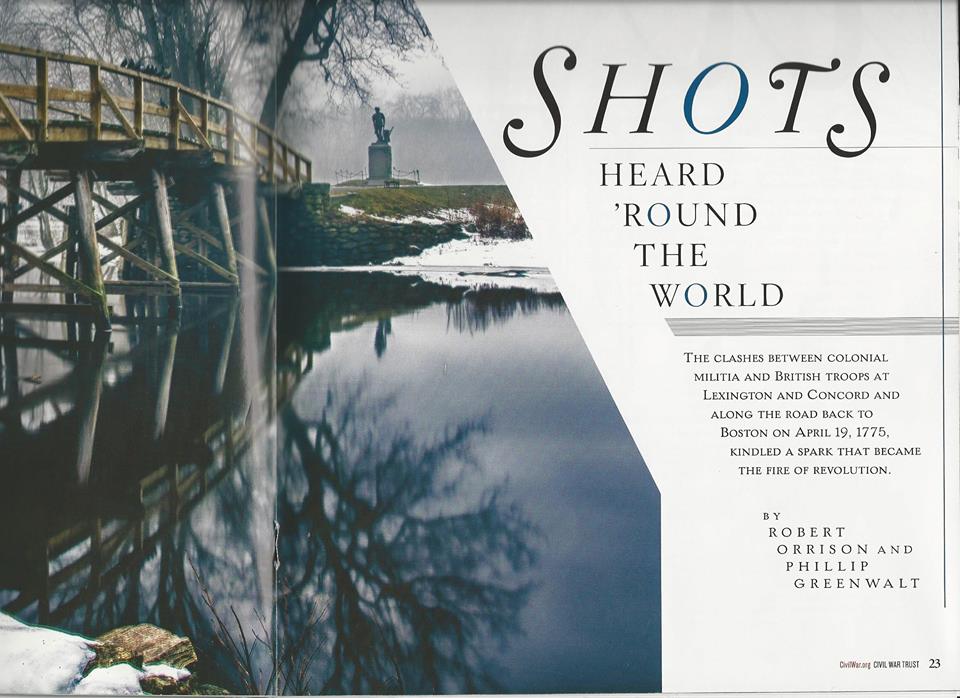
Recently Emerging Revolutionary War Era authors Phillip Greenwalt and Rob Orrison were featured in Hallowed Ground, the Civil War Trust’s quarterly magazine. Their article “Shots Heard Around the World” focuses on the events surrounding Lexington and Concord in 1775. As CWT President Lighthizer writes “the journey towards the stillness at Appomattox began with a shot heard ’round the world at Concord.”

As many of you know, the Civil War Trust has launched a new initiative called “Campaign 1776”, to preserve American battlefields that relate to the American Revolution and the War of 1812. Part of that initiative is funding the archaeology and preservation of land around the area known as “Parker’s Revenge.”  Here, on the afternoon of April 19, 1775, Minutemen met the returning British column on its way from Concord to Boston.  The Minutemen under Capt. John Parker, severely bloodied the British, in a “revenge” from their earlier meeting on the Lexington Green.

Also in the same issue of Hallowed Ground, ERW contributors Drew and Kate Gruber write about the how the American Revolution was on the minds of those who fought in the Civil War. Their article “So Doth History Repeat Itself” covers the “ancestral connection” that both sides had to the patriots of the revolution.

Be sure to check out Hallowed Ground and if you are not already a member of the Civil War Trust, be sure to join today.  Their work in preserving American battlefields is unparalleled.  We thank the staff of Hallowed Ground for including us in their latest issue.  Look for more exciting ventures from Emerging Revolutionary War Era soon!

12345463_949159305165119_407761998932429738_n

Lord Dunmore’s War: The Opening of the American Revolution

PART FOUR OF FOUR

Visiting the Point Pleasant Battlefield

Marker on the site of the 1774 Fort Harrison at Point Pleasant

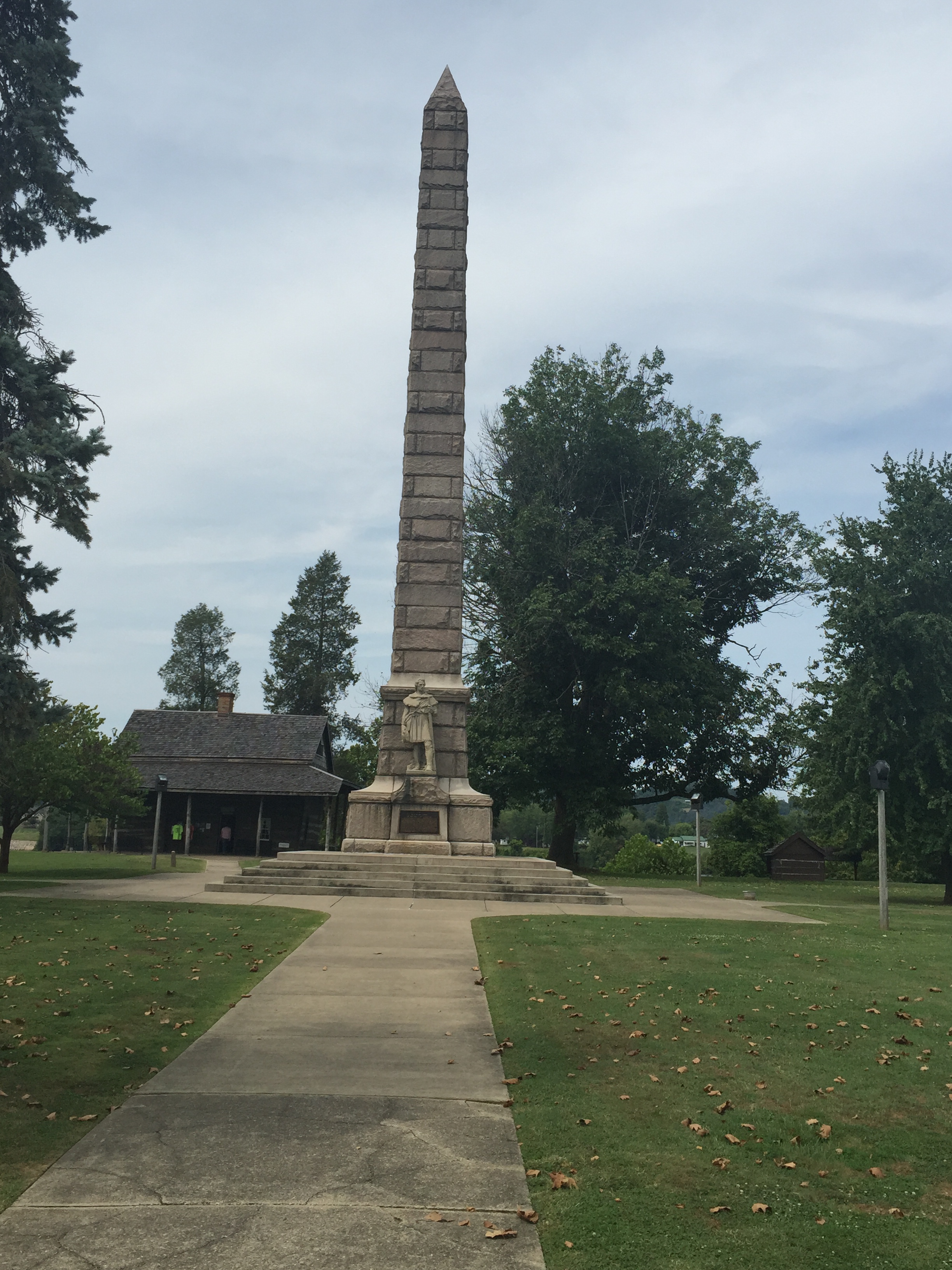
Today, little of the Point Pleasant battlefield remains. A small park, of about four acres, at the confluence of the Kanawha and Ohio Rivers is the only preserved portion of the battlefield. Known as Tu-Endie-Wei State Park, it commemorates the October 10, 1774 Battle of Point Pleasant. “Tu-endie-wei” means “the point between two waters” in the Wyandotte Indian dialect, a fitting name for the point at the confluence of two great rivers.

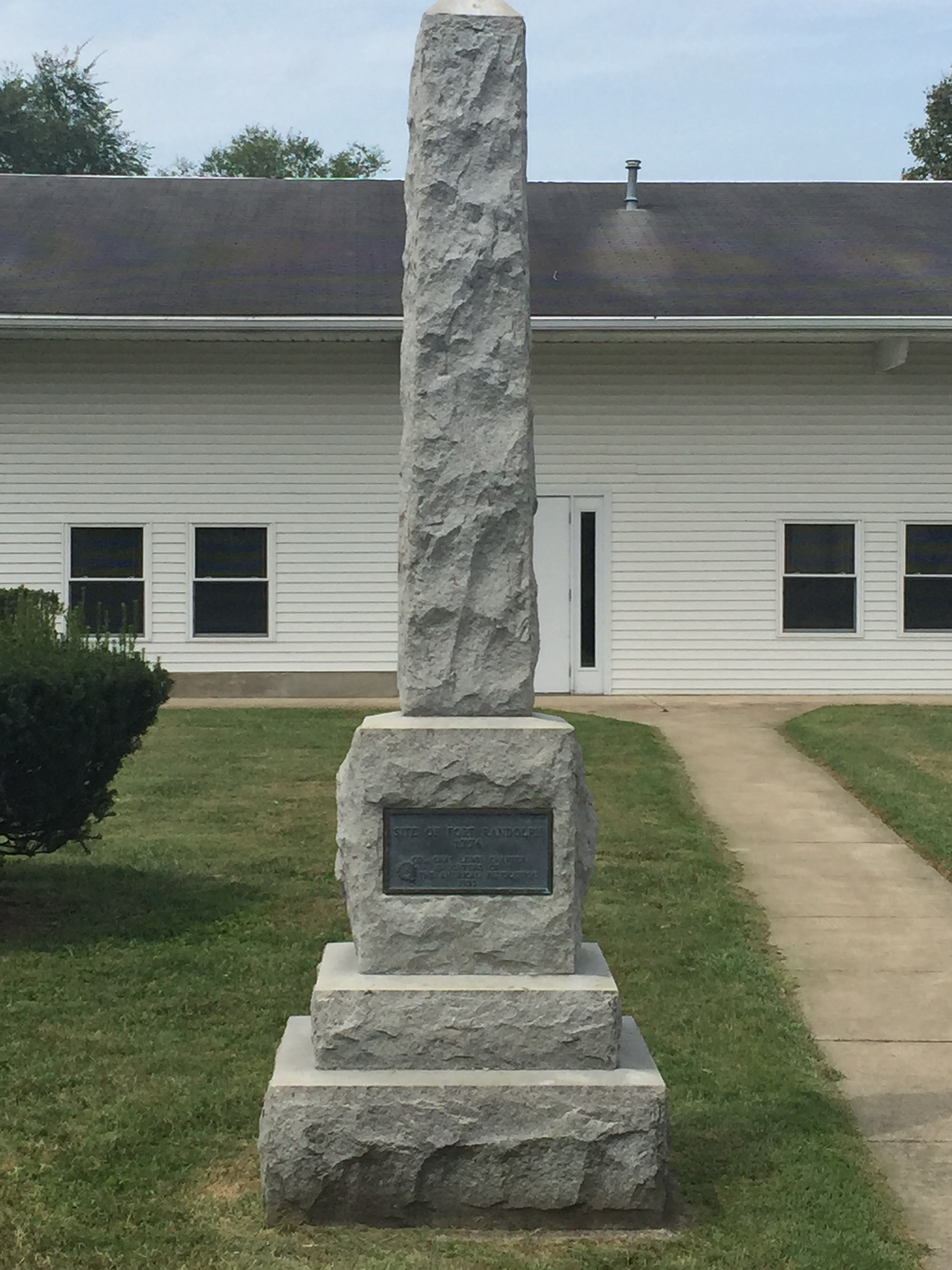
The 84 foot-high obelisk on the site of the mass grave of the Virginia soldiers killed at Point Pleasant

This well-maintained little state park features an 84-foot-granite obelisk that honors

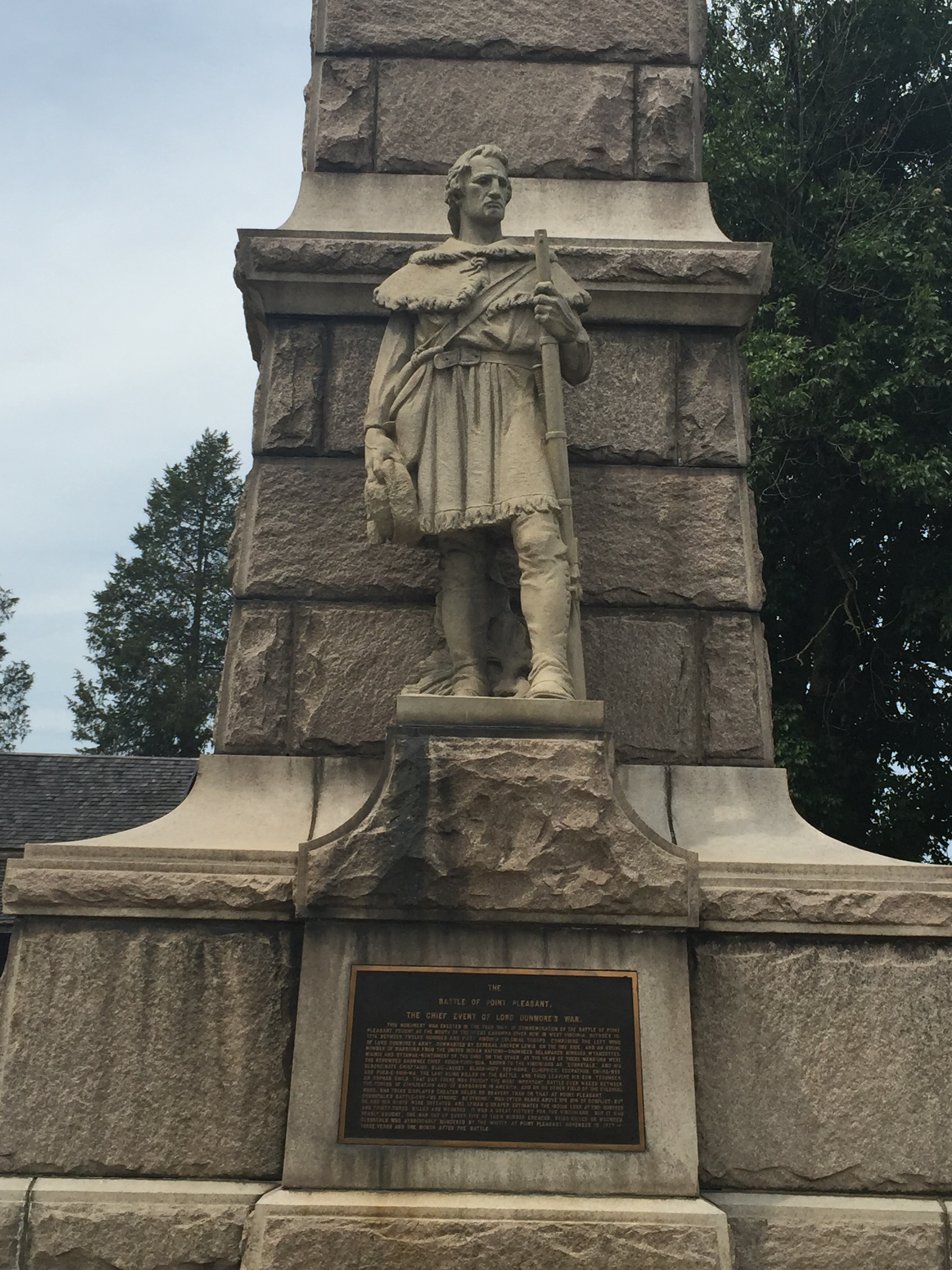
A detail of the frontiersman depicted on the obelisk.

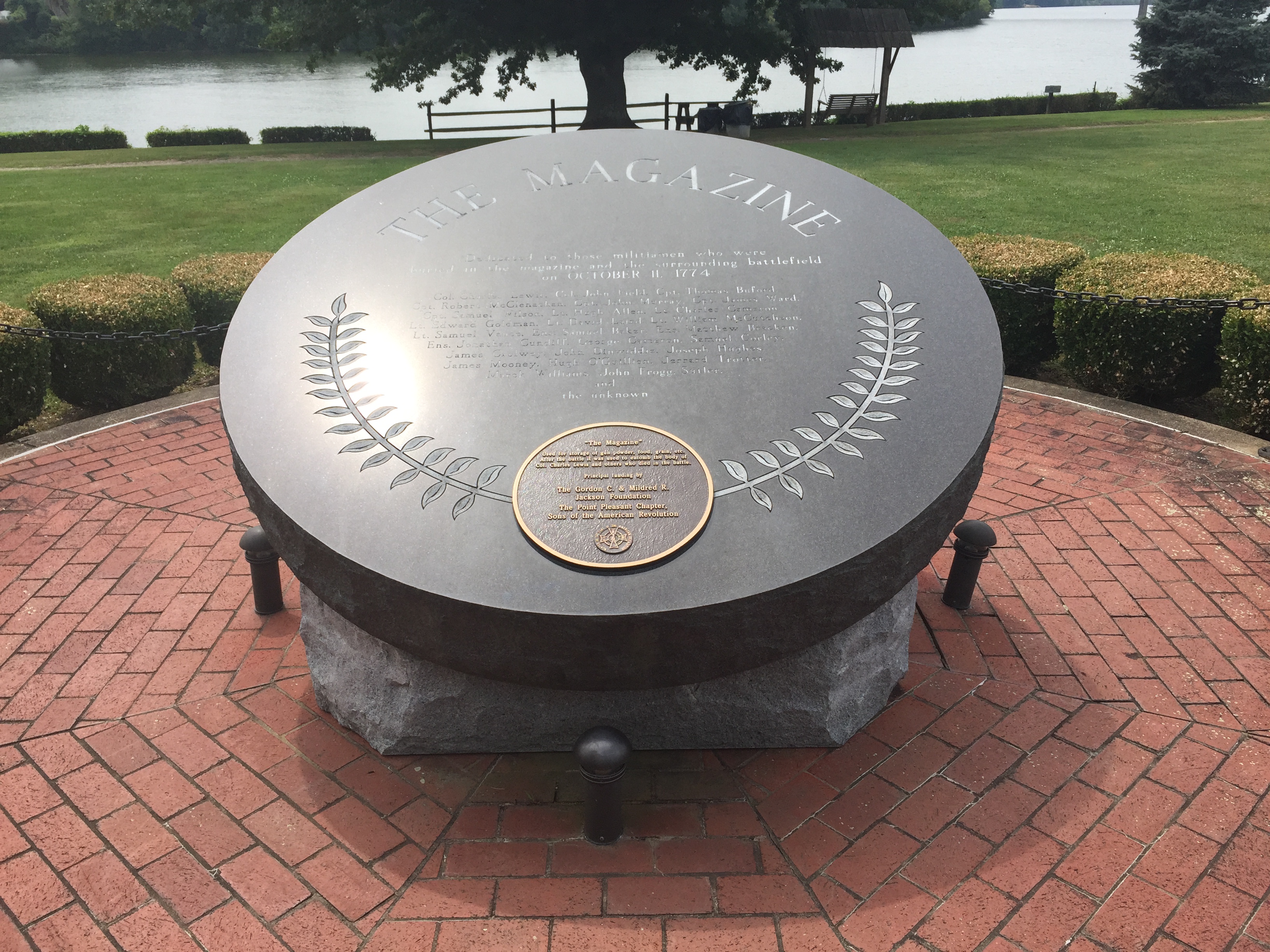
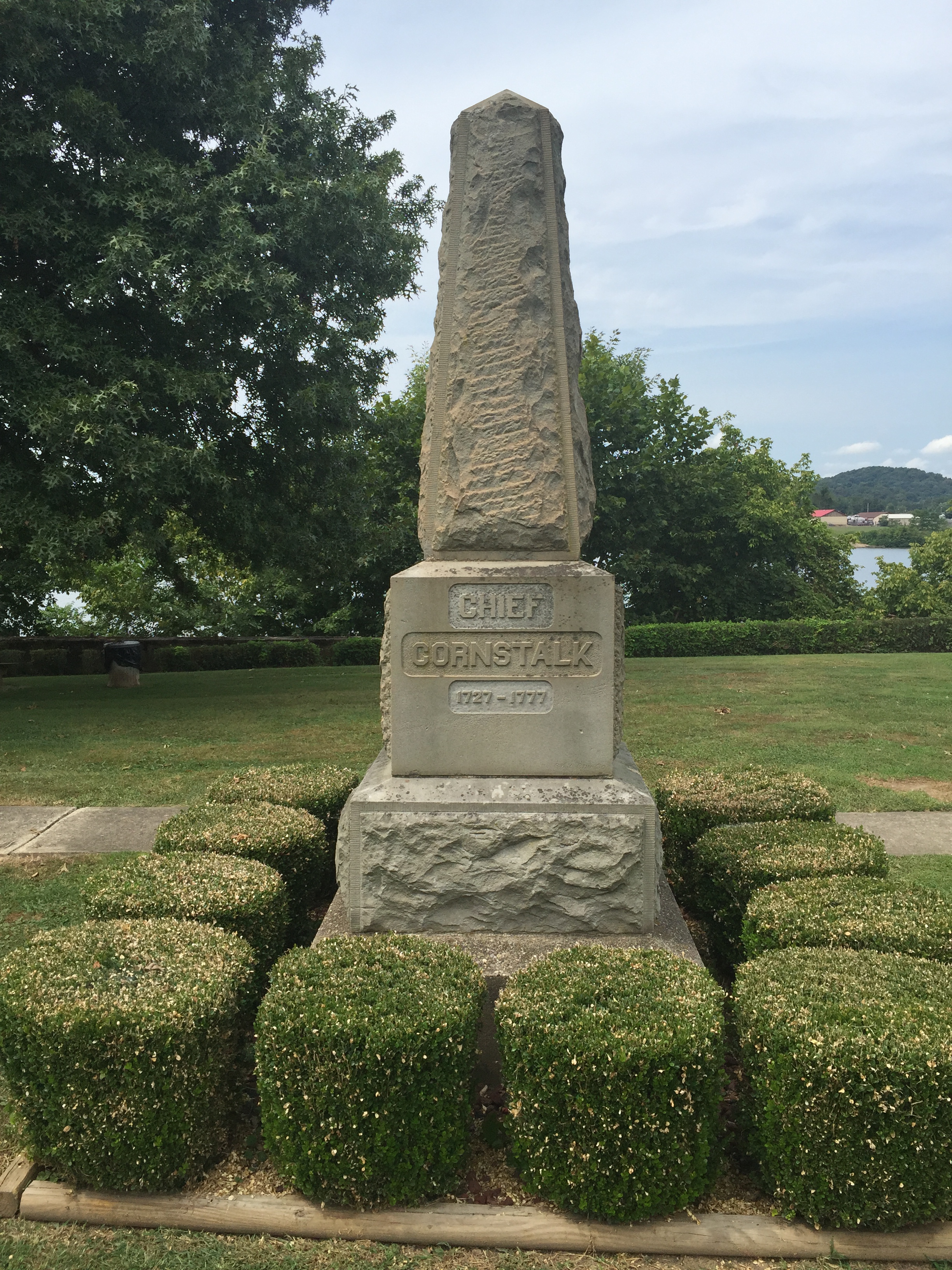
the Virginia militiamen who fought and died at Point Pleasant, and a statue of a frontiersman stands at the base of the obelisk. Smaller memorial tables scattered throughout the park honor Chief Cornstalk and “Mad” Anne Bailey, whose husband was killed in the battle. A large and prominent monument marks the location of Camp Pleasant’s powder magazine. The 1796 Mansion House, erected by Walter Newman as a tavern, while not pertinent to the battle, is the oldest hewn log home in the Kanawha Valley and serves as both museum and visitor’s center for Tu-Endie-Wei State Park.

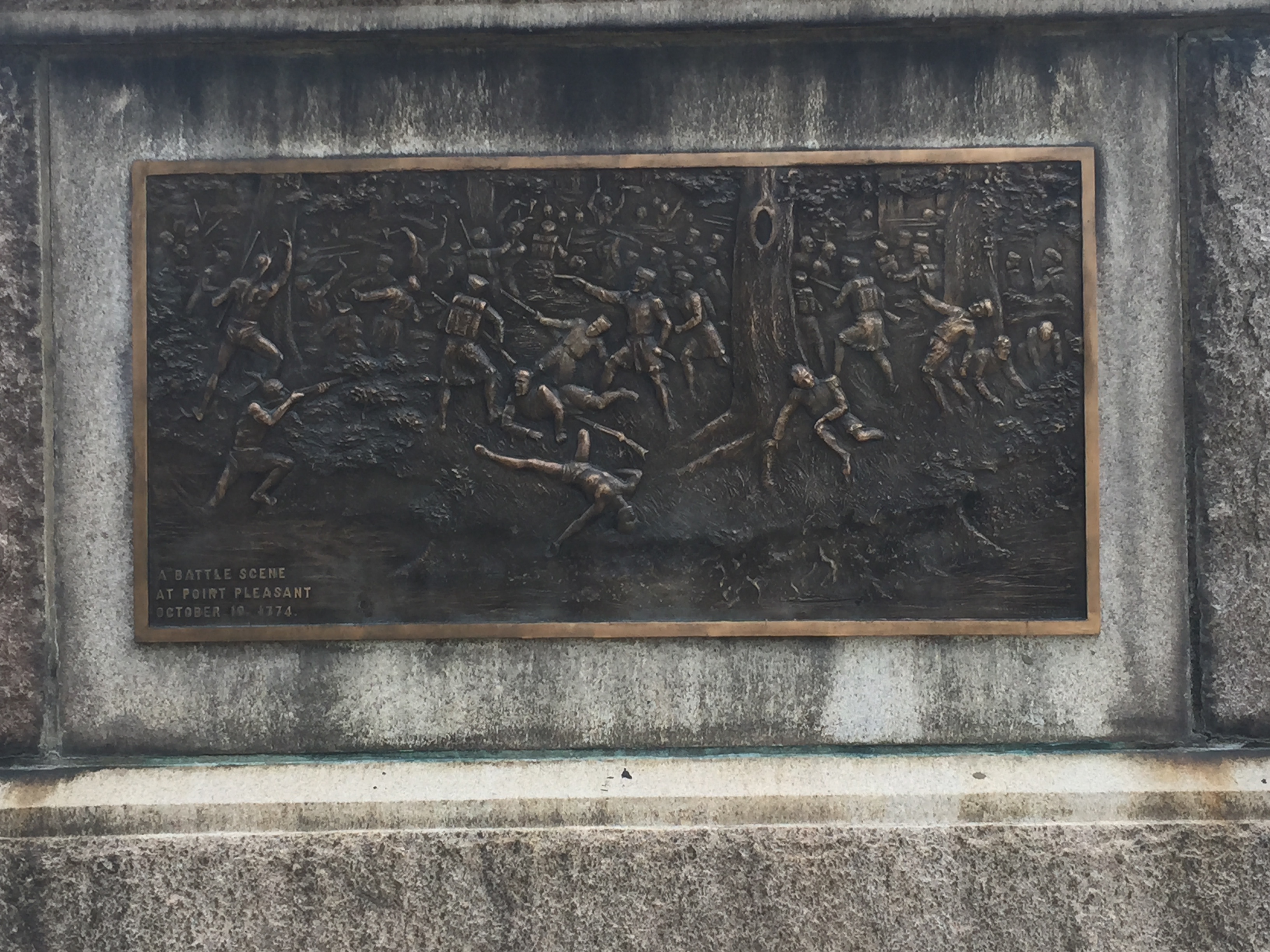
A depiction of the battle on the obelisk.

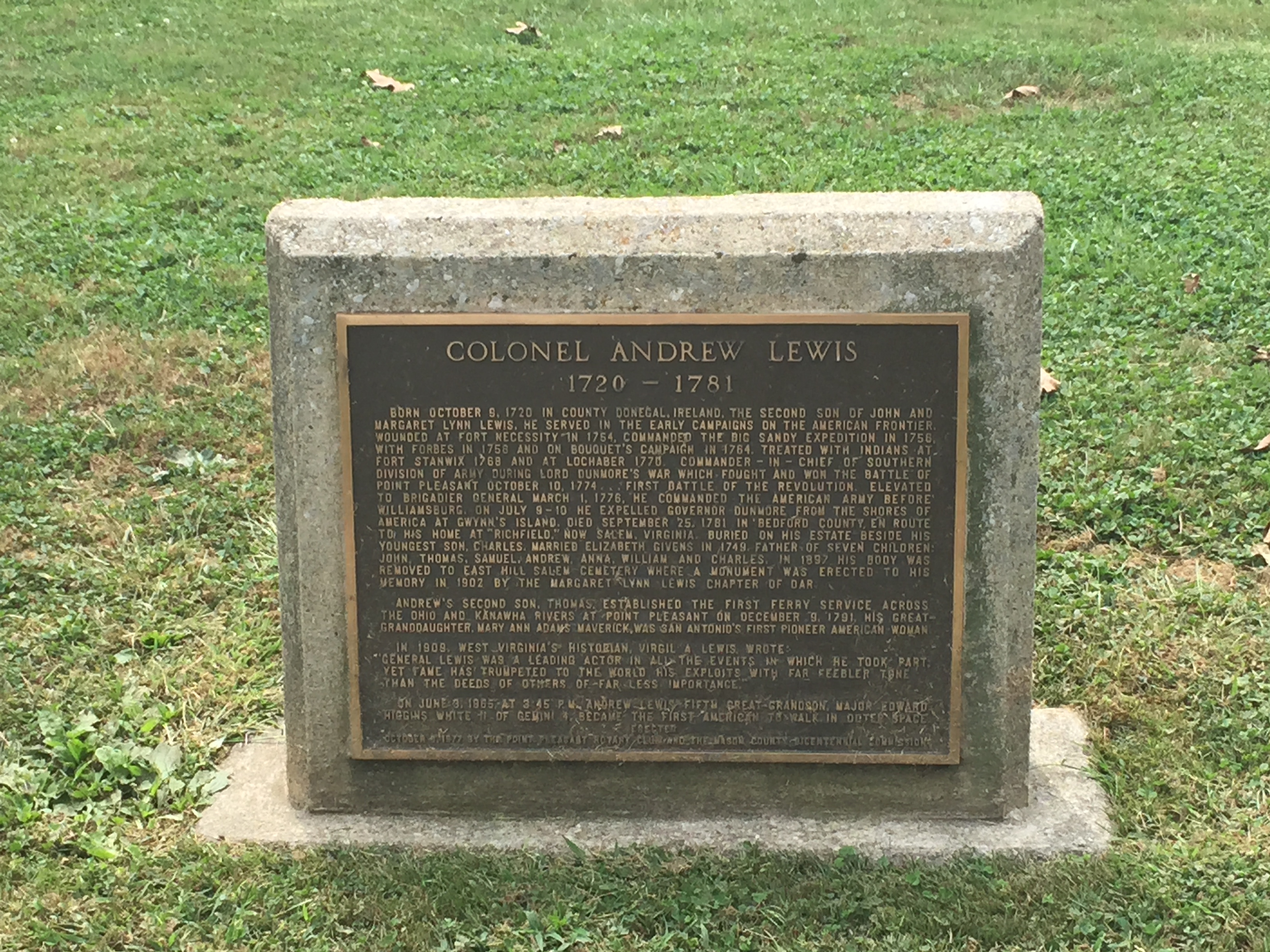
Monument to Col. Andrew Lewis.

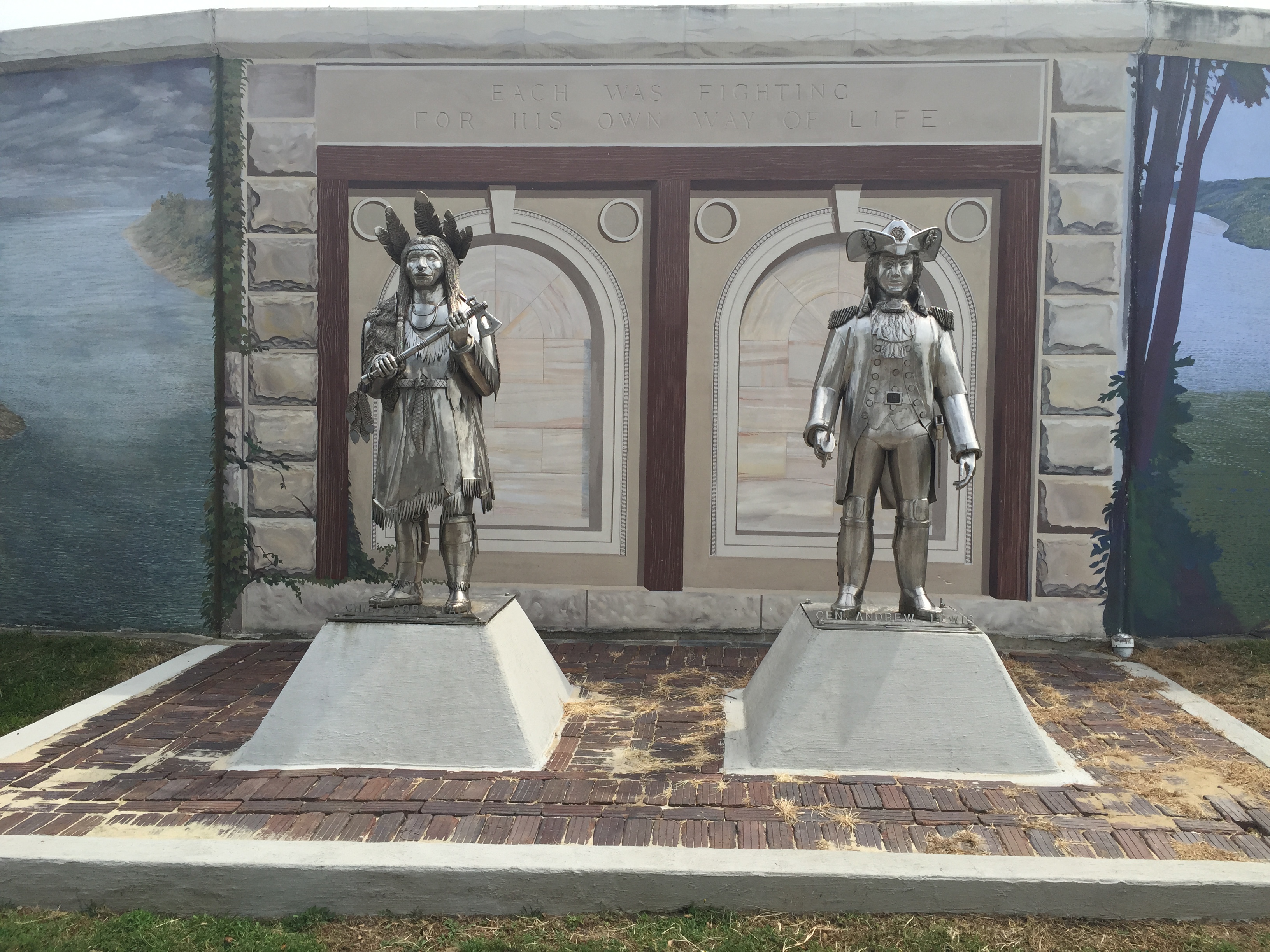
A large Army Corps of Engineers floodwall separates the Ohio River from the town of Point Pleasant. The side of the floodwall facing the river has been adorned with a handsome mural showing the history of the area, and depicting the battle. The mural extends for nearly a mile, and there are a number of odd modern sculptures along the river walk depicting some of the more important figures of the Battle of Point Pleasant, including Lord Dunmore, Chief Cornstalk, and Colonel Lewis. Done in an abstract, modern style, these statues are impressionistic representations of these important historic figures and are probably worth a visit.

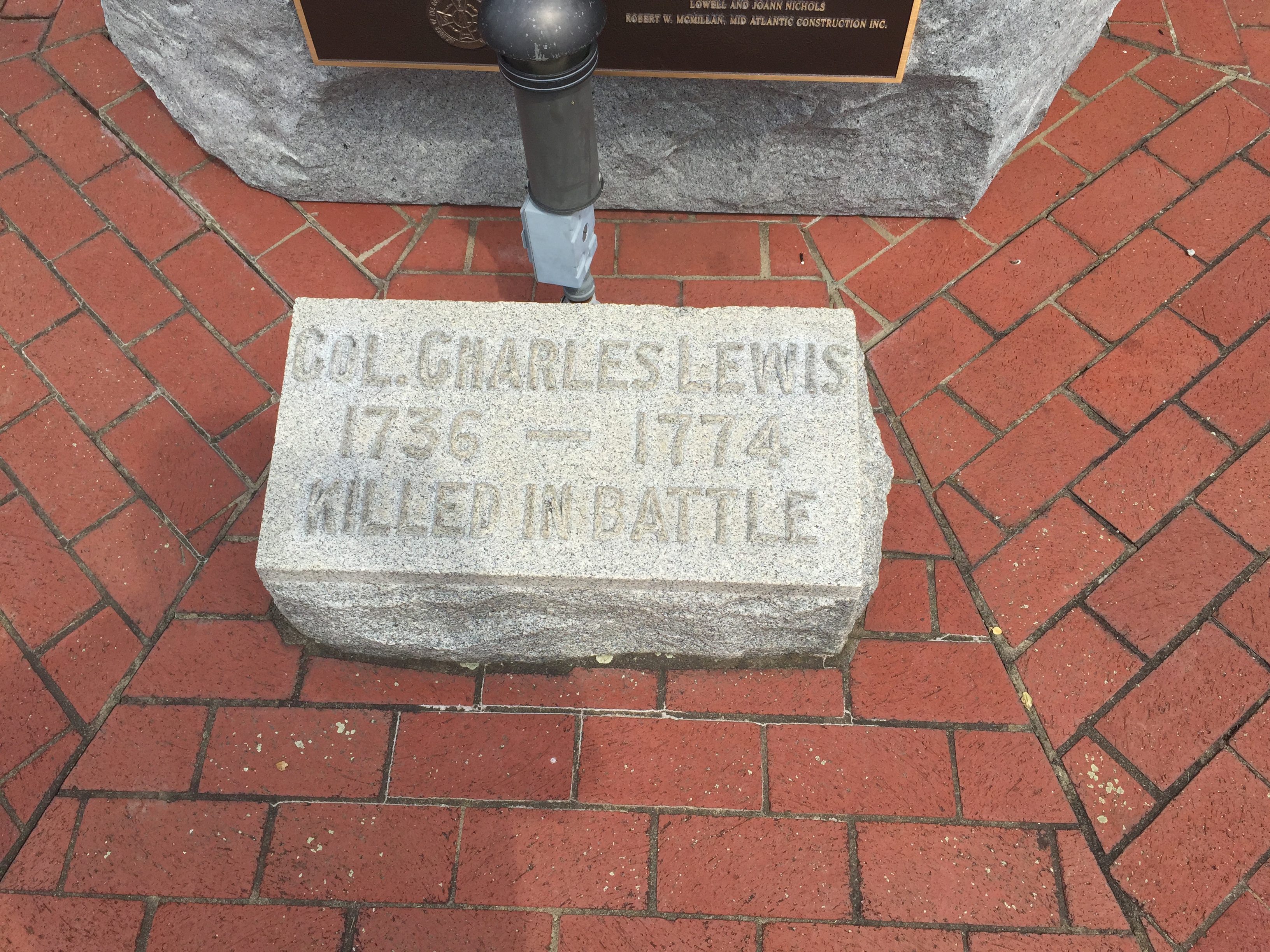
A marker commemorating the death of Col. Charles Lewis at Point Pleasant.

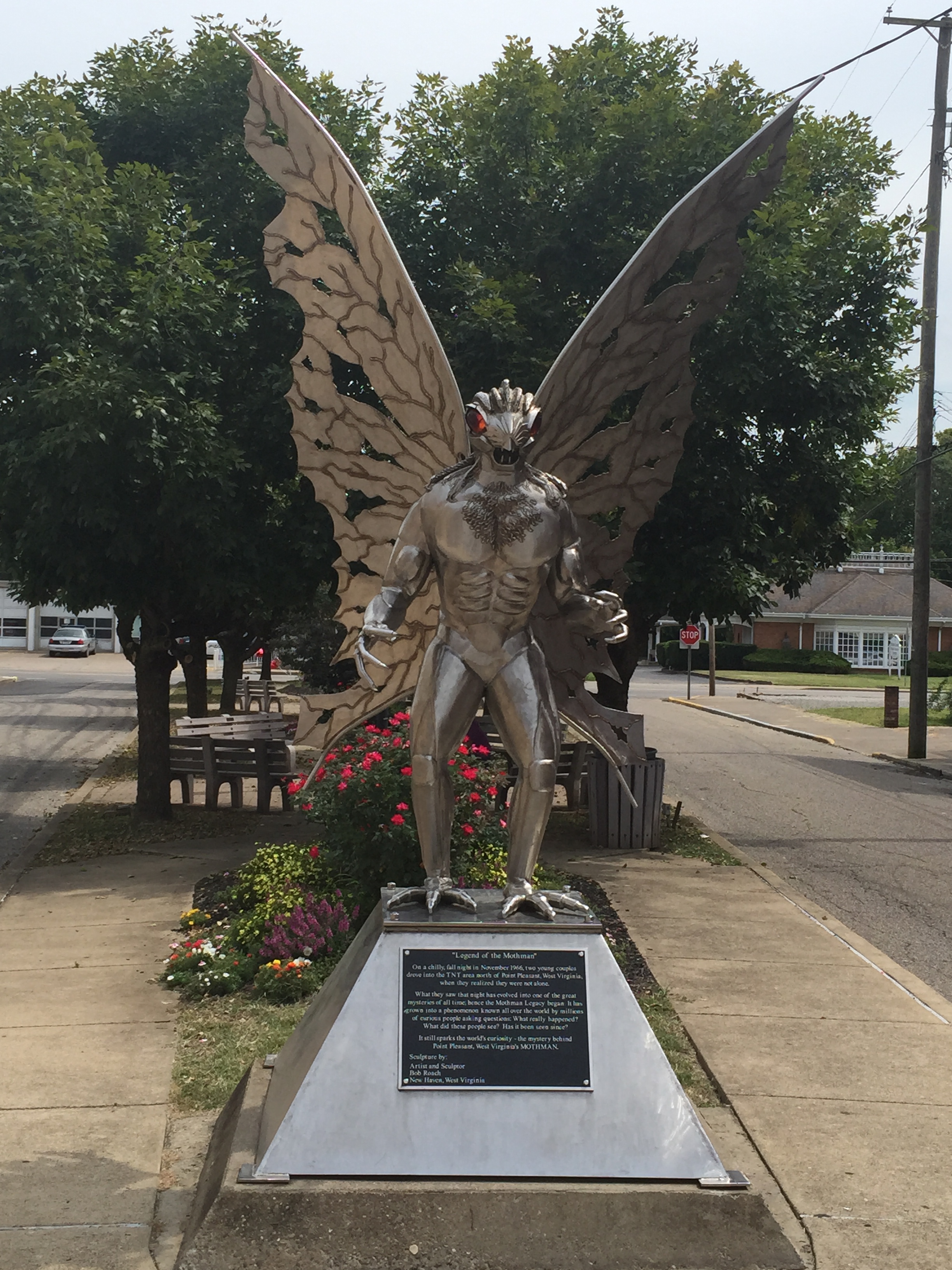
Unfortunately, the history of the Battle of Point Pleasant has been dwarfed by subsequent events. Paranormal enthusiasts flock to Point Pleasant in search of the Mothman, a mythical creature said to be a harbinger of imminent disaster that inhabits an abandoned dynamite factory dating from World War II. In 1975, John Keel published his novel, The Mothman Prophecies, and a bad 2002 movie was made based Keel’s novel. A second film, also loosely based on the legend, was released afterward. There is a Mothman Museum that holds an annual Mothman Festival that offers tours and other silly events that celebrate the Mothman legend. Sadly, none of this focuses on the events of October 10, 1774, which languish largely forgotten.

Marker for the Virginia troops' powder magazine.
Marker for the Virginia troops’ powder magazine.

All of the focus on the Mothman diverts attention away from the Battle of Point Pleasant, which can fairly be called the opening engagement of the American Revolution. The Battle of Point Pleasant, as a landmark event, deserves better, and I hope that by focusing on this important battle, you will now appreciate the significance of it, and that you will visit Tu-Endie-Wei State Park if the opportunity ever presents itself.

Monument to Chief Cornstalk.

As Eric Hinderaker and Peter C. Mancall described it in their 2003 book, At the Edge of Empire: The Backcountry in British North America:

Statutes of Col. Lewis and Chief Cornstalk.


If Dunmore’s War serves as the epilogue to one story, it is the prologue to another: the story of American independence. The events of the preceding decade amounted to nothing short of a revolution in backcountry affairs, and the military campaign led by Lord Dunmore against the Ohio Indians constituted the opening chapter of a new epoch in American affairs. From the perspective of the backcountry, the shots fired on the Ohio late in 1774, not those at Concord six months later, constituted the beginning of the American Revolution. Though the Ohio campaign was led by a royal governor, its muscle was provided by two thousand men who had waited a decade in mounting frustration and anger while the king neglected their needs. This was their declaration of independence.

As a side note for those looking for more information: there is no good modern monograph in print on Lord Dunmore’s War. I relied upon two very old books for much of information included herein. However, there is a new monograph that is scheduled to be published in the spring of 2016 that I am looking forward to reading.

The Mothman.
The Mothman.


“The Old Wagoner”

Part One

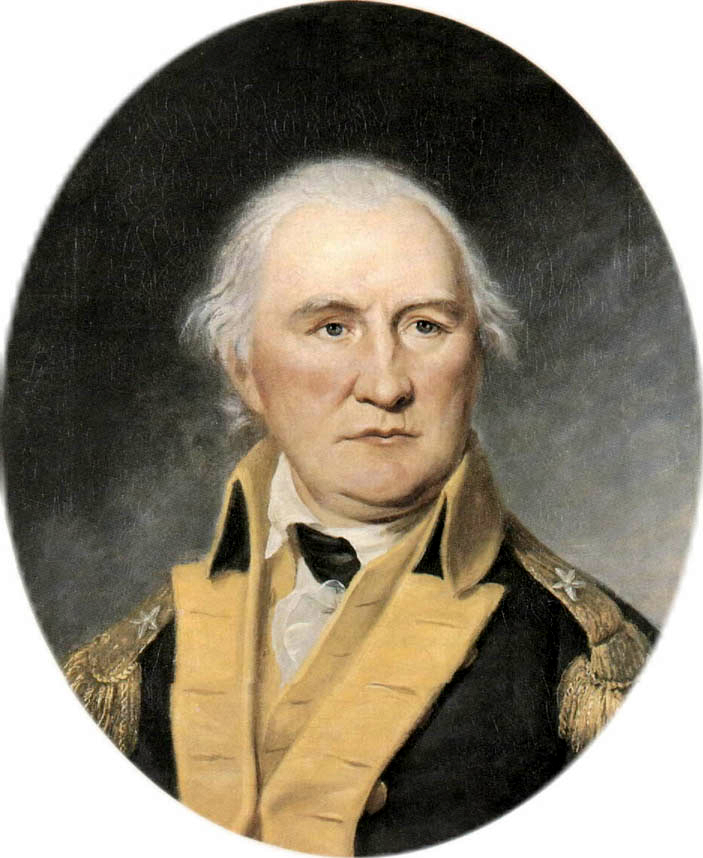
The last battle of the Revolutionary War was fought in 1951 in Winchester, Virginia. Daniel Morgan, the “Old Wagoner” or ‘Old Morgan” as he was known to his soldiers, was front and center of the maelstrom once again just as he was on many a battle field from Quebec to South Carolina during the War for Independence.

Daniel Morgan Statute in Winchester, Virginia (courtesy of Winchester Star)
Daniel Morgan Statute in Winchester, Virginia
(courtesy of Winchester Star)

Residents of Cowpens, South Carolina, a small town near Spartanburg named for Morgan’s dramatic and strategically critical victory of 1781, arrived in Winchester, Virginia to claim the earthly remains of their revered hero. Morgan’s grave was overgrown and in decrepit condition. In Winchester, only one out of forty people queried by the Carolinians knew who Morgan was. Armed with shovels, a mortician, and a letter of authorization from Morgan’s great-great granddaughter, the Carolinians showed up at Mount Hebron Cemetery to dig up the general, take him “home” and reinter him at the site of his greatest victory. There he could rest among a populace that revered his name and cherished his significant contributions toward American independence. However, word of the Carolinians’ attempted exhumation of Morgan quickly spread through town and a contingent of devoted local admirers quickly headed to Mt. Hebron to stop the Carolinians initiative. In the end, a court ruled that the “Old Wagoner” would remain interred at Mt. Hebron in Winchester. Not only did he stay, but this episode kindled a reverence for the General’s legacy and place in history among Winchester’s populace.

Seventeen year-old Daniel Morgan moved into the Shenandoah Valley in 1753, with nothing but sheer determination to carve out a life for himself in the rugged frontier of western Virginia. His early years are shrouded in mystery that Morgan himself kept secret from even his closest associates throughout his life. He was born of Welsh parentage in 1836 in Bucks County Pennsylvania or Hunterdon County, New Jersey, the fifth of seven children. It was a hard life of work on the family farmstead with no opportunity for even a rudimentary education. His time was spent chopping wood, hoeing fields and other taxing physical labor. His mother died when he was young, and his father remarried. A dispute with his father prompted the fiery Morgan to head west on the Great Wagon Road to Carlisle, Pennsylvania where he worked briefly during the winter of 1752-53, before continuing south to the Shenandoah.

Although Morgan lacked an education, the work on the family farm had hardened his six-foot, two-hundred pound frame into a powerful and muscular young man who was well suited for the physicality of life on the frontier. The blue-eyed youth initially obtained employment as a farm laborer in eastern Frederick County in what is now Clarke County. He worked hard and soon earned an offer of better employment. In spite of his youth, Morgan eared employment as the overseer of a saw mill where he learned to manage older and more experienced men, developing his leadership ability. Morgan’s energy and work ethic impressed Robert Burwell who offered Morgan a position as a teamster hauling valley produce across the Blue Ridge to Fredericksburg and other towns in the Virginia Piedmont and carrying badly needed supplies back to the frontier that was the Shenandoah Valley of the 1750’s.

Morgan enjoyed the freedom of the open road and in less than two years had earned enough money to buy his own team and Conestoga wagon. During this time, Morgan had become close friends with fellow teamster John “Captain Jack” Ashby, grandfather of the Virginia Civil War cavalryman. Ashby was noted for his “horsemanship, marksmanship and daring exploits.” Ashby taught Morgan to shoot, hunt, ride and live in the wilderness along the Blue Ridge.  The two men were kindred spirits and became good friends.

In 1755, the French and Indian War came to the Shenandoah Valley when British Maj. Gen. Edward Braddock’s column passed through the Winchester area on its way to wrest Fort Duquesne from the French at the “Forks of the Ohio,” now the site of Pittsburgh. Morgan signed on the haul supplies to Fort Cumberland in western Maryland and soon found himself as a teamster with the army, rolling into western Pennsylvania. When the French and Indians routed Braddock at the battle of the Monongahela in July, the teamsters emptied their wagons of supplies and carried wounded soldiers back to Fort Cumberland. At some point in this campaign, Morgan’s actions or words angered a British officer who violently chastised the young teamster and struck him with the flat of his sword. Morgan’s temper exploded, and the young wagoner knocked the officer out with one strong punch. A court martial sentenced Morgan to 500 lashes, a punishment that often killed its recipients. The stout Morgan endured the suffering and noted that the drummer miscounted and he had only received 499 lashes. He would proudly wear the scars suffered at the hands of the British for the rest of his life.

Depiction of Daniel Morgan on the frontier (courtesy of Fort Edwards)
Depiction of Daniel Morgan on the frontier
(courtesy of Fort Edwards)

With Braddock’s devastating defeat, the French and Indians went on the offensive raiding into western Virginia. Morgan enlisted in a Ranger Company commanded by his friend, “Captain Jack” Ashby. Morgan spent much of his time patrolling the wilds of the Allegheny Mountain posts of Hampshire County and building stockades to defend against the marauding French and Indians. On one occasion while carrying messages to one of the forts along with two other men, Indians waylaid his party at Hanging Rock on the Cacapon River, killing his comrades. They shot Morgan in the neck, but he raced away on his horse, narrowly escaping the tomahawk of a pursuing Indian. Morgan lost consciousness from blood loss, but luckily the horse had the path to fort ingrained in her memory and carried him back to safety. Morgan remained in the Ranger Company until Col. George Washington disbanded it in October. Morgan began a period of multiple pursuits. He sojourned himself in the wilds for several months trying his hand as a hunter. He likely spent time as a militiaman in Frederick County. By 1758, however, he almost instinctively returned to the open road, hauling wheat, tobacco and hemp across the Blue Ridge to eastern Virginia commercial centers such as Alexandria, Dumfries or Fredericksburg. In driving the wagons, Morgan had found his calling. The harsh life of the teamster suited his rough and tumble personality. He quickly gained a reputation as on the leading pugilists of the Shenandoah Valley. He could often be found at Berry’s Tavern in what is now Berryville but at the time was known as Battletown because of the constant brawling that occurred at the tavern. These were brutal affairs that included wrestling, punching, choking and gouging of eyes, but Morgan reigned as the champion. Although not always victorious, the stout teamster made sure there was a rematch which he usually won. In spite of his reputation for drinking and fighting, Morgan prospered as a successful teamster, even if his brawling occasionally landed him on the docket of the Frederick County Circuit Court. In 1762, he found love with Abigail Curry who became his common-law wife, introduced him to the Presbyterian religion and bore him two girls. At her request, he cut back on drinking and brawling. He also rented a tract of land began farming marketable crops. Morgan had finally found the good life he sought in the Valley of Virginia.
With talk of independence in the air in 1774, Morgan participated in Lord Dunmore’s War. He was part of a column that operated in the Wheeling, Virginia area. They attacked Indians along the Muskingum River in the Ohio Country and drove them off, but he did not participate in that war’s decisive action at Point Pleasant. As the war drew to a close, word of the troubles in Boston circulated among the men, and Morgan was among those who committed to solidarity with the Massachusetts patriots.

Part Two will cover Morgan in the opening years of the American Revolution, so check back next week.

A life-long student of military history, Scott C. Patchan is a graduate of James Madison University in the Shenandoah Valley. He is the author of many articles and books, includingThe Forgotten Fury: The Battle of Piedmont (1996),Shenandoah Summer: The 1864 Valley Campaign (2007), andSecond Manassas: Longstreet’s Attack and the Struggle for Chinn Ridge (2011).
Patchan serves as a Director on the board of the Kernstown Battlefield Association in Winchester, Virginia, and is a member of the Shenandoah Valley Battlefield Foundation’s Resource Protection Committee.

Lord Dunmore’s War: The Opening of the American Revolution

PART THREE OF FOUR

The Historic Significance of Lord Dunmore’s War

After defeating Cornstalk, Lewis and his command crossed the Ohio River and advanced to within eight miles of the Shawnee villages at Pickaway Plains (near present-day Circleville, Ohio) on the Scioto River. The built Camp Charlotte on Sippo Creek and began peace negotiations with Cornstalk. On October 19, 1774. They signed the Treat of Camp Charlotte, whereby the Shawnee agreed to cease hunting south of Ohio River and to end harassment of travelers on the river. Logan did not attend, but agreed to cease fighting. However, the Mingo refused to accept the peace terms, and Maj. William Crawford attacked their village at Seekunk (near present-day Steubenville, Ohio), destroying the village.

Lord Dunmore, the final colonial governor of Virginia

With the submission of the Shawnee, Lord Dunmore’s War ended. Dunmore began his return to the colonial capitol of Virginia at Williamsburg, proceeding by Redstone to Fort Cumberland, and on to Williamsburg. By the time that Dunmore and his troops made it back to Williamsburg, the Battles of Lexington and Concord occurred in Massachusetts, opening the Revolutionary War. As colonial governor of Virginia, Dunmore led the British war effort in Virginia, and by the end of 1775, the same militiamen who had fought at Point Pleasant managed to drive Lord Dunmore and the British troops supporting him out of Virginia. Dunmore’s gambit had failed miserably. Before being driven from office, Dunmore sought to form an alliance with the very same Indians he had defeated at Point Pleasant, prompting many Virginians to suspect that he had collaborated with the Shawnee from the beginning.

Lord Dunmore’s War is generally considered to be the opening engagement of the Revolutionary War. As one early historian of the Battle of Point Pleasant put it:

It will be seen by a review of the history of the colonies that prior to the Battle of Point Pleasant, not only the Colonists but England knew, as did Patrick Henry when he made his famous speech that “The War was inevitable.” The British Government seeing the fomentation in the colonies had made repeated concessions; willing to relinquish, if necessary, all but the principle of the Right of England to levy taxes upon the Colonists without giving them representation in the British Government. The Colonists were astir with intense excitement. The tea had been thrown over board in Boston Harbor and the Port had been closed by a bill passed by Parliament in March of that year. Meetings had been and were being held protesting against Royal oppression. That powerful engine of resistance, Committees of Correspondence had been formulating their ideas of resistance and the Virginia Assembly convened at Williamsburg in May, had passed an independent resolution setting forth that June 1st, 1774, should upon the making effective of the Port Bill be made “a day of fasting and prayer to implore the divine interposition for averting the heavy calamity, which threatens the civil right of America;” whereupon, the Earl of Dunmore, then Governor of Virginia, at once dissolved the Assembly. The Continental Congress had already convened and its every breath was ladened with resistance of British oppression.

Is it to be wondered at and is it not the most natural thing in the world, that Dunmore would try to devise ways and means to prevent Virginia from participating in the federation of the Colonies; and what more powerful instrument could he have set in motion to distract their attention from the clouds gathering in the East, than by setting in motion a band of howling Indians on the frontier, making it an absolute necessity that Virginia protect her homes, her women and children and her property rights, and this danger so eminent, could not be delayed. So calling together the flower of the Colonial Army of Virginia, which he promised should be united and together encounter the Indians in their homes, he should cause one branch to alone be attacked, hoping they would thus be destroyed and if only temporarily defeated, they would be so busy protecting the frontier and their homes they would have no time to go into the Colonial Army, confederated as they would be to resist the British Army, already many of whom were camping upon the plains of Boston. But to the surprise of Dunmore the Division of Lewis’ Army was victorious and the tide of American interests was changed.

Without the Army of Lewis, which was the great military training school of the Colony, many of whom went on into the Revolution and became many of them, officers of high rank, it would have been impossible for Virginia to have raised her quota of men and officers to have participated in that struggle for liberty; and without Virginia the Colonists would have thought it impossible, as it would have been, to have undertaken that struggle for independence. Without the entire support that Virginia gave George Rodgers Clark, who was in the Dunmore division, but who later conquered the North West Territory, weakening the otherwise impregnable back ground that constantly threatened the frontier and in whose territory did not close the struggle for American Independence until Wayne’s treaty twenty years later.

We think the opinions of the early writers of history we have quoted, the natural circumstances surrounding Dunmore at and previous to the Battle, makes it plain that although the battle was between the Colonists and Indians it is beyond doubt the first Battle of the Revolution, and the Government of the United States, while it has been tardy, is fully justified in making the declaration that the $10,000 appropriated for the erection of a monument is “An act to aid in the erection of a memorial structure at Point Pleasant, West Virginia, to commemorate the Battle of the Revolution, fought at that point between the Colonial troops and Indians, October 10th, seventeen hundred and seventy four.” While a shaft 82 feet high will stand as a sentinel upon the site where the dead were buried, form whence the battle was directed and subsequently the fort, built, it is a pigmy as compared with the fact that at last, after a lapse of One Hundred and thirty-four years, the Congress of the United States has officially called it as it is a battle of the Revolution, and if a battle of the Revolution it must of necessity be the first, as the hallowed Lexington was not fought, until April 19th, 1775, while that of Point Pleasant, was fought October 10th, 1774.

The battle in its acquisition of territory ceded by the Indians and previously ceded by France to Virginia but literally in control of the Indians until this time, this followed by the ceding of all the vast territory of the Great North West by Virginia to the infant republic.at the close of the Revolution with the cessation of Indian hostilities following the battle, permitting the Colonists to turn their attention to the expulsion of the English army and the overthrow of the British yoke, the moral effect that it had on Virginia, and thus on the Colonies, made it the farthest reaching in its effect an battle ever fought on the American Continent.

While this strong declaration perhaps overstates the case regarding Dunmore’s motivations in commencing the war, there seems little doubt that Lord Dunmore’s War had far-reaching and unforeseen consequences for the success of the American Revolution. As mentioned above, on February 21, 1908, the U.S. Senate passed Senate Bill 160 to erect a monument commemorating the Battle of Point Pleasant that identified Point Pleasant as a “battle of the Revolution.” Unfortunately, the bill failed in the House of Representatives and was never enacted. However, a handsome monument was erected on the Point Pleasant battlefield that specifically states that the battle was the opening of the American Revolution.

Sadly, the peace established at Camp Charlotte did not last long. On March 24, 1775, just before the Battles of Lexington and Concord, a renegade band of Shawnee attacked Daniel Boone along the Wilderness Road in Kentucky. In May 1776, the Shawnee then joined Cherokee chief Dragging Canoe in declaring war on the Virginia colonists, triggering the Cherokee-American Wars of 1776-1794. Little, it seems, was accomplished to secure the peace by Lord Dunmore’s War.