Artistic License and the French Artillery Park at Yorktown, A Case Study

Emerging Revolutionary War welcomes back guest historian Karl G. Elsea

It is common for artists to use “artistic license” when painting historic events including American Revolutionary War art. The problem is this practice also

aids inaccuracies persisting. Here is one case study of one picture involving an historic event that is presented by the National Park Service (NPS) at Yorktown. Please note the staff is helpful and the grounds are beautiful. As for the severity of the problem, the reader can decide after reading the information.

The following picture is from the field at Yorktown where the French Artillery Park was located. The picture illustrates the idea of what an artillery park was.

The problem is this picture contains a number of images that are wrong. For example, the carriages, wagons, carts, and limbers should be painted light blue. The French Army artillery had been painted light blue prior to 1750. There is a lot of confusion to this day concerning gun and limber carriage colors. This confusion may have been generated by a current belief there was one French artillery color. The French used the color of the items to assist which department owned the material. The French Navy department [Ministry of Marine] was responsible for the colonies, including North America, and their cannon were on red carriages with, in all most all cases, iron barrels. The French Quartermaster’s department had their wagons were painted a brighter red. The French Army artillery was painted light blue with bronze barrels. Thus, the French Army barrels shown should appear to be “brass.”

Continue reading “Artistic License and the French Artillery Park at Yorktown, A Case Study”

There Will Be Bloody Bill

Emerging Revolutionary War welcomes guest historian Andrew Waters

Appearing this month at the Journal of the American Revolution (JAR) is an article I wrote on William “Bloody Bill” Cunningham and his infamous raid known as the “Bloody Scout.” The article attempts to provide a single-source narrative of the Bloody Scout and some of the contexts for it, although it is based on a previous article I wrote (though never published) that attempted to explore more deeply its sociological implications.

            Anyone who comes to western South Carolina and has any interest in the American Revolution will soon encounter Bloody Bill. As I attempted to explain over at JAR, “without veering too deeply into sociological speculations, I can only say that his (Cunningham’s) presence is still palpable here, embedded in the cultural DNA. Though he may be only a curiosity in other parts of the United States, if he is known at all, in the South Carolina Upstate, it seems there will always be Bloody Bill.”

Continue reading “There Will Be Bloody Bill”

“Rev War Revelry” 18th Century Weaponry

Brown Bess. Grasshopper. Charleville. May seem like random names with no connection to the title of this post. On the contrary though, these names, be it nicknames or the actual name, of the firearm or artillery piece were all used by the soldiers and militia of the American Revolution.

This Sunday, at 7 p.m. EST, on Emerging Revolutionary War’s Facebook page, the next “Rev War Revelry” will dive into the weaponry that was prevalent during the era of the American Revolution. Joining ERW will be T. Logan Metesh of High Caliber History LLC of which he is the founder.

With over a decade of experience working for the Smithsonian Institution, National Park Service, and the National Rifle Association Museums, Metesh is a sought after consultant, writer, and museum professional. He will use his interpretive ability to present history and research on firearms and firearms development to this historian happy hour.

We look forward to welcoming Logan Metesh to the “Rev War Revelry” Sunday night chat and hope you will join us as well.

“Rev War Revelry” Author Interview: John Maass

In March 1781, General Charles Lord Cornwallis finally caught up with his antagonist, General Nathanael Greene and his joint Continental and militia forces in North Carolina. On March 15, 1781, the British scored a pyrrhic victory over the American forces, securing the field but losing approximately 25% of their field force in the process.

With the victory, Cornwallis was forced to retreat to the North Carolina coast, to Wilmington, where he could rest and refit. He then led his forces north and into Virginia, to his destiny at Yorktown.

Yet, the road to Guilford Court House, for both sides, started in South Carolina, across the entire breadth of North Carolina, and into the southern reaches of Virginia before returning to the Old North State. This road and the history of the campaign, along with the March 15th engagement, unfolds in a new history by Dr. John Maass, author and historian, currently at the U.S. Army Center of Military History in Washington D.C.

His book, The Battle of Guilford Court House, A Most Desperate Engagement will be the focus of this week’s “Rev War Revelry.” The book is now available from book retailers and online. We hope you can join us this Sunday, at 7 p.m. EST, for our next installment of a historian happy hour.

To access, just head to Emerging Revolutionary War’s Facebook page, go to the “Events” tab and follow the prompt at 7 p.m.

“Rev War Revelry” Light Horse Harry Lee Discussion

On January 29, 1756, Henry Lee III is born at Leesylvania Plantation in Prince William County, Virginia. Part of the prestigious Lee family of Virginia, his father was a cousin of Richard Henry and Francis Lightfoot Lee, two brothers who signed the Declaration of Independence.

Henry Lee would blossom into one of the better cavalry commanders in the American Revolution, earning the nickname, “Light Horse Harry” Lee because of his accomplishments. With January being his birth month, Emerging Revolutionary War welcomes historian and author Mike Cecere, who will discuss his book, “Wedded to my Sword, The Revolutionary War Service of Light Horse Harry Lee.”

Cecere, former high school and community college history teacher is the author of thirteen books on the American Revolution, most focused on aspects of the colony of Virginia and/or her native sons.

This Sunday we hope you spend some time joining us on the next installment of “Rev War Revelry’ as we discuss the Lee that was born in January and became a military hero of the American Revolution. This historian happy hour will be live on our Facebook page at 7 pm EST.

(Yes, we do know there is another Lee that is born in January and plays a prominent role in history).

The third Artillery Engagement at the Battle of Trenton: December 26, 1776

Emerging Revolutionary War welcomes back guest historians Karl G. Elsea and William W. Welsch for the final installment of their three part series

1770 drawing of Hessian three-pounder gun and limber
(courtesy of Kriegskarten from Hessisches Staatsarchiv Marburg, Germany at
http://www.digam.net/?str=177)

The v. Lossberg Artillery detachment:

Bombardier Conrad Volprecht was about 44 years old with over 27 years of service. He led the v. Lossberg artillery detachment consisting of another bombardier, 13 gunners and 3 matrosses, with two three-pounder guns and associated horses, harness, and limber.[i]

Over two years after the battle and being a prisoner Bombardier Volprecht gave testimony that indicated the sequence of battle for his detachment was roughly as follows: First went to field, second fired north, third ordered south, and fourth got stuck in the mud till the end of the battle. There is a problem though, the sequence that better fits the data from the battle was as follows: first went to field, second ordered south, third fired west, and fourth got stuck in the mud.

 John Adams wrote “Facts are stubborn things. They cannot be altered by our wishes, our inclinations, or the dictates of our passions.” In studying firsthand accounts of the battles in the Revolutionary War they are sometimes not correct or even true. For example, there is an enjoyable firsthand account (written many years later) by a patriot Sergeant White (The Good Soldier White) that is often quoted in accounts of the battle. Parts of his story are no doubt true. The problem is that when Sgt. White states he was with “Lieut. Munroe, our late President of the U. States” and “I was the first that reach them [cannons],” and “They had all left it, except one man tending vent,” those specific parts of the story cannot be true. Hessian Lt. Englehardt would not have time to do all that he did and then cross the Assunpink bridge before the Jagers if artillery men from Sullivan’s column were that far up King Street. Facts from the battle mean that part of that story does not work.

The most important place in all the 13 states fighting for independence on December 26, 1776 from 8:00 am to 9:00 am was the long, narrow bridge over the Assunpink creek. It was held by Hessian Sergeant Muller and 18 men. Sgt. Muller was about 50 years old with about 32 years of service. The importance of this place was not fully realized by the Hessians, but the Patriots knew it had to be closed, and General Washington had two full brigades, Sargent’s and Glover’s, tasked with taking, as quickly as possible, and then holding the bridge.

At about 8:03 am Patriot General Sullivan was about one mile from Trenton center along the River road when he attacked the outlying Jager pickets. General Sullivan had the artillery fire several canister shots at the Jagers. This firing also served as a signal to General Washington so he would know his other wing was attacking. It was to be recalled that General Washington started his attack about 8:00 am on the Pennington road and he also was about a mile from Trenton center. This cannon firing was also a signal to General Ewing so he knew when to start his distraction. General Ewing heard the three cannon shots and he quickly followed with his guns and howitzers firing ten shots from across the Delaware River. General Ewing kept up his firing until he could make out that Patriots were approaching. The v. Knyphausen regiment was forming on Second Street and was the logical unit to resist any attack coming from the River Road.

Volprecht’s detachment with its two guns followed Lt. Fischer’s detachment east on Fourth Street from the Methodist church into the field north and east of the Quaker lane. Lt. Fischer’s detachment was falling back from its earlier engagement and picked up the v. Lossberg detachment as it passed by. It took longer for the v. Lossberg artillery detachment to prepare for the battle because the horses had to be collected, harnessed, hitched, and the guns limbered. Fischer testified that the “cannon were unhorsed, and the horses unharnessed and brought back again into the stable” from the cancelled early morning patrol.[ii] For the morning patrol the horses had been hitched and guns limbered at 4:00 am but the patrol was cancelled so the men/horses/limber/guns were brought back to the Methodist church and waited for sunrise to unhorse.  

The infantry of the v. Lossberg and Rall regiments followed Volprecht’s detachment into the field. It was in this field that these two regiments would form a line for battle. While waiting for the v. Lossberg regiment to form Volprecht was ordered by Lt. Weiderhold, “Artillery men, come here with the cannon” meaning they were to join the v. Knyphausen regiment.[iii]  The v. Knyphausen regiment was on Second Street heading to the open field just east of Trenton and away from the Assunpink bridge. Volprecht and his v. Lossberg artillery detachment moved south on Quaker lane, linked up with the v. Knyphausen regiment, and set up his gun position facing threats coming from Trenton. The following map presents Trenton as it was in 1776.[iv]

While this was happening on the Hessian side, the right wing of the Patriot forces was moving east on River Road. General Sullivan rushed two of his brigades toward the Assunpink bridge. Neil’s battery with Sargent’s brigade and Sargent’s battery with Glover’s brigade made it to the bridge and across. Glover’s brigade with Sargent’s battery continued along the Assunpink creek to cut off possible exits for the v. Knyphausen regiment. St Clair’s brigade was moving east on Second Street with Moulder’s (three four-pounders) and Hugg’s artillery (two three-pounders).

Hessian Bombardier Volprecht testified that he fired his gun five times and the other gun fired one time.[v] One of those six shots hit the fore horse of one of Hugg’s three-pounder guns as they advanced in support of Patriot St. Clair‘s brigade. John Greenwood, a fifer in the 15th Continental, recorded that one of Hugg’s guns had the fore horse shot by a Hessian three-pounder gun, ”the ball from which struck the fore horse that was dragging our only piece of artillery, a 3-pounder. The animal, which was near me … was struck in its belly and knocked over on its back. While it lay there kicking the cannon was stopped.”[vi]  That was the only hit scored by the Hessian artillery that day. St. Clair’s brigade with Col. Stark’s infantry in the lead applied great pressure causing the v. Knyphausen regiment to pull back farther east. Volprecht’s artillery detachment pulled back with the regiment.

As the Hessian artillery detachment pulled back east disaster struck both guns. Volprecht had been ordered into a valley without the ground being checked. Both guns got stuck in the mud. The rest of the battle the men of the artillery, with some aid from nearby infantry, was spent trying to extract the guns from the mud. One gun was extracted just before the surrender, the other gun was extracted after the battle was over.

Mud ended the third artillery engagement. The battle at Trenton was over. The Patriots had a great victory. What is shocking was the limited number of shots from the Hessian artillery. The Rall artillery detachment fired twelve solid shot and one grape, the v. Knyphausen artillery detachment fired “seven or eight shots,” and the v. Lossberg artillery detachment fired six shots.[vii] These few shots lend support for how quickly the Patriots won the Battle of Trenton.

Sources:

[i] William S. Stryker, The Battles of Trenton and Princeton (The Riverside Press, Cambridge, 1898), 388

[ii]Hessian Documents of the American Revolution, Morristown National Historical Park, ML, The Affair at Trenton Dec. 26, 1776, English Translation, ML 337

[iii] Hessian Documents of the American Revolution, Morristown National Historical Park, ML, The Affair at Trenton Dec. 26, 1776, English Translation, ML 277

[iv] Information taken from The Trenton Mapping Project located at www.trentonhistory.org/Documents/Trentonin1775.pdf  With the information available it is likely more buildings are shown rather than less.

[v] Hessian Documents of the American Revolution, Morristown National Historical Park, ML, The Affair at Trenton Dec. 26, 1776, English Translation, ML 277

[vi] John Greenwood, Revolutionary Services of John Greenwood of Boston and New York, 1775-1783, 40-41. “the first intimation I received of our going to fight was the firing of a 6- pound cannon at us, the ball from which struck the fore horse that was dragging our only piece of artillery a 3-pounder.” Retrieved from https://archive.org/details/revolutionaryser00gree/page/38/mode/2u

[vii] Hessian Documents of the American Revolution, Morristown National Historical Park, ML, The Affair at Trenton Dec. 26, 1776, English Translation, ML 341

The second Artillery Engagement at the Battle of Trenton: December 26, 1776

Emerging Revolutionary War welcomes back guest historians Karl G. Elsea and William W. Welsch

1778 sketch-map drawing of Battle of Trenton by Lt. Fischer
(courtesy of William S. Stryker, The Battles of Trenton and Princeton, Riverside Press, Cambridge, 1988, page128)

The v. Knyphausen artillery detachment:

Lieutenant Friedrich Fischer was about 37 years old and had about 20 years military experience. He was the senior artillery officer in Trenton. For administrative purposes he saw to the needs of the men, and horses, and equipment for the artillery in Trenton. However, for tactical considerations he was a detachment commander to two three-pounder field guns and crews and horses and equipment assigned to support the v. Knyphausen Regiment. He was to follow their orders unless overridden by the Brigade leader, Colonel Rall. Lt. Fischer never made it to his assigned regiment. The reason was the rapid advance by the Patriots on all fronts.

Each regiment of the Hessians as they came to Trenton in mid-December was assigned a significant building, usually a church, to form its “center of gravity.” The v. Knyphausen regiment was assigned the Presbyterian church, the Jagers were assigned the Old Stone Barracks, the v. Lossberg regiment the English church, the dragoons were assigned the Quaker meeting house, and the Rall regiment several taverns. The Artillery was assigned the Methodist church at the northeast corner of Queen Street and Fourth Street. Thus, the artillery horses, harness, and limbers were at the Methodist church for the three detachments. Three of the neighboring houses to the Methodist church each contained the men for an artillery detachment.

Continue reading “The second Artillery Engagement at the Battle of Trenton: December 26, 1776”

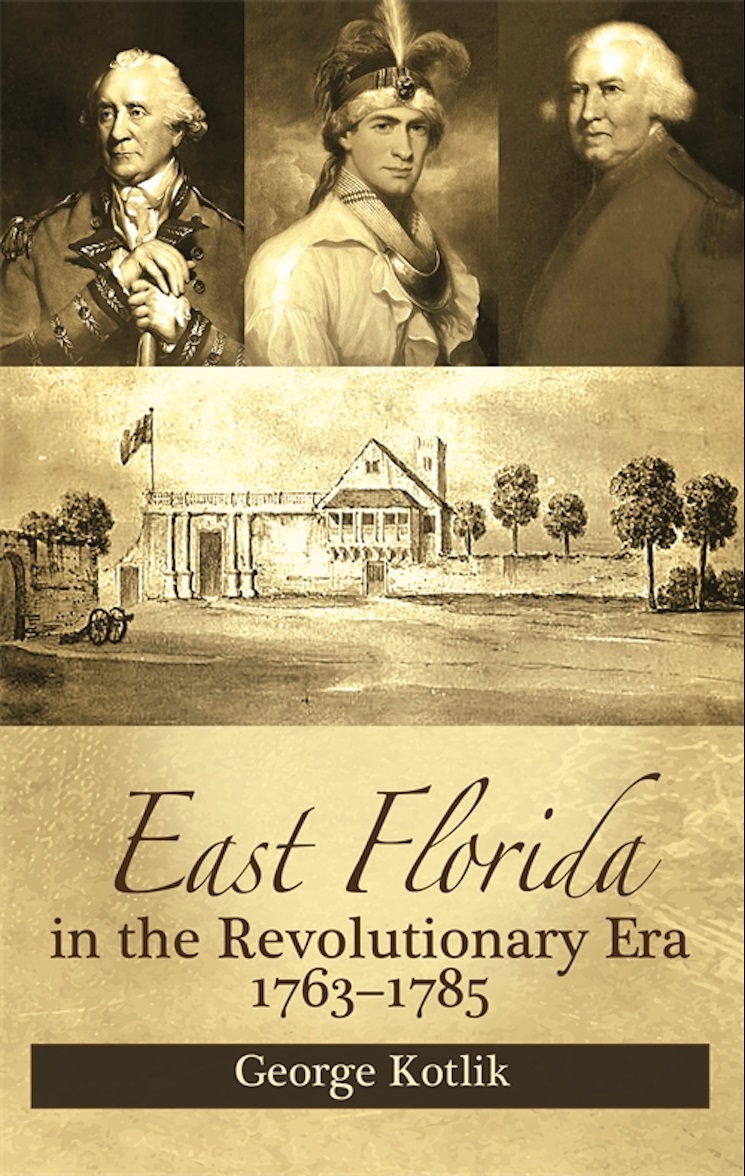
East Florida Rangers

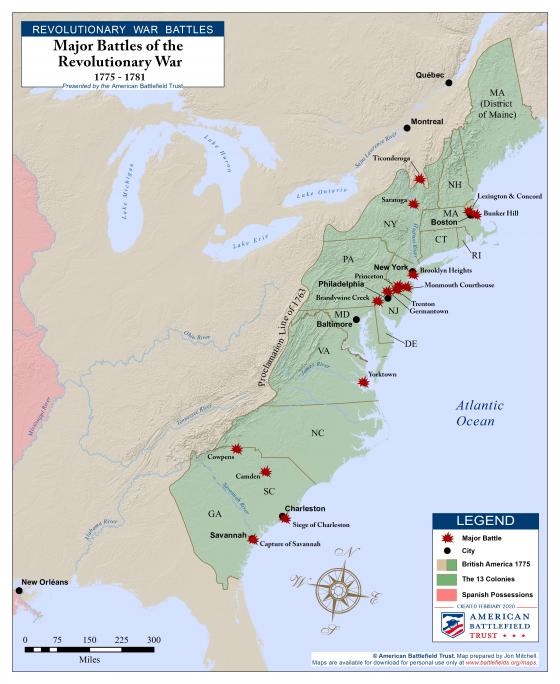
When thirteen North American colonies rebelled against the British crown, the future state of Florida was not part of that movement. In fact, the settled part of the future 27th state of the United States was partitioned into East and West Florida. Both colonies also declined an invitation to send delegates to the Continental Congress.

East & West Florida colonies

West Florida, spanned from slightly east of Pensacola, which was the capital, across to Louisiana and included parts of modern Alabama, Louisiana, Florida, and Mississippi. East Florida, spanned the rest of northern Florida from the Apalachicola River to the Atlantic seaboard and down the peninsula. The capital was located at St. Augustine, founded in 1565 by the Spanish.

During the American Revolution, both East and West Florida would play a role as the rebellion spread into a world conflict, bringing into the fighting the European nations of France and Spain. In East Florida, St. Augustine would send north British soldiers to assist in operations in Georgia and South Carolina and also house American prisoners, including three Signers of the Declaration of Independence; Arthur Middleton, Edward Rutledge, and Thomas Heyward, Jr. Other prisoners, both Americans and French were also confined to the town too.

Continue reading “East Florida Rangers”

Abercrombie’s Sortie

Emerging Revolutionary War welcomes back guest historian Kevin Pawlak

On October 15, 1781, British General Charles Cornwallis penned a note to his superior officer General Sir Henry Clinton. Cornwallis told Clinton that American and French forces seized two redoubts, 9 and 10, along the York River the previous night. “My Situation now becomes very critical,” he glumly said. Before his army, entrenched outside of Yorktown, “shall soon be exposed to an Assault in ruined Works,” Cornwallis desperately sought to break the Allied stranglehold slowly bleeding his army. The general turned to Lt. Col. Robert Abercrombie to break the Allied lines anyway he could.

Map of the Allies’ Second Parallel and Abercrombie’s Sortie (from Jerome Greene, The Guns of Independence)
Continue reading “Abercrombie’s Sortie”

Savannah, an International Engagement

Last week I wrote about the various German principalities that contributed manpower to the British attempt to subdue the colonies. I ended the post with:

“An introduction to another aspect of how the American Revolution had far reaching international complications and commitments.”

I figured this week I would return to that theme and share a portion of the Battle of Savannah in 1779, from the perspective of how many nationalities had native sons take part in the fighting.

Besides the three obvious nationalities; British, German, French, and American, the following countries represented; Ireland, Haiti, Poland, Sweden and Switzerland.

The British commander was General Augustine Prevost, who was born in the Republic of Geneva on August 22, 1723 and like an older brother joined the British army. He saw action in the French and Indian War with the 60th Regiment of Foot and at the conclusion of that conflict even served a brief term as governor of West Florida.

During the American Revolution he was ordered to invade Georgia in 1778 and had taken command at Savannah in January 1779, although he wanted to resign in favor of a younger officer to take charge. His replacement was captured while enroute to relieve Prevost, thus the Genevan was still in charge during the subsequent siege and fighting in September and October 1779.

Curt von Stedingk, hailed from Swedish Pomerania in 1746 and by the time of the Siege of Savannah he had been tabbed to lead part of the offensive. He made it to the British entrenchments where he valiantly placed the American standard. Stedingk was wounded in the fighting. He received a decoration from the French and after the American Revolution George Washington invited him into the Society of Cincinnati. This created some controversy in his native Sweden as the king, Gustav III forbade Stedingk from wearing the ribbon and medal as it was from his service to a “revolting people.” He went on to have a long military career, including fighting Napoleon at the Battle of Leipzig.

Henri Christophe, the only monarch of the Kingdom of Haiti, was a drummer boy in a French regiment during the Siege of Savannah. The unit, the Chasseurs-Volontaires de Saint-Domingue was comprised of various ethnicities hailing from the island of Saint Domingue. Christophe may have been wounded around Savannah. He would distinguish himself in the Haitian Revolution before claiming his kingdom and naming himself monarch on March 28, 1811.

Casimir Pulaski, nicknamed “the father of American cavalry” was mortally wounded by canister while attempting to rally retreating French forces. The grapeshot that felled the Warsaw, Poland native is on display in Savannah or Charleston, depending on what account you believe; or possibly neither? He never regained consciousness and died on board the ship Wasp two days after his wound on October 11.

Arthur Dillon and his “Wild Geese” Irish Regiment, in the employ of the French, also took part in the failed attempt to subdue Savannah. Dillon, born in 1750, continued in the French service until being executed in Paris in 1794 due to his royalist leanings.

With such an international cast of personas, which did include rank-and-file from the countries not listed, the Siege of Savannah showed the global reverberations the conflict had. The preserved plot of land pays homage to this fact, which, if nothing else brings you to want to visit the city, is reason enough!