ERW Weekender: Battle of King’s Mountain

On October 7, 1780, one of the most pivotal battles of the American Revolution fought in the South occurred on a hillside in northwest South Carolina.The engagement brought militia from both sides; those loyal to the British and those adhering to the independence movement against each other. In fact, only one regular British soldier was present on that autumn day; the British commander Major Patrick Ferguson.

How did Ferguson and his militia end up on King’s Mountain? This was due to the campaign being waged by British General Lord Cornwallis in the Southern colonies.

Ferguson’s role was to protect the flank of Cornwallis’ force as it turned north from South Carolina. After issuing a call of bravado, where Ferguson gave Patriot militia an ultimatum; lay down your weapons or suffer the consequences, the British officer began to move through the South Carolina countryside. This decree emboldened the Patriot militia, some of which would come from across the Appalachian Mountains–or “Overmountain”–to join in the fight against Ferguson. This combined force would gather around Sycamore Shoals in present day Tennessee.

Word quickly reached Ferguson near Gilbert Town, North Carolina by way of deserters that a large force of Virginia, Carolinas, and militia from the area of Tennessee had arrived and were planning to march toward his encampment.

Still showing a high degree of disdain for the Patriot militia, Ferguson did not act immediately on the intelligence. Three days later, the Loyalist militia and the British officer started their retrograde movement toward Charlotte and Lord Cornwallis’s main army.

By October 4, 1780 now joined by a sprinkling of Georgia militia, the Patriots had reached Ferguson’s old encampment site. Two days later the militia forced marched through the Cowpens of South Carolina, which had not witnessed the hard hand of battle yet. Just a day’s march ahead was Ferguson’s forces.

SANYO DIGITAL CAMERA
Colonial Road trace near Kings Mountain (author collection)

At this juncture, Ferguson made a fateful decision. Instead of continuing his retreat and he was less than a full-days march away from the main British army, the British officer held up his forces on a forested hill just inside South Carolina and laid out his camp on the highest point; Kings Pinnacle.

Realizing that time was of the essence, the Patriot force, now numbering 900 men, found plentiful horseflesh to mount up and close the gap between the two sides. Riding through the rain and darkness of the night of October 6, the fifteen-mile gap between forces was erased and by late morning the Patriot militia was reining up within striking distance of Kings Mountain.

By mid-afternoon, at approximately 3:00 p.m. the fighting erupted. The Patriot militia broke into smaller commands, numbering between 100-200 men and started to ascend the slopes. Luckily for the Patriots, Ferguson had not detected just how close the enemy was and had also neglected to fortify his encampment. His force though, outnumbered the Patriots by approximately 200 men.

Some of the Loyalist militia did not realize that the enemy had arrived until the Patriot militia came hollering and yelling up the slope of the hillside. With the conglomerate of various militia, there was no unified command of the Patriot forces and the fight quickly boiled down to independent maneuvering and fighting. Using the terrain, the Patriot militia fired from behind trees and boulders. Answering this tactic, Ferguson ordered a bayonet charge down the hill. This caused the Patriot force to retreat to the base of the hill as most of the men were carrying rifles which did not accommodate the bayonet.

Virginia militia Colonel William Campbell and North Carolinian militia Colonel John Sevier helped rally the militia that had broken and sent the force back up the hillside. This back and forth would happen a few more times; Ferguson’s force charging down hill with bayonets, the militia backtracking, than reforming, and charging back up after the Loyalist momentum had waned.

Finally, after an hour of combat the Patriot militia forced their way to the crown of the hill and was able to flank the Loyalist force and attack in rear of their position. This maneuver forced the Loyalists back into their encampment where numbers of them began to surrender.

SANYO DIGITAL CAMERA
Marker to the memory of Major Patrick Ferguson (author collection)

Ferguson sensing the tide turning against the Loyalists, tried to rally his troops, supposedly yelling, “Hurrah,brave boys, the day is ours!” Gathering a few stalwarts, Ferguson made a desperate move to fight his way out of the encircling Patriot militia. A volley from Colonel Sevier’s militia force unhorsed Ferguson who fell entangled in his stirrups. Unfortunately, the horse, spooked with the musketry and smell of gunpowder dragged Ferguson through the Patriot line. After getting untangled from the straps on the horse, Ferguson lay prone on the ground, where a Patriot officer demanded his surrender. Still with some fight in him, Ferguson shot and killed the man. Other Patriot militia responding to the scene fired a collective volley at the downed British officer, killing Ferguson.

Some of the Patriot militia were opposed to accepting the Loyalist surrender, as they remembered the massacres and atrocities committed to their brethren in arms by the infamous Banastre Tarleton. Cooler heads prevailed and the firing died down.

By the time the second white flag was sent out by Captain Abraham DePeyster, Patriot militia officers were finally able to reign in their commands and over 600 Loyalist soldiers surrendered.

Within the one-hour and five minute engagement, Ferguson’s force ceased to exist. Total casualties for the Loyalist force was 290 killed, 163 wounded, and 668 captured. The Patriots suffered a total of 87 casualties; 29 killed and 58 wounded.

The Patriots, with the close proximity of Cornwallis’s forces, who the day after the battle would finally get the request for reinforcements from his slain subordinate, quickly retreated back into the safety of the South Carolina countryside.

However, the Battle of Kings Mountain would become a critical turning point, not only in the Southern Campaign of the American Revolution, but in the entire war itself. The victory, which demolished the Loyalist militia force covering his flank, forced Cornwallis to altere his strategy for the campaign. He would be forced to return to South Carolina, giving up advancing further than Charlotte into North Carolina in order to re-solidify control of territory in his rear. When Cornwallis finally returned to the Tar Heel State the following year, he would suffer eventually suffer a Pyrrhic victory at Guilford Court House in March 1781.

All that was in the future and so is your visit to this battlefield of the American Revolution.
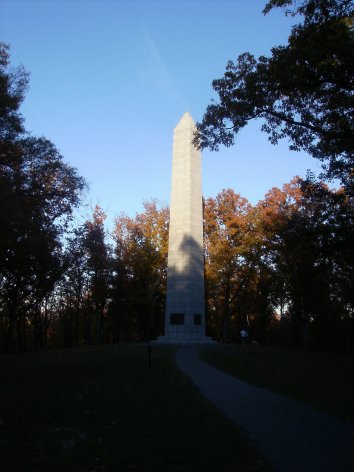
SANYO DIGITAL CAMERA
Kings Mountain Battle Monument commemorating the Patriot victory (author collection)

On March 3, 1931, Kings Mountain National Military Park was formed by an act of Congress and placed under the control of the United States War Department. Two years later, in March 1933, the property was transferred to the National Park Service by an executive order. At this juncture, the entire land mass of the park was comprised of 40 acres that had been originally donated by the Kings Mountain Battlefield Association. The park has grown since that time and now preserves slightly under 4,000 acres.

For further details on how to visit the battlefield, which includes trails, a visitor center, exhibits, and a bookstore, click here. The park is open daily 9:00 a.m. to 5:00 p.m. with extended hours on the weekend between Memorial and Labor Days. Even better there is no fee to access this national military park!

*All the photos taken for this post was done by the author during a visit to the battlefield in autumn.*



Defense in Depth as a Revolutionary War Battlefield Tactic

Part 4
(click here for first three parts)

DanielMorgan
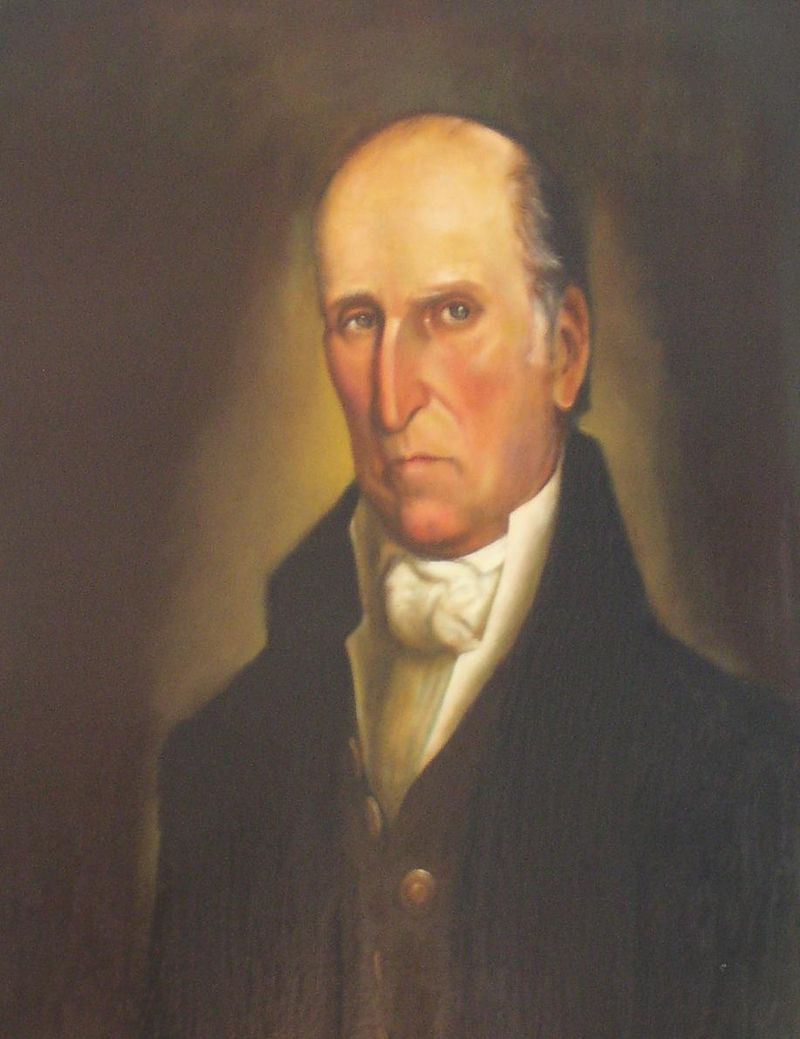
General Daniel Morgan,

As we have seen, two untrained, amateur, but very effective soldiers perfected the concept of the defense in depth during the campaigns of 1781. Morgan was the first to experiment with the concept, and he did so with great effect at Cowpens, thoroughly defeating Tarleton’s Legion and sending “Bloody Ban” flying in a wild panic. Greene then adopted the tactic and applied it on a much larger scale at Guilford Courthouse. Even though he lost the battle, he scored a major strategic victory by punishing Cornwallis’ army and inflicting enormous losses on it for little gain—Greene’s army escaped to fight another day. His stand at Guilford Courthouse set the stage f Continue reading “Defense in Depth as a Revolutionary War Battlefield Tactic”

Defense in Depth as a Revolutionary War Battlefield Tactic

Part Three (click here for first two installments)

Determined to avenge his embarrassing defeat at Cowpens, Lt. Gen. Charles Lord Cornwallis set his army out in a determined pursuit of the American army. Knowing that he was too weak to face Cornwallis in a pitched battle, Maj. Gen. Nathanael Greene, the Southern Department commander, retreated northeastward from Salisbury, North Carolina toward the Virginia state line, where he hoped that additional militia troops would reinforce his army and he would receive supplies. The British chased Greene to the Dan River, near the Virginia border, but Greene wisely put the river between his army and the enemy. Cornwallis and his weary soldiers arrived at the rain-swollen river on February 15, too late to catch Greene’s army, which had finished crossing earlier that day. Frustrated, Cornwallis withdrew to Hillsborough, North Carolina.

LC
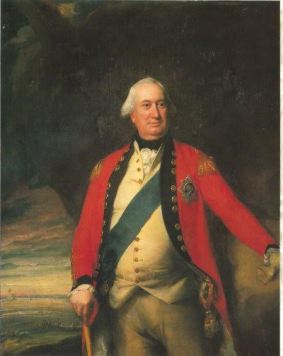
Lord Charles Cornwallis

After receiving both the expected supplies and reinforcements, and after an opportunity to rest his command, Greene soon marched back into North Carolina to face Cornwallis’ tired and poorly supplied army, which now numbered less than 2000 men. After several weeks of skirmishing with Loyalist militiamen and a great deal of maneuvering Greene assumed a defensive position around Guildford Courthouse (near modern Greensboro, North Carolina) on March 14, 1781. Greene had more than 4000 Continentals, militiamen and cavalry, meaning that his army outnumbered Cornwallis’ by more than twice their strength. Continue reading “Defense in Depth as a Revolutionary War Battlefield Tactic”

Part 2: The Defense in Depth as a Revolutionary War Battlefield Tactic

For part one, click here

Brig. Gen. Daniel Morgan, the “Old Wagoner,” as he was known, commanded a light infantry corps assigned to Maj. Gen. Nathanael Greene’s southern army. Morgan met with Greene in Charlotte, North Carolina on December 3, 1780.  Implementing a Fabian strategy, Greene split his army to harass the British while buying time to recruit additional soldiers. Greene ordered Morgan to use his 600-man command to forage and harass the enemy in the back country of South Carolina while avoiding battle with Lt. Gen. Charles Lord Cornwallis’ British army.

Once Cornwallis realized what was going on he dispatched Lt. Col. Banastre Tarleton’s British Legion to track down Morgan’s command and bring it to battle. Tarleton commanded a combined force of Loyalist American troops. The Legion consisted of fast-marching light infantry and dragoon units. At its peak strength, the Legion numbered approximately 200 infantry and 250 dragoons. It was known for its rapid movements and for its ruthless policy of giving the enemy no quarter. Patriot forces feared Tarleton and his Legion, and for good reason.

By January 12, Tarleton’s scouts had located Morgan’s army in the South Carolina back country, and Tarleton began an aggressive pursuit. Morgan hastily retreated to a position at the Cowpens, a prominent crossroads and pasturing grounds for cattle. The field was about 500 yards long and about as wide, dotted with trees, but devoid of undergrowth, which served as a food source for grazing battle.

Once Morgan learned that Tarleton was pursuing him, he spread the word for local militia units to rendezvous with him at the Cowpens. Through the night, South Carolina militiamen drifted into camp. Morgan visited their camps, encouraging them to stand and fight. Morgan’s words were particularly effective; the grizzled veteran knew how to motivate these men. They would need to be prepared, because they faced a stern task the next day.

January 17, 1781 dawned clear and very cold. After his scouts reported Tarleton’s approach, Morgan rode among his men, crying out, “Boys, get up! Benny’s coming!” Morgan designed a defense in depth that was intended to draw the British Legion in and then defeat them by pouncing on their exposed flanks. He knew that his militia had a reputation of being unreliable, and his ability to maneuver was limited, so he elected to design and implement a defense in depth that took advantage of the terrain features of the Cowpens.

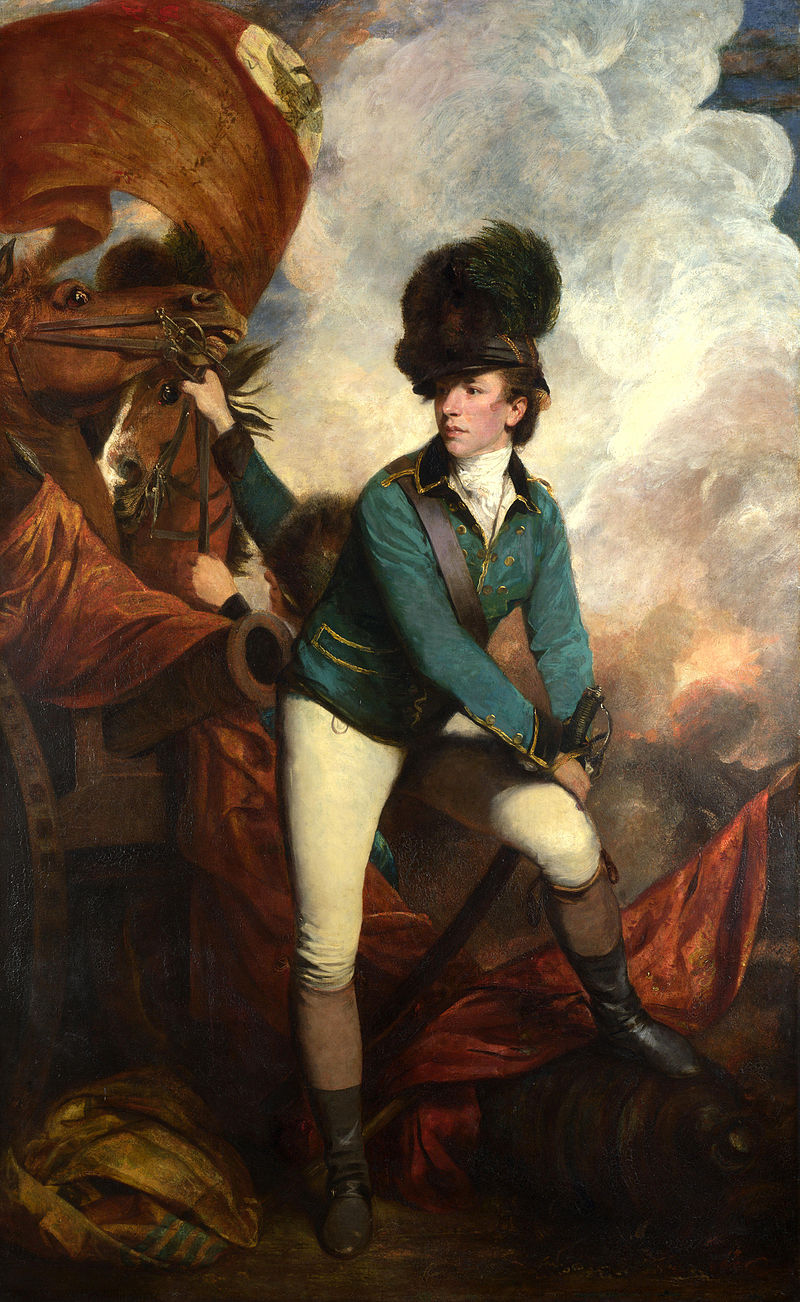
Banastre Tartleton, British commander at Cowpens

Tarleton was overconfident. He believed that Morgan’s command was hemmed in by the nearby Broad River and also believed that the cleared fields of the Cowpens were ideal ground for his dragoons, and concluded that Morgan must be desperate to fight in such a place.

Morgan had prepared three defensive positions. Selected sharpshooters out front and hiding behind trees manned the first line. They picked off a number of Tarleton’s dragoons as they advance, specifically targeting officers. Traditional accounts indicate that they downed 15 of Tarleton’s dragoons this way. Confused, the dragoons retreated.

Having accomplished their initial goal, the sharpshooters then fell back about 150 yards or so to join the second line, which consisted of Brig. Gen. Andrew Pickens’ militiamen. Morgan asked these men to stand long enough to fire two volleys, after which they were to fall back to the third—and main line—manned by Col. John Eager Howard’s Continentals, another 150 yards or so in the rear of the second line. Thus, Morgan had designed a textbook example of a defense in depth.

Andrew Pickens, commanded some of the South Carolina militia at Cowpens

Some of the militia got off two volleys and then most of the militia fell back to a spot behind the third line. Tarleton orders his dragoons to pursue the retreating militiamen, and as the dragoons bore down on them with their sabres drawn, Col. William Washington’s Continental cavalry suddenly thundered onto the field, seemingly from nowhere. They routed the surprised Loyalist dragoons, who fled the field with heavy losses.

The infantry then engaged. With their drums beating and their fifes shrilling, the British infantry advanced at a trot. Recognizing that the moment of crisis had arrived, Morgan cheered his men on, rode to the front and rallied the militia, crying out, “form, form, my brave fellows! Old Morgan was never beaten!”

William Washington, commander of American cavalry at Cowpens and a distant relation to George Washington

Tarleton’s 71st Highlanders, a veteran unit made of Scotsmen, which had been held in reserved, now charged the Continental line, their skirling bagpipes adding to the cacophony of battle. Howard ordered his right flank to face slight right to counter a charge from that direction, but in the noise and chaos, was misunderstood as a call to retreat. As other companies along the line began to pull out, Morgan rode up to ask Howard if he had been beaten. Howard pointed at the orderly ranks of his retreat and assured Morgan that they had not been beaten. Morgan then put spurs to his horse and ordered the retreating units to face about and, on his order, to fire in unison. Their deadly volley dropped numerous British soldiers, who, sensing victory, had broken ranks in a determined charge. The combination of this volley and a determined bayonet charge by the Continentals turned the tide of battle in favor of the Americans.

At the moment, the rallied and re-formed militia and Washington’s cavalry attacked, leading to a double envelopment of the British, who began surrendering in masses. Tarleton and some his men fought on, but others refused to obey orders and fled the field in a panic. Finally, Tarleton realized that he had been badly beaten and fled down the Green River Toad with a handful of his men. Racing ahead of his cavalry, William Washington dashed forward and engaged Tarleton and two of his officers in hand-to-hand combat. Only a well-timed pistol shot by his young bugler saved Washington from the upraised saber of one of the British officers. Tarleton and his remaining forces escaped and galloped off to Cornwallis’ camp to report the bad news.

And bad news it was: Tarleton’s Legion lost 110 dead, over 200 wounded and 500 captured. By contrast, Morgan lost only 12 killed and 60 wounded. His perfectly designed and perfectly implemented defense had worked even beyond the Old Wagoner’s wildest dreams and highest hopes.

Knowing that Cornwallis would pursue him, Morgan buried the dead and then withdrew to the north to live and fight another day. Morgan reunited with Greene’s army and the combined force headed for North Carolina. Morgan, whose health was fragile, soon retired from further duty in the field, but he had left his mark. Cowpens was his finest moment, and set a precedent for Greene to follow two months later at Guilford Courthouse.

Battle of Cowpens (Courtesy of Campaign 1776/CWT)
Battle of Cowpens
(Courtesy of Campaign 1776/CWT)

*Suggestions for additional reading: for a superb book-length microtactical treatment of the Battle of Cowpens, see Lawrence E. Babits, A Devil of a Whipping: The Battle of Cowpens (Chapel Hill: University of North Carolina Press, 1998). This book is the primary resource consulted in drafting this article.

Mercer’s Grenadier Militia

RevWarWednesdays-headerThis is part two in the series by guest historian Drew Gruber. For part one, click here.

On the morning of October 3, 1781, British Colonels Tarleton and Thomas Dundas led another expedition north towards Gloucester Courthouse and away from the protection of their fortifications at Gloucester Point. Their command that day included some of the most renowned fighting men then in service. Cavalry and mounted infantry from Tarleton’s own British Legion, combined with a detachment of Colonel Simcoe’s Queen’s Rangers, elements of the 17th Dragoons, men from the 23rd Regiment (Royal Welch Fusiliers), German Jaegers and part of the 80th Regiment of Foot provided an impressive host for their American and French adversaries. Captain Johann Ewald, commander of the Jaegers commented after the war that he was sent out with “one hundred horse of Simcoe’s and the remainder of the jagers and rangers, which amounted to only sixty man in order to take a position between Seawell’s planatation and Seawall’s Ordinary. I was to form a chain there to protect a foraging of Indian corn.”[1]

Continue reading “Mercer’s Grenadier Militia”

The Other German

RevWarWednesdays-header

Baron Frederich Wilhelm August Heinrich Ferdinand Steuben or Frederich Wilhelm Ludolf Gerhard Augustin von Steuben or more simply Baron von Steuben, may be the most recognizable German to serve with the American army during the American Revolution.*

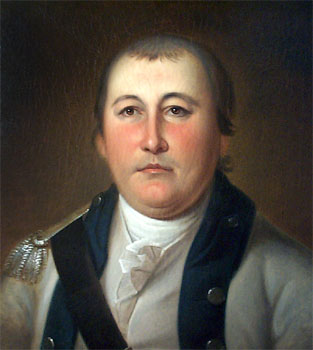
Portrait of Baron Johann de Kalb  (by Charles W. Peale)
Portrait of Baron Johann de Kalb
(by Charles W. Peale)

His merits, pedigree, and how he came to America has been questioned and studied by many scholars and historians.

Another German has not fared so well in terms of recognition of his invaluable services to the American cause.

This post is about that other German-speaking military officer. He did something von Steuben did not.

Baron Johann von Robais de Kalb not only offered his services to the fledgling American Continental Army, he also gallantly gave his life for his adopted-cause.

Born June 19, 1721 in Huttendorf, near Erlangen in Bavaria, de Kalb led a life of privilege, learning multiple languages before earning a commission in the French army in the Loewendal Regiment. He served admirably in the War of Austrian Succession and the Seven Years War, in the later, he won the Order of Military Merit and gained his baronetcy.

Continue reading “The Other German”

Cowpens: Defense in Depth

RevWarWednesdays-header


On a cold January morning 234 years ago, one of the most stunning events in American military history took place in a cattle pasture.   Cowpens, South Carolina, was an overwhelming American victory, at a time when one was desperately needed.

What went so well?  General Daniel Morgan understood the limitations and strengths of his troops, as well as those of his opponents.  He used that to his advantage, along with a keen eye for terrain and a good understanding of the strategic satiation.

Continue reading “Cowpens: Defense in Depth”

Looking Back to Cowpens: William J. Hardee and the Battle of Averasboro

Lieutenant General William J. Hardee.

After abandoning Fayetteville, North Carolina to Maj. Gen. William T. Sherman’s army group, Lieutenant General William J. Hardee withdrew his corps north of the city. Hardee had ordered the Clarendon Bridge over the Cape Fear River destroyed, removing the possibility of a vigorous pursuit by the Federals. The situation for the Confederates, however, remained dire. Hardee’s immediate superior, Gen. Joseph Johnston, was in the process of assembling a makeshift army to delay Sherman’s advance. By the middle of March, the forces that Johnston hoped to consolidate were still scattered throughout the state. More time would be needed for the Confederates to rendezvous. Since Hardee’s corps was naturally positioned to contest the enemy as they left Fayetteville, it would fall to him to engage Sherman once he resumed his march. The veteran officer would prove to be more than equal to the task.

Continue reading “Looking Back to Cowpens: William J. Hardee and the Battle of Averasboro”