250th Anniversary of the Release of Common Sense

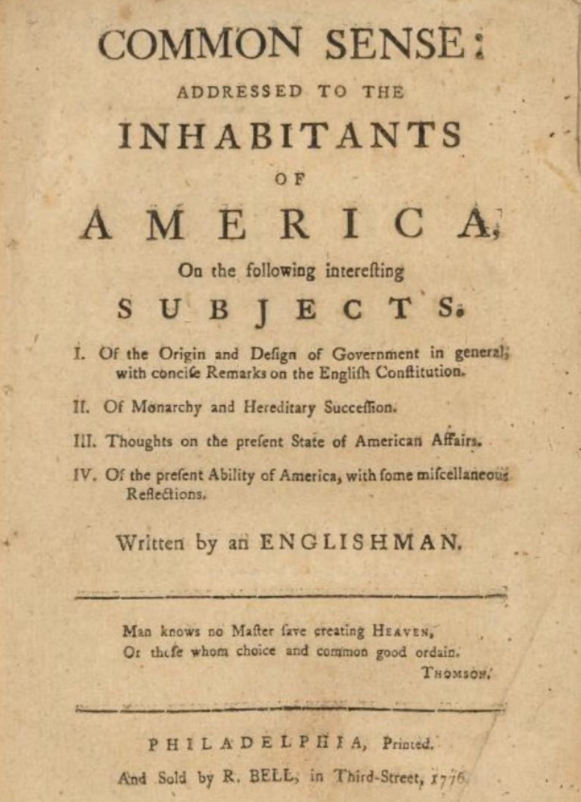
Virginian Landon Carter was vocal about the latest pamphlet sweeping through the American colonies in 1776. In several diary entries from the first four months of that momentous year, he commented on Common Sense, written anonymously “by an Englishman.” Carter described its contents in February as “rascally and nonsensical as possible, for it was only a sophisticated attempt to throw all men out of principles.” By April, as he continued to criticize the work, he reached a conclusion about its author: “I begin now more and more to see that the pamphlet called Common Sense, supporting independency, is written by a member of the Congress …” Carter could not have been further from the truth.

“An Englishman” was, in fact, an apt description for the author of Common Sense, first released to the American public on January 9, 1776. Thomas Paine was an Englishman—born there and, by most measures, matured there as a failure. He failed at his corset-making business. Teaching, collecting taxes, privateering, and working as a grocer—none of these occupations suited him either. He married twice (his first wife died in childbirth), and his second marriage collapsed. Amid this string of failures, Paine found success with the written word, which caught Benjamin Franklin’s attention in England in 1774. With little left for him in England, Paine embarked for America, arriving later that year. There, he scraped by as a writer, publishing essays in Philadelphia newspapers.

Continue reading “250th Anniversary of the Release of Common Sense”

The Zenger Trial and Seeds of The American Revolution

Emerging Revolutionary War welcomes back guest historian Eric Wiser

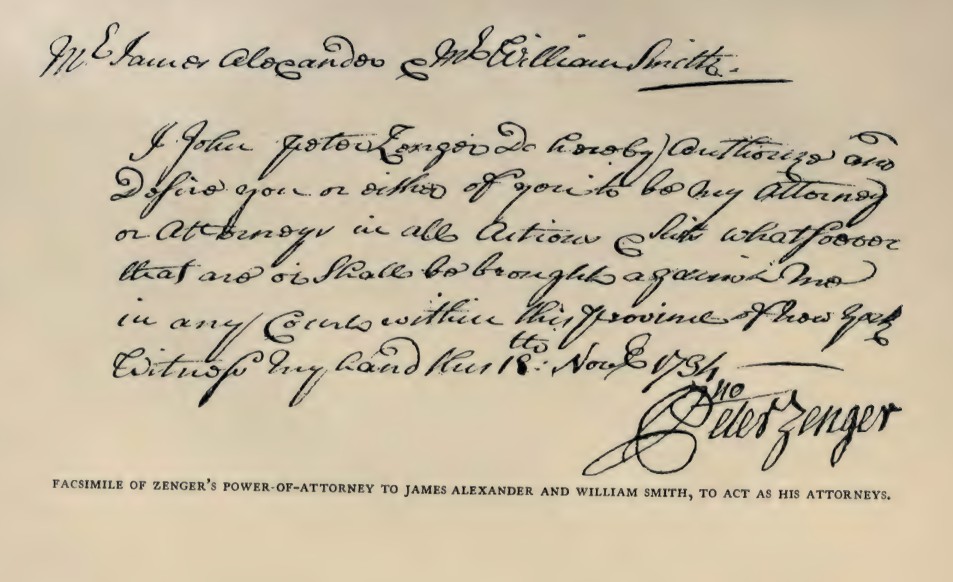
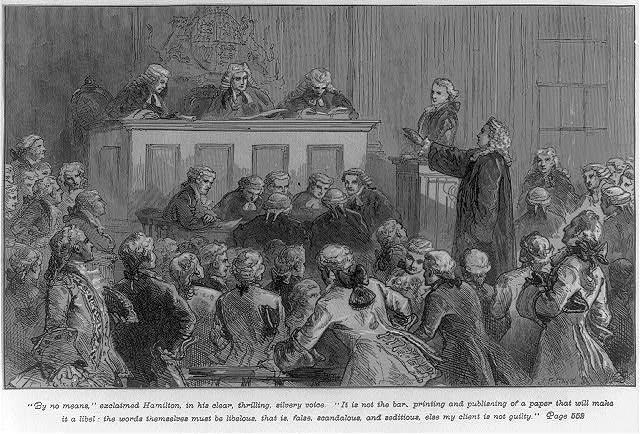
On August 4, 1735 printer John Peter Zenger was acquitted of seditious libel in a dramatic trial before a crowded courtroom in New York’s City Hall.  Zenger languished nine months in jail before his acquittal for “printing and publishing a false, scandalous and seditious libel, in which His Excellency the Governor of this Province, who is the King’s immediate representative…” Zenger’s odds were long given New York Supreme Court’s disbarment of his original attorneys in the pre-trial stage. Aggrieved Royal Gov. William Cosby had a legitimate claim under English Common Law that he was seditiously libeled.[1]  

Zenger’s fame as an early martyr of freedom of the press is well known.  In terms of America’s founding, it’s difficult to imagine independence without the dissemination of ideas through pamphlets and newspapers. Benjamin Franklin, a printer himself whose own brother James was imprisoned by authorities in Massachusetts a decade before Zenger, commented on freedom of the press: “This sacred Privilege is so essential to free Governments, that the Security of Property, and the Freedom of Speech always go together; and in those wretched Countries where a Man cannot call his Tongue his own, he can scarce call any Thing else his own.”[2] 

Despite being thirty-years before the Stamp Act of 1765, the Zenger trial and political conditions surrounding it have seedlings sprouting growth in the Revolution. The substance of these can be traced to the colonial grievances inspired by acts of Parliament which in turn became articulated in the Declaration of Independence. Factionalism between supporters of Crown representatives and those opposed was present in the Zenger episode in nascent form.  The rhetoric expressed by Zenger’s attorneys is indistinguishable from the much of the lofty language in the Revolution less “independence.”  

Continue reading “The Zenger Trial and Seeds of The American Revolution”

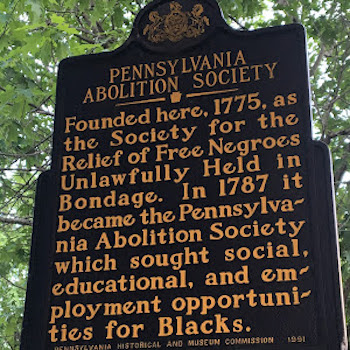
The Untold Story of America’s First Abolitionist Society – 250th Anniversary of the Society for the Relief of Free Negroes Unlawfully Held in Bondage

As we approach the 250th anniversary of Lexington and Concord, on April 14, 2025 another 250th anniversary is taking place but one that is much overlooked. When we think about the fight to end slavery in the United States, names like Frederick Douglass, Harriet Tubman, and William Lloyd Garrison often come to mind. But America’s organized abolitionist movement actually began decades earlier—with a quiet but powerful group of reformers in Philadelphia.

Historic marker located near the intersection of Front and Ionic Streets in the “old city” section of Philadelphia. Close to the original location of Tun Tavern.

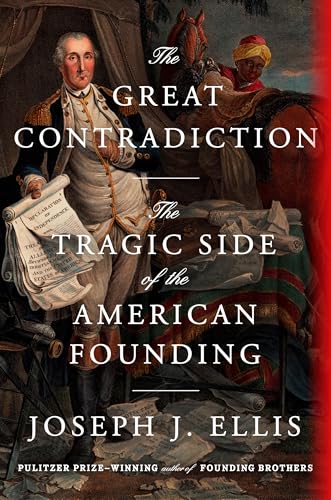
In 1775 the American colonies were on the verge of war with Great Britain, calling for freedom and independence. But even as they demanded liberty, many Americans—including some of the nation’s founders—continued to own slaves. Amid this contradiction, a small group of Philadelphia Quakers stepped up to challenge the injustice of slavery. On April 14, 1775 in Philadelphia, they formed what would become the first formal abolitionist organization in America, the Society for the Relief of Free Negroes Unlawfully Held in Bondage.

The name was long, but its mission was clear. This group was determined to help free Black people who were illegally enslaved or kidnapped into bondage. Their founding was quiet, overshadowed by the Revolutionary War, but it planted the seeds of a movement that would eventually reshape the nation.

At the heart of the Society were the Quakers (17 of the original 24 members were Quakers) formally known as the Religious Society of Friends. Quakers believed deeply in the equality of all people and had long spoken out against slavery. Many had already freed the people they once enslaved, and by the mid-1700s, anti-slavery had become central to their faith.

So in April 1775, a group of these Quakers, joined by a few like-minded allies, came together to create the Society. Their initial goal was modest but critical: to protect the rights of free Black people and prevent them from being illegally sold into slavery. This was not uncommon at the time, especially in cities like Philadelphia where Black communities—both free and slave—lived side by side. However, the outbreak of war later that year put much of the Society’s early work on hold. But their mission didn’t die.

After the war, in 1784, the Society was revived with renewed energy and purpose. It was renamed the Pennsylvania Society for Promoting the Abolition of Slavery and the Relief of Free Negroes Unlawfully Held in Bondage—still a mouthful, but a more expansive vision. Benjamin Franklin, one of America’s most celebrated founding fathers, became the Society’s president in 1787. Franklin had once owned slaves himself, but his views evolved over time. By the end of his life, he was a vocal critic of slavery and used his influence to support the Society’s goals.

This time, they weren’t just focused on defending free Black people—they were actively working to end slavery altogether. Their efforts were both legal and educational. The Society hired lawyers to defend kidnapped individuals, lobbied lawmakers, and even began promoting schools for Black children.

The Society’s work helped inspire real change. Pennsylvania became the first state to pass a gradual abolition law in 1780, a huge step forward. While the Society didn’t write the law, many of its members pushed hard for its passage and later worked to ensure it was enforced.

Still, the road was far from easy. The Society operated in a world where slavery was deeply entrenched—not just economically, but socially and politically. In the South, slavery was expanding. Even in the North, racism was widespread, and support for abolition was often lukewarm.

Despite these challenges, the Society’s model paved the way for the much larger abolitionist movements of the 19th century. It showed that legal advocacy, public education, and grassroots organizing could make a difference. It also helped define Philadelphia as a hub of anti-slavery activism that would later become home to figures like Frederick Douglass and Sojourner Truth.

On This Date: An America 250th Anniversary

The 27-year-old from Thetford, Norfolk, England native had a long journey before he even sailed across the Atlantic Ocean for the colonies. Although receiving an education until age 13, and an apprenticeship with his father until age 19, both uncommon among his peers, Thomas Paine started his professional career as a privateer. It did not suit him for long, he returned to Britain in 1759. Paine then became a staymaker, and within several years, opened his own store in Sandwich, Kent. By the end of the same year, Paine had married.

Read more: On This Date: An America 250th Anniversary

Life seemed to be set for the young couple, but tragedy after tragedy ultimately led Paine to the American colonies. Paine’s shop ran into financial challenges not long after his nuptials, and although offset by the joy of pregnancy, a relocation to a new town may have been too much on Mary. She went into early labor, and both mother and child tragically died during the delivery. A series of moves, career changes, and troubles dotted the next dozen years.

A supernumerary, Excise Officer, staymaker, schoolteacher, were all ahead of time. Charges of fraud and dismissal were as well. By the age of 31, in 1768, Paine’s next professional endeavor took him to Lewes in Sussex. Over the ensuing years in Lewes, a town with a long history of opposition to the monarchy and republican sentiments, Paine became a member of the Court Leet and parish vestry, worked as a tobacconist and grocer, and married for the second the time.

Thomas Paine

By 1772, Paine wrote his first political piece. His time in his home country was now on the clock. By the spring of 1774, following his political priorities and ideologies, Paine had all but abandoned his post as an excise officer and was essentially fired. He next separated from his second wife, Elizabeth, and moved to London. It was while in London that Paine met Benjamin Franklin who suggested he emigrate to Philadelphia. Paine did exactly that.

His journey through life was turbulent, even more so during the first half of the 1770s, just like his voyage across the Atlantic on his to Philadelphia in the Pennsylvania colony. The water supplies aboard the ship were dreadful, and typhoid raged across the decks of the vessel. Paine was barely alive by the time the ship reached Philadelphia. He was so ill he was unable to leave the docked boat under his own power, Benjamin Franklin sending his personal physician to the ship and have him carried off. Yet, on this date, November 30, 250 years ago, Thomas Paine had arrived to the American colonies. After six weeks of recovery his new journey, a journey shared by all those that were to be swept up in the American Revolution, began.

Less than two years after landing in Philadelphia, Paine published his work Common Sense. Coupled with a series of works entitled The Crises, Paine, “ignited a nation to help the failing cause of the Revolution.”

“Rev War Revelry” American Triumph with Tom Hand

Welcome to the first “Rev War Revelry” of 2024! To kick off the new year, Emerging Revolutionary War is joined by Tom Hand, author, historian, and founder of Americana Corner. However, in the later stages of 20234, Tom added published book author to his lengthy list of accomplishments. His book, American Triumph is now available via his website.

The book, “masterly blends the personal experiences and historic milestones” of three luminaries of the early Republic, Benjamin Franklin, George Washington, and John Adams. The book, with a plethora of graphics, sidebars, and informational tidbits aims to provide a “captivating collection of stories” for the “everyday American.”

We look forward to a lively and friendly discussion with Tom. Hope you can tune in, to Emerging Revolutionary War’s Facebook page at 7 p.m. EDT this Sunday, January 7th.

Emerging Revolutionary War checks in with Tom Hand and Americana Corner. Here is what has has been published on that blog for the month of August.

America Looks Westward
August 30, 2022

Americans have always had a yearning to move west and discover new lands. Along the way, our ancestors had to overcome many daunting natural barriers, the first of which was the Appalachian Mountains. The Wilderness Road through the Cumberland Gap was our nation’s first pathway through this formidable range.
Read More

The Legacy of Ben Franklin
August 23, 2022

The Constitutional Convention adjourned on September 17, 1787, and would be Benjamin Franklin’s last moment in the spotlight of American history. It was a fitting finale for this man who had done so much to shape the nation in which he lived. Franklin was 81 years old, in poor health, and hoped for a well-deserved rest.
Read More

Ben Franklin’s Sage Advice Influences Constitutional Convention
August 16, 2022

In 1785, Franklin, his work done in France, was recalled to America by Congress. He arrived in Philadelphia that September, revered as one of our nation’s greatest patriots. Despite his need for a well-deserved rest, he was kept continually busy receiving dignitaries, wrapping up loose ends from his eight-year diplomatic mission, and with what would prove to be one final opportunity to help his country.
Read More

Ben Franklin Becomes America’s Top Diplomat
August 9, 2022

Congress declared America’s independence from England on July 4, 1776, but the most crucial step still lay ahead and that was to secure what we had declared. Delegates knew that to have a real chance at success, the United States needed the assistance of one or more European powers.
Read More

Ben Franklin Works Toward Independence
August 2, 2022

Partly due to Benjamin Franklin’s testimony before the House of Commons, the Stamp Act, which taxed items such as newspapers and legal documents, was repealed by Parliament on March 18, 1766. Unfortunately, this conciliatory measure was immediately undone when Parliament enacted the Declaratory Act which reasserted that all laws passed by that legislative body were binding on the colonies, including those related to taxes.
Read More

“Rev War Revelry” Author Discussion: Eric Sterner – “Anatomy of a Massacre: The Destruction of Gnadenhutten, 1782”

Gnadenhutten. Pronounced with a silent “G” does not smoothly roll of the tongue. Nor is it a historical event that most people are aware of. Cue Eric Stener, historian with Emerging Revolutionary War, contributing historian to both the Journal of the American Revolution and Emerging Civil War while conducting a career in government and public policy, specializing on national security and aerospace.

And now specializing on the Massacre at Gnadenhutten. His latest publication, part of the Journal of American Revolution Books is a November 2020 release that examines the March 8, 1872 massacre of peaceful Native Americans under the tutelage of missionaries from the Church of the United Brethren. Conducted by western settlers, the atrocity caught the attention of revolutionaries such as Benjamin Franklin who wrote, “the abominable Murders committed by some of the frontier People on the poor Moravian Indians, has given me infinite Pain and Vexation.”

Although “ample incidents of good and evil on March 8, that summation does not explain what brought murderers and victims together on the banks of the Muskingum River in today’s Ohio.”

For that reason we turn to the next “Rev War Revelry” this Sunday, at 7 p.m. EST on our Facebook page as we discuss his latest work with author Eric Sterner. For more information or to purchase your copy of his book, click here.

We look forward to you joining us this Sunday for the next historian happy hour!

What’s So Bonhomme about Richard?

Emerging Revolutionary War welcomes guest historian Dwight Hughes

The recent disastrous conflagration aboard the USS Bonhomme Richard (LHD-6) in San Diego harbor brings to mind the original warship by that name and its fiery fate, a tale excellently told in a previous post by Eric Sterner (“I Have not Yet Begun to Fight!” or Words to that Effect (September 23, 1779)).  “Bonhomme Richard” means “good man Richard” in French. So, who is Richard? What was good about him? Why is his name on a man-of-war?

The United States Navy likes to carry forward the labels of famous vessels. This is one of the oldest and most revered monikers in navy history, originally assigned in 1779 by Captain John Paul Jones to a rather decrepit French merchantman armed with a motley collection of guns. The French government donated the former Duc De Duras to Jones to sail against their mutual enemies, the British.

John Paul Jones

Jones famously engaged the powerful frigate HMS Serapis on September 23, 1779 in English waters off Flamborough Head, Yorkshire. The ships grappled together and blasted away at point blank range. Both were battered and ablaze in sinking condition with many casualties when the British captain surrendered. With Bonhomme Richard going down fast, the Americans took over Serapis and managed to save her.

John Paul Jones became the “Father of the U. S. Navy” (or one of them). Bonhomme Richard entered legend as the warship that won and sank. She and her successors also represent those rare U. S. Navy vessels whose names are rendered in a foreign language.

Continue reading “What’s So Bonhomme about Richard?”

ERW Statement

With the recent events facing our nation, American Revolutionary War monuments and memorials have an important role in demonstrating pride in our shared past and the highest ideals we value.  Statues and monuments to the leaders and participants of the struggle for American independence today stand on battlefields, in courthouse squares and on historic sites all across this nation.  While these statues depict very flawed and imperfect human beings, they memorialize the deeds and character that contributed to the creation of the nation we now live in. 

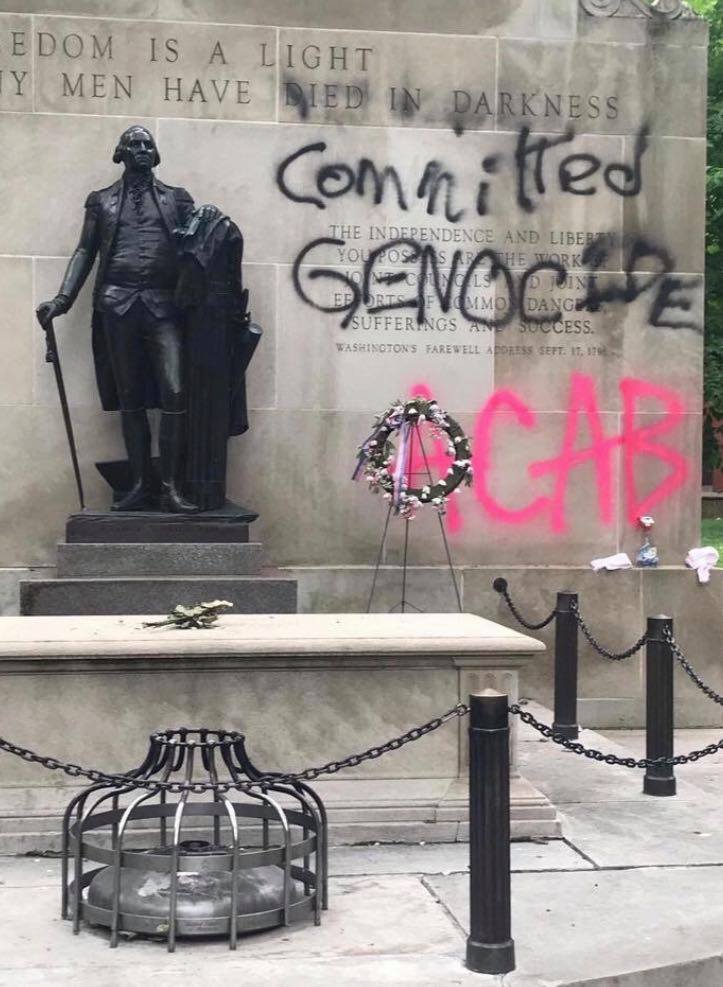
These statues and monuments not only tell an important part of the nation’s founding, they are also artifacts of the eras in which they were constructed and how we have remembered our Revolutionary struggle, and how the ideals of the Revolution continue to live to this very day. Part of what we do at Emerging Revolutionary War is connect the past to the places today. Over the past few weeks we have seen localities remove or plan to remove statues honoring Caesar Rodney in Delaware and Philip Schuyler in New York.  We have also seen statues of Marquis de Lafayette, Baron von Steuben, and Thaddeus Kosciusko vandalized in Washington, DC, a statue of George Washington vandalized in Boston, statues vandalized in Philadelphia of Washington and Benjamin Franklin, and the Tomb of the Unknown Revolutionary War in Philadelphia desecrated. 

We feel it is important that all of the United States’ Revolutionary War statues and monuments are protected so they can continue to demonstrate our highest values and ideals and the tell the story of the important figures who shaped our nation. Without these monuments, we lose vital resources to tell the important stories of our past and help unite us in moving forward as a country. As the 250th anniversary of the American Revolution draws near, rather than the removal of monuments, we hope more monuments and memorials will be erected, especially for overlooked populations that also played a role in the founding of our nation. With this more comprehensive view of history in mind, a broader and more accurate story can be told to the American public.  Emerging Revolutionary War will continue to trace the stories of the past and tie them to the places through these challenging times and we look forward to a better tomorrow.

Beer Drinking in the 18th Century

Emerging Revolutionary War welcomes back guest historian Vanessa Smiley

“Beer is living proof that God loves us and wants us to be happy.” – Benjamin Franklin, Poor Richard’s Almanack

Benjamin Franklin was one of many 18th century beer lovers.
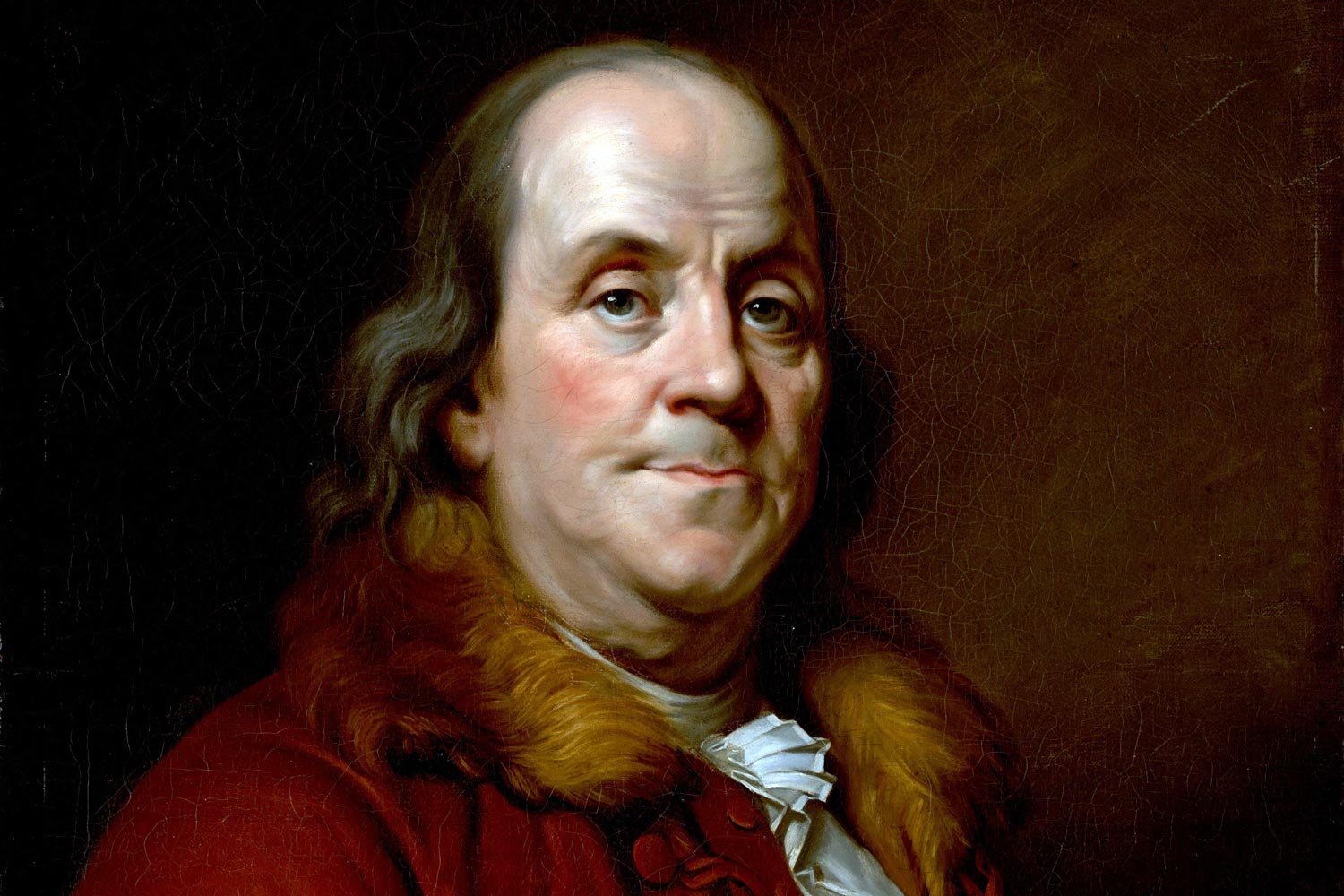
(Benjamin Franklin by Joseph Siffred Duplessis, c. 1785)

During the 18th century, Colonial society held three common beliefs about beer drinking:

  1. Drinking beer was healthier than drinking water
  2. Beer and its ingredients were a healthy supplement to the entire family’s diet
  3. It was an accepted way to promote social discourse

A little different from today’s society, except for beer connoisseurs (such as the Emerging Revolutionary War folks), these beliefs were formed from the circumstances of the time.

Though a generation away from understanding the connection between boiling water and sanitation, most folks understood that water could make you deathly ill. And yet, ale and beer drinkers did not seem to have that same risk. They did not know it at the time, but the boiling process to make these alternative drinking options neutralized much of any tainted water’s ill effects. Therefore, many substituted beer, ale, and other alternatives such as hard cider over water, making these a major dietary staple in the colonies.

Continue reading “Beer Drinking in the 18th Century”