Lost and Found: The Cycles of Loss and Recovery of Brooklyn’s Prison Ship Martys Monument and the Men It Commemorates

Emerging Revolutionary War welcomes a guest post from historian Keith J. Muchowski. Keith is a librarian and professor at New York City College of Technology (CUNY) in Brooklyn. He blogs at thestrawfoot.com.

The plaque dedicated King Juan Carlos I in June 1976 today tucked in a corner of the visitor center. Courtesy Author

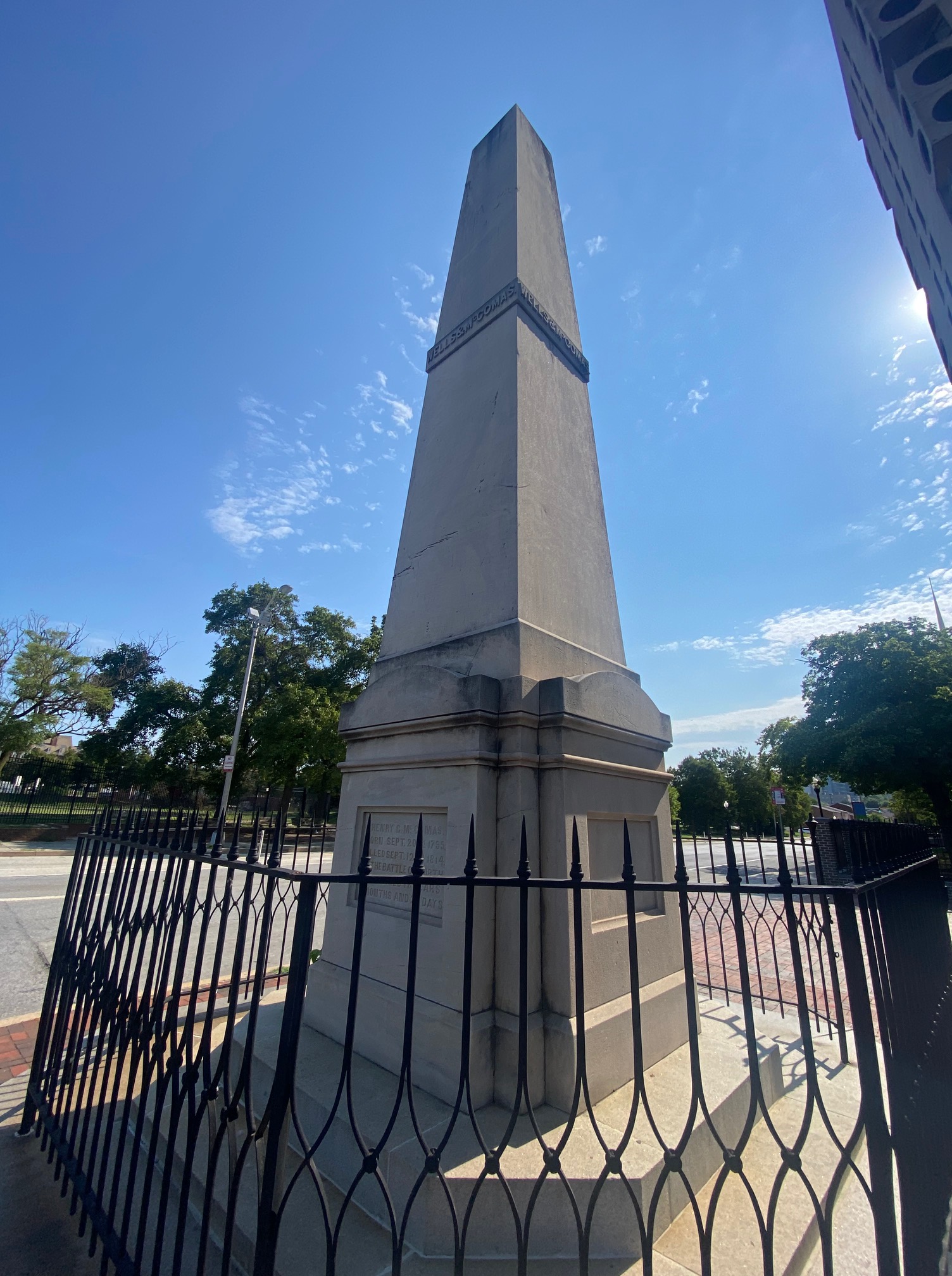
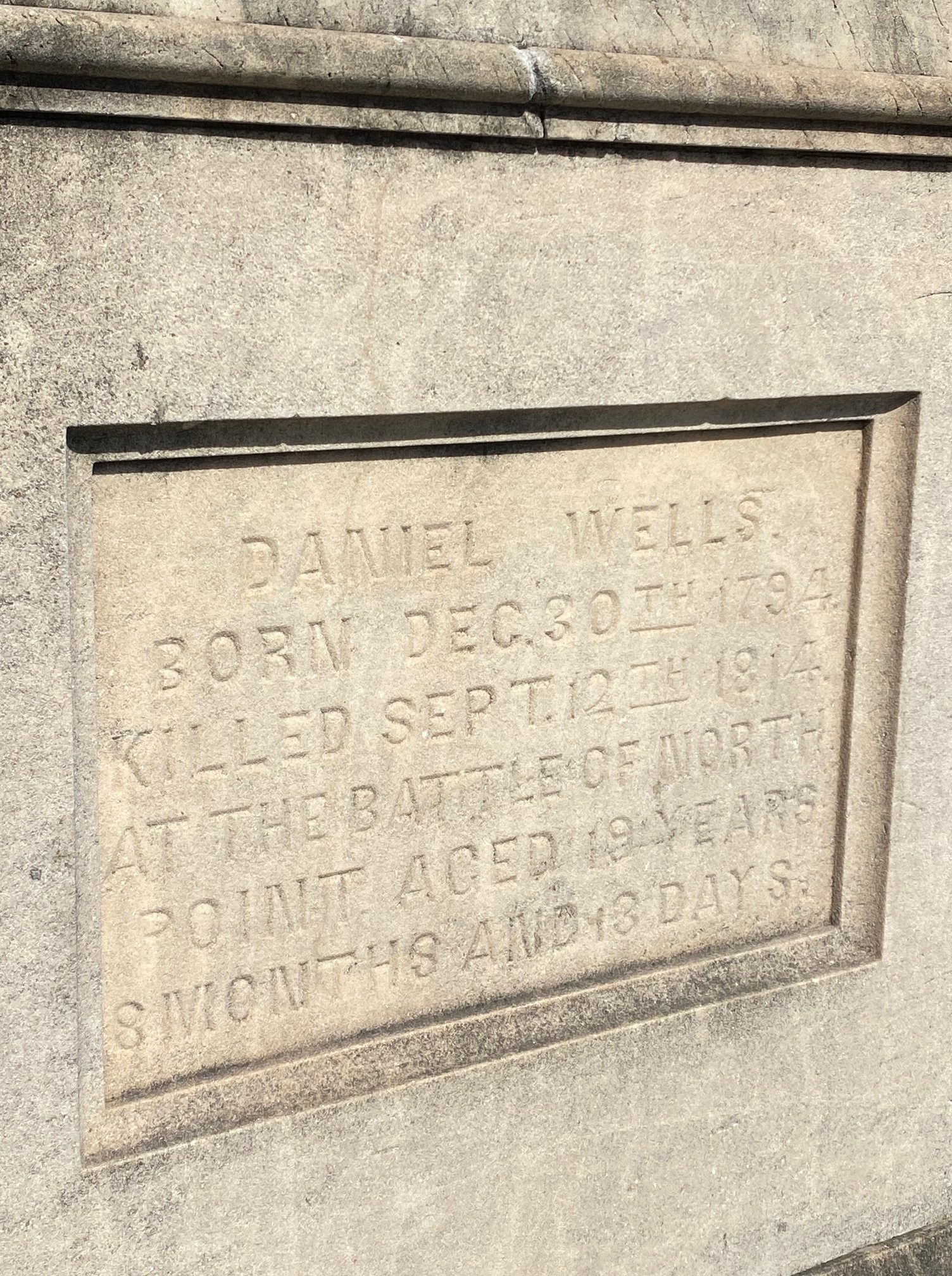
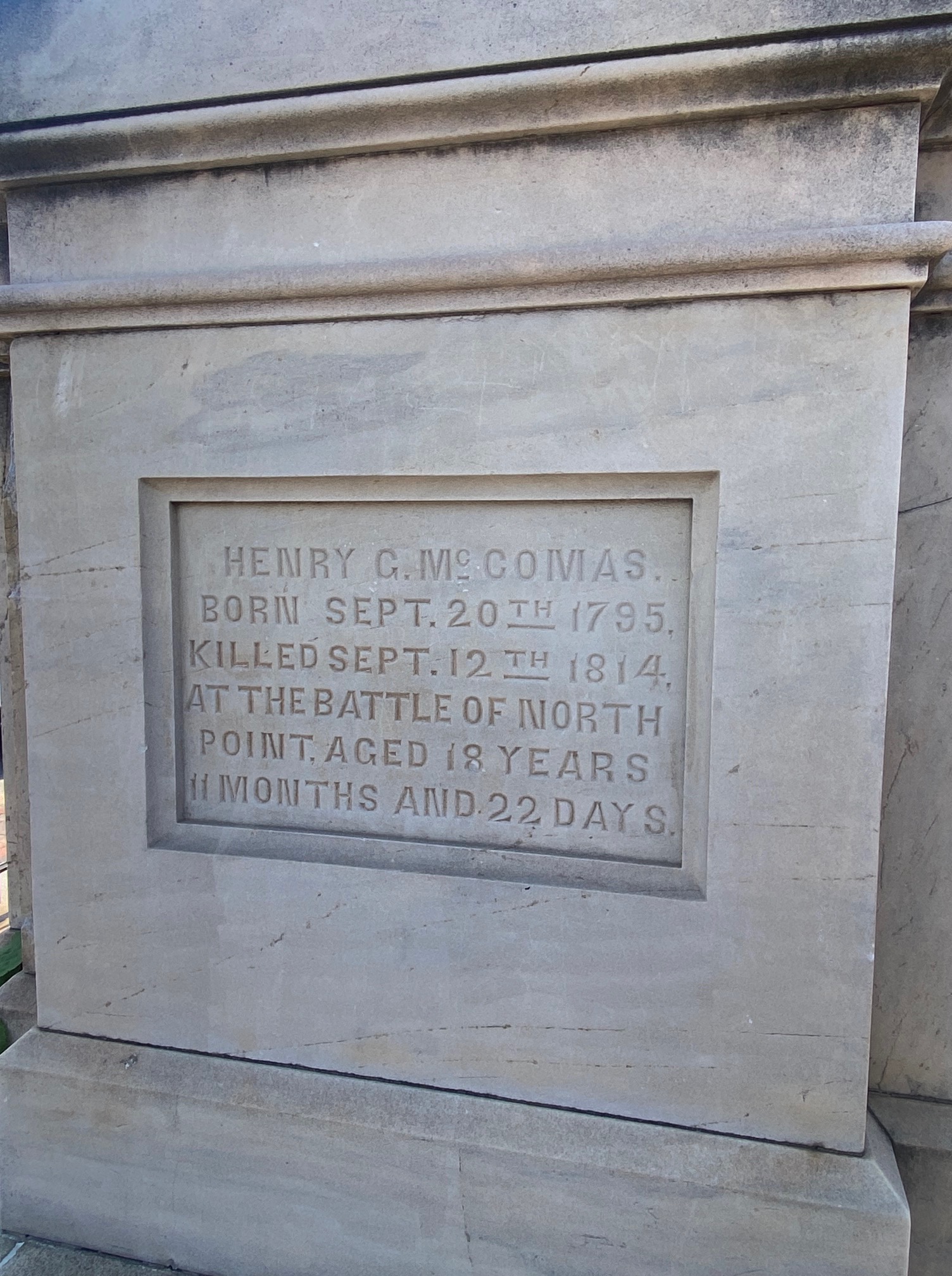
King Juan Carlos I arrived in Brooklyn’s Fort Greene Park on Saturday June 5, 1976 to great fanfare. The thirty-eight-year-old monarch had ascended to the Spanish throne just seven months previously, two days after the death of Francisco Franco. The new leader was determined to reform his nation after three and a half decades of strongman rule. Juan Carlos I’s ancestor, King Carlos III, had helped the colonists achieved their independence nearly two centuries previously with his supply of money, matériel, and men. Many of those Spaniards made the ultimate sacrifice; well over one hundred of them alone perished in British prison ships moored off Brooklyn Wallabout Bay during the war.[i] Now King Juan Carlos I was in the outer borough to recognize them, dedicate a tablet to his fallen countrymen, and help his American hosts celebrate the bicentennial of their independence. The entombed Spaniards were among the over 11,500 men commemorated by the Prison Ship Martyrs Monument. The king’s visit in the mid-1970s was the latest in a series of public commemorations of the prison ship dead dating back over a century and a half. Some of the institutions that did so much to recognize the martyrs, such as the Society of St. Tammany, are today long gone. Others however very much remain. The Society of Old Brooklynites, a civic organization founded in 1880 when Brooklyn was still an independent municipality, has been holding events since the late nineteenth century.

Continue reading “Lost and Found: The Cycles of Loss and Recovery of Brooklyn’s Prison Ship Martys Monument and the Men It Commemorates”

Sir Henry Clinton’s Close Encounter

Emerging Revolutionary War welcomes the contribution of Eric Olsen, Park Ranger/Historian at Morristown National Historical Park

Military history tends to be a lot of “so and so’s” brigade advanced on the left wing, while “what’s his face’s” division withdrew.” Lots of movements of large faceless masses of soldiers. Personally, I prefer the little personal stories of individuals in the face of battle. Here is one such story from the battle of Monmouth in June 1778. 

Sir Henry Clinton

I recently ran across this little tidbit in a July 7, 1778, letter written by the Adjutant General of the Hessian forces in America, Major Carl Leopold Baumeister. He described an incident during the battle of Monmouth involving the British commander in chief, Sir Henry Clinton. “General Clinton in the thickest fire, was saved by one of his adjutants, Captain Sutherland, when a rebel colonel aimed at him, but missed. Captain Sutherland’s horse was wounded. Another adjutant, Lloyd, stabbed the colonel.”

The story sounded vaguely familiar. Then I recalled something I’d read written by a British officer named Thomas Anbury. He was a prisoner of war, part of Burgoyne’s captured “Convention Army.” Anbury and the other prisoners were being held near Charlottesville, Virginia. At a place called Jones’s Plantation, Anbury related the following story on May 12, 1779,

“A very singular circumstance took place in that battle [Monmouth], which fully marks the coolness and deliberation, though in the heat of action, of Sir Henry Clinton: As he was reconnoitering, with two of his Aide de Camps, at the short turning of two roads, they met with an American officer, exceedingly well mounted upon a black horse, who, upon discerning them, made a stop, and looked as if he wished to advance to speak to them, when one of Sir Henry Clinton’s Aid de Camps fired a pistol at him, and he instantly rode off. Sir Henry was much displeased at his Aide de Camp, and censured him for being so hasty, adding, he was confident that the man wished to speak to him, and perhaps, might have given intelligence that would have been very essential, remarking, that when he was in Germany last war, and reconnoitering with Prince Ferdinand, a man rode up in a familiar manner, and gave such intelligence as decided the fate of the day.”

To read more about the Battle of Monmouth, check out “A Handsome Flogging, the Battle of Monmouth, June 28, 1778 by William Griffith, part of the Emerging Revolutionary War Series.

“Rev War Revelry” Before the Dawn’s Early Light: Bladensburg and the Prelude to Fort McHenry

This Sunday, join Emerging Revolutionary War as we explore the prelude to Fort McHenry and the actions in Maryland and Washington D.C. in the summer of 1814. Joining Emerging Revolutionary War will be the American Battlefield Trust’s Senior Education Manager, Dan Davis.

This historian happy hour will discuss the first part of the campaign that eventually led to the climactic Battle of Baltimore, which included both the unsuccessful British attempts at Fort McHenry and North Point. Before that success for American arms, the United States suffered through the defeat at Bladensburg and the capture of the nation’s capital.

We hope you can join us on our Facebook page, on Sunday, April 30th at 7 p.m. EDT .

Mayonnaise

Slathered on hamburgers across the United States of America. Added to coleslaw recipes. In Germany used to dip pomme frites, French fries into. This condiment or sauce is well-known throughout a large percentage of the globe. However, did you know that this white sauce has a tie to the French and Indian or Seven Years War?

Recently I was reading a book, Gibraltar: The Greatest Siege in British History by Roy and Lesley Adkins. When discussing some of the history leading up to the siege of Gibraltar from 1779-1783, the authors referenced an earlier siege, unrelated to Gibraltar actually, and had a note about the creation of mayonnaise.

Like any good historian, I decided to investigate the founding of this sauce that is used so predominantly in America. Below is what I found.

Created for a victory celebration after the French’s successful defeat of the British on the island of Minorca, also spelled Menorca which is the Catalan spelling. The siege and battle had lasted 70 days, from April 20 to June 29, 1756 and had cost the French approximately 3-4,000 casualties. The British loss around 400 men and one of the strategic defenses and the Mediterranean Sea. The French remained in control of the island until the end of the Seven Years’ War. The island recaptured by the Br was returned to the British at the end of the war, trading the island of Guadeloupe for it as part of the peace treaty signed in Paris.

Yet, after the British surrendered Fort St. Philip, in 1756, which protected the town and seaport of Mahon a large victory banquet was held. The French leader, the Duke de Richelieu instructed his chef to to create a feast that would honor the great victory. The island lacked the cream needed for the sauce the chef wanted to make so he invented the egg and oil dressing.

He named the concoction Mahon-aise, after the town he created the sauce in.

Hope you are reading this around lunchtime!

P.S. The author realizes that a few other accounts exist about the creation of the this sauce. Including that the chef of the French duke was told about the sauce by the inhabitants of the island who had already created it.

Elegant Dining with the Lees.

Emerging Revolutionary War welcomes this guest submission by historian Werther Young, aka Elmer Woodard

Not THAT Lee. And not at Stratford Hall,  Leesylvani, nor Shirley plantations. No rustle of silk, silver platters from the kitchen, obsequious servants bowing and scraping, no twitter of conversation, nor the tinkling of crystal.  Our repast was much less spectacular. In his Memoirs, Henry “Light Horse Harry” Lee told of a dining experience during the Race to the Dan on or about February 11, 1781. We tried to recreate that meal.

Lee’s Legion had been assigned By Maj. Gen. Nathanael Greene to Col. Otho William’s Light Division, which had in turn been tasked with luring the British away from Greene’s main army on its retreat to Boyd’s Ferry (now South Boston, Virginia). Williams apparently roused his men at 3 a.m. at Guilford Courthouse (modern Greensboro, N.C.), drew rations, and marched north to collect his Delaware company at an outpost near Brice’s Crossroads (now Summerfield, North Carolina). He then marched northeast on the road to Dix’s Ferry (now US Rt. 158 towards Reidsville, North Carolina and Danville, Virginia) as far as Rodes’ House, six miles almost due north of Guilford Courthouse, and four miles northeast of Brice’s Crossroads.  With Lee’s cavalry rearguard at Rodes’ House, Williams’ infantry was probably spread out along the present Scalesville Road northeast towards Troublesome Iron Works and modern Reidsville. A Lt. Harrington commanded cavalry patrols southeast towards Salem, North Carolina on the Scalesville Road, the direction of the last reported location of the British. In the cool and drizzly morning, everything was quiet, so quiet that Williams’ men had started the slow process of cooking their rations. 

The latest intelligence put the British somewhere towards Salem (present Winston-Salem, North Carolina), some twenty-four miles away. Unfortunately, that information was stale. The British had marched early, passing through Dobson’s Crossroads (present day Kernersville, North Carolina) and by early morning were near present Oak Ridge, North Carolina just nine miles away from Rodes’ House and coming on hard, while Williams and his men were enjoying a “comfortable meal.”  

On paper, Revolutionary War infantry regiments were made up of companies of fifty men each. Generally, cavalrymen counted each horse as a man, so their “company” was only about twenty-five men, and was called a “troop.”  For ration purposes, each company/troop was further divided into subgroups of five or six men each, called a “mess.” In practice, a company could be anywhere from fifteen to seventy men, but let us stay with a typical size of fifty.  By 1781 in North Carolina, with many, many exceptions, army rations were essentially a pound of protein and a pound of carbohydrate per day, roughly four Quarter Pounder hamburgers per day.

“Protein” in the 1781 south was meat, usually pork, fresh or salted. Carbohydrate was usually ground corn, and was packaged from the mill in barrels of about 200 pounds.  Rations were usually issued in three day lots to the company, although six day lots were not unheard of. Indeed, the British 1768 warrant specified that the men’s haversacks were to be large enough for six days’ rations.   Williams’ “Light” Division was ‘Light’ because it did not contain wagons, so the men had to carry everything, including rations, themselves. Stopping to distribute rations would certainly lose the Race to the Dan, so the men were probably issued six days rations (two pounds per man per day, or twelve pounds per man) beforehand.[1]  Our theoretical fifty-man company would receive about 600 pounds of food for six days; the horsemen about the same because they had to feed the horse.  One whole (500 man) regiment would receive about 3,000 pounds of food.  Williams had about a regiment and a half, so his six days’ ration weight would approach 5,000 pounds. 

Rations were issued raw, and it was the messes’ responsibility to cook them.  One of the most essential pieces of equipment was therefore something to cook them in.  This item was so important that four iron kettles were among of the few items specifically mentioned by the Williamsburg Public Store on the very day it opened, October 12, 1775.[2] Kettles were sometimes cast iron, like a witch’s cauldron, but most often were sheet iron with soldered joints, holding about four gallons. Many were made in Fredericksburg, Virginia. Each mess received one kettle, which someone in the mess had to carry where ever they went.[3]

Read more: Elegant Dining with the Lees.

By 11 a.m. or so, somewhat delayed by the difficulties of igniting wet wood, Williams’ Light Division was happily cooking their rations. Lee described the fare as “the meat was on the coals and the corn cakes in the ashes.”[4] Apparently, it also was pretty far along in the process, as Lee referred to having had (past tense) a “comfortable meal” at that time.  For one five-man infantry mess with six days’ rations, this meant that they were boiling thirty pounds of meat and making thirty pounds of corn cakes per man.  

Earlier this year my son Patrick and I decided to try some applied archaeology and figure out just how the corn and pork ration system in the 1781 south worked.  We had found a first-person account from an Overmountain man who went through the Smoky Mountains from Sycamore Shoals (now Elizabethton, Tennessee) to King’s Mountain, North Carolina in ten days on twenty pounds of “parched corn,” about two pounds per day. While we had heard of parched corn, no one really knew what it was, because no one eats it anymore. Additional research showed that it’s just corn meal that has been browned over heat. It was usually mixed half and half with a sweetener of some sort. So, we browned some corn and mixed it with table sugar.  It tastes like sweet cornmeal-flavored sand.  We tried to make parched corn molasses bars, but this degenerated into a sticky mess, and we were … requested … to absent ourselves from the kitchen, permanently ending that part of that experiment.

The next project would be to figure out how Colonel Lee and his men prepared their February repast.  Having thirty years’ experience as a Civil War reenactor with the 44th Virginia and 5th New York Zouaves, I knew that cooking meat on coals in a hurry results most of the time in semi-raw, inedible meat, and corn cakes made in the ashes are just gritty yellow discs that taste like burned dirt.  Given that Lee’s Legion moved about sixty miles in five days, they weren’t eating raw meat and burned dirt.  

Happily, I have a four-gallon mess kettle, and so the experiment began. As it turned out, a friend had recently killed his wife’s pet hog, and he generously donated ten pounds of frozen pork.  In 1781,  pork was either on the hoof or salted, the only way of preserving it at the time.  Since Mr. Hogg was no longer on the hoof, our friend salted it. Finding a watertight oak barrel difficult to come by, he dry-salted it in a food safe plastic bucket, with a layer of pickling salt, then a layer of meat, and so on until the bucket was full, with the top layer being salt.  It then sat for several months, during which time we turned to the carbohydrate issue.

Corn meal is a much more complex article than one would imagine.  Back then in the South it was not just a staple, but THE staple. Farmers planted corn, which generated about twenty-six bushels (approximately 1500 pounds) per acre.  When harvested in the fall, the stalk was cut and then a dozen or so stalks tied together and set upright into a “shock” to dry.  Once dried, the ears went into the corn crib and the stalks fed the animals. Periodically the farmer removed the kernels from the cobs, placed them in a log bucket or a cloth bag, and took them to the mill to be ground.  The miller ground the corn, taking a percentage, and returned the rest to the farmer.  This would last a family of four for about two months before it became musty, at which time the farmer would shuck more corn and go back to the miller.  

The mill was water powered and contained two mill stones which ground the corn kernels into meal.  Nowadays, most “corn meal” is for baked corn bread, and is superfine, almost like powdered sugar.  Back then, this was almost unheard of.  The finer the grind, the higher the miller’s toll (grinding fee), so the grinds were usually much coarser.  Fine meal, meal, and grits were what humans generally ate.  One coarseness level below grits was “Indian grind,” which only Indians would buy, because it was the cheapest grind but still fit for humans, rather than animals.  Soldiers received it, too.  We managed to find a local mill that was happy to make us some Indian grind but we had to buy fifty pounds of it.  Ten bucks later, we had a about eight gallons of Indian grind.

We were not too thrilled about eating burned, dirt flavored disks, so we decided not to make ash cakes.  A bit of research revealed that non-ash corn cakes were often made on a flat rock, or even a shovel blade. We decided to use a spade blade with the edges bent up.  Spades these days are surprisingly expensive, but a case of beer delivered to a pal at the local machine shop soon had us a brand-new steel spade blade with turned up edges and an integral handle, just as shown in the Collectors Encyclopedia.[5]  

Rummaging through the pile of rarely-used reenacting gear produced a foot long “flesh” fork for manipulating the chunks of pork, a small kettle to mix in, a ladle, and a spatula for flipping, although these items could technically be considered cheating. Ten pounds of salt pork has its own unique needs, so we scrubbed out a cooler, put Mr. Hogg’s remains on ice, and set forth. 

As members of the re-created 7th Virginia Regiment, we attended their annual living history event at the Gloucester Museum of History in Gloucester Courthouse, Virginia, where the 7th was initially mustered in April 1776.  Since fires were not allowed, one of the members brought a charcoal brazier.  Not exactly wet wood from February 1781, but it would do. Once the coals were going, the first task was to put the pork on.  This was pretty simple, in that you put the pork in the kettle, fill it with water, and put it on the fire. The point of this is to remove the salt and cook the meat.  Ten pounds of salt pork half-filled the kettle. With the pork simmering, we reviewed the next phase of the plan.  When lard formed on the top of the water, we’d skim it off. When the pork was done, we’d use the salty pork water (the “liquor”) to make batter for the corn cakes, and then fry them in the lard on the spade.

Of course, the plan went awry almost from the beginning.  Despite a lot of boiling, there was not much lard, and nothing was going to get fried without any lard.  One of the kind folks at the museum had to run and errand and agreed to pick up a pound of lard for us.  Of course, as soon as she left, the kettle hit critical lard mass, and we were up to our smallclothes in it. We needed a way to get rid of the lard, so my son Patrick used the small kettle to go ahead and mix water with the Indian grind, and I greased up the shovel. In the meantime, we were fighting a lard tsunami that threatened to boil over into the fire.  We took turns using the spatula to skim, but had no place to put it, except my drinking cup. Hot lard is much like sand at the beach—it gets into everything. The cup was too hot to handle, so we had to use a rag.  Which was soon hot and slippery, because it was full of lard.  Soon our hands were covered with a layer of lard, which at least made everything else slippery.  

We must have gotten the triple expansion Indian grind, because soon we had half a gallon of batter and a hot shovel, so we started frying. The soupy batter just ran all over the shovel and over and out the sides in a giant boondoggle, but over time the water soaked into the grind, stiffening it up.  A three-inch portion, one-half inch thick, was enough to fry in place and we soon learned to flip it just as the visible top side began to tan, not brown, about five minutes for the first side, and four for the second. 

We soon had it going like gangbusters, cranking out five shovelcakes every ten minutes.  Surprisingly, the only thing that Indian grind likes to absorb more than water is – lard.  All of the lard we had skimmed was soon gone, but we avoided disaster by fishing nice fatty chunks of pork out of the kettle and greasing the shovel with that. In no time, we had gone through two pounds of Indian grind and had a plate of thirty to forty shovel cakes to go with our salt pork. The moment of truth had arrived.  Someone had to try it.  This whole thing being my idea, this duty fell to me. 

Honestly, it was pretty good.  The boiled salt pork tasted exactly like boiled pork, now known as “pork loin.”  We had accidentally used water in the Indian Grind instead of the kettle liquor from the pork, so the shovel cakes needed salt, but they were still really good, being essentially a crunchy corn pancake. Everyone was eating them like potato chips.  We purloined some honey from the surgeon, and the shovelcakes became REALLY good. Shovelcakes differ from potato chips in that the former, like the parched corn, are immensely filling.  After three or four each, everyone was stuffed, and we still had plenty of them, so we tossed them in a haversack, and turned to stopping car traffic to interrogate the drivers as to whether they were a friend of American Liberty or vile traitors in league with the pernicious Lord Dunmore.  Most of the drivers had clearly never heard of Lord Dunmore, but they got it when we used somc…historical license… and changed the vile traitor to the pernicious Benedict Arnold.  To our great surprise, the shovelcakes survived the trip home largely without crumbling, and we munched on shovelcakes while scrubbing out the kettles. We rustproofed the inside with lard.  We cleaned the guns and oiled them with lard. And we still have a great deal of lard.  

In summation, we had duplicated how Lee and his men fed themselves on the Race to the Dan.  Each mess had cooked its six days ration of thirty pounds of meat and made dozens of ash/shovelcakes out of their thirty pounds of Indian grind for their “comfortable meal” on that cold drizzly day in February.  What they didn’t eat hot went into their haversacks, and though we haven’t quite yet confirmed this, probably turned that item into a lard-soaked corny gritty pork mess.  Since it was already fully cooked, they could reach in and munch at any time, and all they needed to do for the next meal was to reheat it over the fire.

Recipe for stovetop Gateaux de la Pelle (shovel cakes):

1 cup water

½ cup Indian grind

¾ teaspoon salt

4 tablespoons butter

Boil water and add salt.  When hot, add butter.  Once the butter has melted, combine this mixture with the Indian grind, adding small amounts of grind until the batter is stiff.  Spoon onto well lard/bacon greased griddle/frying pan. Turn when the top side is just tan, just about to brown.  Condiments include honey, butter, molasses, more butter, powdered sugar, and/or more butter.

Regular store-bought corn meal probably won’t work, as it is too fine.  Uncooked yellow or white grits might work, but we haven’t tried that.  Yet.   

Returning to 1781, while “the meat was on the coals and the corn cakes in the ashes,” a citizen galloped into Williams’ camp at Rodes’ House.  The man had found one of Lt. Harrington’s patrols and had been rushed to headquarters in the emergency.  The British had evaded detection and were now only four miles away, approaching Brice’s Crossroads.  It was all mess kettles and elbows.  No doubt shocked that he had been so badly surprised, Williams ordered his men to stop cooking, fall in, and escape northeast.  Lee and his men rode south to fight – and delay – Banastre Tarleton and his Legion.


[1] The British accounts reveal that they had to forage during the Race, and were nevertheless starving.  In contrast, the American account mention extreme fatigue, but little hunger.

[2] Gregory B. Sandor, Journal of the Public Store at Williamsburg (privately published, 2015), 1.  See also 9, 10.

[3] Linen Bags for Camp Kettles (revwar75.com)

[4] Henry Lee, Memoirs of the War in the Southern Department of the United States (Miami, FL: Hardpress, 2017), ebook location 4523-4542.  No mention is made of any campfire grates, fire irons, dining flies, etc.

[5] Spade converted into a frying pan by soldiers, from the collections of Morristown National Historical Park. Pictured in George C. Neumann and Frank J. Kravic, Collector’s Illustrated Encyclopedia of the American Revolution, (Harrisburg, Pa.: Stackpole Books, 1975), 94.

Wether Young  is a graduate of Norfolk Academy, Washington and Lee University, and Campbell University School of Law.  He has practiced law in Virginia for 35 years.  . Beginning in 1987, he has been a member or the 44th Virginia, Coppens’ Zouaves, Brian Pohanka’s 5the New York Duryees’ Zouaves (First Sergeant), the Life Guard, King Charles I, 151er Regiment de l’Armee de France, His Majesty’s Marines, and the 7th Virginia Regiment.  Publications include “Evolutions of the Color Guard in the Cam Chase Gazette,” and  “Johnson & Dow Waterproof and Combustible Cartridges” in the magazine of the Company of Military Historians. He is also the author of “A Bloody Day at Gaines’ Mill “  (McFarland, 2019). 

“If General Howe attempts…”

On December 19, 1777 a bedraggled, underfed, undersupplied, and hemorrhaging manpower, the Continental army trudged into their permanent winter encampment at Valley Forge. Located approximately 20 miles from Philadelphia, General George Washington’s army would recuperate, revitalize, re-train, and march out six months later a different military force.

Meanwhile, the British army, victors of Brandywine and survivors of Germantown ensconced themselves in the colonial capital of the rebellious colonies after its peaceful fall on September 26, 1777. Commanded by Sir General William Howe the British were better fed, better equipped, and in theory better suited to continue conducting military operations to quell the rebellion.

Which begs the question, why did Howe not attack Valley Forge?

Sir William Howe

Although historians have grappled with this, there are a number of reasons why Howe did not press the issue during the winter months, some range from personal to logistical to how warfare was conducted in the 18th century.

Was Howe frustrated at Washington for not taking the bait at White Marsh in early December 1777 to fight outside defensive works and envisioned the same reticence would be shown by the Virginian if the British attempted an offensive action toward Valley Forge?

Or was Howe simply a man of his time and war was not practiced in winter when there were so many variables one could not control, chiefly the unpredictability of Mother Nature?

Was Howe already worried about his reception and defense when he arrived back in England? Only willing to take a low risk-high reward gambit, which he attempted in May 1778 at Barren Hill?

One of his own soldiers, Captain Richard Fitzpatrick in a letter to Charles Fox penned the following;

               “If General Howe attempts anything but securing his army for the winter I shall
consider him, after what has happened in the north, a very rash man. But if he
lets himself be governed by General Grant I shall not be surprised if we get
into some cursed scrape.”[1]

Or does this one paragraph explain the main reason behind no winter campaigning, “what has happened in the north.” A clear implication to the disaster of the other field army operating in the northern American colonies, Burgoyne’s that capitulated at Saratoga in October 1777.

Although we will never know for certain, this is a question that has come up in conversations, at book talks, and around the national park at Valley Forge. This is a question Emerging Revolutionary War will grapple with on our second annual bus tour, which will include Valley Forge, this November. Check the link “Bus Tour 2022” on the black banner above to secure your ticket and partake in the ongoing debate on why Howe did not attack. Limited tickets remain.

[1] Urban, Mark. “Fusiliers: The Saga of a British Redcoat Regiment in the American Revolution (Walker & Company: Manhattan, 2007).

“Rev War Revelry” The Battle of New Orleans in the War of 1812

Emerging Revolutionary War’s next revelry will turn to the War of 1812, specifically its end. Turning their attention south, the British army focused on capturing the city of New Orleans from American forces led by Andrew Jackson. The long and large campaign culminated with the Battle of New Orleans on January 8, 1815. The battle was a great American success and made Jackson a national hero.

Historians Kevin Pawlak, Sean Michael Chick, and George Best will examine the campaign that brought American and British armies to the Crescent City. We look forward to you joining us, at 7 p.m. EDT on our Facebook page for the next historian happy hour.

The Battle Of New Orleans, January 8, 1815. Final Battle Of The War Of 1812, Resulting In Victory For The American Forces Against The British. After A 19Th Century Work. (Photo by: Universal History Archive/UIG via Getty Images)

The March from White Marsh

From November 2, 1777 until early-December, General George Washington and the Continental Army occupied a defensive position at White Marsh, approximately 13 miles northwest of Philadelphia. In early December, a series of small skirmishes erupted along the American lines in the last actions of the campaigning season of 1777. Frustrated by Washington’s refusal to emerge from his entrenchments, Sir William Howe led his British columns back to their winter abode in Philadelphia.

Washington moved the army shortly thereafter toward Valley Forge and their winter cantonment, arriving in that vicinity on December 19. As Washington prepared for the winter of 1777-1778 you can also start the preparations to follow this route with Emerging Revolutionary War on the weekend of November 11 – 13, 2022 on the Rise of the American Army: Valley Forge and the Battle of Monmouth Bus Tour. To secure your spot and further information, click here (or the link on the banner at the top of this page).

British Military Leadership and Provincial Loyalty

Emerging Revolutionary War welcomes back guest historian George Kotlik

Introduction

By 1775, King George III ruled over nineteen provinces in British North America.[1] Six remained loyal to the Crown during the Revolutionary War. Historians have so far explored, in great depth, the various reasons why the thirteen original colonies rebelled. On the flipside, why did some colonies remain loyal? What role did colonial governors play in securing their province’s loyalty during the rebellion? In an attempt to answer these questions, this research will focus on British North America’s mainland colonial governors and general assemblies during 1775. Data on the backgrounds of each British colonial governor on the North American mainland was gathered from their respective biographies. Hereafter, each governor’s background is considered by colony, listed in alphabetical order. Each biography is brief and not meant to be comprehensive. There is not enough time or space in this paper to accomplish that end. Instead, the biographies help determine the type of individual who governed each province at the rebellion’s onset – a unique factor that I argue contributed, in whatever small way, to a colony’s political disposition during the American Revolution. In addition to looking at provincial executive leadership, I have also inspected general assemblies. General assemblies were an important aspect in this research due to the fact that the mere presence of an assembly influenced a colony’s political disposition in 1775. What’s more, colonial governors wielded the authority to dissolve assemblies. That connection, in addition to the assemblies’ influence on provincial loyalty, I argue, merits their inclusion in this study.[2]

Continue reading “British Military Leadership and Provincial Loyalty”

“No body ever heard of a quarter Master, in History”

In the spring of 1778, General George Washington chose Major General Nathanael Greene to be the quartermaster general of the Continental army, replacing General Thomas Mifflin who had resigned the previous November. Greene was hesitant and wrote the quote that graces the title of this post. He was leery of giving up a field command to take a thankless job that faced a mountain of difficulties and was more administrative. From the start of his tenure in this important post, Greene brought about effective change. His never ending responsibilities included allocating resources, installing the right people into positions, and untangling contracts, transportation woes, and developing a concept, such as supply depots on potential campaign routes were vast improvements over what his predecessor accomplished.

Nathanael Greene

Greene though yearned to return to an active field command and through his close connection to Washington along with his due diligence as quartermaster, he was assigned command in the southern theater. His assignment was to replace Major General Horatio Gates as the head of Continental forces after the latter’s defeat at Camden, South Carolina in August 1780. Greene’s role in this position is well-documented and outside the scope of this post. One of the decisions he made, early on in his tenure as commander, paid huge dividends and is usually relegated to a passing few lines in most histories of the southern campaigns. What Greene wrote years earlier about “quartermaster in history” the quote that gives this piece its title, holds true in this instance as well.

On December 4, 1780, Greene wrote to Edward Carrington, then on assignment scouting the rivers and topography through North Carolina and southern Virginia, offering him a new assignment; that of quartermaster general for the southern army. After finishing his surveying of the rivers and water transportation, Carrington was ordered to head toward Greene’s forces, bringing supplies that had been gathered with him as well.

This decision, to place an officer of the caliber of Edward Carrington, in that position was a wise move. One that passes largely unheralded. A decision, though, that ultimately leads to success and eventual victory. In this case the momentous “Race to the Dan” that saved Continental forces, fatigued Lord Charles Cornwallis’ British forces, and played an early role in the latter’s move toward Virginia.

Continue reading ““No body ever heard of a quarter Master, in History””