“Commanding the respect of all who see him” George Washington Takes Command in Cambridge, MA – July 3, 1775

On July 3, 1775 George Washington formally took command of the Continental Army in Cambridge, Massachusetts. Appointed Commander-in-Chief by the Second Continental Congress on June 15, 1775, Washington arrived in Cambridge on July 3, 1775 and assumed command of a disorganized and poorly supplied force besieging British troops in Boston. His leadership would begin the transformation of colonial militias into a unified fighting force capable of challenging British military power.

Washington’s assumption of command occurred at a time when the American colonies were transitioning from protest to open rebellion. The battles of Lexington and Concord in April 1775 had already ignited armed conflict, and the Battle of Bunker Hill in June had demonstrated that colonial forces could stand up to British regulars, though at great cost. Washington understood the gravity of his new role. In a letter to the President of Congress, he wrote humbly, “I am truly sensible of the high Honor done me in this Appointment… I do not think myself equal to the Command I am honored with.” This characteristic modesty was paired with a strong sense of duty and resolve.

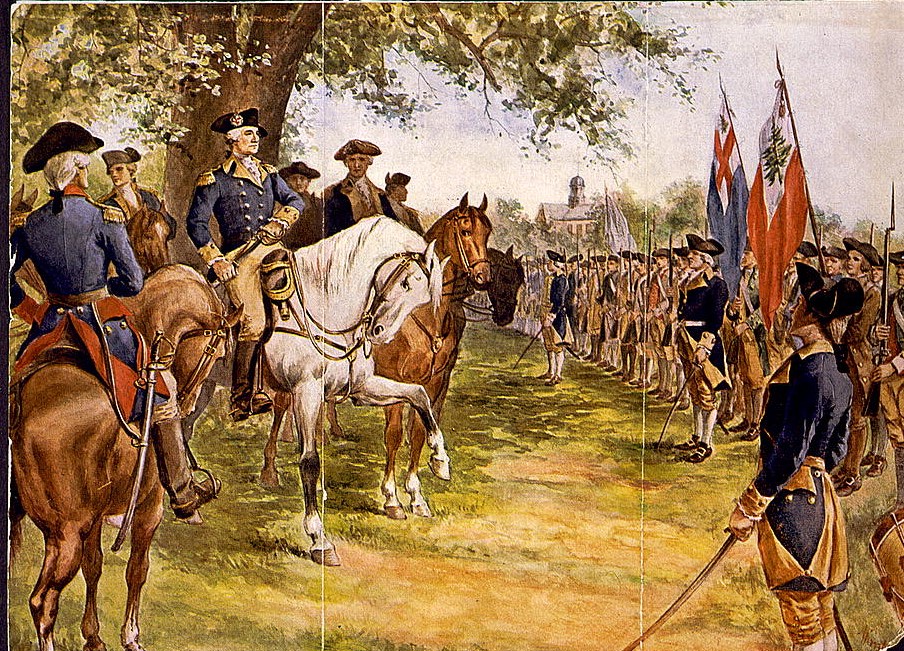
Washington assumes command at Cambridge, Courtesy Library of Congress

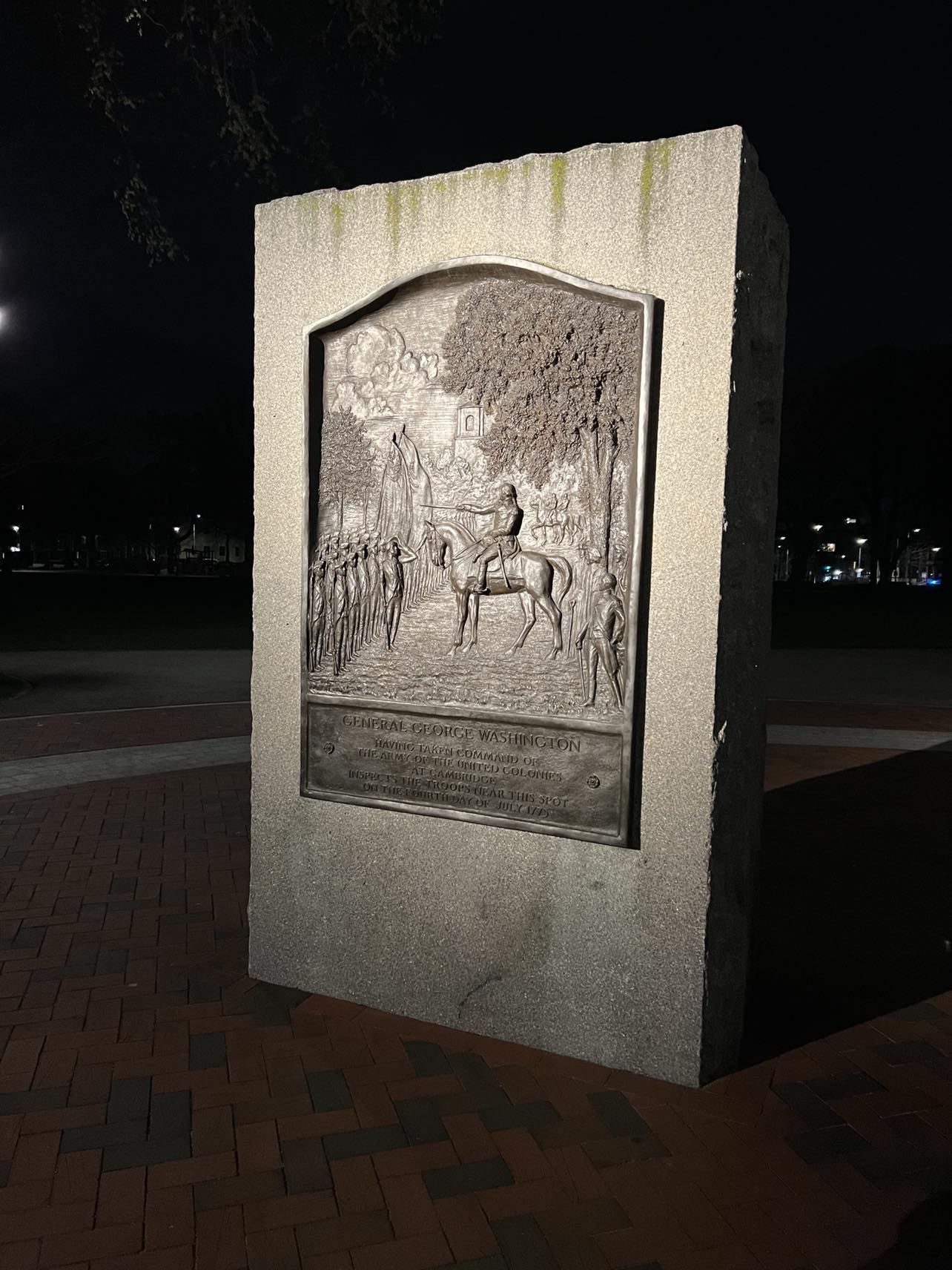
On July 3, Washington appeared before his troops on Cambridge Common, dressed in a blue coat with buff facings, signifying his Virginian roots. There is no official transcript of a speech he may have delivered that day, but contemporary accounts describe a solemn and determined atmosphere. One observer, Reverend William Emerson, noted in his diary, “General Washington… is a tall and noble-looking man, commanding the respect of all who see him.”

Washington immediately set to work imposing discipline, organizing supply chains, and creating a chain of command. Though former commander of the army, Major General Artemus Ward, worked hard on instilling discipline, he was not a man that instilled a lot of confidence. Washington was appalled by the state of the army, writing in frustration to Congress: “The Army… is in a very improper condition to carry on a vigorous War.” He introduced regular drills, uniform codes, and standardized procedures, striving to turn the disparate bands of militiamen into a functioning army. As historian David McCullough noted, “It was Washington’s presence alone that gave the army cohesion.”

Despite his military inexperience—Washington never commanded an army of this size—he brought a unifying vision and moral authority. His appointment was also politically astute, bridging the regional divide between New England and the southern colonies. A Virginian leading New England troops sent a clear message of unity in the face of British oppression.

Marker commemorating Washington on the Cambridge Common, photo by William Griffith

The Cambridge encampment remained Washington’s headquarters until March 1776, when he successfully forced the British evacuation of Boston by fortifying Dorchester Heights with cannons brought from Fort Ticonderoga. This early strategic victory, achieved without major bloodshed, was a major morale boost and affirmed Congress’s faith in their commander.

In retrospect, July 3, 1775, was the beginning of an enduring legacy of leadership and a love of Washington by his men and officers. Through discipline, vision, and personal integrity, he began shaping a ragtag collection of volunteers into the Continental Army, laying the groundwork for American independence.

The Wallace House at 250: New Research and Rehabilitation on Washington’s WinterHeadquarters

Emerging Revolutionary War welcomes guest historian Paul F. Soltis

250 years ago in 1775 John Wallace of Philadelphia was preparing to move. Born in Scotland in 1718, John was the youngest son of the minister of the Church of Scotland at Drumelizer in the Scottish Lowlands south of Glasgow and Edinburgh. While his eldest brother William would take over the ministry in the Kirk following their father’s death, John emigrated from Scotland to the colonies of British North America. Like many Scottish emigrants, Mr. Wallace entered the merchant trade, first in Newport, Rhode Island and eventually in Philadelphia where he met and married Mary Maddox of an established Philadelphia family.

At the opening of the Revolutionary War in 1775, John Wallace purchased 95 acres on the Raritan River in Somerset County, New Jersey from the Rev. Jacob Rutsen Hardenbergh, minister to the Dutch Reformed Churches of the upper Raritan River Valley. At this country estate he called “Hope Farm” Mr. Wallace built the largest home constructed in New Jersey during the Revolutionary War, perhaps “hoping” to escape the revolutionary ferment of Philadelphia. Midway between the British garrison at New York and the Continental Congress in Philadelphia, John Wallace instead found himself at the Crossroads of the American Revolution.

In the fall of 1778, the Continental Army arrived to this region of Somerset County where the Middle Brook flows into the Raritan River for the Middlebrook Cantonment of 1778-79. Nathanael Greene, Quartermaster General of the Continental Army, wrote on October 18, “Middle Brook is situate in a plentyful Country, naturally strong and difficult of access and surrounded with a great plenty of Wood. Great security will also be given to this Camp by the militia of the Country.” Col. Sidney Berry, a deputy quartermaster to Gen. Nathanael Greene, arranged with Mr. Wallace for use of the Wallace House at Hope Farm, a few miles west of the village of Middlebrook, as headquarters for George Washington.

Continue reading “The Wallace House at 250: New Research and Rehabilitation on Washington’s WinterHeadquarters”

“…To a Gentleman in Philadephia”

Fredericktown, Maryland, August 1, 1775, a gentleman on business wrote to his contact in Philadelphia the following observation of a company of volunteers answering the call to head north to Boston to join what would become the Continental Army

“Notwithstanding the urgency of my business, I have been detained three days in this place by an occurrence truly agreeable. I have had the happiness of seeing Captain Michael Cresap marching at the head of a formidable company of upwards of 130 men, form the mountains and backwoods, painted like Indians, armed with tomahawks and rifles and dressed in hunting shirts and moccasins, and though some of them had travelled near eight hundred miles from the banks of the Ohio, they seemed to walk light an easy and not with less spirit than at the first hour of their march. Health and vigour, after what they had undergone, declared them to be intimate with hardships and familiar with danger. Joy and satisfaction, were visible in the crowd that met them. Had Lord North been present, and been assured that the brave leader could raise thousands of such to defend his country, what think you, would not the hatchet and block had intruded upon his mind? I had an opportunity of attending the Captain during his stay in Town, and watched the behavior of his men, and the manner in which he treated them; for it seems that all who go out to war under him do not only pay the most willing obedience to him as their commander, but in every instance of distress look up to him as their friend or father. A great part of his time was spent in listening to and relieving their wants, without any apparent sense of fatigue and trouble. When complaints were before him he determined with kindness and spirit, and on every occasion condescended to please without losing is dignity.”

esterday the Company were supplied with a small quantity of powder from the magazine, which wanted airing, and was not good for rifles ; in the evening, however, they were drawn out to show the gentlemen of the town their dexterity at shooting. A clap board, with a mark the size of a dollar, was put up ; they began to fire at it off band, and the bystanders were surprised, few shots being made that were not close to or in the paper. When they had shot for a time in this way, some lay on their backs, some on their breast or side, others ran twenty or thirty steps, and firing, appeared to be equally certain of the mark. With this performance the company were more than satisfied, when a young man took up a board in his hand, not by the end, but by the side, and holding it up, his brother walked to the distance, and very coolly shot into the white ; laying down bis rifle, he took the board, and holding it as it was held before, the second brother shot as the former had done. By this exercise I was more astonished than pleased. But will you believe me, when I tell you, that one of the men took the board, and placing it between hia legs, stood with his back to the tree while another drove the centre. What wonld a regular army of considerable strength in the forests of America do with one thousand of these men, who want nothing to preserve their health and courage but water from the spring, with a little parched corn, with what they can easily procure in hunting ; and who wrapped in their blankets, in the damp of night, would choose the shade of a tree for their covering, and the earth for their bed.”

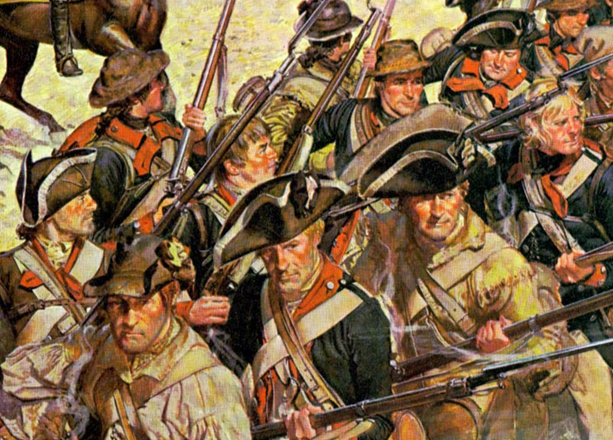
Although a depiction of the 1st Maryland at Guilford C.H in 1781 some of these men are dressed similar to the riflemen mentioned above (wikipedia)

*Account is in “Papers Relating Chiefly To the Maryland Line During the Revolution” Thomas Balch, editor. pgs. 6-7.

Washington’s First Headquarters

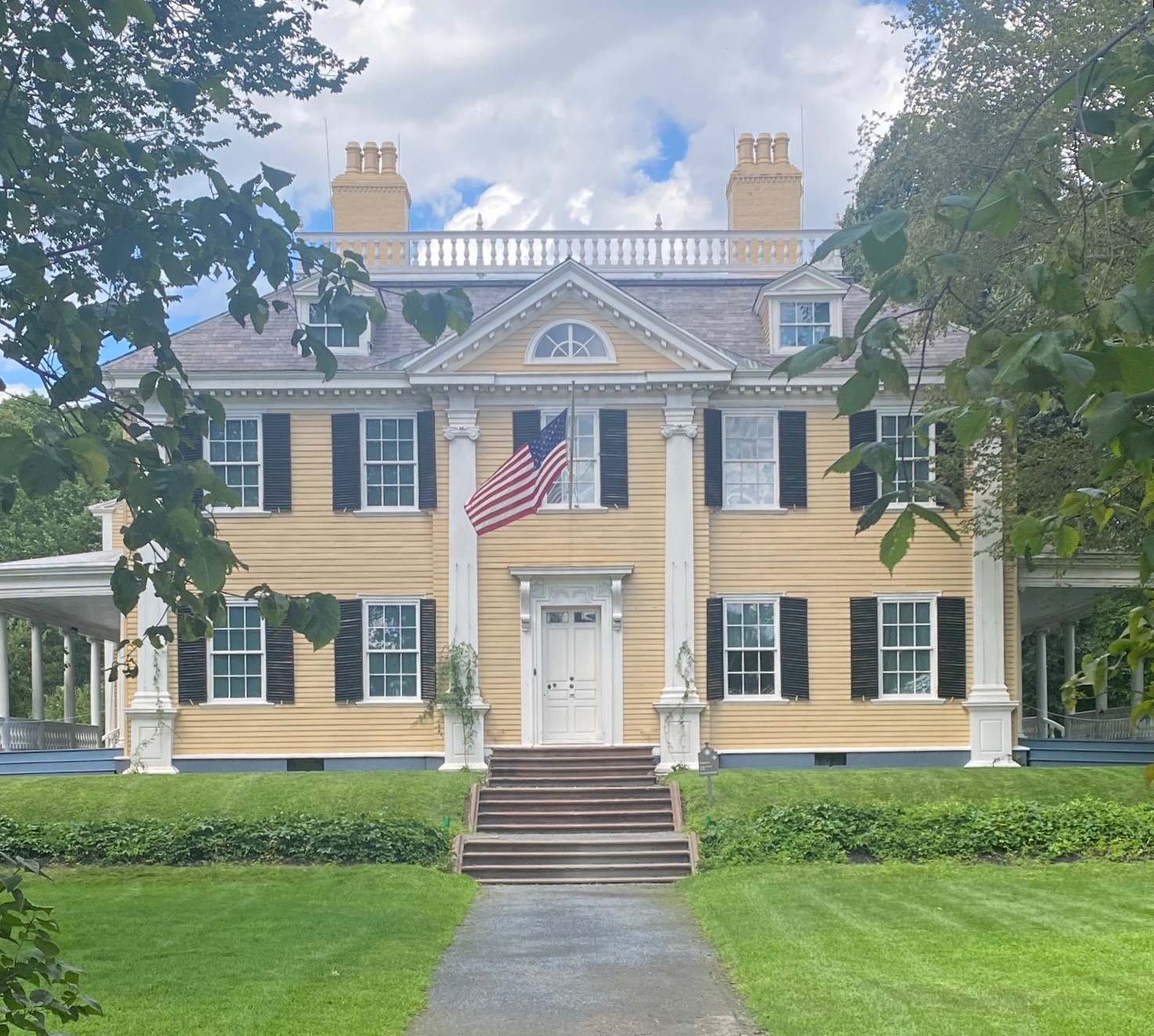
On June 15, 1775, George Washington was appointed by the Second Continental Congress as commander-in-chief of the Continental Army. Approximately a month later he rode into Cambridge, Massachusetts, to the house below, to assume command over that army. After he met the officers at Jonathan Hastings House near Harvard College campus, learning about operations and the siege. He was then directed toward an opulent residence standing about a mile away. Named the Vassall-Craigie-Longfellow residence, this place would become the focal point of the effort against the British in Boston. Washington moved in. He spent the next nine months in residence, overseeing the Siege of Boston and the British evacuation.

From this house, Washington began putting his footprints on the army and met some of the officers that became instrumental in securing American independence. This included the Rhode Islander Nathanael Greene and Massachusetts native and bookseller Henry Knox among others. Martha Washington, in December 1775, traveled over 440 miles from Mount Vernon to Cambridge to winter with her husband in this house. The making of Washington, the general, started here.

The power of place.

Today, the house preserved by the National Park Service today can be toured, click here for information.

“Rev War Revelry” Revolutionary Blacks, Discovering the Frank Brothers, Discussion with Dr. Shirley L. Green

Approximately 5,000 African-American or Black soldiers fought for the patriot cause in the American Revolution. Some joined state militias, some joined the Continental Army, and some sailed the seas with the fledgling navies of the United Colonies. William and Benjamin Frank were two of those 5,000. Both were free Blacks from Rhode Island who enlisted in the 2nd Rhode Island Regiment in 1777. Their father was a veteran of the French and Indian War, so the family was well-established in military tradition.

The 2nd Rhode Island fought and defended Fort Mercer during the campaigns of 1777 and survived harsh winters at Valley Forge and Morristown before returning to Rhode Island to literally defend the hearth and home from the British. Author and historian Dr. Shirley L. Green, adjunct professor at the University of Toledo, a 26-year veteran of the law enforcement community, and current Director of the Toledo Police Museum in Ohio, “takes the reader on a journey based on her family’s history, rooted in its oral tradition.”

Her book Revolutionary Blacks, Discovering the Frank Brothers, Freeborn Men of Color, Soldiers of Independence was published by Westholme Publishing in November 2023.

Furthermore, Dr. Green puts “together the pieces of the puzzle through archival research, interviews, and DNA evidence” to authenticate and expand the family history. The end result is a very readable and needed addition to the historiography of the American Revolution. Her ability to tell “a complex account of Black life during the Revolutionary Era demonstrates that free men of color…demonstrates that free men of color shared with white soldiers the desire to improve their condition in life and to maintain their families safely in postcolonial North America.”

Emerging Revolutionary War looks forward to an engaging and informative discussion with Dr. Green, this Sunday, at 7 p.m. EDT on our Facebook page. We hope you can tune in for this next episode of Emerging Revolutionary War’s “Rev War Revelry.”

For more information about the book and to order a copy, click here.

Looking toward May and warmer weather…

For those in certain geographical areas of the United States winter weather and temperatures are upon us. The barometer fluctuates between highs and lows and wind whips through open spaces. Similar to the winter encampment at Valley Forge in 1777-1778. Much like the soldiers of the Continental army, looking toward warmer weather in the spring so should you! And it includes a visit to Valley Forge as well!

Join Emerging Revolutionary War historian Phillip S. Greenwalt and other historians in the Pursuit of History: Forging the Continental Army as part of the HistoryCamp.org event weekend. Starting on May 19, 2023 the event rolls through the weekend, Check out the full event page, including the book package where you can secure a copy of The Winter that Won the War, the Winter Encampment at Valley Forge 1777-1778, a volume in the popular Emerging Revolutionary War Series published by Savas Beatie, LLC.

To learn more and book your spot, click here.

Rounding out the year with a round-up from our friends at Americana Corner

As 2022 winds down, Emerging Revolutionary War wanted to share one more round-up of what our good friends at Americana Corner were doing in this last month of the year. We hope to continue to partner with Americana Corner in the 2023 and bring new content and new enthusiasm for this critical period in American history to the forefront. To all our readers, thank you and we all at Emerging Revolutionary War hope you have a great ending to 2022 and a Happy New Year!

A few blog posts for light reading as you wind down December…

Washington Takes Command
December 27, 2022

When it came to finding the right man to command the new Continental Army assembled around Boston, George Washington was the logical choice. John Adams quickly nominated Washington and Congress unanimously approved. As Adams stated, “This appointment will have a great effect in cementing and securing the Union of these colonies.”

Read More

George Washington Enters Politics
December 20, 2022

As befitting a wealthy landowner in colonial Virginia, George Washington became active in the colony’s politics in the 1750s. He first ran for a seat representing Frederick County in the Virginia House of Burgesses in 1755 but lost the election. Interestingly, it was the only political race he would ever lose. Washington ran for that same seat in 1758 and was victorious, and he held this seat for seven years.

Read More

The Life of Martha Washington
December 13, 2022

Martha Washington was our nation’s first First Lady and lived in the shadow of her larger-than-life husband George. However, most Americans do not realize that she was a very capable woman and, when given the opportunity, managed her own affairs quite well.

Read More

George Washington’s Life at Mount Vernon
December 6, 2022

When George Washington resigned as Colonel and Commander of the Virginia Regiment in 1758, he returned to Mount Vernon to begin his life as a gentleman planter. Although in less than twenty years Washington would be called away by his country, his time between the French and Indian War and the American Revolution was a significant portion of this great man’s life.

Read More

The March from White Marsh

From November 2, 1777 until early-December, General George Washington and the Continental Army occupied a defensive position at White Marsh, approximately 13 miles northwest of Philadelphia. In early December, a series of small skirmishes erupted along the American lines in the last actions of the campaigning season of 1777. Frustrated by Washington’s refusal to emerge from his entrenchments, Sir William Howe led his British columns back to their winter abode in Philadelphia.

Washington moved the army shortly thereafter toward Valley Forge and their winter cantonment, arriving in that vicinity on December 19. As Washington prepared for the winter of 1777-1778 you can also start the preparations to follow this route with Emerging Revolutionary War on the weekend of November 11 – 13, 2022 on the Rise of the American Army: Valley Forge and the Battle of Monmouth Bus Tour. To secure your spot and further information, click here (or the link on the banner at the top of this page).

African Americans Serving in the American Revolution

If you tuned into our “Rev War Revelry” with historian and author John U. Rees on Sunday, you may have heard him mention a few links and a blog where he adds information that did not make it into the book. Or has come to light since the publication of his history “They Were Good Soldiers: African-Americans in the Continental Army, 1775-1783.”

John was nice enough to provide the following as a follow-up for those interested in reading more into the subject.

African Americans Serving in the Armies of the Revolution
(PDF, click here).

Book:

“They Were Good Soldiers”,  

Additional post-publication updates and information: 

List of soldiers and women featured in the book. 

African American soldier-servants. 

African American women with the army. 

Author interviews pertaining to the book. 

Entries for blog:

“More ‘Good Soldiers’”: 

Revised percentages for 1778 army “Return of Negroes.” 

Officers’ observations of black Continental soldiers. 

Ranney’s painting “Cowpens” and black cavalry soldiers. 

List of soldiers and women featured in the book. 

Black Continental soldiers at the Battle of Monmouth. 

Printed 19th century remembrances of black veterans 

Articles

Articles the book was based on including African Americans in Southern Continental regiments plus transcribed pension files used for that study.  

Jeffrey Brace, African slave and Continental soldier 

Other authors:  

Black soldier motivations (Scoggins) 

Loyalist Ethiopian Regiment (Copeland) 

Black soldiers at New Windsor cantonment (Thorenz) 

Hannah Till, wartime servant to Washington (Cole) 

Thomas Carney, Maryland Continental (Calder) 

Black Hessians (Jones) 

Military role of black Loyalists (Braisted) 

Author Discussion ERW Facebook Live:

To watch the interview with John, click over to Emerging Revolutionary War’s Facebook page and click on the “Videos” tab. To access the page, click here.

Continental Soldiers
The two of soldiers on the left, drawn in 1781 by French Sublieutenant Jean-Baptiste-Antoine de Verger, Royal Deux-Ponts Regiment, are a private of the Rhode Island Regiment, and a soldier of Hazen’s Canadian Regiment. The next in line is a Virginia rifleman, while the last man is a Continental artileryman. Howard C. Rice and Anne S.K. Brown, eds. and trans., The American Campaigns of Rochambeau’s Army 1780, 1781, 1782, 1783, vol. I (Princeton, N.J. and Providence, R.I.,: Princeton University Press, 1972), between pages 142-143 (description on page xxi). Anne S.K. Brown Military Collection, Brown University.  

“Rev War Roundtable with ERW” Focuses on African American soldiers during the American Revolution with author and historian, John U. Rees

Baron Ludwig von Closen, aide–de–camp to French General Rochambeau, wrote in July 1781: 

 “I had a chance to see the American Army, man for man. It is really painful to see those brave men, almost naked with only some trousers and little linen jackets, most of them without stockings, but, would you believe it, very cheerful and healthy in appearance … It is incredible that soldiers composed of men of every age, even children of fifteen, of whites and blacks, unpaid and rather poorly fed, can march so fast and withstand fire so steadfastly’.” 

During the American Revolution, African-Americans, both freed and enslaved, fought for the patriots. Some wielded muskets in militia outfits whereas others were part of the Continental army. African-Americans were there from the Siege of Boston through the end of the conflict. In fact, until the Korean War the American Revolution was the last time a United States military force was integrated in time of war.

Although publications have been printed about the 1st Rhode Island or comparative studies between Africans that served for the British or patriots. However, the field needed a dedicated study of African-Americans that served in the Continental army. Enter John U. Rees.

A lifelong Bucks County, Pennsylvanian who has studied and written about the soldiery of the American Revolution for the past three decades. He is published many times over and this Sunday, he will join Emerging Revolutionary War at 7 p.m. on “Rev War Revelry.”

The discussion will include his new book, “They Were Good Soldiers’: African-Americans Serving in the Continental Army, 1775-1783.” Which is now available for purchase online. ‘They Were Good Soldiers’: African Americans Serving in the Continental Army, 1775-1783 begins by discussing the inclusion and treatment of black Americans by the various Crown forces (particularly British and Loyalist commanders, and military units). The narrative then moves into an overview of black soldiers in the Continental Army, before examining their service state by state. Each state chapter looks first at the Continental regiments in that state’s contingent throughout the war, and then adds interesting black soldiers’ pension narratives or portions thereof. The premise is to introduce the reader to the men’s wartime duties and experiences. The book’s concluding chapters examine veterans’ post-war fortunes in a changing society and the effect of increasing racial bias in the late eighteenth and early nineteenth centuries. 

Besides the book dialogue, a general conversation about the roles of African-Americans in the American Revolutionary period. So, find your favorite brew, bring your questions and insights, and join John Rees and ERW on Sunday evening on our Facebook page.

For more articles by our guest historian John Rees, visit https://tinyurl.com/Rees-author-only . An online compendium of articles on African Americans in the Revolutionary era is available at https://tinyurl.com/Afr-Amer-Rev-War .