First, thank you all for understanding with the technical difficulties of yesterday’s potential Facebook Live.
Over this past weekend, the 210th anniversary of the Battle of Bladensburg and the Burning of Washington by British troops took place. In a potential future tour, I was scouting out locations around our nation’s capital that are connected with the year 1814. Although some of the sites have been rebuilt, some of the history is preserved in museums, and one of the places is still occupied by the president of the United States, there is still a lot of history underfoot related to the War of 1812.
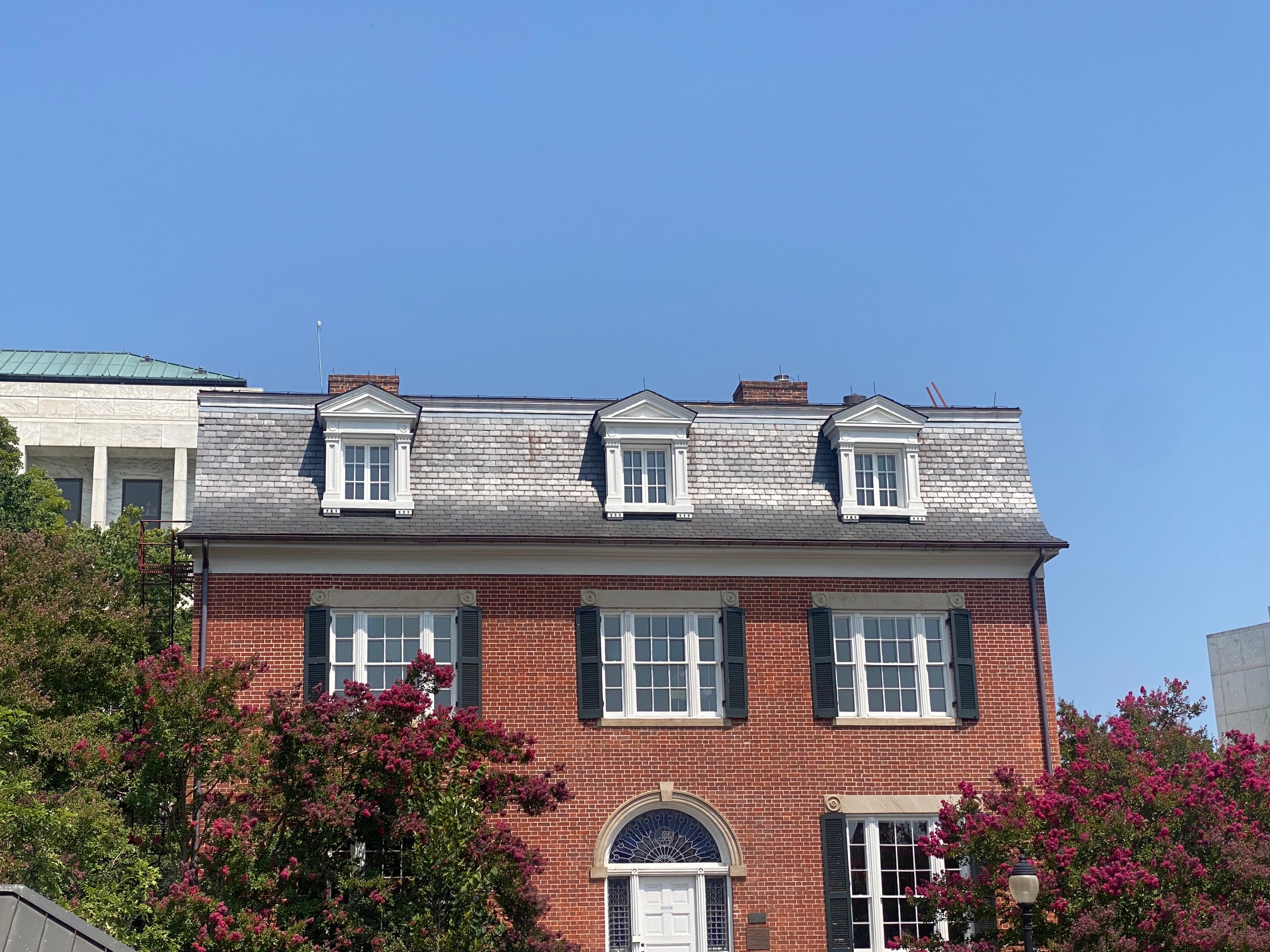
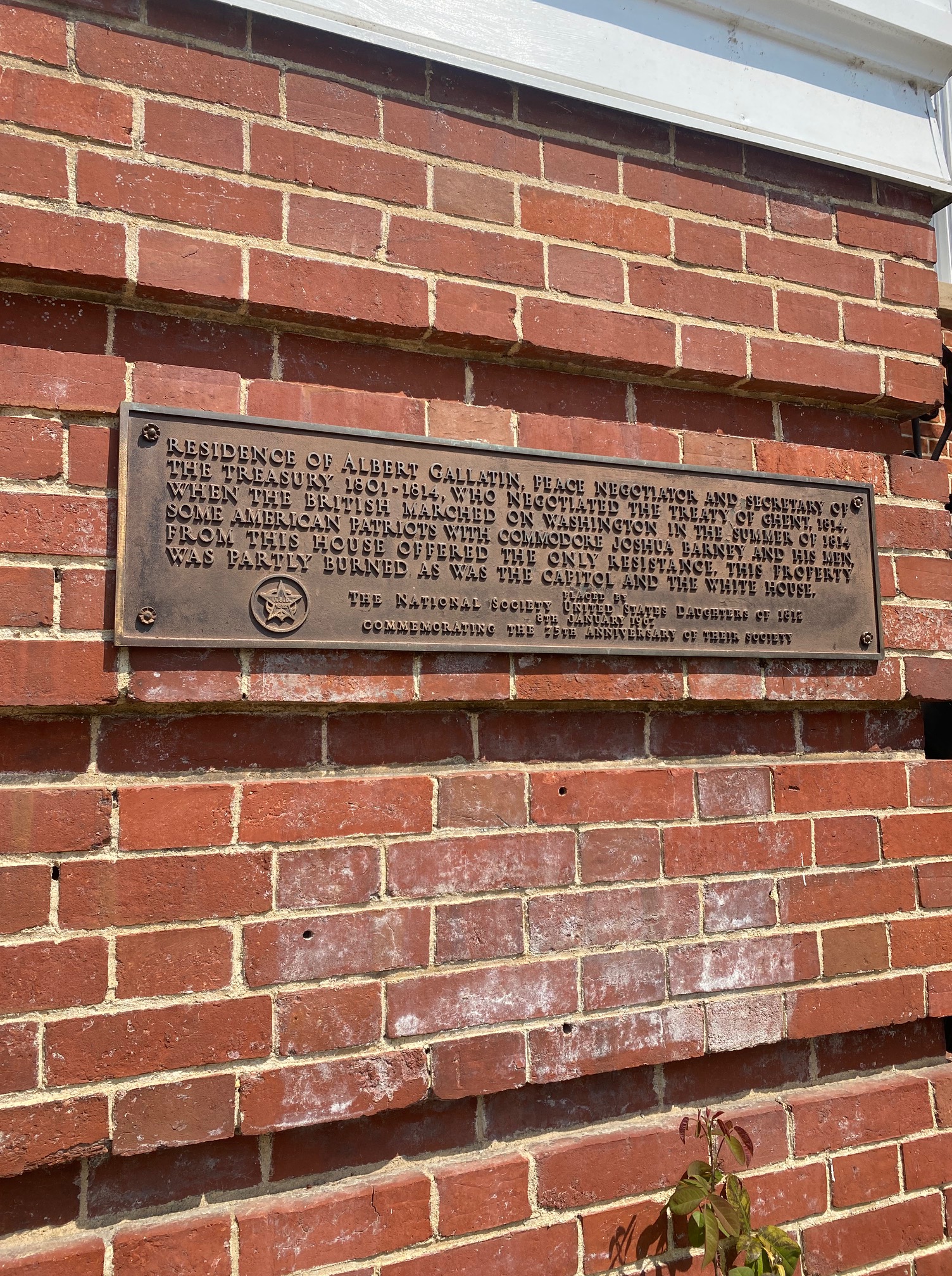
Some of that history is below. Robert Sewall built a house sometime between 1800 on 2nd and Maryland Avenue Northeast but with an inheritance from an uncle’s passing moved to southern Maryland. He rented the property to Albert Gallatin, who would serve as treasury secretary under both Presidents Thomas Jefferson and James Madison. In 1813, Gallatin left to become one of the United States peace commissioners in Ghent, Belgium charged with negotiating a treaty to end the War of 1812. William Sewall, Robert’s son, took responsibility for the house at that point. William served with Commodore Joshua Barney during the War of 1812 and records do not indicate he ever lived at the residence.
During the British march into the city, a group of Barney’s men took refuge in the residence and fired shots at the enemy column. Two British soldiers were killed and the horse of Major General Robert Ross was also struck. Ross ordered men into the structure to clear the snipers but not finding the culprits, the infantrymen burnt the property in retaliation. This would be the only private property burnt during the British incursion into Washington.
The property remained in the Sewall family, the house was rebuilt in 1820 and is now the Belmont-Paul Women’s Equality National Monument, a unit of the National Park Service.
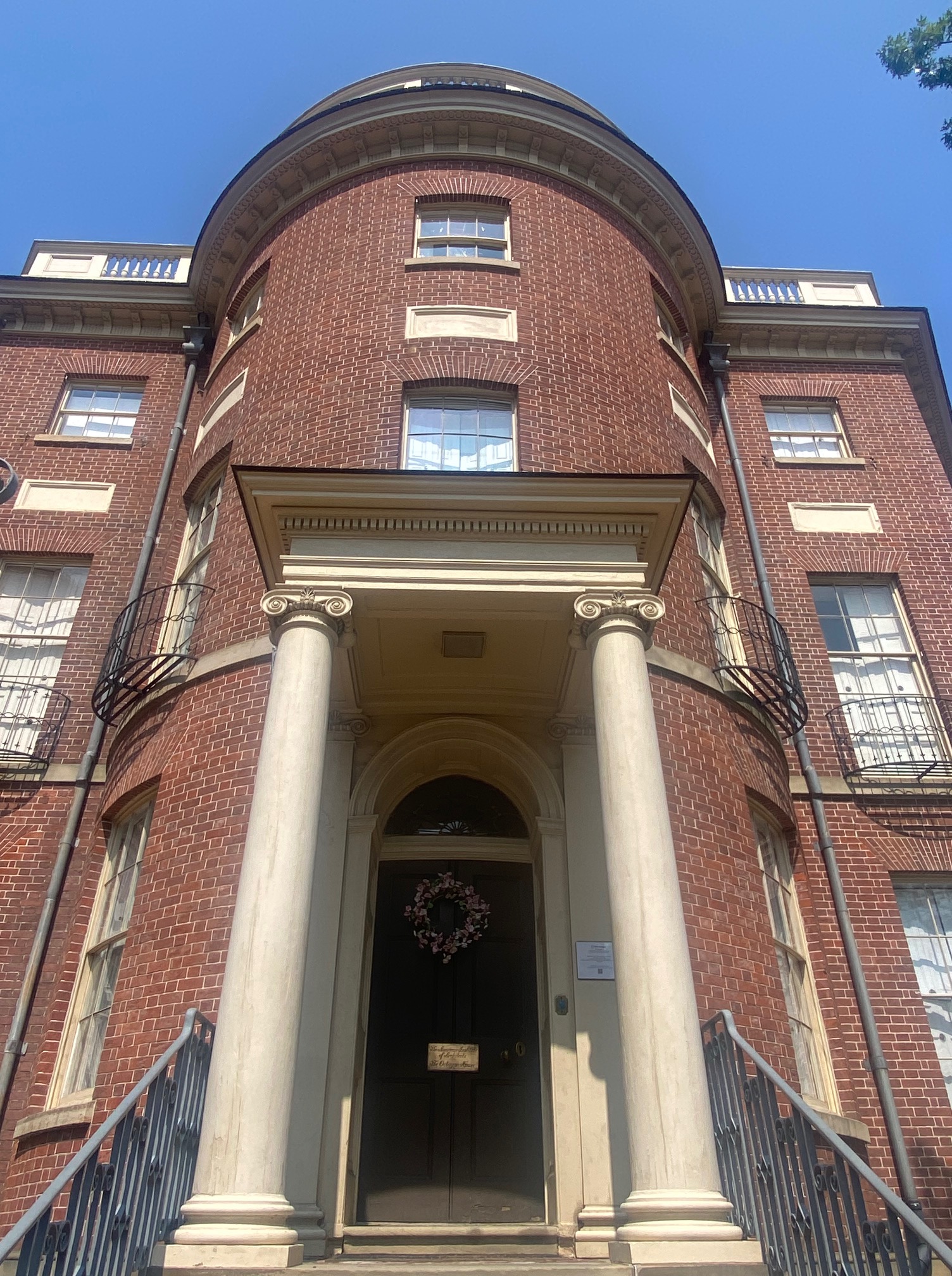
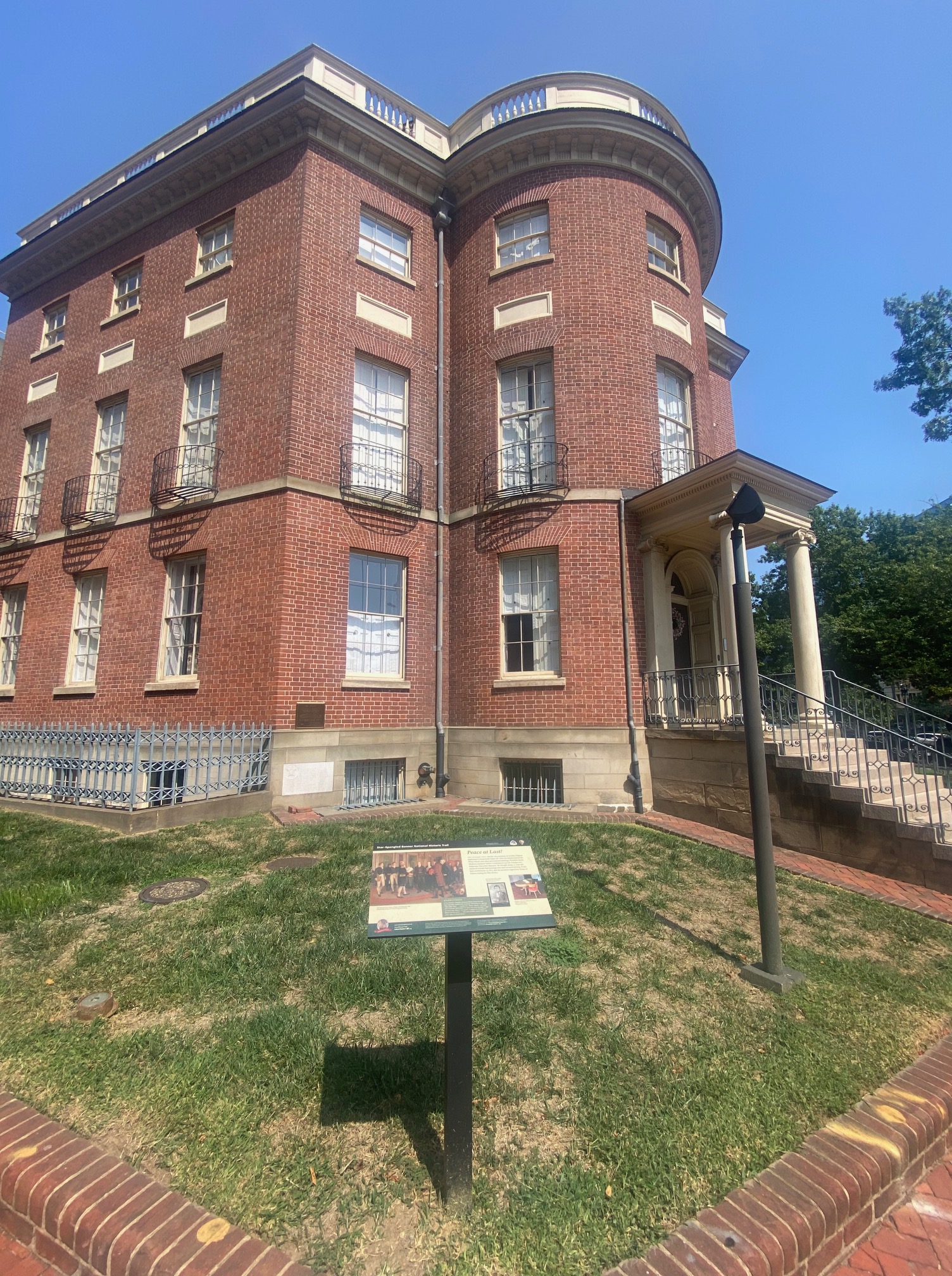
After returning to Washington, the Madison’s took residence here, in the house of John Tayloe III. On September 8, 1814, the Madison family moved in and in an upstairs room, the president received the peace treaty negotiated in Ghent, Belgium. He ratified the treaty in the upstairs study on February 17, 1815. When the Madison family vacated the quarters, six months after moving in, Tayloe received $500 in rent from their stay.
Emerging Revolutionary War welcomes back guest historian Michael Aubrecht
In 1777 Thomas Jefferson and a committee of revisors came to the City of Fredericksburg for the purpose of revising several Virginia statutes. This led to Jefferson drafting the Virginia Statute for Religious Freedom.
When Jefferson and his comrades arrived in Fredericksburg they were met with a town bristling with military activity. Troops were drilling in the public square and filled the crowded streets, buildings and shops. Awaiting travel orders were the men of the Second Virginia and the Seventh Virginia, ordered here on January 9 for a rendezvous just prior to marching to join General Washington at the front. By the time Jefferson arrived in Fredericksburg, sixty of the more than two hundred battles and skirmishes of the war had already taken place.
I chose the long way to Revolutionary War history. Part of it can be blamed on the co-founders and early bloggers on ERW. They convinced me, a Civil War historian, to come to the “dark side,” and study the more pivotal, more complex, and more important era in American history. And thus I joined this merry band and “threw in” to start learning more about our turbulent founding. I can’t say that I am a master of this domain yet, but I’ve come a long in several years.
Today, however, as I walked through one of our country’s national cemeteries, one that does not have any dead from our War for Independence, I began thinking about the American consciousness and the path toward someone’s interest in our military history. I began by reflecting on my own experience and why I was drawn to study the Civil War. Certainly, visiting Civil War battlefields as a young child with a toy musket and kepi sold me easily enough to want me to pursue this field of study as a future career. But maybe it was also the impact of visual media. I could see my childhood heroes in pictures taken at the time, the wreckage of the battlefield, and the plight of dead and dying soldiers on those fields and at field hospitals.
So maybe the Revolutionary period does not garner the attention that study of later wars does as it lacks photographs, and for later conflicts, film, film with sound, and live frontline reporting on tv and the internet. But time may also factor into the perception of interest levels. Iraq, Afghanistan, Desert Storm, and Vietnam veterans are still with us, and although their numbers are marching into history, the Korean War and World War II generations. Their presence in our society makes the conflicts in which they served seem not so long ago, rather, more like recent history. As a public historian, however, when I have discussions regarding World War I and the Civil War it’s viscerally noticeable that modern society has a harder time making tangible connections to these moments in American history. It simply seems much further into the past, a long, long time ago to them. Maybe because there are no longer any living veterans from these wars. Bringing the Revolutionary War into the discussion only makes it seem even more remote from present day. The general public’s perception of time when thinking of this era might as well be the Dark Ages, but it is not even 250 years old yet. We are still a country in its infancy by world comparison. Thus, it’s a harder “sell” to the masses to become involved or interested in the Revolutionary War era outside of a cast of a few prominent characters, George Washington among the very top of that list.
Since April 2023, however, I have been on a crusade to change that thinking as I work with the public. The Revolutionary War was not that far away, and although we only have paintings and sketches from the war rather than photographs and live action film, it is enough to spark an interest and deeper appreciation and understanding. Perhaps, though, it is the tangible reminders of the war that can once and for all disprove the notion that this period is too far removed into the past to be relevant, worth note, or even remembrance.
Nearly eighteen months ago I stood on the battlefield of Camden, fought August 16, 1780. I watched as horsedrawn caissons returned the remains of twelve Continental soldiers of the Maryland and Delaware regiments, one British Loyalist of a North Carolina regiment, and one Scottish Highlander, 71st regiment back to the battlefield. The remains had been discovered earlier in 2022. After a moving ceremony, among a massive crowd gathered to pay their respects, I was able to walk among the flag draped coffins, made of wood from the battlefield itself. I was standing mere inches from soldiers that had given their lives on that field 243 years earlier. The vail of time instantly dropped at that stark realization. The Revolutionary War was not far into the past, hemmed in among long lost American decades. Rather it was right in front of me, in the present, in the now. You could further walk the battlefield that April weekend. Four white flag markers denoted the four corners of where each set of remains were found on the battlefield. You could literally see the battle unfold before you, and now lay witness to where these men had died and fell all those years before.
I have had many powerful experiences at historic sites of the years. Standing or walking in the footsteps of historical giants, visiting gravesites, being present on anniversaries of important moments. But no experience was as powerful as this day. And so, on this day, I reflect on the battle of Camden, South Carolina. I reflect on that April day. And I reflect on the unfinished work that lay ahead during the 250th anniversary commemorations of the Revolutionary War as public historians. We must rededicate ourselves “to the great task remaining before us” to bring these pivotal, complex, and important moments of this era back into the American consciousness and to ensure it remains ever present for the next 250 years.
Emerging Revolutionary War welcomes guest historian Evan Portman
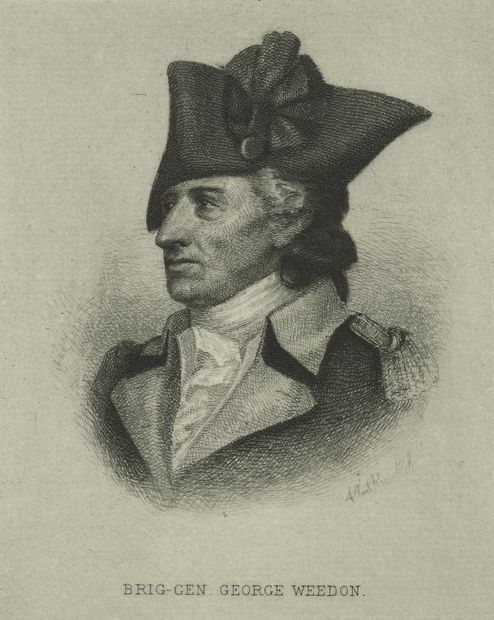
Overlooking the Grand Parade at Valley Forge National Historical Park is a statue almost as solid as the man it portrays. Baron von Steuben helped transform the American army into an effective and efficient fighting force in the winter of 1777-1778, but he also aided the country nearly a century and a half later. Yes, Baron von Steuben helped the United States through World War I—or at least the social turmoil on the home front.
Friedrich Wilhelm August Heinrich Ferdinand Steuben was born in Prussia (modern day Germany) in 1730 and served in the Prussian army through the Seven Years’ War. By 1775, Steuben had accrued a considerable amount of debt (despite his stature within the aristocracy), so he sought a foreign military appointment. Failing to catch the eye of the British, French, or Austrians, the Baron set his sights on the fledgling American government. Congress arranged for Steuben to be paid, depending on the outcome of the war, and sent him to the winter encampment at Valley Forge. There, he began drilling the Continental army and instituted better hygiene and sanitation practices. He also wrote a drill manual, which he published in 1779 as Regulations for the Order and Discipline of the Troops of the United States. After the encampment at Valley Forge, Steuben participated in the Southern Campaign of the Revolutionary War. After the Siege of Yorktown, Congress awarded the Baron a tract of land in New York where he died in 1794.
Emerging Revolutionary War welcomes guest historian Nicholas Benevento.
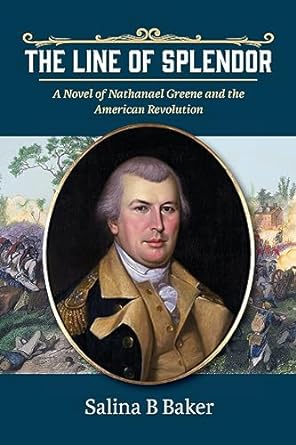
“The Line of Splendor: A Novel of Nathanael Greene and the American Revolution” is a historical novel written by Salina Baker. In her novel, she brings to life a figure who deserves more fame and recognition for his pivotal role in the Revolution. Nathanael Greene was a selfless general and leader who fought valiantly to defend his country and provide for his troops. He was a man who defied the odds and was placed in a position of power and leadership, a favorite of General George Washington. He was a man willing to put everything on the line for the independence and freedom of the United States.
Baker’s book picks up with Nathanael Greene’s life early in the 1770s when Nathanael is about the age of thirty. At this time, there were growing tensions in the American Colonies with Mother England. Shortly before the war broke out, Nathanael married his wife Caty in 1774, and Baker does a masterful job weaving their relationship into the story of his time in the war.
Baker’s work is a fascinating depiction of Nathanael Greene and the American Revolution. Readers of history often read facts and descriptions of events, which Baker provides. But she also takes the reader into the thoughts and conversations of Nathanael Greene, as well as other key figures in his life. Therefore, while this is a fiction novel, enthusiasts of this time period in American history would love this novel. Baker weaves in the history of the war, while also providing us with dialogue and feelings of Nathanael. Baker’s novel is a reminder to the reader that the generals and soldiers who fought in the Revolutionary War were not mythical figures who fought a war that would inevitably end in an American victory. These were real men with real emotions carrying their insecurities and flaws, while experiencing the highs and many lows of the war. Greene was central to many of the key battles early in the war, from the siege of Boston, to the debacle of New York, to the triumph of Washington’s crossing of the Delaware, to the trying times at Valley Forge. Greene held a tremendous weight on his shoulders throughout the war, especially when he led the Southern Army late in the war during the Southern Campaign.
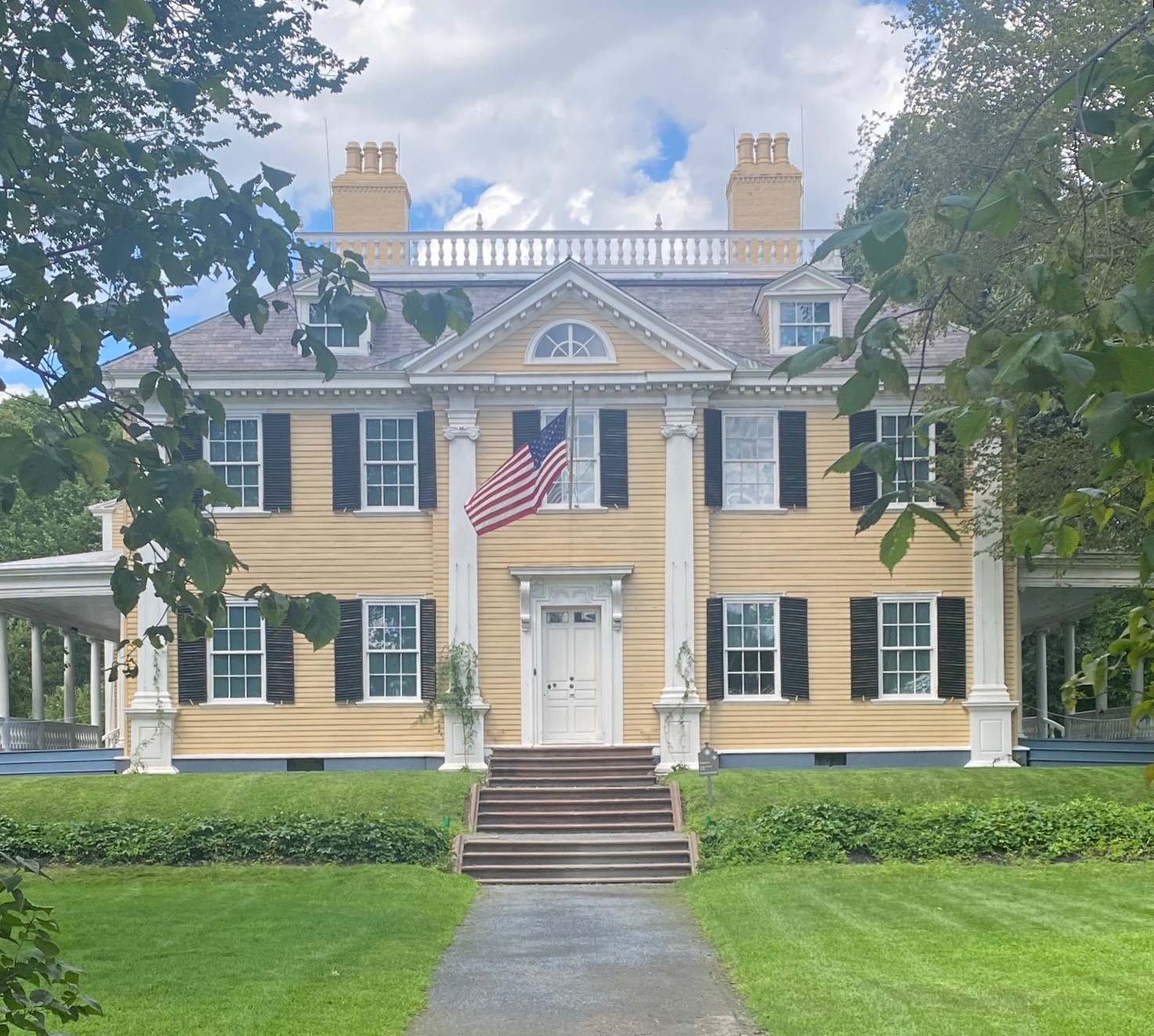
On June 15, 1775, George Washington was appointed by the Second Continental Congress as commander-in-chief of the Continental Army. Approximately a month later he rode into Cambridge, Massachusetts, to the house below, to assume command over that army. After he met the officers at Jonathan Hastings House near Harvard College campus, learning about operations and the siege. He was then directed toward an opulent residence standing about a mile away. Named the Vassall-Craigie-Longfellow residence, this place would become the focal point of the effort against the British in Boston. Washington moved in. He spent the next nine months in residence, overseeing the Siege of Boston and the British evacuation.
From this house, Washington began putting his footprints on the army and met some of the officers that became instrumental in securing American independence. This included the Rhode Islander Nathanael Greene and Massachusetts native and bookseller Henry Knox among others. Martha Washington, in December 1775, traveled over 440 miles from Mount Vernon to Cambridge to winter with her husband in this house. The making of Washington, the general, started here.
The power of place.
Today, the house preserved by the National Park Service today can be toured, click here for information.
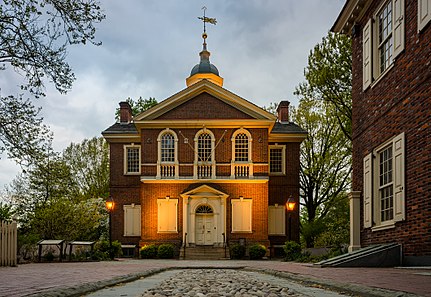
Join us this Sunday, July 7th at 7pm for our next Rev War Revelry as we continue to commemorate the 250th anniversary of the events that led to the American Revolution. We welcome Executive Director Michael Norris to discuss the historic Carpenters Hall in Philadelphia and the role it played in hosting the First Continental Congress. The First Continental Congress convened in Carpenters’ Hall in Philadelphia, Pennsylvania, between September 5 and October 26, 1774. Delegates from twelve of Britain’s thirteen American colonies attended. The Congress was a direct result of the Parliament’s reaction to the Boston Tea Party (December 1773). This gathering of colonial leaders intended to create a united front in their response to what they believed was Parliamentary over reach in the “Coercive Acts.”
Grab a drink and join us on our You Tube Channel: https://www.youtube.com/@emergingrevolutionarywar8217 Feel free to interact with the discussion by adding questions in the video chat. Once the video is over we will repost the video to our Facebook page and our Spotify account. We hope to see you then!
Emerging Revolutionary War welcomes guest historian, Nathaniel Parry, a brief bio follows this post.
The American Revolution was a victory of liberty over tyranny made possible by a mixture of courage, grit, and virtue. It was also, however, a morally ambiguous affair with some of the main participants motivated as much by ambition as they were by idealism. While many of the founding generation prided themselves on their virtue, vice also played an important role in their rebellion against the British, and to fully appreciate this reality, it is useful to examine the role of alcohol, which turns up at many of the revolution’s key moments.
In ways sometimes subtle and often quite important, alcohol provided the impetus for the nation’s founding, belying the pristine image of an honorable rebellion of virtuous patriots against liberty-hating tyrants. From John Hancock celebrating the repeal of the Stamp Act in 1766 by “treat[ing] the Populace with a Pipe of Madeira Wine,” as one newspaper reported,[i] to militiamen wetting their whistles at Buckman Tavern before the Battle of Lexington and Concord,[ii] to General George Washington ordering “an extra ration of liquor to be issued to every man”[iii] in celebration of Britain’s recognition of America’s independence in 1783, alcohol pops up again and again during the revolutionary era. This was a reflection of the fact that drinking was an integral part of daily life in early America.
John Hancock and the Liberty Affair
With heavy drinking habits widespread among all classes and regions, the rum distillery industry flourished in the colonies, made possible by cheap imports of molasses from the West Indies. By one count, there were more than 150 rum distilleries in New England before the revolution, and throughout the colonies some five million gallons of rum were being produced.[iv] In order to ensure access to the cheapest molasses available and to bypass restrictive English regulations such as the Navigation Acts and 1733 Molasses Act, smuggling became rampant in the colonies, a problem that Parliament sought to address with the adoption of the Sugar Act in 1764. An attempt to crack down on smuggling and increase revenue, the Sugar Act had the effect of increasing the price of manufacturing rum and negatively affected the exporting capacity of New England distillers, leading to consternation among merchants. It also heavily taxed the formerly duty-free wine from Madeira, Portugal, which was popular throughout the colonies. This angered both merchants and consumers.[v]
On this date, in 1812, President James Madison, the fourth president of the United States of America, signed declared war on Great Britain, to go into effect the next day. This is the date Madison signed the measure into law, after sending it to Congress on June 1.
The wording, in its entirety, is below:
BY THE PRESIDENT OF THE UNITED STATES OF AMERICA A PROCLAMATION Whereas the Congress of the United States, by virtue of the constituted authority vested in them, have declared by their act bearing date the 18th day of the present month that war exists between the United Kingdom of Great Britain and Ireland and the dependencies thereof and the United States of America and their Territories: Now, therefore, I, James Madison, President of the United States of America, do hereby proclaim the same to all whom it may concern; and I do specially enjoin on all persons holding offices, civil or military, under the authority of the United States that they be vigilant and zealous in discharging the duties respectively incident thereto; and I do moreover exhort all the good people of the United States, as they love their country, as they value the precious heritage derived from the virtue and valor of their fathers, as they feel the wrongs which have forced on them the last resort of injured nations, and as they consult the best means under the blessing of Divine Providence of abridging its calamities, that they exert themselves in preserving order, in promoting concord, in maintaining the authority and efficacy of the laws, and in supporting and invigorating all the measures which may be adopted by the constituted authorities for obtaining a speedy, a just, and an honorable peace. In testimony whereof I have hereunto set my hand and caused the seal of the United States to be affixed to these presents. Done at the city of Washington, the 19th day of June, 1812, and of the Independence of the United States the thirty-sixth. By the President: JAMES MADISON. JAMES MONROE, Secretary of State.
*Transcript courtesy of the Miller Center at the University of Virginia.*
Yes, this may be the first college student protest recorded in what became the United States of America.
No, this was not just about butter or butter substitutes.
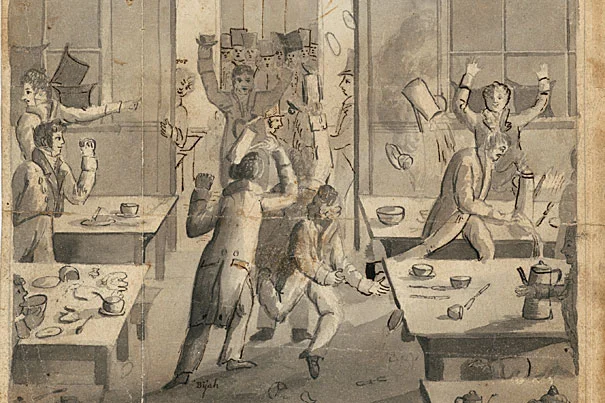
At Harvard College, in 1766, three students, all seniors at the institution, Asa Dunbar, Daniel Johnson, and Thomas Hodgson had had enough of the lack of fresh food being served to the student body. Dunbar, who may be best known as the grandfather of Henry David Thoreau, led the protest, stating that the butter served by the college was “stinketh” and he incited the student body to reject this rancid fare by jumping onto his chair and yelling
“Behold our butter stinketh! Give us therefore butter that stinketh not!”
Dunbar faced disciplinary action, being punished for insubordination and instigating a potential riot. After he received his punishment, the student body enacted another protest, by walking out of the hall, cheering loudly in Harvard Yard, and continuing into Cambridge to dine instead. To give some credit to the college, the adminstration acknowledged the butter ws rancid. With restrictions due to economic difficulties the availability of fresh food was limited however.
As Massachusetts moved closer to open rebellion in their remonstrances against British Parliament and the British crown their example was mirrored by the student body of Harvard. After a month of impassed including “insulting proceedings” the royal governor of Massachusetts, Sir Francis Bernard personally addressed the student body in the chapel on campus and the protests and insubordination of the student body concluded.
A depiction of a student protest courtesy of The Harvard Gazette
Concluding, with a Butter Rebellion, a Tea Party, what food or drink would the colonists focus on next? For me, I think I will sip my Samuel Adams brew. Leave the butter and tea to the Massachusettans.
(Yes, I know that Samuel Adams beer was not around at the time of the American Revolution but I thought it was fitting. And beer and history go together anyways right?)






 Emerging Revolutionary War Era