Beer Drinking in the 18th Century

Emerging Revolutionary War welcomes back guest historian Vanessa Smiley

“Beer is living proof that God loves us and wants us to be happy.” – Benjamin Franklin, Poor Richard’s Almanack
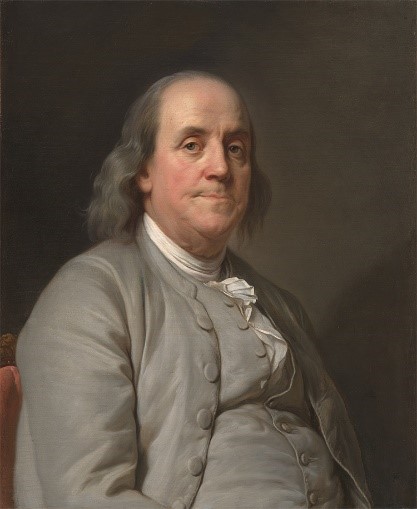
Benjamin Franklin was one of many 18th century beer lovers.
(Benjamin Franklin by Joseph Siffred Duplessis, c. 1785)

During the 18th century, Colonial society held three common beliefs about beer drinking:

  1. Drinking beer was healthier than drinking water
  2. Beer and its ingredients were a healthy supplement to the entire family’s diet
  3. It was an accepted way to promote social discourse

A little different from today’s society, except for beer connoisseurs (such as the Emerging Revolutionary War folks), these beliefs were formed from the circumstances of the time.

Though a generation away from understanding the connection between boiling water and sanitation, most folks understood that water could make you deathly ill. And yet, ale and beer drinkers did not seem to have that same risk. They did not know it at the time, but the boiling process to make these alternative drinking options neutralized much of any tainted water’s ill effects. Therefore, many substituted beer, ale, and other alternatives such as hard cider over water, making these a major dietary staple in the colonies.

Continue reading “Beer Drinking in the 18th Century”

The 245th Anniversary of "Give Me Liberty or Give Me Death"

On this date, in 1775, Virginian Patrick Henry, a delegate to the Second Virginia Convention from Hanover County, Virginia sat in on the ongoing debate at St. John’s Episcopal Church in Richmond, Virginia.

Patrick Henry

The 28-year old then stood to give his defense of his proposed amendments to the petition then being debated. Below is the last few lines of his now famous statement, with the last sentence being the one most remembered;

If we were base enough to desire it, it is now too late to retire from the contest. There is no retreat but in submission and slavery! Our chains are forged! Their clanking may be heard on the plains of Boston! The war is inevitable and let it come! I repeat it, sir, let it come.

Continue reading “The 245th Anniversary of "Give Me Liberty or Give Me Death"”

ERW Weekender: Ninety Six, The Site That Has It All

Emerging Revolutionary War welcomes historian Vanessa Smiley to the blog.

The thing about Ninety Six National Historic Site is that it’s unassuming exterior hides a wealth of history. It’s also nowhere near a major highway, meaning you have to want to get there if you’re thinking of visiting. And when you do get there, you will realize that there’s more history per acre than its demur entrance lets on. Located in the back country of South Carolina, Ninety Six has a history that speaks to the stories of Native Americans, the American frontier of the 18th century, and the American Revolution.

Entrance to the park
(courtesy of Ninety Six NHS, NPS)

The site at Ninety Six holds a treasure trove of study on these subjects. Native American, mostly Cherokee, activity was heavy in the area long before European settlers arrived. One of the earliest backcountry trading posts, established by Robert Gouedy in 1759, made Ninety Six a hotbed of trading activity thanks to its location at the crossroads of twelve different roads and paths, linking the area to nearly all parts of the colonies.

Continue reading “ERW Weekender: Ninety Six, The Site That Has It All”

March Presentations

Emerging Revolutionary War (ERW) would like to highlight from time to time some of the lectures, presentations, talks, and events that our historians are apart of.

This month, ERW historians are giving the following presentations:

Bert Dunkerly

March 27th: “The Brown’s Island Explosion Victims” at the Virginia Forum, Richmond, Virginia

Kate Gruber

March 13th: “Tenacity: Women in Jamestown and Early Virginia” Shenandoah Lyceum Lecture Series, Harrisonburg, Virginia. For more information click here.

Travis Shaw

March 29th: “Lord Dunmore.” Aldie, Virginia

ERW Weekender: Boston Massacre: 250 Years and 1-Day Later

Crispus Attucks. Every American school child learned that name in a social studies or history class in grade school. On the night of March 5, 1770, Attucks, an African-American was one of the six Bostonians that was killed by British soldiers.

Known in American history as the “Boston Massacre” the tragic event was used as fodder by the Sons of Liberty and pro-revolutionary minded individuals to propel the colonies toward rupture with Great Britain.

Continue reading “ERW Weekender: Boston Massacre: 250 Years and 1-Day Later”

Interview with Tom Chaffin, author of Revolutionary Brothers, Thomas Jefferson, the Marquis de Lafayette, and the Friendship that Helped Forge Two Nations

Last week, Emerging Revolutionary War‘s Phillip S. Greenwalt wrote a review of the above mentioned book. To find that review click here. Recently, through email, Emerging Revolutionary War had a chance to interview the author. The questions and his responses are below.

Tom Chaffin, author
Continue reading “Interview with Tom Chaffin, author of Revolutionary Brothers, Thomas Jefferson, the Marquis de Lafayette, and the Friendship that Helped Forge Two Nations”

Review: Revolutionary Brothers, Thomas Jefferson, the Marquis de Lafayette, and the Friendship that Helped Forge Two Nations by Tom Chaffin

Thomas Jefferson, Marquis de Lafayette, two household names from the American Revolutionary War. One the author of Declaration of Independence and one of the great political minds of the era. The other, a Frenchman, enamored with the ideals of the rebelling colonies of British North America who risked a maritime crossing, was wounded at Brandywine, and served both on the field of battle and the international sphere to help achieve American independence.

That much is known about these two gentlemen, icons of history. How about their friendship, one that spanned decades and brought both men through times of personal and professional difficulties. Although years separated visits and both men were well into adulthood before making their respective acquaintance, the friendship helped cement the bond between countries, from aid during the American Revolution to a thankful nation celebrating the return of the Marquis in the mid-1820s.

This friendship has finally been captured in narrative form by historian Tom Chaffin, author of other historical works and biographies in a book published by St. Martin’s Press in 2019.

Continue reading “Review: Revolutionary Brothers, Thomas Jefferson, the Marquis de Lafayette, and the Friendship that Helped Forge Two Nations by Tom Chaffin”

McColloch’s Leap

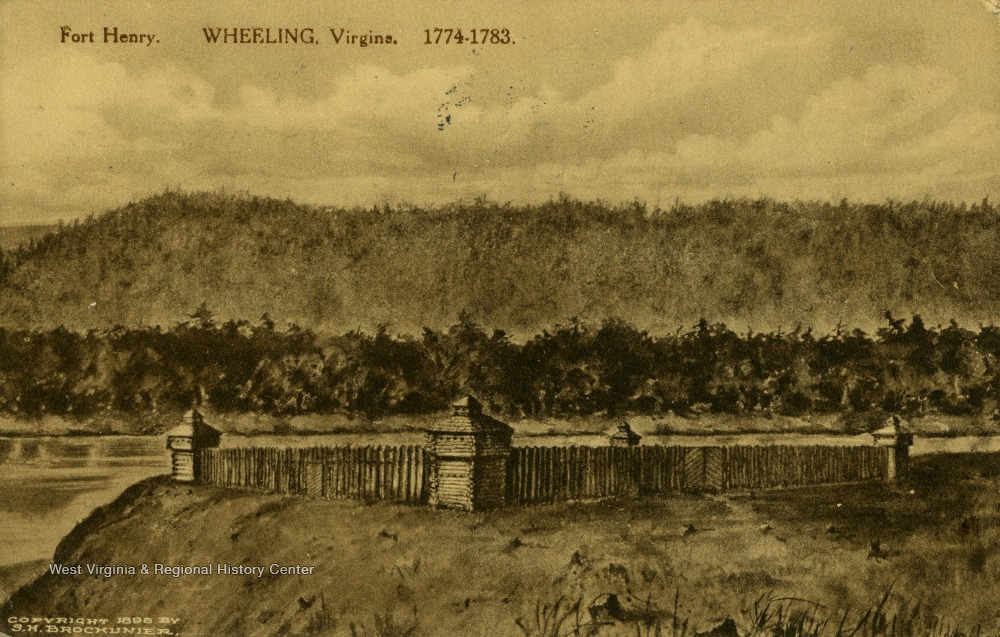
“By no means comparable with the feats of a similar character” and “performed an act of daring” and “nay, desperate horsemanship” and “seldom been equaled by man or beast.” All these describe the amazing escape of Major Samuel McColloch in September 1777 during the attack on Fort Henry around where present-day Wheeling, West Virginia.

I first encountered this amazing, daring, and crazy eluding of capture when I took my own, well not as risky, but still a leap, moving to Wheeling to attend university there. Parents were 3,000 miles away in England and I was attempting to juggle basketball, studies, getting re-acclimated to life in the United States, and unknowingly, a left knee that was about to explode. Being a history major, this was one of the first accounts learned in a freshman year seminar class about local history to inspire the incoming students to explore the area outside of campus.

Fort Henry, built in 1774, was originally named Fort Fincastle, one of the titles of Lord Dunmore, the royal governor of Virginia. When the colonies revolted, the fortification was renamed in honor of Patrick Henry.

Fort Henry
courtesy of West Virginia History OnView
https://wvhistoryonview.org/catalog/041457
Continue reading “McColloch’s Leap”

62nd Foot at Freeman’s Farm

Emerging Revolutionary War welcomes guest historian Kevin Pawlak. A short bio follows the post below.

On May 25, 1775, the 62nd Regiment of Foot stood for review. The line of men, clad in their redcoats with buff facings, did not impress the reviewing officer. He called the regiment “very much drafted” and “very indifferent.” Despite the disparaging grade, in just over two years, the 62nd Foot commendably fought in one of the fiercest actions of the War for Independence.

John Anstruther
courtesy of 62ndregiment.org

Scottish military man Lt. Col. John Anstruther led the 62nd Foot in the campaign of 1777. Anstruther faced no easy task; the 62nd was the junior British regiment in John Burgoyne’s army and most of its men were inexperienced in campaigning and battle. To make the situation even worse, roughly one-quarter of the 62nd Foot’s soldiers were German. Language barriers likely prevented complete cohesion within the unit. However, with a war on, nothing could be done to rectify the regiment’s defects as it marched south into New York.

Anstruther’s regiment was present for the operations around Fort Ticonderoga in early July 1777. After American forces abandoned the fort, the conglomerate and inexperienced 62nd remained behind to man Mount Independence overlooking Lake Champlain. As the rest of Burgoyne’s army continued campaigning, the men of the 62nd Foot spent time guarding themselves against rattlesnakes rather than the enemy. Their time came to rejoin the main army before the Battle of Saratoga commenced.

Continue reading “62nd Foot at Freeman’s Farm”

A Portrait of John Cuppy

Emerging Revolutionary War welcomes guest historian Gabriel Neville

Most of the enlisted men of the Revolutionary War are faceless and forgotten—just names on lists. Biographies and painted portraits are honors that were reserved for officers. Even so, it is possible to trace the lives of some common soldiers using original sources. Many of them applied for pensions after 1818, which required them to provide (usually brief) narratives of their service. Some gave similar attestations when they applied for military bounty land. A small number left detailed accounts of their experiences in interviews, letters, or diaries. Finally, and very rarely, we have photographs taken in the last years of some veterans’ lives. Virginian John Cuppy may be the only Revolutionary War soldier to leave us an artifact in each of these categories.

John Cuppy

Cuppy was born near Morristown, New Jersey on March 11, 1761. While still an infant, he was brought to Hampshire County, Virginia by his German parents. Their new home was on the South Branch of the Potomac River near the town of Romney, which is now in West Virginia. About forty miles west of the Shenandoah Valley, this was the very edged of settled Virginia territory. John was just fourteen years old when the war began—too young to be a candidate for service when Hampshire was directed to raise a rifle company in July of 1775. He was still too young when Dutch-descended Capt. Abel Westfall recruited a company there that winter for Col. Peter Muhlenberg’s new 8th Virginia Regiment.[1]

Continue reading “A Portrait of John Cuppy”