This weekend, September 7-8, ERW travels to Philadelphia for the kick off of the 250th anniversary of the First Continental Congress. We will be coming to you live via our Facebook page from historic sites across Philadelphia and especially Carpenters Hall, the meeting place for the First Continental Congress. We will welcome special guests and share with you the great history surrounding the First Continental Congress and some places that you can visit the next time you are in the City of Brotherly Love.
Stay tuned to our Facebook page this weekend for numerous live videos throughout Saturday and Sunday!
On September 1, 1774 Massachusetts was on the brink of war. General Thomas Gage, now Governor of Massachusetts was growing more worried about Whig access to gunpowder and weapons. He made a fateful decision to send a small expedition to retrieve the provincial powder stored in Charlestown. This powder in Gages’ mind, was owned by the King. Local leaders felt otherwise and now this grab for powder by Gage nearly sparked war in 1774.
As word of the Boston Tea Party reached the other colonies, the response was mixed. Most colonists believed Bostonians should pay for the ruined tea, but they were also overwhelmingly shocked by the harshness of the Coercive Acts. Support from across the 13 colonies began to pour into Boston. Using an already established “Committee of Correspondence” network created in the early 1770s, colonial leaders began to discuss a proper reaction. Boycotts on imports of British goods and tea especially were accepted broadly. But most importantly, 12 colonies (Georgia abstained) sent representatives to a “Continental Congress” in Philadelphia in September 1774. Unlike the previous Stamp Act Congress, the First Continental Congress was attended by the majority of American colonies. The Congress encouraged boycotts and also petitioned the King and Parliament to rescind the Coercive Acts. In response to their planned attendance, Governor Gage dissolved the Massachusetts Provincial Assembly before the Continental Congress met and called for new elections. This did not deter them from sending representatives (John Adams, Samuel Adams, Thomas Cushing, and Robert Treat Paine) to Philadelphia.
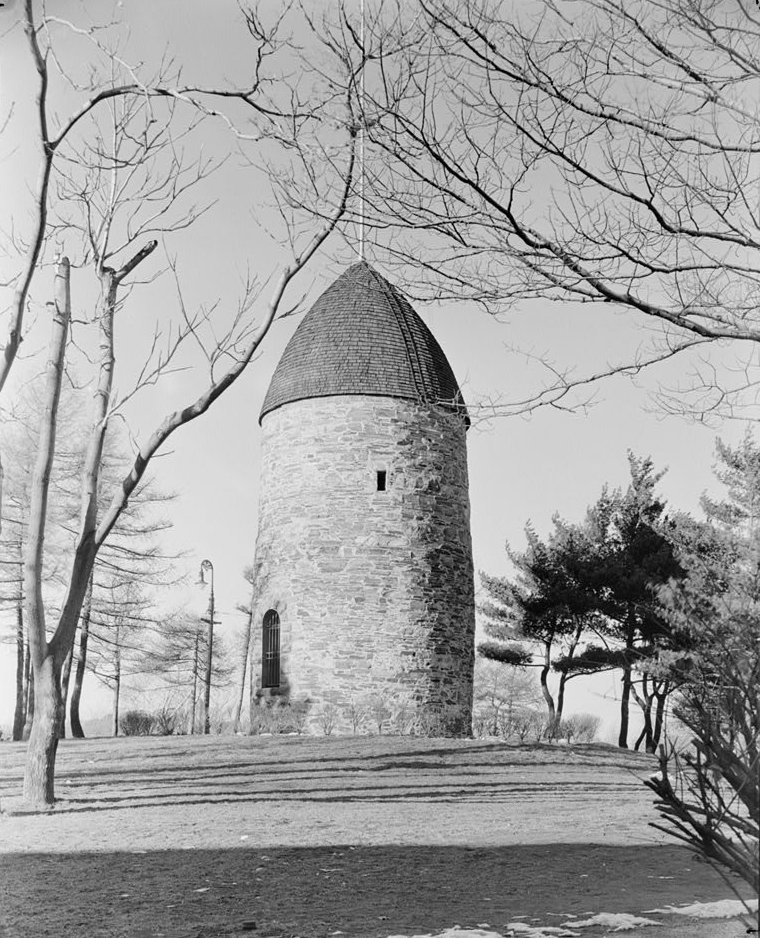
Charlestown (now Somerville) Powder House, ca. 1935
Back in Massachusetts, Gage became wearier of his situation and the possibility of open conflict with colonists. He was active in paying informants and gaining information from local Tories (those loyal to the British government). These sources informed Gage that the people of the countryside were beginning to arm themselves. In an effort to deny them use of the official Royal arms and powder stored across the colony, he began to collect these government-owned supplies. In colonial America, most men served in the local militia. Local towns had powder magazines to store the powder that would be used for training the militia or if the militia was called to defend a portion of the colony. Many of these powder magazines also stored a portion of gunpowder that belonged to the colonial government—the King’s powder.
One such large powder magazine that stored a large quantity of British gunpowder was in nearby Charlestown, now known as Somerville. This powder magazine was the largest in the colony. William Brattle, the commander of the Middlesex County militia and a Royal appointee, notified Gage that he believed the local militia were making plans to steal the Royal gunpowder. Gage moved quickly; he ordered the Middlesex County sheriff to secure the keys. Then early on the morning of September 1, nearly 300 British Regulars made their way to the powder house and removed all of the gunpowder that rightfully belonged to the governor and his agents. By that afternoon, the British troops, powder, and two cannon were in Boston at Castle William (a fort on an island in Boston Harbor).
Word spread quickly that the British came and stole the powder and, in the process, had shot and killed colonials. Now Boston was on fire, and the British navy was bombarding the city. All of this of course was not true, but the word spread like wildfire just the same. Misinformation abounded, and now thousands of locals and militia were gathering in Cambridge looking for revenge. Many loyal to the colonial government were forced to flee to Boston for protection. As time went on, it was evident that the rumors of a battle and Boston burning were untrue. The incident, however, showed how quickly the countryside could mobilize against the governor. Word was quickly sent to Philadelphia where the delegates to the First Continental Congress was aghast at the news. They debated on what to do, and the Massachusetts delegation specifically were on edge for more information. Word eventually arrived that the situation that was first reported was not accurate and no fighting had broken out. John Adams wrote;
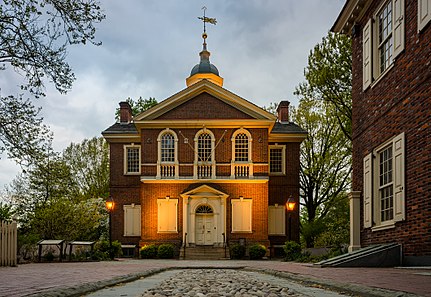
Carpenters Hall, Philadelphia where the First Continental Congress convened on September 5, 1774.
“When the horrid news was brought here of the bombardment of Boston, which made us completely miserable for two days, we saw proofs of both the sympathy and the resolution of the continent. War! war! war! was the cry, and it was pronounced in a tone which would have done honor to the oratory of a Briton or a Roman. If it had proved true, you would have heard the thunder of an American Congress.”
Gage, somewhat shaken by the event, began to concentrate his military strength in the city of Boston and fortified the city against a possible attack. He sent word to England that he needed more men to enforce the Coercive Acts. The “Powder Alarm” proved that, within a day, thousands of armed colonials could assemble. The message he sent London shocked the King: “If you think ten thousand men sufficient, send twenty; if one million is thought enough, give two.” Soon after on September 9th, Whig (Patriot) leaders such as Dr. Joseph Warren and others passed the Suffolk Resolves. These strongly worded resolves called for a boycott of British goods and heavily impacted policies adopted by the First Continental Congress. Parliament badly miscalculated the colonial reaction to the Coercive Acts and the pendulum was beginning to swing to independence. The Powder Alarm quickly taught General Gage that the resistance to Royal authority was not just a small group of rebels, but a growing majority of the population.
You can still today visit the the famous Powder House today. It stands in Nathan Tufts Park at 850 Broadway, Somerville, Massachusetts (GPS: N 42.400675, W 71.116998). There is plenty of street parking available. Take the trails in the park to the Powder House located in the center of the park.
Join us this Sunday, July 7th at 7pm for our next Rev War Revelry as we continue to commemorate the 250th anniversary of the events that led to the American Revolution. We welcome Executive Director Michael Norris to discuss the historic Carpenters Hall in Philadelphia and the role it played in hosting the First Continental Congress. The First Continental Congress convened in Carpenters’ Hall in Philadelphia, Pennsylvania, between September 5 and October 26, 1774. Delegates from twelve of Britain’s thirteen American colonies attended. The Congress was a direct result of the Parliament’s reaction to the Boston Tea Party (December 1773). This gathering of colonial leaders intended to create a united front in their response to what they believed was Parliamentary over reach in the “Coercive Acts.”
Grab a drink and join us on our You Tube Channel: https://www.youtube.com/@emergingrevolutionarywar8217 Feel free to interact with the discussion by adding questions in the video chat. Once the video is over we will repost the video to our Facebook page and our Spotify account. We hope to see you then!
The Charlestown, now Somerville, Powder Magazinewas the focus of the September 1, 1774 Powder Alarm. The historic structure still stands today.
Join ERW this Sunday at 7pm as we welcome back historian and author J.L Bell. We will discuss the events in Boston and Massachusetts in 1774 after the passing of the now popularly called “Intolerable Acts” in response to the Boston Tea Party. A time of political, social and economic upheaval for everyone in the colony, the events that transpired had big impacts across all the colonies and set the stage for April 19, 1775. J.L. Bell is a renowned historian who operates a very comprehensive blog focused on Boston 1775 (https://boston1775.blogspot.com/ )
Grab a drink and sit back and learn about the events that rapidly progressed during 1774 towards warfare and bloodshed. J.L. Bell will provide a great insight into how things quickly deteriorated in Massachusetts and how that impacted all the colonies as a whole. Unlike previous revelries, this revelry will run live on our You Tube channel at: https://www.youtube.com/@emergingrevolutionarywar8217 . Due to new rules and regulations with Facebook, we can no longer stream our revelries live on Facebook. We hope that will change in the future. We will post the You Tube video to our Facebook page after the live broadcast. We hope to see you this Sunday, June 9, 2024 at 7pm on our You Tube Channel!
Joseph Galloway is best known as one of the preeminent and prominent Loyalists who remained in the American colonies through the majority of the American Revolution. Prior to the colonies declaring independence, especially during the First Continental Congress, Galloway was active in the debates that decided the path forward. Besides attending and being active in the discussions in Philadelphia he penned a pamphlet entitled A Candid Examination of the Mutual Claims of Great Britain and the Colonies.
Within the pages, he called African American slavery “the dangerous enemy within” and the “natural weakness” of the soon-to-be Southern states. If a division ensued, Galloway predicted that,
“If the colonies happen to vie and try their reciprocal strength with each other, the political force of the Northern Colonies will soon destroy the opulent force of the Southern.”
Furthermore, Galloway pointed to the colonies/states of Georgia, Maryland, North and South Carolina, and Virginia as vulnerable because of the institution of slavery. In a conflict without the overarching guidance by Great Britain, the division between Northern and Southern colonies/states would lead to a domestic civil war and the possibility that African American slaves would join the Northern effort in vanquishing their former owners.
Although Galloway was writing to prop support for remaining loyal to the British crown he foreshadowed accurately the rift that plagued the independent United States. In laying out his views, Galloway quite succinctly predicted what would happen in 78 years after independence was won by the United States.
Galloway left Philadelphia when the British evacuated the city in 1778 and left for England where he would position himself in a leading role for loyalists in exiles. He never returned to the United States. His succinct prediction of the future though proved eerily accurate.
Sources:
Disunion Among Ourselves, The Perilous Politics of the American Revolution by Eli Merritt
University of Michigan, Evans Early American Imprint Collection, click here for the link.
Emerging Revolutionary War welcomes guest historian Kieran O’Keefe.
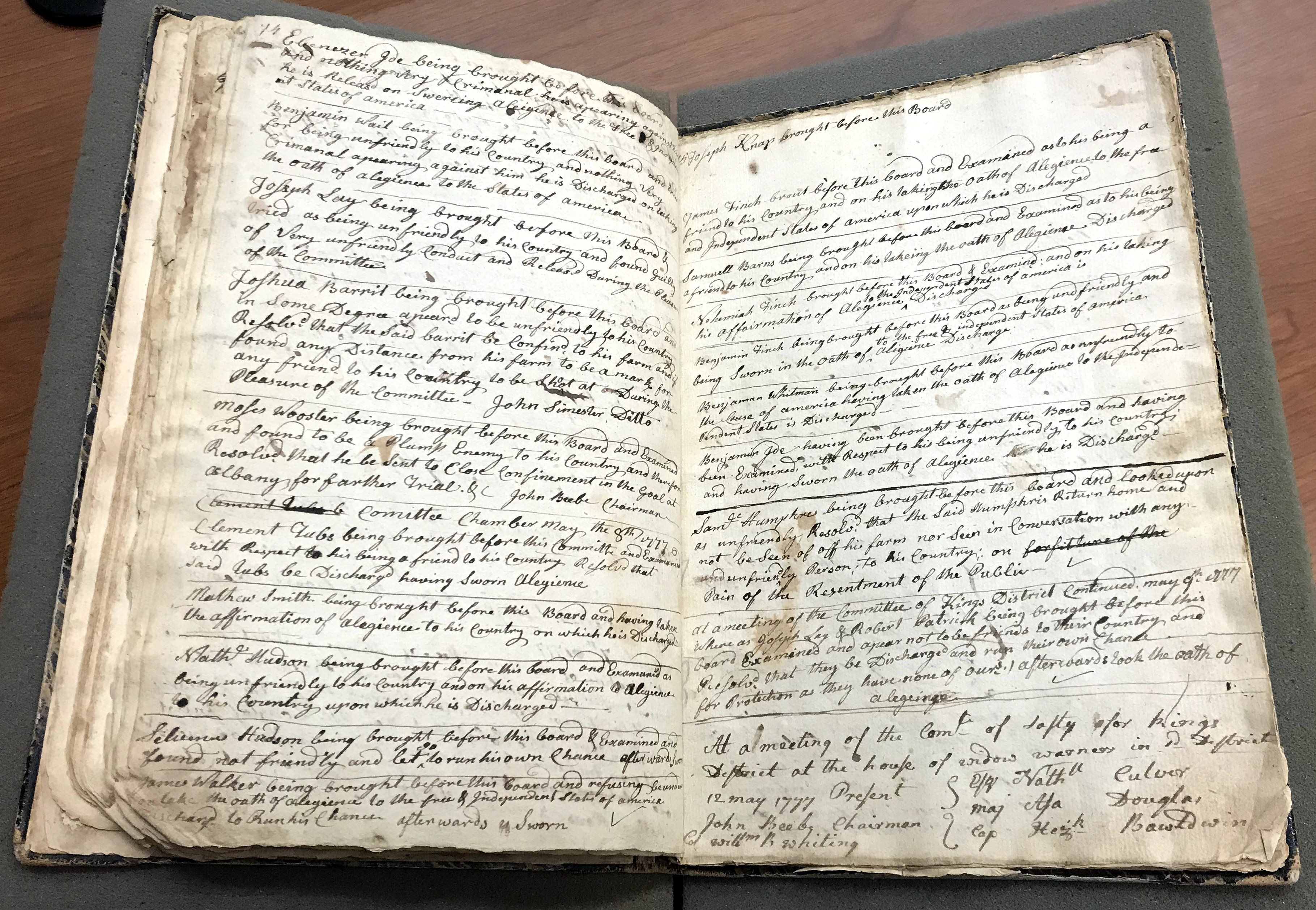
While the most famous scenes of the American Revolutionary War involve major battles or deliberations in Congress, the driving force behind the Revolution within small towns were committees of safety. As the war progressed and British authority dissipated, these committees became the effective government in most localities until the formal establishment of state governments. They had responsibilities such as regulating the economy, suppressing loyalists, procuring military supplies, raising revolutionary forces, and overseeing civil and criminal justice. Despite their ubiquity, it is rare to find the records of a committee completely intact. One such exception is the King’s District Committee of Albany County, New York, whose minutes survive in the Library of Congress.
The First Continental Congress created the committee system when it adopted the Continental Association in 1774. The Association called for the non-importation, non-consumption, and non-exportation of goods between the colonies and Great Britain, Ireland, and the British West Indies. This boycott was to put economic pressure on Britain to repeal the punitive Coercive Acts, which punished Massachusetts for the Boston Tea Party by closing the port of Boston and bringing the colony under tighter royal control with the aid of British redcoats. The Continental Association also stated that “a committee be chosen in every county, city, and town, by those who are qualified to vote for representatives in the legislature, whose business it shall be attentively to observe the conduct of all persons touching this association.” These committees were to ensure that all Americans adhered to the boycott stipulated in the Association. Committees began forming throughout the colonies in late 1774 and soon took on a greater role than originally designed, frequently seizing the reins of local government. The committees were unusually democratic. They generally consisted of about five men who were popularly elected, and many members were from the middling ranks of society with no prior political experience.
The King’s District Committee record book (author collection)


 Emerging Revolutionary War Era