Emerging Revolutionary War is honored to welcome guest historian Derek Maxfield as the author of this post. A biography of Mr. Maxfield is at the end.
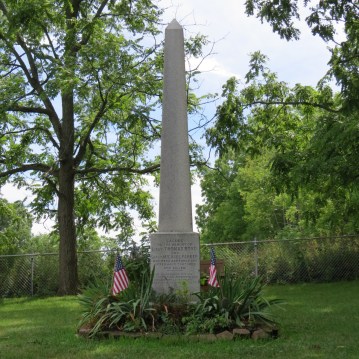
A trek to Conesus, NY, to pay my respects to Capt. Daniel Shays – who is buried in Union Cemetery – resulted in a revolutionary discovery: Groveland Ambuscade Park and Monument. Set atop the western ridge overlooking Conesus Lake is an obelisk dedicated to the memory of a group of scouts from Gen. Sullivan’s army who were ambushed there in 1779.
Monument commemorating the ambush (author collection)
Quite off the beaten track, the park has seen better days. In 1901 The Livingston County Historical Society erected a large monument commemorating the ambush of American troops near that spot. A small park, complete with a pavilion and picnic area was added – though these amenities are no longer present. More recently a wooden stairway was added leading up to the monument, which stands on high ground.
Gen. John Sullivan, under orders from Gen. Washington, mounted a punitive raid against the Iroquois in Western New York in 1779. When Sullivan’s army sought to cross the inlet at the southern end of Conesus Lake, they stalled while engineers worked to create a reliable bridge across the mire. Wishing to know the location of the British and Indian army, under Col. Butler and Chief Joseph Brant, Sullivan sent a scouting party over the western ridge. Leading the scouting party of Lt. Thomas Boyd, who was assisted by a Native American scout named Han Yost.
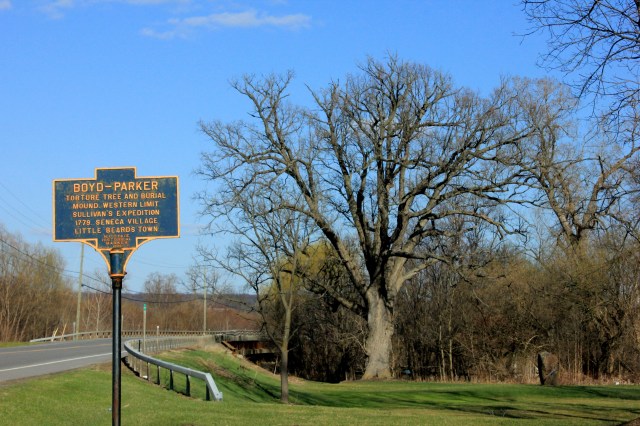
Boyd and his men were lured into a trap and ambushed on September 13th, 1779. Only a handful survived to bring word back to Sullivan. In subsequent days Boyd’s body was found in a Native American village mangled and mutilated. Boyd and Sargent Michael Parker had been captured and interrogated, but gave up little information. This resulted in their torture – fingers and toes removed, they were disemboweled and beheaded. Finally, their entrails were flung over tree branches. This tree, still standing – nearly 300 years old, now is a monument to the brave Continental soldiers who died at the hands of the Seneca. The “Torture Tree” was designated a National Historic Landmark in 2009.
The “Torture Tree” (author collection)
Sixteen of Sullivan’s men were killed at Groveland plus Han Yost, the Native American guide. The scene of the ambush would prove to be the western limit of Sullivan’s penetration into the Iroquois homeland.
Seemingly just a footnote in the history of the Revolution, it is nice to see that this courageous band that died so ingloriously is remembered today.
*Derek Maxfield is an associate professor of history at Genesee Community College in Batavia, NY, where he is also coordinator of the college’s Civil War Initiative. For his work with the Initiative, Maxfield was awarded the SUNY Chancellor’s Award for Excellence in Scholarship and Creative Activities in 2013.
Maxfield holds a Bachelors of Arts degree from SUNY Cortland and a Master of Arts degree from Villanova University. He is also a PhD candidate at the University of Buffalo, where he is ABD (all but dissertation). Among Maxfield’s research interests are 19th century politics and culture, especially Victorian death ways and the Civil War.
Maxfield lives in Churchville, NY, with his wife, Christine, two children—Quincy, 13, and Jesse, 11—a basset hound, three cats and a tortoise.*
Emerging Revolutionary War is honored to welcome back historian Malanna Henderson.
Part One
N-7 Fredericksburg Gun Manufactory State Marker
Located at 200 Gunnery Road between Dunmore and Ferdinand Streets is the Old Walker-Grant public school. The three-acre campus is home to the Fredericksburg Regional Head Start educational program. Built in 1938, Walker-Grant was the first publically financed high school for black youth in Fredericksburg. The institution was named for Joseph Walker and Jason Grant.
Walker, born into slavery in Spotsylvania County in 1854, was freed after the Civil War and moved to Fredericksburg. Employed in a paper mill, Walker was self-taught and had a keen interest in expanding educational opportunities for black youth. He served as the sexton at St. George’s Episcopal Church for more than 50 years. Jason Grant was born free in Chatham, Ontario, Canada, in 1861 to a middle-class family. He attended Wilberforce Educational Institute in Ohio. He met an inspiring educator from Fredericksburg and decided to move there and teach. Grant taught at the county and city schools and also served as principal. His career spanned 42 years. Both Walker and Grant worked diligently to establish a learning institution for black children whose educational opportunities were marginalized by the social order of the day: segregation and racial discrimination.
Over two-hundred years ago, this location was once the site of the Fredericksburg Gunnery plant; the first government ran factory of its kind in the nation. Established in 1776, its existence was paramount to the victory of the Continental forces in winning the Revolutionary War.
By then, the colonists had interpreted an array of British economic policies as threatening their rights as Englishmen. When a slew of taxes were demanded of the colonists who were accustomed to governing themselves, their rebellious cry became, “no taxation without representation.” Until then, the planter-statesmen and other notables still felt they could reconcile with the mother country, despite the occurrences of the Boston Massacre in 1770 and the Boston Tea Party in 1773. However, in Virginia an odious act by the royal governor put the colonists on notice that the British were willing to spill more blood in an effort to vanquish the rebellion.
In the dead of night, on April 21, 1775, a mixed military unit of His Majesty’s Navy and Marines confiscated gun powder and armaments from the Williamsburg Magazine. This vital repository of weapons was stockpiled for the defense against Indian raids, slave revolts and riots. The action of the British soldiers left Virginia virtually defenseless.
John Murray, Fourth Earl of Dunmore and the last royal governor of Virginia ordered the raid. Many colonists saw this as the last straw. Dunmore had repeatedly rebuked the colonial statesmen’s demands, dissolving the House of Burgess and other political committees. An aristocrat, accustomed to having his word obeyed without question, Dunmore saw the burgeoning independence of the statesmen as an affront to his authority and responded by acts of retribution instead of compromise.
Blood had already been spilt at the Battles of Lexington and Concord a few days prior. Thus, disarming the colonists seemed a logical strategy to weaken their resolve. The shot heard around the world occurred in the north and in the south; the stealth act of a midnight raid struck a wedge between Britain and the American colonies that was irreparable.
The colonists had to arm themselves if they were going to war with England, whose military might seemed Herculean to the limited martial skills of the local colonial militias. There was no standing army. Each of the thirteen colonies had their own reservists, comprised of farmers, merchants and tradesmen who were needed sporadically for lawless incidents.
On July 17, 1775, the Third Virginia Convention convened in Richmond to create a working government structure. Delegates were elected to serve on the Committee of Safety, which replaced the Committee of Correspondence. Its powers were comparable to the defunct House of Burgess. The most important resolutions that sprung from those meetings were to raise two regiments, a total of sixteen companies of sixty-eight men each to serve one year tours. In addition, sixteen districts of Minutemen were planned. In all of the county militias, the remaining free white males between the ages of fifteen to fifty were to muster, eleven times a year. Below is a page from Colonel Lewis’s manual on military exercises and drills, dated 1777.
(Courtesy of The George Washington Foundation)
The last meeting of the convention took place on the 26th of August. An ordinance to build a gun manufacturing plant was enacted. One prominent Virginian intellectual described it as, a first step “in open defiance of British parliamentary law.”
The five commissioners appointed to operate the gun factory were Mann Page; William Fitzhugh; Samuel Selden; Charles Dick and Fielding Lewis, George Washington’s brother-in-law, husband to his sister Betty Washington. Lewis was elected chairman of the Committee. As it turned out, the only men who stayed the course was Charles Dick and Fielding Lewis.
Initially, the convention issued to Lewis 2,000 pounds to construct the gun manufacturing plant. Early in November, Lewis purchased a ten-acre tract of land located south of town. He also leased a nearby mill on four town lots.
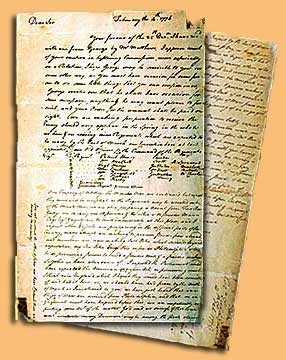
Knowing how desperate the Continental Army was for arms, Lewis penned a letter, on February 4, 1776, to George Washington in haste. Now the Commander-in-chief of the Continental Army, George received this letter from Fielding describing the developments of the factory and the formation of the army regiments they were establishing. Of note, in August of 1775, Patrick Henry was named Colonel of the 1st Regiment, and the 2nd Regiment was commanded by William Woodford with Alexander Spotswood serving as major. In January of 1777, Hugh Mercer was named Colonel of the 3rd Regiment.
(Courtesy of The George Washington Foundation)
“…our Gunn Manufactory is now beginning & expect by New Years day to have near fifty Men imploy’d who will make about Twelve Gunns compleat a Day…”
The gunnery was close to the Hunter Iron Works, an important supplier. James Hunter, the owner, added the manufacturing of muskets to his production output, independent of government funding. He also supplied regiments with axes, spades, shovels and mattocks.
The items produced at the Fredericksburg Gunnery were muskets, bayonets, flint locks, ramrods and more. The plant encompassed a main manufactory, a stone powder magazine, cartridge works, repair shops and a vegetable garden, for the benefit of the employees.
Charles Dick ran the day to day operations, hiring a master workman and artisans. Although, the very capable Mr. Dick never discussed his origins or even his birthdate; the self-made man wasn’t a member of the established gentry. However, he easily found his place amongst Fredericksburg’s leading citizens. Dick was a successful merchant, land owner, Mason and a well-respected member of the community. He served on several important civic organizations; the Committee of Correspondence and later the Committee of Safety. A business partner and personal friend of Fielding Lewis, Dick was godfather to Lewis’ first son.
On September 22, 1775 an advertisement for locksmiths was published, most likely in the Virginia Gazette. Dick needed gunsmiths, artisans and a variety of other laborers to make the gunnery productive. It was evident, early on, that there was a deficiency of expert gunsmiths ready for hire. The House of Delegates passed an apprentice act so Dick could train a class of artisans from the white youth in the area. The young men would be housed, fed and clothed; all paid for by the government. Dick forbade the drinking of beer and rum at the establishment, a drastic change from Eighteenth Century practices. Three black men were engaged to cook, bake and do an assortment of odd jobs. Whether they were slave or free is unknown.
In an emergency the aristocrats of the town, women, too, worked at the factory stuffing cartridges, etc., for the more than one hundred guns hastily readied for the Fredericksburg and Spotsylvania militia. The most commonly used weapon at the time was the British Brown Bess, a muzzle-loading smoothbore musket. It fired a single shot ball or a cluster shot which fired multiple projectiles like a shotgun. About four shots per minute was the typical output from most soldiers. By May of 1777, the factory produced similar muskets to the British Brown Bess by the rate of twenty per week.
Emerging Revolutionary War is honored to welcome back guest historian David A. Powell.
When George Washington opened fire on a small party of Canadian militia commanded by Joseph Coulon de Villiers de Jumonville in May of 1754, he fired the first shots of what would eventually become the French and Indian War – and the Seven Years War across the rest of the globe. Many scholars have also acknowledged that this incident set the spark for what would become our own American Revolution.
Braddock’s Defeat: The Battle of the Monongahela and the Road to Revolution, by David Preston.
Of course, Washington intended none of those things; instead he was carrying out the British Crown’s policy of staking claim to and defending the Ohio Country, lately disputed between France and Britain. However, Jumonville’s death set irreversible forces in motion, not the least of which was the capture of Washington’s own company of Virginia Colonial Militia at Fort Necessity by a much larger French response in June of 1754.
The direct consequence of that encounter was the creation of a new British army, including two regiments of regulars and a train of artillery, rushed from Ireland and England to re-assert Crown control over the forks of the Ohio. Command of this new expedition fell to Major General Edward Braddock. Arriving in 1755, Braddock’s mission was to lead this new force from Fort Cumberland, in western Maryland, to the site of the French Fort Duquesne (present-day Pittsburgh.) That campaign ended in disaster on July 9, 1755 when Braddock’s column collided with a combined force of French and Indians just a dozen miles short of Duquesne, resulting in horrific British losses – including Braddock.
Not surprisingly, this story has been fertile ground for historians. Fine monographs have already been written on the campaign, as well as on the French and Indian War as a whole. Having a particular interest in the period, I have read a number of those works. Naturally, I was curious when I first heard of Dr. David Preston’s new book exploring the campaign.
Preston, a professor at the Citadel, has delivered a tremendous book. Combining new research and close analysis of previously known sources, he provides fresh new perspective on General Edward Braddock, his ill-fated expedition, and the French & Indians opposing him.
Preston finds that Braddock, far from being an unyielding martinet uninterested in either the “savages” or using Colonials, worked hard (if unsuccessfully) to bring Indian warriors into his force, and showed more respect for the colonial elements under his command than some previous historians have portrayed. A number of factors precluded Braddock’s success here, but it was not for want of trying.
Where Preston’s interpretation really shines is in exploring the French and Indian sides of the war. A new account of the battle, located in a French archive, casts new light on the French efforts to defend Fort Duquesne – a venture whose success was by no means a sure thing. Preston also explores the Indian Nations’ complex and diverse reasons for casting their support with the French, which was also not certain. Preston makes it clear that the French defense was in many ways based on fortuitous circumstances rather than planning, especially in regards to the timing of the campaign.
Preston’s detailed description of the battle in question on July 9 presents a clear and detailed exploration of the sequence events as far as they can be known; where the author speculates he notes that, and explains the basis of his interpretation. Above all, his narrative is well-written, exciting and drama-filled.
Preston also excels in his summation of the long-term impact of Braddock’s defeat, both on the fortunes of British North America in the two years following the battle (which ran from bad to disastrous) and on the longer term consequences: the development of light infantry and ranger tactics, leadership, and the growing rift between American colonials and England.
Students of both the Seven Years War in America and the American Revolution will want to read Braddock’s Defeat. Get your copy today.
On this date, in 1781, the British army marched out of their entrenchments at Yorktown and surrendered to General George Washington and the combined Continental and French armies.
Modern view of the “Surrender at Yorktown” site (P. Greenwalt)
Although the victory did not conclusively end the war, the victory prompted British Prime Minister, Lord Frederick North, to exclaim,
“Oh, God, it is all over!”
Approximately two years later, with the signing of the Treaty of Paris on September 3, 1783, the American Revolutionary War was truly over.
What is not truly over is the efforts to preserve, interpret, and educate the current and future generations about the importance of Yorktown and the American Revolution. In the spring, the new American Revolution Museum of Yorktown will open its doors, updating the Victory Center at Yorktown Museum.
From the Jamestown-Yorktown Foundation website, the museum’s goals are to;
“Through comprehensive, immersive indoor exhibits and outdoor living history, the American Revolution Museum at Yorktown offers a truly national perspective, conveying a sense of the transformational nature and epic scale of the Revolution and the richness and complexity of the country’s Revolutionary heritage.”
For more information about the museum, what it entails, and the opening date, click here.
Emerging Revolutionary War is honored to welcome historian Malanna Henderson to the blog. A biography of Mrs. Henderson is at the bottom of this post.
Historical records are generally written by men about men.
When most of us think about the role women played in the Revolutionary War, Betsy Ross comes to mind. Why did early historians choose to recognize the contributions of Betsy Ross instead of others? We all know the answer to that question. Her contribution was sewing the American flag. Sewing, a traditional “female” occupation, was elevated to heroic heights by the legacy of Ross. Most historians today don’t name Betsy Ross as the designer of the first American flag, but that’s another story.
Women whose contributions didn’t fall neatly into categories that weren’t exclusively defined as “feminine” were intentionally excluded; and yet, without their contributions, big and small during the years that the war ensued, the war could have raged on longer or dare I say, we might be flying the Union Jack instead of the Stars and Stripes.
Heroism has many forms.
On the home front women maintained the farms, took care of livestock and fed, clothed and educated their children while their husbands took up arms against the British. That was how most women supported the war effort. However, as in the Civil War women were camp followers, accompanying their husbands and sons to the battlefield. For these women, the army could supply food and protection since they could no longer support themselves after their men left for war. In the military camps, women nursed the sick and wounded, laundered and mended uniforms and cooked meals. At some time in the war, women were paid for providing these services.
Then there were women who chose to pursue more daring endeavors, like spying or binding their breast, cutting their hair and donning men’s clothing to enlist in the war under an alias.
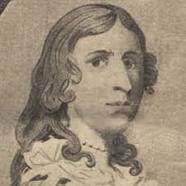
Deborah Sampson (courtesy of Fold3 by Ancestry.com)
Emerging Revolutionary War is honored to welcome guest historian Daniel Welch to the blog. A brief biography of Mr. Welch is at the bottom of the post.
Several weeks ago I decided to take my usual weekend off of visiting American Civil War battlefields to take a moment to explore some American Revolutionary War historic sites just several hours down the road. Since it was a rather last minute decision, I was not completely prepared before visiting other than some basic historical context and a vague idea of operating hours and things to do while at these historic sites. So, if you want to follow the Continental Army during their experiences in the fall and winter of 1777-1778 read on to help plan a great weekend day trip.
Battle of Brandywine
Sandy Hollow, Brandywine Battlefield
If you want to follow these events as they happened, and in chronological order, began your day at the Brandywine Battlefield Park Associates site. Walking the site is free, but there is a charge if you want to go through the museum or on a tour of one of two historic homes on the property. Their hours are constantly changing so make sure you check their website. (click here), before you plan your visit. To go on a house tour, view the film, and go through the museum there is an $8.00 charge; the museum and film alone is $5.00. I would suggest, if you have the time, to take in the film and museum. The film lasts approximately twenty minutes while a thorough look of the museum could take one an additional forty minutes. Between the film and museum, a firm foundation to the events of September 11, 1777 will be in place before you head out to other locations associated with the battle. The house tour is a guided tour through Washington’s headquarters on the property and is conducted by a volunteer at the site. The tour took over an hour and a half, and considering that the home had burned to the ground nearly 100 years ago and has been rebuilt and filled with modern reproductions, your time would be better spent going to other sites associated with the battle.
Birmingham Friend’s Meeting House plaque
Before leaving, make sure you pick up driving directions from the employees at the counter to get to Birmingham Friend’s Meeting House, and Sandy Hollow, the American’s second line of defense during the battle. Also, make sure to purchase the driving tour map of the battle of Brandywine. This map will take you to numerous other historic sites and homes within the Brandywine Valley that witnessed the events of that day. The cost is a mere $2.95. Plan an additional three to four hours to complete the driving tour.
Ultimately the battle proved to be an American defeat. Although he was defeated on the field, Washington and his generals were able to get large portions of the army to the rear through Polish General Pulaski’s assistance in covering the retreat. Despite the best maneuvers to save his army, Washington was unable to save Philadelphia and the city fell to the British just two weeks later on September 26, 1777. The British remained until June 1778.
Lunch
By now a late lunch would be in order. A great spot is the Black Powder Tavern. A tavern since 1746, it has a great Revolutionary War history, including a supposed visit by Washington himself. The restaurant’s name is related to a historical legend that none other than Von Steuben had ordered the tavern turned into a secret black powder magazine during the army’s pivotal winter at Valley Forge. The food here was great, as was the service and beer selection.
Valley Forge National Historical Park
Following the defeat at Brandywine in September, and another engagement at White Marsh in early December, General Washington looked to put his army into a more secure camp for the coming winter. Active military campaigning for 1777 in Pennsylvania was over. Just twenty miles northwest of Philadelphia, the Continental Army faced numerous challenges here including a lack of food and shelter. Disease also spread during their time at Valley Forge. By February 1778, approximately 2,500 soldiers had perished.
General Anthony Wayne Statue, Valley Forge National Historical Park
To begin your visit here, start at the visitor center. The museum has its challenges. There is no discernible narrative to the exhibits; rather, numerous cases with laminated pieces of paper hanging on the side with corresponding images and item descriptions. Although there are some unique items on display, if it is busy you could wait at a particular case for the laminated cards to know what you are looking at. After a perusal of the museum, take in the free film. Although it is rather dated it provides a great overview of the winter encampment, its challenges, and outcomes. Between the film and museum, plan on spending an hour at the visitor center.
If you have additional time, take in the one and only National Park Service Ranger program offered. It is a rather short program, in length and walking distance, from the visitor center to the reconstructed Muhlenberg Hut sites. The program also echoes what is presented in the film. Before leaving the visitor center, I recommend getting the auto tour cd, as well as any updates on road closures. The park is currently under a significant amount of construction that has closed some roads and altered the driving tour route. The suggested driving tour cd is two hours in length. This would be a time allotment for those visitors who do not stop at each site, get out of the car, and explore all the stops along the route. You will want to get out and explore monuments such as those to the New Jersey troops, National Memorial Arch, von Steuben, and Patriots of African American Descent. You will also want to explore the several historic homes within the park that were used during the encampment, such as Varnum’s Quarters, Washington’s Headquarters, and the Memorial Chapel. My explorations, coupled with the driving tour cd, lasted nearly five hours.
George Washington’s Headquarters (Isaac Potts House) at Valley Forge National Historical Park
Although it would be a long day, it can be done in one; however, if you wish to slow the pace of your visit, each site could be done on a separate day during your weekend. There is plenty of lodging in the area to accommodate this schedule. By visiting both of these historic areas and learning about the events of the fall through early spring 1777-1778, a greater picture can be viewed gleaned of military situation during the time period, as well as the tough composition of the Continental Army despite their defeats.
*Dan Welch currently serves as a primary and secondary educator with a public school district in northeast Ohio. Previously, Dan was the education programs coordinator for the Gettysburg Foundation, the non-profit partner of Gettysburg National Military Park, as well as a seasonal Park Ranger at Gettysburg National Military Park for six years. During that time, he led numerous programs on the campaign and battle for school groups, families, and visitors of all ages.
Welch received his BA in Instrumental Music Education from Youngstown State University where he studied under the famed French Hornist William Slocum, and is currently finishing his MA in Military History with a Civil War Era concentration at American Military University. Welch has also studied under the tutelage of Dr. Allen C. Guelzo as part of the Gettysburg Semester at Gettysburg College. He currently resides with his wife, Sarah, in Boardman, Ohio.
On August 2, 1776, in Philadelphia, Pennsylvania, the majority of the 56 men who would forever be known as the “Signers of the Declaration of Independence” placed quill to ink and affixed their signature.
On September 17, 1787, the men who persevered, haggled, and agreed on the United States Constitution, dipped a quill into ink and placed their signatures on that famous document.
If one looks closely and reads the names of the signers, six gentlemen’s names would appear on both documents. If one hazarded a quick guess, Thomas Jefferson, John Hancock, John or Samuel Adams, George Washington, and Benjamin Franklin would most likely be the first names to spill off the tongue.
Only one of those names would be correct; Benjamin Franklin. This post, the first in the series, will shed light on whose these men were, who had the great fortune–or luck?–to sign both famous political documents. The first of the “Six Signing Signers” is…..
I handed over a couple of one dollar bills to pay for my coffee. The image of George Washington caught my eye, and I smiled. It would be nice to relax for a moment and pick-up Valiant Ambition by Nathaniel Philbrick, the Revolutionary War history book I was reading. Settling into a comfortable chair, I soon immersed myself in the drama of the Battle of Princeton. Guided by the book’s text, my imagination created a vivid image of the unfolding conflict. George Washington – looking splendid on a large horse – galloped along, leading his men and shouting “It’s a fine fox-chase, my boys.”[i]
Startled, I closed the book. It seemed too difficult to accept that the “Father of His Country”, the dignified George Washington, and the reserved and diplomatic leader of the 1790’s could be riding recklessly, shouting in a full, commanding voice, and – on other occasions – struggling to keep his temper controlled when dealing with difficult subordinates. Then I felt foolish. My image of George Washington was based on the Gilbert Stuart presidential painting from 1797 that we’d studied in high-school art class!
The past few months of John Champe’s life were probably the most memorable. In the fall he was asked to go on a mission to capture the recent traitor Benedict Arnold. The mission was ordered by George Washington himself and only known to Washington and “Lighthorse” Harry Lee. Champe, a trusted member of Lee’s Legion, was promised a promotion for undertaking the daring mission. He successfully fled from the American camp, gained the trust of British General Sir Henry Clinton and Arnold and was given a commission in Arnold’s Loyalist regiment. He worked with patriots in New York and recruited others to help him in his plan to kidnap Arnold. Now it was December and the next day was the day to kidnap Arnold and return him to Washington.
Then the day before the kidnapping was planned, Clinton set into motion a plan to finally use Arnold militarily. Arnold would take his Loyalist troops and some British regulars and invade the Virginia Capes. Virginia had largely dodged the hardships of war and Clinton believed this would be a great opportunity for Arnold to prove himself. With only Virginia militia located in the colony, Arnold should have no problem wreaking havoc on the Commonwealth.
These new developments ruined Champe and Lee’s plans. When Arnold got orders from Clinton, he moved his headquarters – one day before Champe was to carry out his plan. Furthermore, Champe was also moved to another part of New York and was not able to get word to Lee that the plan was off. Lee and his dragoons waited and waited at Hoboken with no sight of Champe. Soon Lee returned to camp without any word on what happened to Champe. Lee and Washington worried that the worst had happened and Champe was “discovered.”[i]
Grave at John Champe, Prickett Cemetery, Fairmont, WV
Champe soon found himself on a transport in New York harbor with Arnold’s “American Legion.” The destination was unknown to most of the men. Soon though Champe learned that he was to be part of an invasion force against his native state! The thoughts that must have gone through his mind; he had risked everything to capture Arnold – labeled a deserter and now he would have to go into battle against his fellow Virginians. The two week trip to the Virginia Capes must have afforded Champe plenty of time to ponder how close he was coming to succeeding and now what he was called upon to do.
Champe was involved in most of Arnold’s campaign against Virginia. He was part of the force that captured Richmond and found himself in several battles and skirmishes against his fellow Virginians. Arnold was replaced by Gen. William Philips and soon Cornwallis’s army joined Philips in Virginia in May 1781. Sometime after this, Champe was able to “escape” the British army and headed west to the Blue Ridge Mountains. Champe then worked his way south and finally by July he was back with Lee who was then with Nathaniel Greene’s army in the Carolinas. Lee was delighted to see his devoted cavalryman. Surely Champe and Lee had a lot to discuss.
Though Champe was promised a promotion, it was believed by Lee and Washington that it would be too dangerous for Champe to take the field again. If he was captured, the British would surely execute him as a spy. Champe was offered an unknown sum for a reward and headed back home to Loudoun County. His legendary adventure was over.
Sergeant Major John Champe Memorial, Aldie, VA
After the war, Champe did not seek fortune or fame from his exploits. He led a simple life and was a middle class farmer. He struggled to support his family and continuously looked for cheaper and more fertile land to the west. It was due to his desire for new land that he was on a trip looking at land near Morgan Town (modern day Morgantown, WV) in 1798 where he became ill and died. Washington did not forget Champe. In 1798 Washington was appointed by President John Adams commander of the American army in preparation for war with France. Washington called on Champe to be an officer in his army, only finding out that he had recently died.[ii]
Though Champe disappeared mostly from the history books in 1781, his family fought for nearly 100 years to gain the compensation that was due to Champe. Champe was never paid a pension nor given bounty lands that were owed to him for his service. Plus, his promised promotion was never given and they argued that the owed pension should be based off of the rank that was promised him personally by Washington. Unfortunately, the mission was so secret, that very few could confirm it. In petitions filed with Congress in 1818 and 1839, Champe’s widow was finally given a life time pension, though in an amount not reflecting his rank. Finally in 1847, a Congressional act provided for compensation in the amount of $1,200 to the heirs of John Champe and granted him the promotion that was promised to him by Washington. [iii]
Champe has remained a local hero in Loudoun County. In 1861, a local Confederate unit went off to war as the “Champe Rifles” (8th VA Infantry). In the early 20th century, the location of his home was marked with a small obelisk (reportedly made by stone from the foundation of the home). Today the monument sits on the south side of Route 50 a few miles west of Aldie.
In 2001, his grave was finally properly marked with a head stone and a full ceremony. Most recently Champe has been bestowed the highest honor a local hero can be given, a high school in his honor. John Champe High School was opened in Aldie in 2012 and one hopes that his name and legacy will be no longer be forgotten.
Lyrics from Sergeant Champe, ca. 1781
Come sheathe your swords! My gallant boys, And listen to the story, How Sergeant Champe, one gloomy night, Set off to catch the tory
[i]The Revolutionary War Memoirs of General Henry Lee; DeCapo Press, 1998, 409.
Emerging Revolutionary War is honored to share the open letter below from the Society of Cincinnati. This open-letter has not been shared with the public. Thank you to Meg Martin, of Civil War Trust / Campaign 1776 for passing it to ERW.
Symbol of the Society of the Cincinnati, est. 10 May 1783, by Continental officers of the American Revolution. (Courtesy of the George Washington Papers).
Members of the Society of the Cincinnati — the nation’s oldest historical society, whose members are descendants of the officers of the American and French forces that won the Revolutionary War — are calling on the Institute for Advanced Study of Princeton, New Jersey, to halt the development of a critical part of the Princeton battlefield. They are appealing to the Institute to work with the Society and the Civil War Trust, which are working together to preserve the remaining battlefields of our War for Independence.
Eight hundred and fifty members of the Society have signed an Open Letter to the Board of Trustees of the Institute for Advanced Study appealing for the Institute to halt construction that will destroy the site of the charge personally led by George Washington that won the battle. The victory was a turning point in the Revolutionary War.
The signers of the Open Letter include descendants of George Washington, Nathanael Greene and other generals, colonels and other officers of the Continental Army.The signers include men whose ancestors were killed at the Battle of Princeton and others who were wounded in that turning point of the Revolutionary War.
The Institute for Advanced Study, an independent scholarly organization, owns the land over which George Washington led the charge that won the battle and saved the American cause from imminent defeat. “Defeat at Princeton would probably have spelled the end for Washington’s army and with it, our bid for independence,” says Jonathan Woods, president general of the Society of the Cincinnati. “The Declaration of Independence, which the nation will celebrate in a few weeks, would have become a footnote in the history of the British Empire.”
The Society of the Cincinnati, which has its international headquarters in Washington, DC, has allied itself with the Civil War Trust and other members of the Save Princeton Coalition in an effort to save the Princeton battlefield and the other endangered battlefields of the Revolutionary War. The Civil War Trust has made repeated overtures to the Institute for Advanced Study to discuss the purchase of the land by the Trust for a price well in excess of its appraised value. More than 20,000 concerned citizens have signed petitions and sent letters to Institute officials and Governor Chris Christie, urging that the Institute for Advanced Study find alternatives to destruction of this hallowed battlefield site. A copy of the Open Letter is attached.
CONTACT: Jack D. Warren, Jr. Executive Director, The Society of the Cincinnati Office: 202-785-1716 Cell: 202-531-9278 jwarren@societyofthecincinnati.org








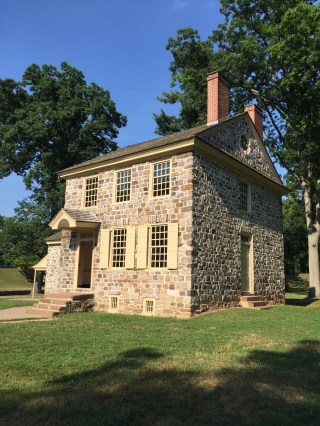
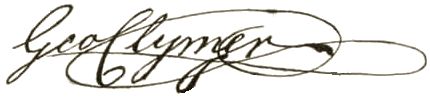

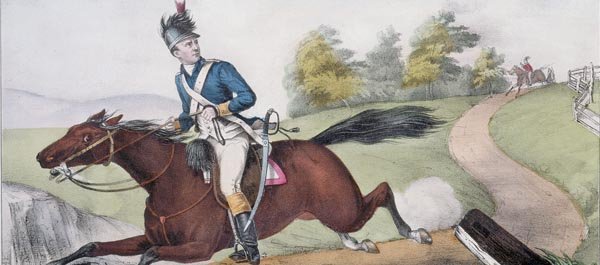


 went off to war as the “Champe Rifles” (8th VA Infantry). In the early 20th century, the location of his home was marked with a small obelisk (reportedly made by stone from the foundation of the home). Today the monument sits on the south side of Route 50 a few miles west of Aldie.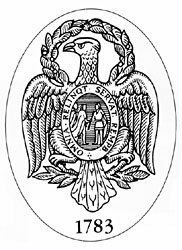
 Emerging Revolutionary War Era