Now At Rest

Not long ago, a good friend of mine found himself in Henry County, Va. Located southwest of Richmond, the county was named for the patriot, Patrick Henry, in 1777. Touring a local cemetery there, my friend came upon a very interesting headstone. It was the grave marker for a soldier of the American Revolution; a man named Thomas Pearson.
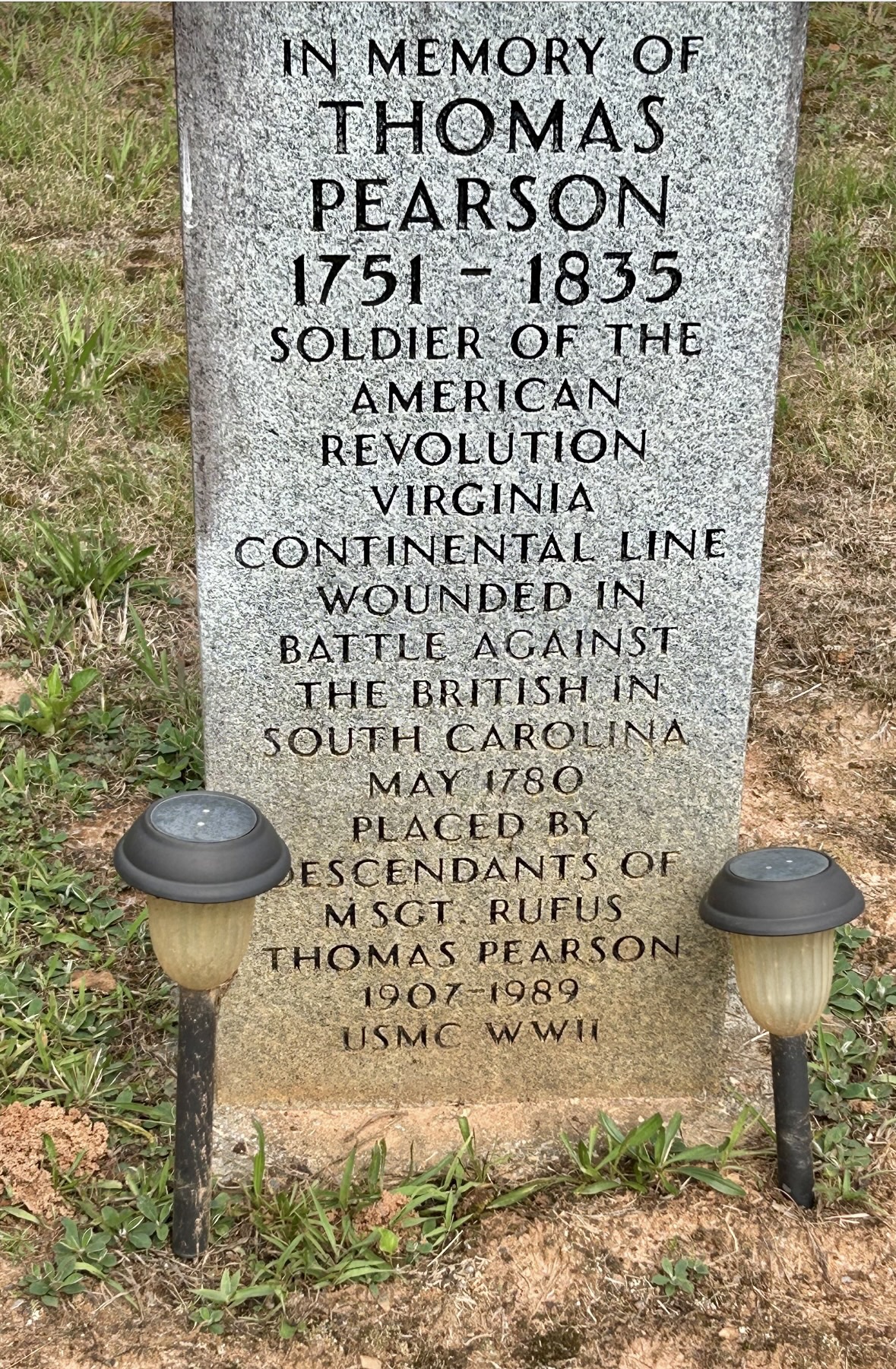
Grave of Thomas Pearson

According to the headstone, Thomas Pearson had served in the Virginia Continental Line and in May 1780, was wounded in battle against the British in South Carolina. My friend sent me a photograph of the headstone. Based on the place and date, he was hoping this Thomas Pearson had perhaps served at the battle of Camden. As a co-author of a book on Camden, I have to admit that I was quite intrigued myself.

But, based on my research for the book, I knew immediately that certain pieces of information on the man’s epitaph didn’t correspond to details of the Camden fight. First off, it indicates that Thomas Pearson served in the Virginia Continental Line. The Virginians engaged at Camden were actually not part of the Continental Line but, rather, state militia forces commanded by Gen. Edward Stevens. In fact, most of the troops of the Virginia Continental Line were captured by the British at the fall of Charleston on May 12, 1780.

The epitaph also reads that Pearson was wounded in May 1780, in South Carolina. The battle of Camden occurred later, on August 16, so most likely this gentleman wasn’t there. Still, the gravestone intrigued me. I decided to do a little research into Thomas Pearson and sadly, I was to discover that his story was a tragic one.

On November 30, 1812, at the age of 61, Thomas Pearson applied for a pension for his services in the Revolutionary War from the Commonwealth of Virginia. According to his application, he was “a soldier in the revolutionary war, belonging to the VA Line on continental establishment, and attached to the regiment commanded by Col. Abraham Buford.” Clearly, he was a veteran of the southern campaign.

In May 1780, he was indeed serving in the Virginia Continental Line, as an officer of the 3rd Virginia Detachment of Scott’s Virginia Brigade. Commanded by Col. Abraham Buford of Culpepper County, VA, the 3rd Detachment, nearly 400 strong, was marching into South Carolina to the relief of the City of Charleston, which was under siege by the British. The city fell before Buford’s column could reach it, however. Afterwards, Buford received orders from Brig. Gen. Isaac Huger to fall back to Hillsborough, NC. In Charleston, British Lt. Gen. Charles, Earl Cornwallis, who would soon assume command of all British forces in the south, learned of the existence of these Patriot reinforcements. On May 27, he sent troops in pursuit. They were mounted troops of the British Legion, mostly loyalists under the command of the infamous Lt. Col. Banastre Tarleton. Throughout the southern campaign, the 26-year-old Tarleton would establish for himself a reputation for cruelty and blood lust that was unsurpassed. Some of the acts attributed to him during this period were true and some were not, but his dubious reputation would become cemented in the minds of many Americans during this episode.
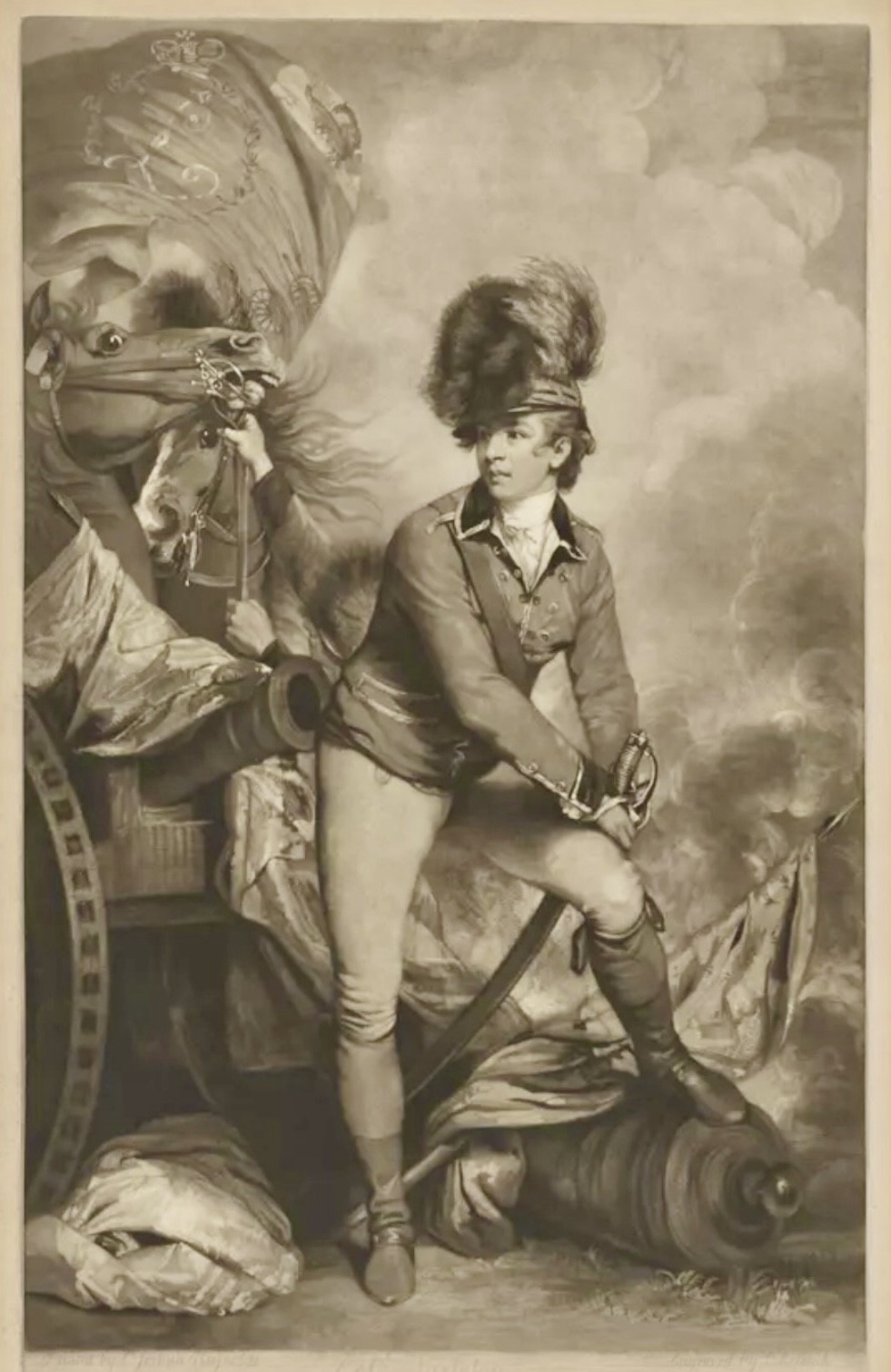
Lt. Col. Banastre Tarleton

Tarleton set out in pursuit of Abraham Buford’s troops on May 27, leading around 300 of his Legion dragoons, some mounted infantry, and a detachment of the 17th Light Dragoons. Having a reputation for driving his forces unmercifully, Tarleton’s troops were able to quickly catch up, and closed in on Buford’s Virginians on May 29, on the border of North and South Carolina. It was farming country here, known as the Waxhaws.

When the two forces were still some miles apart, Tarleton issued a call for surrender, under a white flag of truce. In his message he wrote: “Resistance being vain, to prevent the effusion of human blood, I make offers which can never be repeated.” After conferring with his officers, Col. Buford made the decision to refuse Tarleton’s offer. He replied: “I reject your proposals, and shall defend myself to the last extremity.”  The Patriot force then continued its march north towards Hillsborough, with Tarleton’s troopers continuing the pursuit.

By mid-afternoon of the 29th, Tarleton’s lead elements caught up with Buford’s column, attacking and destroying the small rear guard. Commanding that rear guard was Lieut. Thomas Pearson. Witnesses said that Pearson was sabered and knocked from his horse. While he lay on the ground, he continued to receive wounds; his face was mangled and there were cuts across his nose, lips, and tongue. Col. Buford halted his column, deploying his infantry in a single line across an open field, east of the Rocky River Road. He then issued a questionable order: his men were told to hold their fire until the dragoons were almost on top of them and then unleash a volley at point-blank range. When the charge came, the Virginians followed orders; they held their fire until the British were about 10 yards away. While their one volley did manage to empty a few enemy saddles, it wasn’t nearly enough and now the Virginians had no time to re-load their muskets. In a flash, Tarleton’s troopers were in among the Continentals, hacking men down with their sabers, wholesale.

Quickly realizing the battle was lost, Buford sent forward a white flag of surrender. About this time, Tarleton’s horse was killed, going down and momentarily trapping its rider. Some of his nearby troops became enraged, believing the Patriots were not honoring their own white flag. These troops are said to have continued sabering Patriot soldiers as they tried to surrender. Abraham Buford and some of his troops did manage to escape the field but his command was destroyed. Continental casualties totaled around 113 killed, 147 wounded, and 50 captured. Two Patriot 6-pounder artillery pieces and 26 baggage wagons were likewise captured. Compared to this, Tarleton’s losses were negligible. The battle would long be remembered as “Buford’s Massacre” and many of the Patriot dead lie today in a mass grave at the battlefield site. 
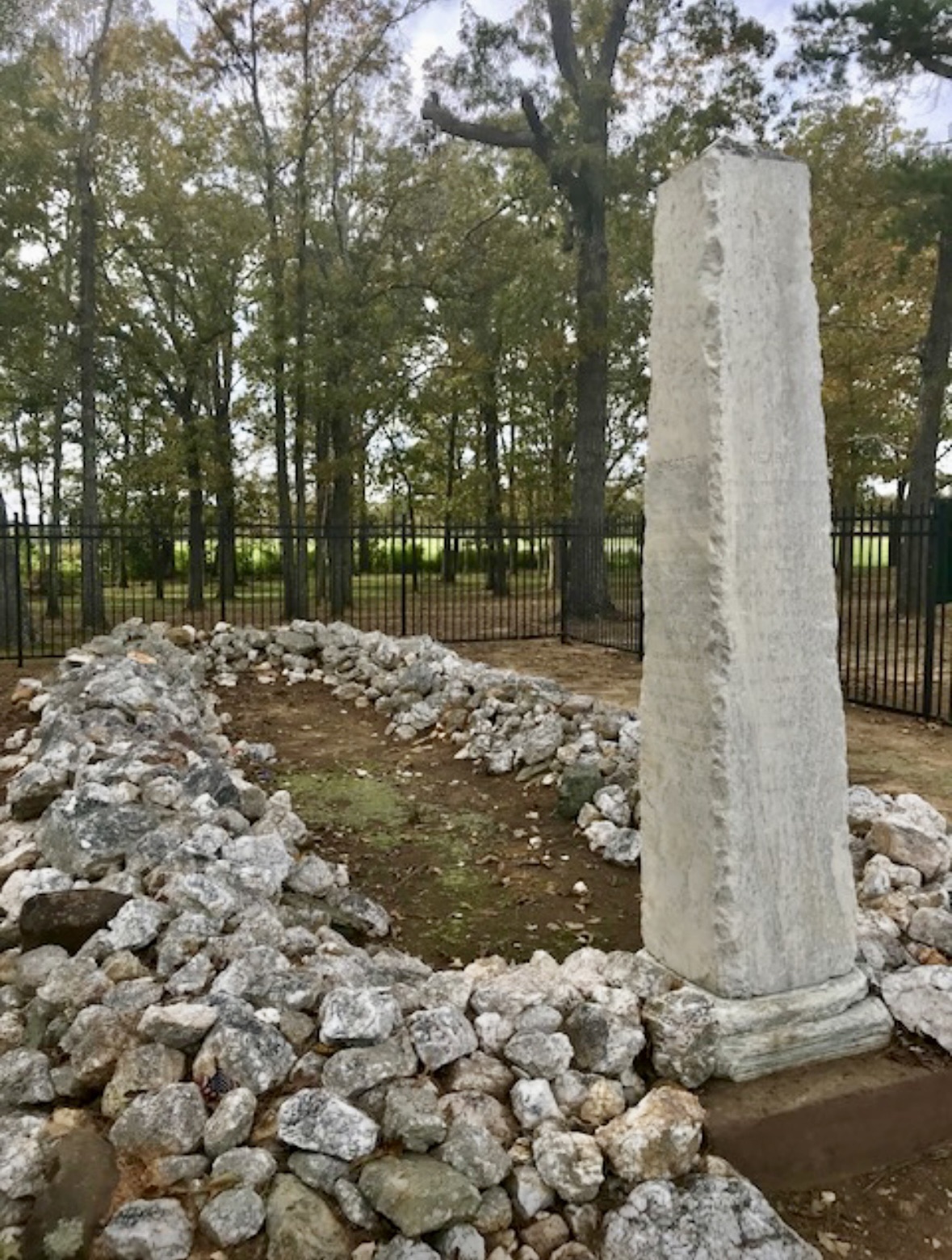
Mass Grave at the Waxhaws battle site

Banastre Tarleton’s reputation for cruelty was established at the Waxhaws. Nicknames like “Bloody Ban” and “Bloody Tarleton” began to be used to describe him and the phrase “Tarleton’s Quarter” would become a Patriot battle cry.    

Even though severely wounded in this action, Lieut. Thomas Pearson managed to survive his injuries, living until 1835. He was 84 when he died; his last years were hard on him. According to his pension application, he “received sundry wounds in his head and arms, which have rendered him, in his present advanced stage of life, incapable of maintaining himself by labour (sic).” On January 12, 1813, the Commonwealth of Virginia granted Pearson’s request for relief. He received an immediate payment of $50, with an annual pension payment of $60.

Today, this Revolutionary War veteran lies at rest in a quiet cemetery in Henry County, VA.
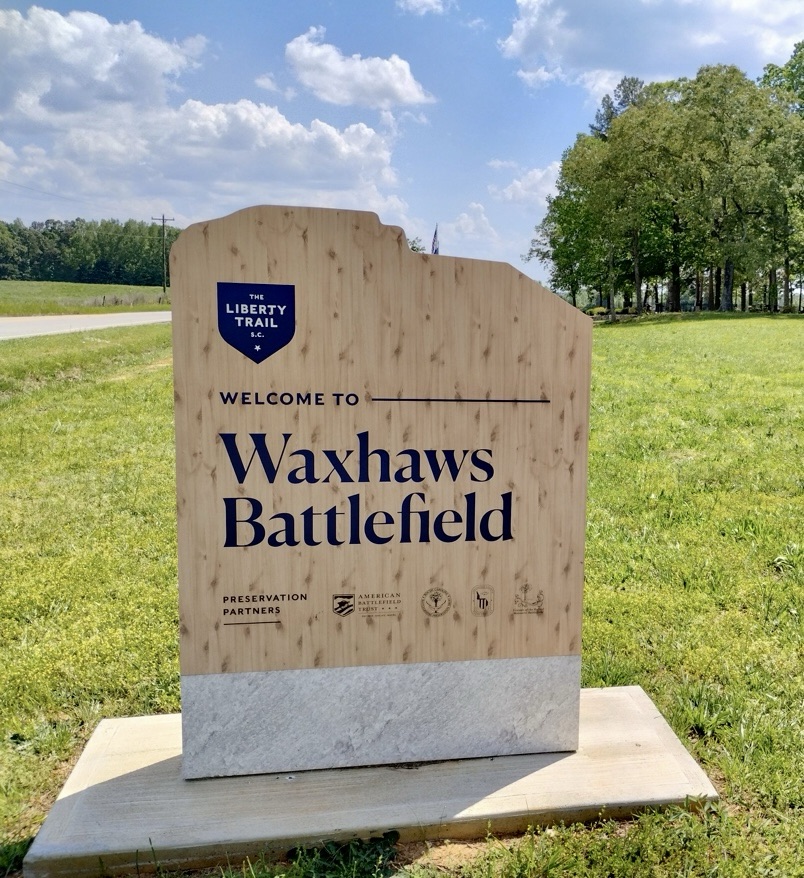
The Waxhaws Battlefield Site, in Lancaster, SC

Rev War Revelry: New Book on the Battle of Camden “All That Can be Expected: The Battle of Camden and the British High Tide in the South”

This Sunday, August 6th at 7pm join ERW series editor Dan Welch and authors Rob Orrison and Mark Wilcox as they discuss one of the worst defeats in American history, the Battle of Camden. How did the hero of Saratoga end up the scapegoat in the south? Learn how a coincidence led to a great British victory. And how did the Patriots recover from such a large defeat and find a path to victory a year later? Orrison and Wilcox will also discuss their upcoming book “All That Can be Expected, The Battle of Camden”. Grab a drink and join us to learn more about the Battle of Camden!

All Rev War Revelries can be found LIVE on our Facebook page, or a week later on our You Tube and Spotify channels.

The Road to Waxhaws: British Moves after the Capture of Charleston

Lieutenant General Henry Clinton, New York Public Library

With the Charleston in British hands, Clinton believed that all he had to do was establish outposts in South Carolina stationed with British regulars. This be believed would put down what was left of the rebellion in the state. These posts assisted the recruitment and training of the thousands of Loyalist troops he believed would now rally around the King’s Colors. To take the best advantage of his Regular troops, Clinton determined to establish three major outposts in the South Carolina backcountry. Clinton established these posts at Augusta (Georgia), Ninety-Six, and Camden. While these posts were to be centers for the British army, the local Loyalist militias were to serve as the pacification forces in South Carolina while the main British force was freed up for larger strategic goals. 

To recruit, enlist, and train the large, expected influx of Loyalist militia, Clinton named Maj. Patrick Ferguson as Inspector of Militia. Ferguson was ordered to enlist younger men, preferably unmarried, into companies that would form battalions. He was instructed to recruit from Georgia to North Carolina and offer short enlistments if necessary. Clinton believed that having the colonists maintain their own law and order (via Great Britain’s authority) would cause less apprehension with those that were mostly undecided about to whom they should throw their support, the Patriots or the British. 

By mid-May, the British army set out for their destinations in the back country. Clinton’s second in command, Lieut. Gen. Charles Lord Cornwallis, marched to Camden while Ferguson moved to Ninety-Six. Without much resistance, Clinton’s plan to conquer South Carolina was working perfectly. Patriot leaders scrambled to find ways to organize their resistance. The only organized Continental force remaining in South Carolina was a small force of Virginians under Col. Abraham Buford that was on its way to Charleston when the city surrendered. Ordered by Brig. Gen Isaac Huger to reverse course and make his way north toward Hillsborough, North Carolina. There along with the North Carolina militia, he could be the core of American defense in North Carolina.  

On May 27, Cornwallis ordered Lieut. Col. Banastre Tarleton with 300 of his dragoons and mounted infantry in pursuit of Buford. Tarleton’s British Legion was mostly composed of Loyalist recruits, so many in his force were from America. Tarleton pushed him men and horses hard, many horses falling out along the way. Buford was aware of a possible British pursuit but underestimated the speed in which Tarleton closed the gap. On May 29, Tarleton caught up with Buford in a region near the South and North Carolina border called the “Waxhaws.”  

Lieutenant Colonel Banastre Tarleton, New York Public Library

The events that took place next are still debated today. Tarleton under a flag of truce tried to get Buford to surrender. Writing to Buford, Tarleton wrote “Resistance being vain, to prevent the effusion of human blood, I make offers which can never be repeated.” Tarleton was already creating an image of himself as an aggressive and brutal fighter. Buford, however, refused, replying, “I reject your proposals, and shall defend myself to the last extremity.” With that, Buford continued his march north towards North Carolina as did Tarleton’s pursuit. Around 3:00 p.m. the lead elements of Tarleton’s force wiped out Buford’s small rearguard, forcing Buford to stop and deal with Tarleton.  

Buford decided to create a single battle line east of the Rocky River Road. Tarleton, ever the aggressive commander, ordered his horsemen to charge the Virginians. Here, Buford made what would be a devastating blunder. He ordered his men to not fire until the British cavalry was within ten yards of the American line. This would not allow the Americans a chance to fire another volley before the British charge was upon them. The Virginians fired, taking out some of the British dragoons and horses (Tarleton himself became briefly trapped under his horse), but most charged through Buford’s line, wielding their sabers and cutting down the Virginians. Total chaos ensued, and many of Buford’s men attempted to flee. Some tried to surrender by throwing their arms to the ground, but American accounts state that the British were offering “no quarter” and killing everyone that tried to surrender. Other accounts report that Buford sent a white flag to Tarleton, but probably because he was injured, it was never received, and the fighting continued. Accounts differ widely between the Americans and British on the fighting, but the fact cannot be argued that Buford’s command was destroyed. 

Waxhaws Grave and Monument, photo and flags courtesy of the author

American casualties were estimated at 350, 113 men killed, 147 wounded, 50 captured, and 2 six-pound artillery pieces and 26 wagons captured. Buford himself was able to escape the field. Tarleton only suffered 5 killed and 12 wounded, a complete victory. What has become known as “Buford’s Massacre” was not referred to as a massacre at all in many period accounts. Tarleton himself blamed the “slaughter” on the fact that his men thought he was killed in the battle and sought revenge. The disparity in numbers and the reports of indiscriminate British slaughter of Americans led to the creation of “Tarleton’s Quarter.” Patriot leaders quickly pounced on this and began to spread stories about Tarleton’s brutal tactics. This proved to be a public relations coup for the Patriot cause, as it energized their side and led to a more robust recruitment of militia and partisan forces to take on the British who now faced no organized opposition in South Carolina or Georgia.

Stay Tuned for the Emerging Revolutionary War Series newest book releases “To the Last Extremity: The Battles for Charleston, 1776-1782” by Mark Maloy and “All That Can Be Expected: The Battle of Camden and the British High Tide in the South, August 16, 1780” by Rob Orrison and Mark Wilcox to learn more abou the 1780 Southern Campaign. Both releases are published by Savas Beatie Publshing: https://www.savasbeatie.com/american-revolution/

Rev War Revelry Tackles the Myth of the Battle of Waxhaws

The Battle of Waxhaws, fought on May 29, 1780, was a lopsided British victory by Lieutenant Colonel Banastre Tarleton’s British cavalry over American Colonel Abraham Buford’s Continental forces in Waxhaws South Carolina. Buford lost 316 of 350 men with the British losing less than 20. Known popularly as “Buford’s Massacre,” Continental leaders used the battle as a propaganda tool against the Crown forces in the south. But, was it really a massacre?

Join us as we welcome historian and author Dr. Jim Piecuch as we discuss his research and theory about the Battle of Waxhaws and its aftermath. Dr. Piecuch has written several books on the Southern Campaign of the American Revolution including his book “Blood Be Upon Your Head: Tarleton and the Myth of Buford’s Massacre.” This Rev War Revelry will be pre-recorded and posted on May 28th at 7pm. Grab a drink and a good seat and enjoy this great presentation on one of the most controversial battles of the American Revolution.

History of the Horn Work and the Siege of Charleston

Press Release from our friends at American Battlefield Trust and their Liberty Trail Initiative

In 1757, during the French and Indian War, Lieutenant Emanuel Hess, a Swiss engineer serving in the British 60th Regiment of Foot, designed a series of fortifications to surround Charles Town, South Carolina. Central to this plan was Charles Town’s Horn Work, a large gate flanked by horn-shaped half-bastions covering three city blocks. Before this plan could be fully executed, the threat of a French attack on Charles Town was contained by British victories in Canada and funding for building the fortification system was withdrawn.

However, the Revolutionary War brought a new threat to Charles Town — this time from the British, and work to fortify the city was resumed by determined Patriots. The Horn Work, with its 30-foot-high walls constructed from an oyster-shell cement called tabby, became the centerpiece of the city’s defensive line and the headquarters for American commanding officers.

Beginning in late March 1780, the British laid siege to Charles Town and trapped the American forces in the city. On May 12, 1780, American Generals Benjamin Lincoln and William Moultrie — standing under the Horn Work’s arched gateway — surrendered to the British, in what was the largest American surrender of the war. The fight for American independence looked bleak on that day, but the resolve of the Patriots in the coming months would turn the tide toward victory.

Modern-Day Archeology

In the years following the Revolutionary War, the tabby walls of the Horn Work were dismantled to make way for the growth of the city. Today, all that remains above ground of the once towering structure is a small remnant in Charleston’s Marion Square — a vibrant urban park located in the heart of downtown Charleston and named for Revolutionary War general and backcountry tactician, Francis Marion. Yet, just a foot under the surface of Marion Square, there is much more to discover about the Horn Work.

In February of this year, graduate students from the Clemson/College of Charleston Historic Preservation program, working on behalf of the American Battlefield Trust and South Carolina Battleground Trust’s Liberty Trail, commenced an archeological study to fully document the exact footprint of the Horn Work for the first time. This study was undertaken in partnership with many organizations, including the Charleston County Library, the Charleston Museum, the South Carolina Institute of Archaeology and Anthropology and the Washington Light Infantry and Sumter Guards.

More than 250 years after work began to build the Horn Work, these graduate students utilized modern technology, including ground penetrating radar, to ensure the protection of this important historic resource and enhance future endeavors to tell its story.

Charleston Gateway

While no period drawings or plans of the Horn Work are known to have survived, the findings of this archeological study, together with historical research on comparable tabby fortifications built in the same area and time by the same engineer, have made it possible to create a rendering of the Horn Work for the first time. With this rendering complete, we are now able to explore a variety of opportunities to interpret the Horn Work in the very place it once stood.

Our goal is to create an outdoor exhibit in Marion Square utilizing an array of interpretive techniques, including physical signage, in-ground markers tracing the footprint of the Horn Work, and Augmented Reality — all designed to bring the Horn Work and the Siege of Charleston to life for visitors. Augmented Reality, in particular, presents a chance to use cutting-edge 21st Century technology to tell this 18th Century story.

Just as the Horn Work was the gateway into Charleston before and during the Revolutionary War, we now seek to create a gateway into the Liberty Trail through Marion Square, which will encourage visitation to battlefields throughout South Carolina and beyond.

For more information on this subject, click here.

Thank you to Catherine Noyes, Liberty Trail Program Director for bringing this to our attention,

“Rev War Revelry” Stays in South Carolina…

After last week’s riveting discussion on the pivotal battle of Kings Mountain, Emerging Revolutionary War decided to stay in the Palmetto State again this week. We have two special guests and historians joining “Rev War Revelry” so set a reminder to tune in on this Sunday, on our Facebook page, at 7pm EST.

From the American Battlefield Trust Catherine Noyas will join the revelry and discuss land acquisition in regards to the American Revolution around Camden, including the new visitor center that will open in spring 2021. She will give highlights on the work being done and the history behind the various initiatives.

From the South Carolina Battlefield Preservation Trust comes historian Doug Bostick. Their mission coalesces with the American Battlefield Trust with the shared goal of preserving the hallowed ground of the Palmetto State. Along with promoting the military history of the state as well.

There will also be mention of the Liberty Trail, so tune in to learn more about that program as well!

We hope you can join us for a chat on preservation, interpretation, and military history on Sunday evening.

From the Preservation Front: “Liberty Trailblazers – American Battlefield Trust”

ABTFrom our friends at American Battlefield Trust (ABT) comes the following announcement and call for assistance. 

The first line of the announcement sums up the importance of this new initiative of the American Battlefield Trust:

“They secured our liberty. It’s time for us to honor their legacy.” 

In a collaboration between the ABT, the National Park Service, and the South Carolina Battleground Trust, the joint initiative is to highlight the “tremendous significance of these places to American independence.” Their combined goal is to preserve 2,500 acres of American Revolutionary War battle lands in the Palmetto State.

As of the middle of this month, 308 acres of hallowed ground has been saved. The land protected are part of the battlefields of Camden and Eutaw Springs, which “bookend a period of incredible consequence to the American Revolution.”

This is a great start, but as that means, it is a beginning and the ABT will need all our help to make it happen. This new direction will bring preservation, education, and technology together into one investment and keep the effort going, until this land is saved for the present and future generations.

For those readers of ours that are already members, thank you. For those that are interested in learning  more, click here.

To check out the various sites and history associated with the Liberty Trail, click here.