Was the Battle of Point Pleasant the First Battle of the Revolution?

Emerging Revolutionary War welcomes back guest historian Evan Portman

By the time Ralph Waldo Emerson immortalized the “shot heard round the world” in his 1836 “Concord Hymn”, the battles of Lexington and Concord had already achieved fame as the first engagement of the Revolutionary War. However, in the early twentieth century one West Virginia historian began to argue that the true “shot heard round the world” had occurred six months earlier on October 10, 1774, at the battle of Point Pleasant.

The battle was the culmination of Lord Dunmore’s War, a five-month campaign against the Shawnee and Mingo tribes in an effort to quell the violence along the Ohio frontier.[1] Virginia settlers had begun moving into the Ohio Country following the Treaty of Fort Stanwix, in which the Iroquois Confederacy ceded the territories of present-day Kentucky and West Virginia to the Colony of Virginia. However, the Shawnee had not been consulted regarding the treaty and claimed ancestral hunting rights to the region, responding with violent raids along the frontier to reclaim their land.[2] Virginia Colonial Governor John Murray, 4th Earl of Dunmore sanctioned the colonial militia to wage a campaign against the Native Americans after white settlers began reacting violently, themselves.[3]

Continue reading “Was the Battle of Point Pleasant the First Battle of the Revolution?”

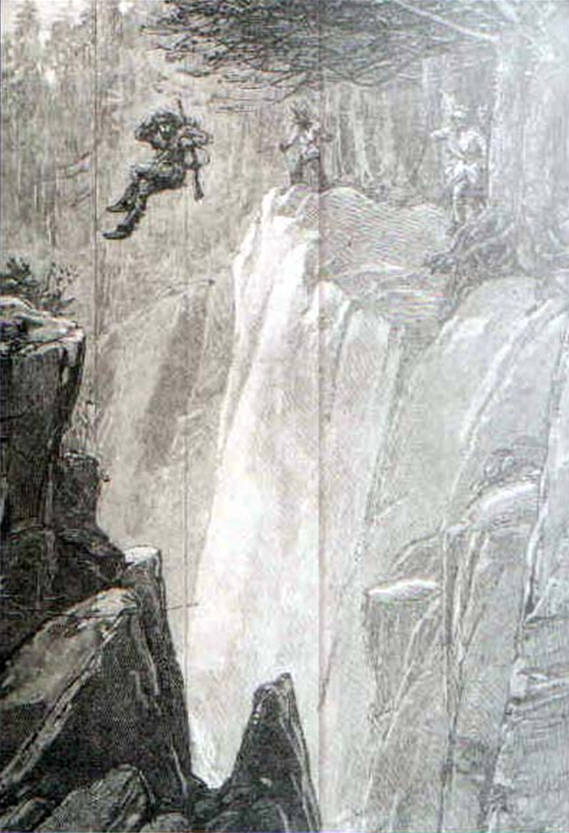
When the Legend Becomes Fact: Brady’s Leap?

Brady’s Leap. Unknown. (Wikipedia Commons)

The American Revolution on the frontier produced its share of stories and legends.  In many ways, the heroes in those tales were more relatable than the men who led the war east of the Appalachians. They were not land-owning generals like George Washington, political organizers like Sam Adams, world-renowned scientists like Benjamin Franklin, inspiring speakers like Patrick Henry, or political philosophers like Thomas Jefferson.  Instead, they were farmers turned amateur soldiers, trappers and hunters turned scouts, family men turned avenging marauders.  In at least one case, even a quasi-fugitive from the law could become a symbol of protection and security.

By the 19th century, names like Daniel Boone, Simon Kenton, Ebenezer Zane, Lewis Wetzel, Issac Shelby, and Samuel Brady were known to every schoolboy west of the Appalachians. Some of their reputations faded with time as the frontier moved west onto the Great Plains and into the Rocky Mountains.  Still, the stories remained, mostly to sit in in aging volumes on a library bookshelf, but occasionally to be dusted off for works of historical fiction.  Like most stories, they occasionally morphed and evolved over time in the retelling.   Sometimes they hold up quite well on close examination and can be verified.  

Sometimes a little more skepticism may be in order.  Samuel Brady’s leap over a river is one such story.  There are two versions of the story.  In one he leaped to the opposite side of a rocky Cuyahoga River chasm.  In the other, he leaped entirely across a deep ravine through which Slippery Rock Creek ran.

Continue reading “When the Legend Becomes Fact: Brady’s Leap?”

Book Review: Steven P. Locke, War Along the Wabash: The Ohio Indian Confederacy’s Destruction of the U.S. Army, 1791 (Havertown, PA: Casemate Publishers, 2023).

The frontier is inextricably tied to the early development of the United States under its 1789 Constitution.  In The Treaty of Paris ending the Revolution, Britain legally ceded its territories north of the Ohio and east of the Mississippi Rivers up to the borders of Canada to the United States—the very same territory it had claimed from France at the end of the Seven Years War.  While European states might redraw borders, they did not consult the people actually living in the area.  Congress proclaimed the area the Northwest Territory and in the following years, native people, particularly the Native nations living in modern Ohio, Indiana, and Michigan fought a lengthy war with the new Unites States, inflicting one of its worst defeats on the United States Army and coming closer than any other Native American coalition to halting, or at least slowing, the spread of white society beyond the Appalachians.

            Steven P. Locke, in his new book, War Along the Wabash, chronicles the first major campaign of the United States Army in what has become known as the War of the Northwest Territory.  In 1791, frustrated by Indian attacks on frontier settlements that had not stopped after the American Revolution, Congress authorized the Washington Administration to raise an army and conduct a campaign against the Ohio Indians, the Miami, Seneca/Cayuga, Shawnee, Wyandot, Odawa, Ojibwe, Potawatomi, and Delaware.  Major General Arthur St. Clair, a veteran of the Revolutionary War, was Governor of the Northwest Territory and took personal command of the army created for the campaign.  His objective was simple enough, to launch his army from Fort Washington in modern Cincinnati to Kekionga, a cluster of Native American villages at the portage between the Maumee and Wabash Rivers in modern Fort Wayne.  Presumably, Americans ensconced in such a fort would be able to readily overawe the local tribes in their homes, force a Native American recognition of American “ownership” of the Ohio Country, and stop Indian raids along and across the Ohio River.  St. Clair received command on March 4, 1791 and was expected to march out of Fort Washington by July 10, hardly sufficient time to recruit, organize, train, and equip an army large enough for the task before him, particularly on the sparsely populated frontier.   Federal troops and supplies had to come all the way from the east coast by way of Pittsburgh and the Ohio River, while Kentucky provided militia and filled out some provisional levies. 

            Despite his intimate experience with the connection between military operations and logistical support, Secretary of War Henry Knox pressed St. Clair all summer to get his troops moving.  St. Clair, of course, could not.   The Americans had already launched mounted raids into Native American territory, which generally resulted in burned villages and despoiled crops.  According to Locke, the speed with which those raids proceeded highlights the cross-purposes under which St. Clair’s campaign would take place.  He could either move quickly with a largely mounted force over existing trails or take a more deliberate, plodding approach through the wilderness by building a road, which necessitated infantry and engineers.  St. Clair chose the latter, but the pressure from Knox and President Washington never ceased.  St. Clair responded by marching the army out of Fort Washington in September and slowly moving northward, building a road, camps, and forts as it moved a little over two miles a day, even before the army had fully assembled at Fort Washington. Indeed, in the first month, St. Clair was not usually with the army, consumed by logistical duties as he shuttled back and forth from Fort Washington or Kentucky gathering supplies and militia and then moving them forward over the newly built, yet still primitive, road. 

            By November 3, 1791, St. Clair had rejoined his army and reached the headwaters of the Wabash River with one regular infantry regiment, two levy regiments, and assorted militia, artillery, dragoons, teamsters, and camp followers.  Altogether, it was about 1,400 men.  Mistakenly believing he was closer to Kekionga than was the case and that the Indians would not attack, he did not build breastworks that night, but deployed his army in two lines with some militia thrown across a creek and various outposts scattered around his position.  He had detached his best federal regiment and sent it back down the trail to escort a supply train coming up to feed the army.  Thus, the United States Army was at its weakest point during the campaign when the Indians of the emerging Ohio Indian Confederacy struck early the next morning.  

            The Confederacy force of 1,100 warriors applied traditional tactics, quickly routing the forward militia and then moving along the flanks to the rear, essentially surrounding St. Clair and then pressing ever tighter.  Sniping from cover, the Indians seemed immune to American fire while inflicting heavy losses on the defenders.   St. Clair launched two bayonet charges to restore his lines.  As usual, the Native Americans gave way to the bayonet charges and then moved around the charging unit’s flanks as it separated from the main army, bringing each under a withering cross-fire.  In a sense, St. Clair carved up his own army and dished out pieces for the Confederacy to consume.  By the time St. Clair launched a third bayonet charge to clear his route of retreat, his army had collapsed.   He escaped with 500 men, leaving 900 dead, dying, or wounded on the battlefield, including dozens of women and children among his camp followers.  (Estimates of American losses vary widely among historians.)  The disaster was worse than General Braddock’s defeat on the Monongahela in 1755, or Custer’s in 1876.  War Along the Wabash is at its strongest when relating and analyzing the battle.  

            Locke tells the entire tale well, discusses the difficulties of raising an army from virtually nothing, includes small biographies of major “characters” as he introduces them, pays careful attention to logistics, which are often overlooked in campaign histories and were critical in the unfolding of St. Clair’s campaign, analyzes decisions and strategies, and discusses the fallout after St. Clair returned to Philadelphia to defend his decision-making.  While most of the story is from the American perspective, which is better documented, Locke makes a serious effort to address Native American perspectives and experiences as they assembled and fought the American army.  

All that said, he lapses into odd, avoidable errors from time to time.  In my Kindle edition, Locke writes on page 397 that there were approximately 400 commissioned officers in the army (nearly 1 in 3 of the total force) at the beginning of the battle, just 150 of whom remained at the end, meaning 250 commissioned officers were killed during the battle.  Yet, on page 429 he notes 69 out of 124 commissioned officers being killed or wounded during the three-hour battle.  Collectively—and there are more eyebrow-raising moments—such errors or inconsistencies distract from the book’s overall strengths, which are considerable.  

In 1793, during his campaign against the Ohio Indian Confederacy, Major General Anthony Wayne led his army up St. Clair’s trace and built a fort near the battlefield, identifiable by the large number of human remains and camp detritus, which he named Fort Recovery.  A town, still named Fort Recovery, grew up there, and the site of the battle largely lies under Wayne Street.   (Museums and parks around town commemorate both St. Clair’s defeat and Wayne’s subsequent campaign).  War Along the Wabash is an excellent starting point to understand St. Clair’s campaign and the defeat that often bears his name.  It will not be the last word, but it sets a high bar that future historians will have to work hard to surpass.  

Serendipity, Genealogy, and the 241st Anniversary of the Battle of Upper Sandusky

We interact with history at a personal level in many ways.  We enjoy careers in the field, read, tour locations, work as living historians (or interact with them), dig through archives, trace our roots, visit museums, or simply stumble across some connection in the course of living our daily lives.  But, a fortuitous bit of family history struck on a recent weekend, just shy of the 241st anniversary of a battle.  

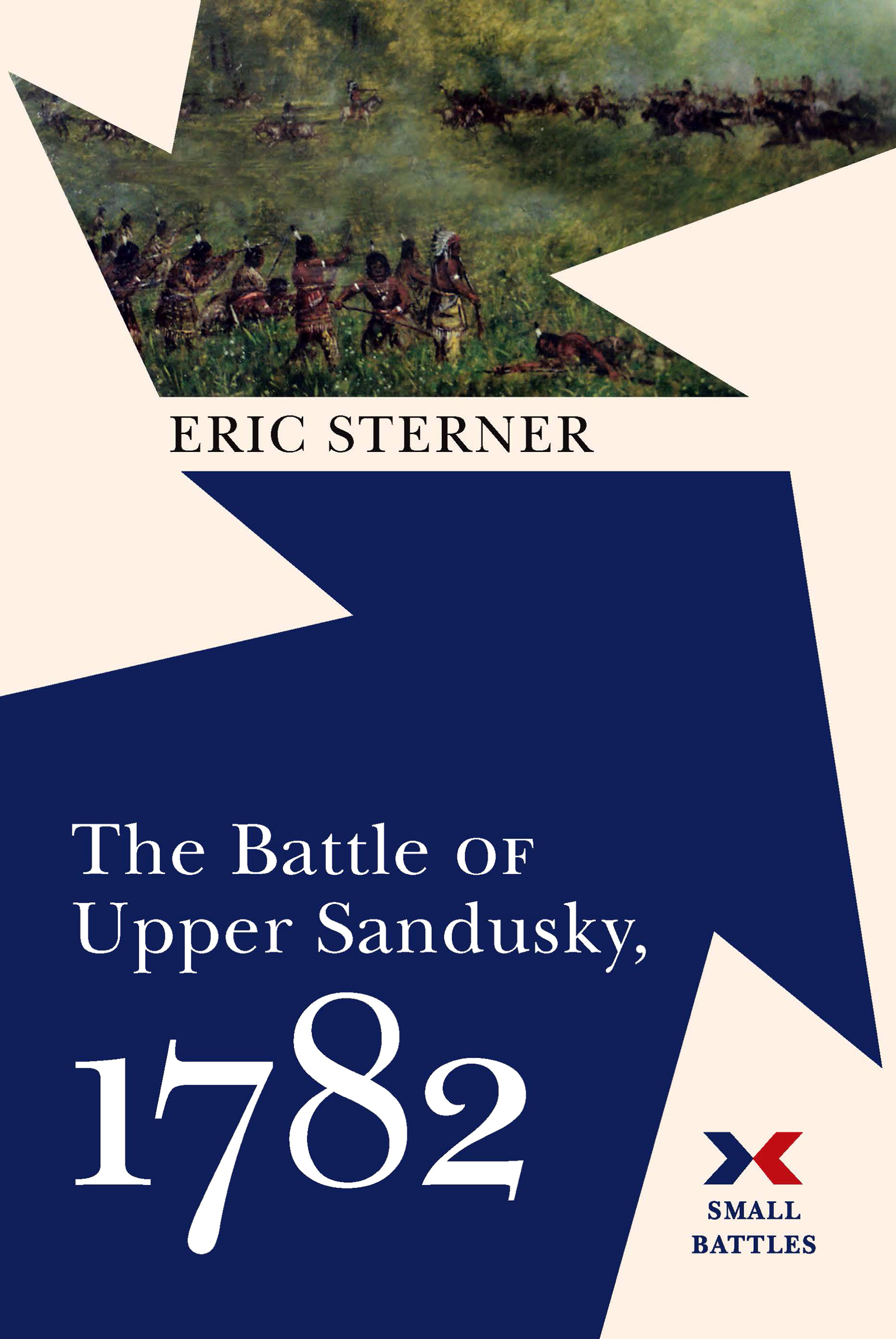
My wife and oldest daughter spent a Sunday morning with my in-laws to visit and record some family stories and memories.  They came back with a box of material.  The first document they perused was a 19thcentury application for membership in the Daughters of the American Revolution.  I was in a different room and suddenly heard yelling as my wife came to find me.  I assumed a snake had gotten into the house or we’d won the lottery without playing.  It turned out that the DAR applicant, a direct forebear of both my wife and daughter, was descended from Nicholas Dawson, who had fought in the Crawford Campaign, which happened to be the subject of my second book, The Battle of Upper Sandusky, 1782.  (Shameless bit of self-promotion: it just went on sale).  Talk about coincidence.

Many volunteer actions on the frontier during the American Revolution lacked troop rosters.  But, to stimulate volunteering for the Crawford campaign the county lieutenants for Pennsylvania’s Washington and Westmoreland counties offered to count the time on campaign against a volunteer’s legal militia obligations. So, they created rosters, some of which partially survived.  The Pennsylvania Archives published that material.  Sure enough, Nicholas Dawson shows up as a miscellaneous volunteer, meaning only that the roster didn’t include his company assignment.  The ever-helpful Fold3 database also holds pension debt certificates issued to Dawson on January 18 and 20, 1785.

Continue reading “Serendipity, Genealogy, and the 241st Anniversary of the Battle of Upper Sandusky”

Down the Rabbit Hole with Three Captains Johnny

On the afternoon of June 4, 1782 in the grasslands of western Ohio, a Pennsylvania volunteer named Francis Dunlavy spent a portion of his time trying to shoot a Native American he later called “Big Captain Johnny.”  For his part, the Indian attempted with equal passion to kill Dunlavy.  At some point, they worked themselves into a position on opposite sides of a recently fallen tree at the edge of a wood that adorned a modest, but noticeable rise that could pass for a hill in the surrounding plain.  Even dropped on its side, the tree still held a full canopy of leaves, and the two combatants stalked each other around it.    Eventually, “Big Captain Johnny” saw his opening.  He was close enough to rise and hurl tomahawks at Dunlavy.   Fortunately, he missed and Dunlavy survived to relate the tale to his friends and family.  In 1872, more than 30 years after Dunlavy passed, his family related the tale to C.W. Butterfield, who wrote the first history of the Crawford Campaign.  Before telling the story again, I wanted to confirm it.  That meant searching for Francis Dunlavy and Captain Johnny anywhere, and everywhere, they might have left footprints in history. 

Continue reading “Down the Rabbit Hole with Three Captains Johnny”

ERW Weekender: Fort Recovery

Emerging Revolutionary War welcomes guest historian Joshua Shepherd

Mural of the action on November 4, 1791

For most history enthusiasts, a visit to a battlefield is simply a diversion that very often takes place during an annual vacation. But the pleasant surroundings of America’s historic parks belie the terrifying sights that greeted a battlefield’s first visitors.

On December 24, 1793, a detachment of American troops under the command of Major Henry Burbeck arrived at an insignificant knoll deep in the wilderness of present-day Ohio. Tasked with constructing a timber fortification on the site, the troops first had to attend to the unenviable task of clearing the remains of over six hundred men who had been killed there two years earlier. Burbeck reported that the battlefield “had a very melancholy appearance – nearly in the space of 350 yards lay 500 skull bones – 300 of which we buried.” Most of the skulls, it was reported, appeared to have been smashed by tomahawk blows.        

Continue reading “ERW Weekender: Fort Recovery”

History after a Pandemic

The odds are good that you haven’t been able to visit some of your favorite Revolutionary War sites during the Covid-19 pandemic. Many of these locations rely on foot traffic for their annual income and may be struggling to stay afloat amidst various state lockdowns and a smaller number of visitors.  (We left out many national, state, and local parks, which sometimes have access to government funds.  But, they often have partnerships with non-profit foundations that provide vital support for their activities.)  So, we decided to start a list of museums and parks that you can help out now and visit as circumstances allow.  No doubt it will grow.  The list does not constitute a solicitation or endorsement, but many of our historians visited some of these museums in the past and found them really helpful to our own work.  (You may need to copy and paste some links.)  If you search our “weekender” posts, there are even more sites to support and visit when you can.

Continue reading “History after a Pandemic”

Book Review: Peckuwe 1780, by John F. Winkler

erw-book-reviews-11


9781472828859_6

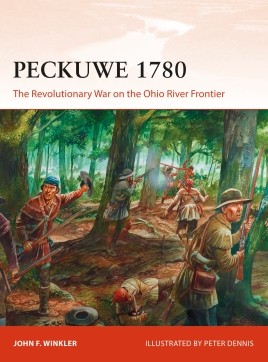
John F. Winkler, Peckuwe 1780: The Revolutionary War on the Ohio River Frontier, (Oxford: Osprey Publishing, 2018).   $24.00

I once read a review comparing Osprey Publishing’s monographs on particular battles, weapons, uniforms, or campaigns to “flash cards,” which made me smile.  As a kid, I somehow acquired stacks of flashcards laying out the technical specs of various military aircraft or ships and thought they were the greatest things since sliced bread.  Those were the days before Amazon or Barnes & Noble, when a kid had to depend on the local library and Waldenbooks for books about history, which they didn’t have in large numbers.  The Osprey monographs were a windfall of sorts when the local library started carrying them.  They’re not intended for an academic audience by any stretch, but can play a useful role in interesting popular audiences in places, people, and events that might otherwise prove too obscure or too intimidating for a young or casual reader.  So, when I came across John F. Winkler’s new monograph for Osprey, Peckuwe 1780, I snapped it up as much for sentimental reasons as for my interest in the American Revolution on the western frontier.

Continue reading “Book Review: Peckuwe 1780, by John F. Winkler”

Revolution on the Ohio Frontier: Fort Laurens

img_2465
The Museum at Fort Laurens, Ohio

For much of the American Revolution, the British waged war on their rebelling colonists in the Ohio River Valley via proxy, relying on western Indian nations (Shawnee, Wyandot, Mingo, Chippewa, Ottawa, and others) to attack isolated American settlements and villages across the Ohio River.  The Continental Congress, already unable to meet the needs of its own army along the coasts, could offer little in the way of assistance. So, frontier defense largely fell upon the local militia.  They adopted a two-pronged strategy: 1) build forts and blockhouses along the frontier, giving settlers a place of safe haven when Indian raiding parties were about, and 2) preemptive raids against Native American villages in an attempt to disrupt their preparations for raids against the settlers.

In 1777, however, Congress realized that more aggressive measures were required: the war would have to be carried against the heart of British power at Detroit, from where the British coordinated, supplied, and rewarded Native American raids. With that in mind, Congress and Continental authorities at Pittsburgh began planning an offensive to capture the British post between Lakes Huron and Erie.  First, they would need to secure the continued neutrality of the Delaware Indian nation in the Muskingum River Valley, which today is in Eastern Ohio. Second, they would need to build a substantial network of forts capable of sustaining an overland offensive. Building a new fort in Delaware territory would serve both goals.

Continue reading “Revolution on the Ohio Frontier: Fort Laurens”

Norman MacLeod’s Campaign Journal, October 13, 1778

Sketch of Wabash River, 1778
Sketch of the Wabash River Made During Hamilton’s 1778 Campaign (Wikimedia Commons)

In the summer of 1778, Lieutenant Colonel George Rogers Clark of the Virginia militia launched one of the most daring American military operations of the Revolutionary War when he invaded the “Illinois country” and captured Cahokia and Kaskaskia in modern-day Illinois and Vincennes in southern Indiana, effectively neutralizing British power on the Illinois, Wabash, and Mississippi Rivers.  Henry Hamilton, Lieutenant Governor of Quebec and Britain’s Superintendent for Indian Affairs in Detroit, could not allow such audacity to succeed, lest Britain’s influence with the western Indian nations wane.  Learning of Fort Sackville’s fall at Vincennes on the Wabash River, he set out to recapture it.

Continue reading “Norman MacLeod’s Campaign Journal, October 13, 1778”