Rev War Revelry: 18th Century Military Strategy on the eve of the New York Campaign of 1776

Although the New York Campaign of 1776 was not General Nathanael Greene’s finest moments during the American Revolutionary War, he did rebound and become one of the premier military strategists by the end of the conflict. His views, learned on the field of battle, the bustle of various headquarters, and the countless miles of riding and marching on campaign was summed up when he wrote the following.

“Don’t be surprised if my movements don’t correspond with your Ideas of military propriety. War is an intricate business, and people are often saved by ways and means they least look for or expect.”

Military strategy, tactics, and the war that unfolded will be the topic of discussion on our Facebook page for Sunday, July 26, and the next “Rev War Revelry.” If you miss it, check out our YouTube and podcast channels as the program will be uploaded there next week. This program will also mark the debut of the newest full-time contributor and historian with Emerging Revolutionary War, Ben Powers. Although this “Revelry” will be taped, we wanted to give a bit more background about Ben, what he has written and projects moving forward. That way you can fill the comment section with questions about both military strategy and our newest blog historian. Ben had the following to say.

“I’m honored to share a few exciting milestones in my work with Emerging Revolutionary War.

Over the past several months, I’ve had the privilege of contributing a growing body of research to ERW, including:

• “Nathaniel Greene: Washington’s Strategist or Pioneering Operational Artist” (November 2025)
• “The Attack and Defense of the Chew House: British Professionalism at Germantown” (March 2026)
• “Brave, Meritorious, Unrewarded Kirkwood”: Unrecognized Valor in the Continental Army (April 2026)
• Review of The Wandering Army: The Campaigns That Transformed the British Way of War by Huw J. Davies (April 2026)
• “Embattled Farmers or Continentals?” (July 19, 2026)

In June, Emerging Revolutionary War welcomed me as a regular contributor. I am grateful to the editors and readers for the opportunity to participate in the outstanding scholarship and public history the organization produces.

I’m also pleased to be working with the ERW team on an upcoming volume to the Emerging Revolutionary War Series that will center on Race to the Dan/Guilford for the 250th. This is a long-term project, but I am looking forward to the journey.

Whether you’re interested in Revolutionary War history, military leadership, or operational art, I hope you’ll join us for the conversation.

Thank you to everyone who has read, shared, commented on, or challenged my work. As we celebrate America’s 250th anniversary, I look forward to continuing to learn, write, and contribute to the field.”
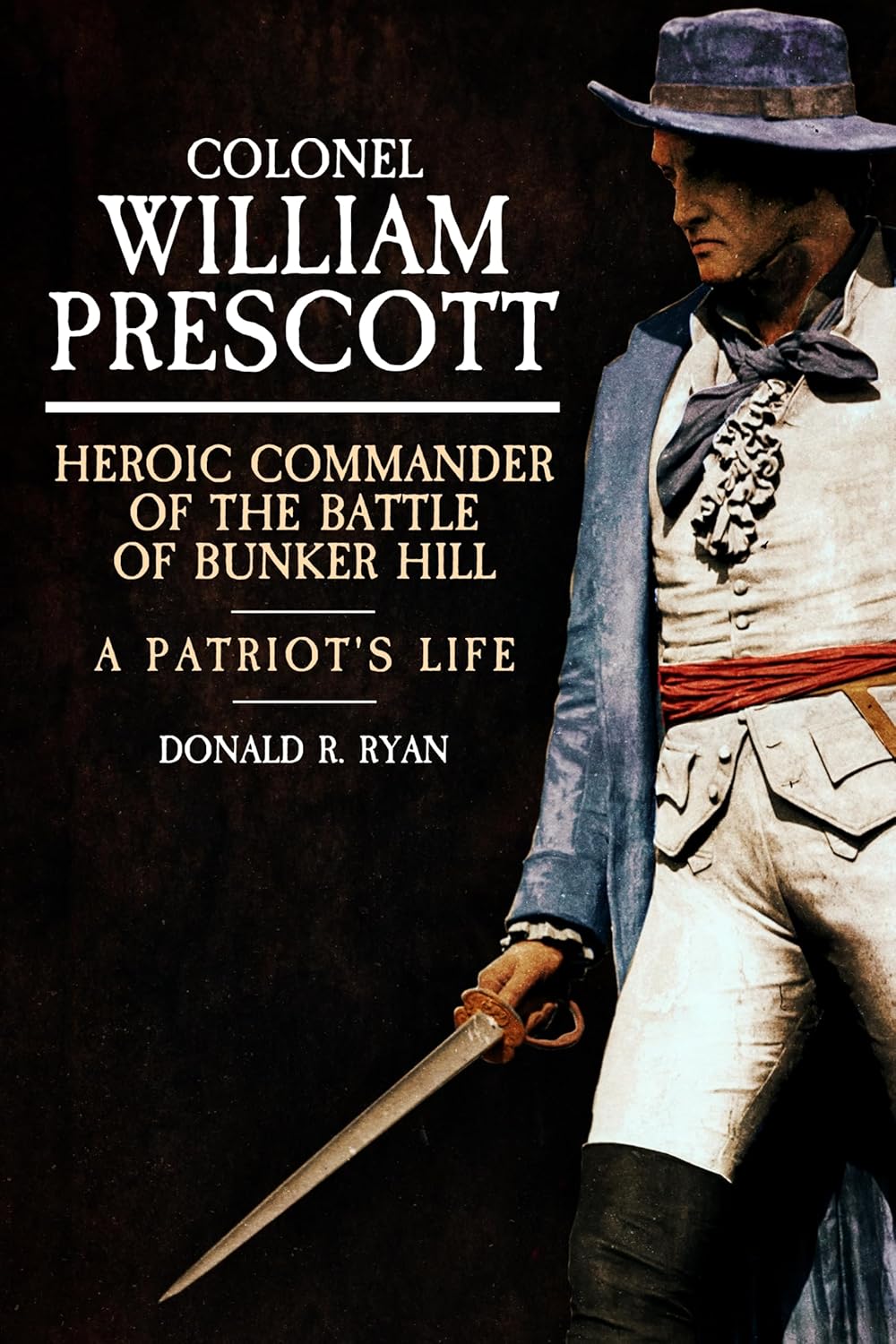
“Rev War Revelry” Colonel William Prescott: Heroic Commander of the Battle of Bunker Hill by Donald R. Ryan

Depicted in various paintings, still standing watch over Breed’s Hill, his name is synonymous with the heroic American defense of the earthen redoubt that graced the aforementioned hill. Although forced to evacuate the work when overwhelmed by the third British advance and out of ammunition, Prescott had shown his value as a competent battlefield leader. Especially of the militia.

Yet, as America approached the 250th anniversary of the country, there had not been a single dedicated biography that covered his entire life. Prescott is mentioned in plenty of great historical works on the battle, the region, and the lives of other patriots who fought that day. But the Massachusetts native deserved more. Entered Donald R. Ryan.

Ryan, a volunteer historian and guide for Boston National Historical Park, took on the task of researching, locating, and even contacting living descendants of Prescott. You can now hold in your hands and read his excellent work on this great military figure, best known for his role in one of the most iconic battles of the American Revolution.

Before you do get your copy and settle in to read, tune in on Sunday evening, as Ryan will appear on our popular “Rev War Revelry” to discuss his book. Emerging Revolutionary War will go live at 7 p.m. EDT. and stream to our Facebook page.

Cannot make the live program on Sunday evening? Don’t fret, the program will be posted to our podcast and YouTube channels in the days after. Either way, hope you tune in to learn about Col. Prescot!

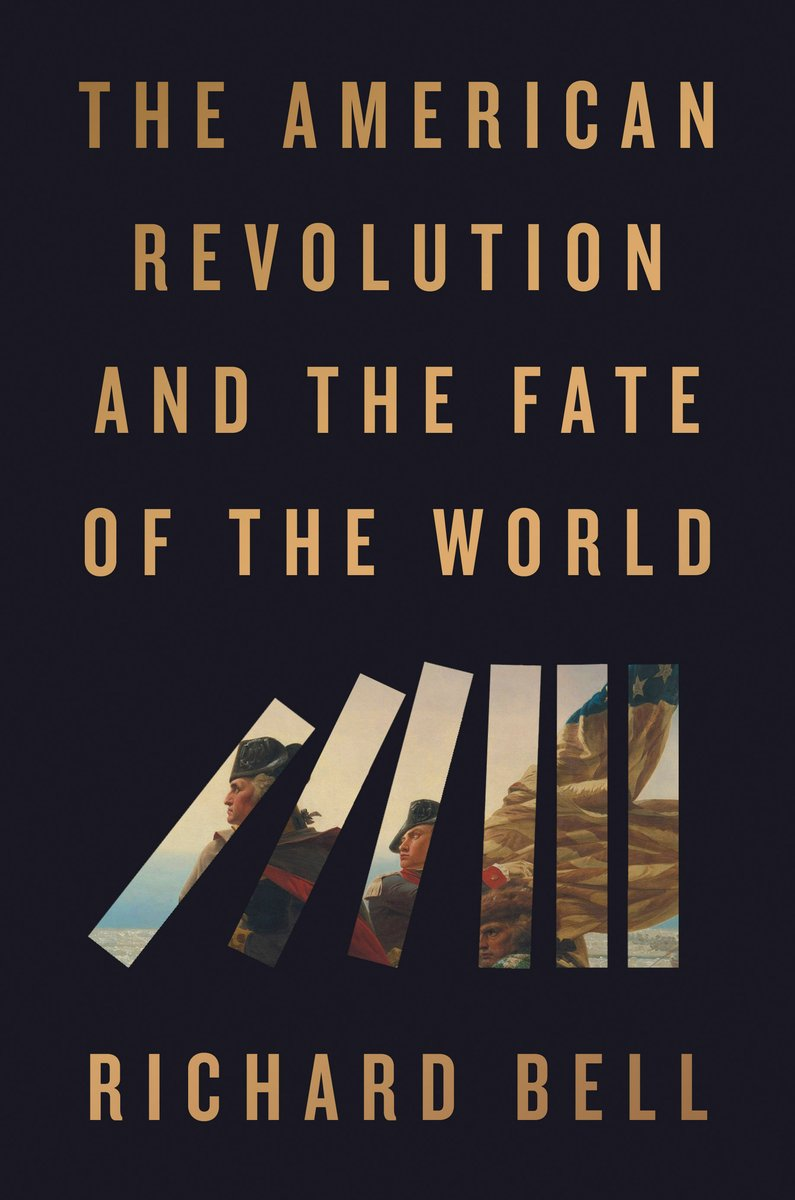
Rev War Revelry: “The American Revolution and the Fate of the World” by Dr. Richard Bell

Dr. Richard Bell, historian and professor of history at the University of Maryland, will discuss his new book, “The American Revolution and the Fate of the World.” Published by Penguin Random House, this “revelatory and enthralling book, award-winning historian Richard Bell reveals the full breadth and depth of America’s founding event. The American Revolution was not only the colonies’ triumphant liberation from the rule of an overbearing England; it was also a cataclysm that pulled in participants from around the globe and threw the entire world order into chaos.”

We look forward to you tuning in to this Sunday evening, 7 pm EDT on our Facebook page for this discussion with Dr. Bell!

“Rev War Revelry” A Discussion with Revolutionary Maryland historian Drew Palmer

When you think of Maryland in the American Revolutionary War, what are the first connections that come to mind? Taking a stab at it, probably the Maryland 400 during the Battle of Brooklyn in 1776? Or possibly the 1st Maryland at the Battle of Guilford Court House in 1781? If you are a national park junkie, potentially Thomas Stone National Historic Site, home of one of Maryland’s four Signers of the Declaration of Independence, may come to mind. If you are not familiar with that NPS unit, click here.

To fill in those gaps, Emerging Revolutionary War welcomes historian Drew Palmer. He is the creator of Revolutionary Maryland, which is an online public history blog that is “dedicated to uncovering and sharing all things related to the state’s experience during this transformative period.”

Palmer is a Revolutionary War historian, a U.S. high school history teacher, and the creator of Revolutionary Maryland. Palmer has worked as a public historian at numerous historic sites over the years, including Appomattox Courthouse, Fort Ticonderoga, Adams National Historical Park, and Fort McHenry National Monument and Shrine. Palmer’s research primarily focuses on the Revolutionary War in Maryland and the South. Most recently, he published his research on Fort Whetstone and the Maryland Matrosses during the Revolutionary War. He also worked with Fort McHenry to direct a short documentary on Fort McHenry’s 250 years of history. Palmer earned his B.A. in history from DeSales University in 2023 and his M.A. in applied history from Shippensburg University in 2024. He currently lives outside of Baltimore and is working on multiple research topics involving the Revolutionary War.

Emerging Revolutionary War is proud to welcome a great emerging historian of the Revolutionary War Era to the “Revelry.” We hope you can join us, live, on Sunday, April 19, at 7 p.m. EDT on our Facebook page.

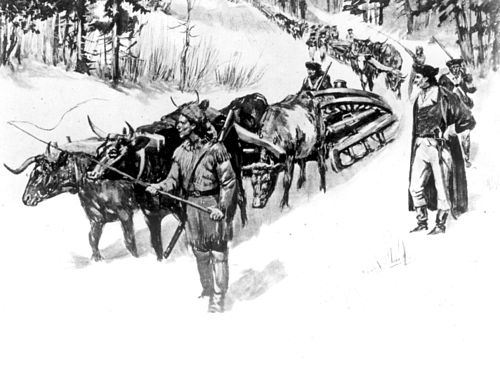
Rev War Revelry: Henry Knox and the Noble Train

In December 1775, Henry Knox wrote to General George Washington, “I hope in 16 or 17 days to be able to present your Excellency a noble train of artillery”. However, the train of artillery would not arrive until the end of January 1776. Still an impressive feat, as Knox with his team moved 60 tons (119,000 pounds) of artillery over 300 miles from upstate New York to the environs of Boston in 70 days in the midst of winter.

This impressive feat enabled Washington to evict the British from Boston, winning the siege and giving the fledgling rebellion a victory to build momentum from.

To discuss this amazing feat and part of American military history, Emerging Revolutionary War welcomes Dr. Phillip Hamilton, a professor of history at Christopher Newport University. A historian of the American Revolutionary and Early Republican periods, he has edited and written “The Revolutionary War Lives and Letters of Lucy and Henry Knox.”

Although the program is pre-recorded, Emerging Revolutionary War hopes you still tune in on Sunday, February 22 at 7 p.m. EDT. We promise the revelry will be enlightening. If you have any questions, please drop them in the chat during the program, and we will ensure Dr. Hamilton receives them.

Rev War Revelry: Tom Hand and America Victorious

As you settle into your winter holidays or looking for one more gift for that history enthusiast on your Christmas list (and speaking for fellow book-lovers, a late Christmas gift book is always appreciated), Emerging Revolutionary War welcomes you to join us for the return of Tom Hand, of AmericanaCorner as he discusses his second volume, America Victorious, Lesser Known Campaigns and Commanders That Helped Win American Independence.

Tom, who created AmericanaCorner in 2020, is a graduate of the United States Military Academy at West Point, Class of 1982, and a lifelong student and enthusiast of American History. He also sits on the Board of Trustees for the American Battlefield Trust.

During the Revelry on Sunday night, at 7 p.m. EDT, a special discount code (we have heard from our sources) will be offered for those interested in purchasing the book. Tom will also discuss upcoming book signings and other happenings at AmericanaCorner.

Tune in and end the weekend (and the last Revelry of 2025) with Emerging Revolutionary War and Tom Hand!

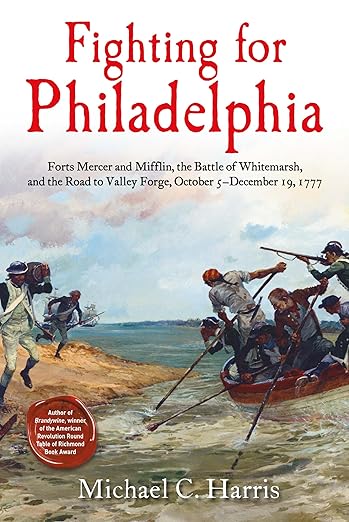
“Rev War Revelry” Fighting for Philadelphia

Fort Mercer. Fort Mifflin. The Whitemarsh Campaign. Names of battles and maneuvers that “receive but scant attention in the literature of the American Revolution.” Until now. Award-winning author and historian Michael C. Harris returns to Emerging Revolutionary War to discuss his latest book.

Finishing the trilogy, started with Brandywine, continued with Germantown, and now Fighting for Philadelphia. Just released by Savas Beatie this month!

Enjoy this pre-recorded “Rev War Revelry” and get a synopsis of why this book is needed on your bookshelf. Join Emerging Revolutionary War Sunday at 7 p.m. EDT.

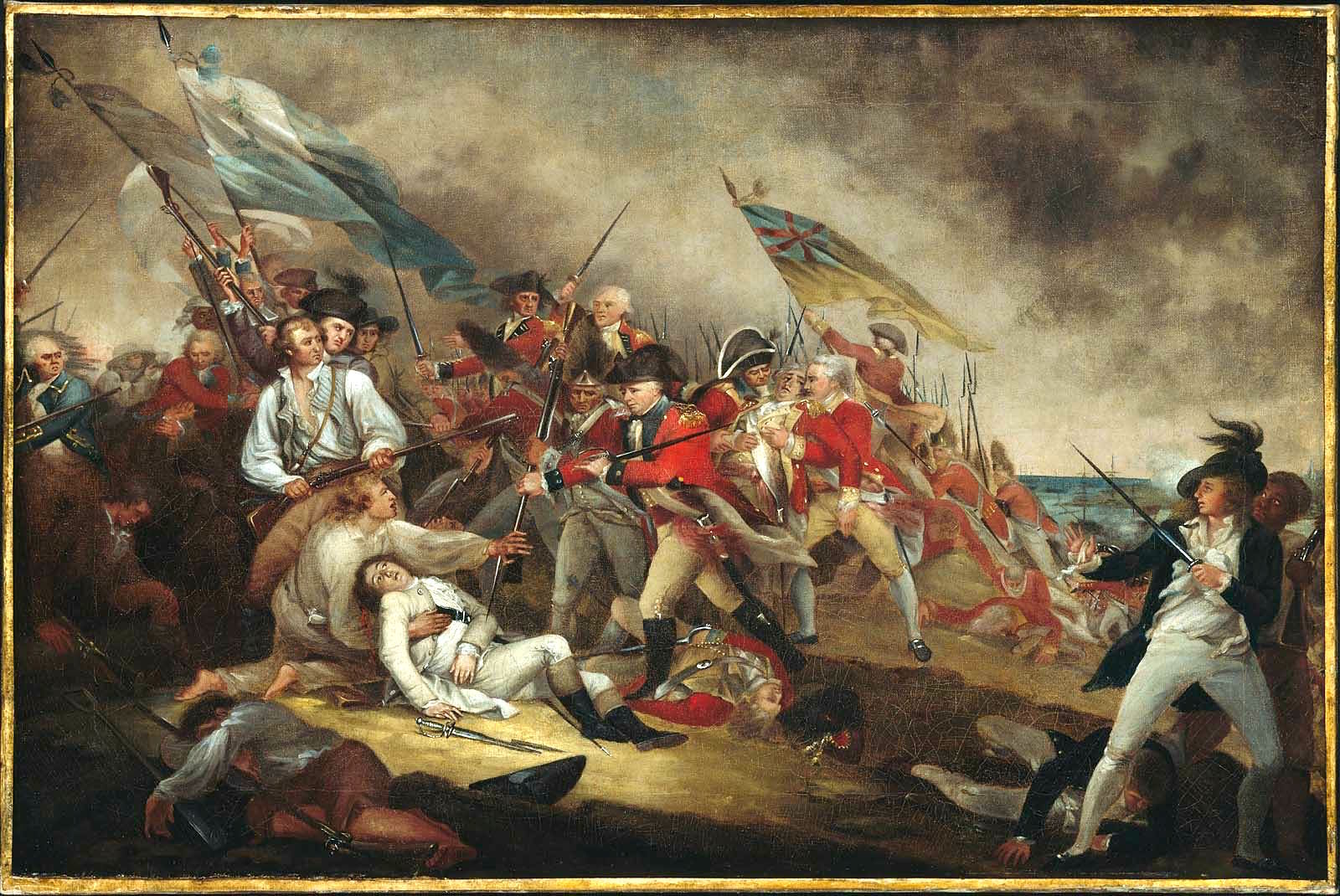
“Rev War Revelry” The Battle of Bunker Hill

On Tuesday, the 250th anniversary of the Battle of Bunker Hill, fought on Breed’s Hill on Charlestown Peninsula, will be remembered. On June 17, 1775, the last major engagement before George Washington arrived in Massachusetts to take command was fought between militia under Colonel William Prescott and British forces under General William Howe. Although a defeat for the patriots, resulting in the death of Dr. Joseph Warren, the victory was a pyrrhic one for the British.

Join Emerging Revolutionary War historians as they discuss the engagement, the personas, and the ramifications of the Battle of Bunker Hill. Also, stay tuned until the end for an announcement as well.

So, two days before the 250th, grab your favorite beverage and tune into our Facebook page at 7 p.m. EDT and have your questions ready. If you are unable to attend the live on Sunday evening, don’t fret, the video will be posted to YouTube by the anniversary and to our podcast channel as soon as possible

“Rev War Revelry” Bullet Strikes from the First Day of the American Revolution

Much has been written about the “shot heard around the world,” as the poet Ralph Waldo Emerson eloquently wrote in the 19th century. Yet, what about those actual shots? The musket balls fired on April 19, 1775? What was the damage, and how does this material culture history add to our overall understanding of the events that unfolded on that fateful day? Thanks to historian Joel Bohy, who is part of a duo of historians, along with Doug Scott, we now have insight into that answer.

Using forensic techniques, seemingly straight out of CSI, the authors have done painstaking research into the bullet holes and artifacts struck by bullets to shed even more light on the events that unfolded along Battle Road, Lexington, and Concord on the first day of the American Revolution.

Join Emerging Revolutionary War for this pre-recorded “Rev War Revelry” this Sunday evening at 7 p.m. EDT with author Joel Bohy as he explains the history and research behind this book. A much-needed addition to any Revolutionary War enthusiast’s bookshelf!

“Rev War Revelry” “Till the Extinction of this Rebellion…” with Author Eric Sterner

For this week’s “Rev War Revelry” Emerging Revolutionary War ventures to the west to discuss the recently published book, “Till the Extinction of this Rebellion, George Rogers Clark, Frontier Warfare, and the Illinois Campaign of 1778-1779.” The author, Eric Sterner, is a contributor to the Emerging Revolutionary War, along with the author of An Anatomy of a Massacre: The Destruction of Gnadenhutten, 1782. When not writing history, Sterner had a career in government and public policy besides contributing to the literature and study of the American Revolutionary War era.

This book, published by Westholme Publishing, examines the viewpoints of the American, British, and Indigenous perspectives and illustrates the wide impact of the American Revolution on the peoples west of the Appalachian Mountains. What happened with Clark’s movements and campaign will lay the foundation for American expansion and the “opening of the West” following the American Revolution.

We hope you can join us for this historian happy hour this Sunday at 7 p.m. on our Facebook channel. If you miss it, we will post the revelry on our YouTube channel. Just search “Emerging Revolutionary War” to subscribe.