The Patriot Martyrs of April 19, 1775

Yesterday marked the 250th anniversary of the first battles of the American Revolution.  The Battles of Lexington and Concord were brutal and vicious.  More than 40 American colonists were killed in the fighting.  These were the first martyrs in the cause for American liberty.  Here are the stories of some of those men who shed their blood on that fateful day for our freedom.

Jonathan Harrington was one of the few dozen men in the Lexington militia who stood on the Lexington Green when the first British troops arrived at sunrise on April 19, 1775.  He lived with his wife and child in a home that was located on the Green.  After a shot was fired, the British soldiers opened fire on the American militiamen.  As they were dispersing, Harrington was shot through the chest.  He crawled towards his house and died within sight of his home.  Local legend says he crawled to his own doorstep and died at the feet of his wife and child.

Sign on the Harrington house which still stands in Lexington, MA today.

Isaac Davis was the captain of the Acton minutemen. The Acton minutemen marched more than 5 miles to Concord in the early morning hours of April 19.  After seeing smoke from the town, the minutemen marched down towards the North Bridge and the British soldiers guarding the opposite side fired a volley at the minutemen.  This volley was high and may have been a warning shot.  The next volley was fired into the minutemen.  Private Abner Hosmer was shot through the head and killed.  Davis was shot through the chest, his blood splattering the men around him.  Seconds later the American colonists were given the command to fire on British soldiers for the very first time.

The Acton Monument stands over the graves of Isaac Davis, Abner Hosmer, and James Hayward.

James Hayward was part of the Acton company that joined in the running battle back towards Boston.  During the battle soldiers from both sides stopped to get water at local wells.  At one point a British soldier went to the well by the Fiske house to get a drink of water.  At the same time, Hayward was heading there too.  The two saw each other and raised their muskets.  The British soldier said, “You are a dead man!” Hayward replied, “So are you.” They both fired at the same time. The British soldier was killed instantly.  Hayward was hit, with splinters of his powder horn going into his side.  He died not long after.

The site of the Fiske well, where James Hayward and a British soldier died.

Jason Russell was a 58-year-old man living in the village of Metonomy (present day Arlington, Massachusetts) and was preparing to defend his home on the road back to Boston. People were telling him to leave the area, but Russell refused and exclaimed “An Englishman’s home is his castle!” As the British column came down the road, Russell and a dozen militiamen began to fire into redcoats.  Unfortunately for Russell and the other militiamen, the British had deployed flankers to clear out many of the houses along the road.  The colonists were taken by surprise and retreated into the house.  Russell was unable to run and was bayonetted to death by the British troops on his front doorstep.  The British entered the house and hand to hand fighting occurred inside the house.  Two British soldiers and eleven militiamen were killed.

A painting depicting the death of Jason Russell at the Jason Russell House (Arlington Historical Society)

Jason Winship and Jabez Wyman decided to sit in the Cooper Tavern and have a drink.  The fighting in Metonomy became extremely brutal.  Even unarmed civilians got caught up in the carnage.  As British arrived at the Cooper Tavern, the tavern owners fled into a cellar.  Winship and Wyman did not stand a chance. The owners noted that: “the King’s regular troops under the command of General Gage, upon their return from blood and slaughter, which they had made at Lexington and Concord, fired more than one hundred bullets into the house where we dwell, through doors, and windows,…The two aged gentlemen [Winship and Wyman] were immediately most barbarously and inhumanly murdered by them, being stabbed through in many places, their heads mangled, skulls broke, and their brains out on the floor and walls of the house.”

Samuel Whittemore was a 78-year-old man who lived in Menotomy.  He prepared to fight the British troops marching along the road.  He carried a musket, two pistols and a sword.  As some British soldiers moved to get Whittemore, he shot one with his musket, then killed two with his pistols and then drew his sword to fight them.  The British soldiers shot off part of his face off, clubbed him and bayoneted him fourteen times, leaving him for dead. Amazingly, he survived and live for another eighteen years, dying at the ripe age of 96.

A monument for Smauel Whittemore in Arlington, MA.

One of the last people to die that day was 65-year-old militiaman James Miller.  As the British were making it back to Charlestown, James Miller and some men fired into the retreating soldiers.  British soldiers ran towards the militia.  Miller’s compatriots fled and entreated him to do the same.  Miller replied, “I am too old to run.”  The British opened fire and killed Miller.

These stories are only a few of the dozens who died that day.  You can find these and many other stories (and where they happened!) in “A Single Blow” by Robert Orrison and Phill Greenwalt, one of seven books that are part of the Emerging Revolutionary War book series published by Savas Beatie.

Today the remains of the men who were killed on Lexington Green now lie there under a monument that was erected in 1799, not long after the successful conclusion of the Revolutionary War.  The epitaph on that monument still speaks to the heroism and valor of these first Americans to fall in the Revolutionary War:

“The Blood of these Martyrs,
In the cause of God & their Country,
Was the Cement of the Union of these States, then
Colonies; & gave the spring to the spirit. Firmness
And resolution of their Fellow Citizens.
They rose as one man to revenge their brethren’s
Blood and at the point of the sword to assert &
Defend their native Rights.
They nobly dar’d to be free!!”

Review: “The Ride: Paul Revere and the Night That Saved America” by Kostya Kennedy

“LISTEN, my children, and you shall hear
Of the midnight ride of Paul Revere,
On the eighteenth of April, in Seventy-five”

Henry Wadsworth Longfellow penned the poem, “Paul Revere’s Ride” in 1860. Now as America moves toward celebrating the 250th anniversary of Paul Revere’s famous ride, which happened on this date in 1775, another literary work has hit the market on this very topic.

Published on March 25 by Kostya Kennedy, Chief of Premium Publishing at Dotdash Meredith, with a lengthy career in writing, teaching, and journalism. The book reads like Revere’s ride, a fast-paced, descriptive overview of the man, events, and memories around the night of April 18, 1775. For those who have read David Hackett Fischer’s book, published in 1994, you may not find anything groundbreaking or new. However, that is not the point I feel in this book.

Kennedy pens this to get the reader hooked. Sets of rhetorical questions, “what-if” scenarios, and descriptive writing make the reader feel that they are in the environs of Boston or on the routes to Lexington traversed by Revere. Oh, and Kennedy does not forget Dawes, Prescott, and others who also played prominent roles in April 1775.

History enthusiasts and content experts may find a few shortcomings and errors, such as Kennedy continuing to use “Royal” when discussing the British Army. Since the English Civil War, the British Army has lost the right to use “Royal” in front of it. A few times, he labels the “British” as coming when the colonists would have used “Regulars” or “Redcoats.” Lastly, falling into the ag-old myth that Lexington had minutemen and a militia, the town just had the latter. Trivial things that do not impact the flow of the narrative.

A highlight to me, though, is the final sections about the memory of that day. Including a great insert of an interview with the direct descendant of Paul Revere and a comical anecdote about Paul Revere III being pulled over for speeding in Lexington, Massachusetts one year on April 18.

The book is a great read on the anniversary of Paul Revere’s Ride. Take it from me, I read the book in a day! Descriptive, vivid, and convince you that if you have not been, a trip to Boston and the Massachusetts countryside should be in your near future.

Published by: St. Martin’s Press, March 25, 2025
Images, sources, 282 pages

On this date…The Jay Treaty

On this date in history…

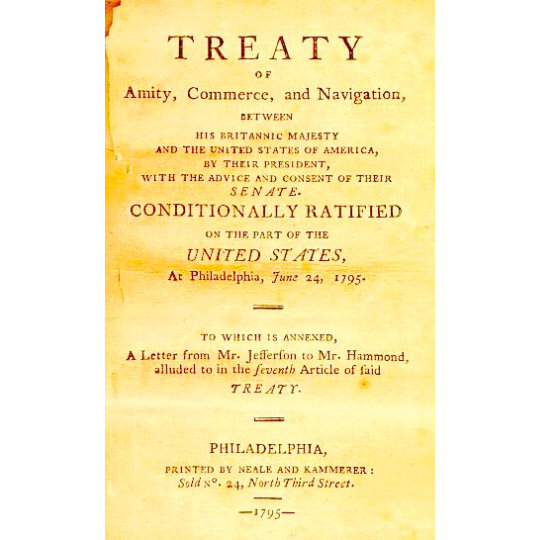
On November 19, 1794, John Jay, representing George Washington’s administration, affixed his signature to a document bearing his name in history. The Jay Treaty. Although the official name of the pact was “The Treaty of Amity, Commerce, and Navigation, Between His Britannic Majesty and the United States of America.”

The treaty’s aim was to resolve outstanding issues from the conclusion of the American Revolutionary War and facilitate economic trade. Although some of the clauses were not fulfilled completely and another war, the War of 1812, erupted because of it, the treaty did serve a purpose. The agreement ushered in a decade of trade between the two countries and gave the fledgling nation a chance to gain footing, a major concern for George Washington, as first president. The treaty also cemented the promise that Great Britain would vacate the forts in the Northwest Territory and agreed to arbitration on the boundary between Canada and the United States and the pre-American Revolutionary War debt.

Yet, the treaty was divisive. Even Jay remarked that he could find his way in the dead of night by the illumination of his own effigy. The treaty angered the French as that country was amid its revolutionary throes, and bitterly divided the nation. Out of it came the separation into two political parties, the Federalists, who supported the treaty, and the Democratic-Republicans who stood opposed to it.

The treaty was ratified by the Senate on June 24, 1795, with an exact two-thirds majority, 20 to 10 along with being passed by William Pitt the Younger, prime minister of Great Britain and his government, and took effect on February 29, 1796.

Historian Joseph Ellis wrote that the Jay Treaty was “a shrewd bargain for the United States” and “a precocious preview of the Monroe Doctrine.” As one of Washington’s most fervent wishes, the treaty “postponed war with England until America was economically and politically more capable of fighting one.”

Touring the Sites of Lexington and Concord

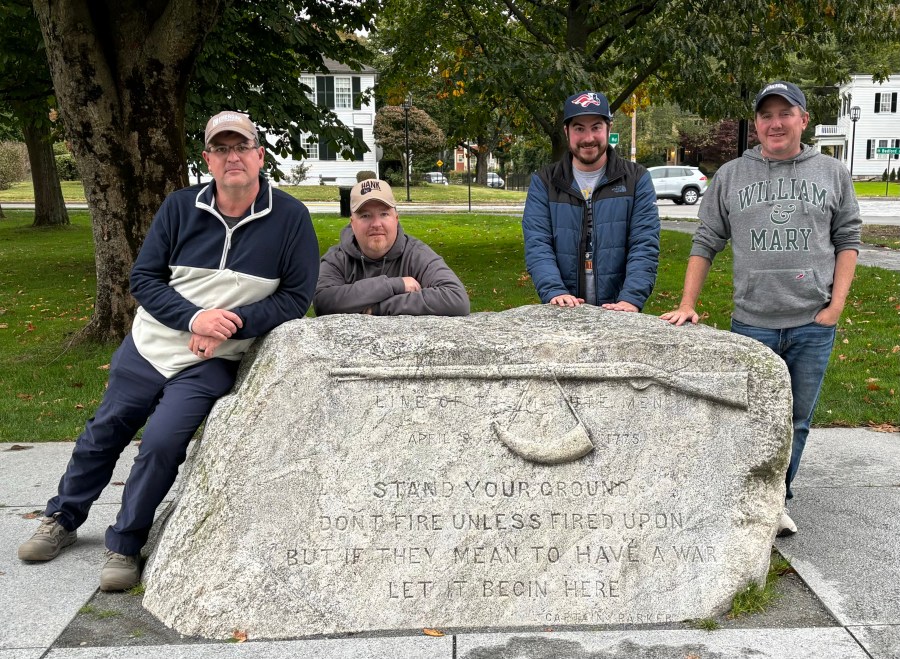
Last weekend, Emerging Revolutionary War wrapped up our fourth annual bus tour. Our previous tours covered Trenton, Princeton, Monmouth, Valley Forge, and Charleston. This year we went to where the whole war started: Lexington and Concord on the eve of the 250th anniversary of the battles. We had a jam-packed weekend with a fully sold out 56 passenger bus. As most places close down in November in Massachusetts, we chose to move this year’s tour from our usual Veterans Day weekend, to Columbus Day weekend. Here is a brief overview of how the weekend went:

Continue reading “Touring the Sites of Lexington and Concord”

Announcing our 2025 ERW Bus Tour…. Philadelphia Campaign of 1777 with Michael Harris!

We are excited to announced our FIFTH annual ERW bus tour will be on November 7-9, 2025 and will cover the 1777 Philadelphia Campaign.

Author and historian Michael Harris will join us as we cover the fall of 1777 campaign. The British Army under Gen. William Howe made a concerted effort to take the American capital of Philadelphia. George Washington and the Continental Army fought major actions at Brandywine and Germantown in an effort to hold and take back the city. The tour will cover sites associated with the Philadelphia Campaign, such as Brandywine, Germantown, Paoli and others.

Tickets are $250 per person and will include Friday night lecture at the host hotel, all day bus tour on Saturday and half day bus tour on Sunday. A lunch is included for Saturday.

Our host hotel is the Holiday Inn Express and Suites – King of Prussia. Lodging is NOT included in the registration fee. A room bloc has been established under the name of “Emerging Revolutionary War.” A link will be provided in the future for hotel lodging.

Join us for our FIFTH annual tour as we take on the beginning of the American Revolution just a few months before the 250th anniversary. Learn about the dramatic events that led to some of the bloodiest days in the American Revolution. There is no better way to experience history than to stand in the footsteps of where it happened!

To register, visit: https://www.eventbrite.com/e/battles-for-the-capital-1777-philadelphia-campaign-bus-tour-tickets-1048228358237?aff=oddtdtcreator

For more questions, please email emergingrevolutionarywar@gmail.com.

“Boston Harbor a Teapot this Night!”

With three ships sitting at Griffins Wharf in Boston Harbor laden with tea, the Sons of Liberty were quickly running out of time on December 16, 1773. At the stroke of midnight, twenty days would have past since the first ship arrived in the harbor. At that time, customs officials would seize the cargo, the tax would be paid, and the British government would have been successful in forcing the colonists to pay a tax they did not consent to. The British would have demonstrated their power over the colonists. The colonists’ rights as Englishmen were at stake. Whereas the tea cosignees had resigned in New York and Philadelphia, the ones in Boston refused to resign and the Governor was refusing to allow the ships to leave the harbor.

On December 16, the leaders of Boston held a meeting they referred to as the “Body of the People.” Because of the large amount of interest in the issue, more than 5,000 people attended this meeting at the Old South Meeting House in Boston (the largest venue in the city). At the meeting was William Rotch, the owner of the ship Dartmouth which was the first ship to enter the harbor and would be the first to be seized by the customs officials on December 17. Rotch wanted to protect his property and see if the Governor would allow him to sail out of the harbor. The meeting recessed to let him go to the Governor outside of Boston and request the ability to leave the Harbor. Governor Hutchinson said he could not allow the Dartmouth to leave. After the meeting had reconvened in the Old South Meeting House, Rotch returned to Boston at about 6 p.m. and told the crowd that the Governor would not let the tea return. This news was responded to with loud cries and shouting.

At that moment, Samuel Adams declared “This meeting can do nothing further to save the country.” After saying this, people heard Indian war whoops coming from the crowd and outside the building. Another person declared “Boston Harbor a teapot this night!” The people then began exiting the building and heading down to Griffins Wharf a few blocks away. Down at the wharf, men (some disguised as Mohawk Indians) began boarding the three ships. Approximately one hundred men boarded the ships and quickly got to work pulling up the large tea chests to the decks and dumping the tea into the cold water below. Crowds gathered and watched the men work for nearly two hours as they methodically worked to destroy all the tea on board the ships.

The men were careful to not destroy any other property except the tea. They also refused to steal any of the tea, punishing anyone who made an attempt. It was low tide and the tea started to pile up out of the water and needed to be mashed down into the water and mud.

British regulars were stationed at nearby Castle William, but they were not called down to the ships out of fear of insitigating a similar event as the Boston Massacre that occurred three years earlier. The British navy, posted in the harbor also made no attempt to stop the destruction. Some Royal Navy sailors watched the events on Griffins Wharf with some trepidation.

Once all 342 chests of tea had been tossed overboard, the destroyers left and the crowd dispersed. In all, they had destroyed 46 tons of tea on the ships.

The event would have major repurcussions as the British determined to repsond to the event with brute force and would ultimately result in the Revolutionary War less than two years later. John Adams wrote: “This Destruction of the Tea is so bold, so daring, so firm, intrepid and inflexible, and it must have so important Consequences, and so lasting, that I cant but consider it as an Epocha in History.”

Learn more about the events happening to commemorate the 250th anniversary of the Boston Tea Party by visiting https://www.december16.org/.

You can learn more about Boston in the Revolutionary War by reading Rob Orrison and Phill Greenwalt’s book A Single Blow, part of the Emerging Revolutionary War book series.

“Rev War Roundtable with ERW” Brandywine Campaign

The largest, in terms of military forces deployed, engagement in the American Revolutionary War occurred on September 11, 1777 in southeastern Pennsylvania. The Battle of Brandywine was a pivotal moment in the British campaign that captured the patriot capital in Philadelphia. With the anniversary of the engagement happening the Friday before, the Emerging Revolutionary War crew will make this engagement and campaign the focal point of Sunday’s “Rev War Roundtable with ERW.”

Joining the “Rev War Revelry” this Sunday, at 7pm on Emerging Revolutionary War’s Facebook page will be Michael C. Harris, historian and author of Brandywine: A History of the Battle that Lost Philadelphia but Saved America, September 11, 1777, which was published and is available for purchase by Savas Beatie. Click here to order.

Besides authoring the history mentioned above, Harris has an upcoming release, on another important battle in Pennsylvania, Germantown, fought on October 4, 1777. Rumor on the street has it that he will be joining ERW at a future date to discuss this important battle and talk about his new book.

A bit of a background on Harris. He is a graduate of the University of Mary Washington and the American Military University. He has worked for the National Park Service in Fredericksburg, Virginia, Fort Mott State Park in New Jersey, and the Pennsylvania Historical and Museum Commission at Brandywine Battlefield. He has conducted tours and staff rides of many east coast battlefields. Michael is certified in secondary education and currently teaches in the Philadelphia region. He lives in Pennsylvania with his wife, Michelle and son, Nathanael.

Although the battle lost Philadelphia for the patriots, Harris does not hold back on the culprit for the setback:

“Washington failed the army, the army did not fail Washington.”

To hear the reasoning behind that emphatic quote we hope you join us this Sunday!

African Americans Serving in the American Revolution

If you tuned into our “Rev War Revelry” with historian and author John U. Rees on Sunday, you may have heard him mention a few links and a blog where he adds information that did not make it into the book. Or has come to light since the publication of his history “They Were Good Soldiers: African-Americans in the Continental Army, 1775-1783.”

John was nice enough to provide the following as a follow-up for those interested in reading more into the subject.

African Americans Serving in the Armies of the Revolution
(PDF, click here).

Book:

“They Were Good Soldiers”,  

Additional post-publication updates and information: 

List of soldiers and women featured in the book. 

African American soldier-servants. 

African American women with the army. 

Author interviews pertaining to the book. 

Entries for blog:

“More ‘Good Soldiers’”: 

Revised percentages for 1778 army “Return of Negroes.” 

Officers’ observations of black Continental soldiers. 

Ranney’s painting “Cowpens” and black cavalry soldiers. 

List of soldiers and women featured in the book. 

Black Continental soldiers at the Battle of Monmouth. 

Printed 19th century remembrances of black veterans 

Articles

Articles the book was based on including African Americans in Southern Continental regiments plus transcribed pension files used for that study.  

Jeffrey Brace, African slave and Continental soldier 

Other authors:  

Black soldier motivations (Scoggins) 

Loyalist Ethiopian Regiment (Copeland) 

Black soldiers at New Windsor cantonment (Thorenz) 

Hannah Till, wartime servant to Washington (Cole) 

Thomas Carney, Maryland Continental (Calder) 

Black Hessians (Jones) 

Military role of black Loyalists (Braisted) 

Author Discussion ERW Facebook Live:

To watch the interview with John, click over to Emerging Revolutionary War’s Facebook page and click on the “Videos” tab. To access the page, click here.

Continental Soldiers
The two of soldiers on the left, drawn in 1781 by French Sublieutenant Jean-Baptiste-Antoine de Verger, Royal Deux-Ponts Regiment, are a private of the Rhode Island Regiment, and a soldier of Hazen’s Canadian Regiment. The next in line is a Virginia rifleman, while the last man is a Continental artileryman. Howard C. Rice and Anne S.K. Brown, eds. and trans., The American Campaigns of Rochambeau’s Army 1780, 1781, 1782, 1783, vol. I (Princeton, N.J. and Providence, R.I.,: Princeton University Press, 1972), between pages 142-143 (description on page xxi). Anne S.K. Brown Military Collection, Brown University.  

Announcing “Rev War Roundtable with ERW” on Zoom!

On April 19, 1775, Massachusetts militia and minutemen responded to the call of British Regulars, “redcoats” marching from Boston to the town of Concord. What ensued was the “shot heard around the world” at the North Bridge in that town. What that shot signified was the changing course from words to war, that would define the relationship between 13 British North American colonies and Great Britain.

Now, 245 years later, Emerging Revolutionary War will turn that war back into words with its inaugural Rev War Revelry Zoom series. On Sunday, 7 p.m. EST, tune in to listen and watch historians from Emerging Revolutionary War discuss in an informal setting this momentous day in American history. Other topics are welcomed that pertain to the American Revolutionary War era as well.

As the title of the Zoom series relates, this will be similar to a tavern talk, much like the talks and information sharing rendezvous that went on in the 18th century, in places like Boston, where the road to revolution gained momentum as ales and spirits flowed. Thus, grab your favorite beverage, rest assured that ERW historians will be doing the same and join us, virtually, in our tavern Sunday evening.

General Edward Hand: The Squaw Campaign

Emerging Revolutionary War welcomes guest historian Eric Sterner. 

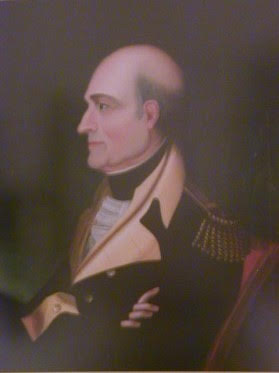
In February 1778, Brigadier General Edward Hand, commanding Continental forces at Fort Pitt on the American frontier, launched what may be one of the oddest campaigns of the American Revolution, more famous for its fecklessness than any benefit to the American war effort. Born in Ireland, Hand arrived in the colonies with the 18th Royal Irish Regiment as a surgeon’s mate.  He eventually left service in 1774 and set up a medical practice in Philadelphia.  The siege of Boston found him among the besiegers as Lieutenant Colonel of a Pennsylvania Rifle Battalion.  He fought under Washington on Long Island, at White Plains, and then Princeton, after which Washington successfully pursued the rank of Brigadier for him before sending him to Pittsburgh.[1]   Hand arrived in June, 1777, finding just two companies of the 13th Virginia.[2]   As was often the case on the frontier, Fort Pitt was under-garrisoned and Continental officers would have to scrounge constantly for troops, largely relying on local militia forces to defend the frontier.

Hand
General Edward Hand (courtesy of Ohio History Central)

Hand hoped to conduct a campaign to the west, driving toward British power at Detroit, but was unable to raise sufficient forces that fall.  Instead, he settled for a trip down the Ohio to ensure local garrisons were in proper order.[3]  Around Christmas, Hand received information that the British had established a small magazine on the Cuyahoga River, likely somewhere close to where it empties into Lake Erie in the current city limits of Cleveland.[4]  As December gave way to January and February, Hand resolved to do something about it.  At the beginning of the month, he wrote Colonel William Crawford, formerly of the 13th Virginia, currently of the Pennsylvania militia and a well-respected local leader, entreating the colonel to undertake an expedition:
“As I am credibly informed that the English have lodged a quantity of arms, ammunition, provision, and clothing at a small indian Town, about one hundred miles from Fort Pitt to support the savages in their excursions against the inhabitants of this and the adjacent counties, I ardently wish to collect as many brave, active lads as are willing to turn out, to destroy this magazine.  Every man must be provided with a horse, and every article necessary to equip them for the expedition, except ammunition, which, with some arms, I can furnish.” Continue reading “General Edward Hand: The Squaw Campaign”