

Emerging Revolutionary War welcomes back guest historian Bjorn Bruckshaw
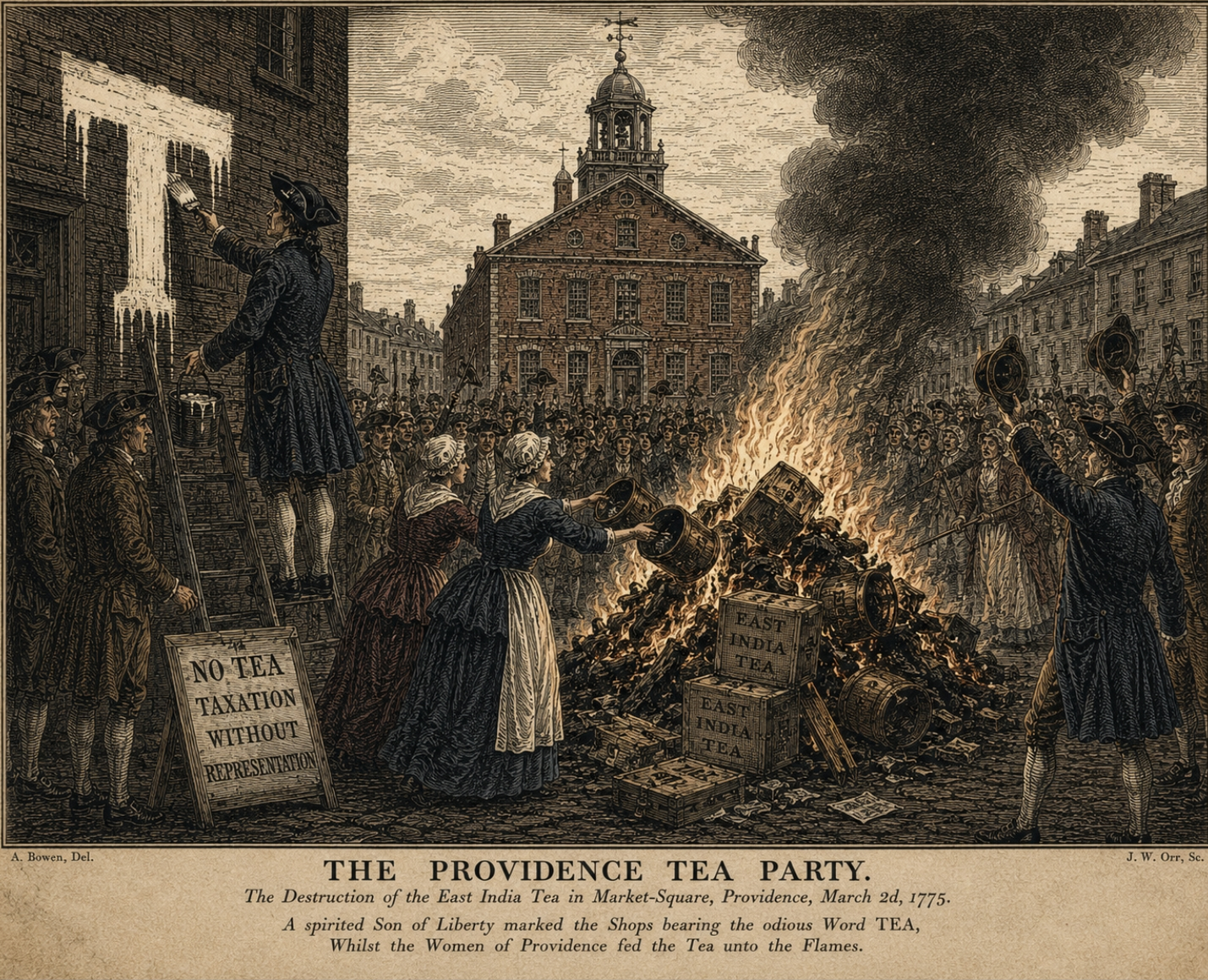
On a chilly but sunlit afternoon in Providence, smoke began to rise over Market Square—not from hearth fires meant to warm the town, but from a blaze built in defiance. As the smell of burning tar and tea drifted through the streets, cheers and shouts of defiance echoed through the square. Nearby, a man moved quickly from shop to shop, brush and lampblack in hand. One by one, he painted over a single word on storefront signs: TEA. This was no act carried out in secret. According to the Providence Gazette, he was “a spirited Son of Liberty,” and he worked in full view of the town as a crowd gathered around the growing fire.¹
Just beyond him, the protest had already begun.
Earlier that day, a town crier had moved through Providence announcing that a quantity of India tea would be burned in the Market Square that afternoon, calling upon “all true friends of their country, lovers of freedom, and haters of shackles and hand-cuffs” to assemble and cast the tea into the flames.² By the appointed hour, the square was filled. This was no spontaneous outburst. It was organized, deliberate, and intended to be seen.
At the center of the gathering, flames climbed upward as a barrel of tar was placed upon the fire. Into it were thrown not only tea—hundreds of pounds of it—but also printed copies of Lord North’s speech and other “obnoxious English papers.” ³ the destruction was more than economic protest. It was a public repudiation of British authority itself. And then came the moment that set Providence apart.
These were not men disguised as Mohawk Indians, shrouded in secrecy under the cover of night as in Boston. This was something different—an open, public act carried out in daylight. At its center stood the women of Providence, dressed in everyday clothing, without disguise, stepping forward with the same patriotism and candor to cast the tea into the flames before the gathered town.⁴
In that moment, the Providence Gazette captured one of the most remarkable features of the event, noting that the tea was “fed to the fire by the women of the town.”⁵ Women, long central to colonial resistance through boycotts and the management of household consumption, now stood in the public square, actively participating in the destruction itself. This was not quiet resistance confined to the home. It was visible, communal, and unmistakable.
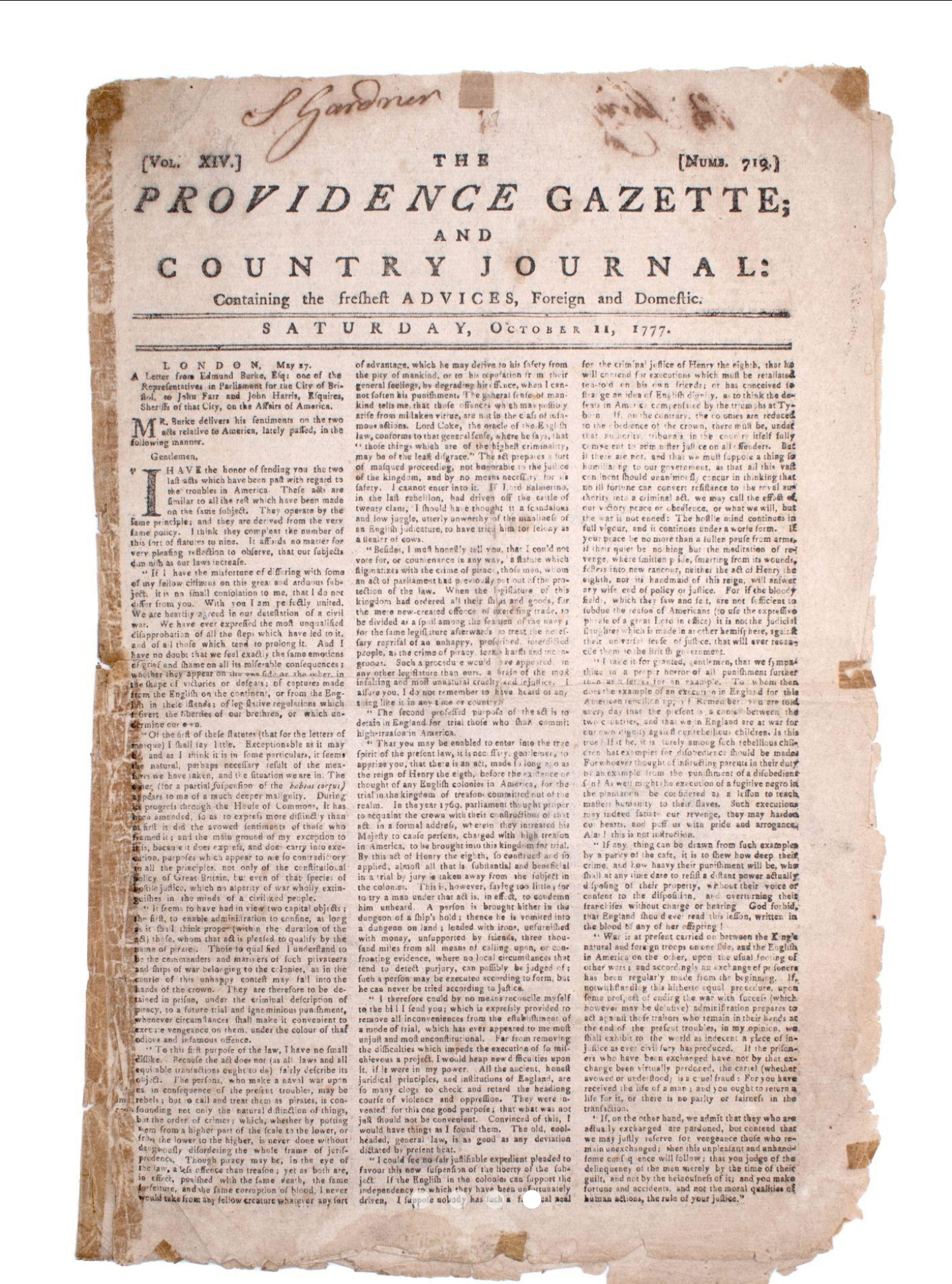
The prominence of women in the Providence protest did not go unnoticed beyond Rhode Island. In Virginia, the event was reported in the Virginia Gazette, where the destruction of tea was described in strikingly gendered and satirical terms. The article referred to the event as the “funeral of Madam Souchong,” personifying the tea as a female figure while simultaneously reinforcing contemporary stereotypes about women.⁶ In doing so, the report transformed the protest into a symbolic spectacle, revealing how acts of resistance in one colony could be interpreted—and reshaped—by observers in another.
Rhode Island had already established itself as one of the most defiant colonies in British North America. Its long-standing resistance to imperial regulation, fueled by its maritime economy and frequent clashes with customs enforcement, made it a persistent source of frustration for British authorities. Loyalist observers took note. Writing during the conflict, Peter Oliver described resistance in New England as the work of “lawless men” driven by mob influence, portraying their actions as rooted in disorder rather than lawful opposition.⁷ British officials expressed similar concerns in the aftermath of the Gaspee Affair, viewing the destruction of the customs schooner as a “daring insult to the authority of the Crown” and evidence that resistance in Rhode Island had reached a dangerous level.⁸ In June 1772, that defiance became unmistakable when local patriots burned the Gaspee, a British vessel sent to enforce imperial law.
The British response only deepened colonial fears. Officials threatened to transport suspected participants to England for trial, raising concerns about the erosion of traditional rights and legal protections.⁹ In Rhode Island, the lesson was clear: British authority was not only intrusive but increasingly dangerous.
Tea stood at the center of this growing conflict. Although Parliament repealed most of the Townshend duties in 1770, it deliberately retained the tax on tea as a symbol of its authority over the colonies.¹⁰ The Tea Act of 1773 reinforced that authority while attempting to rescue the struggling British East India Company by allowing it to sell tea directly in colonial markets.¹¹ Though the Act lowered the price of tea, it made clear that Parliament would not abandon its claim to tax the colonies.
For colonists, this created a dilemma. Cheap tea was still taxed tea and accepting it meant accepting Parliament’s authority.
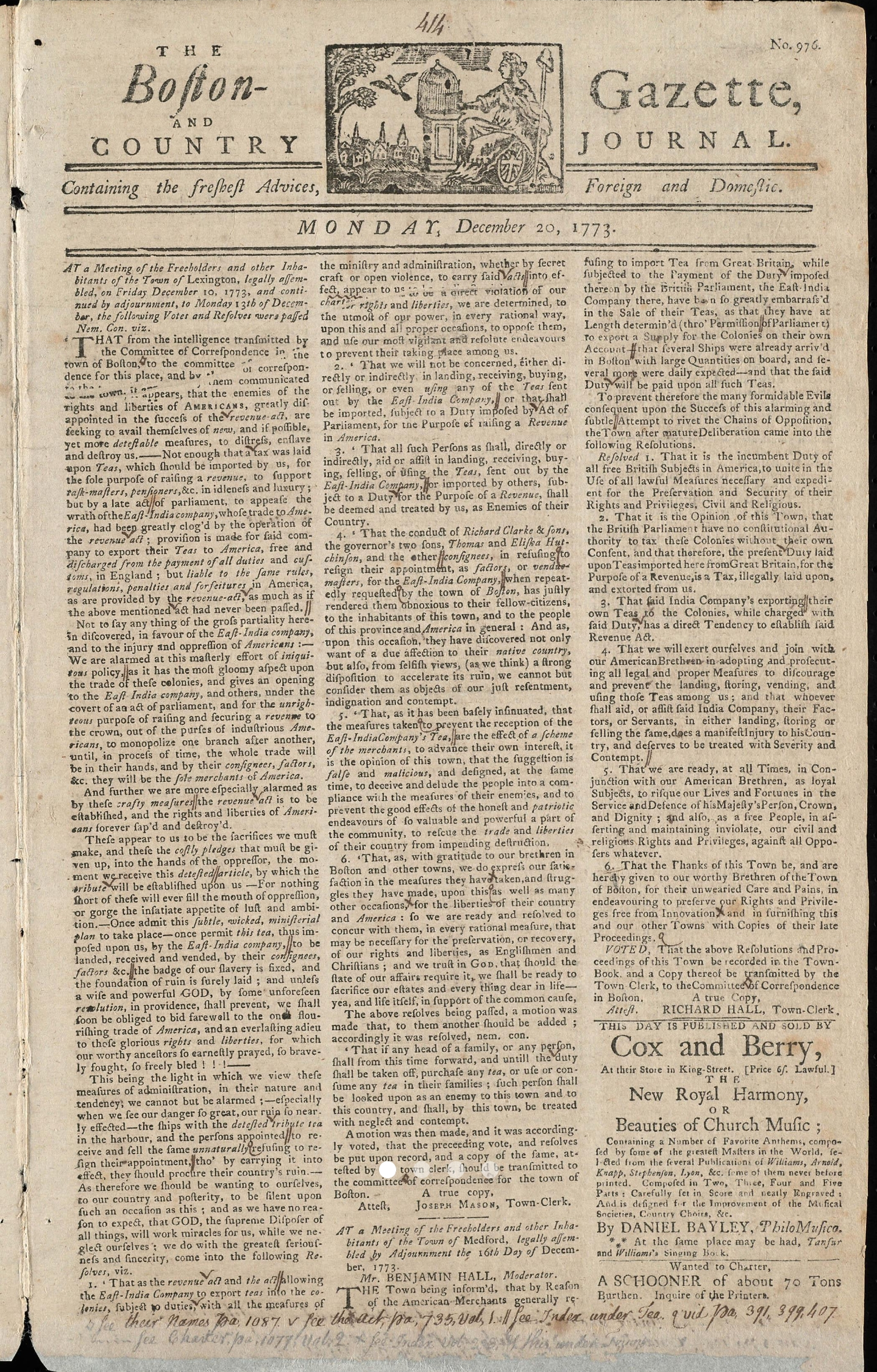
Resistance spread quickly. Boston’s destruction of tea in December 1773 became the most famous example, but it was not unique. Across the colonies, tea was refused, returned, or destroyed. Providence’s response followed the same logic but took a different form.
Unlike Boston, Providence does not appear to have received a direct East India Company consignment. Yet tea remained widely available through existing commercial networks, including both legal imports and illicit trade. ¹² Among the varieties familiar to colonial consumers was souchong, a Chinese black tea imported through British merchants. Over time, tea became more than a commodity. It became a symbol of imperial authority.
The Providence protest transformed that symbolism into action.
Unlike the Boston Tea Party, which was carried out at night by men in disguise, the Providence tea burning was conducted in daylight, announced in advance, and performed openly before the community.
There was no attempt at concealment. The participants did not hide their actions. Instead, they invited the town to witness—and join—them.
The presence of the “spirited Son of Liberty” further connects the event to the broader resistance movement. The Sons of Liberty had been central to organizing opposition to British taxation since the 1760s.¹³ While no surviving document identifies the organization as the formal leader of the Providence tea burning, the use of that label within the event itself demonstrates that participants understood their actions as part of that larger movement.
Reactions to such acts varied sharply. Supporters of the patriot cause viewed the destruction of tea as a legitimate defense of colonial rights. Loyalists, however, saw something far different. Writers such as Peter Oliver condemned similar protests as lawless acts of mob rule, arguing that they reflected a breakdown of civil order and respect for authority.¹⁴ Though no specific loyalist account of the Providence event survives, it is clear how such an act would have been interpreted by those who opposed the revolutionary movement.
The symbolic meaning of tea extended beyond its economic value. Among the varieties circulating in colonial markets was souchong, a widely traded Chinese tea distributed through British commercial networks.¹⁵ In at least one contemporary interpretation, that tea was transformed into something more than a commodity. The Virginia Gazette’s reference to the “funeral of Madam Souchong” reveals how the act of burning tea resonated beyond Providence, entering the political and cultural language of the Revolution.
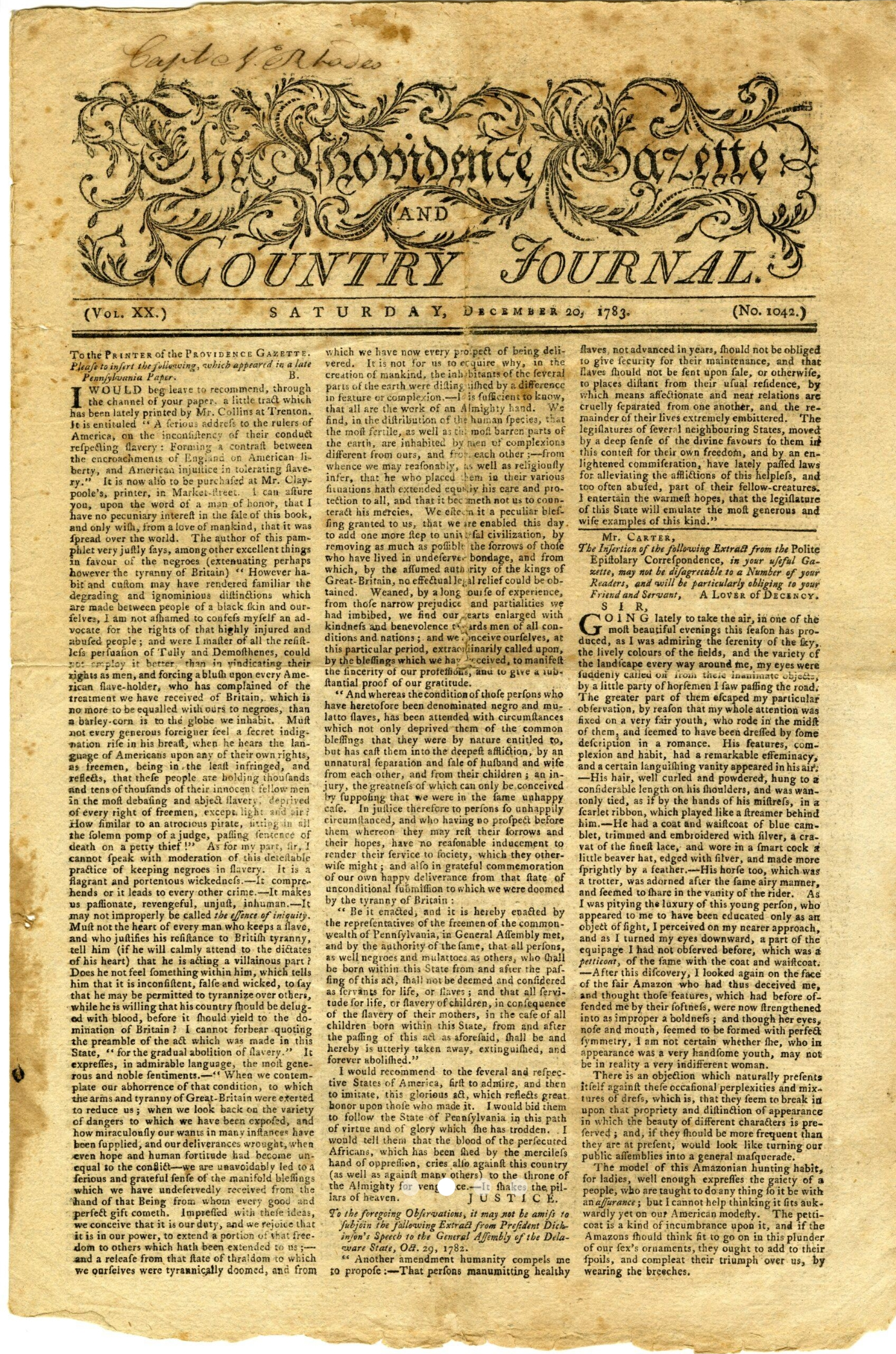
Seen in this light, the destruction of tea in Providence was not merely an act of protest. It was a public declaration. By casting the tea into the flames, participants rejected not only the commodity but the system that imposed it.
Despite its significance, the Providence tea burning has remained overshadowed by Boston’s more famous protest. Yet it offers something equally important: a clear view of resistance as a communal act, carried out openly and with the visible participation of women.
As the flames consumed the tea in Market Square, the message was unmistakable. Resistance was no longer cautious or concealed. It was public, shared, and increasingly bold.
And as the women of Providence fed the fire, and a Son of Liberty marked the streets, the Revolution was no longer approaching.
It had already begun.
Endnotes:
1. Providence Gazette (Providence, RI), March 4, 1775, describing a “spirited Son of Liberty” defacing shop signs bearing the word “TEA.”
2. Town crier notice reproduced in “The Providence Tea Party: On Dry Land, in Daylight and Thrown by Women,”, originally derived from period newspaper accounts describing the March 2, 1775 event.
3. Providence Gazette (Providence, RI), March 4, 1775, reporting the burning of tea along with Lord North’s speech and other British materials.
4. Narrative interpretation based on the sequence of events described in the Providence Gazette, March 4, 1775.
5. Providence Gazette (Providence, RI), March 4, 1775, stating that approximately 300 pounds of tea were “fed to the fire by the women of the town.”
6. Virginia Gazette (Williamsburg, VA), 1775, article commonly titled “Providence Women Burn Tea,” describing the event as the “funeral of Madam Souchong” and reflecting contemporary gendered satire.
7. Peter Oliver, Origin and Progress of the American Rebellion (Stanford: Stanford University Press, 1961), 140–145.
8. John R. Bartlett, ed., Records of the Colony of Rhode Island and Providence Plantations, vol. 7 (Providence: A. Crawford Greene, 1862), 132–134; see also American Archives, Fourth Series, vol. 1 (Washington, D.C., 1837), documenting British reactions to the Gaspee incident.
9. American Archives, Fourth Series, vol. 1 (Washington, D.C., 1837), detailing British investigation procedures and proposed transport of suspects for trial.
10. Edmund S. Morgan and Helen M. Morgan, The Stamp Act Crisis: Prologue to Revolution (Chapel Hill: University of North Carolina Press, 1953), 270–272.
11. Benjamin L. Carp, Defiance of the Patriots: The Boston Tea Party and the Making of America (New Haven: Yale University Press, 2010), 90–95.
12. T.H. Breen, The Marketplace of Revolution: How Consumer Politics Shaped American Independence (Oxford: Oxford University Press, 2004), 221–225.
13. Pauline Maier, From Resistance to Revolution: Colonial Radicals and the Development of American Opposition to Britain, 1765–1776 (New York: Alfred A. Knopf, 1972), 79–85.
14. Peter Oliver, Origin and Progress of the American Rebellion (Stanford: Stanford University Press, 1961), 140–145.
15. Hoh-cheung Mui and Lorna H. Mui, The Management of Monopoly: A Study of the East India Company’s Conduct of Its Tea Trade, 1784–1833 (Vancouver: University of British Columbia Press, 1984), 33–36.
Image Sources:
Providence Gazette (Providence, RI), March 4, 1775, reproduced in Peter Force, American Archives, 4th series, vol. 2 (Washington, D.C., 1839), 15.
Public Domain image of The Providence Tea Party.

