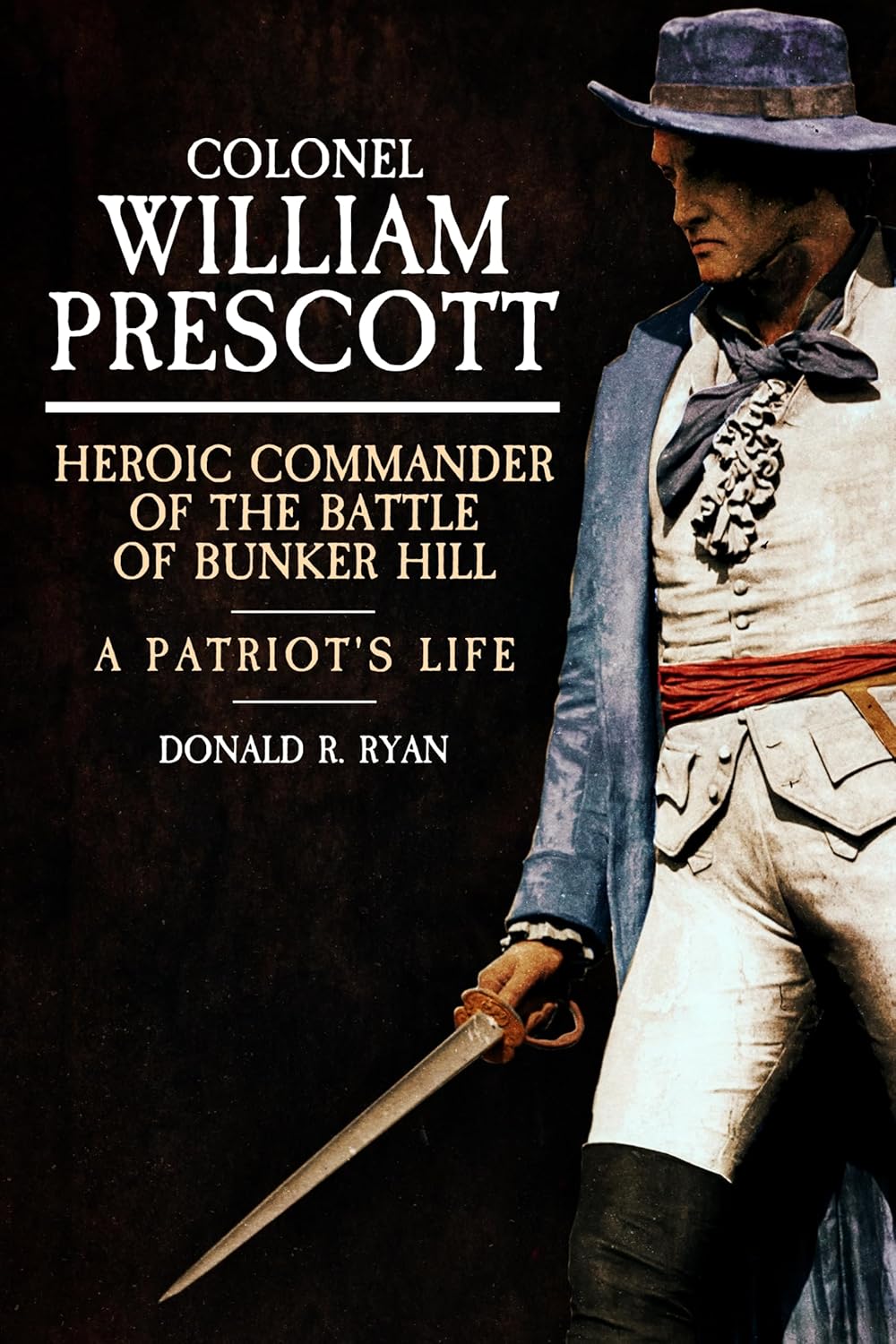
Depicted in various paintings, still standing watch over Breed’s Hill, his name is synonymous with the heroic American defense of the earthen redoubt that graced the aforementioned hill. Although forced to evacuate the work when overwhelmed by the third British advance and out of ammunition, Prescott had shown his value as a competent battlefield leader. Especially of the militia.
Yet, as America approached the 250th anniversary of the country, there had not been a single dedicated biography that covered his entire life. Prescott is mentioned in plenty of great historical works on the battle, the region, and the lives of other patriots who fought that day. But the Massachusetts native deserved more. Entered Donald R. Ryan.
Ryan, a volunteer historian and guide for Boston National Historical Park, took on the task of researching, locating, and even contacting living descendants of Prescott. You can now hold in your hands and read his excellent work on this great military figure, best known for his role in one of the most iconic battles of the American Revolution.
Before you do get your copy and settle in to read, tune in on Sunday evening, as Ryan will appear on our popular “Rev War Revelry” to discuss his book. Emerging Revolutionary War will go live at 7 p.m. EDT. and stream to our Facebook page.
Cannot make the live program on Sunday evening? Don’t fret, the program will be posted to our podcast and YouTube channels in the days after. Either way, hope you tune in to learn about Col. Prescot!
Emerging Revolutionary War welcomes back guest historian Bjorn Bruckshaw
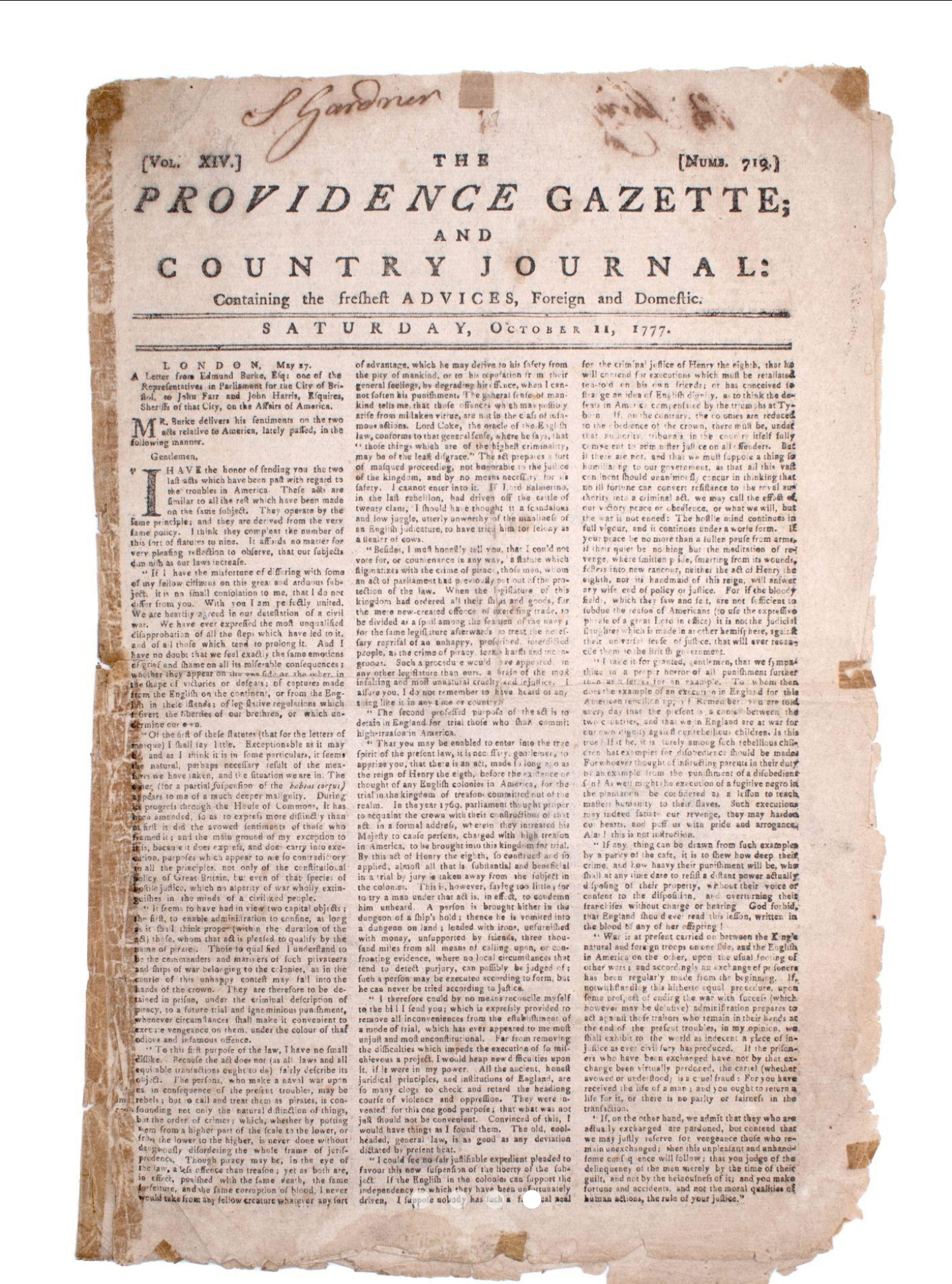
On a chilly but sunlit afternoon in Providence, smoke began to rise over Market Square—not from hearth fires meant to warm the town, but from a blaze built in defiance. As the smell of burning tar and tea drifted through the streets, cheers and shouts of defiance echoed through the square. Nearby, a man moved quickly from shop to shop, brush and lampblack in hand. One by one, he painted over a single word on storefront signs: TEA. This was no act carried out in secret. According to the Providence Gazette, he was “a spirited Son of Liberty,” and he worked in full view of the town as a crowd gathered around the growing fire.¹
Just beyond him, the protest had already begun.
Earlier that day, a town crier had moved through Providence announcing that a quantity of India tea would be burned in the Market Square that afternoon, calling upon “all true friends of their country, lovers of freedom, and haters of shackles and hand-cuffs” to assemble and cast the tea into the flames.² By the appointed hour, the square was filled. This was no spontaneous outburst. It was organized, deliberate, and intended to be seen.
At the center of the gathering, flames climbed upward as a barrel of tar was placed upon the fire. Into it were thrown not only tea—hundreds of pounds of it—but also printed copies of Lord North’s speech and other “obnoxious English papers.” ³ the destruction was more than economic protest. It was a public repudiation of British authority itself. And then came the moment that set Providence apart.
These were not men disguised as Mohawk Indians, shrouded in secrecy under the cover of night as in Boston. This was something different—an open, public act carried out in daylight. At its center stood the women of Providence, dressed in everyday clothing, without disguise, stepping forward with the same patriotism and candor to cast the tea into the flames before the gathered town.⁴
In that moment, the Providence Gazette captured one of the most remarkable features of the event, noting that the tea was “fed to the fire by the women of the town.”⁵ Women, long central to colonial resistance through boycotts and the management of household consumption, now stood in the public square, actively participating in the destruction itself. This was not quiet resistance confined to the home. It was visible, communal, and unmistakable.
The prominence of women in the Providence protest did not go unnoticed beyond Rhode Island. In Virginia, the event was reported in the Virginia Gazette, where the destruction of tea was described in strikingly gendered and satirical terms. The article referred to the event as the “funeral of Madam Souchong,” personifying the tea as a female figure while simultaneously reinforcing contemporary stereotypes about women.⁶ In doing so, the report transformed the protest into a symbolic spectacle, revealing how acts of resistance in one colony could be interpreted—and reshaped—by observers in another.
Rhode Island had already established itself as one of the most defiant colonies in British North America. Its long-standing resistance to imperial regulation, fueled by its maritime economy and frequent clashes with customs enforcement, made it a persistent source of frustration for British authorities. Loyalist observers took note. Writing during the conflict, Peter Oliver described resistance in New England as the work of “lawless men” driven by mob influence, portraying their actions as rooted in disorder rather than lawful opposition.⁷ British officials expressed similar concerns in the aftermath of the Gaspee Affair, viewing the destruction of the customs schooner as a “daring insult to the authority of the Crown” and evidence that resistance in Rhode Island had reached a dangerous level.⁸ In June 1772, that defiance became unmistakable when local patriots burned the Gaspee, a British vessel sent to enforce imperial law.
The British response only deepened colonial fears. Officials threatened to transport suspected participants to England for trial, raising concerns about the erosion of traditional rights and legal protections.⁹ In Rhode Island, the lesson was clear: British authority was not only intrusive but increasingly dangerous.
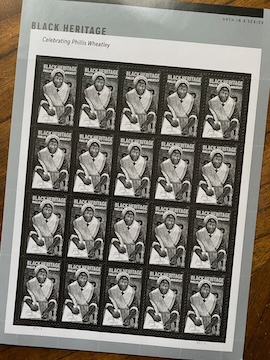
The United States Postal Service has issued a new postage stamp honoring Phillis Wheatley, a Revolution-era poet who was the first author of African descent in the American Colonies to publish a book.
Unveiled at the Old South Meeting House in Boston on Thursday, Jan. 29, 2026, the Wheatley stamps was the 49th stamp in the Black Heritage series.
For more on Wheatley, I reached out the Boston Tea Party Ships and Museum. Cathryn Philippe is a living historian at the museum who portrays Wheatley—who, as it turned out, had an interesting connection to the Boston Tea Party. Cathryn was kind enough to spend some time chatting with me about Wheatley’s story:
(I first met Cathryn several years ago, while doing a virtual field trip in Boston for the American Battlefield Trust. I had the chance to visit the Boston Tea Party Ships and Museum and see Cathryn’s portrayal for myself. Take a look here.)
For more on the Phillis Wheatley stamp, we quote part of the Postal Service’s press release:
On this date in 1776, Major Joseph Ward, serving as a staff officer for Major General Artemas Ward, second in command of the Continental Army that had just evicted the British from Boston, sat down at his desk to pen the following letter. The recipient was John Adams, a fellow Massachusettsan then serving in the Second Continental Congress in Philadelphia, Pennsylvania. Ward continued his correspondence of keeping Adams apprised of military affairs around Boston. In this letter, however, he makes the case for the colonies to “cut the Gordian knot” and declare independence, months before Richard Henry Lee’s proposal to call for independence in late June 1776.
Boston 23 March 1776
Sir,
The 17th Instant the Pirates all abandoned their Works in Boston and Charlestown and went on board their Ships, and on the 20th they burnt and destroyed the works on Castle Island. They now lye in Nantasket Road waiting for a fair wind; we keep a vigilant eye over them lest they should make an attack on some unexpected quarter. The particulars with regard to the Seige, the Stores taken, &c. you will receive from better authority, therefore it is unnecessary for me to mention them. Our Troops behaved well, and I think the flight of the British Fleet and Army before the American Arms, must have a happy and very important effect upon the great Cause we engaged in, and greatly facilitate our future operations. I wish it may stimulate the Congress to form an American Government immediately. If, after all our exertions and successes, while Providence offers us Freedom and Independence, we should receive the gloven cloven foot of George to rule here again what will posterity, what will the wise and virtuous through the World say of us? Will they not say, (and jusly) that we were fools who had an inestimable prize put into our hands but had no heart to improve it! Heaven seems now to offer us the glorious privilege, the bright preeminence above all other people, of being the Guardians of the Rights of Mankind and the Patrons of the World. It is the fault of the United Colonies (a rare fault among men) they do not sufficiently know and feel their own strength and importance. Independence would have a great effect upon the Army, some now begin to fear that after all their fatigue and hazards in the Cause of Freedom, a compromise will take place whereby Britain may still exercise a power injurious to the Liberty Peace and Safety of America: Cut the Gordian knot, and the timid and wavering will have new feelings, trimming will be at an end, and the determined faithful friends of their Country will kindle with new ardour, and the United Colonies increase in strength and glory every hour.
Yesterday I saw your Brother, who informed that Mrs. Adams and your Children were well.
General Ward, on account of his declining health, has wrote his Resignation to the President of the Congress. I expect the greatest part of the Army will march for New York, or the Southern Colonies as soon as the Fleet is gone to Sea; and the Troops that remain here will be employed in fortifying the most advantageous Posts to defend the Town and harbour. I do not much expect the Enemy will make any attempts to regain possession of Boston, for I think they are sufficiently convinced that they cannot penetrate the Country in this part of America; ’tis probable they will try their fortune to the Southward and if they fail there the game will be up with them. We hear many accounts about Commissioners coming from Britain to treat with the Colonies separately, or with the Congress. Many fear we shall be duped by them, but I trust the congress is too wise to be awed by the splendor or deceived by the cunning of British Courtiers.
I know not of one discouraging circumstance attending either our civil or military affairs in this part of the Continent. I have lately heard with pleasure that the Farmer is become an advocate for Independence.Wishing the Congress that Wisdom which is from above, I am Sir with much Respect Your most Humble Servant,Joseph Ward
Clockwise from top left: Chris Mackowski, Christopher Dalton, Steven Pitt, and Philip Payne
To help celebrate America’s 250th birthday this year, St. Bonaventure University’s History Department will present a series of public programs through March and April—and Emerging Revolutionary War is taking part. From John Adams and Revolutionary-era Boston to George Washington’s long shadow, presenters will invite audiences to reconsider how we remember the Revolution today. And all programs will be available to watch live on Zoom and later on YouTube.
“July Fourth this year will mark 250 years since the Declaration of Independence was finalized,” says Dr. Phillip Payne, chair of the history department. “We wanted to invite members of the community to join us in commemorating that event. It’s a question we can all think about: what does the American Founding mean to us today?”
The programs, which are free and open to the public, will each begin at 7:00 p.m. Light refreshments will be served. The programs will also be available to watch via Zoom; for Zoom links, visit the history department’s blog, https://bonashistorydept.blogspot.com/.
Timothy Newell kept a very vivid diary of life in Boston in 1775 and 1776. He started the entry below on this date, 250 years ago, by copying the “sundry papers lent me…relative to the Siege and Evacuation of Boston in 1775…”
To the Commanding Officer at Roxbury
March 8, 1776
As His Excellency Gen Howe is determined to leave the Town with the troops under his command, a number of the respectable Inhabitants, being very anxious for its preservation and safety, have applied to General Robertson for this purpose, who at their request have communicated the same to his Excellency Gen Howe, who has assurred him, that he has no intention of destroying the Town, unless the Troops under his command are molested, during their embarkation, or at their departure by the armed force without; which declaration he gave General Robertson leave to communicate to the Inhabitants. If such an opposition should take place, we have the greatest reason to expect the Town will be exposed to entire destruction. As our fears are quieted, with regard to General Howe’s intentions, we beg we may have some assurances, that so dreadful a calamity may not be brought on by any measures without. As a testimony of the truth above we have signed our names to this Paper, carried out by Mess Thomas and Jonathan Amory, and Peter Johonnet, who have at the earnest entreaties of the Inhabitants, through the Lieu Governor solicited a flag of truce for this purpose.
John Scollay 2. Timothy Newell 3. Thomas Marshall 4. Samuel Austin
*The General Robertson mentioned above was Brigadier General James Robertson, who commanded the 4th Brigade during the Siege of Boston
In March 1776, a quiet hill overlooking Boston Harbor became one of the first turning points of the American Revolutionary War. Dorchester Heights, rising above the southern approaches to Boston in what is now South Boston, played a decisive role in forcing the British Army to evacuate the city. The dramatic occupation and fortification of the Heights by American forces under General George Washington transformed a long, grinding siege into a strategic victory that reshaped the war’s momentum.
After the battles of Lexington and Concord in April 1775 and the bloody clash at Bunker Hill in June, British forces under General Thomas Gage and then William Howe found themselves effectively trapped in Boston. Surrounding militia units from Massachusetts and neighboring colonies formed a loose ring around the city, beginning what became known as the Siege of Boston. When George Washington arrived in July 1775 to take command of the newly formed Continental Army, he inherited a force that was determined but poorly supplied and short on artillery.
Throughout the fall and winter of 1775–1776, Washington searched for a way to break the stalemate. A direct assault on Boston would have been costly and risky. Instead, he looked to geography. Dorchester Heights, commanding sweeping views of the harbor and the city, offered a strategic advantage. If American forces could fortify the Heights with cannon, they would threaten both the British fleet and the troops stationed in Boston. Control of this high ground would make the British position untenable. The British Navy had encouraged British General Howe (now commanding the British forces in Boston) to take the position due to the Navy’s vulnerability if the Americans were able to command the heights with artillery. Howe underestimated the importance of the heights and also believed the Americans lacked the proper artillery and strength to hold it.
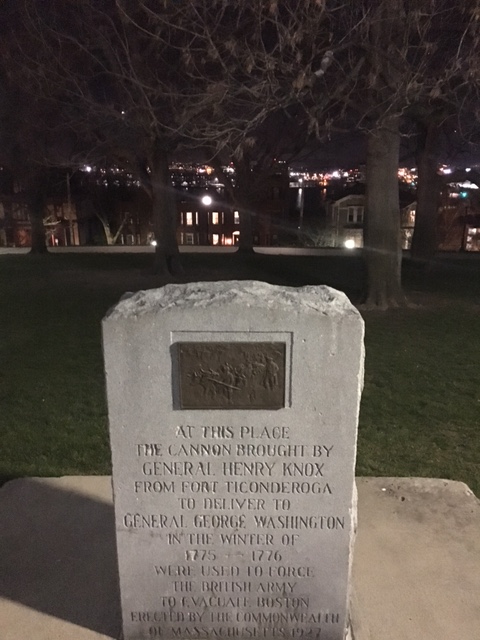
Knox marker on Dorchester Heights
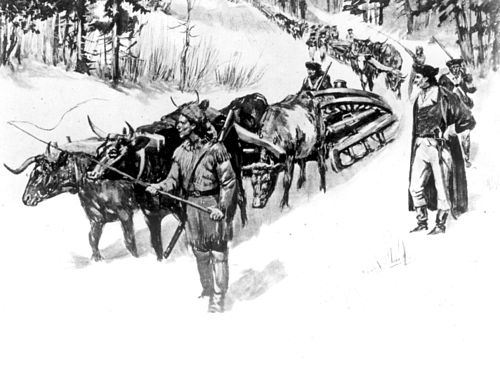
The key to Washington’s plan lay in artillery. In late 1775, Colonel Henry Knox undertook an audacious mission to transport heavy cannons captured from the British at Fort Ticonderoga in upstate New York. Over the winter, Knox and his men hauled approximately 60 tons of artillery—an operation later dubbed the “Noble Train of Artillery”—over 300 miles of frozen rivers and snow-covered terrain to Cambridge, Massachusetts.
These cannons provided Washington with the firepower necessary to implement his strategy. By early March 1776, conditions were ripe. The ground was still frozen, making it easier to move heavy equipment and but would challenge their skills at building fortifications.
On the night of March 4, American troops moved silently toward Dorchester Heights. Under the cover of darkness and diversionary bombardments from other positions, they began constructing fortifications with remarkable speed. Using pre-prepared materials—fascines (bundles of sticks), chandeliers (wooden frames filled with earth), and hay bales—they built defensive works capable of withstanding British cannon fire.
By dawn on March 5, the anniversary of the Boston Massacre, British sentries were stunned to see formidable American fortifications atop the Heights, bristling with cannon aimed at the city and harbor. General Howe reportedly exclaimed that the rebels had accomplished more in one night than his army could have done in months. The strategic implications were clear. From Dorchester Heights, American artillery could rain fire down on British ships and troop positions. The Royal Navy, essential to British supply and mobility, was now vulnerable. Remaining in Boston was a risk that Admiral Molyneux Shuldham was not willing to take and pushed Howe to respond quickly.
General Howe initially planned a counterattack to dislodge the Americans. However, a fierce storm on March 6 disrupted preparations and made an amphibious assault difficult. Also, Washington got word of the planned British assault and increased his manpower on Dorchester Heights to nearly 6,000. The memory of heavy British casualties at Bunker Hill also weighed heavily. Dorchester Heights were even stronger and more defensible than Breed’s Hill had been the previous year.
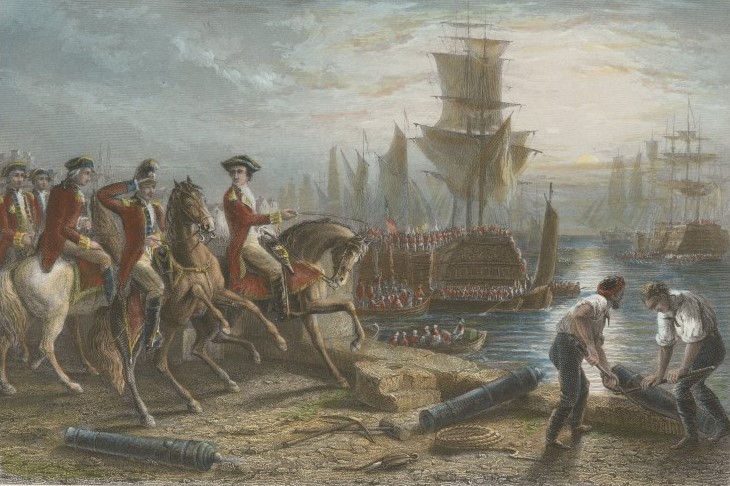
Howe evacuating Boston, courtesy New York Public Library
Facing the prospect of severe losses and an increasingly precarious situation, Howe reconsidered. Negotiations—informal and indirect—suggested that if the British evacuated Boston without destroying the town, American forces would not attack during the withdrawal.
On March 17, 1776, British troops and Loyalists began evacuating the city. More than 11,000 soldiers and nearly 1,000 Loyalists boarded ships and sailed to Halifax, Nova Scotia. The Siege of Boston was over, and the city was firmly in American hands for the remainder of the war.
The occupation of Dorchester Heights marked the first major strategic victory for the Continental Army under Washington’s leadership. It demonstrated the effectiveness of coordinated planning, logistical ingenuity, and the intelligent use of terrain. Rather than launching a costly frontal assault, Washington had leveraged geography and artillery to compel the enemy’s withdrawal.
This victory also boosted American morale at a critical time. The war was far from won—indeed, it would intensify dramatically later in 1776 with British campaigns in New York—but the successful eviction of British forces from Boston showed that the Continental Army could achieve meaningful results.
Moreover, Dorchester Heights solidified Washington’s reputation as a capable commander. His cautious but decisive approach, combined with Knox’s logistical triumph, set a pattern for future operations. The event underscored the importance of high ground in military strategy, a lesson that had already been evident at Bunker Hill but was applied with even greater effect in March 1776.
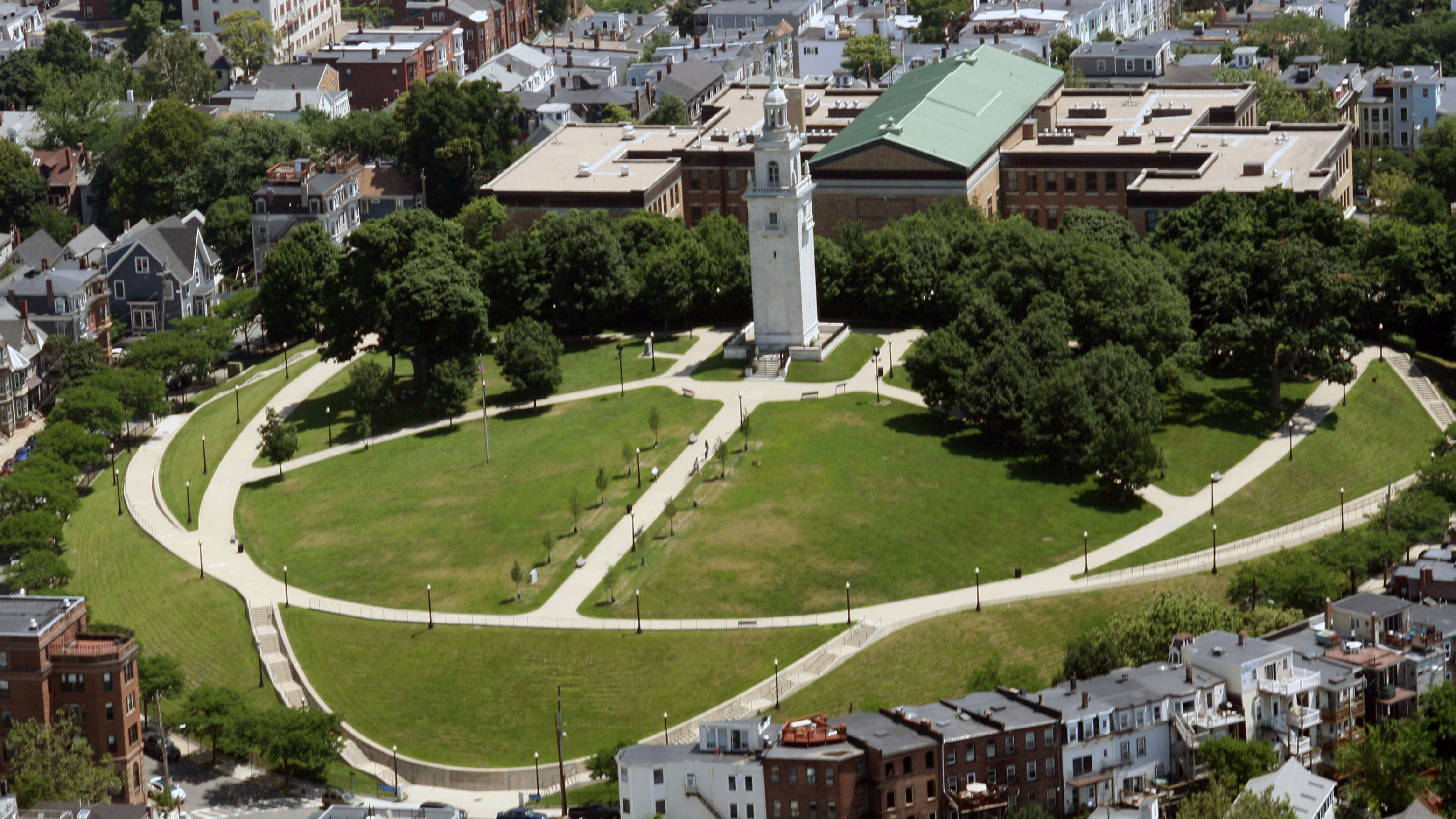
Dorchester Heights and the 1902 monument today, part of the Boston National Historical Park, courtesy of NPS
For good reason, much has been done, discussed, developed, and disseminated regarding the voluminous correspondence between Abigail and John Adams. Yet, her spouse was not the only recipient of the wisdom and insight that Abigail possessed. She also became friends with and communicated with Catherine Sawbridge Macaulay Graham in England.
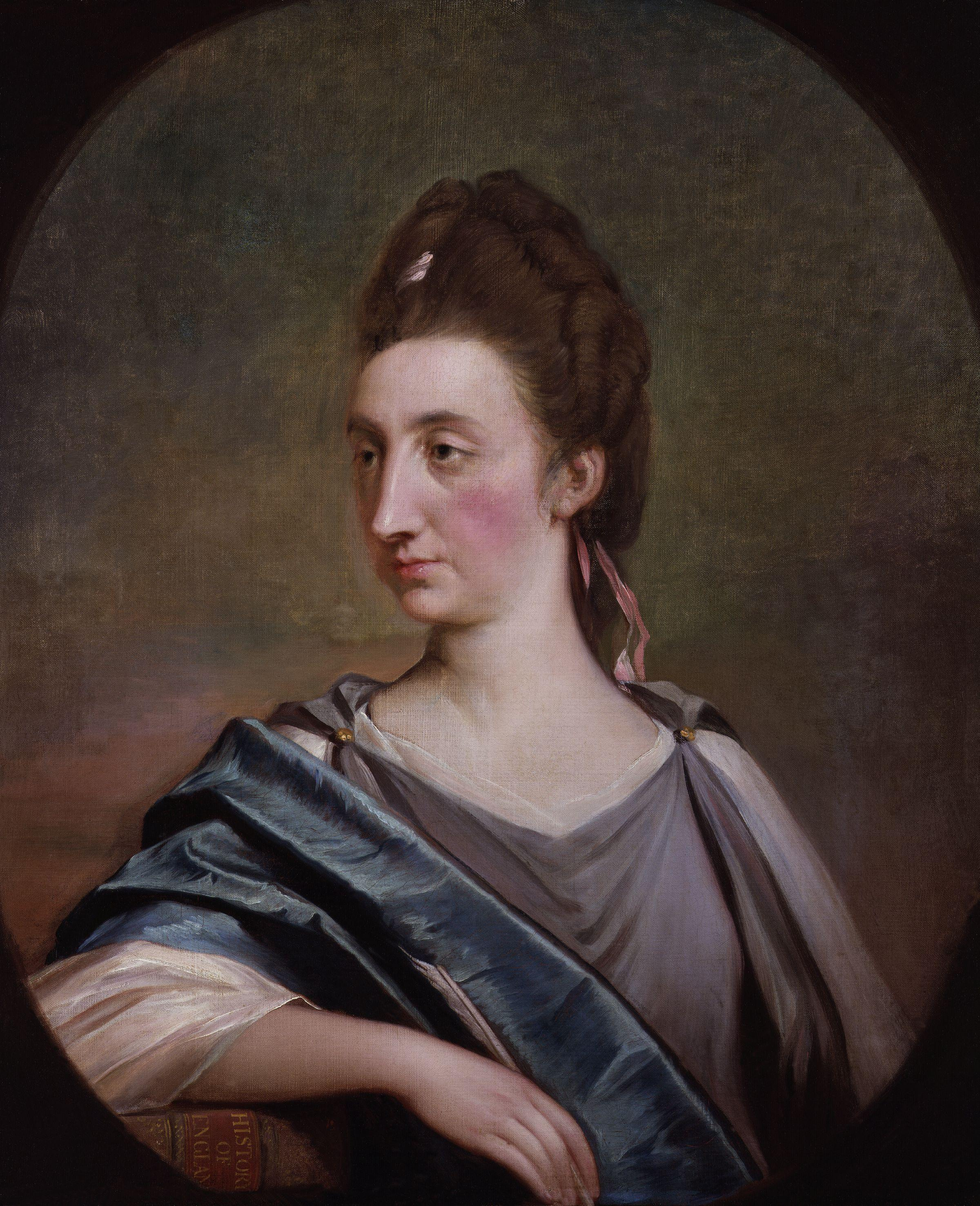
Catharine Sawbridge Macaulay Graham
Graham was a prominent English historian and writer, “at the forefront of radical transatlantic politics in the eighteenth century.” She was a prolific pamphleteer and considered one of England’s first major historians. She was a supporter of and wrote extensively on the American and French Revolutions. Through the cause of the former, she struck up a correspondence with Abigail Adams. Below is a letter from Abigail to Catherine in 1774 that highlights the current events in Massachusetts and also how close the two ladies on either side of the Atlantic Ocean had become in their letter writing. It is truly a remarkable letter that provides emotion and description of a friendship and life in Massachusetts on the cusp of revolution.
Madam
In the last Letter which Mr. Adams had the honour to receive from you, you express a Desire to become acquainted with our American Ladies.1 To them Mrs. Macaulay is sufficiently distinguished by her superior abilities, and altho she who is now ventureing to address her cannot lay claim to eaquil accomplishments with the Lady before introduced,2 yet she flatters herself she is no ways deficient in her esteem for a Lady who so warmly interests herself in the cause of America—a Cause madam which is now become so serious to every American that we consider it as a struggle from which we shall obtain a release from our present bondage by an ample redress of our Grieveances—or a redress by the Sword. The only alternative which every american thinks of is Liberty or Death.
“Tender plants must bend, but when a Goverment is grown to strength like some old oak rough with its armed bark it yealds not to the tug, but only nods and turns to sullen state.”
Should I attempt to discribe to you the complicated misiries and distresses brought upon us by the late inhumane acts of the British parliment my pen would faill me. Suffice it to say, that we are invaded with fleets and Armies, our commerce not only obstructed, but totally ruined, the courts of Justice shut, many driven out from the Metropolis, thousands reduced to want, or dependant upon the charity of their neighbours for a daily supply of food, all the Horrours of a civil war threatning us on one hand, and the chains of Slavery ready forged for us on the other. We Blush when we recollect from whence these woes arise, and must forever execrate the infamous memory of those Men whether they are Americans or Brittons, whose contagious Ambition first opened the pandoraen Box, and wantonly and cruelly scatterd the fatal ingrediants—first taught us filled with grief and anxiety to inquire
Are these thy deeds o Britton? this the praise
That points the growing Lusture of thy Name
These glorious works that in thy [better?] Days
fild the bright period of thine early fame
To rise in ravage and with arm prophane
From freedoms shrine each sacred Gift to rend
and mark the closing annals of thy reign
With every foe subdued, and every Friend.
You will think Madam perhaps from the account I have given you, that we are in great confusion and disorder—but it is far otherways. Tho there are but few who are unfealing or insensible to the general calimity, by far the greater part support it with that firmness, that fortitude, that undaunted resolution which ever attends those who are conscious that they are the injured not the injurer, and that they are engaged in a righteous cause in which they fear not to “bare their bold Breasts and pour their generous Blood.” Altho by the obstruction of publick justice, each individual is left at a loose, to do that which is right in his own Eyes, yet each one strives to shew his neighbour that the restraints of Honour and of conscience are more powerful motives, than the judiciary proceedings of the Law. Notwithstanding the inveterate Malice of our Enimies who are continually representing us, as in a state of anarchy and confusion, torn up with intestine broils, and guilty of continual riots and outrage, yet this people never saw a time of greater peace and harmony among themselves, every one uniting in the common cause, and strengthning each other with inconceivable constancy and sumpathetick ardor.
I mean always to Except those whose venal Souls barter freedom for Gold, and would sell their Country, nay gladly see an innocent land deluged with Blood, if they could riot upon its Spoils, which heaven Avert!—Tis with anxious Hearts and eager expectations that we are now waiting for the result of the united Supplications of America. Yet having so often experienced their Enefficacy we have little reason to hope. We think we have more to expect from the firm and religious observance of the association which accompanied them3—for tho it was formerly the pride and ambition of American[s] to indulge in the fashions and Manufactures of Great Brittain now she threatens us with her chains we will scorn to wear her livery, and shall think ourselves more decently attired in the coarse and plain vestures of our own Manufactury than in all the gaudy trapings that adorn the slave.—Yet connected as we are by Blood, by commerce, by one common language, by one common religion as protestants, and as good and loyal subjects of the same king, we earnestly wish that the three fold cord of Duty, interest and filial affection may not be snapped assunder. Tis like the Gordean knot. It never can be untied, but the sword may cut it, and America if she falls to use the words of the revered and ever honourd Mr. Pitt, will fall like a strong Man, will embrace the pillars of State and pull down the constitution along with her.
I must intreet your pardon Madam for Detaining you so long from the important Services in which you are engaged, but having taken up my pen I could not refrain giving utterance to some of those Emotions which have agitated my Bosom and are the cause of many anxious hours to her who begs leave to subscribe herself Dear Madam your great admirer & humble Servant,
In December 1775, Henry Knox wrote to General George Washington, “I hope in 16 or 17 days to be able to present your Excellency a noble train of artillery”. However, the train of artillery would not arrive until the end of January 1776. Still an impressive feat, as Knox with his team moved 60 tons (119,000 pounds) of artillery over 300 miles from upstate New York to the environs of Boston in 70 days in the midst of winter.
This impressive feat enabled Washington to evict the British from Boston, winning the siege and giving the fledgling rebellion a victory to build momentum from.
To discuss this amazing feat and part of American military history, Emerging Revolutionary War welcomes Dr. Phillip Hamilton, a professor of history at Christopher Newport University. A historian of the American Revolutionary and Early Republican periods, he has edited and written “The Revolutionary War Lives and Letters of Lucy and Henry Knox.”
Although the program is pre-recorded, Emerging Revolutionary War hopes you still tune in on Sunday, February 22 at 7 p.m. EDT. We promise the revelry will be enlightening. If you have any questions, please drop them in the chat during the program, and we will ensure Dr. Hamilton receives them.
In honor of the 250th anniversary of the Battle of Quebec, we reshare guest historian Scott Patchan’s post on Daniel Morgan during the Canadian Campaign of 1775. This post originally posted in December 2015.
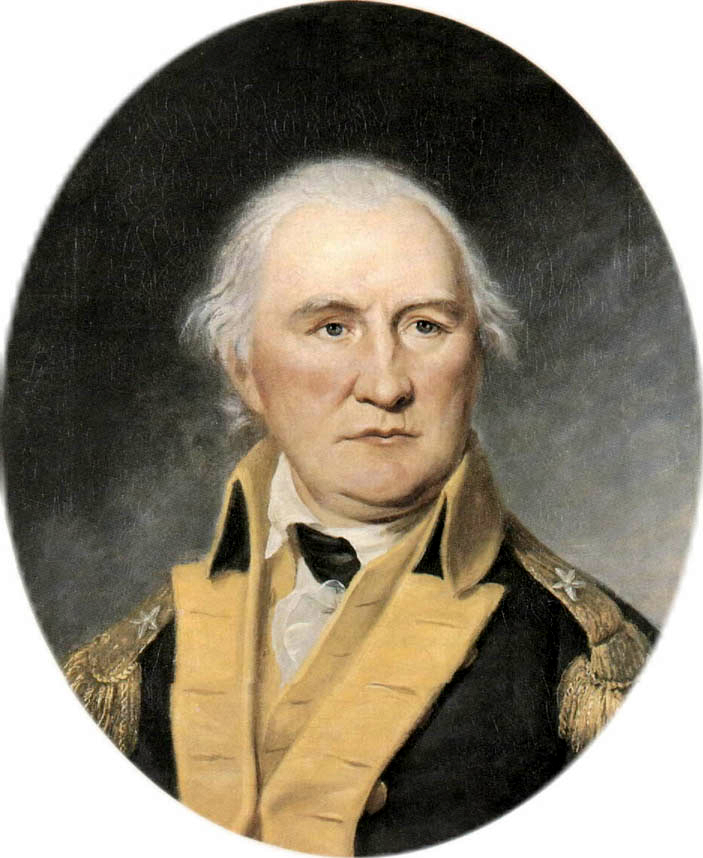
When the situation deteriorated to outright rebellion against the crown, Morgan raised a regiment of crack riflemen from Frederick County, and marched them to Boston in twenty-one days to take part in the siege of Boston. There, he served under his former commander from the French and Indian War, General George Washington. Morgan learned the hard way that orders must be followed. He once allowed his riflemen to exceed orders in firing upon British positions at Boston. Washington called Morgan on the disobedience, and Daniel thought that he would be cashiered from the army. Washington, however, relented the next day, but Morgan had learned a valuable lesson about following orders.
Daniel Morgan in the American Revolution
In the fall of 1775, Washington sent Morgan as commander of three companies of Continental riflemen on a mission to capture Quebec from the British. Morgan’s command marched with the column of Colonel Benedict Arnold. They traversed the Maine wilderness, rowing up stream to the “Great Carrying Place,” where carried their canoes and bateaux for great distances overland to another series of streams and lakes that took them to Quebec. As the cold weather set in, sickness and hunger overtook the column and Arnold sent those unfit for duty back to the rear. After covering 350 miles, the American arrived in front of Quebec in early November, surprising the British.
Although Morgan wanted to attack immediately and utilize the element of surprise, he was overruled and the small American force besieged Quebec, waiting for another column under General Richard Montgomery to arrive from the Hudson Valley. When a British party sallied forth and captured one of Morgan’s riflemen on November 18, Arnold believed the British would come out and fight in the open. As such, Arnold drew up his army in front of the fortifications to meet them. They declined his offer and instead looked down on the ragamuffin Americans from the ramparts and exchanged taunts and catcalls. The overall situation frustrated the irascible Morgan, and when his men complained that Arnold was not giving the riflemen their fair share of rations, the “Old Wagoner” violently argued with Arnold, and nearly came to blows with the future traitor. Morgan departed Arnold, leaving him with angry warning about poor treatment of the riflemen. From that time forward, Morgan’s command always received their fair share of the army’s rations.
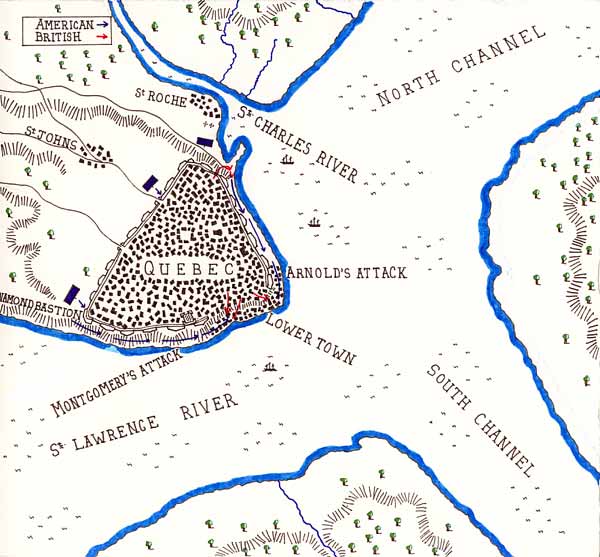
Montgomery’s column arrived on December 5, and the Americans commenced setting up his mortars and artillery outside of Quebec. The Americans finally attacked during a snowstorm in the early morning darkness of December 31, but their force numbered only 950 men. Arnold’s column came under fire as it moved toward the ramparts of Quebec, and a musket ball struck Arnold taking him out of action. Although Morgan was not the senior officer, the others insisted that he take command, having seen actual combat which they had not. Morgan later noted that this “reflected credit on their judgment.” At Morgan’s order, his riflemen rushed to the front, armed with both their Pennsylvania rifles and a spontoon for the assault while some carried ladders to storm the walls. They quickly drove a small force of British away and closed in on the walls.
Map of Battle of Quebec, 1775 (courtesy of British Battles)
Morgan ordered the men up the ladders and first one gingerly began the climb. Morgan sensed his hesitancy, pulled him down and scaled it himself, shouting, “Now boys, Follow me!” The men instantly complied, and Morgan reached the top of the wall where a volley of musketry exploded, knocking him back to the snow-covered ground. The burst burnt his hair and blackened his face; one ball grazed his cheek and another pierced his hat; but Morgan was otherwise unhurt. Stunned he laid motionless on the ground for a moment, and the attack stopped, his men thinking him dead. But he soon stirred and clambered up the ladder to the cheers of his men who followed suit. This time he stopped before reaching the top, and hurtled himself over the rampart into the midst of the enemy. He landed on a cannon and injured his back and found British bayonets levelled at him from all directions. While the British focused on Morgan, his riflemen poured over the wall and came to his rescue, driving off Morgan’s would-be impalers. Morgan kept up a close pursuit of the British who offered weak resistance to the attacking riflemen. Although Morgan had broken into Quebec, the main body of Arnold’s division failed to follow the riflemen over the wall and exploit the opportunity at hand. Morgan captured much of the lower portion of Quebec with only two companies of his riflemen. He later described the breakdown that occurred:
“Here, I was ordered to wait for General Montgomery, and a fatal order it was. It prevented me from taking the garrison, as I had already captured half of the town. The sally port through the (second) barrier was standing open; the guard had left it, and the people were running from the upper town in whole platoons, giving themselves up as prisoners to get out of the way of the confusion which might shortly ensue. I went up to the edge of the upper town with an interpreter to see what was going on, as the firing had ceased. Finding no person in arms at all, I returned and called a council of war of what few officers I had with me; for the greater part of our force had missed their way, and had not got into the town. Here I was overruled by sound judgment and good reasoning. It was said in the first place that if I went on I should break orders; in the next, that I had more prisoners than I had men; and that if I left them they might break out and retake the battery we had just captured and cut off our retreat. It was further urged that Gen. Montgomery was coming down along the shore of the St Lawrence, and would join us in a few minutes; and that we were sure of conquest if we acted with caution and prudence. To these good reasons I gave up my own original opinion, and lost the town.”
Montgomery never arrived; he had been killed in the first blast of musketry against his column, and his command broke. As time went on, the British regained their composure and pushed back against Morgan’s command. Morgan went back and brought up 200 New Englanders who joined the riflemen as they attempted to renew the attack. Now, the previously undefended point, was well manned, and daylight illuminated the paucity of Morgan’s numbers. Nevertheless, Morgan pressed them back further into the town to an interior fortification. A brave British officer led a counterattack, but Morgan personally shot him dead and disrupted the assault. Nevertheless, the time for action had passed. The British had become aware that Morgan’s was the only active American force in the city and closed in around him. In the meanwhile, additional British forces reoccupied the gates Morgan had initially taken and trapped him in the city. Morgan had no choice but to surrender his small command.
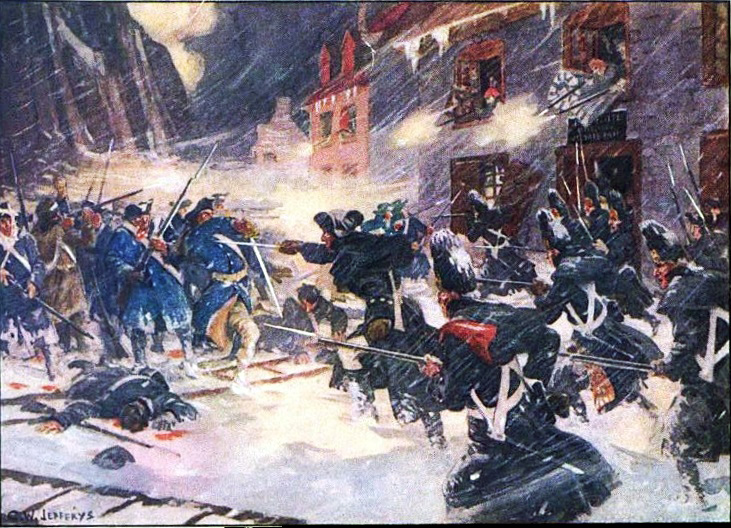
One artist’s depiction of the Battle of Quebec, 1775. Both forces are wearing blue overcoats. (courtesy of British Battles)
Morgan and the other officers enjoyed a liberal captivity with generous quarters in a seminary. The British officers visited them often and remained on friendly terms with the Americans. Morgan developed a dislike for some of his fellow officers whom he regarded as dishonest and scheming, and his fighting skills were brought to bear on at least one occasion when several men teamed up against big Dan Morgan. The imprisonment ended when the British returned the American officers on September 24, 1776, in New Jersey. Morgan returned to his wife and two daughters at his home outside of Battletown or Berryville, where he awaited his proper exchange. While there, he named his home “Soldier’s Rest,” as he recuperated from the trials of the taxing expedition to Quebec. The war was still young, and the Continental Army would soon be calling upon his services again. A special command of riflemen was being organized and Morgan would be its commander.



 Emerging Revolutionary War Era