Offering engaging perspectives on the Revolutionary War Era
Author: Daniel Welch
I am currently a primary and secondary educator with a public school district in northeast Ohio. Previously, I was the Education Programs Coordinator for the Gettysburg Foundation, the non-profit partner of Gettysburg National Military Park, and have been a seasonal Park Ranger at Gettysburg National Military Park for eight years. During that time, I have given numerous programs on the campaign and battle for school groups, families, and visitors of all ages.
I received his BA in Instrumental Music Education from Youngstown State University where he studied under the famed French Hornist William Slocum, and am currently finishing his MA in Military History with a Civil War Era concentration at American Military University. I have also studied under the tutelage of Dr. Allen C. Guelzo as part of the Gettysburg Semester at Gettysburg College. I reside with my wife, Sarah, in Boardman, Ohio.
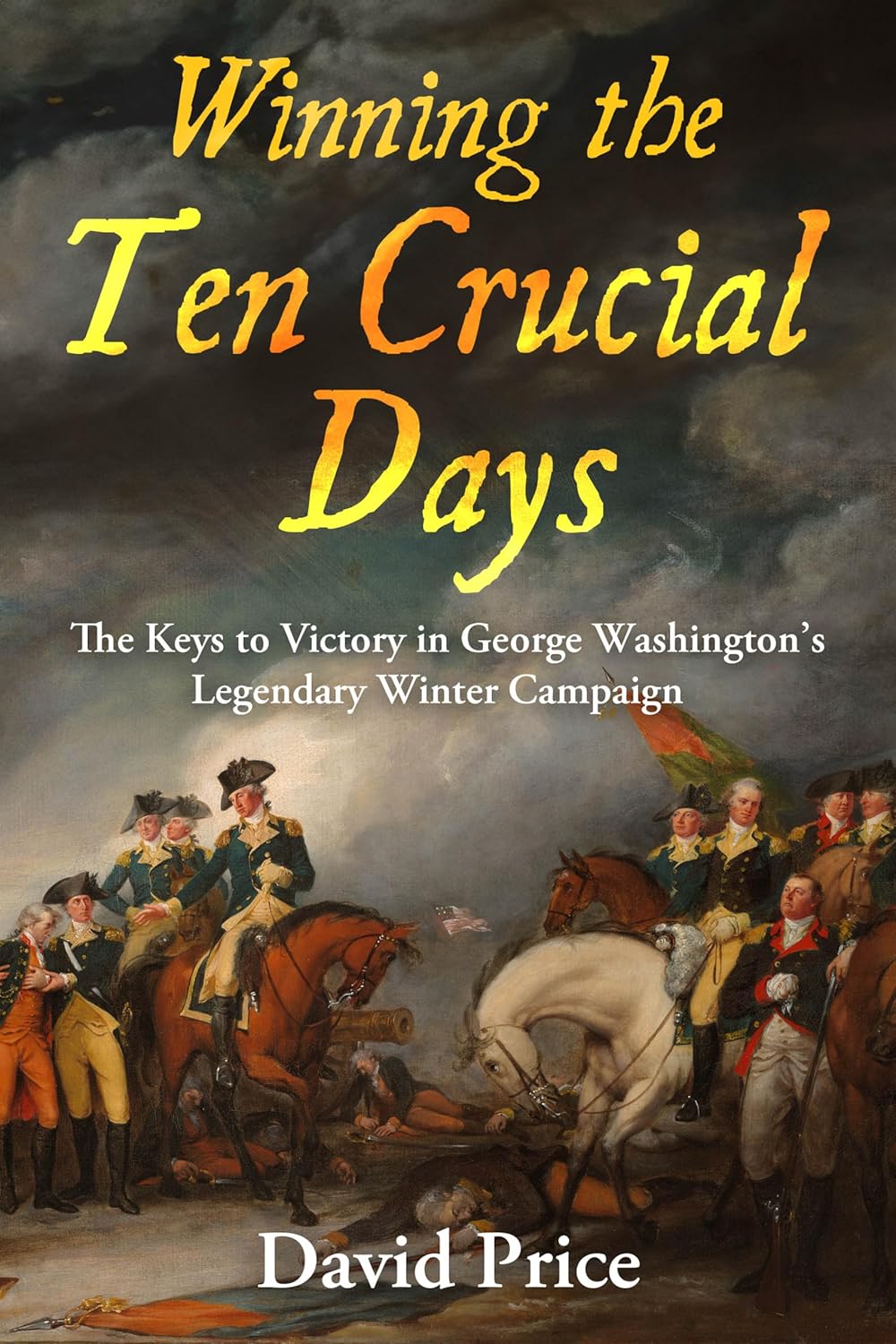
In David Price’s work, Winning the Ten Crucial Days: The Keys to Victory in George Washington’s Legendary Winter Campaign, the author analyzes one of the most pivotal moments during the Revolutionary War through a unique lens. Focusing on leadership, geography, weather, artillery, and contingency, Price’s narrative eschews the traditional format that has been trod before on this topic, usually a chronological regurgitation of events during this time period. Examine these crucial days during the winter campaign of 1776-1777 with author David Price in this ERW Revelry book talk. This talk will be pre-recorded and posted to our Facebook page at 7pm, March 22, 2026 and also to our Spotify and You Tube Channels.
The 27-year-old from Thetford, Norfolk, England native had a long journey before he even sailed across the Atlantic Ocean for the colonies. Although receiving an education until age 13, and an apprenticeship with his father until age 19, both uncommon among his peers, Thomas Paine started his professional career as a privateer. It did not suit him for long, he returned to Britain in 1759. Paine then became a staymaker, and within several years, opened his own store in Sandwich, Kent. By the end of the same year, Paine had married.
Life seemed to be set for the young couple, but tragedy after tragedy ultimately led Paine to the American colonies. Paine’s shop ran into financial challenges not long after his nuptials, and although offset by the joy of pregnancy, a relocation to a new town may have been too much on Mary. She went into early labor, and both mother and child tragically died during the delivery. A series of moves, career changes, and troubles dotted the next dozen years.
A supernumerary, Excise Officer, staymaker, schoolteacher, were all ahead of time. Charges of fraud and dismissal were as well. By the age of 31, in 1768, Paine’s next professional endeavor took him to Lewes in Sussex. Over the ensuing years in Lewes, a town with a long history of opposition to the monarchy and republican sentiments, Paine became a member of the Court Leet and parish vestry, worked as a tobacconist and grocer, and married for the second the time.
Thomas Paine
By 1772, Paine wrote his first political piece. His time in his home country was now on the clock. By the spring of 1774, following his political priorities and ideologies, Paine had all but abandoned his post as an excise officer and was essentially fired. He next separated from his second wife, Elizabeth, and moved to London. It was while in London that Paine met Benjamin Franklin who suggested he emigrate to Philadelphia. Paine did exactly that.
His journey through life was turbulent, even more so during the first half of the 1770s, just like his voyage across the Atlantic on his to Philadelphia in the Pennsylvania colony. The water supplies aboard the ship were dreadful, and typhoid raged across the decks of the vessel. Paine was barely alive by the time the ship reached Philadelphia. He was so ill he was unable to leave the docked boat under his own power, Benjamin Franklin sending his personal physician to the ship and have him carried off. Yet, on this date, November 30, 250 years ago, Thomas Paine had arrived to the American colonies. After six weeks of recovery his new journey, a journey shared by all those that were to be swept up in the American Revolution, began.
Less than two years after landing in Philadelphia, Paine published his work Common Sense. Coupled with a series of works entitled The Crises, Paine, “ignited a nation to help the failing cause of the Revolution.”
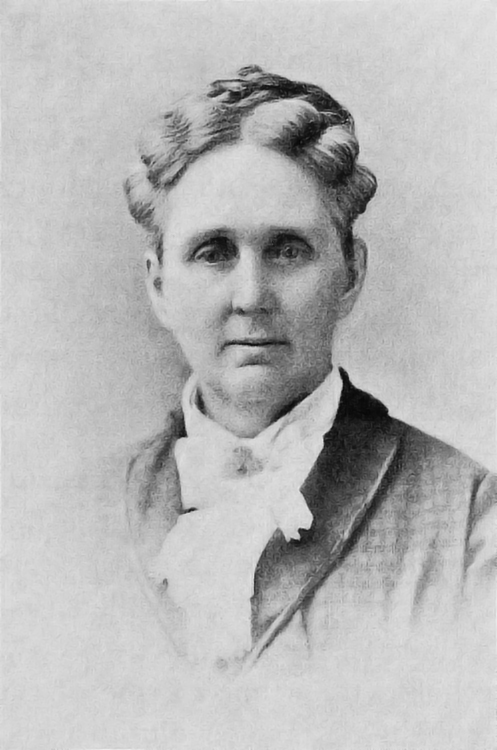
Valley Forge consists of acres of undulating countryside where General George Washington and some 11,000 Continental Army troops spent the winter of 1777-1778. Today, it is one of the nation’s most hallowed shrines. Few, if any, modern visitors recognize the woman who fought to save it, nor her heroic work as a nurse during the American Civil War.
Anna Morris Ellis was born in Muncy, Pennsylvania, on April 9, 1824. On September 26, 1848, she married William Hayman Holstein. At 38 years old, Anna became involved in the Union army’s war effort during the American Civil War after the battle of Antietam in September 1862. Her husband returning home after serving a 90-day enlistment, told of wounded men lying in barns and fields around Sharpsburg, Maryland because there weren’t enough medical corpsmen. Despite an overhaul to the Union Army of the Potomac’s Medical Department by Dr. Jonathan Letterman earlier that summer, the combined evacuation of the Virginia Peninsula from their failed late spring and summer campaigns and the Second Manassas campaign outside of Washington, D.C. in August had left this medical department in a state of chaos, confusion, and wholly unprepared to meet the medical needs of such another large scale engagement as Antietam. Anna and her husband William immediately left for the Antietam battlefield in response to the distressing scenes he had painted for her.
Anna Morris Ellis Holstein
The Holstein’s served for months around the Antietam battlefield, caring for the sick and wounded. Their role as post-battle caretakers continued just a month after the battle of Gettysburg when the large army field hospital of Camp Letterman opened just east of the borough on the York Road. This time, however, Anna was already numbed to the scenes of shattered limbs and the despondently ill wearied from disease. By this time her husband had secured a position with the U.S. Sanitary Commission which also setup at Gettysburg to aid the wounded and sick in the wake of the battle. That agency, along with the U.S. Christian Commission, offered supplies and personages to aid in the aftermath of not only Gettysburg, but other battles in the final years of the war.
Anna’s role for caring for those soldiers left behind by both armies was significant. She was made matron-in-chief of Camp Letterman by Dr. Cyrus Nathaniel Chamberlain, which, under her and Chamberlain’s care, attended to over 3,000 wounded soldiers. Anna continued to work at Camp Letterman until it closed on November 19, 1863. Later that day, both her and her husband sat on the platform near Abraham Lincoln while he delivered the Gettysburg Address. Following her work at Gettysburg, Anna continued to nurse the sick and wounded back to health. By the end of the Civil War in 1865 and into 1866, she worked as a matron in a hospital in Annapolis, Maryland, caring for returned prisoners of war that were sick or wounded.
In the post Civil War years, Anna turned to the preservation of the places and material culture from America’s first war for independence. She was no stranger to the importance of this era and the necessity of keeping the memory of those that served during that turbulent era alive for future generations. Anna’s great-grandfather was Capt. Samuel Morris. Morris was the captain of the First City Troop of Philadelphia when it served as George Washington’s body guard. Captain Morris was with Washington during the Ten Crucial Days and was on the field him at the battles of Trenton and Princeton. Morris even earned the sobriquet as leader of the “fighting Quakers.” Anna’s grandfather, Richard Wells, also served the American cause. He was commissioned to provision the U.S. fleet on the Delaware River during the revolutionary war.
One of her first missions was to save and restore George Washington’s Virginia estate, Mount Vernon. The home had fallen into significant disrepair, with the recent war years only aiding to its material decay. Both Anna and her husband, who also had strong ancestral ties to the War for Independence, were among the first to promote the struggles at Mount Vernon, the necessity for saving it, and the fundraising to back those plans. It was her skills in fundraising so successfully for Mount Vernon that led her to be named as regent for the Valley Forge Centennial and Memorial Association. Anna also was one of the founders, and also named regent as well, of the Valley Forge Chapter of the D.A.R.
By 1878, The Centennial and Memorial Association of Valley Forge, was incorporated in Montgomery County, Pennsylvania. Once incorporated, she led the charge as regent to save, acquire, restore and preserve General Washington’s Valley Forge Headquarters and surrounding acreage as parcels became available. Much needed funds for this charge would be needed, however. On June 19, 1878, to commemorate the 100th anniversary of the Continental Army marching out of Valley Forge, the Association held a large, organized event. With the funds generated from the anniversary commemoration, the Association was able to not only purchase General Washington’s Headquarters, but also additional acreage around the farm complex. They were also able to purchase original artifacts to place in the home, begin renovations to restore the home back to its 1777-78 appearance, and plant a tree from Washington’s Mt. Vernon on the property.
By 1893, when the Commonwealth of Pennsylvania assumed control of the camp sites and headquarters at Valley Forge, with Anna credited as the person “to whom the Nation is indebted more than any other” for her tireless efforts to ensure this national shrine was preserved and protected in perpetuity. Decades later, the National Park Service would assume ownership and operational leadership of the park from the state of Pennsylvania.
Anna and William’s home still stands in King of Prussia, Pennsylvania today at 211 Henderson Road. In 2021 the Pennsylvania Historical and Museum Commission placed a marker at the entrance drive to the home. Anna’s work at saving material culture from the Revolutionary War and ensuring the legacy of the veterans of that conflict lived on was vast. Hopefully this small summation of her activities inspires others to dig deeper into her efforts.
I chose the long way to Revolutionary War history. Part of it can be blamed on the co-founders and early bloggers on ERW. They convinced me, a Civil War historian, to come to the “dark side,” and study the more pivotal, more complex, and more important era in American history. And thus I joined this merry band and “threw in” to start learning more about our turbulent founding. I can’t say that I am a master of this domain yet, but I’ve come a long in several years.
Today, however, as I walked through one of our country’s national cemeteries, one that does not have any dead from our War for Independence, I began thinking about the American consciousness and the path toward someone’s interest in our military history. I began by reflecting on my own experience and why I was drawn to study the Civil War. Certainly, visiting Civil War battlefields as a young child with a toy musket and kepi sold me easily enough to want me to pursue this field of study as a future career. But maybe it was also the impact of visual media. I could see my childhood heroes in pictures taken at the time, the wreckage of the battlefield, and the plight of dead and dying soldiers on those fields and at field hospitals.
So maybe the Revolutionary period does not garner the attention that study of later wars does as it lacks photographs, and for later conflicts, film, film with sound, and live frontline reporting on tv and the internet. But time may also factor into the perception of interest levels. Iraq, Afghanistan, Desert Storm, and Vietnam veterans are still with us, and although their numbers are marching into history, the Korean War and World War II generations. Their presence in our society makes the conflicts in which they served seem not so long ago, rather, more like recent history. As a public historian, however, when I have discussions regarding World War I and the Civil War it’s viscerally noticeable that modern society has a harder time making tangible connections to these moments in American history. It simply seems much further into the past, a long, long time ago to them. Maybe because there are no longer any living veterans from these wars. Bringing the Revolutionary War into the discussion only makes it seem even more remote from present day. The general public’s perception of time when thinking of this era might as well be the Dark Ages, but it is not even 250 years old yet. We are still a country in its infancy by world comparison. Thus, it’s a harder “sell” to the masses to become involved or interested in the Revolutionary War era outside of a cast of a few prominent characters, George Washington among the very top of that list.
Since April 2023, however, I have been on a crusade to change that thinking as I work with the public. The Revolutionary War was not that far away, and although we only have paintings and sketches from the war rather than photographs and live action film, it is enough to spark an interest and deeper appreciation and understanding. Perhaps, though, it is the tangible reminders of the war that can once and for all disprove the notion that this period is too far removed into the past to be relevant, worth note, or even remembrance.
Nearly eighteen months ago I stood on the battlefield of Camden, fought August 16, 1780. I watched as horsedrawn caissons returned the remains of twelve Continental soldiers of the Maryland and Delaware regiments, one British Loyalist of a North Carolina regiment, and one Scottish Highlander, 71st regiment back to the battlefield. The remains had been discovered earlier in 2022. After a moving ceremony, among a massive crowd gathered to pay their respects, I was able to walk among the flag draped coffins, made of wood from the battlefield itself. I was standing mere inches from soldiers that had given their lives on that field 243 years earlier. The vail of time instantly dropped at that stark realization. The Revolutionary War was not far into the past, hemmed in among long lost American decades. Rather it was right in front of me, in the present, in the now. You could further walk the battlefield that April weekend. Four white flag markers denoted the four corners of where each set of remains were found on the battlefield. You could literally see the battle unfold before you, and now lay witness to where these men had died and fell all those years before.
I have had many powerful experiences at historic sites of the years. Standing or walking in the footsteps of historical giants, visiting gravesites, being present on anniversaries of important moments. But no experience was as powerful as this day. And so, on this day, I reflect on the battle of Camden, South Carolina. I reflect on that April day. And I reflect on the unfinished work that lay ahead during the 250th anniversary commemorations of the Revolutionary War as public historians. We must rededicate ourselves “to the great task remaining before us” to bring these pivotal, complex, and important moments of this era back into the American consciousness and to ensure it remains ever present for the next 250 years.
December 16, 1773, was deep into the rear-view mirror. A new year had begun, and February 1774 lay close to the horizon. Yet, for the British Parliament, the events of what later became known as the Boston Tea Party were still very much breaking news. Word had just reached London of what had happened in Boston. Now, how would the Crown and those in parliamentary power react to this shocking news?
Most contemporary sources of the period, as well as a litany of works in the historiography of the subject, contend that Britian’s reaction to what happened in December 1773, and thus their course in handling the situation in 1774, was done so prematurely and without much rational debate and discussion. Historian Jon Ferling suggests, “the myth arose that its government, under Prime Minister Frederick, Lord North, had acted in haste.” The myth had grown during the numerous setbacks the British later suffered during the war itself. And, in the wake of their ultimate defeat, many contemporaries across the pond argued that Britain’s leaders, “had failed to comprehend the gravity of the challenge,” i.e., using the military might of their nation to quell the rebellious colonies in 1774.
If one was to examine the proceedings of Parliament during this period 250 years ago, however, they would not find hasty decisions being made based on emotional reactions to the news out of Boston the previous month. This is especially so when the use of the country’s military resources was debated as an option to deal with the rowdy and disobedient Bostonians. Nothing could be farther for the truth contends Ferling, noting that the use of their military to enforce Crown law in the colonies began in the opening days of 1774, even before the throwing of the tea reached London. Not only was this thought discussed and debated in Parliament, but the reactions the colonists would have was also heavily considered. Some openly debated that such a strong application of Britain’s military in Boston, the Massachusetts Colony, and other coercive actions, may indeed spark yet another war in North America. These arguments were then quickly followed by questions of whether Britian could win in another conflict on this continent so soon after the French and Indian War; a conflict that had drained Britain’s finances and depleted her military ranks.
As January 1774 concluded 250 years ago, and February was just days away, these larger questions on how Parliament and the Crown should react to the Boston Tea Party and course-correct those in colonies in open rebellion against Britain were continually debated. It was not until March 1774 that a decision was made. North, and thus Parliament, opted to avoid the potential for outright war by utilizing their military might first. Instead, they chose a route of punitive measures, the Coercive Acts (also known as the Intolerable Acts). As part of this legislation, certain parts would solely focus on Massachusetts as punishment for the events of December 16, 1773, in Boston. These acts also included closing Boston Harbor until the destroyed tea’s worth had been repaid, and Gen. Thomas Gage, commander of the British Army in America, installed as the colonial governor of Massachusetts. Gage contended that these refractory Bostonians would “be lions while we are lambs; but if we take the resolute part, they will prove very meek, I promise you.”
In the end, however, this course of action was not made in haste at all, but rather after nearly four full months after the throwing of the tea in Boston harbor. And, one could argue that North and Parliament initially sought to refrain from the sole use of Britain’s military might, rather opting for legislative settlement to the issues that arose from Massachusetts. But, as history played out 250 years ago in 1774, as historian Ferling contends, “Britain, of course, miscalculated hugely.”
Henry Knox received much of the glory and distinction in the Knox family during the war years. Yet, his wife, Lucy Knox, had much to say to her husband regrading the future if the war effort turned out successfully for the colonies. Lucy, a daughter of loyalists who ultimately sailed for England at the start of war, remained in Boston, Massachusetts while her husband rode off to war and Washington’s army. Much of her correspondence to Henry during the war focused on events in and around Boston, news from the various battlefield fronts that had reached the city, the family business, and many other assorted topics. But, she also made sure to remind Henry that upon his return home, he would no longer be in command, nor have a generalship around the house; rather he would need to be willing to share “equal command” within the household.
The following letter, written on August 23, 1777, finds Lucy at home, slowly recuperating from a days-long illness. Wanting to hear more of her daily routine while he was gone, she obliged Henry’s request to write about the ebb and flow of her life at home each day. She notes her solitary lifestyle now that both her parents are gone as well as her husband but shares with him the comfort she finds when opportunity allows to spend time with friends. Lucy, like many other wives and families left behind on the homefront fears that she may be forgotten during his extended time with the army. Then, Lucy shifts to news from the war front and requests information regarding several in the army in which Henry might know. It is also evident, as the letter draws to an end, that inflation on goods, and subsequent supply thereof, has led her to need more money from her husband in which to purchase linen.
I wrote you a line by the last post just to lett you know I was alive which indeed was all I could then say with propriety for I [struck: then] had serious thoughts that I never should see you again – so much was I reduced by only four days illness but by help of a good constitution I am surprisingly better today – I am now to answer your three last letters in one of which you ask for a history of my life. it is my love so barren of adventures and so replete with repetition that I fear it will afford you little amusement – however such as it is I give it you – In the first place, I rise about eight in the morning (a lazy hour you will say – but the day after that, is full long for a person in my situation) I presently after sitt down to my breakfast, where a page in my book, and a dish of tea, employ me alternately for about an hour – when after seeing that family matters go on right, I [struck: repeair] repair to my work, my book, or my pen, for the rest of the forenoon – at two oclock I usually take my solitary dinner where I reflect upon my past happiness when I used to sitt at the window watching for my Harry – and when I saw him coming my heart would leap for joy – when he was all my own and never happy from me when the bare thought of six months absence would have shocked him – to divert these ideas I place my little Lucy by me at table – but the more engaging her little actions are so much the more do I regret the absence of her father who would take such delight in them. – in the afternoon I commonly take my chaise, and ride into the country or go to drink tea with one of my few [struck: acquaintance] [inserted: friends]. They consist of Mrs Jarviss Mrs Sears Mrs Smith Mrs Pollard and my Aunt Waldo – I have many acquaintance beside these whom I visit but not without ceremony – when with any of [inserted: the] former I often spend the evening – but when I return home – how shall describe my feelings to find myself intirely alone – to reflect that the only friend I have in the world is at such an imense distance from me – to think that [inserted: he] may [inserted: be] sick and I cannot assist him ah poor me my heart is ready to burst, you who know what a trifle would make me unhappy, can conceive what I suffer now. –
when I seriously reflect that I have lost my father Mother Brother and Sisters – intirely lost them – I am half distracted true I chearfully resigned them for one far dearer to me than all of them – but I am totaly deprived of him – I have not seen him for almost six months – and he writes me without pointing out any method by which I may ever expect to see him again – tis hard my Harry indeed it is I love you with the tenderest the purest affection – I would undergo any hardships to be near you and you will not lett me – suppose this campaign should be like the last carried into the winter – do you intend not to see me in all that time – tell me dear what your plan is –
I wrote you that the Hero Sailed while I was at Newburg – She did but has [jnserted: been] cruiseing about from harbour to harbour since – to get met – she is now here, and will sail in a day or two for france –
I wish I had fifty guinies to spare to send by her for necessarys – but I have not – the very little gold we have must be reserved for my Love in case he should be taken – for friends in such a case are not too common. – I am more distressed from the hott weather than any other fears – God grant you may not go farther south’ard – if you should I possitively will come too – I believe Genl Howe is a paltry fellow – but happy for as that he is so – are you not much pleased with the news from the Northard we think it is a great affair and a confirmation of StClairs villainy baseness – I hope he will not go unpunished – we hear also that Genl Gates is to go back to his command. – if so Master Schuyler, cannot be guiltless – it is very strange, you never mentioned that affair in any of your letters –
What has become of Mrs Greene, do you all live together – or how do you manage – is Billy to remain with you payless or is he to have a com[inserted: m]ission – if the former I think he had much better remained where he was – if he understood business he might without a capital have made a fortune – people here – without advanceing a shilling frequently clear hundreds in a day – such chaps as Eben Oliver – are all men of fortune – while persons – who have ever lived in affluence – are in danger of want – oh that you had less of the military man about you – you might then after the war have lived at ease all the days of your life – but now I don’t know what you will do – your being long acustomed to command – will make you too haughty for mercantile matters – tho I hope you will not consider yourself as commander in chief of your own house – but be convinced tho not in the affair of Mr Coudre that there is such a thing as equal command – I send this by CaptRandal who says he expects to remain with you – pray how many of these lads have have you – I am sure they must be very expensive – I am in want of some square dollars – which I expect from you to by me a peace of linen an article I can do no longer without haveing had no recruit of that kind for almost five years – girls in general when they marry are well stocked with those things but poor I had no such advantage –
little Lucy who is without exception the sweetest child in the world – sends you a kiss but where [inserted: shall] I take it from say you – from the paper I hope – but dare I say I sometimes fear [struck: what] [inserted: that] a long absence the force of bad example may lead you to forget me at sometimes – to know that it ever gave you pleasure to be in company with the finest woman in the world, would be worse that death to me – but it is not so, my Harry is too just too delicate too sincere – and too fond of his Lucy to admit the most remote thought of that distracting kind –away with it – don’t be angry with me my Love – I am not jealous of you affection – I love you with a love as true and sacred as ever entered the human heart – but from a diffidence of my own merit I sometimes fear you will Love me less – after being so long from me – if you should may my life end before I know it – that I may die thinking you wholly mine –
Peter Kiteridge was born into slavery in Boston, Massachusetts and worked in the household of the Kittredge family, from Andover, Massachusetts. Although slavery is most often associated with the southern colonies, and later the southern states, it was an established institution across the the thirteen original colonies at the time of the American Revolution. Despite being born into the institution legalized in the colony in which he lived, African American Peter Kiteredge cast his lot with those fighting for the cause of independence. The Kitteridge family had as well. Many in the extended family of Kittredges were physicians, and Dr. Thomas Kittredge went on to serve as as surgeon for Colonel James Frye’s regiment (Essex County Regiment) that was raised in Andover. In May 1775, the regiment became part of the Army of Observation. During the war, Peter Kittredge served in Captain William H. Ballard’s company of Colonel James Frye’s regiment. Peter joined the army in 1775 or 1776, according to his memory over thirty years later, and served for five years in the army before later becoming a sailor.
By the early 1800s, Peter Kiteridge was struggling both with his finances and his health. In this letter dated April 26, 1806, he noted that he is a freeman and in need of financial assistance. This document reveals much more about Peter, including the time between when he was a slave and when he went into military service. But the heart of Kiteridge’s letter was his request for assistance from the Selectmen of the town of Medfield. Due to a “complaint” that he had suffered since the war, perhaps the lingering effects of a disease contracted during his time in the service, Peter was unable to continue to work, and he asked for help to support his wife and four children. Because he later signed this petition with an “X” we can assume that his years as a slave left him illiterate. By the turn of the century, however, he was not the only veteran of the Revolutionary War that needed financial assistance. As this generation of servicemen aged, a growing demand for what later became known as veteran pensions increased. Today, veteran pension records, and petitions for assistance such as this, provide scholars a wealth of information on those that lived and served during this turbulent period.
Below you will find the full petition of the Medfield Selectman of April 26, 1806 courtesy of the Gilder Lehrman Collection.
“Gentlemen
I beg leave to state to you my necessitous circumstances, that through your intervention I may obtain that succour, which suffering humanity ever requires. Borne of African parents & as I apprehend in Boston, from whence while an infant I was removed to Rowley and from thence again to Andover into the family of Doct. [Thom] Kiteridge, with whom as was then the lot of my unfortunate race, I passed the best part of my life as a slave. [struck: At the age of twenty five] In the year of our Lord 1775 or 6 & in the twenty fifth of my age I entered into the service of the U.S. as a private soldier where I continued five years [inserted: and] where I contracted a complaint from which I have suffered in a greater or less degree ever since & with which I am now afflicted. After leaving the army to become a sailor for two years; when I quited the sea & resided for some time in Newtown, from whence I went to Natick where I remained for a short time & then removed to Dover where I [struck: remained] [inserted: carried] as a day labourer during the period of seven years. Eight years past I removed to the place where I now live, & have untill this time, by my labor, assisted by the kindness of the neighbouring inhabitants been enabled to support myself and family. At present having arrived [2] at the fifty eight year of my life and afflicted with severe and as I apprehend with incurable diseases whereby the labour of my hands is wholly cut off, and with it the only means of my support. – My family at this time consists of a wife and [struck: three] four children, three of whome are so young as to be unable to support themselves and the time of their mother [struck: has] is wholy occupied in taking cair [sic] of myself & our little ones – thus gentlemen, in this my extremity I am induced to call on you for assistance; not in the character of an inhabitant of the town of Westfield, for I have no such claim, but as a stranger accidently fallen within your borders, one who has not the means of subsistence, & in fact, one, who must fail through want & disease unless sustained by the fostering hand of your care.
I am Gentlemen your mos obedient, most humble servant.
Peter Kiteredge His X Mark
Attent. Ebenezer Clark Paul Hifner
To the policemen Selectmen of the Town of Medfield. [docket] Medfield 26 April 1806 [docket] Peter Kittridge application – [address] To the gentlemen Select [Men] of the Town of Medfield – “
Sitting down to write on September 9, 1786 from Mount Vernon, George Washington addresses his letter to Virginian, veteran of the late revolution, and plantation owner John Francis Mercer. Mercer’s family had strong ties to Virginia and the Washington family, John’s father was Washington’s attorney for many years during the eighteenth-century. Even though John had married, moved, and settled in Maryland, the two continued to correspond, although this most recent response by Washington took much longer usual. When Mercer’s letter arrived to Mount Vernon several weeks earlier, Washington was able to do little as he was fighting a “fever.” Now, he sat down to reply, and although there were many topics on his mind in which he wished to discuss with Mercer, Washington’s feelings toward slavery were first on his mind.
At the time Washington composed his thoughts to Mercer, particularly on his plan to never purchase another slave, Washington owned approximately 277 slaves. Yet, he expressed his desire to slavery abolished through the gradual abolition of slavery. Washington was a man of principle, displayed time and again during the war, and his aversion to the institution only grew as Washington the man grew as well. And, his was not alone. Many founders of era, including many from the upper South, looked for gradual solutions to ending the institution, despite the modern historical narrative. In the end, Washington ensured the emancipation of his slaves following his wife’s death in his will.
Gov. John F. Mercer, circa 1803.
Mount Vernon 9th. Sep 1786
Dear Sir,
Your favor of the 20th. ulto. did not reach me till about the first inst. – It found me in a fever, from which I am now but sufficiently recovered to attend to business. – I mention this to shew that I had it not in my power to give an answer to your propositions sooner. –
With respect to the first. I never mean (unless some particular circumstances should compel me to it) to possess another slave by purchase; it being among my first wishes to see some plan adopted by, [inserted: The Legislature by] which slavery in this Country may be abolished by slow, sure, & imperceptable degrees. – With respect to the 2d., I never did, nor never intend to purchase a military certificate; – I see no difference it makes with you (if it is one of the funds allotted for the discharge of my claim) who the the purchaser is [2] is. – If the depreciation is 3 for 1 only, you will have it in your power whilst you are at the receipt of Custom – Richmond – where it is said the great regulator of this business (Greaves) resides, to convert them into specie at that rate. – If the difference is more, there would be no propriety, if I inclined to deal in them at all, in my taking them at that exchange.
I shall rely on your promise of Two hundred pounds in five Weeks from the date of your letter. – It will enable me to pay the work men which have been employed abt. this house all the Spring & Summer, (some of whom are here still). – But there are two debts which press hard upon me. One of which, if there is no other resource, I must sell land or negroes to discharge. – It is owing to Govr. Clinton of New York, who was so obliging as to borrow, & become my security for £2500 to answer some calls of mine. – This sum was to be returned in twelve [3] twelve months from the conclusion of the Peace. – For the remains of it [struck: this sum], about Eight hundred pounds york Cy. I am now paying an interest of Seven prCt.; but the high interest (tho’ more than any estate can bear) I should not regard, if my credit was not at stake to comply with the conditions of the loan. – The other debt tho’ I know the person to whom it is due wants it, and I am equally anxious to pay it, might be put of a while longer. – This sum is larger than the other
“The Importance of the North River (the Hudson), and the sanguine wishes of all to prevent the enemy from possessing it, have been the causes of this unhappy catastrophe.” So wrote General George Washington in 1776 as the British invaded New Jersey. Worse was to come, as the British overran the state, and the Americans suffered one unhappy catastrophe after another.
Central New Jersey witnessed many small battles and important events during the American Revolution. This area saw it all: from spies and espionage, to military encampments like Morristown and Middlebrook, to mutinies, raids, and full-blown engagements like Bound Brook, Short Hills, and Springfield. The British had their own catastrophes too. So did civilians caught in the middle.







 Emerging Revolutionary War Era