
Lexington Green
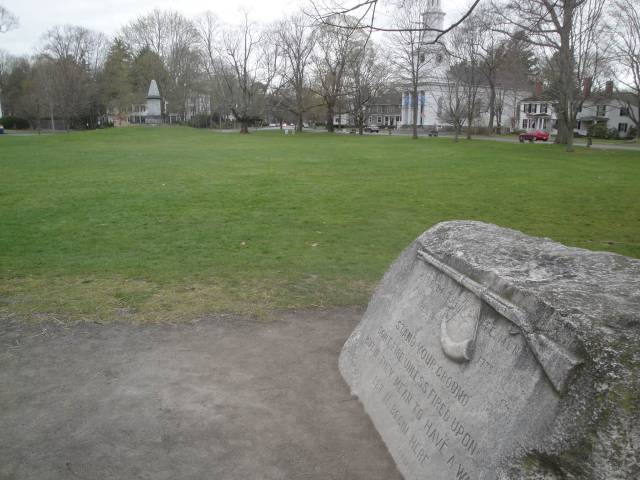
242 years later, the question still remains….
Who fired first?

Lexington Green
242 years later, the question still remains….
Who fired first?
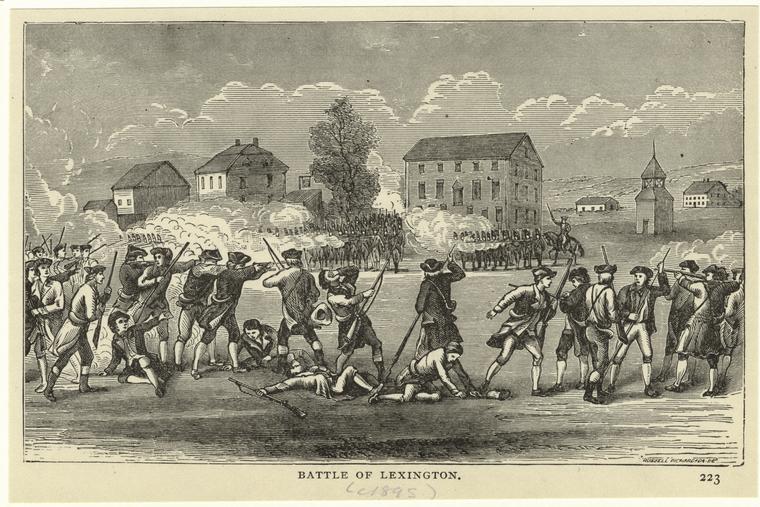

Finally, Gage put his plan into motion. The previous excursions taught him that this needed to be a quick strike, and secrecy was essential. Gage planned on a mixed force of elite Grenadiers and Light Infantry, picked from the several regiments in Boston. The Grenadiers were known to be fearless fighters and of big stock. While the Light Infantry tended to be smaller, they were less equipped so they could move fast. Both types of infantry were considered some of the most trained and effective troops. One possible problem was that these companies never served together since they were pulled from their various regiments. This could cause command issues if forced into combat. In command of these nearly 700 men, Gage placed Lt. Col. Francis Smith. Smith, a senior officer in the 10th Regiment of Foot, was chosen because he was cautious, prudent, and would not act rashly. Gage knew this was a precarious mission and wanted a level-headed man in command. Smith, one of the more overweight officers in Gage’s command, was not a dynamic leader. His ability to be flexible and think on the fly was questionable. Smith’s second in command was Maj. John Pitcairn of the Royal Marines. Pitcairn was considered a sharp officer and actually respected by many in Boston, even the Patriots.
Gage’s orders to Smith were direct. He was to march to Concord “with the utmost
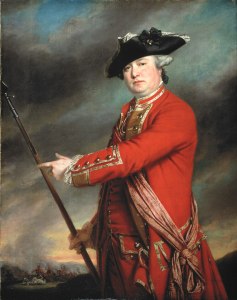
expedition and secrecy to Concord, where you will seize and destroy all the artillery, ammunition, provisions, tents, small arms and all military stores whatever.” Gage also wanted to be sure the soldiers respected private property; their issue was with the rebels and their leaders, not the private citizens. They were also not to fire on any militia they encountered unless they were fired upon first. Gage knew that there might a possibility that armed militias would meet Smith’s force somewhere along the way as they had done previously in Portsmouth and Salem.
Left out of Smith’s orders were the capture of the Patriot leaders. One can only surmise why Gage did not carry out this directive from Dartmouth, but Gage knew the situation in Massachusetts better than his superiors. He might have wanted to avoid creating martyrs for the Patriot case. In either case, the men would cross Back Bay on long boats provided by the Royal Navy. From there, they would land at Lechmere Point and march through Cambridge, Menotomy through Lexington and to Concord. The other possible route, over the Boston neck, was deemed more hazardous and open to potential ambushes. The column wanted to keep its final destination a secret and crossing via water could possibly confuse the Patriot riders and spies that were surely out in the countryside after the first two false alarms that spring.
To try to prevent the Patriot riders from spreading the alarm, Gage ordered out a patrol of 25 men on April 18th to ride in the direction of Concord to cover all the major roads and intersections. As Gage told Smith, these men were “ordered out to stop all advice of your march getting to Concord before you.” Unfortunately, these men raised more suspicion than anything else. Locals began to wonder why these British men on horseback were out on patrol. Though these patrols did capture a few Patriot riders that night, they created more harm than good and added to the Patriot sense that something was about to happen on the night of April 18th.
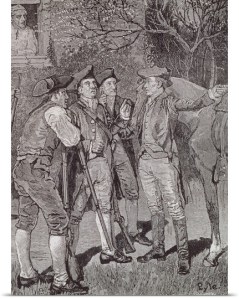
The precision and preciseness of the Patriot and Sons of Liberty spy network was proven on the night of April 18th. Gage, proud of his highly guarded secret, found out quickly through some of his junior officers, that the mission was not a secret. Many of the men did know their “secret” destination was Concord. How this information was released is lost to history. Some argue Gage’s wife, Margaret, might have informed Dr. Joseph Warren about the expedition. Margaret, a native of New Jersey might have had possible sentimental feelings towards the Patriots. However, there is no hard evidence that she betrayed her husband. What is known is that Warren did have informants close to Gage and, possibly through paid information, Warren was able to procure this important information. The Patriot leaders also had other clues that something was going to happen on the night of April 18th. The moving of all the Grenadier and Light Infantry companies from the barracks to the Boston Common, as well as the assembly of the Naval long boats on Back Bay notified the Patriots that the British were planning a move of some sort. Either way, as the British units were assembling on the Boston Common, the Patriot system of alarm riders was put into action.
The City of Boston is known for many things and history is one of them. There are many 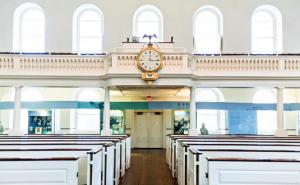 sites within the city that interpret the story of the beginning of the American Revolution. Many sites are along the famous and popular “Freedom Trail.” The Freedom Trail winds through the city and connects historic sites, churches, monuments, museums and cemeteries that focus on the story of 18th century Boston. The trail can be identified by a double brick pattern located in the sidewalk. The 2 ½ mile trail begins at Boston Common and ends at the Bunker Hill Monument. Several sites in this book are included in the Freedom Trail, but there are others that are just as important that are not on the path of the trail. All the locations for this section are in walking distance, though we highly encourage you to use public transportation as driving in Boston can be challenging. Most attractions/sites in Boston are conveniently served by the “T” subway system.
For your first stop, visit the Old South Meeting House located at 310 Washington St, Boston (GPS: N 42.357078, W 71.058578). Built in 1729, the Old South Meeting House was one of the largest buildings in Boston at the time. It was here where the public meeting was held on the night of the Boston Tea Party. Today the building serves as a historic site and museum. The small admission fee is worth the price to see this historic site which includes exhibits on the history of the church, Boston and the Boston Tea Party.
From the Old South Meeting House, you can take the route of the “Mohawks” to the next stop, the Boston Tea Party Ships and Museum. Take Milk Street (next to the Old South Meeting House) for three blocks and take a right onto Congress Street. After six blocks the Boston Tea Party Ships and Museum will be on your left as you cross the bridge over Fort Point Channel (GPS: N 42.352071, W 71.051369). The Boston Tea Party Ships and Museum includes interactive exhibits and experiences where visitors can help throw tea over board one of the recreated ships (the Eleanor and the Beaver). There is also a tea room, theater and film and gift shop. Hours vary depending on the season.
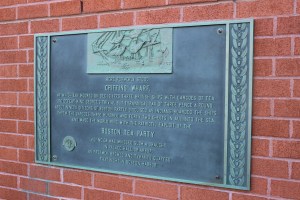 Due to the expansion of the Boston shore lines over time, the actual location of Griffin’s Wharf is not near the water today. Some argue it was at the foot of Pearl Street near the intersection of Pearl Street and Atlantic Avenue. There is a plaque commemorating the Boston Tea Party located on Seaport Boulevard. To see the plaque, take Atlantic Avenue and make a right onto Seaport Boulevard, the plaque is located on the building to the right near the bridge (GPS: N 42.354147, W 71.050977).
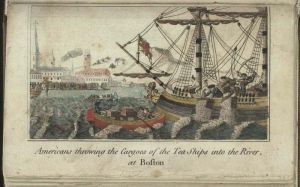 The town meeting held on the night of December 16, 1773 at the Old South Meeting House was no ordinary meeting. Boston was well known for its public meetings, but this one was different. Frequently city leaders called town meetings to discuss important political, economic and social decisions facing the city or colony. The town meeting was a foundation of the political process for Massachusetts and much of the New England colonies. Royal authorities had watched these meetings more closely since the 1760s during the opposition to the Stamp Act. Colonial Whigs (anti Royal leaders) had used these meetings to protest British policies that they saw as threats to their liberties.
This town meeting was a follow up assembly to previous meetings held in November originally called for Faneuil Hall. The large turnout, however, required the crowd to move to the more spacious Old South Meeting House. Nearly 5,000 people attended the meeting to discuss the city and colony’s response to a new tax on tea and more directly, the ships in the harbor that held tea from the East India Company. The colonial Whigs did not want the cargo unloaded but the captain of the ships could not leave the harbor with the tea unless they had approval from the Governor. Governor Thomas Hutchinson did not believe he had the authority to allow the ships to leave without unloading the tea. Adding to that decision, Hutchinson was more than frustrated with those who had rejected Royal authority over the years. Thus, a legal and theoretical standoff ensued. That night, the people of Boston took the matter into their own hands.
On the surface, the Tea Act of 1773 was rooted in helping pay off the debt of the British Empire, caused in part by fighting the Seven Year War (French and Indian War) with France. Also, the revenue raised would pay British officials in the colonies, thus making them more loyal to Parliament and the British Crown. The Tea Act was one of many Parliamentary laws or “Acts” passed to raise revenue in the colonies. More importantly, the underlying purpose was for Parliament to display their authority to pass laws that were binding on the British colonies. Due to colonial opposition and resistance, many of these acts were repealed. However, the Tea Act, passed in 1773, sparked an immediate response throughout the colonies.
The Tea Act was also seen as a mode for saving a British held company, the British East India Company. Before 1773, the company had to sell its tea in London and was subject to duties. The company had collected large quantities of tea in warehouses in London and was looking for a way to disperse the tea at a bargain. The Tea Act allowed the company to sell directly to American ports without paying the duties. This also forced American buyers to only purchase their tea from the East India Company, which was subject to a tax. The good news was the price of tea was reduced because the Company no longer had to pay the duties in London. Colonists resisted the notion that Parliament could force them to buy tea from the East Indian Company (many made a good living off of smuggled tea sales) and that they were required to pay a tax on the tea.
The popular notion, “taxation without representation,” had been around since the 1750’s and became well-known in 1764 in response to the highly unpopular Sugar Act and Stamp Act. Colonial Whigs believed they had no representation in Parliament because they did not elect representatives to Parliament. British political theory and law believed in the model of “virtual representation” which meant the colonists did not vote for individual members of Parliament though that body, as a whole acted in the best interest for all British subjects. Colonial leaders, who for decades were allowed to vote for their representative bodies in their respective colony, did not accept this theory. The opposing views on representation began to open opposition to British authority over colonial matters.
Though passed in May 1773, the Tea Act did not impact the people in the colonies until fall. Seven ships of tea were sent to four American ports, Boston, New York, Philadelphia and Charleston. Meanwhile, colonial Whig leaders began to organize a resistance to the East India Tea that was en route. In fact, in every other city but Boston the tea was refused and forced to either be returned to England or confiscated by local officials. It was in Boston that a determined governor and history of Royal opposition led to a signal event in American history.
On November28th, the ship Dartmouth arrived loaded with tea. British law gave ships with imports twenty days to pay the duties or the local custom officials could confiscate the cargo. Hutchinson, when petitioned, would not allow the ship to leave the port without paying the duty. His sons, who acted as the Tea Consignees (authorized to receive the tea and see to its distribution) for Boston, also refused to back down and resign their positions, which happened in other American ports. Soon two more ships arrived in the harbor with the unwanted tea. Unable to return the tea to England and without being able to unload the tea due to the threats of local groups such as the Sons of Liberty, the captains of the ships were in a tight and dangerous spot.
On the night of December 17th, one of the largest public meetings in Boston convened at the Old South Meeting House. Speeches by Sam Adams, John Hancock, Joseph Warren and other Boston Whig leaders called for the return of the tea to England. Later in the evening, word came that a last minute plea to Governor Hutchinson to let the ships return was refused. Sam Adams announced publicly, “This meeting can do nothing further to save the country.”
The events that happened next have been debated since 1773, soon men arrived outside the Meeting House disguised as Mohawk Indians. Whether or not these men were signaled to move towards the ships with tea is unknown. As the “Mohawks” marched down Milk Street towards Griffin’s Wharf where the three ships of tea were docked, the thousands gathered inside the Old South Meetinghouse began to pour out of the building. Chants of “Boston a Teapot Tonight” and “Hurrah for Griffin’s Wharf” were reportedly heard. Some people followed the “Mohawks”, others continued to protest in the streets, while still others headed home believing that a confrontation was about to take place.
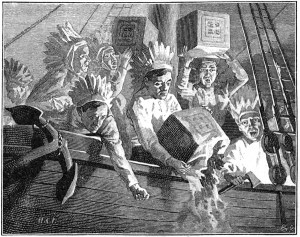 Many details remain unknown about who exactly the “Mohawks” were that marched on Griffin’s Wharf that night. The men used lamp soot and red ochre to disguise their faces and carried a wide assortment of weapons. As they made their way to the wharf, they yelled and “whooped” as Indians in a war party. If they had coordinated the timing with leaders in the Old South Meetinghouse, it is still unknown. The identities of most of these men either were never recorded or are lost to history; that is how tight their veil of secrecy was coupled with their sophisticated organization. As they made their way to the ships, the Whig leaders inside the Old South Meetinghouse stayed behind and were never directly part of what happened next.
The men, with a crowd behind them, approached the wharf. There they divided into three different groups, one for each of the ships, Dartmouth, Beaver and Eleanor. Being a port city, most of the men knew where to find the cargo they were looking for and how to operate on a ship. Respectively, most of the other cargo and private property on the ships were not touched. They were only after the tea. Hauling the chests to the deck, they were broken open and dumped into Boston Harbor. Some of the men watched to make sure no one was trying to steal any of the tea that they were dumping. The group of approximately 150 men worked quickly as the crowd of spectators grew.
The American Revolution did not just “happen.” It was the culmination of various events and acts that individually did not guarantee separation. As a collective, one can retroactively see how the accumulation of these events led to the inevitable. The Boston Tea Party was one of these events. This time it was different; this time Great Britain would respond in a way it never had before. The Tea Party gave the tinder box of revolution in America more fuel and many believed a small incident would cause a spark leading to open war between colonies and mother country. The spark would come on April 19, 1775 in the Massachusetts countryside.


“Minutemen” on April 19, 1775 at Lexington and Concord have always been grouped together in history and textbooks. But, is that completely historically accurate? Well, no. There is a common misperception that most of the Americans that went to arms on the morning of April 19, 1775 were “Minutemen.” This view has become part of American mythology and popular memory, referenced in most histories dealing with this April day. Despite all of this, the fact remains that many of the men who answered the call that day were not “Minutemen” at all.
The British colonies in North America had a long standing tradition of locally based military units. Most men between the ages of sixteen and thirty five were required to be part of the local militia and these units would meet periodically throughout the year for basic training. Many of these occasions became festive events for the local community. The colonial militia was called out often by the colonial governor to defend against Native American attacks or foreign invasions. Frequently, the militia would supplement a professional force for short campaigns. This was especially common in the French and Indian War, fought between 1756 and 1763.
But the militia was far from a professional and well trained force. Colonies, such as Massachusetts, began to create select companies of men chosen from the local militia regiment. These companies would train more often and be better equipped. They were to be the “elite” force of the militia. Also, these men would be required to respond to an emergency at a short notice. The rise of the “Minuteman” concept can be found as early as 1645. In response to an Indian tribe disturbance, the Massachusetts Council of War created a new regulation. This regulation ordered militia companies to “appoint out and to make choice of thirty soldiers of their companies in ye hundred, who shall be ready at a half an hour’s warning.” The need for a quick response force was already recognized by colonial leaders.
Though the idea of the “Minuteman” can be found in 1645 Massachusetts, the more popular idea of the “Minuteman” came from Worcester, Massachusetts. In 1774 the town was in the forefront of opposing Governor (and General) Thomas Gage’s efforts to enforce Royal authority. The Worcester County Convention passed new militia regulations that highlighted/reinforced how the populace was getting closer and closer to open confrontation with the British Crown. In these new regulations, the Worcester Convention called for “officers in each town of the county, to enlist one third of the men of their respective towns, between sixteen and sixty years of age, to be ready to act at a minute’s warning…” Thus the “Minuteman” was born.
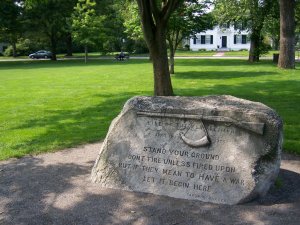
As events in Massachusetts spiraled into open confrontation between the Whigs (Patriots) and the Crown, every town in Massachusetts ramped up their military training of their militia and created “Minuteman” companies. These units became a source of local pride. Along with the militia forces, towns and counties created a complex network of communication via riders that could notify hundreds if not thousands of militia units of possible threats. As Gage began to use his growing military force in Boston to search for colonial military stores, these riders and “Minutemen” showed their effectiveness.
On the morning of April 19, 1775 riders rode out to a very well prepared countryside west of Boston. Paul Revere, William Dawes and many others connected each town with the news that the British regulars were marching on Concord to capture provincial military stores (and possibly capture colonial leaders). Militia and “Minutemen” by the hundreds began to arrive along the road from Cambridge to Concord.
The first Americans the British confronted on the road to Concord were members of Captain Parker’s Lexington Militia. These men, gathered the night before at Buckman’s Tavern in Lexington after an early warning, were still in the area in the early morning of April 19th as the vanguard of the British column neared Lexington. As they formed up in two lines on the Lexington Green, the British quickly came onto the Green to confront the armed colonials. What happened next set off a shockwave not just through Massachusetts, but the entire British colonies in North America. These first shots were fired by militia, not the famed “Minutemen.”
It is here in Lexington that the confusion and myth of the “Minutemen” was born. Several of the monuments around the Lexington Green are dedicated to the “Lexington Minutemen.” But the men on the green were typical militia; they ranged in age and skill levels. They were not highly trained like a “Minutemen” company.
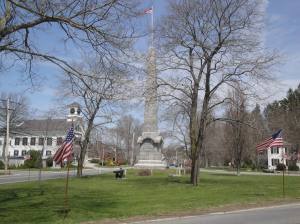
As the British made their way to Concord, Militia and “Minuteman” companies began to answer the well-traveled call that the British were marching on to Concord. After the skirmish at the North Bridge in Concord, more and more colonials answered the call and began to confront the British column as it made its way back to Charlestown. Thousands of militia and “Minutemen” made their way to the towns of Lexington, Menotomy, and Cambridge to confront the British. Because of the great response of these men, there was no turning back after April 19th.
The importance of the “Minutemen” cannot be exaggerated but neither can the importance of the militia. They were two distinct colonial military forces, both created with their own specific uses. In modern times, most wanted to attach their local story to that of the famed “Minutemen.” Though it is most likely that more militia turned out on April 19th than “Minutemen.”
Many monuments in Lexington, Concord and along Battle Road mention the “Minutemen” of 1775. Also, many of the sites associated with the events of April 19th are preserved by Minute Man National Park. I guess “Militia National Park” didn’t have as good of a ring to it.
Recommended Reading:
The Minute Men: The First Fight: Myths and Realities of the American Revolution by John Galvin
Part III of III
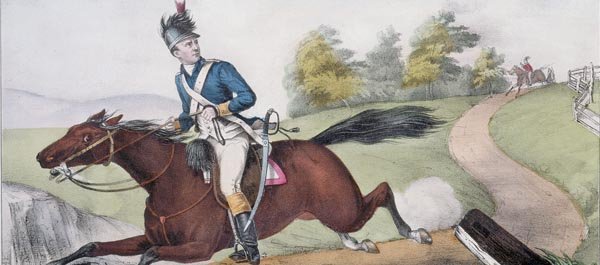
The past few months of John Champe’s life were probably the most memorable. In the fall he was asked to go on a mission to capture the recent traitor Benedict Arnold. The mission was ordered by George Washington himself and only known to Washington and “Lighthorse” Harry Lee. Champe, a trusted member of Lee’s Legion, was promised a promotion for undertaking the daring mission. He successfully fled from the American camp, gained the trust of British General Sir Henry Clinton and Arnold and was given a commission in Arnold’s Loyalist regiment. He worked with patriots in New York and recruited others to help him in his plan to kidnap Arnold. Now it was December and the next day was the day to kidnap Arnold and return him to Washington.
Then the day before the kidnapping was planned, Clinton set into motion a plan to finally use Arnold militarily. Arnold would take his Loyalist troops and some British regulars and invade the Virginia Capes. Virginia had largely dodged the hardships of war and Clinton believed this would be a great opportunity for Arnold to prove himself. With only Virginia militia located in the colony, Arnold should have no problem wreaking havoc on the Commonwealth.
These new developments ruined Champe and Lee’s plans. When Arnold got orders from Clinton, he moved his headquarters – one day before Champe was to carry out his plan. Furthermore, Champe was also moved to another part of New York and was not able to get word to Lee that the plan was off. Lee and his dragoons waited and waited at Hoboken with no sight of Champe. Soon Lee returned to camp without any word on what happened to Champe. Lee and Washington worried that the worst had happened and Champe was “discovered.”[i]

Champe soon found himself on a transport in New York harbor with Arnold’s “American Legion.” The destination was unknown to most of the men. Soon though Champe learned that he was to be part of an invasion force against his native state! The thoughts that must have gone through his mind; he had risked everything to capture Arnold – labeled a deserter and now he would have to go into battle against his fellow Virginians. The two week trip to the Virginia Capes must have afforded Champe plenty of time to ponder how close he was coming to succeeding and now what he was called upon to do.
Champe was involved in most of Arnold’s campaign against Virginia. He was part of the force that captured Richmond and found himself in several battles and skirmishes against his fellow Virginians. Arnold was replaced by Gen. William Philips and soon Cornwallis’s army joined Philips in Virginia in May 1781. Sometime after this, Champe was able to “escape” the British army and headed west to the Blue Ridge Mountains. Champe then worked his way south and finally by July he was back with Lee who was then with Nathaniel Greene’s army in the Carolinas. Lee was delighted to see his devoted cavalryman. Surely Champe and Lee had a lot to discuss.
Though Champe was promised a promotion, it was believed by Lee and Washington that it would be too dangerous for Champe to take the field again. If he was captured, the British would surely execute him as a spy. Champe was offered an unknown sum for a reward and headed back home to Loudoun County. His legendary adventure was over.

After the war, Champe did not seek fortune or fame from his exploits. He led a simple life and was a middle class farmer. He struggled to support his family and continuously looked for cheaper and more fertile land to the west. It was due to his desire for new land that he was on a trip looking at land near Morgan Town (modern day Morgantown, WV) in 1798 where he became ill and died. Washington did not forget Champe. In 1798 Washington was appointed by President John Adams commander of the American army in preparation for war with France. Washington called on Champe to be an officer in his army, only finding out that he had recently died.[ii]
Though Champe disappeared mostly from the history books in 1781, his family fought for nearly 100 years to gain the compensation that was due to Champe. Champe was never paid a pension nor given bounty lands that were owed to him for his service. Plus, his promised promotion was never given and they argued that the owed pension should be based off of the rank that was promised him personally by Washington. Unfortunately, the mission was so secret, that very few could confirm it. In petitions filed with Congress in 1818 and 1839, Champe’s widow was finally given a life time pension, though in an amount not reflecting his rank. Finally in 1847, a Congressional act provided for compensation in the amount of $1,200 to the heirs of John Champe and granted him the promotion that was promised to him by Washington. [iii]
Champe has remained a local hero in Loudoun County. In 1861, a local Confederate unit went off to war as the “Champe Rifles” (8th VA Infantry). In the early 20th century, the location of his home was marked with a small obelisk (reportedly made by stone from the foundation of the home). Today the monument sits on the south side of Route 50 a few miles west of Aldie.
In 2001, his grave was finally properly marked with a head stone and a full ceremony. Most recently Champe has been bestowed the highest honor a local hero can be given, a high school in his honor. John Champe High School was opened in Aldie in 2012 and one hopes that his name and legacy will be no longer be forgotten.
Lyrics from Sergeant Champe, ca. 1781
Come sheathe your swords! My gallant boys, And listen to the story, How Sergeant Champe, one gloomy night, Set off to catch the tory
[i] The Revolutionary War Memoirs of General Henry Lee; DeCapo Press, 1998, 409.
[ii] Ibid., 410.
[iii] Pension Application of John Champe W4153, National Archives and Records Administration
Part II of III

The rectitude of the decision John Champe made on that October night to “desert” his men and “join” the British must have weighed heavily on his mind as he approached the Hudson River. The mission, offered by “Lighthorse” Harry Lee, to capture the traitor Benedict Arnold was a serious one. The only hesitation Champe felt was how his reputation and honor would be injured by his desertion. No one but Lee and Washington could know the truth, the success of the mission counted on secrecy.[i]
As Champe reached the Paulus Hook area of the Hudson River, the details are murky. Some accounts have Champe jumping into a boat along the shore and pushing off into the river and rowing to a British war ship. Other claims have Champe clearing a British patrol along the river and escorted by the patrol to a nearby ship. [ii] Either way, Champe eluded his American pursuers and accomplished the first goal of his mission, to reach the British lines.
Lee, already having established a spy network, lined up a system of couriers to communicate with Champe. By October 25th, Lee had heard from Champe and wrote to Washington that “my friend got safe to New York; he was before Sir Henry Clinton and has passed all the forms of the garrison; he accidentally met General Arnold in the street which has paved a natural way for further acquaintance; the party entertains high hope of success…”[iii]
Clinton and Arnold expected many other American officers to be inspired by Arnold and

join the British army. Champe, a modest officer in a fabled unit was just the kind of man that Clinton wanted to attract. The fact that Champe was fleeing his own men who were in hot pursuit of him made the deception complete. Clinton questioned Champe about the condition of the American army and morale. Champe informed Clinton that other officers were sure to desert and Washington’s ranks were thinning with men heading home. Clinton soon trusted him to be a deserter and attached him to a unit of Loyalists that Arnold was raising.[iv]
Champe became close to Arnold and spent a lot of time with him. Champe spent a lot of time at Arnold’s headquarters at the King’s Arms Tavern on Broadway in New York City. He would take the next several weeks to study Arnold and his habits. Champe also watched for other deserters joining the British army in New York. The fear by Washington was that Arnold was acting with other American officers in defecting. Soon Champe realized that Arnold had acted alone in his treason.
Finally in early December Champe informed Lee that his plan was to kidnap Arnold one night as Arnold took his nightly walk in a garden next to his headquarters. Champe was even able to recruit fellow patriots to assist him in the kidnapping of Arnold. On the selected night, Champe would have a boat waiting for him at a nearby landing. He also had loosened some of the fence boards around the garden area so he could sneak Arnold out of the garden. After getting Arnold onto the boat, Champe would take him to Hoboken (western side of the Hudson River). There Lee and three of his dragoons would wait for Champe and his cargo. Washington insisted to Lee and then to Champe that Arnold was not to be harmed. Champe was sure of his success and spent days and weeks in planning the capture of Arnold. [v]
As the evening approached, everything was in place. He had earned the confidence of Clinton and Arnold. He was now a sergeant in the British army and spent countless hours preparing and making the necessary connections to fellow patriots in New York. The boat was prepared and waiting, Lee would be at Hoboken with his dragoons. Everything was in place to bring home the traitor Arnold.
[i] The Revolutionary War Memoirs of General Henry Lee; DeCapo Press, 1998, pg. 399.
[ii] “Sergeant John Champe and Certain of His Contemporaries”, William and Mary College Quarterly, April 1937, pg. 153.
[iii] Ibid., 154.
[iv] The Revolutionary War Memoirs of General Henry Lee; DeCapo Press, 1998, pg. 405.
[v] Ibid., 409.
Part I of III
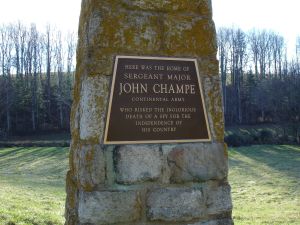
Along Route 50, west of Aldie, Virginia is a small obelisk in the middle of a cow pasture. Thousands of car drive by the marker, not knowing what it is or who it is for. Most people that come to this area of Virginia for history are interested in the American Civil War. In this region of Virginia the legendary John S. Mosby operated behind Union lines for two years. Also here were the hard fought cavalry battles that preluded the Battle of Gettysburg. But this monument doesn’t refer to anything in the Civil War. This monument commemorates a local American Revolutionary War hero. A man that has been mostly forgotten until recently.
John Champe was born in ca. 1755 from a family that was well established on Virginia’s Northern Neck. His family owned substantial land in King George, Stafford and Prince William Counties. At some point, his family moved to the Aldie region of Loudoun County, where John was born. The men of the Champe family were involved in the local militia and civil office as road builders. Though the family had substantial land holdings and slaves, John was one of many siblings and sought out his future with the military at the outbreak of the American Revolution.
John Champe enlisted as a private in the 1st Regiment, Virginia Light Dragoons in December 1776. Champe’s abilities were quickly noticed and saw himself promoted to corporal by 1778 and then a sergeant by 1779. Champe’s abilities were quickly noticed by his commander, Major “Lighthorse” Harry Lee. Lee described Champe as “rather above the common size – full of bone and muscle; with a saturnine countenance, grave, thoughtful and taciturn – of tried courage and inflexible perseverance.” [i] Though Champe might have quickly risen in the non-commissioned ranks, he desired more. His opportunity for promotion and a date with history came on September 27, 1780 at West Point, NY.
The treachery that took place on September 24th at West Point by once beloved American General Benedict Arnold is well documented. Arnold planned on turning over the fortress at West Point to the British (thus giving up the vital Hudson River). Arnold, receiving command of the post at West Point in August 1780, quickly reduced the viability of the fortifications by neglecting repairs and sending troops away from the post. Arnold’s treachery was not exposed until British officer, Major John Andre was captured, carrying on him copies of letters and Arnold’s plans. Luckily for Arnold, he learned on the morning of September 24th of Andre’s capture and he quickly fled to the HMS Vulture then on to safety in New York City.
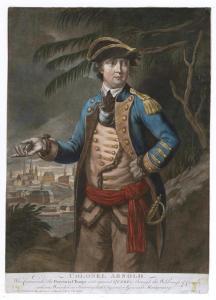 Washington also learned of Arnold’s treason on September 24th during his planned visit to West Point. Washington reportedly took the news calmly and began to investigate the depth of treason in his officer corps. Maj. Lee assisted Washington in his investigation, and both found no evidence of other American officers involved in the plot. Washington then turned to the capture of Arnold, and that is where our “hero” comes into the story.
In October of 1780, Washington looked to Lee to find someone in his talented cavalry command that could “defect” to the British and carry out an elaborate plan to capture Arnold. Calling Lee to his headquarters, Washington and Lee discussed the proposition of capturing Arnold and how to carry out such a plan. Lee was tasked with finding someone in his command that could successfully carry out the plan. Lee soon wrote to Washington that he had two men in mind, but his top choice was a sergeant in his cavalry unit
“The chief of the two persons is a sergeant in my Cavalry; to him I have promised promotion…if your Excellency approves of what is done, the sergeant will desert from us tomorrow; the sergeant is a very promising youth of uncommon taciturnity and inflexible perseverance…I have incited his thirst for fame by impressing on his mind the virtue and glory of the act.” [ii]
Washington quickly responded and agreed to Champe’s terms of promotion and soon the mission was hatched. Champe would desert to the British and only Lee and Washington would know about it. He would be labeled a traitor and his family name tarnished. If he was captured by the Americans, he would be executed and if he was exposed as an American spy to the British, he would also be executed. Champe accepted the risk and on the night of October 21st, Champe mounted his horse and made way for the Hudson River where he hoped to find either a British picket line or ship. With him Champe carried his orderly book, saddle bags and five guineas (provided to him by Lee).
Quickly Champe was challenged by an American patrol and he quickly fled,. This is exactly what Champe and Lee wanted, for the British to believe him, his desertion had to seem real. Soon the patrol reported to Lee about Champe’s departure. Lee delayed the pursuit, by first inquiring with other patrol members. Surely a man of Champe’s stature was not defecting. Soon though Lee knew he had to order a pursuit, he just hoped Champe had put enough distance between him and the Americans to make his escape.

Though Lee’s delay allowed Champe some time, it was not enough to break away cleanly. As Champe was making his way to the Hudson River, the American patrol was on his heels and calling for his halt. In front of him were British warships in the Hudson River and a British patrol on the banks for the river. Now was the time of decision, he could be shot dead by the British or captured and executed by the Americans. The plan to capture Arnold and punish the traitor was already at its first “Rubicon.”
[i] The Revolutionary War Memoirs of General Henry Lee; DeCapo Press, 1998, pg. 396.
[ii] “Sergeant John Champe and Certain of His Contemporaries”; William and Mary College Quarterly, April 1937, pg. 153.
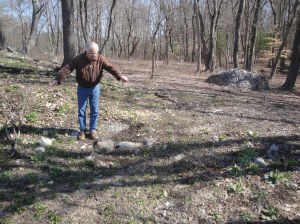
Recently, ERW members Phil Greenwalt and Rob Orrison spent the 241st anniversary of the opening of the American Revolution in the outskirts of Boston in Concord, Massachusetts. It was a whirlwind trip of research, photos and most importantly meeting the stakeholders in historic preservation and public history in the region. We already knew how active Concord was in promoting and preserving its history, but each time you visit you are blown away by their efforts and their appreciation for their past.
While in Concord, our more than gracious host was Jayne Gordon. Jayne has been involved in almost every public history project or initiative in the Concord area. A native of the area, everyone in Lexington and Concord knows Jayne. Jayne took the time to introduce us to many people and organizations in the area. I wanted to focus on two organizations that are doing great work in the region to promote local history with a national impact.
The Robbins House
Formerly the Drinking Gourd Project, The Robbins House is introducing people to the story of African Americans in the region. The all-volunteer board and staff are breaking new ground. Facing misconceptions of slavery in 18th century Concord head on, Robbins House President Maria Madison has led the charge to change the narrative.
The Robbins House is an early 19th century house that was inhabited by the first generation

of descendants of formerly enslaved African America Revolutionary War veteran Caesar Robbins. Using the story of Caesar Robbins as a base, Maria and her fellow volunteers interpret the role of African Americans in 18th and 19th century Concord. Most forget that 18th century Massachusetts was a colony that supported and practiced slavery. The Robbins House also interpret stories of how literary icons, such as Ralph Waldo Emerson and David Henry Thoreau, dealt with slavery and prejudice. Again, most visitors (including me!) have their preconceived notions challenged. The Robbins House also provides exhibits on other aspects of African American history of Concord, as well as lectures, programs and self-guided tours of Concord.
The Robbins House’s location next to the famous North Bridge provides an interesting juxtaposition on freedom and liberty. Just a few hundred yards away the dream of American freedom and independence began and the Robbins House is filling the void of how that liberty equated to a large portion of the American population. On your next visit to Concord, it is a worth your time and support. I really enjoyed my time meeting with Maria and look forward to future conversations and visits. Visit their website at for more information www.robbinshouse.org.
Friends of Minuteman National Park
Many of our readers are aware of the recent “Parker’s Revenge” project and preservation project with the Civil War Trust’s “Campaign 1776.” Also, I bet all of our readers are aware of Minuteman National Historical Park, but how many know about the great efforts of the Friends of Minuteman National Historical Park? I must admit, until my recent visit I include myself if that “unknowing” category. Jayne introduced us to Robert Morris, President of the “Friends,” and Bob spent a morning going over the organization and their recent efforts to promote new historic research, archaeology and restoration of the area known as “Parker’s Revenge” along the Battle Road.

“Parker’s Revenge” occurred on the afternoon of April 19, 1775 along the road between Concord and Lexington. Captain Parker, who earlier that day confronted the British on the Lexington Green, regrouped his militia and prepared for an attack on the British column as it made its way back to Boston. As they marched through Lincoln and approached Fiske Hill, Parker’s men opened up a deadly fire from behind rocks. Up until last year, historians have always interpreted the event to take place along the Battle Road next to the modern Minuteman National Historical Park Visitor Center. But now, thanks to fundraising and manpower efforts of the “Friends”, the history of “Parker’s Revenge” is being rewritten. With new archaeology, the area of “Parker’s Revenge” will be reinterpreted a few hundred yards west of the current location. Bob and his team of volunteers also plan to work with the National Park Service to assist in restore the historic landscape in the area.
The “Friends” also fundraise to support interpretation projects, grounds projects, and support the large volunteer corps at the park. One of the most important tasks for the organization is advocating on behalf of the national park. My morning spent with Bob and Jayne walking the newly discovered “Parker’s Revenge” battlefield was a highlight of my trip. Being one of the first people to walk the “new” battlefield and hear how the project developed was a special treat.
I highly recommend you follow along the many projects the “Friends” have on going to support Minuteman National Historic Park. They are always looking for new members, no matter where you may live. Visit their website at www.friendsofminuteman.org
Again, I cannot thank Jayne Gordon enough for showing me around Concord and sharing her passion for history. I appreciated my short time with Maria Madison of the Robbins House and Robert Morris of the Friends of Minuteman National Park. Both are breaking new ground and supporting preservation and interpretation of the events surrounding spring 1775. These are the people on the front lines and that meshes well with one of the established goals of Emerging Revolutionary War is to share and promote these public history organizations. They are instrumental in telling the story of the American Revolution.



 Often the study of history can ground us and make us feel less “unique.” This allows us to hopefully put our own experiences into perspective and be able to hopefully learn from lessons of the past. Many today complain about how print and social media can distort facts to support a particular agenda. This is not a modern phenomenon. Many in the Sons of Liberty (such as Paul Revere) used print media to their advantage to promote resistance to and then independence from Great Britain.
Many pro-Patriot newspapers printed nothing less than propaganda pieces after the battles of April 19, 1775. Here is part of what was printed by the Massachusetts Spy on May 3, 1775.
“Americans! forever bear in mind the BATTLE of LEXINGTON! where British Troops, unmolested and unprovoked wantonly, and in a most inhuman manner fired upon and killed a number of our countrymen, then robbed them of their provisions, ransacked, plundered and burnt their houses! nor could the tears of defenseless women, some of whom were in the pains of childbirth, the cries of helpless, babes, nor the prayers of old age, confined to beds of sickness, appease their thirst for blood! – or divert them from the DESIGN of MURDER and ROBBERY!”
Obviously a historic study of the events on April 19, 1775 disputes much of what is claimed by the Massachusetts Spy. But when you have a point to make, an agenda to promote and a local population to rally to a cause…why should truth get in the way?! We have come a long way since 1775, but in many ways not much has changed.

 Emerging Revolutionary War Era