

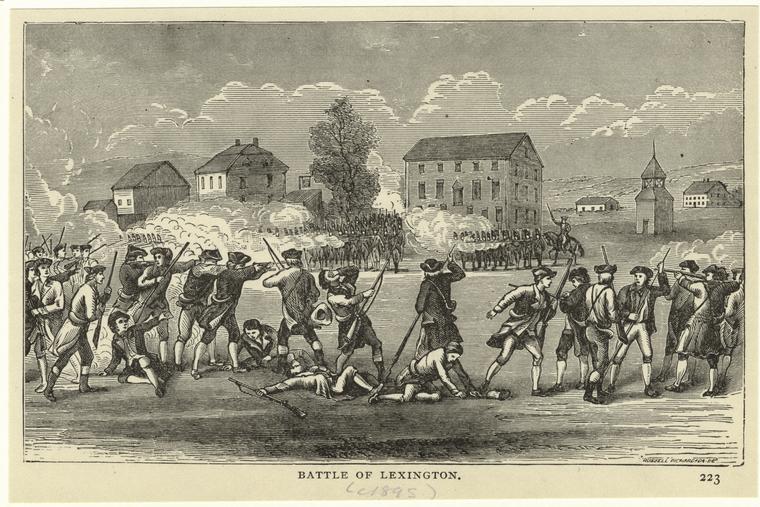

Finally, Gage put his plan into motion. The previous excursions taught him that this needed to be a quick strike, and secrecy was essential. Gage planned on a mixed force of elite Grenadiers and Light Infantry, picked from the several regiments in Boston. The Grenadiers were known to be fearless fighters and of big stock. While the Light Infantry tended to be smaller, they were less equipped so they could move fast. Both types of infantry were considered some of the most trained and effective troops. One possible problem was that these companies never served together since they were pulled from their various regiments. This could cause command issues if forced into combat. In command of these nearly 700 men, Gage placed Lt. Col. Francis Smith. Smith, a senior officer in the 10th Regiment of Foot, was chosen because he was cautious, prudent, and would not act rashly. Gage knew this was a precarious mission and wanted a level-headed man in command. Smith, one of the more overweight officers in Gage’s command, was not a dynamic leader. His ability to be flexible and think on the fly was questionable. Smith’s second in command was Maj. John Pitcairn of the Royal Marines. Pitcairn was considered a sharp officer and actually respected by many in Boston, even the Patriots.
Gage’s orders to Smith were direct. He was to march to Concord “with the utmost
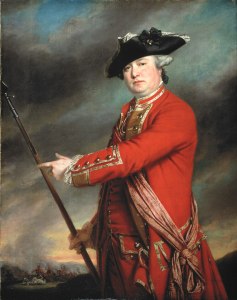
expedition and secrecy to Concord, where you will seize and destroy all the artillery, ammunition, provisions, tents, small arms and all military stores whatever.” Gage also wanted to be sure the soldiers respected private property; their issue was with the rebels and their leaders, not the private citizens. They were also not to fire on any militia they encountered unless they were fired upon first. Gage knew that there might a possibility that armed militias would meet Smith’s force somewhere along the way as they had done previously in Portsmouth and Salem.
Left out of Smith’s orders were the capture of the Patriot leaders. One can only surmise why Gage did not carry out this directive from Dartmouth, but Gage knew the situation in Massachusetts better than his superiors. He might have wanted to avoid creating martyrs for the Patriot case. In either case, the men would cross Back Bay on long boats provided by the Royal Navy. From there, they would land at Lechmere Point and march through Cambridge, Menotomy through Lexington and to Concord. The other possible route, over the Boston neck, was deemed more hazardous and open to potential ambushes. The column wanted to keep its final destination a secret and crossing via water could possibly confuse the Patriot riders and spies that were surely out in the countryside after the first two false alarms that spring.
To try to prevent the Patriot riders from spreading the alarm, Gage ordered out a patrol of 25 men on April 18th to ride in the direction of Concord to cover all the major roads and intersections. As Gage told Smith, these men were “ordered out to stop all advice of your march getting to Concord before you.” Unfortunately, these men raised more suspicion than anything else. Locals began to wonder why these British men on horseback were out on patrol. Though these patrols did capture a few Patriot riders that night, they created more harm than good and added to the Patriot sense that something was about to happen on the night of April 18th.
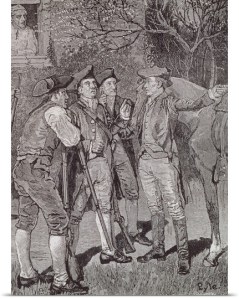
The precision and preciseness of the Patriot and Sons of Liberty spy network was proven on the night of April 18th. Gage, proud of his highly guarded secret, found out quickly through some of his junior officers, that the mission was not a secret. Many of the men did know their “secret” destination was Concord. How this information was released is lost to history. Some argue Gage’s wife, Margaret, might have informed Dr. Joseph Warren about the expedition. Margaret, a native of New Jersey might have had possible sentimental feelings towards the Patriots. However, there is no hard evidence that she betrayed her husband. What is known is that Warren did have informants close to Gage and, possibly through paid information, Warren was able to procure this important information. The Patriot leaders also had other clues that something was going to happen on the night of April 18th. The moving of all the Grenadier and Light Infantry companies from the barracks to the Boston Common, as well as the assembly of the Naval long boats on Back Bay notified the Patriots that the British were planning a move of some sort. Either way, as the British units were assembling on the Boston Common, the Patriot system of alarm riders was put into action.
 sites within the city that interpret the story of the beginning of the American Revolution. Many sites are along the famous and popular “Freedom Trail.” The Freedom Trail winds through the city and connects historic sites, churches, monuments, museums and cemeteries that focus on the story of 18th century Boston. The trail can be identified by a double brick pattern located in the sidewalk. The 2 ½ mile trail begins at Boston Common and ends at the Bunker Hill Monument. Several sites in this book are included in the Freedom Trail, but there are others that are just as important that are not on the path of the trail. All the locations for this section are in walking distance, though we highly encourage you to use public transportation as driving in Boston can be challenging. Most attractions/sites in Boston are conveniently served by the “T” subway system.
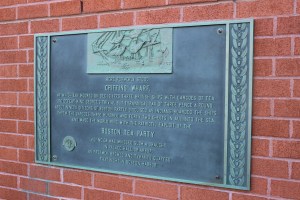 Due to the expansion of the Boston shore lines over time, the actual location of Griffin’s Wharf is not near the water today. Some argue it was at the foot of Pearl Street near the intersection of Pearl Street and Atlantic Avenue. There is a plaque commemorating the Boston Tea Party located on Seaport Boulevard. To see the plaque, take Atlantic Avenue and make a right onto Seaport Boulevard, the plaque is located on the building to the right near the bridge (GPS: N 42.354147, W 71.050977).
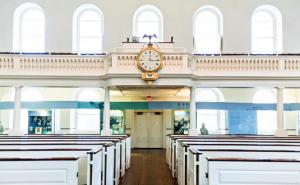
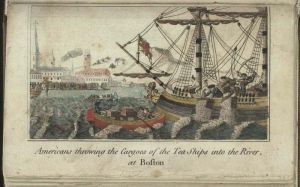 The town meeting held on the night of December 16, 1773 at the Old South Meeting House was no ordinary meeting. Boston was well known for its public meetings, but this one was different. Frequently city leaders called town meetings to discuss important political, economic and social decisions facing the city or colony. The town meeting was a foundation of the political process for Massachusetts and much of the New England colonies. Royal authorities had watched these meetings more closely since the 1760s during the opposition to the Stamp Act. Colonial Whigs (anti Royal leaders) had used these meetings to protest British policies that they saw as threats to their liberties.
 India Company. Before 1773, the company had to sell its tea in London and was subject to duties. The company had collected large quantities of tea in warehouses in London and was looking for a way to disperse the tea at a bargain. The Tea Act allowed the company to sell directly to American ports without paying the duties. This also forced American buyers to only purchase their tea from the East India Company, which was subject to a tax. The good news was the price of tea was reduced because the Company no longer had to pay the duties in London. Colonists resisted the notion that Parliament could force them to buy tea from the East Indian Company (many made a good living off of smuggled tea sales) and that they were required to pay a tax on the tea.
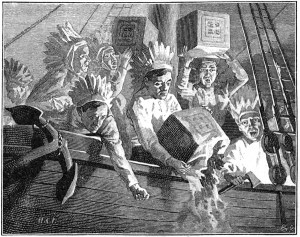 Many details remain unknown about who exactly the “Mohawks” were that marched on Griffin’s Wharf that night. The men used lamp soot and red ochre to disguise their faces and carried a wide assortment of weapons. As they made their way to the wharf, they yelled and “whooped” as Indians in a war party. If they had coordinated the timing with leaders in the Old South Meetinghouse, it is still unknown. The identities of most of these men either were never recorded or are lost to history; that is how tight their veil of secrecy was coupled with their sophisticated organization. As they made their way to the ships, the Whig leaders inside the Old South Meetinghouse stayed behind and were never directly part of what happened next.

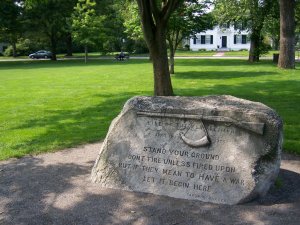
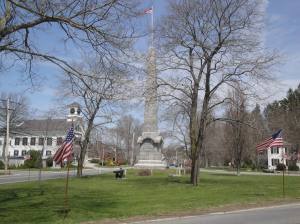
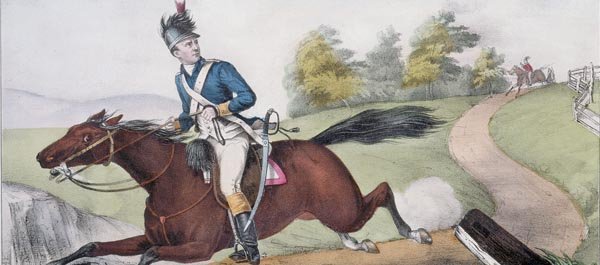


 went off to war as the “Champe Rifles” (8th VA Infantry). In the early 20th century, the location of his home was marked with a small obelisk (reportedly made by stone from the foundation of the home). Today the monument sits on the south side of Route 50 a few miles west of Aldie.

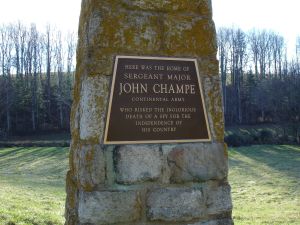
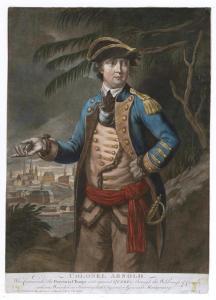 Washington also learned of Arnold’s treason on September 24th during his planned visit to West Point. Washington reportedly took the news calmly and began to investigate the depth of treason in his officer corps. Maj. Lee assisted Washington in his investigation, and both found no evidence of other American officers involved in the plot. Washington then turned to the capture of Arnold, and that is where our “hero” comes into the story.




 Often the study of history can ground us and make us feel less “unique.” This allows us to hopefully put our own experiences into perspective and be able to hopefully learn from lessons of the past. Many today complain about how print and social media can distort facts to support a particular agenda. This is not a modern phenomenon. Many in the Sons of Liberty (such as Paul Revere) used print media to their advantage to promote resistance to and then independence from Great Britain.

 Emerging Revolutionary War Era