Robert Morris: Founding Father and Revolutionary Financier

Emerging Revolutionary War welcomes back guest historian Michael Aubrecht

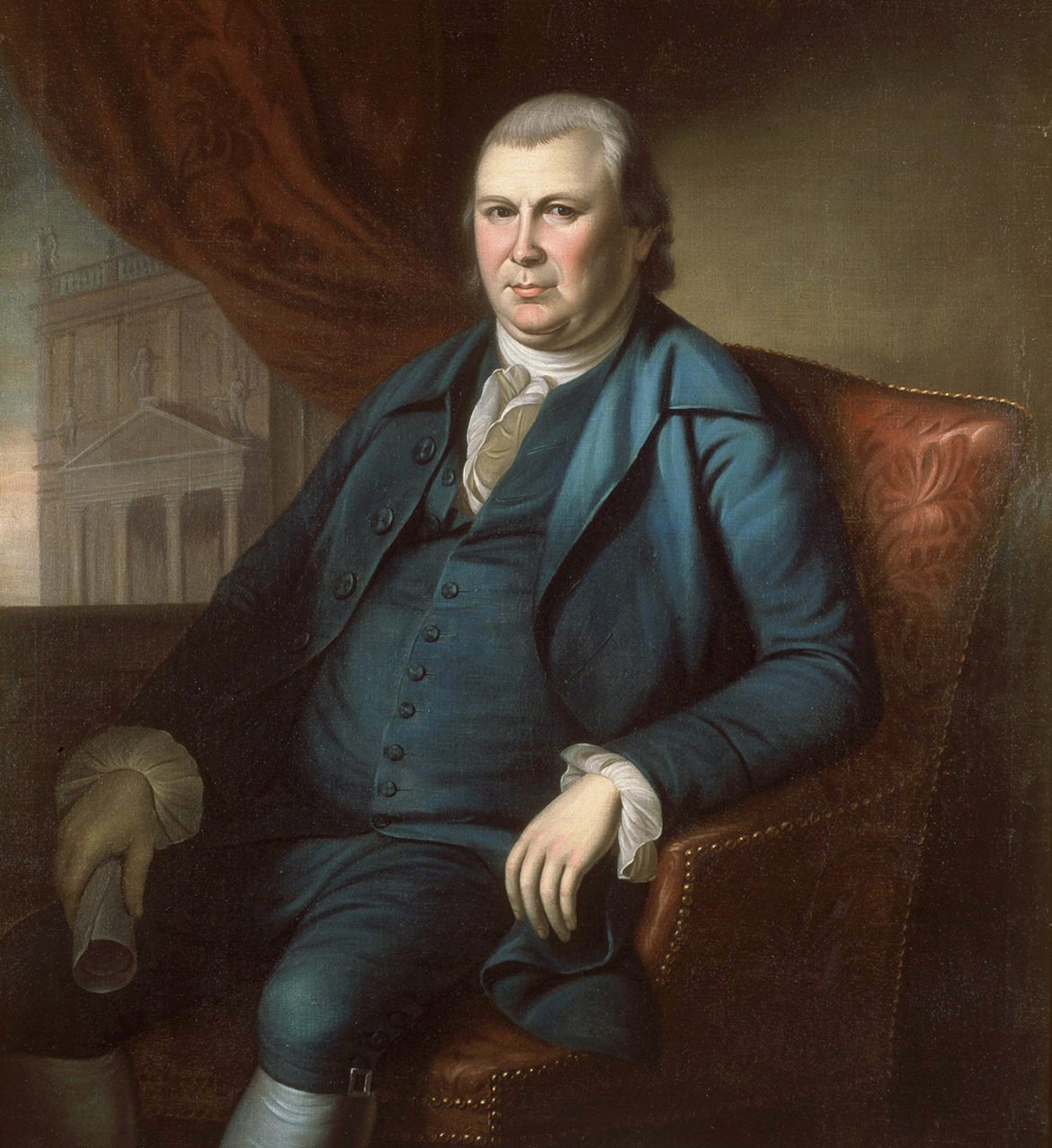
To call Robert Morris “a political renaissance man” would be an understatement. He was vice president of the Pennsylvania Committee of Safety (1775–76) and was a member of the Continental Congress (1775–78) as well as a member of the Pennsylvania legislature (1778–79, 1780–81, 1785–86). Morris practically controlled the financial operations of the Revolutionary War from 1776 to 1783. He was a delegate to the Constitutional Convention (1787) and served in the U.S. Senate (1789–95). Perhaps most impressive is the fact that he signed the Declaration of Independence and the Articles of Confederation and later signed the U.S. Constitution.

At the start of the war Robert Morris was one of the wealthiest men in the colonies, but he would go on to claim bankruptcy after some catastrophic decisions. To fully appreciate the contributions of Robert Morris we must go back and examine him from the beginning.

Robert Morris

Robert Morris was born on January 31, 1734, in Liverpool, England, the son of Robert Morris, Sr., and Elizabeth Murphet Morris. His mother died when he was only two and he was raised by his grandmother. Morris’ father immigrated to the colonies in 1700, settled in Maryland and in 1738 he began a successful career working for Foster, Cunliffe and Sons of Liverpool. His job was to purchase and ship tobacco back to England. Morris Sr. was known for his ingenuity, and he was the creator of the tobacco inspection law. He was also regarded as an inventive merchant and was the first to keep his accounts in money rather than in gallons, pounds, or yards.

In 1750 tragedy would once again strike the Morris family. In July Morris Sr. hosted a dinner party aboard one of the company’s ships. As he prepared to depart a farewell salute was fired from the ship’s cannon and wadding from the shot burst through the side of the boat and severely injured him. He died a few days later of blood poisoning on July 12, 1750. The tragedy had a terrible effect on Morris who became an orphan at the age of 16. Looking for a change he left Maryland for Philadelphia in 1748. He was taken under the wing of his father’s friend, Mr. Greenway, who filled the gap left by the death of Morris’ father. Raised with a tremendous work ethic Morris flourished as a clerk at the merchant firm of Charles Willing & Co. 

Following in his father’s footsteps Morris was also gifted with successful ingenuity. In his twenties he took his earnings and joined a few friends in establishing the London Coffee House. (Today the Philadelphia Stock Exchange claims the coffee house as its origin.) Morris was sent as a ship’s captain on a trading mission to Jamaica during the Seven Years War (1756-1763). He was captured by a group of French Privateers but managed to escape to Cuba where he remained until an American ship arrived in Havana. Only then was he able to secure safe passage back to Philadelphia. 

Shortly after Morris’ return to the colonies Willing retired and handed the firm over to his son Thomas who offered him a partnership. This resulted in the formation of Willing, Morris & Co. The firm boasted three ships that were dispatched to the West Indies and England importing British cargo and exporting American goods. This relationship lasted for over 40 years and was immensely successful. At one point, Morris was ranked by the Encyclopedia of American Wealth, along with Charles Carroll of Carrollton, as the two wealthiest signers of the Declaration of Independence.

As influential merchants, Morris and Willing disagreed with the changes in tax policy. In 1765, the Stamp Act was passed and was met with massive resistance. Morris was at the forefront and led protests in the streets. His fervor was so striking that he convinced the stamp collector to suspend his post and return the stamps back to their origin. The tax collector stated that if he had not complied, he feared his house would have been torn down “brick by brick.” In 1769, the partners organized the first non-importation agreement, which forever ended the slave trade in the Philadelphia region.

Morris married Mary White on March 2, 1769, and they had seven children. In 1770, he bought an eighty-acre farm on the eastern bank of the Schuylkill River where he built a home he named “The Hills.” Due to his growing reputation Morris was asked to be a warden of the port of Philadelphia. Showing his tenacity, he convinced the captain of a tea ship to return to England in 1775.

Later on, Morris was appointed to the Model Treaty Committee following Richard Henry Lee’s resolution for independence on June 7, 1776. The resulting treaty projected international relations based on free trade and not political alliance. The treaty was eventually taken to Paris by Benjamin Franklin who transformed it into the Treaty of Alliance which was made possible by the Continental Army’s victory at Yorktown in 1781. 

Scholars disagree as to whether Morris was present on July 4 when the Declaration of Independence was approved. But when it came time to sign the Declaration on August 2 he did so. Morris boldly stated that it was “the duty of every individual to act his part in whatever station his country may call him to in hours of difficulty, danger and distress.” Until peace was achieved in 1783, Morris performed services in support of the war. His efforts earned him the moniker of “Financier of the Revolution.”

Michael is the author of “The Letters of Robert Morris: Founding Father and Revolutionary Financier.

An Englishman’s Journal of the Revolutionary War: The Journals of Nicholas Cresswell 1774-1777

Emerging Revolutionary War welcomes guest historian Kenneth Bancroft

“Nothing but War is talked of…This cannot be redressing grievances, it is open rebellion…1

250 years ago on October 20, 1775 a 25 year old Englishman wrote these words in Alexandria, Virginia, noting that “everything is in confusion…soon they will declare Independence.”2.Nicholas Cresswell had arrived in America a year and a half prior to that entry in a journal that he kept to chronicle his venture to “shape his course in the world” and set up a new life inVirginia, “as I like the situation of that Colony the best.”3 He was aware of grumblings from colonials, but his focus was on land and his adventure had him traveling and trading with the Native Americans in the Ohio country and experiencing the slave culture in the colonies, especially the horrific sugar plantations in Barbados.

But what his journal is most known for is his observations and critique of the revolutionary world from Virginia to New York in 1774 through 1777. Cresswell’s misfortune, among others, was that he arrived in America seeking opportunity just as the Imperial Crisis over the Intolerable Acts had began. News of, and reaction to the closure of the port of Boston frequently disrupted his schemes and social life. As an Englishman still loyal to the Crown, his Revolutionary War journal offers a unique outsider look at the costs of the conflict in the country and towns as opposed to the more common tomes of soldier life.

“No prospect of getting home this winter, as I am suspected of being a Spy.”4 Cresswell’s tenure in America was tenuous. Unsuccessful in trying to establish himself with land and basically broke, he blamed his misfortune on the “Liberty Mad”5 political climate that considered him a ‘Tory’ who would not commit to the cause. His penchant for getting into drunken political arguments did not help and kept getting him in trouble with local Committees of Safety.

“Am determined to make my escape the first opportunity.”6 By that point Cresswell knew it was time to forgo his quest and return to England, but the question was how, especially with non- importation measures and the war closing ports. What followed next for Cresswell was an amazing account of encounters with revolutionary notables and locations such as Thomas Jefferson, Patrick Henry, and British General Howe in Philadelphia, Williamsburg, and New York respectively. Ultimately, Cresswell was able to secure passage back to England where he reluctantly picked up where he left off by order of his father to “shear or bind corn.”7

1 Nicholas Cresswell, The Journals of Nicholas Cresswell, 1774-1777, (North Charleston, South Carolina: reprinted 2024), 97.

2 Ibid, 97.

3 Ibid, 3.

4 Ibid, 101.

5 Ibid, 47.

6 Ibid, 143.

7 Ibid, 214.

The Journals of Nicholas Cresswell was first published in 1924 and offers a candid account of the American Revolution from a viewpoint not typically explored. Its accounts of mustering militia, salt shortages, political pulpits, and anti-Tory riots and fights add color to our revolutionary origins. Add to that Cresswell’s experiences with the Native Americans in the Ohio country and the plantations in Barbados which further inform our understanding of our colonial past. Join Cresswell’s journey! To read more about Cresswell’s journey click here. The blog is an online platform and resource to follow his daily posts as they occurred 250 years ago. Keyword search features and research links are featured as well. Follow along on Facebook, too, at Nicholas Cresswell Journals.

“Rev War Revelry” Fighting for Philadelphia

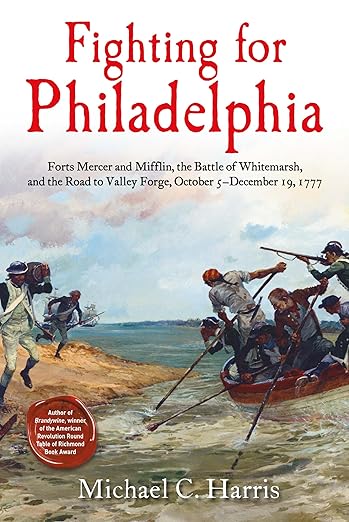
Fort Mercer. Fort Mifflin. The Whitemarsh Campaign. Names of battles and maneuvers that “receive but scant attention in the literature of the American Revolution.” Until now. Award-winning author and historian Michael C. Harris returns to Emerging Revolutionary War to discuss his latest book.

Finishing the trilogy, started with Brandywine, continued with Germantown, and now Fighting for Philadelphia. Just released by Savas Beatie this month!

Enjoy this pre-recorded “Rev War Revelry” and get a synopsis of why this book is needed on your bookshelf. Join Emerging Revolutionary War Sunday at 7 p.m. EDT.

The Death and Life of Bazabeel Norman, Veteran & “Man of Color”

Emerging Revolutionary War welcomes back guest historian Eric Olsen. Eric is a historian with the National Park Service at Morristown National Historical Park. To learn more about the site, click here.

The following obituary of a Revolutionary War veteran appeared in a Marietta, Ohio newspaper in 1830.“Saturday, July 24, 1830

Casualty – On Saturday evening last, Mr. Bazil Norman of Roxbury township, a man of color, left his house to go to watch a deer lick, and not returning in the course of the night, the next day a search was commenced under the belief that some accident had befallen him; after a diligent search by his family and neighbors, he was found dead having fallen from a precipice about twelve feet.  From appearances he had been to the lick and stayed the usual time, and late in the evening attempted to return, by the aid of a torch-light; having a narrow pass to descend between some rocks about a half mile from his house, he missed his way a few yards, fell, and broke is neck. Mr. Norman was aged about 73 – was a soldier in the revolutionary war, and at the time of his death received a pension from the United States.” -American Friend & Marietta Gazette, July 24, 1830.

Bazabeel Norman was an African American private in the Maryland Line of the Continental Army and most likely part of the 1779-1780 encampment at Jockey Hollow. I haven’t been able to find any muster rolls or service records to confirm this, but fortunately Norman did apply for a veteran’s pension in 1818 in which he summarized his military service.

“ enlisted in fall of the year 1777 into the company of Capt. Richard Anderson as a private soldier in the regiment commanded by Col. John Gumby in the Maryland line and served my Country against the common enemy until the close of the war…I was in the battles of Monmouth, Camden, Cowpens, Guilford Courthouse & Eutaw Springs. I am now 67 years old…”

In 1818 the only veterans who could apply for a pension were for men who were infirm or indigent. Bazabeel Norman apparently fit the requirements and was granted a pension. But too many men were granted pensions and Congress suspected that undeserving men were cheating the system. In 1820 veterans who had been granted pensions in 1818 were now required to make a list of their possessions and prove they were needy. In his July 25, 1820 application, Norman summarized his family life.

“As to my family I have none at home but my wife, one son & a Grand child, an orphan. My wife is 63 years of age & very infirm, my son wants only about a month of being 21 years of age. My Grandchild is a Girl about eight years old & very weakly. The rest of my children are of age & doing for themselves. I am by occupation a farmer but owing to age & infirmity I am unable to do very little toward supporting myself.”

After his death in 1830 his wife “Fortune” applied for and obtained a widow’s pension [W 5429]. In her application, she mentioned that they were married before the end of the war but did not provide any more interesting information.

The only reason I was able to research Bazabeel Norman was because of an email from Michael Shaver, Acting Chief of Interpretation of Morristown NHP & Thomas Edison NHP. I’m quoting from his email, because frankly I never heard of the person he makes reference to and it easier than rewriting his email. Michael wrote, “A few weeks ago on the PBS series, Finding Your Roots, one of the genealogies that Henry Louis Gates was exploring was that of actress, Rebecca Hall. Hall, the daughter of Sir Peter Hall, founder of the Royal Shakespeare Company, and Maria Ewing, an American-born opera star of the 1970s and 1980s.  Hall has appeared in Iron Man 3 and last year’s King Kong movie, along with a host of highly acclaimed independent films. What prompted her appearance on the program was her directorial debut of the Netflix film, Passing. Hall now lives in Brooklyn and the Hudson Valley…

At about 30 minutes in, Gates is taking Hall back into the earlier generations of her family. He closes out with the discovery of Bazabeel “Basil” Norman, a free black from Maryland at about 36 minutes who was discovered through documentation of a veteran’s land grant in Ohio in 1818.

Basil Norman came from Frederick County, Maryland joined the 7th Regiment in the fall of 1777, under the command of Colonel John Gumby, in the company commanded by Captain Richard Anderson “and served my country against the common enemy until the close of the war under the continental establishment and discharged under a general order.

So Norman was probably hung his hat in Jockey Hollow.”

A big shout out/thank you to Michael for the tip which has revealed another African American soldier from Jockey Hollow.

Sources:

American Friend & Marietta Gazette, July 24, 1830, page 3, column 1, Ancestry online

Pension Application of Bazabeel Norman and his widow Fortune Norman, W5429, National Archives, Fold 3, Ancestry Online.

Finding Your Roots | Hidden in the Genes | Season 8 | Episode 1 | PBS

Guest Book Review: Thomas Jefferson and the Virginia Statute for Religious Freedom: Faith & Liberty in Fredericksburg 

Among America’s Founding Fathers, Thomas Jefferson is among the most well-known. Author of the Declaration of Independence, Governor of Virginia, Minister to France, and the third President of the United States, Jefferson’s public career is familiar to many Americans. Of his many accomplishments, his authorship of the Statute of Virginia for Religious Freedom is perhaps less well-known among the public, but was one of which he was supremely proud. In Thomas Jefferson and the Virginia Statute for Religious Freedom: Faith & Liberty in Fredericksburg, Michael Aubrecht expertly delivers the story of the creation of this remarkable document and its relationship to the city in which it was written.

The Virginia Statute for Religious Freedom was written in Fredericksburg, Virginia in January 1777. Jefferson and four other men had been appointed to a Committee of Revisors tasked to examine Virginia’s existing laws and redraft them as necessary for the newly independent Commonwealth. Jefferson’s Statute, originally known simply as Bill 82, was only one of more than a hundred bills cataloged by the committee, but its significance has certainly been profound. Aubrecht’s narrative goes beyond telling how Jefferson wrote the document, however. Indeed, historians are not sure as to when exactly that occurred during the week that the committee met at Weedon’s Tavern in Fredericksburg. Instead, Aubrecht expertly places the story of the document’s creation within the context of the time and place it was written.

Each of the book’s thirteen chapters is essentially a vignette, concisely covering the man who wrote the statute, his and the nascent country’s views towards religion and religious practice, and the city and tavern in which it was written. The author also covers topics related to statute’s legacy, including its commemoration, and civic organizations, such as the Jefferson Institute, that perpetuate that legacy. Thus, while the story of the writing of the Virginia Statute for Religious Freedom can be and, indeed has been, quickly and effectively described on interpretive signs and monuments, Aubrecht effectively focuses on the sentiments and character of the man and locations that shaped the document.

Thomas Jefferson was not a one dimensional figure and Aubrecht does not whitewash his chief character. Jefferson was a man with many virtues and talents, but also possessed his share of faults. Aubrecht, like many other historians of the Colonial and Early Republican eras, observes and notes the contradiction between Jefferson’s views on liberty and the fact that his way of life was entirely dependent on slavery. Such objectivity only serves to strengthen the credibility of Aubrecht’s work.

Aubrecht’s work is masterfully researched. As is the case with any effective work of history, the work is truly based on extensive primary source research, chiefly the papers and correspondence of Jefferson. Scholars examining topics relating to religion in Colonial and Early America will find value in mining Aubrecht’s bibliography. Michael Aubrecht’s Thomas Jefferson and the Virginia Statute for Religious Freedom: Faith & Liberty in Fredericksburg will be of interest to anyone interested in Early American history and is a must read for scholars researching religious attitudes during this fascinating and complex period.

Review by: Timothy Willging, Fredericksburg, Virginia.

Civil War Nurse Saves Mount Vernon & Valley Forge

Valley Forge consists of acres of undulating countryside where General George Washington and some 11,000 Continental Army troops spent the winter of 1777-1778. Today, it is one of the nation’s most hallowed shrines. Few, if any, modern visitors recognize the woman who fought to save it, nor her heroic work as a nurse during the American Civil War.

Read more: Civil War Nurse Saves Mount Vernon & Valley Forge

Anna Morris Ellis was born in Muncy, Pennsylvania, on April 9, 1824. On September 26, 1848, she married William Hayman Holstein. At 38 years old, Anna became involved in the Union army’s war effort during the American Civil War after the battle of Antietam in September 1862. Her husband returning home after serving a 90-day enlistment, told of wounded men lying in barns and fields around Sharpsburg, Maryland because there weren’t enough medical corpsmen. Despite an overhaul to the Union Army of the Potomac’s Medical Department by Dr. Jonathan Letterman earlier that summer, the combined evacuation of the Virginia Peninsula from their failed late spring and summer campaigns and the Second Manassas campaign outside of Washington, D.C. in August had left this medical department in a state of chaos, confusion, and wholly unprepared to meet the medical needs of such another large scale engagement as Antietam. Anna and her husband William immediately left for the Antietam battlefield in response to the distressing scenes he had painted for her. 

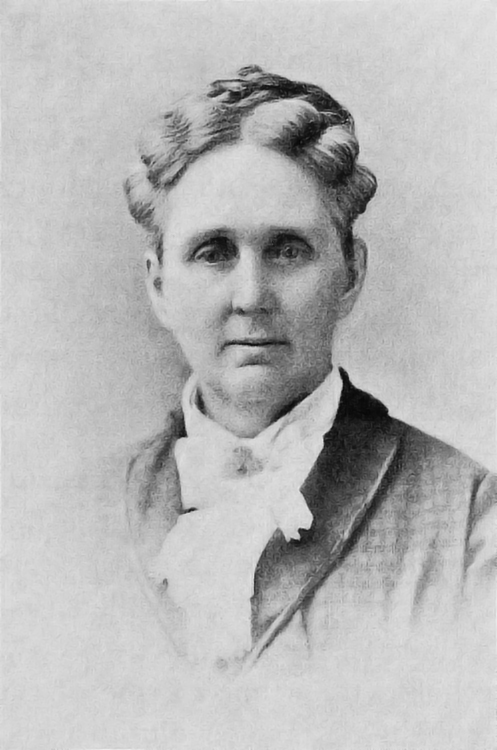
Anna Morris Ellis Holstein

The Holstein’s served for months around the Antietam battlefield, caring for the sick and wounded. Their role as post-battle caretakers continued just a month after the battle of Gettysburg when the large army field hospital of Camp Letterman opened just east of the borough on the York Road. This time, however, Anna was already numbed to the scenes of shattered limbs and the despondently ill wearied from disease. By this time her husband had secured a position with the U.S. Sanitary Commission which also setup at Gettysburg to aid the wounded and sick in the wake of the battle. That agency, along with the U.S. Christian Commission, offered supplies and personages to aid in the aftermath of not only Gettysburg, but other battles in the final years of the war.

Anna’s role for caring for those soldiers left behind by both armies was significant. She was made matron-in-chief of Camp Letterman by Dr. Cyrus Nathaniel Chamberlain, which, under her and Chamberlain’s care, attended to over 3,000 wounded soldiers. Anna continued to work at Camp Letterman until it closed on November 19, 1863. Later that day, both her and her husband sat on the platform near Abraham Lincoln while he delivered the Gettysburg Address. Following her work at Gettysburg, Anna continued to nurse the sick and wounded back to health. By the end of the Civil War in 1865 and into 1866, she worked as a matron in a hospital in Annapolis, Maryland, caring for returned prisoners of war that were sick or wounded.

In the post Civil War years, Anna turned to the preservation of the places and material culture from America’s first war for independence. She was no stranger to the importance of this era and the necessity of keeping the memory of those that served during that turbulent era alive for future generations. Anna’s great-grandfather was Capt. Samuel Morris. Morris was the captain of the First City Troop of Philadelphia when it served as George Washington’s body guard. Captain Morris was with Washington during the Ten Crucial Days and was on the field him at the battles of Trenton and Princeton. Morris even earned the sobriquet as leader of the “fighting Quakers.” Anna’s grandfather, Richard Wells, also served the American cause. He was commissioned to provision the U.S. fleet on the Delaware River during the revolutionary war.

One of her first missions was to save and restore George Washington’s Virginia estate, Mount Vernon. The home had fallen into significant disrepair, with the recent war years only aiding to its material decay. Both Anna and her husband, who also had strong ancestral ties to the War for Independence, were among the first to promote the struggles at Mount Vernon, the necessity for saving it, and the fundraising to back those plans. It was her skills in fundraising so successfully for Mount Vernon that led her to be named as regent for the Valley Forge Centennial and Memorial Association. Anna also was one of the founders, and also named regent as well, of the Valley Forge Chapter of the D.A.R.

By 1878, The Centennial and Memorial Association of Valley Forge, was incorporated in Montgomery County, Pennsylvania. Once incorporated, she led the charge as regent to save, acquire, restore and preserve General Washington’s Valley Forge Headquarters and surrounding acreage as parcels became available. Much needed funds for this charge would be needed, however. On June 19, 1878, to commemorate the 100th anniversary of the Continental Army marching out of Valley Forge, the Association held a large, organized event. With the funds generated from the anniversary commemoration, the Association was able to not only purchase General Washington’s Headquarters, but also additional acreage around the farm complex. They were also able to purchase original artifacts to place in the home, begin renovations to restore the home back to its 1777-78 appearance, and plant a tree from Washington’s Mt. Vernon on the property.

By 1893, when the Commonwealth of Pennsylvania assumed control of the camp sites and headquarters at Valley Forge, with Anna credited as the person “to whom the Nation is indebted more than any other” for her tireless efforts to ensure this national shrine was preserved and protected in perpetuity. Decades later, the National Park Service would assume ownership and operational leadership of the park from the state of Pennsylvania.

Anna and William’s home still stands in King of Prussia, Pennsylvania today at 211 Henderson Road. In 2021 the Pennsylvania Historical and Museum Commission placed a marker at the entrance drive to the home. Anna’s work at saving material culture from the Revolutionary War and ensuring the legacy of the veterans of that conflict lived on was vast. Hopefully this small summation of her activities inspires others to dig deeper into her efforts.

Announcing our 2025 ERW Bus Tour…. Philadelphia Campaign of 1777 with Michael Harris!

We are excited to announced our FIFTH annual ERW bus tour will be on November 7-9, 2025 and will cover the 1777 Philadelphia Campaign.

Author and historian Michael Harris will join us as we cover the fall of 1777 campaign. The British Army under Gen. William Howe made a concerted effort to take the American capital of Philadelphia. George Washington and the Continental Army fought major actions at Brandywine and Germantown in an effort to hold and take back the city. The tour will cover sites associated with the Philadelphia Campaign, such as Brandywine, Germantown, Paoli and others.

Tickets are $250 per person and will include Friday night lecture at the host hotel, all day bus tour on Saturday and half day bus tour on Sunday. A lunch is included for Saturday.

Our host hotel is the Holiday Inn Express and Suites – King of Prussia. Lodging is NOT included in the registration fee. A room bloc has been established under the name of “Emerging Revolutionary War.” A link will be provided in the future for hotel lodging.

Join us for our FIFTH annual tour as we take on the beginning of the American Revolution just a few months before the 250th anniversary. Learn about the dramatic events that led to some of the bloodiest days in the American Revolution. There is no better way to experience history than to stand in the footsteps of where it happened!

To register, visit: https://www.eventbrite.com/e/battles-for-the-capital-1777-philadelphia-campaign-bus-tour-tickets-1048228358237?aff=oddtdtcreator

For more questions, please email emergingrevolutionarywar@gmail.com.

The Baron…

Emerging Revolutionary War welcomes guest historian Evan Portman

Overlooking the Grand Parade at Valley Forge National Historical Park is a statue almost as solid as the man it portrays. Baron von Steuben helped transform the American army into an effective and efficient fighting force in the winter of 1777-1778, but he also aided the country nearly a century and a half later. Yes, Baron von Steuben helped the United States through World War I—or at least the social turmoil on the home front.

Friedrich Wilhelm August Heinrich Ferdinand Steuben was born in Prussia (modern day Germany) in 1730 and served in the Prussian army through the Seven Years’ War. By 1775, Steuben had accrued a considerable amount of debt (despite his stature within the aristocracy), so he sought a foreign military appointment. Failing to catch the eye of the British, French, or Austrians, the Baron set his sights on the fledgling American government. Congress arranged for Steuben to be paid, depending on the outcome of the war, and sent him to the winter encampment at Valley Forge. There, he began drilling the Continental army and instituted better hygiene and sanitation practices. He also wrote a drill manual, which he published in 1779 as Regulations for the Order and Discipline of the Troops of the United States. After the encampment at Valley Forge, Steuben participated in the Southern Campaign of the Revolutionary War. After the Siege of Yorktown, Congress awarded the Baron a tract of land in New York where he died in 1794.

Continue reading “The Baron…”

Rev War Revelry: Women of the Revolution with Saratoga Historian Lauren Roberts

Join us this Sunday at 7 pm as we welcome Saratoga historian Lauren Roberts. Lauren will discuss with us the upcoming as we discuss their upcoming Women in War Symposium and Bus Tour hosted by the Saratoga County 250th Commission. The third Annual Women in War Symposium will be held on May 4, from 8:15 a.m. to 3:30 p.m. at the Old Saratoga American Legion Post, located at 6 Clancy St. As an enhancement to the Symposium, a bus tour of historic sites will be offered on May 5.

Lauren will also discuss some of the topics being covered at the Symposium and some of the diverse history in Saratoga that relates to the American Revolution. We all know about the Battle of Freeman’s Farm and Bemis Heights, but how many know about the “witch of Saratoga”? Grab a drink and join us this Sunday night at 7pm on our Facebook page for a fun and insightful discussion into the great work that Saratoga County is doing to commemorate “America’s Turning Point.”