Review: Braddock’s Defeat: The Battle of the Monongahela and the Road to Revolution, by David Preston. Oxford University Press, 2016. Reviewed by David A. Powell

Emerging Revolutionary War is honored to welcome back guest historian David A. Powell. 

When George Washington opened fire on a small party of Canadian militia commanded by Joseph Coulon de Villiers de Jumonville in May of 1754, he fired the first shots of what would eventually become the French and Indian War – and the Seven Years War across the rest of the globe. Many scholars have also acknowledged that this incident set the spark for what would become our own American Revolution.

51n-wna6fhl-_sx328_bo1204203200_
Braddock’s Defeat: The Battle of the Monongahela and the Road to Revolution, by David Preston.

Of course, Washington intended none of those things; instead he was carrying out the British Crown’s policy of staking claim to and defending the Ohio Country, lately disputed between France and Britain.  However, Jumonville’s death set irreversible forces in motion, not the least of which was the capture of Washington’s own company of Virginia Colonial Militia at Fort Necessity by a much larger French response in June of 1754.

The direct consequence of that encounter was the creation of a new British army, including two regiments of regulars and a train of artillery, rushed from Ireland and England to re-assert Crown control over the forks of the Ohio. Command of this new expedition fell to Major General Edward Braddock. Arriving in 1755, Braddock’s mission was to lead this new force from Fort Cumberland, in western Maryland, to the site of the French Fort Duquesne (present-day Pittsburgh.) That campaign ended in disaster on July 9, 1755 when Braddock’s column collided with a combined force of French and Indians just a dozen miles short of Duquesne, resulting in horrific British losses – including Braddock.

Not surprisingly, this story has been fertile ground for historians. Fine monographs have already been written on the campaign, as well as on the French and Indian War as a whole. Having a particular interest in the period, I have read a number of those works. Naturally, I was curious when I first heard of Dr. David Preston’s new book exploring the campaign.

Preston, a professor at the Citadel, has delivered a tremendous book. Combining new research and close analysis of previously known sources, he provides fresh new perspective on General Edward Braddock, his ill-fated expedition, and the French & Indians opposing him.

Preston finds that Braddock, far from being an unyielding martinet uninterested in either the “savages” or using Colonials, worked hard (if unsuccessfully) to bring Indian warriors into his force, and showed more respect for the colonial elements under his command than some previous historians have portrayed. A number of factors precluded Braddock’s success here, but it was not for want of trying.

Where Preston’s interpretation really shines is in exploring the French and Indian sides of the war. A new account of the battle, located in a French archive, casts new light on the French efforts to defend Fort Duquesne – a venture whose success was by no means a sure thing. Preston also explores the Indian Nations’ complex and diverse reasons for casting their support with the French, which was also not certain. Preston makes it clear that the French defense was in many ways based on fortuitous circumstances rather than planning, especially in regards to the timing of the campaign.

Preston’s detailed description of the battle in question on July 9 presents a clear and detailed exploration of the sequence events as far as they can be known; where the author speculates he notes that, and explains the basis of his interpretation. Above all, his narrative is well-written, exciting and drama-filled.

Preston also excels in his summation of the long-term impact of Braddock’s defeat, both on the fortunes of British North America in the two years following the battle (which ran from bad to disastrous) and on the longer term consequences: the development of light infantry and ranger tactics, leadership, and the growing rift between American colonials and England.

Students of both the Seven Years War in America and the American Revolution will want to read Braddock’s Defeat. Get your copy today.

Surrender at Yorktown

On this date, in 1781, the British army marched out of their entrenchments at Yorktown and surrendered to General George Washington and the combined Continental and French armies.

img_5983
Modern view of the “Surrender at Yorktown” site (P. Greenwalt)

Although the victory did not conclusively end the war, the victory prompted British Prime Minister, Lord Frederick North, to exclaim,

“Oh, God, it is all over!”

Approximately two years later, with the signing of the Treaty of Paris on September 3, 1783, the American Revolutionary War was truly over.

What is not truly over is the efforts to preserve, interpret, and educate the current and future generations about the importance of Yorktown and the American Revolution. In the spring, the new American Revolution Museum of Yorktown will open its doors, updating the Victory Center at Yorktown Museum.

From the Jamestown-Yorktown Foundation website, the museum’s goals are to;

“Through comprehensive, immersive indoor exhibits and outdoor living history, the American Revolution Museum at Yorktown offers a truly national perspective, conveying a sense of the transformational nature and epic scale of the Revolution and the richness and complexity of the country’s Revolutionary heritage.”

For more information about the museum, what it entails, and the opening date, click here.


ERW Weekender: Battle of King’s Mountain

On October 7, 1780, one of the most pivotal battles of the American Revolution fought in the South occurred on a hillside in northwest South Carolina.The engagement brought militia from both sides; those loyal to the British and those adhering to the independence movement against each other. In fact, only one regular British soldier was present on that autumn day; the British commander Major Patrick Ferguson.

How did Ferguson and his militia end up on King’s Mountain? This was due to the campaign being waged by British General Lord Cornwallis in the Southern colonies.

Ferguson’s role was to protect the flank of Cornwallis’ force as it turned north from South Carolina. After issuing a call of bravado, where Ferguson gave Patriot militia an ultimatum; lay down your weapons or suffer the consequences, the British officer began to move through the South Carolina countryside. This decree emboldened the Patriot militia, some of which would come from across the Appalachian Mountains–or “Overmountain”–to join in the fight against Ferguson. This combined force would gather around Sycamore Shoals in present day Tennessee.

Word quickly reached Ferguson near Gilbert Town, North Carolina by way of deserters that a large force of Virginia, Carolinas, and militia from the area of Tennessee had arrived and were planning to march toward his encampment.

Still showing a high degree of disdain for the Patriot militia, Ferguson did not act immediately on the intelligence. Three days later, the Loyalist militia and the British officer started their retrograde movement toward Charlotte and Lord Cornwallis’s main army.

By October 4, 1780 now joined by a sprinkling of Georgia militia, the Patriots had reached Ferguson’s old encampment site. Two days later the militia forced marched through the Cowpens of South Carolina, which had not witnessed the hard hand of battle yet. Just a day’s march ahead was Ferguson’s forces.

SANYO DIGITAL CAMERA
Colonial Road trace near Kings Mountain (author collection)

At this juncture, Ferguson made a fateful decision. Instead of continuing his retreat and he was less than a full-days march away from the main British army, the British officer held up his forces on a forested hill just inside South Carolina and laid out his camp on the highest point; Kings Pinnacle.

Realizing that time was of the essence, the Patriot force, now numbering 900 men, found plentiful horseflesh to mount up and close the gap between the two sides. Riding through the rain and darkness of the night of October 6, the fifteen-mile gap between forces was erased and by late morning the Patriot militia was reining up within striking distance of Kings Mountain.

By mid-afternoon, at approximately 3:00 p.m. the fighting erupted. The Patriot militia broke into smaller commands, numbering between 100-200 men and started to ascend the slopes. Luckily for the Patriots, Ferguson had not detected just how close the enemy was and had also neglected to fortify his encampment. His force though, outnumbered the Patriots by approximately 200 men.

Some of the Loyalist militia did not realize that the enemy had arrived until the Patriot militia came hollering and yelling up the slope of the hillside. With the conglomerate of various militia, there was no unified command of the Patriot forces and the fight quickly boiled down to independent maneuvering and fighting. Using the terrain, the Patriot militia fired from behind trees and boulders. Answering this tactic, Ferguson ordered a bayonet charge down the hill. This caused the Patriot force to retreat to the base of the hill as most of the men were carrying rifles which did not accommodate the bayonet.

Virginia militia Colonel William Campbell and North Carolinian militia Colonel John Sevier helped rally the militia that had broken and sent the force back up the hillside. This back and forth would happen a few more times; Ferguson’s force charging down hill with bayonets, the militia backtracking, than reforming, and charging back up after the Loyalist momentum had waned.

Finally, after an hour of combat the Patriot militia forced their way to the crown of the hill and was able to flank the Loyalist force and attack in rear of their position. This maneuver forced the Loyalists back into their encampment where numbers of them began to surrender.

SANYO DIGITAL CAMERA
Marker to the memory of Major Patrick Ferguson (author collection)

Ferguson sensing the tide turning against the Loyalists, tried to rally his troops, supposedly yelling, “Hurrah,brave boys, the day is ours!” Gathering a few stalwarts, Ferguson made a desperate move to fight his way out of the encircling Patriot militia. A volley from Colonel Sevier’s militia force unhorsed Ferguson who fell entangled in his stirrups. Unfortunately, the horse, spooked with the musketry and smell of gunpowder dragged Ferguson through the Patriot line. After getting untangled from the straps on the horse, Ferguson lay prone on the ground, where a Patriot officer demanded his surrender. Still with some fight in him, Ferguson shot and killed the man. Other Patriot militia responding to the scene fired a collective volley at the downed British officer, killing Ferguson.

Some of the Patriot militia were opposed to accepting the Loyalist surrender, as they remembered the massacres and atrocities committed to their brethren in arms by the infamous Banastre Tarleton. Cooler heads prevailed and the firing died down.

By the time the second white flag was sent out by Captain Abraham DePeyster, Patriot militia officers were finally able to reign in their commands and over 600 Loyalist soldiers surrendered.

Within the one-hour and five minute engagement, Ferguson’s force ceased to exist. Total casualties for the Loyalist force was 290 killed, 163 wounded, and 668 captured. The Patriots suffered a total of 87 casualties; 29 killed and 58 wounded.

The Patriots, with the close proximity of Cornwallis’s forces, who the day after the battle would finally get the request for reinforcements from his slain subordinate, quickly retreated back into the safety of the South Carolina countryside.

However, the Battle of Kings Mountain would become a critical turning point, not only in the Southern Campaign of the American Revolution, but in the entire war itself. The victory, which demolished the Loyalist militia force covering his flank, forced Cornwallis to altere his strategy for the campaign. He would be forced to return to South Carolina, giving up advancing further than Charlotte into North Carolina in order to re-solidify control of territory in his rear. When Cornwallis finally returned to the Tar Heel State the following year, he would suffer eventually suffer a Pyrrhic victory at Guilford Court House in March 1781.

All that was in the future and so is your visit to this battlefield of the American Revolution.

SANYO DIGITAL CAMERA
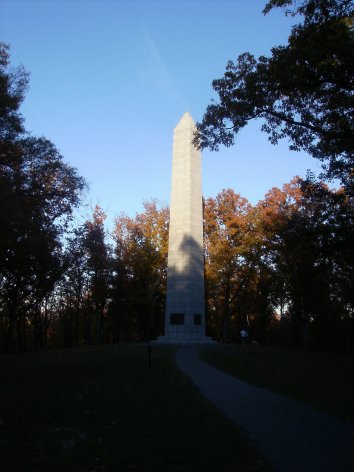
Kings Mountain Battle Monument commemorating the Patriot victory (author collection)

On March 3, 1931, Kings Mountain National Military Park was formed by an act of Congress and placed under the control of the United States War Department. Two years later, in March 1933, the property was transferred to the National Park Service by an executive order. At this juncture, the entire land mass of the park was comprised of 40 acres that had been originally donated by the Kings Mountain Battlefield Association. The park has grown since that time and now preserves slightly under 4,000 acres.

For further details on how to visit the battlefield, which includes trails, a visitor center, exhibits, and a bookstore, click here. The park is open daily 9:00 a.m. to 5:00 p.m. with extended hours on the weekend between Memorial and Labor Days. Even better there is no fee to access this national military park!

*All the photos taken for this post was done by the author during a visit to the battlefield in autumn.*


Union Jack o’er the Capitol: A Burning of Washington Walking Tour

Emerging Revolutionary War is honored to welcome guest historian Zach Whitlow. Zach’s biography is at the bottom of this post. 

August marks the 202nd anniversary of the Burning of Washington. On the heels of their astounding victory at Bladensburg, a British incursionary force under Major General Robert Ross and Rear Admiral George Cockburn occupied the American capital for about 24 hours on August 24th & 25th, 1814. Besides a small ambush at the Sewall House on Capitol Hill, in which two corporals and General Ross’ horse was killed, the British encountered no resistance in the city whatsoever. The Union Jack was triumphantly raised: Washington had fallen. Soon it would burn.

The burned out shell of the White House following the British occupation of Washington. (The President's House, by George Munger, 1814-1815)
The burned out shell of the White House following the British occupation of Washington. (The President’s House, by George Munger, 1814-1815)

What followed were events that literally burned themselves into the American psyche. To remember this bleak moment in history, rangers from the National Mall & Memorial Parks are leading a series of walking tours in the month of August. Beginning at the newly designated Belmont-Paul Women’s Equality National Monument (the site of the ambush), visitors walk a total of 2.5 miles and retrace the British advance down Pennsylvania Avenue. Through the program, the rangers will sift through the modern paved environment and tell the stories of long gone places, such as the newspaper offices of the National Intelligencer and Barbara Suter’s tavern.  The tour will also feature some of the surviving remnants of that time, such as the Octagon Museum.

The walking tour begins at Belmont-Paul Women’s Equality National Monument (144 Constitution Ave NE, Washington, DC 20002) every Saturday in August at 3:00 pm. There will also be programs on Wednesday, August 24th and Thursday, August 25th at 3:00 pm. Please bring comfortable shoes and plenty of drinking water.


*Zach Whitlow has an M.A. in Museum Studies from the George Washington University, a B.A. in History from California State University, Long Beach, and three A.A. degrees from Fullerton College. A lifelong historian, he currently works for the National Park Service at the National Mall & Memorial Parks in Washington, DC and the Office of Historic Alexandria in Alexandria, VA. Prior to this, Zach worked at the National Archives, George Washington’s Mount Vernon, and the Queen Mary in Long Beach, CA. He currently lives in Alexandria, VA with his girlfriend Teresa and their two cats, Max and Lizzie.


Defense in Depth as a Revolutionary War Battlefield Tactic

Part Three (click here for first two installments)

Determined to avenge his embarrassing defeat at Cowpens, Lt. Gen. Charles Lord Cornwallis set his army out in a determined pursuit of the American army. Knowing that he was too weak to face Cornwallis in a pitched battle, Maj. Gen. Nathanael Greene, the Southern Department commander, retreated northeastward from Salisbury, North Carolina toward the Virginia state line, where he hoped that additional militia troops would reinforce his army and he would receive supplies. The British chased Greene to the Dan River, near the Virginia border, but Greene wisely put the river between his army and the enemy. Cornwallis and his weary soldiers arrived at the rain-swollen river on February 15, too late to catch Greene’s army, which had finished crossing earlier that day. Frustrated, Cornwallis withdrew to Hillsborough, North Carolina.

LC
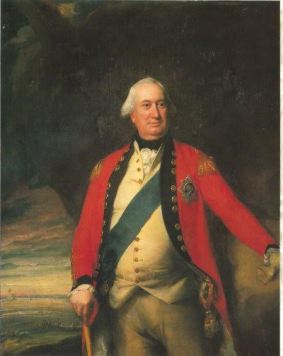
Lord Charles Cornwallis

After receiving both the expected supplies and reinforcements, and after an opportunity to rest his command, Greene soon marched back into North Carolina to face Cornwallis’ tired and poorly supplied army, which now numbered less than 2000 men. After several weeks of skirmishing with Loyalist militiamen and a great deal of maneuvering Greene assumed a defensive position around Guildford Courthouse (near modern Greensboro, North Carolina) on March 14, 1781. Greene had more than 4000 Continentals, militiamen and cavalry, meaning that his army outnumbered Cornwallis’ by more than twice their strength. Continue reading “Defense in Depth as a Revolutionary War Battlefield Tactic”

“The whole story soon became known to the corps” The Unknown Legend of John Champe

Part III of III

The past few months of John Champe’s life were probably the most memorable. In the fall he was asked to go on a mission to capture the recent traitor Benedict Arnold. The mission was ordered by George Washington himself and only known to Washington and “Lighthorse” Harry Lee. Champe, a trusted member of Lee’s Legion, was promised a promotion for undertaking the daring mission. He successfully fled from the American camp, gained the trust of British General Sir Henry Clinton and Arnold and was given a commission in Arnold’s Loyalist regiment. He worked with patriots in New York and recruited others to help him in his plan to kidnap Arnold. Now it was December and the next day was the day to kidnap Arnold and return him to Washington.

Then the day before the kidnapping was planned, Clinton set into motion a plan to finally use Arnold militarily. Arnold would take his Loyalist troops and some British regulars and invade the Virginia Capes.  Virginia had largely dodged the hardships of war and Clinton believed this would be a great opportunity for Arnold to prove himself. With only Virginia militia located in the colony, Arnold should have no problem wreaking havoc on the Commonwealth.

These new developments ruined Champe and Lee’s plans. When Arnold got orders from Clinton, he moved his headquarters – one day before Champe was to carry out his plan. Furthermore, Champe was also moved to another part of New York and was not able to get word to Lee that the plan was off. Lee and his dragoons waited and waited at Hoboken with no sight of Champe. Soon Lee returned to camp without any word on what happened to Champe. Lee and Washington worried that the worst had happened and Champe was “discovered.”[i]

OLYMPUS DIGITAL CAMERA
Grave at John Champe, Prickett Cemetery, Fairmont, WV

Champe soon found himself on a transport in New York harbor with Arnold’s “American Legion.” The destination was unknown to most of the men. Soon though Champe learned that he was to be part of an invasion force against his native state! The thoughts that must have gone through his mind; he had risked everything to capture Arnold – labeled a deserter and now he would have to go into battle against his fellow Virginians. The two week trip to the Virginia Capes must have afforded Champe plenty of time to ponder how close he was coming to succeeding and now what he was called upon to do.

Champe was involved in most of Arnold’s campaign against Virginia. He was part of the force that captured Richmond and found himself in several battles and skirmishes against his fellow Virginians. Arnold was replaced by Gen. William Philips and soon Cornwallis’s army joined Philips in Virginia in May 1781. Sometime after this, Champe was able to “escape” the British army and headed west to the Blue Ridge Mountains.  Champe then worked his way south and finally by July he was back with Lee who was then with Nathaniel Greene’s army in the Carolinas. Lee was delighted to see his devoted cavalryman. Surely Champe and Lee had a lot to discuss.

Though Champe was promised a promotion, it was believed by Lee and Washington that it would be too dangerous for Champe to take the field again. If he was captured, the British would surely execute him as a spy. Champe was offered an unknown sum for a reward and headed back home to Loudoun County. His legendary adventure was over.

Sergeant Major John Champe Memorial
Sergeant Major John Champe Memorial, Aldie, VA

After the war, Champe did not seek fortune or fame from his exploits. He led a simple life and was a middle class farmer.  He struggled to support his family and continuously looked for cheaper and more fertile land to the west.  It was due to his desire for new land that he was on a trip looking at land near Morgan Town (modern day Morgantown, WV) in 1798 where he became ill and died. Washington did not forget Champe. In 1798 Washington was appointed by President John Adams commander of the American army in preparation for war with France. Washington called on Champe to be an officer in his army, only finding out that he had recently died.[ii]

Though Champe disappeared mostly from the history books in 1781, his family fought for nearly 100 years to gain the compensation that was due to Champe. Champe was never paid a pension nor given bounty lands that were owed to him for his service. Plus, his promised promotion was never given and they argued that the owed pension should be based off of the rank that was promised him personally by Washington.  Unfortunately, the mission was so secret, that very few could confirm it. In petitions filed with Congress in 1818 and 1839, Champe’s widow was finally given a life time pension, though in an amount not reflecting his rank.  Finally in 1847, a Congressional act provided for compensation in the amount of $1,200 to the heirs of John Champe and granted him the promotion that was promised to him by Washington. [iii]

Champe has remained a local hero in Loudoun County. In 1861, a local Confederate unit15_magnet_9 went off to war as the “Champe Rifles” (8th VA Infantry).  In the early 20th century, the location of his home was marked with a small obelisk (reportedly made by stone from the foundation of the home).  Today the monument sits on the south side of Route 50 a few miles west of Aldie.

In 2001, his grave was finally properly marked with a head stone and a full ceremony. Most recently Champe has been bestowed the highest honor a local hero can be given, a high school in his honor. John Champe High School was opened in Aldie in 2012 and one hopes that his name and legacy will be no longer be forgotten.

Lyrics from Sergeant Champe, ca. 1781

Come sheathe your swords!                                                                                                                      My gallant boys,                                                                                                                                          And listen to the story,                                                                                                                             How Sergeant Champe, one gloomy                                                                                                   night,                                                                                                                                                                 Set off to catch the tory

[i] The Revolutionary War Memoirs of General Henry Lee; DeCapo Press, 1998, 409.

[ii] Ibid., 410.

[iii] Pension Application of John Champe W4153, National Archives and Records Administration

News Release: The British Are Coming!

*From our friends at Civil War Trust and Campaign 1776*

If you have been following the ongoing saga regarding the Institute of Advanced Study’s plans to build 15 faculty houses on the historically hallowed ground of Princeton Battlefield, there is another update to track.

“The British Are Coming.”

17th Regiment of Foot Reenactors
Living historians portraying the British 17th Regiment of Foot at the Battle of Princeton. The 17th Regiment, under Lt. Col. Charles Mawhood, bore the brunt of General George Washington’s famous counterattack during the January 3, 1777 Battle of Princeton. Image taken March 2016. (Source: US Civil War Trust).

Continue reading “News Release: The British Are Coming!”

“The whole story soon became known to the corps” The Unknown Legend of John Champe

Part II of III

600x265xChampe_fight.jpg.pagespeed.ic.feACjOFSnb
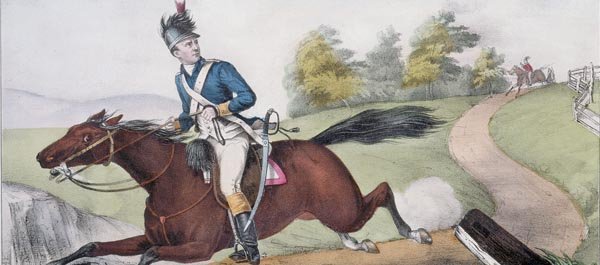
John Champe’s “desertion”

The rectitude of the decision John Champe made on that October night to “desert” his men and “join” the British must have weighed heavily on his mind as he approached the Hudson River. The mission, offered by “Lighthorse” Harry Lee, to capture the traitor Benedict Arnold was a serious one. The only hesitation Champe felt was how his reputation and honor would be injured by his desertion.  No one but Lee and Washington could know the truth, the success of the mission counted on secrecy.[i]


As Champe reached the Paulus Hook area of the Hudson River, the details are murky. Some accounts have Champe jumping into a boat along the shore and pushing off into the river and rowing to a British war ship. Other claims have Champe clearing a British patrol along the river and escorted by the patrol to a nearby ship. [ii]  Either way, Champe eluded his American pursuers and accomplished the first goal of his mission, to reach the British lines.

Lee, already having established a spy network, lined up a system of couriers to communicate with Champe. By October 25th, Lee had heard from Champe and wrote to Washington that “my friend got safe to New York; he was before Sir Henry Clinton and has passed all the forms of the garrison; he accidentally met General Arnold in the street which has paved a natural way for further acquaintance; the party entertains high hope of success…”[iii]

Clinton and Arnold expected many other American officers to be inspired by Arnold and

Sirhenryclinton2
Sir Henry Clinton

join the British army. Champe, a modest officer in a fabled unit was just the kind of man that Clinton wanted to attract. The fact that Champe was fleeing his own men who were in hot pursuit of him made the deception complete. Clinton questioned Champe about the condition of the American army and morale.  Champe informed Clinton that other officers were sure to desert and Washington’s ranks were thinning with men heading home. Clinton soon trusted him to be a deserter and attached him to a unit of Loyalists that Arnold was raising.[iv]


Champe became close to Arnold and spent a lot of time with him. Champe spent a lot of time at Arnold’s headquarters at the King’s Arms Tavern on Broadway in New York City. He would take the next several weeks to study Arnold and his habits. Champe also watched for other deserters joining the British army in New York. The fear by Washington was that Arnold was acting with other American officers in defecting. Soon Champe realized that Arnold had acted alone in his treason.

Finally in early December Champe informed Lee that his plan was to kidnap Arnold one night as Arnold took his nightly walk in a garden next to his headquarters. Champe was even able to recruit fellow patriots to assist him in the kidnapping of Arnold. On the selected night, Champe would have a boat waiting for him at a nearby landing. He also had loosened some of the fence boards around the garden area so he could sneak Arnold out of the garden. After getting Arnold onto the boat, Champe would take him to Hoboken (western side of the Hudson River). There Lee and three of his dragoons would wait for Champe and his cargo.  Washington insisted to Lee and then to Champe that Arnold was not to be harmed. Champe was sure of his success and spent days and weeks in planning the capture of Arnold. [v]

As the evening approached, everything was in place. He had earned the confidence of Clinton and Arnold. He was now a sergeant in the British army and spent countless hours preparing and making the necessary connections to fellow patriots in New York.  The boat was prepared and waiting, Lee would be at Hoboken with his dragoons.  Everything was in place to bring home the traitor Arnold.


[i] The Revolutionary War Memoirs of General Henry Lee; DeCapo Press, 1998, pg. 399.

[ii] “Sergeant John Champe and Certain of His Contemporaries”, William and Mary College Quarterly, April 1937, pg. 153.

[iii] Ibid., 154.

[iv] The Revolutionary War Memoirs of General Henry Lee; DeCapo Press, 1998, pg. 405.

[v] Ibid., 409.

“The whole story soon became known to the corps” The Unknown Legend of John Champe

Part I of III

Sergeant Major John Champe Monument

Along Route 50, west of Aldie, Virginia is a small obelisk in the middle of a cow pasture. Thousands of car drive by the marker, not knowing what it is or who it is for. Most people that come to this area of Virginia for history are interested in the American Civil War. In this region of Virginia the legendary John S. Mosby operated behind Union lines for two years. Also here were the hard fought cavalry battles that preluded the Battle of Gettysburg.  But this monument doesn’t refer to anything in the Civil War.  This monument commemorates a local American Revolutionary War hero.  A man that has been mostly forgotten until recently.

John Champe was born in ca. 1755 from a family that was well established on Virginia’s Northern Neck. His family owned substantial land in King George, Stafford and Prince William Counties. At some point, his family moved to the Aldie region of Loudoun County, where John was born. The men of the Champe family were involved in the local militia and civil office as road builders. Though the family had substantial land holdings and slaves, John was one of many siblings and sought out his future with the military at the outbreak of the American Revolution.

John Champe enlisted as a private in the 1st Regiment, Virginia Light Dragoons in December 1776. Champe’s abilities were quickly noticed and saw himself promoted to corporal by 1778 and then a sergeant by 1779. Champe’s abilities were quickly noticed by his commander, Major “Lighthorse” Harry Lee. Lee described Champe as “rather above the common size – full of bone and muscle; with a saturnine countenance, grave, thoughtful and taciturn – of tried courage and inflexible perseverance.” [i] Though Champe might have quickly risen in the non-commissioned ranks, he desired more.  His opportunity for promotion and a date with history came on September 27, 1780 at West Point, NY.

The treachery that took place on September 24th at West Point by once beloved American General Benedict Arnold is well documented.  Arnold planned on turning over the fortress at West Point to the British (thus giving up the vital Hudson River).  Arnold, receiving command of the post at West Point in August 1780, quickly reduced the viability of the fortifications by neglecting repairs and sending troops away from the post.  Arnold’s treachery was not exposed until British officer, Major John Andre was captured, carrying on him copies of letters and Arnold’s plans.  Luckily for Arnold, he learned on the morning of September 24th of Andre’s capture and he quickly fled to the HMS Vulture then on to safety in New York City.

Benedict_Arnold_1colorWashington also learned of Arnold’s treason on September 24th during his planned visit to West Point.  Washington reportedly took the news calmly and began to investigate the depth of treason in his officer corps.  Maj. Lee assisted Washington in his investigation, and both found no evidence of other American officers involved in the plot.  Washington then turned to the capture of Arnold, and that is where our “hero” comes into the story.

In October of 1780, Washington looked to Lee to find someone in his talented cavalry command that could “defect” to the British and carry out an elaborate plan to capture Arnold. Calling Lee to his headquarters, Washington and Lee discussed the proposition of capturing Arnold and how to carry out such a plan.  Lee was tasked with finding someone in his command that could successfully carry out the plan. Lee soon wrote to Washington that he had two men in mind, but his top choice was a sergeant in his cavalry unit

“The chief of the two persons is a sergeant in my Cavalry; to him I have promised promotion…if your Excellency approves of what is done, the sergeant will desert from us tomorrow; the sergeant is a very promising youth of uncommon taciturnity and inflexible perseverance…I have incited his thirst for fame by impressing on his mind the virtue and glory of the act.” [ii]

Washington quickly responded and agreed to Champe’s terms of promotion and soon the mission was hatched. Champe would desert to the British and only Lee and Washington would know about it.  He would be labeled a traitor and his family name tarnished.  If he was captured by the Americans, he would be executed and if he was exposed as an American spy to the British, he would also be executed.  Champe accepted the risk and on the night of October 21st, Champe mounted his horse and made way for the Hudson River where he hoped to find either a British picket line or ship. With him Champe carried his orderly book, saddle bags and five guineas (provided to him by Lee).

Quickly Champe was challenged by an American patrol and he quickly fled,.  This is exactly what Champe and Lee wanted, for the British to believe him, his desertion had to seem real.  Soon the patrol reported to Lee about Champe’s departure.  Lee delayed the pursuit, by first inquiring with other patrol members.  Surely a man of Champe’s stature was not defecting. Soon though Lee knew he had to order a pursuit, he just hoped Champe had put enough distance between him and the Americans to make his escape.

H-Lee-10_11_07-600
“Light Horse” Harry Lee


Though Lee’s delay allowed Champe some time, it was not enough to break away cleanly. As Champe was making his way to the Hudson River, the American patrol was on his heels and calling for his halt. In front of him were British warships in the Hudson River and a British patrol on the banks for the river.  Now was the time of decision, he could be shot dead by the British or captured and executed by the Americans.  The plan to capture Arnold and punish the traitor was already at its first “Rubicon.”


[i] The Revolutionary War Memoirs of General Henry Lee; DeCapo Press, 1998, pg. 396.

[ii] “Sergeant John Champe and Certain of His Contemporaries”; William and Mary College Quarterly, April 1937, pg. 153.

The Virginia Capes, Jutland, and American Destiny

At the end of last month and the beginning of this, I was in Britain marking the centennial of the Battle of Jutland, World War I’s largest naval battle. My great-grandfather was there as part of the Royal Navy, and it was meaningful in the extreme for me to be present at the commemorations.800px-BattleOfVirginiaCapes

The National Museum of the Royal Navy interpreted Jutland as “The Battle that Won the War,” and based its argument on the fact that the battle’s outcome led directly to German resumption of unrestricted submarine warfare, which in turn brought the United States into the war, with all the resulting titanic effects. In other words, a naval battle which didn’t feature a single American had a profound impact on U.S. history.

If that sounds familiar to Revolutionary War scholars, that’s because the same description applies to the 1781 Battle of the Virginia Capes. Let me explain.

Continue reading “The Virginia Capes, Jutland, and American Destiny”