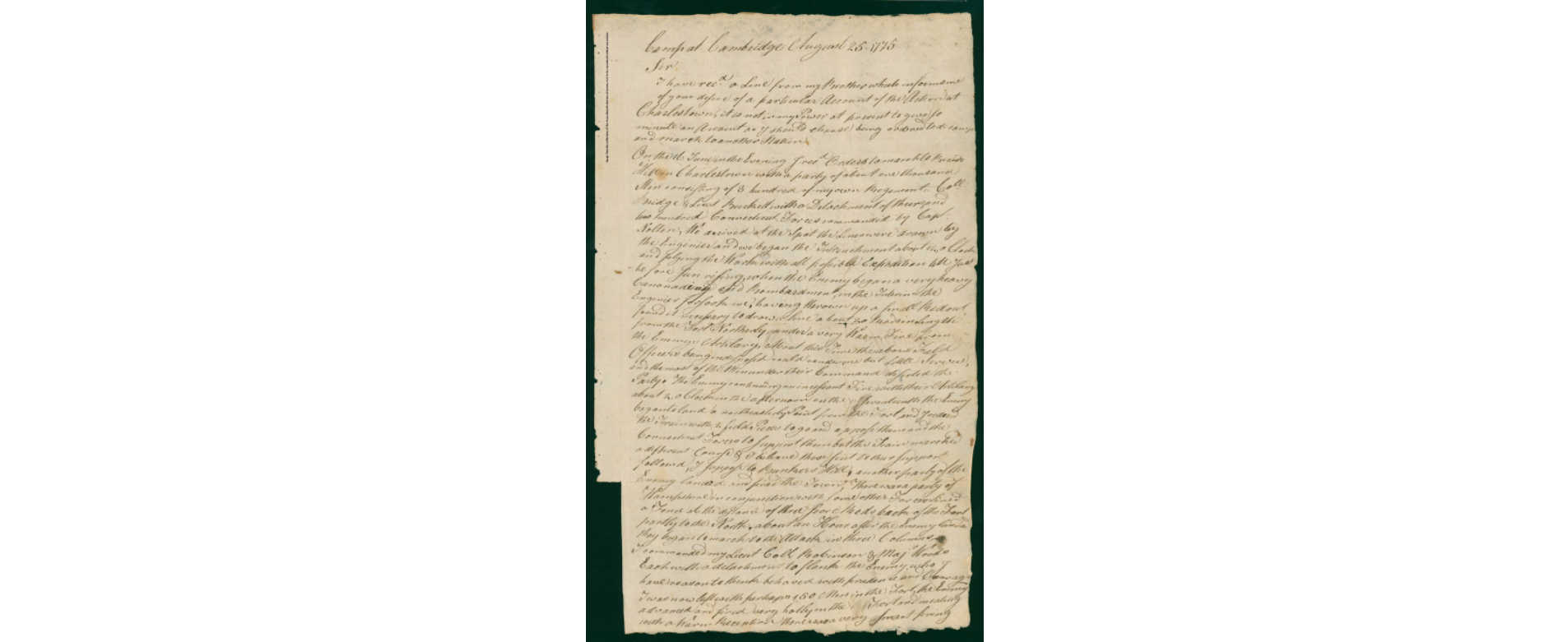
Approximately two months after waging the defense of Breed’s Hill, on the Charlestown peninsula, against the British, Colonel William Prescott put quill to paper to write to John Adams. In this communique, he discussed the action at Breed’s Hill, known as the Battle of Bunker Hill, fought on June 17, 1775, to his fellow Massachusetts native. Take note that he even wrote his account about the orders he received and which hill that missive directed him to. Since the waft of smoke has drifted from the battle on that June day, veterans, officers, and historians have debated why Prescott and company chose Breed’s Hill instead of Bunker Hill. This letter is just another wrinkle in that timeless debate.
Camp at Cambridge August 25.1775
Sir
I have recd. a Line from my Brother which informs me of your desire of a particular Account of the Action at Charlestown, it is not in my Power at present to give so minute an Account as I should choose being ordered to decamp and march to another Station.
On the 16 June in the Evening I recd. Orders to march to Breeds Hill in Charlestown with a party of about one thousand Men consisting of 3 hundred of my own Regiment, Coll. Bridge & Lieut Breckett with a Detachment of theirs, and two hundred Connecticut Forces commanded by Capt. Nolten, We arrived at the Spot the Lines were drawn by the Enginier and we began the Intrenchmant about 12, o Clock and plying the Work with all possible Expodition till Just before sun rising, when the Enemy began a very heavy Canonading and Bombardment, in the Interin [Interim] the Enginier forsook me, having thrown up a small Redout, found it necessary to draw a Line about 20 Rods in length from the Fort Northerly, under a very Warm Fire from the Enemys Artilary, About this Time the above Field Officers being indisposed could render me but Little Service, and the most of the Men under their Command deserted the Party. The Enemy continueing an incessant Fire with their Artilary. about 2, o Clock in the afternoon on the seventeenth the Enemy began to land a northeasterly Point from the Fort, and I orderd the Train with 2 field Pieces to go and oppose them and the Connecticut Forces to support them but the Train marched a different Course & I believe those sent to their support followd, I suppose to Bunkers Hill, another party of the Enemy landed and fired the Town, There was a party of Hampshire in conjunction with some other Forces Lined a Fence at the distance of three score Rods back of the Fort partly to the North, about an Hour after the Enemy landed they began to march to the Attack in three Columns, I commanded my Lieut Coll. Robinson & Majr. Woods Each with a detachment to flank the Enemy, who I have reason to think behaved with prudence and Courage.
I was now left with perhaps 150 Men in the Fort, the Enemy advanced and fired very hotly on the Fort and meating with a Warm Reception there was a very smart firing on both sides. after a considerable Time finding our Amunition was almost spent I commanded a sessation till the Enemy advanced within 30 yards when we gave them such a hot fire, that the [y] were obliged to retire nearly 150 yards before they could Rally and come again to the Attack. Our Amunition being nea [r ]ly exaustid could keep up only a scattering Fire. The Enemy being numerous surrounded our little Fort began to mount our Lines and enter the Fort with their Bayonets, we was obliged to retreat through them while they kept up as hot a fire as it was possible for them to make we having very few Bayonets could make no resistance, we kept the fort about one hour and twenty Minutes after the Attack with small Arms, This is nearly the State of Facts tho’ imperfect & too general which if any ways satisfactory to you will afford pleasure to your most obedient humble Servt.
William Prescott To the honble John Adams Esqr.
Image of original letter from Prescott to Adams, courtesy of Massachusetts Historical Society
Emerging Revolutionary War welcomes guest historian Ben Powers
Introduction
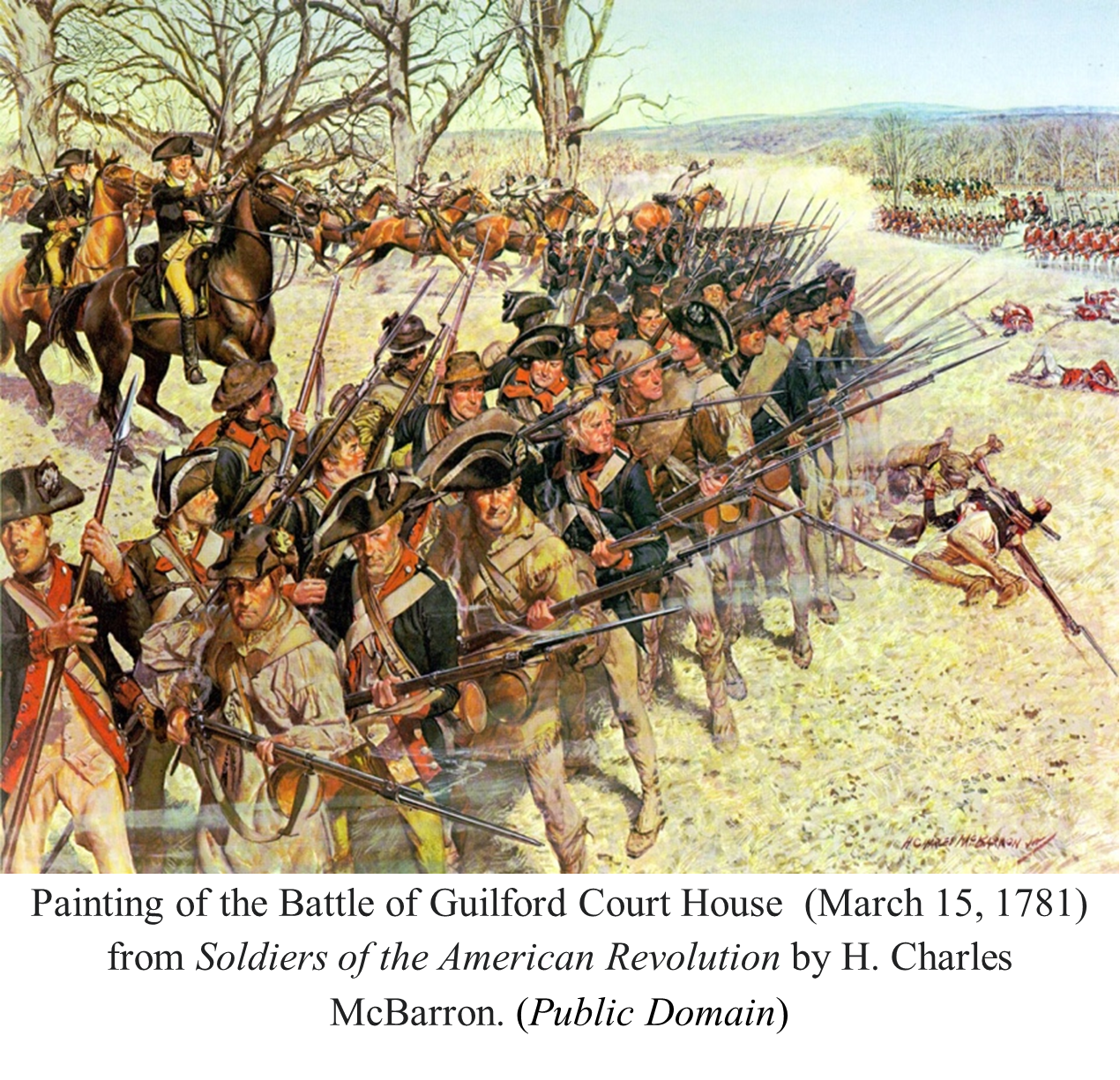
Nathaniel Greene is renowned for leading the Southern Department during the American Revolution, achieving significant strategic results against Lords Cornwallis and Rawdon, even though he lost several battles. Historian Theodore Thayer called him “the strategist of the American Revolution.”[1] Greene carefully planned his army’s movements to maximize maneuverability, chose to fight in situations with roughly equal numbers, strengthened support from auxiliary and irregular forces, and put the British in increasingly worse positions. His main goal was to keep his army active—success meant staying in the field and avoiding severe losses. This led Cornwallis to make decisions that resulted in his defeat at Yorktown, Virginia, in October 1781. Greene’s careful coordination of military actions to achieve strategic results hinted at what would later be called “operational art,” a concept later connected to leaders like Napoleon Bonaparte and Soviet theorists.[2] Greene’s skills showed the main elements of operational art, making him more than a strategist—he was an early example of an operational artist.
Some Definitions
The “operational level of war” is a twentieth-century concept describing military activities between the tactical level (winning battles) and the strategic level (achieving national aims through armed force and other instruments of power). In current doctrine, tactics involve sequencing forces in time and space to accomplish missions like seizing terrain. Strategy is how national leaders and senior commanders use available means to achieve defined ends. The operational level connects these two, as theater commanders sequence campaigns to achieve strategic objectives, a concept relevant for analyzing Greene’s approach.
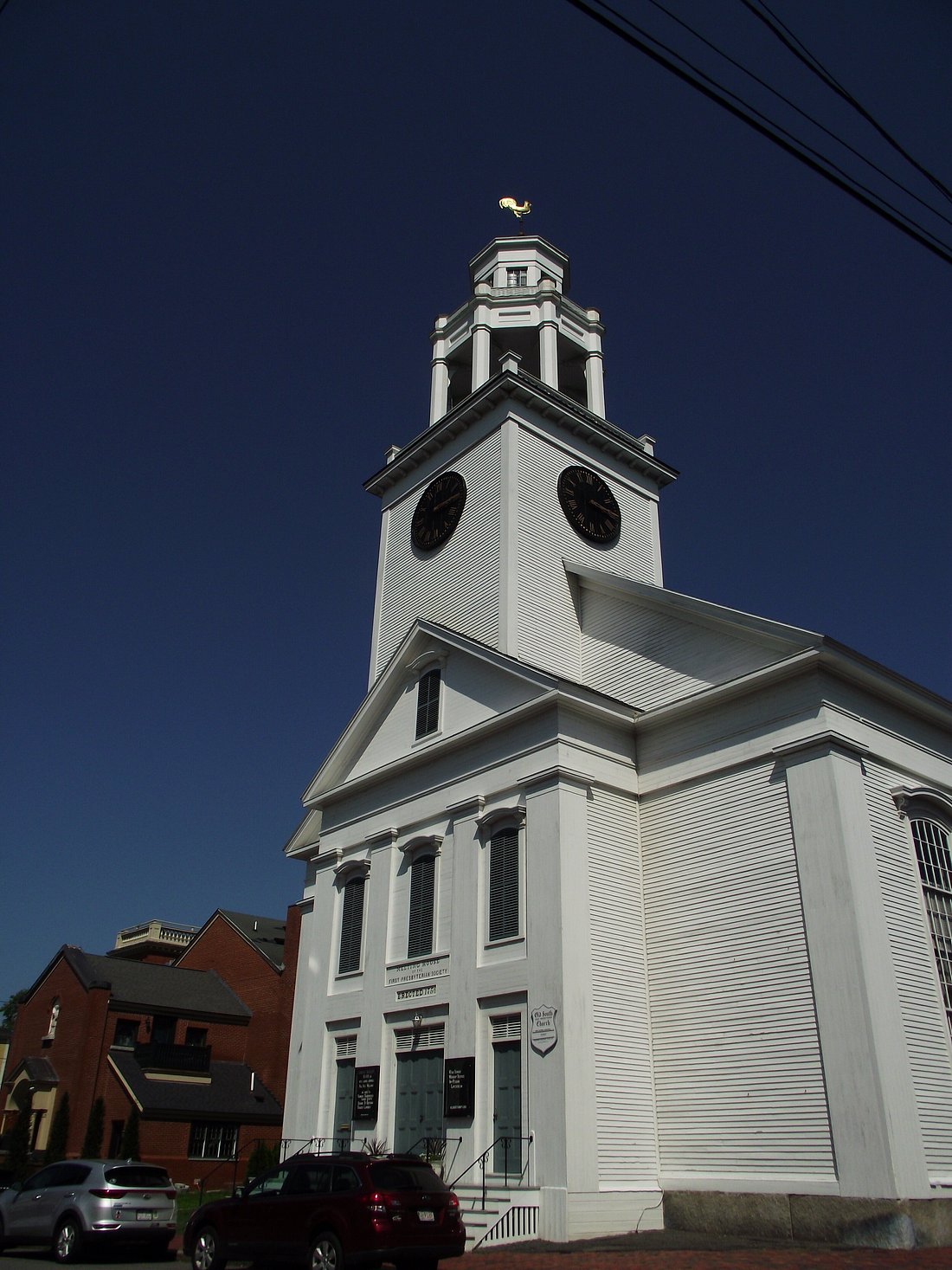
Modern view of the “Old South Presbyterian Church, Newburyport, MA
As Benedict Arnold assembled his small army of 1,100 men in Newburyport for his bold cooridinated strike on Canada (with General Richard Montgomery attacking via Montreal), there was one last stop before the men boarded the boats in the Merrimack River. From here they would hug the coast on their way to Maine, then overland to Quebec. It was a bold strategy for the inexperienced army and army commander. Though the was just started in April, and peace was still spoken by many political leaders, Washington approved this first American offensive. Strike the British forces in the Canadian colonies, with the hope of encouraging their northern colonial neighbors to join their cause.
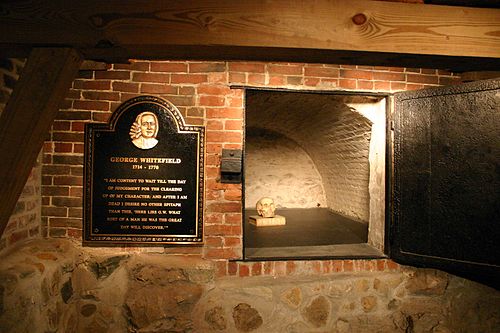
Arnold felt it was appropriate that his mission have the blessing of God, so hundreds of men squeezed into the First Presbyterian Church (now called Old South Presbyterian Church). One of the largest churches in the city, it was the spiritual home of the Great Awakening in New England. Here, evangelist preacher George Whitefield, preached from when the church was built in 1756 until his death in 1770. Whitefield was buried in the crypt of the church. His fame was well known to Arnold and others, Whitefield is considered one of the founders Methodism and a great public speaker.
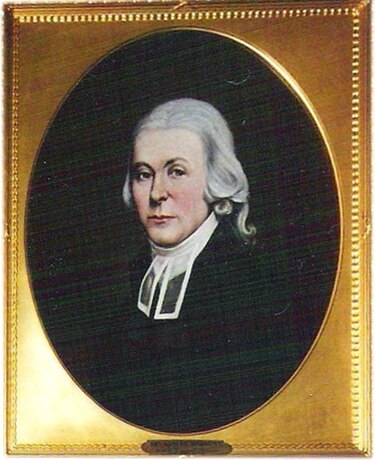
What men could not fit into the church pressed up against the doors and windows. Today’s service, held on Wednesday, September 20, was a dedication service. To bless the men and their task at hand. Reverand Samuel Spring, a popular orator in his own right, and he was now to serve as chaplain of Arnold’s small army on its way to Canada.
The scene was recounted in J. T. Headley’s, 1864 “The Chaplains and Clergy of the Revolution“:
Reverand Samuel Spring
“There sat the fearless Arnold, the bold rifleman, Morgan, and a host of other brave men, who, notwithstanding their dauntless courage, felt that the perils of the untrodden, mysterious wilderness, they were about to penetrate, might be too great for human energy and endurance, and the hour come, that their only hope would rest in the God whose spirit the chaplain [Samuel Spring] invoked as their guide and stay. The citizens, who crowded the gallery, never forgot that sermon. It became the talk of the place, and was the cause of his eventually settling over them as their pastor.”
After the sermon, a surreal experience took place. Soon, someone on Arnold’s staff wanted to go to the crypt and see the tomb of Whitefield. Headley quoted Rev. Spring:
“I preached over the grave of Whitefield. After the service the general officers gathered around me. Some one requested a visit to Whitefield’s tomb. The sexton was hunted up, the key procured, and we descended to his coffin. It had lain in the tomb six years, but was in good preservation. The officers induced the sexton to take off the lid of the coffin. The body had nearly all returned to dust. Some portions of his grave-clothes remained. His collar and wristbands, in the best preservation, were taken and carefully cut in little pieces, and divided among them.”
A modern view of the crypt of Rev. George Whitefield
Headley continued; “The chaplain, with the haughty Arnold, the chivalrous Morgan, and group of officers, gathered in the dark vault around the tomb of Whitefield, formed a scene worthy of a painter. The clank of steel had a strange sound around the sainted sleeper, while the hallowed atmosphere filled all hearts with solemn awe and reverence.”
Now, with their good luck token from the grave of Whitefield, Arnold and his staff made their way to the shore where his men were boarding their boats in the Merrimack River. Arnold and his men saw their mission blessed by God, and wanted to tie their cause with that of the Great Awakening. They believed their cause was right and just. The process of visiting a tomb and taking pieces of a dead man’s clothing may seem a tad bit of “macbre” to us today, to Arnold it was a way to bless his mission. One that he believed would bring him and his men glory.
Emerging Revolutionary War welcomes guest historian and reviewer Al Dickenson
No president has an easy job. But imagine holding the position of president immediately after undoubtedly the best president the United States has ever had.
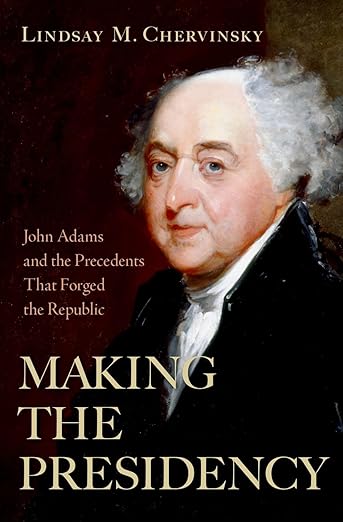
That was John Adams’ conundrum. Additionally, it is the subject of renowned historian Lindsey Chervinsky’s new book, Making the Presidency: John Adams and the Precedents That Forged the Republic. Initially released last year, in the midst of a politically fraught election season, Chervinsky places the modern world into a context we should all understand better: the history of the 1790s.
After a brief introduction regarding the Revolutionary War, the early republic, and George Washington’s presidency, readers are thrown into John Adams’ presidency. Federalists opposing Democratic-Republicans (commonly referred to as simply “Republicans” in Chervinsky’s text, as they referred to themselves), the Americans opposing the French, the North opposing the South, Federalists opposing Federalists: it seemed there could be no peace in the nation so split apart. Yet the nation stood for another 220 years. Why is that?
Chervinsky argues that the reason we are a nation today relies on how John Adams served his presidency, specifically the power sharing he enacted in his cabinet amongst Republicans (like Vice President Thomas Jefferson), Federalists (like Secretary of State Timothy Pickering), and Archfederalists (like Secretary of War James McHenry), the successful navigation of foreign affairs (see the ongoing French Revolution, specifically the XYZ Affair), and the peaceful transfer of power.
The final focus of Chervinsky’s book, Adams’ loss in the 1800 election, perhaps offers the most original outlook on Adams’ presidency. Being the loser of the election, and being the first incumbent president to lose an election, historians have often treated Jefferson a little kindlier than Adams. Where Chervinsky’s work shines, however, is in showing how these great, powerful men, the leaders of their respective parties, differed in how they saw power, and in how they wielded it.
Little scholarship focuses on Jefferson’s machinations to gain the presidency. Rarely researched are his Virginia and Kentucky Resolutions, which called for nullifying federal law, even though these ideas were eventually adapted into various Confederate causes and mentalities in the following decades. Nor are the essentially political and emotional blackmail Jefferson laid on Federalist members of Congress who refused to vote for him over Aaron Burr. Jefferson threatened the members of Congress with, in essence, secession of Republican states if they did not pick a president soon, given that this was the only election in American history where the House of Representatives made the presidential selection. The dirty tricks of politics manifested themselves in this election, including smear campaigns against Adams and unfounded warnings that the Federalist Party would forego the will of the people and simply appoint a new, Federalist president.
Compare this to John Adams, who, while certainly desirous of a second term, largely laid low during the turmoil occurring on the other side of the Capitol. When presented with suggestions to keep himself as president, he refused. When asked to annul the election, Adams refused. When asked to stand for himself and campaign in the final months of the election season, and during the contingent election in the House between Jefferson and Burr, Adams refused and stayed silent. He did not cling to power, nor did he view his opinion better than that of the American people who voted for a Republican and the House members who would choose the next presidency. Though he was a lame duck president in every sense of the word, he held true to his convictions of propriety in politics, though privately he fumed.
In this way, though history often sheds more light on the winner, makes historians wonder what other ways “losers” of an election may have impacted our politics and history. An interesting study question for any intrigued historian, but one that Chervinsky shows is vital to understanding American history and modern politics alike.
Emerging Revolutionary War welcomes back Jeffrey Collin Wilford Part I, click here. Part II, click here.
Major Andre’s Reckoning
Along the way from Tarrytown, New York, to West Point, Benjamin Tallmadge conversed almost nonstop with the freshly captured British prisoner John André and learned much about the youthful officer. It was perhaps Major Tallmadge’s background as George Washington’s chief intelligence officer as well as recollections illuminated by the light of André’s charisma, that helped begin to paint a picture of an honorable soldier. After countless hours of conversation during their journey north he became convinced that André’s “Head was in fault, & not his heart.” Tallmadge commented later that André was “a most delectable Companion. It often drew tears from my Eyes to find him so pleasant & agreeable in Conversation on different Subjects, when I reflected on his future fate, & that too, as I believed, so near at hand—” In the short time the two spent together Tallmadge seemed to have grown extremely fond of the British Major.
One can sympathize with Tallmadge’s point of view. After all, André was merely another victim of the traitor Arnold. He had intended to meet him on board the Vulture but when Arnold failed to show he was forced to go ashore with Smith. After the Vulture was scared off by artillery and Arnold convinced him to don civilian clothes, plying him with incriminating materials and sending him through enemy territory, the stage was set. In his testimony, he said it was General “Clinton’s directions not to go within an Enemy post or to quit my own dress.“ Even so, by his own admission, it was the ruling of the military Proceedings that “he changed his Dress within our Lines and under a feigned Name and in a Disguished [sic].”
Perhaps Tallmadge’s sympathies toward André were accentuated by his hatred for Arnold. Tallmadge’s characterization of André becomes clearer in a simple personal act from his testimony when he stated that “André kept reviewing his shabby Dress, & finally remarked to me that he was positively ashamed to go to the Head Qrs of the American Army in such a plight. I called my Servant, & directed him to bring my Dragoon Cloak, which I presented to André. This he refused to take for some time, but I insisted on it, & he finally put it on & rode in it to Tappan.”
By the time they made Tappan, André was under heavy guard and imprisoned at Mabie’s Tavern. Just a few hundred feet away, Washington convened 14 of his top military officers who, over two days of testimony, found André guilty and sentenced him to death. On October 1st André personally requested from Washington the honor of a firing squad over a “gibbet.” Knowing the favor could not be granted, Washington opted to ignore the request.
On October 2nd, just before noon, André appeared on the stoop of Mabie’s Tavern. Four officers were present to escort the convicted spy to his final judgment. One of the four officers was Captain Lieutenant John Van Dyk, with just six months separating this moment from his own capture by the British off the coast of New Jersey. “There were about six steps which led into the stoop of the house, on the light of these, one American officer with myself were standing when Major André came out of the front door of the house in regimentals, hooking his arm with the two American officers (his attendants) one on his right and left. He ran down the steps of the stoop as quickly and lively as though no execution was to take place, and immediately fell into the centre of the guard, a place assigned him.”
André exits Mabie’s Tavern on the day of execution. (copyright: New York Public Library)
Escorting André with his four guards was also Major Benjamin Tallmadge. “I walked with him to the place of execution, and parted with him under the gallows, entirely overwhelmed with Grief, that so gallant an officer, & so accomplished a Gentleman should come to such an ignominious End.” Echoing that sentiment in writing nine days after his execution was Alexander Hamilton, saying “Never perhaps did any man suffer death with more justice, or deserve it less.”
Mabie’s Tavern today (Wilford)
When André had turned the corner to see the gallows before him, Van Dyk recorded his statement. “Gentlemen, I am disappointed, I expected my request…would have been granted.” According to Van Dyk, preparations were made and André’s final words when asked if he had any were “I have nothing more to say, gentlemen, but this, you all bear me witness, that I meet my fate as a brave man.” With that came the untimely end of Major John André who was then cut down and not allowed to fall to the ground and “every attention and respect was paid to Major André that it is possible to pay a man in his situation.” He was placed in a simple coffin and buried in a shallow grave close to the site. Over the following 40 years, a peach tree grew above the grave, ostensibly from a peach given to André by a woman as he marched to his execution.
When the Duke of York requested the return of his remains in 1821 it was not without fear of a backlash, specifically from the residents of Tappan. Many felt it was an affront to the memory of George Washington. British consul James Buchanan found that the protestations dissipated quickly after he agreed to buy those who were against the idea a drink at the local inn. The bones were then dug up with the root of the peach growing through the skull’s eye socket. They were placed in a mahogany ossuary and shipped by way of a British mail ship called a packet to New York City where they awaited their return to London.
Captain, now Colonel, John Van Dyk, 67 years old and working for the New York Customs House near the docks of the North (Hudson) River heard about the impending exhumation and, using his connections with influential New Yorker John Pintard, requested a dialog with Buchanan. Through the British consul, he obtained a penned introduction to the captain of the packet where André’s bones lay. Van Dyk made his way to the North River and found the captain just leaving to go back aboard the packet. Upon handing him the introduction from Buchanan, the captain requested that he return at 10 o’clock the following morning and a barge would be waiting to take him to the ship.
Coincidentally, that same day Dr. Valentine Mott, considered by many to be the greatest surgeon of his time, was treating one of Van Dyk’s children and heard of Van Dyk’s plan. Naturally, he was invited along for the next morning’s visit. That day, the two reached the docks just before 10 o’clock and met the barge which took them to the ship. “We went together on board the Packet. The bones were in a superb urn, and we were permitted to handle them. I mentioned the circumstances, as I have related them above, to the Captain [about André’s execution] — bid him goodbye, and we came on shore.” Van Dyk’s motivations for wanting to visit the remains of André are lost to history and probably best understood by those who experienced the emotions of that fateful day in American history.
Amidst a boat of mail destined for England, John André left New York for the last time, traveling back to London where his remains were repatriated. His ossuary was emptied of its contents and his remains were buried in Westminster Abbey with the inscription “universally beloved and esteemed by the Army in which he served, and lamented even by his foes, now lay alongside medieval kings, Renaissance statesmen, and Georgian poets.” Arnold and his wife Peggy lived the rest of their lives post-Revolution in London, reviled by most, and are buried just 3 miles away at St. Mary’s Church in Battersea, in a vault that sits behind a wall in a basement kindergarten classroom.
[Original source: The Papers of George Washington, Revolutionary War Series, vol. 28, 28 August–27 October 1780, edited by William M. Ferraro and Jeffrey L. Zvengrowski, 291–296. Charlottesville: University of Virginia Press, 2020.]
[Original source: The Papers of George Washington, Revolutionary War Series, vol. 28, 28 August–27 October 1780, edited by William M. Ferraro and Jeffrey L. Zvengrowski, 277–283. Charlottesville: University of Virginia Press, 2020.]
[Original source: The Papers of George Washington, Revolutionary War Series, vol. 22, 1 August–21 October 1779, edited by Benjamin L. Huggins, 745–746. Charlottesville: University of Virginia Press, 2013.]
[Original source: The Papers of George Washington, Revolutionary War Series, vol. 28, 28 August–27 October 1780, edited by William M. Ferraro and Jeffrey L. Zvengrowski, 303–311. Charlottesville: University of Virginia Press, 2020.]
Van Dyk, John. “Major André, Letter of Col. Van Dyk to John Pintard, August 27, 1821.” Historical Magazine 7, no. 8 (August 1863): 250-252.
Van Dyk, John. “Major André.” Martinsburg Gazette, August 20, 1835.
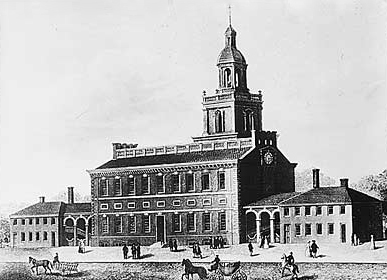
Pennsylvania State House, ca. 1770. Courtesy of the National Park Service
On May 10, 1775, the delegates convened their Second Continental Congress in Philadelphia. Unlike the First Continental Congress held a year before, this Congress had more delegates and met in the Pennsylvania State House and not Carpenters Hall. Also, events spiraled out of control since 1774, and the northern colonies were in outright rebellion with the battles of Lexington and Concord and the capture of Fort Ticonderoga. The delegates dived into several heavy topics as now blood was shed and an army of several thousand besieged the British in Boston.
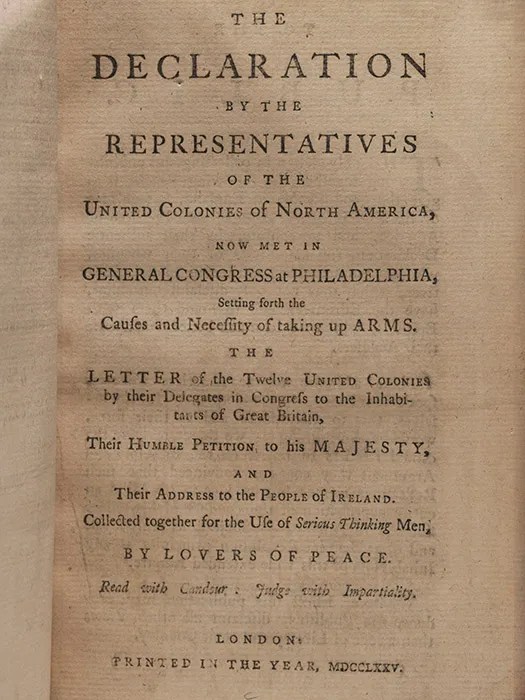
Just before the Congress met John Adams wrote “our prospect of a Union of the Colonies, is promising indeed. Never was there such a Sprit.” It is evident that there were many discussions in the taverns around Philadelphia among the delegates that showed the feelings of many had changed since 1774. Though there were still a large portion of the colonies that were not ready to give up reconciliation with Great Britain. This tug in pull between men like John Adams and men like John Dickenson (more on the side of reconciliation) is shown in two documents passed by the Congress in early July. The “Olive Branch Petition” and the “Declaration of the Causes and Necessity of Taking Up Arms” reflect the mixed views of the Congress and the colonies as a whole of —conciliation and confrontation. Together, they illustrate the ideological crossroads at which the colonies stood, torn between loyalty to the British Crown and the growing necessity of armed resistance.
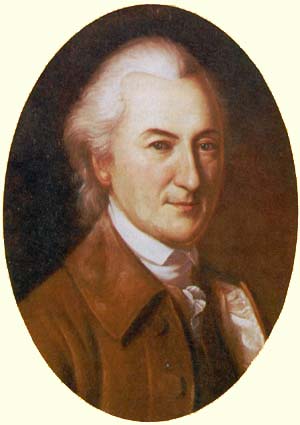
The “Olive Branch Petition”, drafted primarily by John Dickinson of Pennsylvania and approved by the Continental Congress on July 5, 1775, was a final attempt by the colonies to avoid a full-scale war with Great Britain. Despite the ongoing military engagements at Lexington, Concord, and Bunker Hill, many colonial leaders still hoped for a peaceful resolution to the growing conflict. The petition expressed loyalty to King George III and implored him to intervene in the escalating tensions caused by his ministers and Parliament.
John Dickinson was the leader of the moderates of the Second Continental Congress. Dickinson has the distinction of serving in the Congress as a representative from Pennsylvania and then Deleware. Courtesy of the National Park Service.
The document was rooted in the belief that reconciliation was still possible. It portrayed the colonies as loyal subjects who had been forced into resistance by the oppressive acts of the British government. The petition requested the King to repeal the Coercive Acts and halt hostilities, suggesting that harmony could be restored without further bloodshed.
Key to understanding the “Olive Branch Petition” is the deep-seated colonial belief in the distinction between the King and Parliament. Many colonists viewed Parliament as the source of tyranny but retained faith in the monarch as a potential protector. This petition, therefore, was not revolutionary but reformist. It sought to open a dialogue rather than sever ties.
However, the petition was rejected outright by King George III, who had already declared the colonies in open rebellion in August 1775 (before the Olve Branch petition arrived in London). He refused to read the document and issued the Proclamation of Rebellion, affirming Britain’s intent to suppress the colonial uprising by force. Many believed that the blood shed at Bunker Hill (226 killed and 828 wounded) combined with the fighting on April 19th backed the King into a corner. How could he accept peace when British soldiers were killed by rebels, especially since by the time he received the petition all the colonies were under arms against him. The rejection marked a turning point: it signaled the end of any realistic hopes for a peaceful compromise and pushed more colonists toward the idea of independence.
In stark contrast, the “Declaration of the Causes and Necessity of Taking Up Arms”, approved on July 6, 1775, just one day after the “Olive Branch Petition”, presented a much more assertive stance. Drafted by a committee including Thomas Jefferson and John Dickinson, the document aimed to justify the colonies’ decision to resist British authority through armed force.
The Declaration opened with a powerful assertion of the colonists’ natural rights and their entitlement to resist tyranny. It traced the history of British oppression, citing the Intolerable Acts, the imposition of taxes without consent, the quartering of troops, and the use of military force to suppress civil liberties. Unlike the Olive Branch Petition, which appealed to the King’s mercy, this document framed the conflict as a necessary defense of liberty and justice.
Although it still professed allegiance to the Crown, the Declaration was far more militant in tone. It acknowledged the seriousness of taking up arms but asserted that the colonies had been left with no other choice. It stated:
“Our cause is just. Our union is perfect. Our internal resources are great, and, if necessary, foreign assistance is undoubtedly attainable.”
This language revealed a shift in colonial thinking—from grievances to justification, from negotiation to resistance. The document was an attempt to rally public support and unify the colonies behind a common cause, portraying the struggle not as a rebellion but as a righteous defense against despotism.
Courtesy of Special Collections, University of Delaware Library
The coexistence of these two documents reflects the political complexity and emotional turmoil of the time. The Continental Congress, representing a wide spectrum of colonial opinion, tried to navigate between diplomacy and defiance. The “Olive Branch Petition” sought to appeal to moderates and loyalists who feared war, while the Declaration of the Causes aimed to galvanize patriots and articulate a coherent justification for resistance.
This dual approach was not merely political hedging but a reflection of genuine uncertainty. Many colonists still considered themselves British and hoped to remain within the empire, albeit under reformed governance. At the same time, the continued military aggression from Britain made armed resistance increasingly inevitable.
Ultimately, the failure of the “Olive Branch Petition” and the intensification of British military efforts helped consolidate revolutionary sentiment. The rejection by King George III confirmed to many that reconciliation was no longer possible. Over the following months, radical voices like Thomas Paine’s in Common Sense would build upon the groundwork laid by the “Declaration of the Causes” and push for full independence, culminating in the Declaration of Independence in July 1776.
The “Olive Branch Petition” and the “Declaration of the Causes and Necessity of Taking Up Arms” encapsulate the American colonies’ transition from loyal subjects to revolutionaries. They demonstrate how, in the face of unyielding imperial power, a people once desperate to avoid conflict found themselves compelled to fight. These documents not only reflect the diplomatic and ideological struggles of the Revolutionary era but also serve as enduring symbols of the tension between peace and justice in times of crisis.
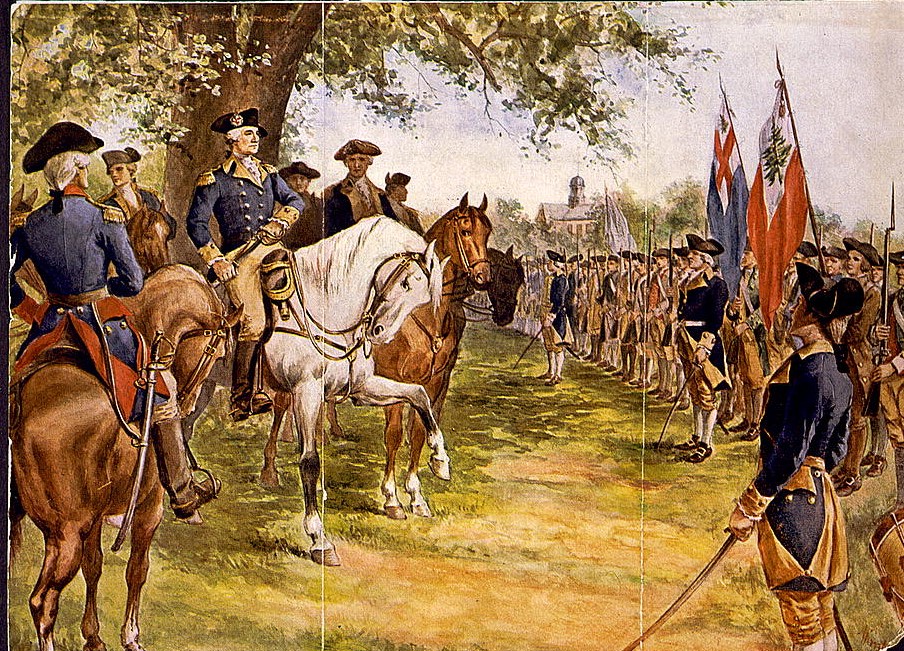
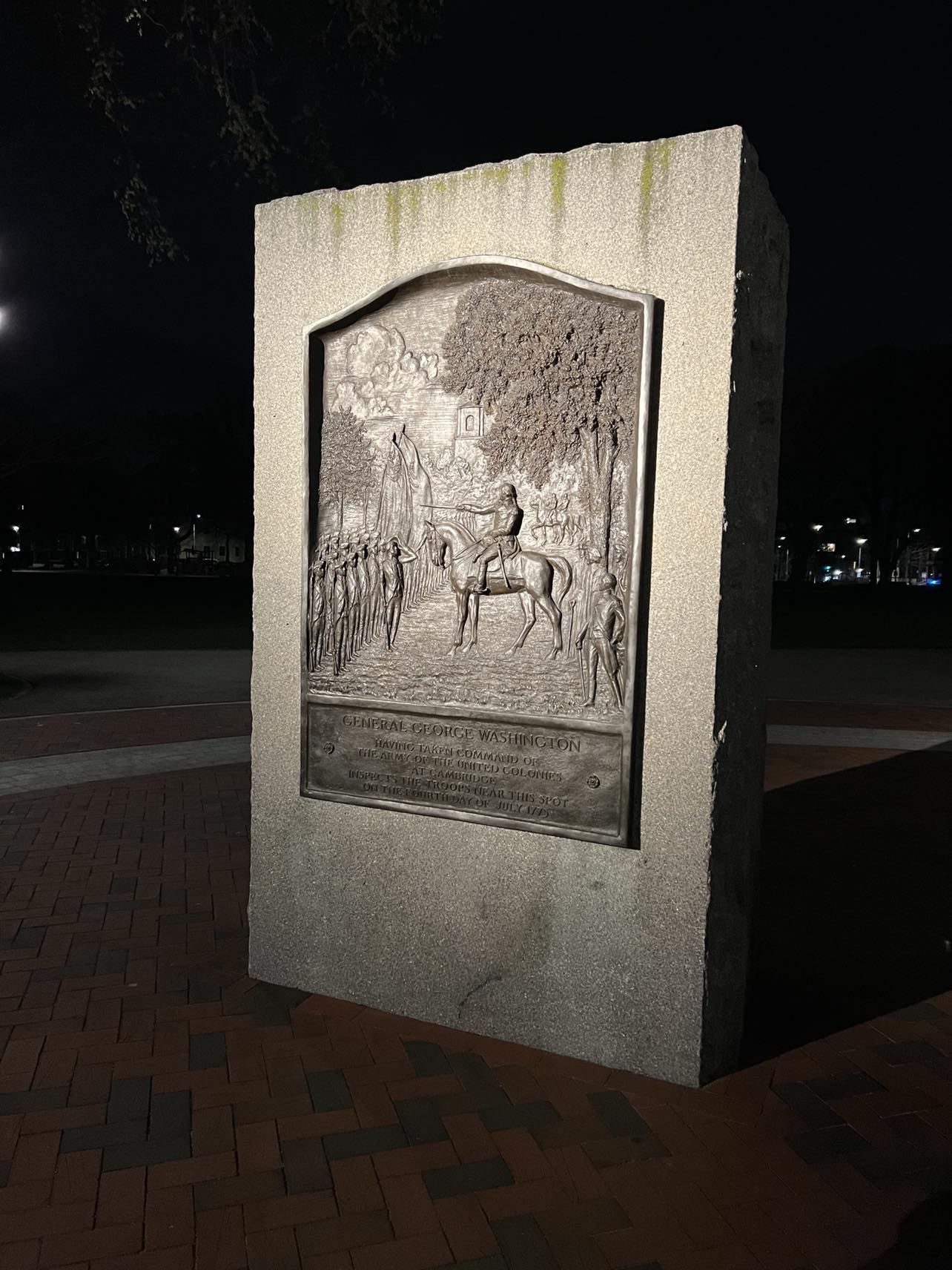
On July 3, 1775 George Washington formally took command of the Continental Army in Cambridge, Massachusetts. Appointed Commander-in-Chief by the Second Continental Congress on June 15, 1775, Washington arrived in Cambridge on July 3, 1775 and assumed command of a disorganized and poorly supplied force besieging British troops in Boston. His leadership would begin the transformation of colonial militias into a unified fighting force capable of challenging British military power.
Washington’s assumption of command occurred at a time when the American colonies were transitioning from protest to open rebellion. The battles of Lexington and Concord in April 1775 had already ignited armed conflict, and the Battle of Bunker Hill in June had demonstrated that colonial forces could stand up to British regulars, though at great cost. Washington understood the gravity of his new role. In a letter to the President of Congress, he wrote humbly, “I am truly sensible of the high Honor done me in this Appointment… I do not think myself equal to the Command I am honored with.” This characteristic modesty was paired with a strong sense of duty and resolve.
Washington assumes command at Cambridge, Courtesy Library of Congress
On July 3, Washington appeared before his troops on Cambridge Common, dressed in a blue coat with buff facings, signifying his Virginian roots. There is no official transcript of a speech he may have delivered that day, but contemporary accounts describe a solemn and determined atmosphere. One observer, Reverend William Emerson, noted in his diary, “General Washington… is a tall and noble-looking man, commanding the respect of all who see him.”
Washington immediately set to work imposing discipline, organizing supply chains, and creating a chain of command. Though former commander of the army, Major General Artemus Ward, worked hard on instilling discipline, he was not a man that instilled a lot of confidence. Washington was appalled by the state of the army, writing in frustration to Congress: “The Army… is in a very improper condition to carry on a vigorous War.” He introduced regular drills, uniform codes, and standardized procedures, striving to turn the disparate bands of militiamen into a functioning army. As historian David McCullough noted, “It was Washington’s presence alone that gave the army cohesion.”
Despite his military inexperience—Washington never commanded an army of this size—he brought a unifying vision and moral authority. His appointment was also politically astute, bridging the regional divide between New England and the southern colonies. A Virginian leading New England troops sent a clear message of unity in the face of British oppression.
Marker commemorating Washington on the Cambridge Common, photo by William Griffith
The Cambridge encampment remained Washington’s headquarters until March 1776, when he successfully forced the British evacuation of Boston by fortifying Dorchester Heights with cannons brought from Fort Ticonderoga. This early strategic victory, achieved without major bloodshed, was a major morale boost and affirmed Congress’s faith in their commander.
In retrospect, July 3, 1775, was the beginning of an enduring legacy of leadership and a love of Washington by his men and officers. Through discipline, vision, and personal integrity, he began shaping a ragtag collection of volunteers into the Continental Army, laying the groundwork for American independence.
Emerging Revolutionary War welcomes back Jeffrey Collin Wilford For Part I, click here.
General Benedict Arnold’s Betrayal
On the morning of September 21, 1780, while Captain John Van Dyk, only recently freed from the prison ship Jersey, was guarding West Point as part of Colonel John Lamb’s artillery unit, the HMS Vulture arrived at Haverstraw Bay and anchored just off Teller’s Point. Two men pressing apples at a cider mill on the shore became alarmed at the presence of a British warship on the river north of the “neutral ground,” and a barge disembarking from it filled with Redcoats. Not knowing their intent, both decided to take matters into their own hands and opened fire on the soldiers. John “Rifle Jack” Peterson, a veteran of the Battle of Saratoga, received his nickname due to his superior marksmanship. The other, Moses Sherwood was just 19 years old and a friend of Jack Peterson. Both were enlisted in the Westchester County militia. Their relationship was very close as Rifle Jack had held Sherwood’s father in his arms as he died at Saratoga three years earlier.
Croton (Teller’s) Point today – (Wilford)
Several of their shots hit their mark, wounding soldiers and prompting the barge to return to the Vulture which opened fire with a barrage of grapeshot on the two men as they crouched behind rocks. This signaled to the pair that the ship was within cannon range and they quickly made their way in the darkness to Fort Lafayette ten miles to the north to secure a cannon from the officer in charge, Colonel James Livingston.
Cannon that fired on the Vulture Peekskill Museum (Wilford)
At Peterson and Sherwood worked with several other soldiers to lug the 4-pounder back to the point while, unbeknownst to them, André slipped away from the Vulture. He made his way from the Vulture to shore, at around midnight, with Loyalist Joshua Hett Smith who had been instructed to gather him from the ship. His destination was a clandestine meeting on the river bank with American General Benedict Arnold, the famous war hero of Saratoga who had been plotting for months to turn against the cause of American independence. What was clear, by André’s account, was that this meeting was to be a fairly quick round-trip between the Vulture and shore under cover of darkness.
Instead, an unraveling of the circumstances dictated that he shed all previous warnings from British General Sir Henry Clinton to stay dressed in his regimental uniform, avoid enemy checkpoints, and not possess any incriminating papers. André admitted this to Clinton in a letter written after his capture and dated September 29, 1780 stating, “The Events of coming within an Enemys posts and of Changing my dress which led me to my present Situation were contrary to my own Intentions as they were to your Orders.” This would force him to become, in his own words, “involuntarily an impostor.”
As negotiations on the riverbank dragged on, likely due to Arnold’s negotiations around rank and compensation, daybreak drew near. Fearing discovery, and clearly against André’s original plan, they moved their talks to the home of Smith, which overlooked the river and the Vulture at anchor. During the meeting at Smith’s house, Arnold eventually handed over the defensive plans of the Continental Army’s citadel, West Point, and the minutes from General George Washington’s September 6th War Council meeting that created a vulnerability for the Americans that could have proved catastrophic.
It is easy to understand why West Point was so significant to the British. It was crucial, not just as a military installation situated on the banks of the Hudson between New England and the Southern Colonies, but as a symbol of American strength and resolve. Perched on the high ground overlooking the Hudson, West Point had been there to thwart British attempts to dominate the 300-mile-long river which would have allowed them to effectively cut off the rebels of New England from the rest of the colonies. Losing West Point would have taken an important strategic foothold away from the Americans. The potential of losing General Washington in the process would have also dealt a severely damaging blow to the American cause, if not ending the war altogether.
While the Arnold and André negotiations were taking place, a contingent of men, along with Peterson and Sherwood, had dragged the 4-pounder to Teller’s Point into position on the riverbank within range of the Vulture.
Early in the morning, awakened by cannon fire, the conspirators at Smith’s house could see the Americans in the distance opening fire on the ship. Though he did not immediately know it, this would permanently separate André from his only means of a safe escape. Hit several times and stranded in the middle of the Hudson by a slack tide and unfavorable winds, the Vulture endured the cannon fire but eventually cut her cables to drift with the currents south to Dobbs Ferry.
As a result of the retreat of the Vulture, an alternative plan was devised to get André back to the British lines. On the morning of the 22nd, in disguise and with a pass written by Arnold to travel unmolested behind American lines under the alias John Anderson, he and Smith began the overland trek back to British-occupied New York City. Arnold returned to his home at West Point. What was clear from André’s later testimony was that he felt like this change of plan made him a victim of circumstance saying he “thought it was settled that in the way I came I was also to return.”
What were the motivations for the thirty-nine-year-old hero of Saratoga, who had risen through the military ranks to become one of Washington’s most effective field generals, to give up not only West Point, but his reputation in history? Much has been written, but what is known is that he had been living a life well beyond his means. His wife Peggy Shippen, half his age and from a prominent Philadelphia Loyalist merchant family, had a taste for luxury. To woo the 19-year-old, Arnold openly lived a life of excess while in Philadelphia which turned more than a few heads, wondering if he had secretly been trading with the British.
Benedict Arnold was also known for his self-assured nature and temper. Infighting within certain circles of the military, and his discovery that several junior officers had received promotions ahead of him, provided him even more motivation to turn. Arnold felt the military did not display the respect that was due a war hero and this sentiment was on display in a letter to Washington on May 5, 1779. “Having made every sacrifice of fortune and blood, and become a cripple in the service of my country, I little expected to meet the ungrateful returns I have received of my countrymen.” Perhaps the influence placed upon him by his relationship with Peggy due to her father’s position, and his criticism of the American cause added more weight to his self-imposed need to betray his country. Consequently, he began to develop a plan to turn over West Point to British General Sir Henry Clinton, with Major John André as the British intermediary.
The second day treading enemy soil was rather uneventful as André and Smith carefully made their way south to the original King’s Ferry which crossed the Hudson between Stony Point and Verplanck, the site of the former Fort Lafayette. The crossing was a nerve-wracking affair for André as this was the main ferry crossing for all Continental troops and supplies just outside of the watchful eye of the British forces in New York City 45 miles to the south. Following the Crom-Pond Road, the journey was slow and deliberate, befitting a spy and his Loyalist guide. As nightfall approached, they bedded down at a farmhouse before continuing their journey early the next morning.
Isaac Underhill House – Where André ate his last breakfast (Wilford)
The pair continued to make their way along the Croton River until reaching the southernmost lines of the Continental Army where Smith left André just after finishing their breakfast at the Isaac Underhill house. By the time André had reached Tarrytown, New York, by way of the Albany Post Road, a road he had been told to avoid, his luck had run out. Isaac Underhill House – Where André ate his last breakfast (Wilford)
At 9 o’clock on the morning of September 23, 1780, André was stopped by three militiamen at Clark’s Kill, a stream that today marks the boundary between Sleepy Hollow and Tarrytown, New York. According to André, he “was taken by three Volunteers who not Satisfied with my pass riffled me and finding papers Made me a prisoner.” Isaac Van Wart, John Paulding, and David Williams would go on to be considered heroes by most, but certainly not by all. One of their leading detractors was the person George Washington entrusted with returning André to West Point and ultimately Tappan for trial, Major Benjamin Tallmadge. Tallmadge was Washington’s chief intelligence officer and he believed the three militiamen were “of that class of person who passed between both armies.” He felt they lacked the very character he would end up heaping upon André.
André Capture Site (Wilford)
While the circumstances surrounding Major John André’s capture unfolded in Tarrytown, General Arnold, aware that his treacherous plot had been uncovered, and leaving behind his baby and a hysterically distraught Peggy Shippen, raced to avoid capture and meet up with the HMS Vulture. Upon his return from a meeting with French General Rochambeau at Hartford Connecticut, Washington, unaware of any involvement by Shippen, allowed her to return to her family in Philadelphia, perhaps letting go of an important bargaining chip in the process. It would later be learned that she might have been complicit in her husband’s treason. While she openly denied it, an admission from Theodosia Burr, Aaron Burr’s wife, that she admitted to her involvement as well as a £500 annual pension from King George III would suggest this.
Emerging Revolutionary War welcomes guest historian Riley Sullivan, Professor of History at San Jacinto College in Houston, Texas.
While many might be familiar with famed engagements at places like Bunker Hill, Saratoga, and Yorktown during the Revolutionary War, few are familiar with the actions that took place near New London, Connecticut in September of 1781. However, for the people of Connecticut, the battles that took place near Groton Heights and New London have been immortalized as a campaign highlighted by treachery and massacre. Largely, this interpretation has been adopted due to the commander of the British forces who engaged in this raid, Benedict Arnold.
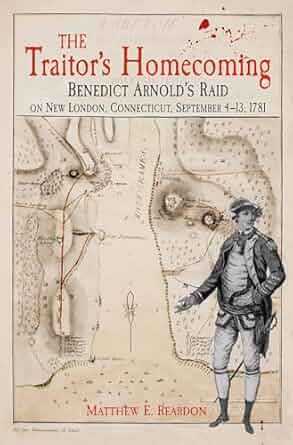
Perhaps no other name in American History brings about more scorn than that of Benedict Arnold. Having defected to the British cause late in the Revolutionary War, for Americans at the time–and even today–he is viewed as a modern day Judas. However, with such infamy ultimately comes much misinterpretation of this historical figure and the events he was involved in. In Matthew E. Reardon’s recent study The Traitor’s Homecoming, he attempts to undo much of this misinterpretation. Drawing on previously unused primary sources, Reardon constructs an engaging argument that challenges the traditional view of Arnold’s conduct in the New London raid.
To construct this narrative of the New London raid, Reardon attempts to place into context the setting of the New London raid. By this stage in the war, the conflict in New York had been a state of stalemate for the previous few years. However, with Generals Washington and Rochambeu’s combined Franco-American forces on the move, the British commander in the region, Henry Clinton—informed by faulty intelligence as Reardon demonstrated—was convinced that an attack on New York was imminent. As a result, to divert Washington’s attention away from a possible attack on New York, Clinton authorized Arnold to lead a contingent of British troops to attack the vulnerable Connecticut coastline.
New London made the ideal target for a British raid as it had been a hotbed for commerce and privateering for the Patriot cause. To conduct such a raid, Clinton turned to Arnold as he was both a native of Connecticut and familiar with the New London area. Largely only being contested by militia behind a number of forts that guarded approaches to both the town and the Thames River, Arnold’s combined force of Loyalists, Hessian Jaegers, and British regulars made quick work of the Patriot militia throughout the campaign. Even with New London in their hands, outside events–notably Clinton’s realization that Washington was moving on Cornwallis at Yorktown–led to Arnold having to relinquish his gains. However, with the high casualties suffered by both sides during the raid, coupled with the burning of much of the town, the events “cemented Benedict Arnold’s reputation for villainy.” (x)
When considering the traditional interpretation of Arnold’s raid on New London, Reardon makes it clear throughout his work that a “distorted interpretation” of the events had emerged (ix). From veterans to the Groton Battle Monument at Fort Griswold Battlefield State Park, the events that took place in Connecticut in 1781 have been enshrined as a massacre of Connecticut militia at the hands of Arnold. However, when looking at contemporary letters, diaries, and later pension records, Reardon demonstrates that there are some noticeable gaps within the traditional account of this campaign. In particular, when examining the death of Colonel William Ledyard–who was alleged to have been killed while attempting to surrender–Reardon concluded that through these sources, the traditional accounts accepted proved to be inconsistent with contemporary accounts of the campaign.
But, even with these inconsistencies, this is not to say that the fighting at Fort Griswold and the subsequent burning of New London was less than brutal. Reardon wrote that “the immediate reaction of the community was shock” and that “for many it was beyond comprehension.” (339) To no surprise, this sheer shock of the fighting coupled with Arnold’s involvement led to this distorted narrative of the campaign.
Through the examination of contemporary letters, diaries, and later pension applications, Reardon is able to reconstruct in great detail the events of Arnold’s New London raid and offer an unbiased narrative. By providing these fresh sources in The Traitor’s Homecoming, Reardon effectively builds on the existing literature of the subject and demonstrates how public perception can lead to the misinterpretation of historical events like that of the New London raid.
Details:
Matthew E. Reardon, The Traitor’s Homecoming: Benedict Arnold’s Raid on New London, Connecticut, September 4-13, 1781. Published by: Savas Beatie LLC. Summer 2024. 448 Pages.
*Check out Emerging Revolutionary War’s YouTube page as well for a “Rev War Revelry” interview with author Matthew E. Reardon.*
Emerging Revolutionary War welcomes historian and educator Jeffrey Collin Wilford to theblog. A brief biog is at the bottom of this post. A list of sources will be at the bottom of the concluding Part III.
Major John André and John Van Dyk: Continental Artillery Soldier
Much has been written about the betrayal of America by Benedict Arnold. However, one small but candidly morbid fact buried in the story has not. It relates to the disposition of British Major John André’s remains as they lay in a wooden ossuary on a British mail ship on the banks of the Hudson River while awaiting their return to England in 1821. The only recorded recollection of this event was in a letter written by a 67-year-old former Revolutionary War soldier and published in a Virginia newspaper in 1825. This man also happened to be one of the four officers who escorted André to the gallows in Tappan, New York, on October 2, 1780.
John Van Dyk lived a storied life, serving America as a militiaman, Continental Artillery soldier, customs officer, New York City assessor, and assistant alderman. He came from an old Dutch family that had settled in the original New Amsterdam colony, which would eventually become Manhattan. There is ample evidence that, in 1775, he was actively involved in significant acts of disobedience against British rule with other “Liberty Boys,” as the New York Sons of Liberty preferred to call themselves.
One of these acts was stealing muskets and cannons from the Royal Armory and Fort George. Under the encouragement of Isaac Sears and Marinus Willett, he was one of a crowd of colonists who broke into the Royal Arsenal at City Hall on April 23, 1775, stealing 550 muskets, bayonets, and related munitions. The angry mob had been spurred to act by the attacks on their fellow countrymen the week previous at Lexington and Concord in Massachusetts. Every person who took a musket was required to sign for it, signaling a promise to return it if it was needed to fight against British occupation. That call came on July 4, 1775, when the New York Provincial Congress ordered them recalled to outfit newly commissioned Colonel Alexander McDougall’s 1st New York Regiment. It was relayed that anyone who refused would be deemed an enemy of the state. In all, 434 muskets were returned.
Exactly four months later, Captain John Van Dyk was one of sixty or so men who, under Liberty Boys Colonel John Lasher and Colonel John Lamb, executed the orders of the New York Provincial Congress to remove the cannon from Fort George at the southern tip of Manhattan and drag them back to the area of City Hall. With tensions high in the city, the state leaders feared they would be turned against the colonists if they were left in the hands of the British. One of the militia members assisting in the removal effort was 19-year-old King’s College student Alexander Hamilton of the Hearts of Oak independent militia. By this time, civil unrest had relegated the British colonial government to operating from naval ships anchored in New York Harbor, which made keeping the cannon secure from a more agitated population nearly impossible.
Just before midnight on August 23, 1775, a skirmish ensued between Lasher and Lamb’s men removing the cannon, and a British barge near the shore. It had been sent to monitor the rebels’ activity by Captain George Vandeput from the HMS Asia, a 64-gun British warship anchored near shore. Musket shots rang out, presumably started by the British, which resulted in the killing of a King’s soldier on the barge. As a result, the Asia turned broadside and opened fire with their cannons in a barrage on the city that lasted for three hours. A city whose population had already been diminished by the fear of a coming conflict, shrunk even further due to the terror experienced that night.
John Van Dyk spent most of the next eight years as an officer in General Henry Knox’s artillery while under the command of Colonel John Lamb. During the war, he saw action at Brooklyn, Harlem Heights, White Plains, Trenton, Brandywine, Germantown, Crosswicks Creek, Monmouth, and Short Hills. He was also at both Morristown winter encampments and Valley Forge. In 1780 he was captured by the British off the coast of New Jersey and confined on the prison ship HMS Jersey in Brooklyn before being released that summer.
Van Dyk had spent months out of commission in late 1779 and early 1780 with what, according to his symptoms, was probably malaria or yellow fever. He petitioned General Knox, who, in turn, appealed to General Washington for leave to recuperate. Making his way to West Point to meet with General Washington he was instructed by the Commander-in-Chief’s aide-de-camp to be evaluated by Dr. John Cochran, physician and surgeon general of the army of the Middle Department. On Cochran’s recommendation, General Washington wrote to President Samuel Huntington asking that the Continental Congress grant Van Dyk’s petition for an 8-month Furlow to sea to convalesce, which was common at the time as it was believed the fresh sea air was helpful to healing. Approved, it would take six months before he boarded the brig General Reed with a crew of 120 and 16 guns, a privateer out of Philadelphia commanded by Samuel Davidson. Once aboard ship he was temporarily made a Lieutenant of Marines.
Only two days into the voyage, on April 21, 1780, things took an immediate turn for the worse when they were intercepted and captured by the 28-gun HMS Iris and the 16-gun sloop HMS Vulture. The Iris was the former American warship USS Hancock, captured in July of 1777 and renamed by the British. Van Dyk was brought to Brooklyn and placed on the prison ship Jersey in Wallabout Bay, one of the most notorious and deadly places for holding American prisoners of war. Conditions were so poor that, while approximately 6,800 American soldiers died in battle during the Revolution, over 11,000 prisoners died on the Jersey alone! Fortunately for John Van Dyk, American officers were often traded off the Jersey for British officers who were in the custody of American forces. Within two months he was released and traveled to his temporary home of Elizabethtown, New Jersey to finish recuperating before rejoining Lamb’s artillery in Tappan, New York.
John Van Dyk had experienced many horrors of war in the years and months leading up to the morning of September 21, 1780, when British Major John André, an Adjutant General to British General Sir Henry Clinton, left New York City and sailed up the Hudson River. This pivotal incident would brand one of Washington’s closest generals a traitor and lead to the death of the esteemed and well-liked André. Ironically, Major André traveled on the very same sloop that had assisted in the capture of Captain Van Dyk just six months earlier.
Bio:
Jeffrey Wilford has been an educator in Maine for over 30 years where he holds certifications in history and science. He received a bachelor’s degree in communications with an emphasis in journalism from California State University – Fullerton and a master’s degree in education, teaching and learning, from the University of Maine. In addition to his career teaching, he has worked as a general assignment newspaper reporter and an assistant to the press secretary of former Maine Governor and US Congressman Joseph Brennen. He lives in Maine with his wife Nicolette Rolde Wilford.






 Emerging Revolutionary War Era