The Nassau Cannon

In March, 1776 Commodore Esek Hopkins led the bulk of the Continental Navy on a raid to the Bahamas, where it occupied the town of New Providence on Nassau Island for two weeks.  Hopkins and his captains were drawn by a report of gunpowder stored in the town, which the patriot cause desperately needed.[1]  Unfortunately for Hopkins, the colony’s governor had spirited away some 150 barrels the night before the American flotilla’s arrival.  Not all was lost as the Marines quickly demanded and received the surrender of two small forts defending the town and its harbor.  With those in hand, Hopkins and his men quickly got to work removing artillery, military stores, and other useful supplies.

            While the American Marines and sailors managed to recover just 24 casks of powder, their haul in sizeable artillery pieces and mortars was impressive: 88 cannon ranging from 9- to 36-pounders; 15 mortars from 4-11 inches; 5,458 shells; 11,071 roundshot; 165 chain & double shot, plus fuses, rams, sponges, carriage trucks, mortar beds, copper hoops, and various stores not required for artillery.[2]  It was a boon to be sure.  The curious part of Hopkins’ inventory of captured war material, however, is that he sent it to Connecticut Governor Jonathan Trumbull, not a representative of the Naval Committee that had issued his orders.  To John Hancock, president of the Continental Congress, he sent a report of his mission, but only mentioned “I have taken all the Stores onboard the fleet.”[3]  Indeed, his report of the armaments aboard the British schooner Hawke, which the fleet captured on its return to American waters, was more complete.  It took another day, until April 9, for Hopkins to forward the inventory of seized cannon.  Congress merely resolved that an extract of his letter should be published for delegates to peruse.[4] Perhaps inadvertently, Hopkins exacerbated regional political conflicts and undermined his own command.

Continue reading “The Nassau Cannon”

“Rev War Revelry” American Triumph with Tom Hand

Welcome to the first “Rev War Revelry” of 2024! To kick off the new year, Emerging Revolutionary War is joined by Tom Hand, author, historian, and founder of Americana Corner. However, in the later stages of 20234, Tom added published book author to his lengthy list of accomplishments. His book, American Triumph is now available via his website.

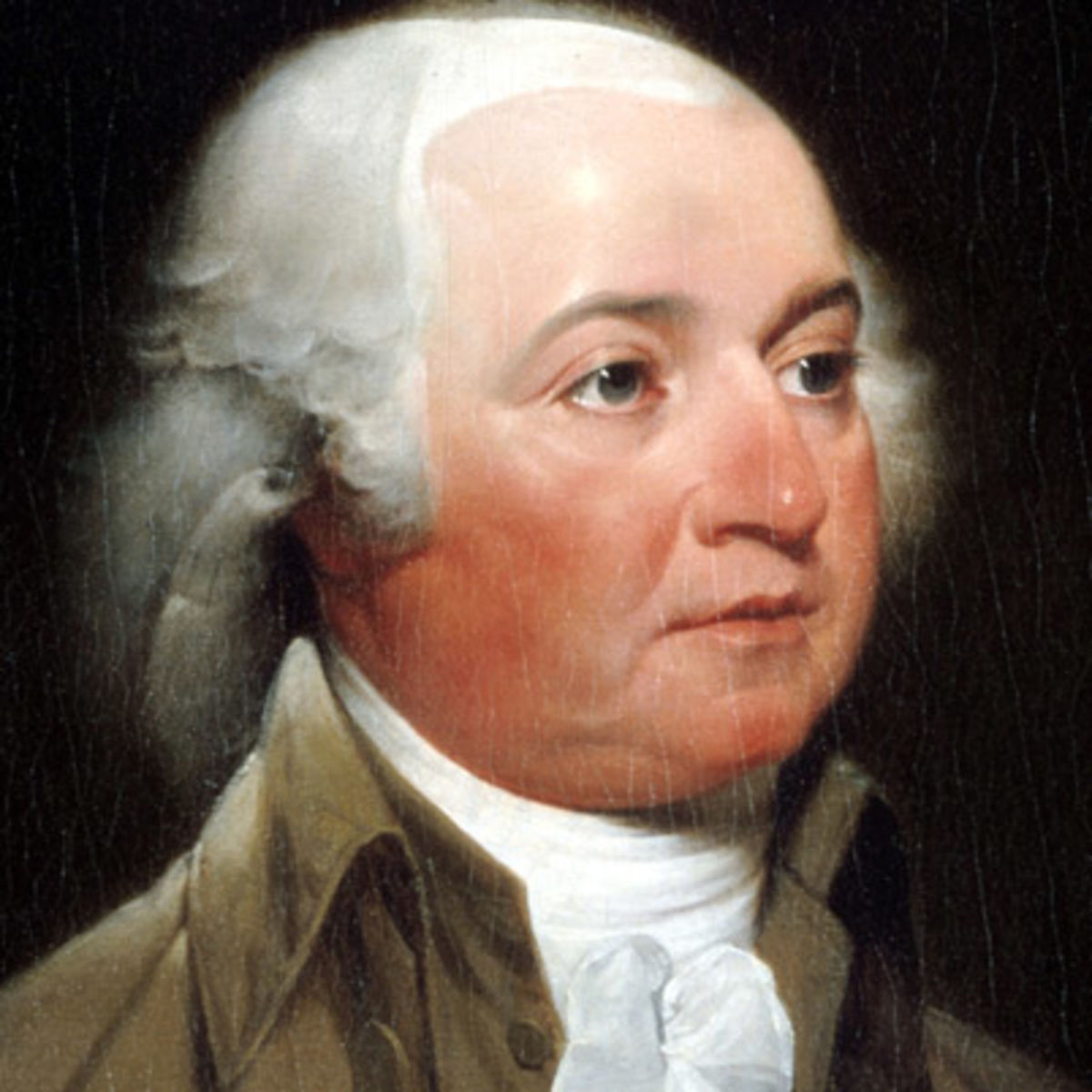
The book, “masterly blends the personal experiences and historic milestones” of three luminaries of the early Republic, Benjamin Franklin, George Washington, and John Adams. The book, with a plethora of graphics, sidebars, and informational tidbits aims to provide a “captivating collection of stories” for the “everyday American.”

We look forward to a lively and friendly discussion with Tom. Hope you can tune in, to Emerging Revolutionary War’s Facebook page at 7 p.m. EDT this Sunday, January 7th.

Jefferson County, West Virginia: Home of Two Revolutionary War Generals

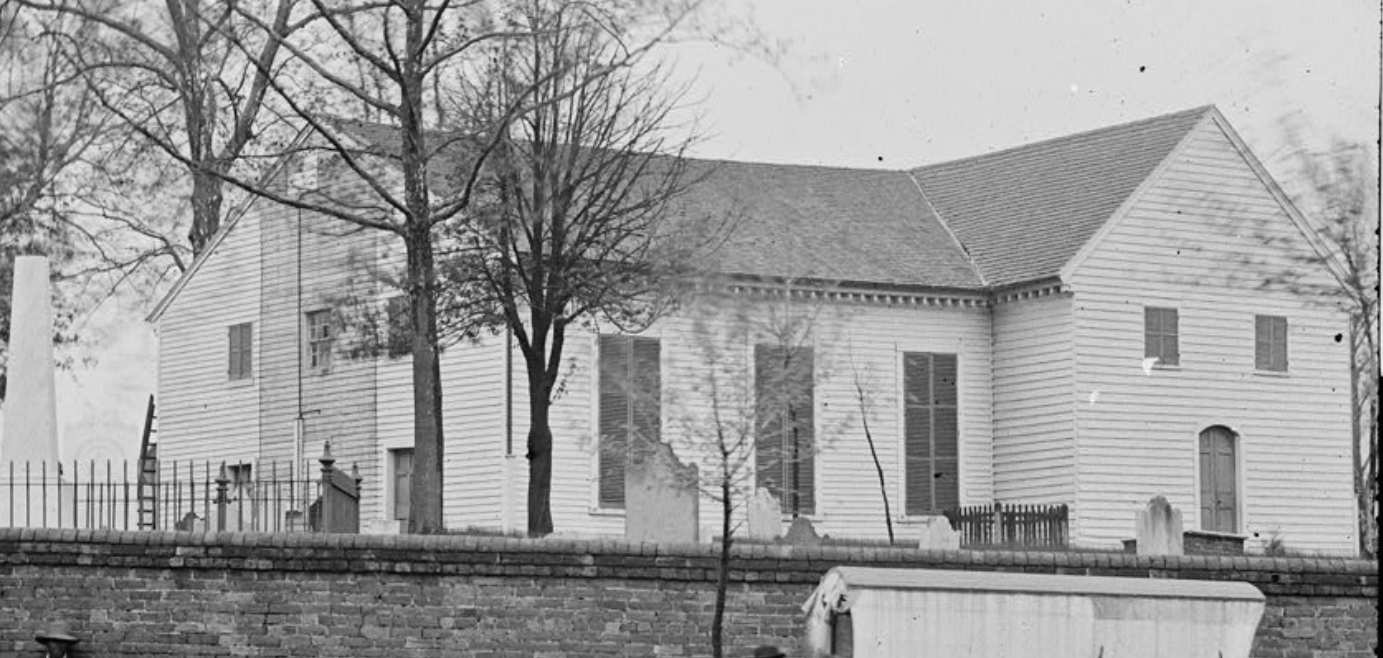
Though it is most commonly associated with its Civil War history, Jefferson County, West Virginia, boasts a large amount of Revolutionary War history, too. One does not have to travel far in the county to stumble on a Washington family home (there were ten, seven still stand) or find Washington family members buried in the Zion Episcopal Cemetery in Charlestown, the county seat (this cemetery supposedly boasts more Washington family graves than any other place in the United States).

Beyond Washington, though, Jefferson County can claim at least two other well-known Revolutionary War generals on its citizen rolls: Horatio Gates and Charles Lee. Both of their countryside estates still stand today but are privately owned.

Traveller’s Rest (Library of Congress)

Traveller’s Rest, built by Horatio Gates in 1773, stands west of Kearneysville in the western section of the county. Gates employed carpenter John Ariss for the wooden portions of the construction project, a man who also worked on many of the local Washington homes. Gates lived at Traveller’s Rest until his service in the Continental Army took him away from his home. Following his defeat at the Battle of Camden in 1780 and his subsequent sidelining by the Continental Congress, Gates returned to his plantation, where he lived quietly. In 1790, the former general freed his slaves, sold the house, and moved to New York, where he died in 1806.

Three miles south of Gates lived Charles Lee at Prato Rio, a Portuguese phrase meaning “Stream on the meadow.” Lee did not build his home but purchased the 1733 structure in 1774 after some urging from Gates. Following his own sacking in the wake of the Battle of Monmouth, Lee returned to his home in 1779, a place he referred to as “The Hut.” Lee spent his last years there quietly surrounded by his three dogs, Father, Son, and Holy Ghost. Supposedly, when he learned of a possible visit from George Washington, Lee attached a note to his door that read, “No dinner cooked here to-day.”

Lee’s house was less conventional than Gates’ home. The inside contained no walls—only chalk lines delineated the different rooms. Lee remarked, “I can sit in any corner, and give orders, and overlook the whole, without moving my chair.”

Prato Rio (West Virginia State Historic Preservation Office)

While both homes can be seen from public roads today, they are not open to the public. Please respect the owners’ privacy.

Rev War Revelry: “For Britannia’s Glory and Wealth” with Author and Historian Glenn Williams, PhD

Join us this Sunday night at 7pm as we welcome Glenn F. Williams, PhD to our popular Sunday night Rev War Revelry! Glenn will examine the political and economic causes of the American Revolution beginning at the end of the Seven Years War / French and Indian War through the resistance movements. He will dispel or clarify some of the popular beliefs about the grievances that eventually led the thirteen colonies to break with the Mother Country. This will be a timely discussion as we approach the 250th anniversary of the Boston Tea Party. Glenn Williams is a retired U.S. Army officer that until recently also enjoyed a “second career” as a military historian. He retired as a senior Historian after 18 years at the U.S. Army Center of Military History and 3 1/2 years as the historian of the American Battlefield Protection Program of the U.S. National Park Service.

Grab your favorite drink and tune in, we will be live so feel free to drop your questions in the live chat. If you are not able to tune in on Sunday, the video will be placed on our You Tube and podcast channels.

Rev War Revelry: Old South Meeting House and the Boston Tea Party

Join us this Sunday, October 15th at 7pm as we welcome Matthew Wilding, Director of Education and Interpretation at Revolutionary Spaces. Revolutionary Spaces manages the Old South Meeting House and the Old State House in historic Boston. We will discuss the history of the Old South Meeting House and its important role in the revolutionary movement in Boston (especially during the Boston Tea Party). We will also cover their plans for the 250th anniversary of the Boston Tea Party, including their new exhibit on the destruction of property in public protests.

Grab a drink and follow along as we start to gear up for the 250th anniversary of the Boston Tea Party with Emerging Revolutionary War!

October 1, 2023 Rev War Revelry: The Camden Re-Burial Project: Discussion with Archeologists and Scholars James Legg & Steven Smith, Ph.D

Join us as we discuss the excavation and successful recovery of the remains of 14 veterans of the August 16, 1780, Battle of Camden with James Legg and Steven Smith, Ph.D., the lead archeologists of the Camden Re-Burial Project which began in September 2022. We will discuss the indepth research conducted and the precise archaeological work that was done on the battlefield. Also learn about the reburial ceremony and where the soldiers were finally laid to rest.

This is a great opportunity to learn about a rare discovery on a American Revolutionary War battlefield. The Camden battlefield is a great archaeological site that is revealing multiple stories and helping historians piece together a better understanding of the battle. Grab a drink and join us on our Facebook page for a great evening of archaeology and history!

August 15, 1780 – Horatio Gates, Thomas Sumter and the road to Camden

Major General Horatio Gates, “Hero of Saratoga” was tasked with saving the American effort in the south. Credit NPS

On August 15, Maj. Gen. Horatio Gates began to finalize his plans to move against Camden, SC. Gates, appointed as the new commander of the Southern Department the previous month, believed the British garrison in Camden was weak. Gates was receiving intelligence gathered by partisan commander Thomas Sumter who was acting in and around Camden. He informed Gates that the American army outnumbered the British post and that a large portion of the men at Camden were taken ill and not fit for duty (on this account, Sumter was correct). Sumter did not provide the intelligence that Lord Cornwallis was now in Camden with reinforcements and was taking personal command of the British force in Camden.

Modern day image of the area at Rugeley’s Mills, with modern day Flat Rock Road following the historic trace of the Great Wagon Road. Credit Rob Orrison

With this information, Gates felt confident in his ability to take on the British in Camden. He developed a plan that involved a three-part movement. He would leave his force south to Saunder’s Creek (about six miles north of Camden) and establish a strong defensive position. He also ordered Francis Marion and his men to the southeast. Gates wanted Marion to take command of the Williamsburg militia, watch the British movements, and destroy boats in the Santee River that a defeated Cornwallis might need to retreat from Camden to Charleston. The third prong he ordered a few days earlier on August 13. Gates, under the encouragement of Thomas Sumter, decided to send 100 Maryland Continentals and 300 Carolina militiamen (as well as two brass three pounders) to join Sumter and move down the western side of the Wateree. From this location Sumter could attack supplies and reinforcements going into Camden from Ninety Six to the west. Gates’s confidence was evident.

South Carolina militia Brig. Gen Thomas Sumter. Credit New York Public Library

As Gates made his final disposition to move south, Sumter’s militia along with his Continental detachment met some success west of Camden. The Wateree River flowed south just one mile west of Camden. Near the important Wateree Ferry that served the major route west from Camden, Loyalist Lt. Col. James Cary built a small fort on his farm near the ferry. Sumter was aware of the fort and decided to see if he could capture it. When Col. Thomas Taylor of Sumter’s command launched the attack, most of the defenders inside were asleep, and the others were deceived by Patriot militia dressed just like those occupying the fort. The Loyalists immediately surrendered. Sumter reported that his men killed 7 and captured 30 prisoners, including Cary. Also included in the loot were 38 wagons of supplies and nearly 300 head of cattle. After capturing Cary’s Fort, Sumter was also able to attack and capture a relief column from Ninety Six to Camden. Sumter’s spoils from this attack numbered nearly 70 prisoners and numerous wagons. Sumter also reaffirmed his earlier intelligence to Gates by writing that the British in Camden “do not exceed two thousand, and not as many as one thousand of the militia, who aregenerally sickly, and much dispirited.” Sumter’s intelligence, though not accurate, gave Gates encouragement on the upcoming movement toward Camden. At 10pm on August 15, Gates had his army on the road south towards Camden.

Gates was flush with optimism, at that same time Cornwallis had his army on the road north. Though the British forces were about half the size of Gates, they were more than Gates expected and consisted of some of the best men in the British army led by one of their most accomplished generals. Soon, due to a twist of fate, these two armies collided along the Great Wagon Road in the long life pine forest of South Carolina. The result was one of the worst days in the history of the United States Army.

Authors Rob Orrison and Mark Wilcox’s new book “All That Can Be Expected: The Battle of Camden and the British High Tide in the South, August 16, 1780” is due out August, 2023 and available at: https://www.savasbeatie.com/

Review: “East Florida in the Revolutionary Era, 1763–1785” by George Kotlik

Thirteen of the Great Britain’s North American colonies moved toward independence in 1775, declaring the fact officially the following year with the issuance of the Declaration of Independence. Perched below these thirteen rebellious provinces was the colony of East Florida. Earned after the Seven Year’s War by Great Britain from Spain, the most populous city an oldest permanently established European metropolis was St. Augustine, which was also the capital of the colony. This colony, through the eight years of the American Revolutionary War, had a tenuous connection with their neighbors to the north. Largely forgotten in the pantheon of history describing this period, from the time of Britain gaining possession in 1763 through the end of the Revolutionary era in this historian’s estimation, in 1785.

Entitled, East Florida in the Revolutionary Era, 1763-1785 and penned by George Kotlik, a historian specializing in 18th century North American history, the publication offers “an accessible and detailed narrative of the East Florida during the American Revolution.” (pg. 8).

What ensues in the following pages is a brief yet complete overview of the military, political, social, and economic history within those years of East Florida. Some of the names in the pages are well known to enthusiasts of the American Revolutionary War era whereas others will be new names to add to the repertoire for further study. From Governor Patrick Tonyn, British general and last governor for England of East Florida to bringing attention to the William Augustus Bowles, a Maryland born Loyalist, sympathetic to the Muscogee Native Americans of East Florida who tried in vain from the last decade of the 18th century, to establish an independent state for the tribe, with British support. These are just two of the historical personas that Kotlik discusses in his narrative, the rest await you within the pages of the book!

Although no major military actions happened within the confines of the colony that does not mean the role of East Florida in relation to the American Revolution should not be marginalized. “Militias were raised, a general assembly was postponed, St. Augustine experienced a heightened British troop presence, planters between the St. Johns and St. Marys Rivers suffered at the hands of George raiding parties, and a constant threat of a Spanish or American invasion” all affected the psyches and lives of East Floridians. (pg. 104-105).

The hope from Kotlik is to provide the launching point for further discussion into the role of East Florida specifically and Florida in general during the revolutionary period. “Such a lack of coverage is a reminder for scholars to to emphasize East Florida’s presence in the war that made America.” (pg. 111). With this history in hand, Kotlik has provided the necessary overview for further exploration.

Publisher: NewSouth Books, University of Georgia Press, 2023
156 pages plus images

Rev War Revelry: I Can’t Tell A Lie: A New Look at Parson Weems with Author and Historian James Bish

Parson Weems’ Fable; by Grant Wood, Amon Carter Museum of American Art, Fort Worth, Texas

George Washington’s lifetime family associations, primarily his Ball family relations, were relied on byWashington’s first biographer Parson Weems. James Bish’s new book “I Can’t Tell A Lie” looks into the Washington and Ball family associations, along with Weems’ family associations. Relying on these close associations, he identifies the sources for Weems’ many anecdotes regarding Washington. Mr Bish will also focus on the many Revolutionary War connections including The Prayer at Valley Forge, Dr James Craik, Col. William Grayson, John Cadwalader, Henry Lee II and Henry Lee lll.

Be sure to grab a drink, join us to learn a new theory about the Cherry Tree, Washington’s Prayer at Valley Forge and other Parson Weems’ anecdotes, in this interesting work about Parson Mason Weems and George Washington.

Rev War Revelry Tackles the Myth of the Battle of Waxhaws

The Battle of Waxhaws, fought on May 29, 1780, was a lopsided British victory by Lieutenant Colonel Banastre Tarleton’s British cavalry over American Colonel Abraham Buford’s Continental forces in Waxhaws South Carolina. Buford lost 316 of 350 men with the British losing less than 20. Known popularly as “Buford’s Massacre,” Continental leaders used the battle as a propaganda tool against the Crown forces in the south. But, was it really a massacre?

Join us as we welcome historian and author Dr. Jim Piecuch as we discuss his research and theory about the Battle of Waxhaws and its aftermath. Dr. Piecuch has written several books on the Southern Campaign of the American Revolution including his book “Blood Be Upon Your Head: Tarleton and the Myth of Buford’s Massacre.” This Rev War Revelry will be pre-recorded and posted on May 28th at 7pm. Grab a drink and a good seat and enjoy this great presentation on one of the most controversial battles of the American Revolution.