Emerging Revolutionary War checks in with Tom Hand and Americana Corner. Here is what has has been published on that blog for the month of July.
Ben Franklin Enters Politics July 26, 2022
Benjamin Franklin retired from an active role in his printing business in 1748 at the age of 42. His work had made him a wealthy man, and he decided to devote the remainder of his life to civic improvements and governmental affairs. Franklin became a member of the Philadelphia City Council that same year, beginning a period of more than four decades of involvement in American politics and statecraft.
Virginia’s House of Burgesses, British America’s First Elected Legislature July 19, 2022
The Colony of Virginia was established at Jamestown by the Virginia Company in 1607 as a for-profit venture by its investors. To bring order to the province, Governor George Yeardley created a one-house or unicameral General Assembly on July 30, 1619.
When the English began to settle North America in the 1600’s, the leaders of the various colonies had different motives. While all colonies exercised their authority in the King’s name, they were not created in the same mold, and some had more autonomy than others. In fact, there were three different types of colonies: royal, self-governing, and proprietary.
Ben Franklin, America’s First Man of Science July 5, 2022
Benjamin Franklin was one of the world’s foremost inventors and scientists in the 1700s. His creative genius and inventiveness led to many significant discoveries that made living life easier for all. Moreover, he was proof positive that brilliant minds existed in British America, despite its backwoods reputation in Europe.
We are happy to welcome Scott Stroh to our Third Annual Symposium on the American Revolution, co-hosted with Gadsby’s Tavern Museum, The Lyceum and Emerging Revolutionary War. This year’s theme is “The World Turned Upside: The American Revolution’s Impact on a Global Scale. We asked Scott to answer a few questions about their talk and their passion for history.
Scott Stroh was born in Philadelphia, PA, but family roots along the Chesapeake Bay fostered a deep love of Virginia history at a young age. Mr. Stroh Graduated from Randolph-Macon College in Ashland, VA with a BA in History and Education in 1992 and from Middle Tennessee State University in Murfreesboro, TN with a MA in History and Museum Studies in 1997.
Mr. Stroh served as Curator of Collections and Interpretation at the Anacortes Museum in Anacortes, WA, as Curator at Historic Spanish Point in Osprey, FL, as Executive Director of the Roanoke Island Commission in Manteo, NC, as Florida’s State Historic Preservation Officer and Director of Historical Resources, and as Executive Director of the Milwaukee County Historical Society. He was appointed Executive Director of Gunston Hall in June 2013.
What first attracted you to the study of early American history? What keeps you involved in the study of this history? Do you find these things are the same or different?
Growing up in Philadelphia I fell in love with history and, in particular, early American history as a child. Even at a young age, I was very interested in the people who defined this period and I voraciously read biographies about anybody living during that period of time. My favorite museum was also Franklin Court, in part because they had a large room with telephones that allowed you to call and “talk” with the Founders, but also with lesser known figures like Absalom Jones (first African American to be ordained a priest in the Episcopal of the United States). These moments, and others like them, were defining experiences of my childhood and directly contributed to my career in museums.
I remain involved with this history not only because of my role at Gunston Hall, but perhaps more importantly because I believe learning about and understanding this history is essential to being an informed and productive citizen today.
I admit, I was skeptical when I saw the book on the bookshelf of my local bookstore and then again at the county library. Another biography on the Marquis de Lafayette? Was one truly needed? Four days later with the book finished and now laying beside me as I type this review I can emphatically say “yes” that this biography was needed about the most celebrated Frenchman in the history of the United States.
Having read previously a biography solely on Lafayette and another where a historian compared him as a revolutionary brother to Thomas Jefferson, I had a baseline knowledge of the marquis. Mike Duncan, popular history podcaster and New York Times-Bestselling Author provides a very readable, engaging biography that moves gracefully through Lafayette’s life, more graceful than supposedly the young Frenchman’s first dance at Versailles in front of Marie Antoinette.
After a brief but concise overview of the young Lafayettes’s formative years, Duncan dedicates the majority of the narrative of how the Frenchman became the “hero of two worlds.” From how he navigated his escape to America in 1777 to the ideals he brought back to France and his hopefulness for creating a better homeland. One of the values of Duncan’s work is his ability to find the inner workings of Lafayette’s demeanor and mindset. This is done by looking at his peers and their criticalness of how the Frenchman navigated the shifting sands of the turbulent French political scene from 1789 through the Napoleon era.
I greatly enjoyed the writing style and the blend of popular and academic historical scholarship that Duncan effortlessly moved between throughout the narrative. This work is definitely a must read for anyone looking for that introductory book about the Marquis de Lafayette. For those who have a little more foundational knowledge there may be limited new material but the primary sources from contemporaries adds a much-needed element of constructing the two worlds that Lafayette moved between.
To walk the footsteps of Lafayette at Valley Forge, join Emerging Revolutionary War in November for our Second Annual Emerging Revolutionary War Bus Tour. Click the “2022 Bus Tour” link on the black bar above to secure your ticket.
Dr. Lindsay M. Chervinsky is a Senior Fellow at the Center for Presidential History at Southern Methodist University and a Professorial Lecturer at the School of Media and Public Affairs at George Washington University. She received her B.A. with honors in history and political science from George Washington University, her masters and Ph.D. from the University of California, Davis, and her postdoctoral fellowship from Southern Methodist University. Previously Dr. Chervinsky worked as a historian at the White House Historical Association. Her writing has appeared in the Wall Street Journal, Ms. Magazine, The Daily Beast, The Bulwark, Time Magazine, USA Today, CNN, NBC Think, and the Washington Post. Dr.Chervinsky is the author of the award-winning book, The Cabinet: George Washington and the Creation of an American Institution, recently out in paperback, and the forthcoming book An Honest Man: The Inimitable Presidency of John Adams.
What first attracted you to the study of early American history? What keeps you involved in the study of this history? Do you find these things are the same or different?
I’ve always been fascinated by trying to envision how people lived during other time periods. So many things are the same — they loved, grieved, nursed ambitions, fought, played, and worked — but so much was also radically different. What did it smell like? What was it like to live without electricity, running, water, or modern medicine? That juxtaposition continues to drive me. The early American period captured my attention for much of the same reason. It feels so distant and different, yet we can see so many parallels and origins that begin at this time. So much of our culture, politics, and government began in the Revolution and is still with us today.
Why do you think it is important for us to study the Revolutionary Era?
There is much about our nation that is new and has evolved over time, but so much of our identity and how we operate can be traced back to the Revolutionary Period, whether it’s our government institutions, our national myths, our culture, or the divisions that still plague us. We cannot understand our current moment without understanding where we started.
What do you think was the most significant foreign impact on the American Revolution?
I think the obvious answer is France’s decision to ally itself with the colonies. The money, arms, supplies, and naval support were integral to the final American victory. However, I’d add one layer that is less discussed and that’s the longstanding animosity between France and England. The history of war between these two nations forced Great Britain to think about the continental and global implications of the war. Once France entered the conflict, the war was no longer confined to North America, but extended to Europe, India, Asia, and the Caribbean. By forcing Britain to divide its attention and resources, France weakened Britain’s grasp on the colonies and fed on its biggest fears, including a French invasion of England. That fear cannot be overlooked.
What are some of the important lessons of the American Revolution do you think are still relevant today?
The American Revolution offers so many important lessons, but here are the two most relevant takeaways.
First, the Revolution offers a really important military history lesson that apparently has to be learned by many nations again and again: it is nearly impossible to subdue a foreign nation by invasion unless you are willing to kill every last man, woman, and child. During the Revolution, George Washington knew that as long as the Continental Army survived, so too would the cause for independence. He didn’t need to win a decisive battle. He just needed to outlast the British army that was thousands of miles from home and dependent on a long, fragile supply chain. The longer the war dragged on, the more expensive the war would become for the British, the more unpopular it would be back at home, and the harder it would be for the British army to wage a huge offensive campaign. Additionally, as British forces antagonized Americans, it became much more difficult for them to acquire supplies locally or maintain emotional support for their efforts. Finally, Washington learned that an insurgency campaign required huge numbers to crush. It would have required hundreds of thousands, if not millions, of British troops to subdue the entire North American continent. The United States learned this same lesson the hard way during the Vietnam War, as did the Soviet Union in Afghanistan. And now Russia is learning it again in Ukraine. While history never repeats itself, it rhymes. Especially military history.
Second, the Revolution teaches us a very important lesson for our nation at home. The war required the colonies to work together. No one colony could take on the mighty British Empire alone. The only way to win was to coordinate actions, pool resources, communicate, and work together. While each colony had its own economic, cultural, and political traditions, they had more in common than they did differences. We were better together then and we are better together now, despite all of our nasty divisions at the moment. Even if we wanted to break up into multiple nations, there would be no way to do so. So we might as well try and make the best of it.
What was it about the American Revolution that elicited such global interest?
In 1776, the world was dominated by empires run by monarchies. From our perch in 2022, we see that colonies have waged successful revolutions and claimed their independence across the globe, but that reality was not a foregone conclusion. Indeed, the idea that colonies could throw off the shackles of monarchy and form a new nation was a radical, and sometimes terrifying, one. Kings and queens across the globe watched with mixed emotions, both hoping that the mighty British empire would be brought down a notch, but also fearing that the revolution would spread to their borders and challenge their rule. They were correct that the revolution would have global implications–for politics, for the economy, for the balance of powers, and for the spread of ideas that would indeed forge the age of revolutions.
Emerging Revolutionary War checks in with Tom Hand and Americana Corner. Here is what has has been published on that blog for the month of June. A month of Ben Franklin!
Ben Franklin Improves Life for His Fellow Citizens June 28, 2022
Benjamin Franklin made his money in the printing business, but his true calling was as a man devoted to understanding and improving all aspects of life. Franklin’s interests and innovations stretched from the areas of civics to morals to science to home improvements. His efforts left the world a better place. Read More
Ben Franklin’s Writing Enlightens and Entertains America June 21, 2022
Benjamin Franklin was the leading printer in British America, but he was also one of the most successful authors of his time. Over the course of Franklin’s impressive life, he wrote two of the greatest treasures of American literature, Poor Richard’s Almanack and his Memoirs, also called The Autobiography of Benjamin Franklin. Read More
Ben Franklin, British America’s Most Successful Printer June 14, 2022
Benjamin Franklin was the most successful printer in British America, owning or controlling most of the newspapers in the colonies by 1753. He got his first taste of the printing business in 1718 at the age of twelve while working at The New England Courant in Boston, a newspaper owned by his older brother James. Read More
Ben Franklin: An Extraordinary Man from Humble Beginnings June 7, 2022
Benjamin Franklin was one of the most gifted and intriguing men in American history. His incredible rise from humble beginnings to one of the most famous men in the world is an inspirational story. It all began in Boston on January 17, 1706, when Franklin was born to Josiah and Abiah Franklin. Read More
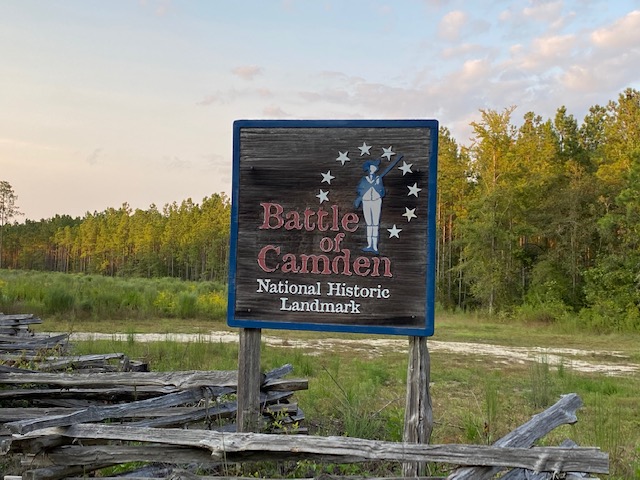
“Colonel Armand’s dragoons and militia displayed a good countenance, but were soon borne down by the rapid charge of the legion. The chase again commenced…” So wrote British Lieutenant Colonel Banastre Tarleton in his work, “A History of the Campaigns of 1780 and 1781, in the Southern Provinces of North America” regarding his pursuit of retreating American militiamen from the disastrous battlefield at Camden, SC in August 1780, and the gallant effort of one Patriot cavalry commander, a foreign officer, who sought desperately to reform the panicked militia and make a stand. He was Lieutenant Colonel Charles Armand Tuffin, Marquis de la Rouerie.
Lieutenant Colonel Charles Armand
French by birth, Armand was one of many European soldiers to come to America in the 1770’s with hopes of obtaining high ranking commissions in the fledgling Continental Army during the Revolution. Arriving in 1776, Armand’s service in the war would generally become overshadowed by that of his more famous countryman, the younger Marquis de Lafayette, who would arrive a year later.
Emerging Revolutionary War’s next revelry will turn to the War of 1812, specifically its end. Turning their attention south, the British army focused on capturing the city of New Orleans from American forces led by Andrew Jackson. The long and large campaign culminated with the Battle of New Orleans on January 8, 1815. The battle was a great American success and made Jackson a national hero.
Historians Kevin Pawlak, Sean Michael Chick, and George Best will examine the campaign that brought American and British armies to the Crescent City. We look forward to you joining us, at 7 p.m. EDT on our Facebook page for the next historian happy hour.
The Battle Of New Orleans, January 8, 1815. Final Battle Of The War Of 1812, Resulting In Victory For The American Forces Against The British. After A 19Th Century Work. (Photo by: Universal History Archive/UIG via Getty Images)
To usher in the month of May, Emerging Revolutionary War returns to the French and Indian War for a discussion with author and historian Billy Griffith on his book, “The Battle of Lake George: England’s FirstTriumph in the French and Indian War.
On September 8, 1755, two armies clashed along the southern shore of Lake George in New York’s Adirondack Mountains. The battle between William Johnson’s force of colonial provincials and Mohawk allies and Baron de Dieskau’s French and Native American army would decide who possessed the lower part of the strategic water highway system that connected New York City with Quebec.
Join ERW historian Billy Griffith for a discussion about this crucial event in the early stages of the French and Indian War that can be considered one of the first true “American” victories against professional foreign troops. We look forward to you joining us, at 7 p.m. EDT on our Facebook page for the next historian happy hour.
April 19th in American Revolutionary War history is usually remembered as the day the “shot heard around the world” happened in the towns of Lexington and Concord, Massachusetts. For the 2022 edition of that day, Emerging Revolutionary War invites you to turn your attention to Valley Forge and a virtual event hosted by the Valley Forge Park Alliance.
Starting at 7 p.m. EDT, Emerging Revolutionary War historian, Phillip S. Greenwalt will present a virtual talk entitled, ‘Timely and Handsome’: Transformation of the Continental Army at Valley Forge. A synopsis of the talk is below.
“As spring began to blossom over Valley Forge, Baron von Steuben’s drilling of the Continental army was in full effect. Although the men and officers of Washington’s army had become proficient on the drill field, there was still the simple question of how would they fare against the British in the upcoming campaign season? A month prior to the end of the winter encampment on June 19, 1778, a small-scale action, at Barren Hill, by a detachment of the Continental army would prove a snapshot into possible future battlefield behavior. The signs were promising. This talk will focus on the training of von Steuben, the composition of the Marquis de Lafayette’s force that marched out of the encampment in middle of May, the action at Barren’s Hill, and the insight this small scale action showed about the transformation of the army during the winter at Valley Forge.”
To register for the event, click here. The link will take you to the Valley Forge Park Alliance website. To learn more about this important aspect of the Valley Forge encampment, Emerging Revolutionary War invites you to click the link on the title bar at the top of this blog labeled “2022 Bus Tour” and secure one of 14 remaining tickets to attend the November 11-13, 2022 tour that will cover Valley Forge and Monmouth.
Reenactors portraying Continental soldiers being trained at Valley Forge (courtesy of Valley Forge Park Alliance)
When studying history we tend to divide time periods up and compartmentalize them for our own ease of study and understanding. Yet when we step back and look, it becomes obvious how events flow one into another. There is a great deal of overlap and often events occurred concurrently.
April 19 will bring the anniversary of the opening of the Revolution at Lexington and Concord. While the conflict with Great Britain was growing and festering, other events were taking place in various colonies. The ending of the French and Indian War is seen as the close of an era and a neat stopping point before the coming of the Revolution. Yet on the heels of the war’s ending, Britain began implementing the taxes and regulations that would anger American colonists.








 Emerging Revolutionary War Era