

“That his northern laurels would be turned into southern willows” Major General Horatio Gates Arrives to take command in North Carolina, July 25, 1780

Opportunity knocked for Horatio Gates with the fall of Charleston, South Carlina in May 1780. A devastating loss for the Americans, with nearly 6,000 men of the Southern Army under Benjamin Lincoln surrendered to Sir Henry Clinton. Unless something wasn’t done soon, the entire southern colonies could fall and the revolution along with it. Congress needed someone who could inspire men to join the war effort and a trusted leader with a positive record. Washington put Nathaniel Greene’s name forward, but Congress in a rare move went against Washington’s wishes and appointed Horatio Gates as commander of the Southern Department on June 13th

Major General Horatio Gates, ca. 1794 by Gilbert Stuart

The road from his victory at Saratoga to the Southern Department wasn’t an easy one for Gates. He sought independent field command and many believe he wanted Washington’s position as commander in chief. His allies in Congress and the Continental Army lobbied heavily on Gates’ behalf and were able to have Gates appointed to the powerful Board of War (the defacto Department of Defense). Though an important role (and serving as Washington’s civilian superior), Gates believed he belonged in the field.  Though his role in the famous “Conway Cabal” is still debated today, he was implicated via letters in criticizing Washington’s leadership. Whether his involvement was real or not, the relationship between him and Washington (and Washington’s inner circle) was seriously damaged. Due to the situation, Gates resigned from the Board of War and accepted appointment as department commander of the Northern Department. In this role he was responsible to look after the New York Highlands and watch from British incursions from Canada or New York city. Gates was unhappy in this role and proposed another American invasion of Canada. Washington and Congress disagreed and rejected his plans. He disliked his task of dealing with enemy native tribes in the region and dragged his feet in following orders. Finally, that fall, Gates took command of American forces in New England with his headquarters in Boston. Though excited by this appointment, he quickly realized that this post was not where the action would be. The British left Boston in 1776 and since the city was peaceful and not a welcome place for a man seeking glory and military action. Finally, after much frustration, Gates asked to return to his farm in Virginia and arrived there by December 1779. Gates found himself a hero without an army and continued to brood over his situation.

Continue reading ““That his northern laurels would be turned into southern willows” Major General Horatio Gates Arrives to take command in North Carolina, July 25, 1780”
Americana Corner

Emerging Revolutionary War checks in with Tom Hand and Americana Corner. Here is what has has been published on that blog for the month of June. A month of Ben Franklin!

Ben Franklin Improves Life for His Fellow Citizens
June 28, 2022

Benjamin Franklin made his money in the printing business, but his true calling was as a man devoted to understanding and improving all aspects of life. Franklin’s interests and innovations stretched from the areas of civics to morals to science to home improvements. His efforts left the world a better place. Read More

Ben Franklin’s Writing Enlightens and Entertains America
June 21, 2022

Benjamin Franklin was the leading printer in British America, but he was also one of the most successful authors of his time. Over the course of Franklin’s impressive life, he wrote two of the greatest treasures of American literature, Poor Richard’s Almanack and his Memoirs, also called The Autobiography of Benjamin Franklin.
Read More

Ben Franklin, British America’s Most Successful Printer
June 14, 2022

Benjamin Franklin was the most successful printer in British America, owning or controlling most of the newspapers in the colonies by 1753. He got his first taste of the printing business in 1718 at the age of twelve while working at The New England Courant in Boston, a newspaper owned by his older brother James.
Read More

Ben Franklin: An Extraordinary Man from Humble Beginnings
June 7, 2022

Benjamin Franklin was one of the most gifted and intriguing men in American history. His incredible rise from humble beginnings to one of the most famous men in the world is an inspirational story. It all began in Boston on January 17, 1706, when Franklin was born to Josiah and Abiah Franklin.
Read More

Americana Corner

Been a bit since we checked in and shared what our good friend Tom Hand has been doing at Americana Corner. The blog, dedicated to sharing “informative stories of the great events, founding documents, and inspirational leaders” routinely has a new post up every Tuesday. Below is what was on the blog for the month of May. Click the title to read the entire post.

Patriots, Loyalists and America’s First Civil War
With the Battles of Lexington and Concord in 1775, the actual fighting of the American Revolution was underway. As it turned out, this open warfare was not reserved just for the new Continental Army formed around Boston and the British Army trapped in the city. It soon spilled over into a fight between neighbors.

Americans Divide Over Independence
According to the Merriam-Webster dictionary, a civil war is a war between opposing groups of citizens of the same state or country. By this definition or any objective measure, our nation experienced a civil war from about 1773 to 1783. It was much worse in its intensity and cost than anything from the Civil War, including Sherman’s infamous March to the Sea.

The Quasi-War and Its Aftermath
The only fighting in the Quasi-War occurred at sea, and mostly in the Caribbean. But with war at a fever pitch and French interests so close by in Louisiana, there was a very real concern in Congress about a possible French invasion of the United States from the west.

Escalating Tensions with France Lead to Quasi-War
The Quasi-War was an undeclared war between France and the United States, largely fought at sea in the Caribbean and along the southern coast of America, between 1798 and 1800. It developed because of a series of related events that soured the formerly strong relationship between the two nations.

Marquis de Lafayette, Virginia 1781

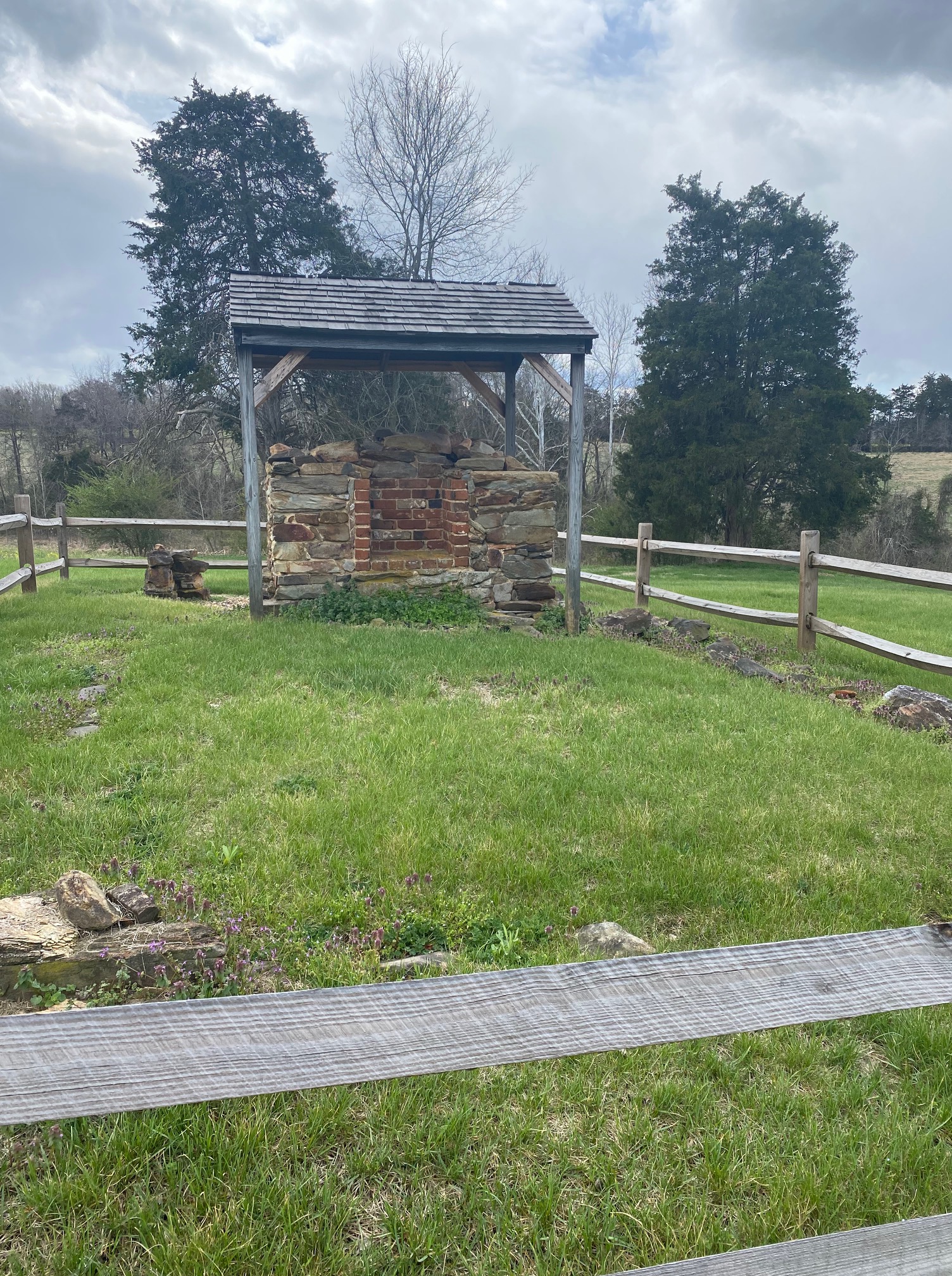
A few weeks back, you may have noticed a video on Emerging Revolutionary War’s Facebook page about the Marquis de Lafayette and his independent command during the spring and summer of 1781 in Virginia. Along with good pal, Dan Davis, we located a site of where Lafayette encamped while he maneuvers to protect the iron furnaces of the Fredericksburg area, keep a distance from British forces under General Lord Charles Cornwallis, and await reinforcements being sent south under General Anthony Wayne.

He continued to keep his commander-in-chief, General George Washington updated on affairs in the latter’s native state. From a camp in central Virginia the Frenchman penned the following letter.

Camp Betwen Rappaahonock and North Anna June 3d 1781

My Dear General

Inclosed you will find the Copy of a letter to General Greene. He at first Had-Requested I would directly write to you, Since which His orders Have Been different, But He directed me to forward you Copies of My official Accounts. So many letters are lost in their Way that I do not Care to Avoid Repetitions. I Heartly wish, My dear General, My Conduct may Be approved of particularly By You. My Circumstances Have Been peculiar, and in this State I Have Some times Experienced Strange disappointements. Two of them the Stores at Charlotte’s Ville, and the delay of the [Pensylva] Detachement Have given me Much Uneasiness and May Be attended with Bad Consequences. There is great Slowness and Great Carelessness in this part of the world—But the Intentions are good, and the people want to Be Awakened. Your presence, My dear General, would do a Great deal. Should these deta[chments] Be Increased to three or four thousand, and the french Army Come this way, leaving One of our generals at Rhode island and two or three about New York and in the Jersays you Might be on the offensive in this Quarter, and there Could Be a Southern Army in Carolina. Your presence would do Immense good, But I would wish you to Have a large force—General Washington Before He personally appears must Be Strong enough to Hope Success. Adieu, My dear general, With the Highest Respect and Most Tender affection I Have the Honor to be Yours

Lafayette

If you persist in the idea to Come this Way you may depend upon about 3000 Militia in the field Relieved every two months. your presence will induce them to turn out with great Spirit.

That letter may have been written somewhere around the terrain you see in the photos below. You never know what you can stumble into touring central Virginia!

*Link to the letter can be found here.

Prelude to Guilford Courthouse: Weitzel’s Mill

This March brings the 241st Anniversary of the pivotal battle of Guilford Courthouse, NC. While this battle is of immense importance to the Southern Campaign, several smaller battles leading up to it have been largely overlooked. Through February and early March of 1781, detachments of the American and British armies maneuvered across the modern-day counties of Alamance, Guilford, Orange, Chatham, and Caswell. The is the third in a series of three articles.  

            The last of the skirmishes occurred at Weitzel’s Mill, also spelled as Wetzel’s, and Wiley’s. Cornwallis was becoming more determined to strike at the Americans to either force a general battle, which he felt his veteran army could win, or destroy the isolated detachments operating near him. 

Continue reading “Prelude to Guilford Courthouse: Weitzel’s Mill”

“Rev War Revelry” Convention Army Discussion

On October 17, 1777, British General John Burgoyne surrendered his joint British, Canadian, and Hessian and Brunswicker forces to patriot General Horatio Gates near Saratoga, New York. Over 6,000 soldiers, the number placed by one historian is 6,222, became captives of war. Under the terms of the convention agreed upon by Burgoyne and Gates, the vanquished army was to march to Boston, Massachusetts, board British ships, and sail to England, to await formal exchange and to not participate in the war in America further.

When news reached the Continental Congress of this concession, that political body demanded a complete list of the troops surrendered to ensure the terms of the convention was to be upheld. When this was not forthcoming by the British, Congress reacted by vowing to not adhere to the stipulations of the convention. Burgoyne’s forces would not head back to Great Britain to await an exchange that year. Instead, these men were to be confined in camps both in New England and Virginia for the duration of the war. This force came to be called the Convention Army.

This Sunday, March 6, at 7 p.m. EDT, join Emerging Revolutionary War on our Facebook page for the next historian happy hour, as Dan Welch and Phillip S. Greenwalt discuss the Convention Army and what happened after the pivotal battle of Saratoga in October 1777.

Prelude to Guilford Courthouse: Clapp’s Mill

This March brings the 241st Anniversary of the pivotal battle of Guilford Courthouse, NC. While this battle is of immense importance to the Southern Campaign, several smaller battles leading up to it have been largely overlooked. Through February and early March of 1781, detachments of the American and British armies maneuvered across the modern-day counties of Alamance, Guilford, Orange, Chatham, and Caswell. The is the second in a series of three articles.  

            Pyle’s Defeat on February 25, 1781 was a public relations disaster for the British. The next skirmish fought between the opposing forces was at Clapp’s Mill on March 2nd and has also been called the Battle of Alamance. On February 27th, Cornwallis’ army moved from Hillsborough to the Haw River, camping on the south side of Alamance Creek at an important crossroads.

Continue reading “Prelude to Guilford Courthouse: Clapp’s Mill”

Prelude to Guilford Courthouse: Pyle’s Defeat

This March brings the 241st Anniversary of the pivotal battle of Guilford Courthouse, NC. While this battle is of immense importance to the Southern Campaign, several smaller battles leading up to it have been largely overlooked. Through February and early March of 1781, detachments of the American and British armies maneuvered across the modern-day counties of Alamance, Guilford, Orange, Chatham, and Caswell. This is the first of a series of three articles.

Having unsuccessfully chased General Nathaniel Greene’s small, ragged army across North Carolina, British forces under Lord Charles Cornwallis moved to the state capital at Hillsborough to announce their liberation of the state and call Loyalists to come forward and support them. Greene’s army retreated across the Dan River into Virginia, where he awaited supplies and reinforcements.

Continue reading “Prelude to Guilford Courthouse: Pyle’s Defeat”

“It it with great reluctance, I trouble you on a subject.”

In the throes of the winter of 1778, spent at Valley Forge, General George Washington and his staff formulated a mountain of paperwork to multiple recipients of the American cause. On February 16, 1778, Alexander Hamilton composed a letter for the commander-in-chief of the Continental army to a gentleman who had moved from the military to the political ranks; George Clinton of New York.

George Clinton

He had seen service in the Hudson Highlands and had been commissioned a brigadier general in the Continental army on March 25, 1777. Later that same year both governor and lieutenant governor of New York, formally resigning the latter and accepting the former on July 30, 1777. In that capacity, he received the letter, excerpts below, from Valley Forge.

“It is with great reluctance, I trouble you on a subject, which does not properly fall within your province; but it is a subject that occasions me more distress, than I have felt, since the commencement of the war; and which loudly demands the most zealous exertions of every person of weight and authority, who is interested in the success of our affairs.” I mean the present dreadful situation of the army for want of provisions and the miserable prospects before us, with respect to futurity. It is more alarming, than you will probably conceive, for to form a just idea, it were necessary to be on the spot.2 For some days past, there has been little less, than a famine in camp. A part of the army has been a week, without any kind of flesh & the rest three or four days.3 Naked and starving as they are, we cannot eno⟨ugh⟩ admire the incomparable patience and fidelity of the soldiery, that they have not been, ere this, excited by their sufferings, to a general mutiny and dispersion. Strong symptoms however of discontent have appeared in particular instances; and nothing but the most active effort⟨s⟩ every where, can long avert so shocking a catastrophe.

Washington then asks for any help or supplies that Clinton can send his way, even though the army is outside the state lines of New York. Washington’s mindset is that the cause of the army in Pennsylvania is the cause of American independence and that Clinton, who had served would recognize that and do his utmost to provide what he can.

“I am calling upon all those, whose stations and influence enable them to contribute their aid upon so important an occasion, and from your well known zeal, I expect every thing within the compass of your power, and that the abilities and resources of the state over which you preside, will admit. I am sensible of the disadvantages it labours under, from having been so long the scene of war, and that it must be exceedingly drained by the great demands to which it has been subject, But though you may not be able to contribute materially to our relief, you can perhaps do something towards it; and any assistance, however trifling in itself, will be of great moment, at so critical a juncture, and will conduce to keeping the army together, ’till the Commissary’s department can be put upon a better footing, and effectual measures concerted to secure a permanent and competent supply. What methods you can take, you will be the best judge of; but if you can devise any means to procure a quantity of cattle or other kind of flesh, for the use of this army, to be at camp in the course of a month, you will render a most essential service to the common cause.

Not only did Clinton receive this missive from Washington, dated February 16, but the following day Gouverneur Morris from a camp committee established by the Continental Congress also sent the New York governor a letter asking for any assistance he could provide for the army at Valley Forge.

These letters underscore the seriousness of the plight of the army encamped at Valley Forge as the winter slowly turned to spring. The action at Washington’s headquarters and from the camp committee helped create a path forward through that pivotal winter. To learn more about what transpired during those six months from December 1777 to June 1778, follow the link above to the “2022 Bus Tour” and join Emerging Revolutionary War on our second annual bus tour November 11-13, 2022.

The entire letter from Washington (Hamilton) to George Clinton can be found here.

“Rev War Revelry” Battle of Cowpens

On January 17, 1781, General Daniel Morgan and his mixed force of Continental soldiers and militia defeated the British under the command of Lieutenant Colonel Banastre Tarleton. This victory for the patriots in northwestern South Carolina had major implications on the southern theater and the main British force under General Lord Charles Cornwallis. The battle, named after the use of the fields in which it was fought, Cowpens, also included one of the only instances in American history of a successful double envelopment.

On Sunday, at 7 p.m. EDT, Emerging Revolutionary War will be joined by American Battlefield Trust’s Kristopher White, Deputy Director of Education and Daniel Davis, Education Manager, in a discussion about the history and preservation of the Battle of Cowpens.

Round out your January weekend by joining us on our Facebook page for this live historian happy hour.