Review: Anatomy of a Massacre: The Destruction of Gnadenhutten, 1782, by Eric Sterner

Emerging Revolutionary War welcomes back guest historian Gabe Neville.

In his first book, Anatomy of a Massacre: The Destruction of Gnadenhutten, 1782, Eric Sterner has taken on a difficult subject. Racial violence is something many writers would shy away from while others might delight in the chance to condemn the perpetrators. Mr. Sterner, laudably, does neither. Instead, he seeks to understand what happened.

It is worth noting that the first known massacre of Indians by white men in what is now the United States occurred long before the events in the book. It happened near Jamestown, Virginia in 1610 when Virginia’s governor, Thomas West, 3rd Baron de la Warr, ordered an attack on the Paspahegh Band of Powhatans. Seventy men attacked the village, killing between 65 and 75 Paspaheghs and kidnapping the village leader’s wife and children. Rowing away, the colonists decided to kill the children, “w[hi]ch was effected by Throweinge them overboard and shoteinge owtt their Braynes in the water.” Three centuries of violence ensued.[1]
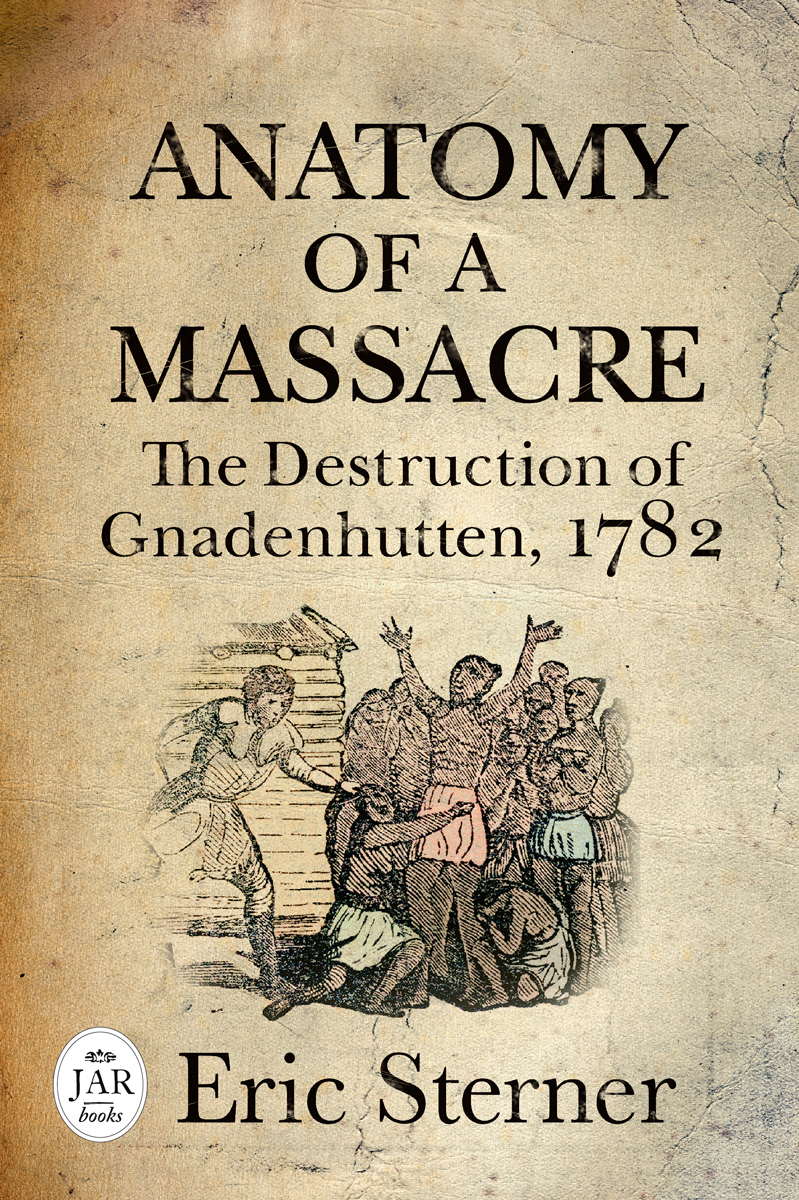
Lord de la Warr’s name appears frequently in Mr. Sterner’s story. His name was given to the Delaware River, which in turn lent its name to the Lenape people who have long been known to English speakers as the Delaware Tribe. Mr. Sterner has provided the definitive account of the worst atrocity of the Revolutionary War. In 1782 more than eighty white settlers clubbed, killed, and scalped ninety-six peaceful, Christian Indians as they prayed and sang hymns. The attack on the Moravian mission town of Gnadenhutten (Ohio) was intended as both a punitive and preemptive strike, conducted by settlers whose families and farms had been targeted by other Indians acting as proxies of the British. It is a horrific story that has defied understanding until now.

Histories of conflict between Native and European Americans have often served us poorly, reducing one or both sides to caricatures. Earlier histories, written by white men, put a finger on the scale of historical interpretation such that Indian atrocities were called “massacres” while white atrocities were called “battles” or “raids.” In the last half of the 20th century, the finger moved to the other side of the scale. Territorial expansion, the introduction of Old World diseases, missionary activity, the presumption of Manifest Destiny, and acts of violence large and small were braided together into a narrative of premeditated genocide.

These approaches reveal the eras and ideologies of their writers. More problematic is both schools tendency to gloss over of the complexity of frontier culture. The Gnadenhutten Massacre is not a cowboys-and-Indians story of “white” and “red” men exchanging bullets and arrows. It is far more complicated than that, with many of its actors desiring little more than their own survival. Though never stated, Mr. Sterner’s approach seems inspired by the axiom: “Don’t judge a man until you have walked a mile in his shoes.” The original expression, appropriately enough, referred to walking “a mile in his moccasins.”

The people in Mr. Sterner’s story can certainly be categorized as “whites” and “Indians,” and for narrative purposes two of the book’s chapters align with these groupings. Still, though racism is an important element of the story, there is plenty to suggest that skin color was not the only matter at issue. The two most prominent white characters –John Heckewelder and David Zeisberger—were Moravian missionaries who lived for decades among the Indians and were wholly dedicated to their welfare. Other whites, British agents, were Indian allies. The killers at Gnadenhutten were white, but acted independently and in defiance of government authority. On the Native American side, the Delaware, Shawnee, Wyandot, and Iroquois tribes were distinct political entities with different alliances, histories, and leaders. Even within these tribes, individual bands (what the author calls “phratries”) disagreed with each other, sometimes sharply, on military and political questions. Some were allied with the British and some with the Americans. The victims at Gnadenhutten were—though Indians—also pious, hymn-singing Christians. The white perpetrators behaved in a decidedly un-Christian manner despite their heritage. History, it turns out, was just as full of contradictions as the present is.

European-American settlers could indeed be brutal, as the events at Gnadenhutten show. Indians could also be ruthless. The first known massacre perpetrated by North American Indians was committed long before Europeans arrived on the continent. The tactic later employed by American armies of destroying villages and burning crops was first used by Indians against the colonists around Jamestown in 1622. Further complexity is found in the fact that even the line between “whites” and “Indians” was sometimes blurred. The Indian victims of the Gnadenhutten Massacre were Christians who dressed and lived much as Europeans did. Conversely, Indian armies—notably at the 1774 Battle of Point Pleasant—sometimes had white warriors among them. These were typically men who had been kidnapped as children and adopted into Indian society.

Mr. Sterner takes a dispassionate, investigatory approach to his work. It is refreshingly free of grand economic or social theories. He seeks to comprehend the events as those involved comprehended them and shows little interest in passing judgment. Instead, he seeks to “walk” a mile in their shoes and moccasins. In doing so, he respectfully refers to Natives by the Indian names, uncynically takes the faith of the Moravians at face value, and justly illustrates the terrors experienced by settlers on the frontier. Each of these groups is examined in its own chapter. Then, in his fourth and final chapter, Mr. Sterner tells us what happened at Gnadenhutten. By then the reader is left struggling to reconcile his or her outrage with the realization that what happened was likely inevitable.

The chance to experience this tension between the world that was and the world that ought to have been is a gift to Mr. Sterner’s readers. Conceiving of a world as it ought to have been is easy. Understanding it as it actually was is much harder. Period accounts indicate that even the perpetrators of the massacre wrestled with this tension in real time. One of them, after executing a dozen Moravian Indians, “sat down and cried because he found in it no satisfaction for his murdered wife and children.” Another whose family had been killed by Indians sat down by the river bank and burst into tears, crying, “You know I couldn’t help it!”[2]

Anatomy of a Massacre could have had an epilogue. Shortly after the events at Gnadenhutten, Col. William Crawford was captured and cruelly tortured to death by Delaware tribesmen as payback for the massacre. Crawford had played no part in the earlier atrocity, but men under his command had. Mr. Sterner has written about Crawford’s death for Emerging Revolutionary War and no doubt made a considered decision to let the Gnadenhutten story stand on its own.

The last “massacre” of American Indians occurred in 1911 in Nevada, when state police killed eight members of Mike Daggett’s Band of Shoshones, whom they were pursuing for horse theft and murder. This “Battle of Kelly Creek” occurred three hundred and one years after the massacre of the Paspahegh Band of Powhatans near Jamestown and closed the book on three centuries of racial violence between Native and European Americans. It is a cringe-inducing history, to be sure.

Mr. Sterner’s book suggests two lessons. First is that we should not blame atrocities so much on the perpetrators’ culture and demographics but rather on the killers themselves and on human nature. Culture matters, but people in every culture will do terrible things in terrible circumstances. Second is that we cannot substitute a cartoonish caricature of history for the nuanced reality of what really happened. The consequence of dumbed-down history is not a partial understanding but rather a false understanding. The Moravian Indians and missionaries lived in villages that were both physically and figuratively between two cultures. Though neutral, family and social ties to the war’s combatants remained and neither side could accept or understand them as a unique group. That led the Wyandots and British-allied Delaware to forcibly relocate them, and it motivated the settlers led by David Williamson to kill them.

An analogous refusal to understand the past for what it really was does a different kind of “violence” to history. Mr. Sterner’s book provides hope that historians can in fact focus on real history, avoiding the polemics and theorizing that characterizes so much academic writing. Like Glenn Williams, author of Dunmore’s War, Mr. Sterner seeks to trace the course of events and to understand the subjects of his work as they understood themselves. It’s good history.


Sources:

[1] George Percy, “’A Trewe Relaycon:’ Virginia from 1609 to 1612,” Tyler’s Quarterly, 3 (1921-1922): 259-282, 272. “Weroance” was a title for a “sub-chief” or a village leader.

[2] Eric Sterner, Anatomy of a Massacre: The Destruction of Gnadenhutten, 1782 (Yardley, Pa: Westholme, 2020), 148.

Inspiration

Merriam-Webster’s two two definitions of inspiration are “an aspiring agent or influence” and “the quality or state of being influenced.” Being a military historian that has spent a portion of his graduate school and adult life studying the American Revolution, there are a multiple examples of people, events, or circumstances that would fit that Merriam-Webster definition.

The 56-men who affixed a signature to the Declaration of Independence in the summer of 1776 and the gravity of what that meant.

Thomas Paine’s The American Crisis comes to mind during the bleak December 1776 days as George Washington’s army hurriedly moved through New Jersey.

George Washington’s personal heroics, at Princeton in January of 1777 and Monmouth Court House in June 1778, defying his own personal demise to rally the troops he led.

The tales of suffering, at Valley Forge, Morristown, and through the heat of a Carolinas campaign by the common soldier, many whose names are lost to history.

Recently, I have been looking for inspiration, I think most of us are, with how 2020 ended and the beginning of 2021, but this post is not about straying into current politics, viewpoints, or stances on the pandemic. This is more personal.

The pandemic has afforded me the opportunity to read more, as I am sure my fellow history enthusiasts and bookophiles can relate to. Those readings reawakened a question I tried to tackle as a graduate student a decade ago at George Mason University.

What inspired the men from Maryland to fight for American independence?

Or more accurately:

What did not inspire the men from Maryland to fight for American independence?

I ruled out pay, patriotism (at the start), and other tangible benefits. I gleaned from some of the primary sources that have survived, the chance to create a new life, for the soldiers themselves or their loved ones at home was a major motivator to serve. Family was the spark of inspiration.

On this date, that is something I can really relate to. My father, who will be celebrating his 71st trip around the sun, is battling dementia. He will know that this date, February 8, is his birthday, but will struggle to remember anything else. Yet, he was surprised to see his name in a book recently, one that I sent to him, one that I had helped in the editorial process. To see him reading it, cherishing it, and tearing up with happiness at the simple recognition of his name and mine, is an inspiration to myself.

So, he was and is an inspiration, half the duo of sparking my passion of American history (any guesses on the other half)?

What or who is your inspiration as we enter the second month of 2021?

Happy Birthday Dad, from the history enthusiast you helped create.

If curious, he is reading A Handsome Flogging: The Battle of Monmouth, June 28,1778 by William R. Griffith IV

“God willing and the Creek don’t rise.”

If you are from a certain geographical area of the United States the title of this post is a saying you have heard numerous times. Heck, you may even use it yourself. I’ll admit that I have found usage of this American style vernacular a few instances in my lifetime.

Did you know that there is one version that connects the popular saying to a figure in American history and has its origin dating back into the 18th century?

While reading a history of Osceola, I came across the mention of Benjamin Hawkins and as many of you know, did some internet research, consulted other books on the Seminoles, Creeks, and other Native Americans and the research took off from there. This is just a brief overview of Hawkins and his possible, albeit tenuous, connection to this saying.

A possible first mention of the saying above is attributed to Hawkins, whose name probably does not ring a bell for a large segment of people, historians included. Hawkins, born in North Carolina on August 15, 1754 into a family of six, was a gifted individual who attended the College of New Jersey, now known as Princeton University with an aptitude for linguistics, which apparently including learning Native American dialects.

Continue reading ““God willing and the Creek don’t rise.””

“Rev War Revelry” Light Horse Harry Lee Discussion

On January 29, 1756, Henry Lee III is born at Leesylvania Plantation in Prince William County, Virginia. Part of the prestigious Lee family of Virginia, his father was a cousin of Richard Henry and Francis Lightfoot Lee, two brothers who signed the Declaration of Independence.

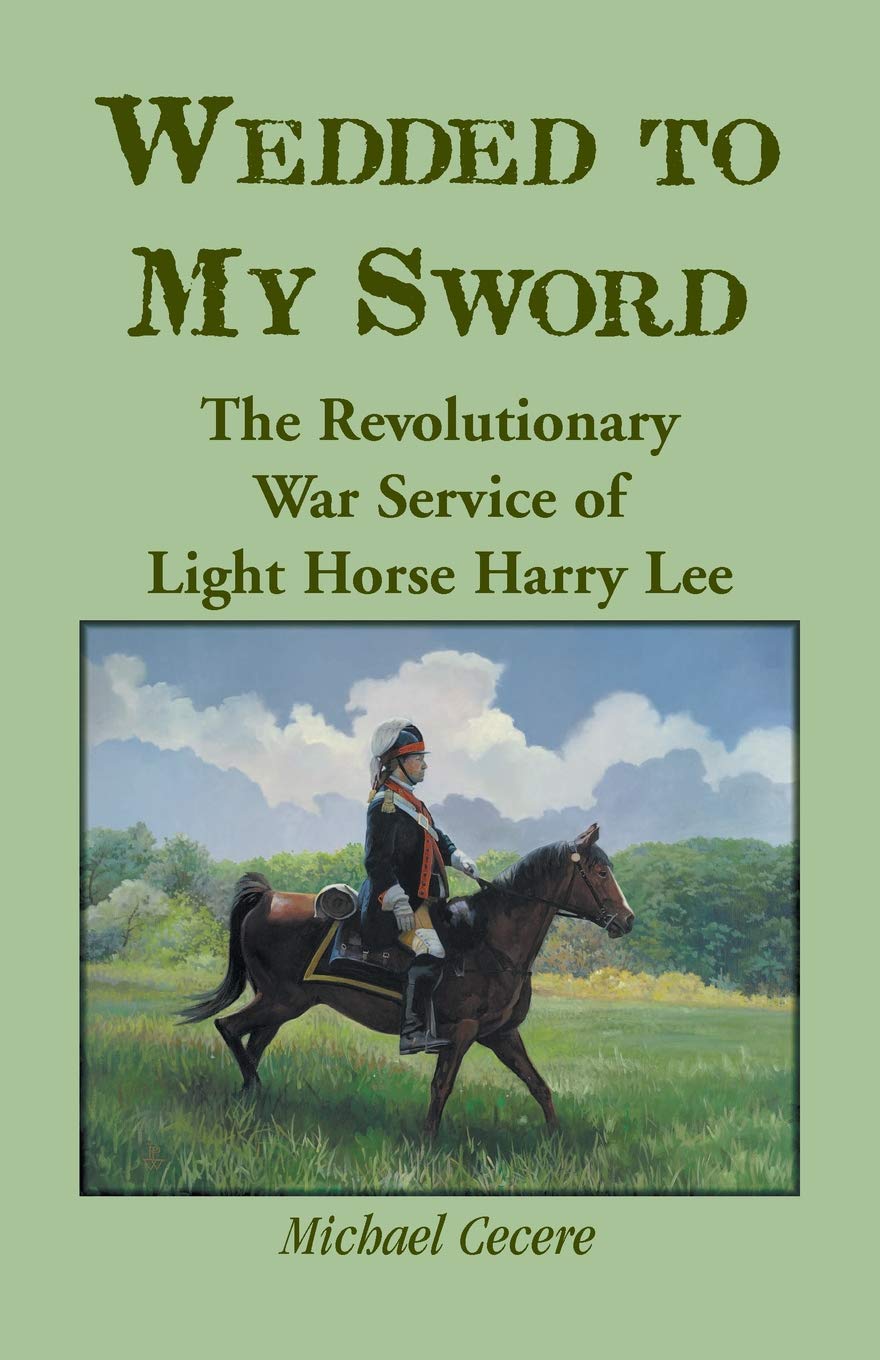
Henry Lee would blossom into one of the better cavalry commanders in the American Revolution, earning the nickname, “Light Horse Harry” Lee because of his accomplishments. With January being his birth month, Emerging Revolutionary War welcomes historian and author Mike Cecere, who will discuss his book, “Wedded to my Sword, The Revolutionary War Service of Light Horse Harry Lee.”

Cecere, former high school and community college history teacher is the author of thirteen books on the American Revolution, most focused on aspects of the colony of Virginia and/or her native sons.

This Sunday we hope you spend some time joining us on the next installment of “Rev War Revelry’ as we discuss the Lee that was born in January and became a military hero of the American Revolution. This historian happy hour will be live on our Facebook page at 7 pm EST.

(Yes, we do know there is another Lee that is born in January and plays a prominent role in history).

“Rev War Revelry” A Cigar Chat with John Adams

Join Emerging Revolutionary War historians this Sunday, at 7 p.m. EST on our Facebook page for the next historian happy hour. This week we will be joined by John Adams…no that is not a mistype.

John Adams is the founder and owner of Liberty Cigars, which “was founded to reacquaint men and women with the simple pleasure of respite and leisure. Lasting bonds, whether among one or many, are more easily formed when wrought in a relaxed and convivial atmosphere.”

Liberty Cigars

That “convivial atmosphere” will be recreated during the next installment of “Rev War Revelry” as ERW historians will discuss tobacco, cigars, and the founding generation of the United States.

“In the time to come we will share the incredible stories of our great republics’ illustrious history with the hope that through you, it will long endure. Our premium cigars are named for a seminal person, event or entity in history so that we may honor them, as we should, across the ages” according to Adams.

Liberty Cigars is part of the American History Guild, founded over a decade ago to “rekindle and stoke the sacred fire of liberty.”

We hope you can set aside an hour of your weekend to join us in “the simple pleasure of respite and leisure” with John Adams. If weather permits, there may be another twist to the “Revelry” on Sunday evening.

The third Artillery Engagement at the Battle of Trenton: December 26, 1776

Emerging Revolutionary War welcomes back guest historians Karl G. Elsea and William W. Welsch for the final installment of their three part series

1770 drawing of Hessian three-pounder gun and limber
(courtesy of Kriegskarten from Hessisches Staatsarchiv Marburg, Germany at
http://www.digam.net/?str=177)

The v. Lossberg Artillery detachment:

Bombardier Conrad Volprecht was about 44 years old with over 27 years of service. He led the v. Lossberg artillery detachment consisting of another bombardier, 13 gunners and 3 matrosses, with two three-pounder guns and associated horses, harness, and limber.[i]

Over two years after the battle and being a prisoner Bombardier Volprecht gave testimony that indicated the sequence of battle for his detachment was roughly as follows: First went to field, second fired north, third ordered south, and fourth got stuck in the mud till the end of the battle. There is a problem though, the sequence that better fits the data from the battle was as follows: first went to field, second ordered south, third fired west, and fourth got stuck in the mud.

 John Adams wrote “Facts are stubborn things. They cannot be altered by our wishes, our inclinations, or the dictates of our passions.” In studying firsthand accounts of the battles in the Revolutionary War they are sometimes not correct or even true. For example, there is an enjoyable firsthand account (written many years later) by a patriot Sergeant White (The Good Soldier White) that is often quoted in accounts of the battle. Parts of his story are no doubt true. The problem is that when Sgt. White states he was with “Lieut. Munroe, our late President of the U. States” and “I was the first that reach them [cannons],” and “They had all left it, except one man tending vent,” those specific parts of the story cannot be true. Hessian Lt. Englehardt would not have time to do all that he did and then cross the Assunpink bridge before the Jagers if artillery men from Sullivan’s column were that far up King Street. Facts from the battle mean that part of that story does not work.

The most important place in all the 13 states fighting for independence on December 26, 1776 from 8:00 am to 9:00 am was the long, narrow bridge over the Assunpink creek. It was held by Hessian Sergeant Muller and 18 men. Sgt. Muller was about 50 years old with about 32 years of service. The importance of this place was not fully realized by the Hessians, but the Patriots knew it had to be closed, and General Washington had two full brigades, Sargent’s and Glover’s, tasked with taking, as quickly as possible, and then holding the bridge.

At about 8:03 am Patriot General Sullivan was about one mile from Trenton center along the River road when he attacked the outlying Jager pickets. General Sullivan had the artillery fire several canister shots at the Jagers. This firing also served as a signal to General Washington so he would know his other wing was attacking. It was to be recalled that General Washington started his attack about 8:00 am on the Pennington road and he also was about a mile from Trenton center. This cannon firing was also a signal to General Ewing so he knew when to start his distraction. General Ewing heard the three cannon shots and he quickly followed with his guns and howitzers firing ten shots from across the Delaware River. General Ewing kept up his firing until he could make out that Patriots were approaching. The v. Knyphausen regiment was forming on Second Street and was the logical unit to resist any attack coming from the River Road.

Volprecht’s detachment with its two guns followed Lt. Fischer’s detachment east on Fourth Street from the Methodist church into the field north and east of the Quaker lane. Lt. Fischer’s detachment was falling back from its earlier engagement and picked up the v. Lossberg detachment as it passed by. It took longer for the v. Lossberg artillery detachment to prepare for the battle because the horses had to be collected, harnessed, hitched, and the guns limbered. Fischer testified that the “cannon were unhorsed, and the horses unharnessed and brought back again into the stable” from the cancelled early morning patrol.[ii] For the morning patrol the horses had been hitched and guns limbered at 4:00 am but the patrol was cancelled so the men/horses/limber/guns were brought back to the Methodist church and waited for sunrise to unhorse.  

The infantry of the v. Lossberg and Rall regiments followed Volprecht’s detachment into the field. It was in this field that these two regiments would form a line for battle. While waiting for the v. Lossberg regiment to form Volprecht was ordered by Lt. Weiderhold, “Artillery men, come here with the cannon” meaning they were to join the v. Knyphausen regiment.[iii]  The v. Knyphausen regiment was on Second Street heading to the open field just east of Trenton and away from the Assunpink bridge. Volprecht and his v. Lossberg artillery detachment moved south on Quaker lane, linked up with the v. Knyphausen regiment, and set up his gun position facing threats coming from Trenton. The following map presents Trenton as it was in 1776.[iv]

While this was happening on the Hessian side, the right wing of the Patriot forces was moving east on River Road. General Sullivan rushed two of his brigades toward the Assunpink bridge. Neil’s battery with Sargent’s brigade and Sargent’s battery with Glover’s brigade made it to the bridge and across. Glover’s brigade with Sargent’s battery continued along the Assunpink creek to cut off possible exits for the v. Knyphausen regiment. St Clair’s brigade was moving east on Second Street with Moulder’s (three four-pounders) and Hugg’s artillery (two three-pounders).

Hessian Bombardier Volprecht testified that he fired his gun five times and the other gun fired one time.[v] One of those six shots hit the fore horse of one of Hugg’s three-pounder guns as they advanced in support of Patriot St. Clair‘s brigade. John Greenwood, a fifer in the 15th Continental, recorded that one of Hugg’s guns had the fore horse shot by a Hessian three-pounder gun, ”the ball from which struck the fore horse that was dragging our only piece of artillery, a 3-pounder. The animal, which was near me … was struck in its belly and knocked over on its back. While it lay there kicking the cannon was stopped.”[vi]  That was the only hit scored by the Hessian artillery that day. St. Clair’s brigade with Col. Stark’s infantry in the lead applied great pressure causing the v. Knyphausen regiment to pull back farther east. Volprecht’s artillery detachment pulled back with the regiment.

As the Hessian artillery detachment pulled back east disaster struck both guns. Volprecht had been ordered into a valley without the ground being checked. Both guns got stuck in the mud. The rest of the battle the men of the artillery, with some aid from nearby infantry, was spent trying to extract the guns from the mud. One gun was extracted just before the surrender, the other gun was extracted after the battle was over.

Mud ended the third artillery engagement. The battle at Trenton was over. The Patriots had a great victory. What is shocking was the limited number of shots from the Hessian artillery. The Rall artillery detachment fired twelve solid shot and one grape, the v. Knyphausen artillery detachment fired “seven or eight shots,” and the v. Lossberg artillery detachment fired six shots.[vii] These few shots lend support for how quickly the Patriots won the Battle of Trenton.

Sources:

[i] William S. Stryker, The Battles of Trenton and Princeton (The Riverside Press, Cambridge, 1898), 388

[ii]Hessian Documents of the American Revolution, Morristown National Historical Park, ML, The Affair at Trenton Dec. 26, 1776, English Translation, ML 337

[iii] Hessian Documents of the American Revolution, Morristown National Historical Park, ML, The Affair at Trenton Dec. 26, 1776, English Translation, ML 277

[iv] Information taken from The Trenton Mapping Project located at www.trentonhistory.org/Documents/Trentonin1775.pdf  With the information available it is likely more buildings are shown rather than less.

[v] Hessian Documents of the American Revolution, Morristown National Historical Park, ML, The Affair at Trenton Dec. 26, 1776, English Translation, ML 277

[vi] John Greenwood, Revolutionary Services of John Greenwood of Boston and New York, 1775-1783, 40-41. “the first intimation I received of our going to fight was the firing of a 6- pound cannon at us, the ball from which struck the fore horse that was dragging our only piece of artillery a 3-pounder.” Retrieved from https://archive.org/details/revolutionaryser00gree/page/38/mode/2u

[vii] Hessian Documents of the American Revolution, Morristown National Historical Park, ML, The Affair at Trenton Dec. 26, 1776, English Translation, ML 341

The second Artillery Engagement at the Battle of Trenton: December 26, 1776

Emerging Revolutionary War welcomes back guest historians Karl G. Elsea and William W. Welsch

1778 sketch-map drawing of Battle of Trenton by Lt. Fischer
(courtesy of William S. Stryker, The Battles of Trenton and Princeton, Riverside Press, Cambridge, 1988, page128)

The v. Knyphausen artillery detachment:

Lieutenant Friedrich Fischer was about 37 years old and had about 20 years military experience. He was the senior artillery officer in Trenton. For administrative purposes he saw to the needs of the men, and horses, and equipment for the artillery in Trenton. However, for tactical considerations he was a detachment commander to two three-pounder field guns and crews and horses and equipment assigned to support the v. Knyphausen Regiment. He was to follow their orders unless overridden by the Brigade leader, Colonel Rall. Lt. Fischer never made it to his assigned regiment. The reason was the rapid advance by the Patriots on all fronts.

Each regiment of the Hessians as they came to Trenton in mid-December was assigned a significant building, usually a church, to form its “center of gravity.” The v. Knyphausen regiment was assigned the Presbyterian church, the Jagers were assigned the Old Stone Barracks, the v. Lossberg regiment the English church, the dragoons were assigned the Quaker meeting house, and the Rall regiment several taverns. The Artillery was assigned the Methodist church at the northeast corner of Queen Street and Fourth Street. Thus, the artillery horses, harness, and limbers were at the Methodist church for the three detachments. Three of the neighboring houses to the Methodist church each contained the men for an artillery detachment.

Continue reading “The second Artillery Engagement at the Battle of Trenton: December 26, 1776”

The first of three Artillery Engagements at the Battle of Trenton: December 26, 1776

Emerging Revolutionary War welcomes back guest historians Karl G. Elsea and William M. Welsch.

Part I

1770 drawing of Hessian three-pounder barrel
(Drawing of Hessian three-pounder gun, dated 1770, at Kriegskarten from Hessisches Staatsarchiv Marburg, Germany at http://www.digam.net/?str=177)

The Rall Artillery Detachment:

It is well known that the Battle of Trenton saved the American Revolution from defeat. What is not well known is the story of two of the three Hessian artillery detachments and the description of their field guns. This series of articles tells the story of the three Hessian artillery engagements at the First Battle of Trenton. These three fights largely determined the victory for the patriots.

The field guns used by the patriots in the artillery engagement at Trenton were fairly well documented. The Patriots used British Armstrong design M1736 six-pounders, British commercial iron four-pounder barrels on Patriot designed carriages, and the Common Pattern British designed three-pounders (looked like scaled down six-pounders).

The Hessian three-pounder field guns were primarily designed to be beautiful, symmetric and fill both the roles of field (light) artillery and garrison (medium) artillery. The “brass” barrel was one caliber (caliber was equal to 3.01 English inch) thick at the breech, one half caliber thick at the muzzle, and was twenty calibers long from breech ring to muzzle. This symmetry came at a price, namely, the barrel alone weighted over 700 pounds. As a comparison, the 1776 designed British Congreve three-pounder barrel had a weight of 212 pounds and was 12.4 calibers long while the “Common” pattern three-pounder barrel used by the Patriots was 287 pounds and 14.5 calibers long.[i] This flaw in the Hessian guns concerning the weight required four horses to pull each gun and made each gun more vulnerable to sinking in mud. Field guns were supposed to be” light,” something these Hessian guns were not.

Continue reading “The first of three Artillery Engagements at the Battle of Trenton: December 26, 1776”

Christmas Night, 1776: How Did They Cross? The Horses:

Emerging Revolutionary War welcomes guest historians Karl G. Elsea and William W. Welsch. Short bios of both historians are at the bottom of this part.

Part I:

The purpose of this article is to further investigate General George Washington’s Christmas night crossing of the Delaware River in December, 1776, with added emphasis on the role of the artillery and horses   This is the result of discussions and collaboration between the two authors.

In an earlier article published by The Journal of the American Revolution, the second author posed the question of just how difficult was the crossing.  Given the weather, the river conditions, the expertise of the crews, and available original sources, this remains an unanswerable conundrum.  However, new research is able to provide a better understanding of the challenges posed in crossing the cannons and horses.

In calculating the number of horses needed to move the artillery, authors have been initially tempted to use the numbers provided from John Muller’s Treatise on Artillery.  Muller (about 1757) wrote that “A 3 pounder requires but 1 horse, a 6 pounder 2, a 12 pounder 3 of the light [field artillery] sort.”  That quote assumed roads as they were in England and Europe, and relatively flat and firm, dry surfaces with well-fed and conditioned horses. Those conditions do not apply well for Revolutionary War America.[i]

There is a primary source that states a three-pounders was pulled by at least 2 horses. John Greenwood, a fifer in the 15th Continental, recorded “the ball … struck the fore horse that was dragging our only piece of artillery, a 3-pounder.”[ii] This was important information because a three-pounder gun could be pulled by a single horse according to Muller. Because the weather was rainy and sleety, with the ground becoming muddy, an extra horse was required. That Patriot three-pounder gun had at least two horses.

There were old expressions that give important insight into what a horse could pull. For example, “on flat, firm ground a horse or mule can pull its own weight ten hours a day, every day.” Also, “on rough ground a horse can pull half its weight with large wheels.”[iii]  While those expressions offer what a well-fed horse could accomplish, we have no way of assessing the condition of the army’s horses, given that forage was a constant problem.

There was another issue concerning horses pulling in harness. Not all of their effort can be applied to the load being pulled. If there was more than one horse pulling a gun, then they were harnessed in tandem in America. The horse between the shafts for the limber was called the thill horse. In tandem the horse in front of the thill horse only had 3/4 of its draught applied to the load. If there was a horse before that one, then only half of that horse had the draught apply to the load. If there was a fourth horse in tandem, then only 1/4 of the draught can be applied. More than four horses in tandem provided no gain in pull and might make pulling harder. For example, cresting a hill with the Fore horse on down side and the Thill horse on the rise side of the hill would result in the forces being against each other.

 There was another problem, if the ground was rough or muddy then one must reduce the draught for all the horses by half. If a horse had a rider, then that horse’s ability to pull a load was reduced by half.

A typical Colonial farm horse available for pulling battalion guns in Colonial America was probably between 14 and 15 hands tall and weighed between 850 and 1,000 pounds. Large draft horses like the Conestoga were not used on battalion guns, they were reserved for large wagons.

It seems very reasonable that each gun in Washington’s force had an extra horse added due to the conditions of the ground. With the information presented above, the following presents the math for a light six-pounder guns as used by Hamilton and Forest.

The “old” six-pounder (Armstrong design 1736) with carriage and limber and everything with which to utilize the gun weighted about 1,800 pounds. Adding 24 rounds of ready fixed ammunition adds 202 pounds for a grand total of 2002 pounds that must be pulled.[iv] The “old” six-pounder would normally be pulled by two horses according to Muller. The thill horse would provide about 1000 pounds of draught and the fore horse about 750 pounds for a total of 1750 pounds of draught with 2 horses. As the math suggests, there was a shortfall in draught (2002 vs 1750) which means that the horses would likely wear out in less than 10 hours of work. The shortfall noted could be significantly greater when the condition of the ground was considered. With the thill horse and two fore horses added as a pair, then an additional 750 pounds of draught was available (for a total of 2,500 pounds of draught). Because the army was moving by a road then the horses in front of the thill horse did not have to be in tandem and could be added as a pair. This calculation demonstrates the six-pounder likely had an additional horse. The calculations would be similar for the howitzers.  That means the six-pounders, the four-pounders, and the howitzers each had three horses and the three-pounders each had two horses.

A typical colonial period ferry (flat) designed to carry a large farm wagon to market, as would be case at McKonkey’s and Johnson’s ferries, would typically be about 48 feet long and 9 feet wide. A light six-pounder gun with three horses (fore horses in a pair) would be almost 40 feet long. Same for the 5.5-inch howitzer. The track of a six-pounder would be 4 feet, 8 inches leaving some room on the side(s). A three-pounder gun with 2 horses (thill and fore) would be about 35 feet long. With that information one can see that each gun would require a trip on the ferry, and there would be some space along the side(s) for some artillerymen and/or horses.

At least seven artillery ammunition carts had to be used – one for each artillery company. In addition, Forest’s artillery company needed an additional cart because he had two types of cannon, and thus a cart for each type of cannon. It may be that Moulder also required two ammo carts to carry adequate ammunition for his three guns. Each cart with horses would require about 24 feet, so two carts could be taken on a ferry.

Thus, Knox’s artillery would require eighteen ferry trips to move all eighteen cannons, one for each cannon and team.  Two trips required on a ferry for the four ammo carts (two carts per ferry) associated with Greene’s column (Forest, Hamilton, Bauman).  Three trips required on a ferry for the five ammo carts (two carts per ferry) associated with Sullivan’s column (Sargent, Neil, Hugg, Moulder).

CompanyNumber and Type CannonFerry Trips
ForestTwo 6-pounder guns Two 5.5-inch howitzers Two ammo carts2 2 2
HamiltonTwo 6-pounder guns One ammo cart2 1/2
BaumanThree 3-pounder guns One ammo cart3 1/2
SergeantTwo 6-pounder guns One ammo cart2 1/2
NeilTwo 3-pounder guns One ammo cart2 1/2
HuggTwo 3-pounder guns One ammo cart2 1/2
MoulderThree 4-pounder guns Two ammo carts3 1

[i] John Muller, A Treatise of Artillery the second edition (John Millan, Whitehall, London, 1768), 178.

[ii] John Greenwood, Revolutionary Services of John Greenwood of Boston and New York, 1775-1783, 40-41. “the first intimation I received of our going to fight was the firing of a 6- pound cannon at us, the ball from which struck the fore horse that was dragging our only piece of artillery a 3-pounder.” Retrieved from https://archive.org/details/revolutionaryser00gree/page/38/mode/2u

[iii] First author’s grandparents (paternal and maternal) farmed with horses in early 1900’s. Grandparent that farmed in Blue Ridge Mountain’s foothills and clay mud taught these expressions. The reader may find references to a horse pulling 1.5 times its weight on a road. That reference assumes roads with firm surfaces and includes, in its averaging of 1.5, roads with asphalt and concrete from more modern times.

[iv] Adrian B. Caruana, The Light 6-Pdr. Battalion Gun of 1776, (Alexandria Bay, NY: Museum Restoration Service, 1993), 14.

*Bios*

Karl G. Elsea graduated with a B.S. in Electrical Engineering from Va. Tech. and a MBA from UNCC. Son, daughter, and I participate in Revolutionary War reenactments. Have ridden horses most of my life. Was a coxswain in the U. S. Coast Guard and earned the Trident. Taught disadvantaged youth at a juvenile detention center. Own horses and pull a bronze four-pounder cannon and limber for living history.

William M. Welsch, a retired administrator at Montclair State University in New Jersey, is the current and founding president of the American Revolution Round Table of Richmond, and co-founder of the Congress of American Revolution Round Tables. He is a tour guide of Revolutionary War battlefields, frequent presenter and author of multiple articles on the Revolution. His interest areas include the Revolution in New Jersey, Pennsylvania and the generals of the Continental Army. Welsch served in the United States Marine Corps and is married with two daughters and five grandchildren.

The Supreme Court at Risk

Emerging Revolutionary War welcomes back guest historian Dan Welch.

It’s December 9, 1775. Not only was the future of the fledgling Patriot’s cause at stake, but the future of our yet-to-be created Supreme Court was as well. 

Over the previous months, rebel forces in the area had been engaged with Lord Dunmore’s troops for control of military supplies in the colony of Virginia. This eventually led towards the area around Norfolk, where Dunmore’s forces had fortified a position opposite a river crossing that was strategic both militarily and economically. The position, south of Norfolk, at Great Bridge, was not uncontested. Just opposite Dunmore’s stockade, known as Fort Murray, on the other side of the river, rebel forces settled in, arriving on December 2.

Col. William Wofford, in command of the 2nd Virginia Regiment and about 100 men of the Culpeper Minutemen battalion, began entrenching their position opposite Fort Murray while more militia from surrounding Virginia counties and North Carolina marched towards their aid. As more men arrived, as well as several pieces of field artillery, Lord Dunmore grew wary. He believed his only course of action was to attack Wofford’s men and drive them from the field. The attack was set to begin by dawn’s early light on December 9, 1775.

Found in the ranks of Wofford’s command that morning as the battle opened was a father and son, Thomas and John Marshall. Thomas, a vestryman, High Sheriff, and a member of the House of Burgesses had brought his son with him into the patriot ranks from Fauquier County.  By the time of the battle, Thomas, who had been active in the organizing and raising the Culpeper Minutemen, had been appointed its major. His son John, age 20, its first lieutenant.

John Marshall’s biographer later recounted the importance of this moment on the young nineteen-year-old, writing “The young soldier in this brief time saw a flash of the great truth that liberty can be made a reality and then possessed only by men who are strong, courageous, unselfish, and wise enough to act unitedly…He began to discern, though vaguely as yet, the supreme need of the organization of democracy.”

John Marshall went on to serve as the fourth Chief Justice of the United States Supreme Court in 1801. Marshall remained at the post for thirty-four years, and, during his tenure, the Marshall Court brought the role of the Supreme Court to the fore, issued more than 1,000 decisions, and set the precedent of handing down a single majority opinion.  These accomplishments and influences are just some of many that Marshall had on the Court, the federal government, and American history.  Today, on the 245th anniversary of the battle of Great Bridge, it’s interesting to pause, reflect, and wonder how very different the United States and the Supreme Court might have been had Colonel Wofford’s forces, among them John Marshall, been defeated that day at the “second Bunker’s Hill affair….”

Pictures of Great Bridge Battlefield and monuments.