Recently I had the chance to travel through Lexington, Kentucky en route to western Kentucky and to see the sites associated with the Fort Donelson campaign in the American Civil War.
In Frankfurt, Kentucky, Simon Bolivar Buckner, the Confederate general who surrendered the Tennessee fort, is buried.
Little did I know that a stone’s throw away, literally, is the grave of Daniel Boone. A fascinating find, if I would have researched a little more, I probably would have realized who all was buried in that cemetery in the state capital of Kentucky.
There, on a bluff, above the Kentucky River, lies Daniel and his wife Rebecca. The great frontiersman and pioneer who took settlers through the Cumberland Gap. One of the first folk heroes of American history.
Never know what you may stumble upon, when on a history excursion!
Today 240 years ago in the back country of South Carolina, General Horatio Gates and his “Grand Army” were encamped around Rugeleys Mills South Carolina. He had come a long way in a short amount of time with his army from Deep Creek, NC. The men were ill fed, mostly poorly trained militia but he needed to strike a win for the American cause in the South. What he planned that evening is still debated today.
Gates had only been in command of the re comprised Southern Continental Army for a few weeks. He was tasked with turning around a disastrous year for the Americans in South Carolina. Most of the Southern army was captured at Charleston in May 1780 and then a bloody defeat of Virginia forces on May 29th at Waxhaws. American partisans such as Moultrie and Sumter had found some success, but the Continental Congress worried that they were about to lose the southern colonies. Something had to be done and many believed (though Washington and his supporters wanted Nathaniel Greene) the hero of Saratoga was the man for the job.
Now that Gates had brought his army so close to the British post at Camden, SC he needed intelligence on his next move. There could be no misstep, he was only 12 miles from the British at Camden. At that time, Gates believed he outnumbered the British under Lord Rawdon, but what he was soon to find out is he over inflated his own numbers and now Lord Cornwallis was in command. Gates’ force was still slightly larger, but it was mostly made up for militia. The British army comprised of some of the best units in North American. A very different situation indeed.
Gates ordered his engineer Lt. Col. Johann Christian Senf and Virginian Lt. Col. Charles Porterfield southward towards Camden. Senf was to find a suitable location for the American army to march and set up a defensive position. Gates had no illusions to attacking the British at Camden, and most likely he hoped they would abandon Camden all together. Senf wrote “reconnoitering a deep creek 7 miles in front was found impassable 7 miles to the right and about the same distance to the left, only at the place of the Ford interjects the great road”. (1) This creek was Saunder’s Creek and it is where Gates decided to move his “Grand Army” and await developments from Thomas Sumter who he had sent on a mission along the Wateree River in the flank and rear of Camden.
Tim McGrath has written two award-winning winning books about the early history of the United States Navy: Give Me a Fast Ship and John Barry. For his third book, he switched gears to tackle an oft-overlooked soldier, lawyer, politician, and president: James Monroe. In what will likely be the definitive Monroe biography, McGrath tackles the entirety of our fifth president’s life. Born in 1758, Monroe joined the American army in the Revolution’s early days until he was sidelined with a serious wound at Trenton.
As McGrath tells it, the story of Monroe’s early life was a constant search for a mentor and sponsor, which eventually landed him on William “Lord Stirling” Alexander’s staff. It was enough to bring him the attention and lukewarm friendship or support of many of the army’s leading lights and the country’s future leaders, but not enough to really launch his career. Eventually, he landed a legal apprenticeship with Virginia’s Governor Thomas Jefferson. It changed Monroe’s life, giving him a path forward professionally, politically, and intellectually.
Bernardo De Galvez, Governor of Louisiana (Wikimedia Commons)
Willing’s next target was the town of Manchack upon which he descended “so rapidly that they reached the Settlements without being discovered.”[1] On the 23rd, Willing’s advance parties captured the 250-ton British sloop Rebecca, with sixteen 4-pounders and six swivels.[2] It was a coup worthy of Navy SEALS. Rebecca was normally a merchant vessel, but had been armed and sent upriver to contest the Rattletrap’s advance by protecting Manchack. Instead, her presence had strengthened Willing’s force. Captured while lying against the levy opposite the town, she only had fifteen men aboard when an equal or superior force of Americans struck about 7 am.[3] With Manchack captured and the Rebecca renamed the Morris, Willing turned his attention to the end game at New Orleans, where he hoped to dispose of his booty and obtain supplies useful for the American war effort.
At New Orleans, the Congressional Agent, Oliver Pollock, was aware of Rattletrap’s advance and began making preparations to dispose of the property Willing and his raiders had taken, a growing portion of which constituted slaves. He organized a small force under his nephew, Thomas Pollock, to go up river and help Willing bring his vessels and cargo into port. Instead, Pollock and his men proceeded down the river, where they captured an English brig, the Neptune, eventually bringing her into New Orleans as a prize.[4] (The British would argue strenuously that Neptune and a private boat were not in fact legal prizes.)
Willing’s Marine Expedition, The Marines in the Revolution: A Pictorial History, (Washington, DC: United States Marine Corps/Government Printing Office, 1975)
In 1778, Captain James Willing and his crew sailed and rowed the bateaux Rattletrap down the Ohio River to the Mississippi. A “left” turn of sorts then took them down the Mississippi all the way to the Gulf of Mexico. Willing’s purpose was straightforward: secure the neutrality of residents along the Mississippi, obtain supplies from New Orleans, and return them to the new United States. It was as tall an order as the Ohio and Mississippi were dangerous. British rangers and their Native American allies closely watched both shores and would readily attack vulnerable river traffic. Willing’s only refuge lay in a string of forts the Americans had established on the Ohio, but they did not extend very far. He would have to make due with his crew and the two swivel guns that armed Rattletrap. Continue reading “Captain James Willing’s Mississippi Raid, Part 1”→
This Sunday, Father’s Day in the United States, join Emerging Revolutionary War for the next historian happy hour on the proverbial “Father of the Country” George Washington.
As our historians discuss, converse, and share their knowledge, the “Rev War Revelry” will not just be dedicated to one man, George Washington. But, also, to the “Fathers’ of the Father of the Country.” The generations prior to Washington who are buried in eastern Virginia, on the historic Northern Neck of Virginia, and within the boundary of George Washington Birthplace National Monument, a part of the National Park Service.
Joining the ERW crew this week will be guest historian Scott S. Hill, who is the Chief of Interpretation and Education at George Washington Birthplace National Monument and Thomas Stone National Historic Site.
So, if you are a father, we wish you a great Father’s Day. We also encourage you to share an hour and a brew, with your father, if able, and tune into our Facebook page at 7 p.m. EST to catch the discussion that ensues.
Burial Ground, George Washington Birthplace NM (courtesy of Project Gutenberg)
Emerging Revolutionary War welcomes back guest historian Dan Davis
Like my last post at Emerging Revolutionary War on the “Race to the Dan”, the origins of this post lie in a conversation with blog co-founder, Phill Greenwalt. The topic of our discussion revolved around the aftermath of the British victory at the Battle of Camden. The engagement ultimately brought two American officers to the Southern Theater: Nathanael Greene and Daniel Morgan. Greene accepted the position as the new head of the Southern Department’s co two months to the day after the battle while commanding the post at West Point, New York. Morgan’s story, however, is much more fascinating.
In the spring of 1779, George Washington created a light infantry corps within the Continental Army. Such a command fit Morgan’s skillset. He previously commanded the army’s provisional rifle corps. Additionally, Morgan, then a colonel, had compiled a record that arguably warranted elevation to brigadier general. After fighting broke out at Lexington and Concord, Morgan led a rifle company to the aid to the American army besieging Boston. Morgan participated in Col. Benedict Arnold’s Canadian Expedition and was captured during the assault on Quebec. He also played a critical role in the Battles of Saratoga. Morgan’s home state of Virginia, however, had met its quota for general officers and a vacancy was not available.
On June 30, 1779, Morgan learned Brig. Gen. Anthony Wayne received command of the new corps. With his pride devastated, Morgan traveled to Philadelphia. There, on July 19, Congress read his resignation.
The War of 1812 is considered by some historians as the end of the American Revolutionary Era. From the conflict, the United States will find a war hero and future president, Andrew Jackson and a poem by lawyer Francis Scott Key that turns into our national anthem.
But, the origins of the war, the military actions that spread around the United States, from Louisiana to the nation’s capital, to the invasion of Canada, and on the high seas are largely overlooked. There are numerous reasons for this.
That, in part, is why, this Sunday, at 7pm EST, on ERW’s Facebook page, the next historian happy hour “Rev War Revelry” will be focused on this important conflict. Join ERW historian Phillip S. Greenwalt along with the following guest historians for an hour-ish discussion of the three-year war.
Joining Phill will be;
Dan Davis, of the American Battlefield Trust, who has lectured on Andrew Jackson and the Battle of New Orleans. He is also a full-time historian with Emerging Civil War.
Also, formerly of Fort McHenry National Monument and Historic Shrine, and now working for the National Park Service in the Washington D.C. area, guest historian Jim Bailey will be the second of three guest historians.
Leaving the best for last, okay pun intended, as all three guest historians are great. But in all seriousness, the third guest historian joining for this revelry will be George Best. He is a park ranger for the National Park Service at Harper’s Ferry National Historical Park and volunteers as the Communications Coordinator for the Friends of Maryland’s War of 1812.
We look forward to you joining with your thoughts, comments, and questions this Sunday on our Facebook page (there will be an event post for you to use as a reminder) as we discuss this three-year conflict that had reverberations for many years afterwards.
When the idea was formulated, back in April, to do a Sunday evening Zoom/Facebook live type history hour, the emphasis behind this “happy hour” was to style it as a more informal chat. Our goal was to create a virtual adaptation of what would occur if the same historians met at a tavern/bar/pub to casually chat about American history.
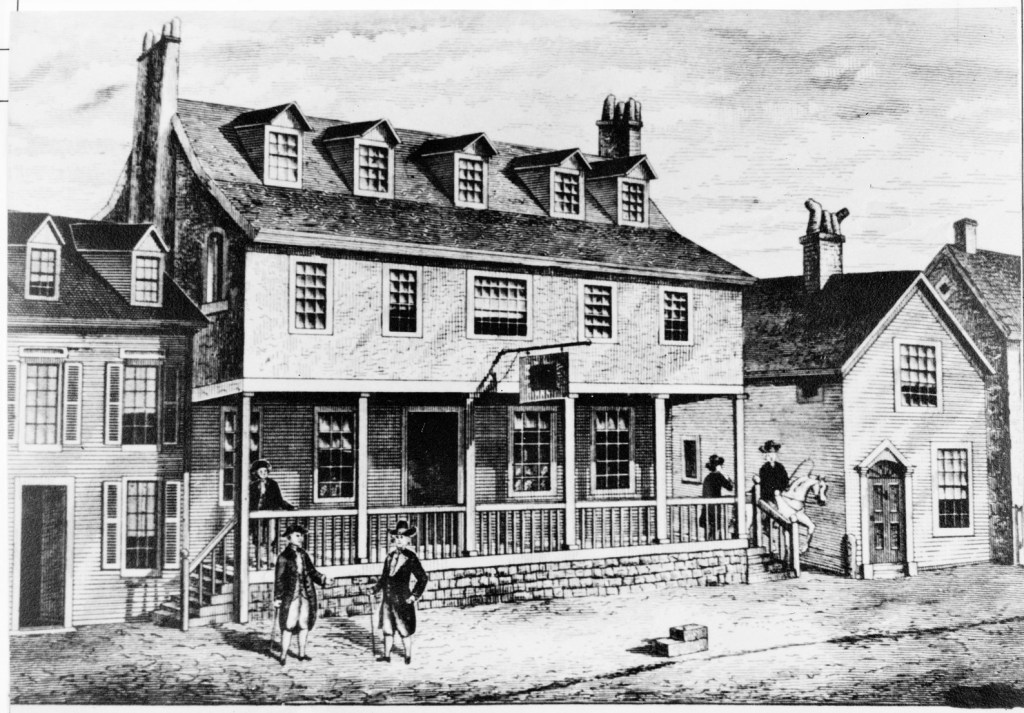
Speed up to this Sunday, June 7th, Emerging Revolutionary War will welcome three guest historians, who all have a connection to a historic tavern to join co-founder Rob Orrison on a talk about 18th century taverns. Yes, a “tavern talk about taverns.”
Joining Orrison on the hour-long happy hour chat will be:
Liz Williams, Executive Director of Gadsby’s Tavern in Alexandria, Virginia, part of The Office of Historic Alexandria, in which she has been employed with since 2004. She is a graduate of Mary Washington College in Fredericksburg, Virginia with a degree in Historic Preservation and a graduate degree in Tourism Administration from George Washington University. She has also worked at various historic sites in the Virginia and Washington D.C. area.
An ERW favorite and returning to the “Rev War Revelry” is Stacey Fraser, the Collections and Outreach Manager with Lexington (MA) Historical Society. One of the sites she oversees the collection of is Buckman Tavern, which played a role in the April 19, 1775 engagements that rolled through Lexington and Concord, Massachusetts.
The third guest historian is Sarah Kneeshaw, the Education and Public Programs Coordinator at Fraunces Tavern Museum. The tavern was built in 1719 in New York City by the De Lancey family. She joined the staff at the downtown New York City site (which is directly across from Federal Hall where George Washington was inaugurated president in April 1789) in 2016. Sarah holds a bachelor’s degree in Anthropology from Fordham University and also attained a graduate degree in Museum Studies from John Hopkins University. She is a native of Staten Island.
Thus, this Sunday, set a side an hour-ish, starting at 7pm EST, to hear these four historians discuss taverns, their importance, and roles in the 18th century social, military, and political history of the burgeoning United States. With your preferred drink, be it an 18th century tavern concoction or not, in hand, we look forward to your questions, comments and insights.
Emerging Revolutionary War welcomes back guest historian Gabriel Neville.
Thirty years ago, Dutch Henderson was “stomping through the woods” near Lake Sinclair in central Georgia when he stumbled upon an old gravestone. Some might have thought it an odd spot for a grave, but Dutch knew the history of the area and it made sense. In fact, the setting told him the man six feet under had played an important role in American history.
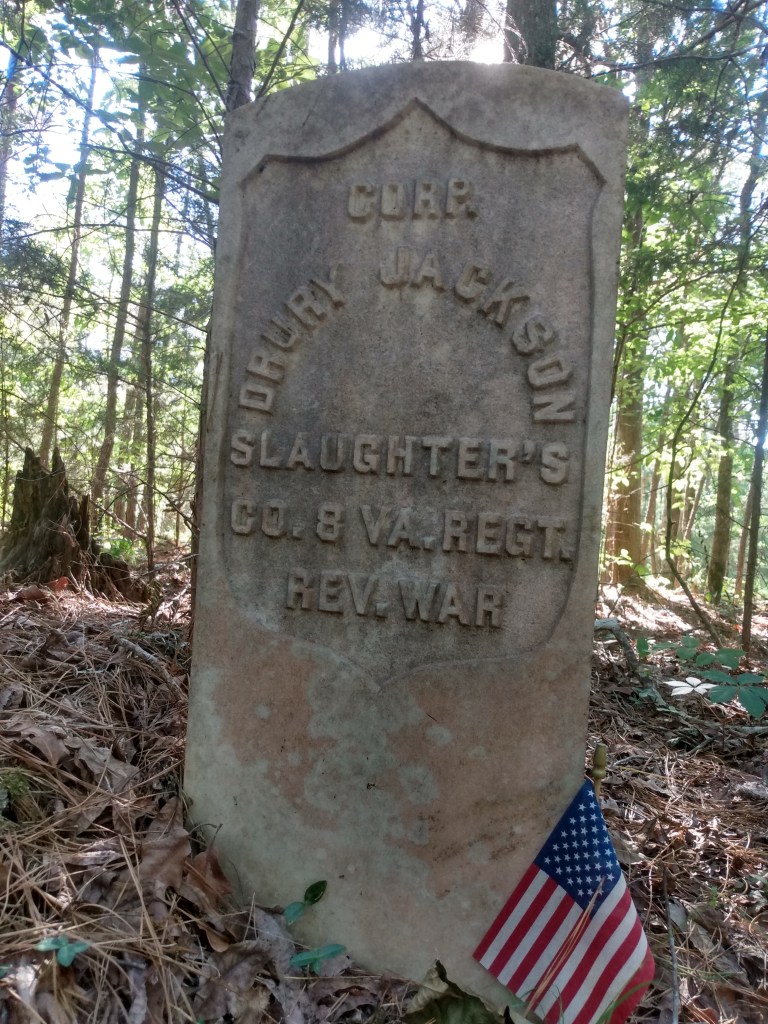
The inscription on the marker read: “CORP. DRURY JACKSON, SLAUGHTER’S CO. 8 VA. REGT. REV. WAR.” Why was this headstone for a Revolutionary War soldier all alone in the woods near a lake? Time changes things. Neither the lake nor the woods were there when Drury Jackson died. Back then the grave was on cleared ground overlooking the Oconee River. Depressions in the soil still reveal to the trained eye that Drury was buried in proper cemetery. The river became a lake in 1953 when it was dammed up to create a 45,000-kilowatt hydroelectric generating station. When Dutch found the grave, the cemetery had been neglected and reclaimed by nature. Today it is in a copse of trees surrounded by vacation homes.
The mysterious headstone for veteran Drury Jackson provides no dates to help us identify the man in the ground. (Dutch Henderson)
Dutch spends his free time studying local history and conducting archeology. He has made some important finds, including a string of frontier forts along what was once the “far” side of the Oconee. He’s pretty sure that Drury’s burial in that spot is an important clue to his life in the years following the Revolutionary War. From there, however, things get complicated.[1]
A genealogy site sporting a photo of the headstone tells us that Drury Jackson was born in Brunswick County, Virginia on February 2, 1745, married Lucy Dozier and then Nancy Ann Kennedy, and died in Wilkes County, Georgia before 1794. This seems possible, but Wilkes County is about seventy miles northeast of the grave. Another source tells us that Drury Jackson was born in 1767 in Franklin County, Tennessee, married Lucy B. Myrick, and died in Baldwin County, Georgia in 1823. This seems more likely, since the grave is in Baldwin County.
So, which of the two men is the right Drury Jackson? The easy assumption is that the stone properly belongs to the one who died nearby. The grave marker itself is of no help. It provides neither the date of his birth nor the date of his death. Moreover, it is the kind of marker that was issued after 1873 by the federal government for the graves of veterans of the Civil and Spanish-American wars (and the unmarked graves of veterans of earlier wars). It is clear that the marker was placed there long after the man’s death by descendants or others in the community.[2]




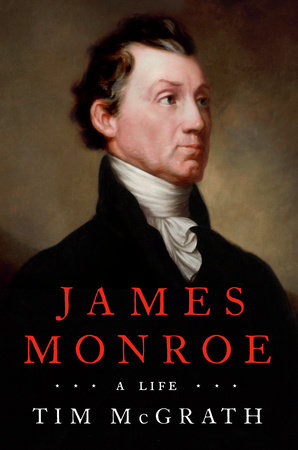 Tim McGrath has written two award-winning winning books about the early history of the United States Navy: Give Me a Fast Ship and John Barry. For his third book, he switched gears to tackle an oft-overlooked soldier, lawyer, politician, and president: James Monroe. In what will likely be the definitive Monroe biography, McGrath tackles the entirety of our fifth president’s life. Born in 1758, Monroe joined the American army in the Revolution’s early days until he was sidelined with a serious wound at


 Emerging Revolutionary War Era