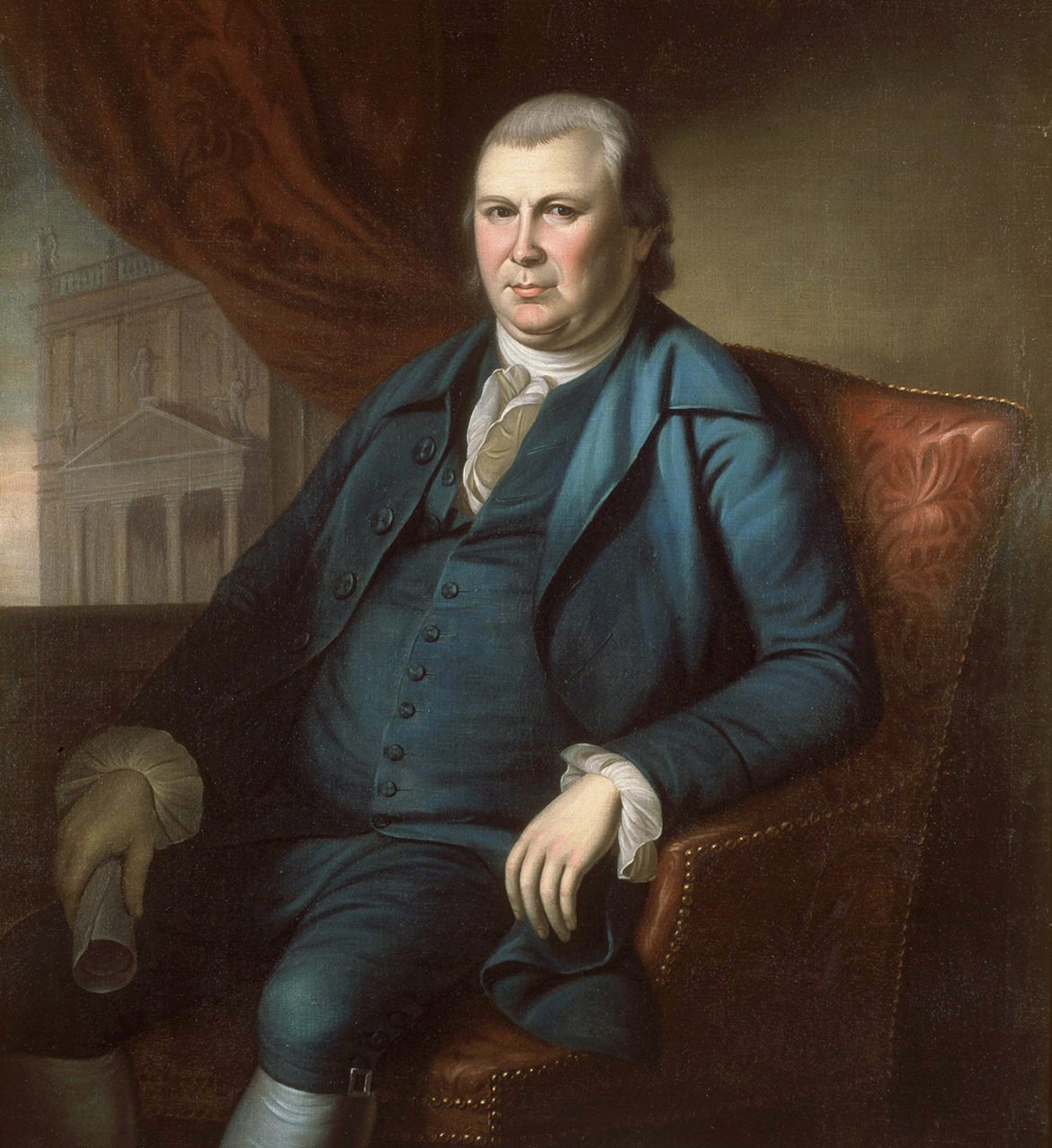
Robert Morris: Founding Father and Revolutionary Financier

Emerging Revolutionary War welcomes back guest historian Michael Aubrecht

To call Robert Morris “a political renaissance man” would be an understatement. He was vice president of the Pennsylvania Committee of Safety (1775–76) and was a member of the Continental Congress (1775–78) as well as a member of the Pennsylvania legislature (1778–79, 1780–81, 1785–86). Morris practically controlled the financial operations of the Revolutionary War from 1776 to 1783. He was a delegate to the Constitutional Convention (1787) and served in the U.S. Senate (1789–95). Perhaps most impressive is the fact that he signed the Declaration of Independence and the Articles of Confederation and later signed the U.S. Constitution.

At the start of the war Robert Morris was one of the wealthiest men in the colonies, but he would go on to claim bankruptcy after some catastrophic decisions. To fully appreciate the contributions of Robert Morris we must go back and examine him from the beginning.

Robert Morris

Robert Morris was born on January 31, 1734, in Liverpool, England, the son of Robert Morris, Sr., and Elizabeth Murphet Morris. His mother died when he was only two and he was raised by his grandmother. Morris’ father immigrated to the colonies in 1700, settled in Maryland and in 1738 he began a successful career working for Foster, Cunliffe and Sons of Liverpool. His job was to purchase and ship tobacco back to England. Morris Sr. was known for his ingenuity, and he was the creator of the tobacco inspection law. He was also regarded as an inventive merchant and was the first to keep his accounts in money rather than in gallons, pounds, or yards.

In 1750 tragedy would once again strike the Morris family. In July Morris Sr. hosted a dinner party aboard one of the company’s ships. As he prepared to depart a farewell salute was fired from the ship’s cannon and wadding from the shot burst through the side of the boat and severely injured him. He died a few days later of blood poisoning on July 12, 1750. The tragedy had a terrible effect on Morris who became an orphan at the age of 16. Looking for a change he left Maryland for Philadelphia in 1748. He was taken under the wing of his father’s friend, Mr. Greenway, who filled the gap left by the death of Morris’ father. Raised with a tremendous work ethic Morris flourished as a clerk at the merchant firm of Charles Willing & Co. 

Following in his father’s footsteps Morris was also gifted with successful ingenuity. In his twenties he took his earnings and joined a few friends in establishing the London Coffee House. (Today the Philadelphia Stock Exchange claims the coffee house as its origin.) Morris was sent as a ship’s captain on a trading mission to Jamaica during the Seven Years War (1756-1763). He was captured by a group of French Privateers but managed to escape to Cuba where he remained until an American ship arrived in Havana. Only then was he able to secure safe passage back to Philadelphia. 

Shortly after Morris’ return to the colonies Willing retired and handed the firm over to his son Thomas who offered him a partnership. This resulted in the formation of Willing, Morris & Co. The firm boasted three ships that were dispatched to the West Indies and England importing British cargo and exporting American goods. This relationship lasted for over 40 years and was immensely successful. At one point, Morris was ranked by the Encyclopedia of American Wealth, along with Charles Carroll of Carrollton, as the two wealthiest signers of the Declaration of Independence.

As influential merchants, Morris and Willing disagreed with the changes in tax policy. In 1765, the Stamp Act was passed and was met with massive resistance. Morris was at the forefront and led protests in the streets. His fervor was so striking that he convinced the stamp collector to suspend his post and return the stamps back to their origin. The tax collector stated that if he had not complied, he feared his house would have been torn down “brick by brick.” In 1769, the partners organized the first non-importation agreement, which forever ended the slave trade in the Philadelphia region.

Morris married Mary White on March 2, 1769, and they had seven children. In 1770, he bought an eighty-acre farm on the eastern bank of the Schuylkill River where he built a home he named “The Hills.” Due to his growing reputation Morris was asked to be a warden of the port of Philadelphia. Showing his tenacity, he convinced the captain of a tea ship to return to England in 1775.

Later on, Morris was appointed to the Model Treaty Committee following Richard Henry Lee’s resolution for independence on June 7, 1776. The resulting treaty projected international relations based on free trade and not political alliance. The treaty was eventually taken to Paris by Benjamin Franklin who transformed it into the Treaty of Alliance which was made possible by the Continental Army’s victory at Yorktown in 1781. 

Scholars disagree as to whether Morris was present on July 4 when the Declaration of Independence was approved. But when it came time to sign the Declaration on August 2 he did so. Morris boldly stated that it was “the duty of every individual to act his part in whatever station his country may call him to in hours of difficulty, danger and distress.” Until peace was achieved in 1783, Morris performed services in support of the war. His efforts earned him the moniker of “Financier of the Revolution.”

Michael is the author of “The Letters of Robert Morris: Founding Father and Revolutionary Financier.

Liberty’s Words Ringing Hollow: Prince Whipple’s 1779 Petition for Freedom in New Hampshire

Emerging Revolutionary War welcomes guest historian Dr Lawrence Howard

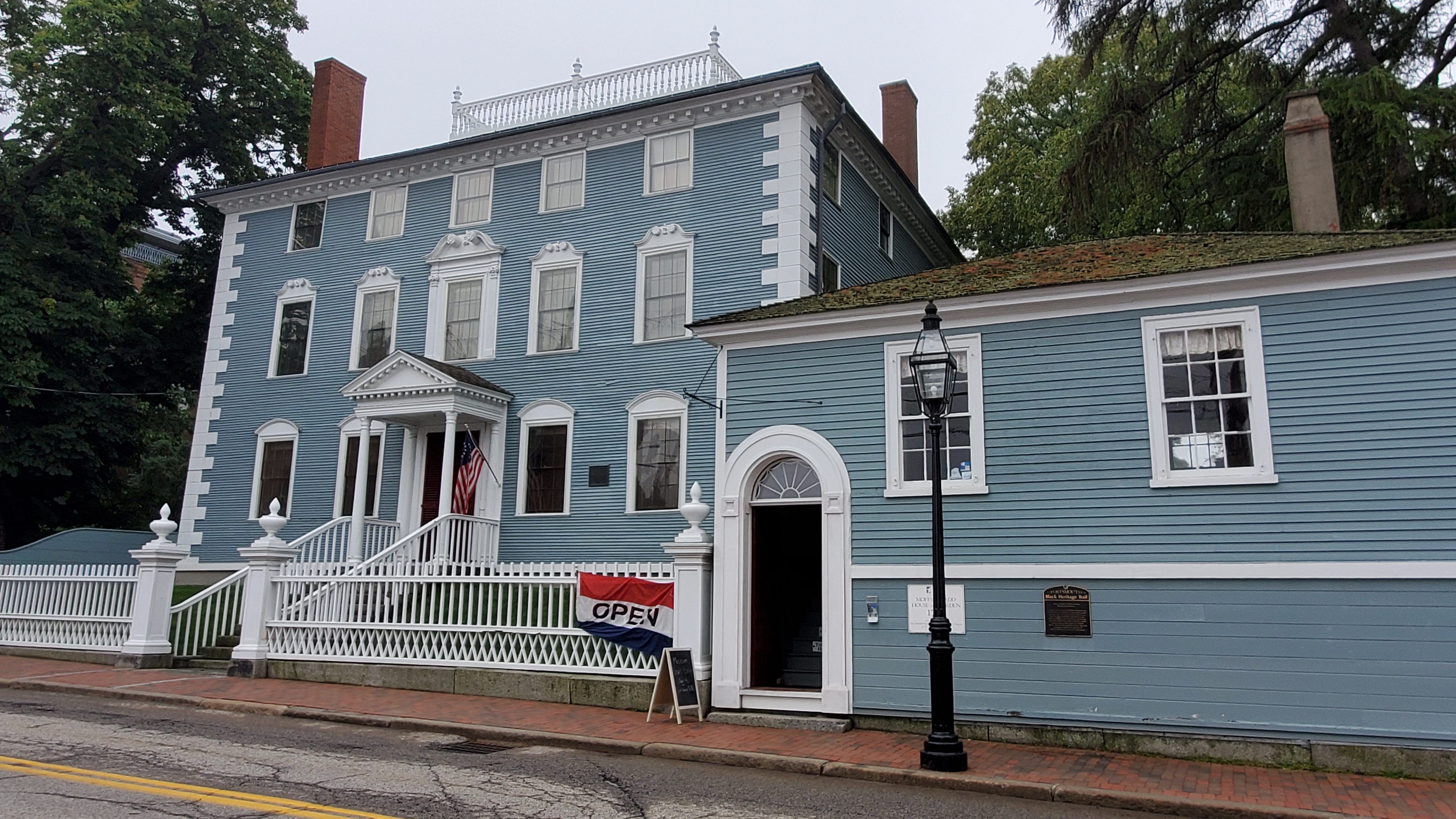
Many people have not been taught that slavery was practiced in early America’s northern colonies, later states. Though fewer people were enslaved in the north than in the south, where the plantation economy was highly reliant on enslaved labor, people were also held in bondage in the north. Also not often taught is the contribution such enslaved persons made to the success of America’s Founding, though recent scholarship seeks to amend this. This article explores the 1779 Petition to the New Hampshire Government, written by Prince Whipple – born in Africa in 1750 and purchased by William Whipple of Portsmouth, New Hampshire at a young age. In this petition, twenty black men requested emancipation from slavery. The African American petitioners echoed some of the same political ideas that the delegates to the Second Continental Congress had staked their own lives on just three years earlier in the Declaration of Independence, announcing American political independence from Britain.

Moffatt-Ladd House, Portsmouth, NH, Author’s photo.

Continue reading “Liberty’s Words Ringing Hollow: Prince Whipple’s 1779 Petition for Freedom in New Hampshire”

“never heard anything more infamously insolent” Loyalist and British response to Patrick Henry’s famous speech

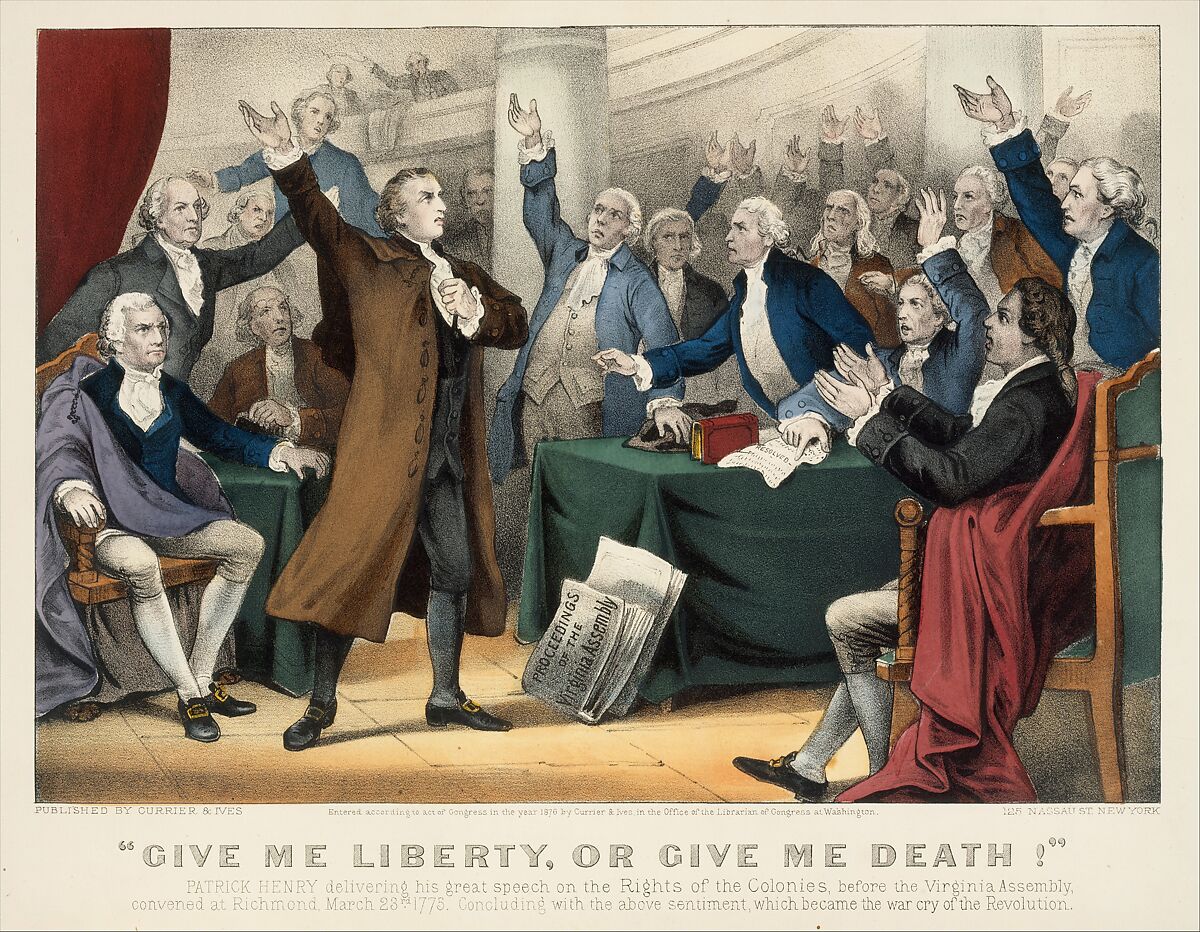
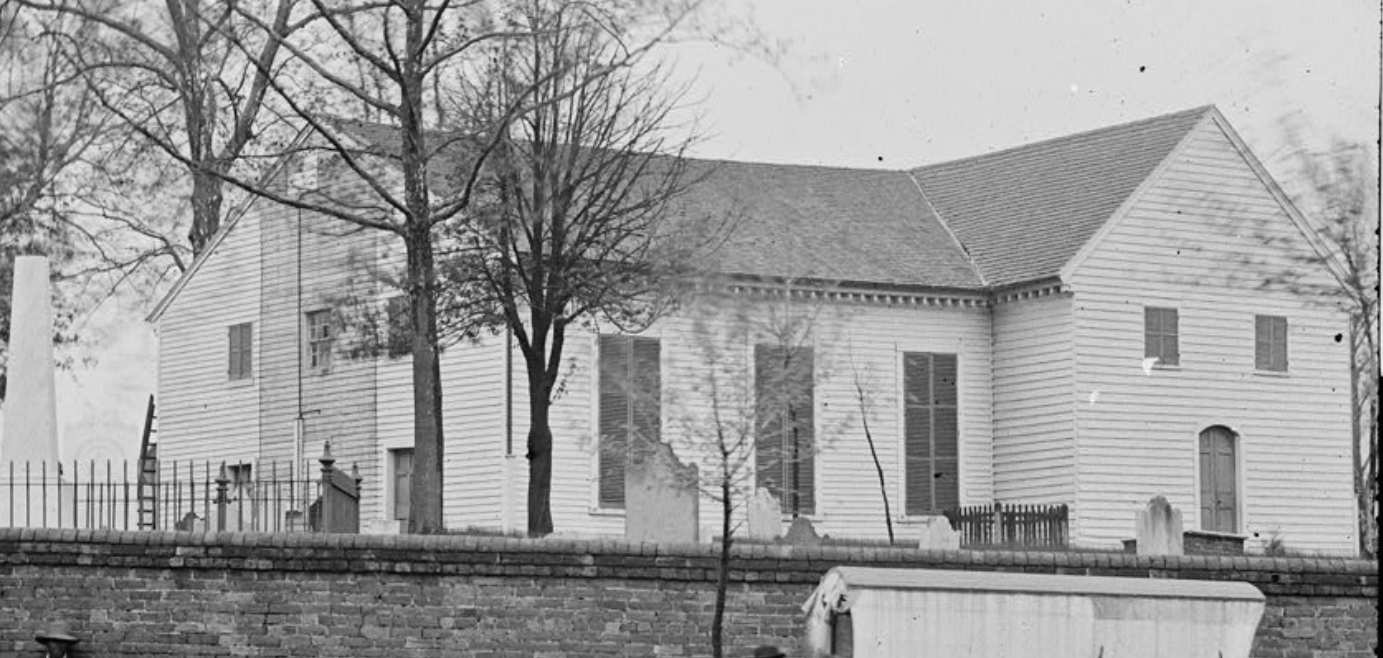
Patrick Henry’s famous speech, delivered on March 23, 1775, before the Virginia Convention at St. John’s Church in Richmond, has become one of the most iconic calls to action in American history. His fiery declaration—“Give me liberty, or give me death!”—was a passionate plea for resistance against British tyranny and a rallying cry for colonial unity in the face of increasing oppression. While Patrick Henry’s speech electrified the American colonies and inspired many to embrace the revolutionary cause, Great Britain’s response to such sentiments, and to the broader colonial rebellion, was both dismissive and aggressive. The British government’s approach to colonial dissent during this period sheds light on their underestimation of the revolutionary movement and the rigidity of their imperial policies.

At the time of Henry’s speech, tensions between Great Britain and its American colonies had been escalating for over a decade. Following the French and Indian War (1754–1763), Britain sought to tighten its control over its colonies and recover war debts by imposing taxes such as the Stamp Act (1765) and the Townshend Acts (1767). These measures were deeply unpopular among colonists, who argued that taxation without representation was a violation of their rights. The colonies’ resistance to British authority—through boycotts, protests, and the formation of groups like the Sons of Liberty—was met with increasing hostility from Britain. By 1775, the situation had deteriorated to the brink of open conflict.

From the British perspective, Patrick Henry’s speech, and similar revolutionary rhetoric, would have been seen as treasonous and inflammatory. The British government viewed the colonies not as equal partners in the empire but as subordinate territories meant to serve the interests of the Crown. Henry’s call to arms was a direct challenge to this hierarchical structure, and British officials were likely to dismiss it as the rantings of a radical minority. However, the speech also highlighted the growing unity and resolve among the colonists, which British leaders largely failed to grasp. This underestimation of colonial sentiment was one of the key reasons why Britain’s response to the American Revolution was ultimately ineffective. Loyalist James Parker wrote ““You never heard anything more infamously insolent than P. Henry’s speech: he called the K—— a Tyrant, a fool, a puppet, and a tool to the ministry,”

The British response to colonial dissent, including the sentiments expressed in Henry’s speech, was characterized by a combination of punitive measures and military force. In the years leading up to the speech, Britain had already implemented harsh policies, such as the Coercive Acts (1774), known in the colonies as the Intolerable Acts. These laws were designed to punish Massachusetts for the Boston Tea Party and to reassert British authority over the colonies. Instead of quelling dissent, these measures only served to galvanize colonial resistance and unify the colonies against British rule.

St. John’s Church, ca 1865 – courtesy Library of Congress

After Henry’s speech, Britain’s strategy remained focused on suppressing the rebellion through force rather than addressing the colonies’ grievances. By April 1775, just weeks after Henry’s address, British troops marched to Lexington and Concord to seize colonial military supplies, leading to the first battles of the Revolutionary War. This military action demonstrated Britain’s refusal to engage in meaningful dialogue with the colonies and its commitment to maintaining control through coercion. Though considered by many as a spark of revolution, Henry’s motion and speech did not reach Great Britain until after the fighting broke out at Lexington and Concord. Though combined, hearing Virginia’s martial push with rebellion in New England proved this was not a localized issue.

One of the reasons Britain failed to adequately respond to the ideological challenge posed by Henry’s speech was its inability to understand the depth of colonial dissatisfaction. British officials often dismissed colonial leaders as self-interested agitators and underestimated the widespread support for revolutionary ideas. This miscalculation led to a reliance on military solutions, which further alienated the colonies and made reconciliation increasingly unlikely.

In addition to military measures, Britain attempted to divide the colonies and weaken their resolve. Propaganda campaigns and offers of pardons were used to sway public opinion and encourage loyalty to the Crown. However, these efforts were largely unsuccessful, as revolutionary leaders like Patrick Henry were able to inspire unity and resilience among the colonists.

Ultimately, Britain’s response to the sentiments expressed in Patrick Henry’s “Give me liberty, or give me death” speech reflected a broader pattern of misjudgment and inflexibility. By dismissing the legitimate grievances of the colonies and relying on punitive measures and military force, Britain failed to address the underlying causes of the American Revolution. Henry’s speech symbolized the growing determination of the American colonies to fight for their independence, and Britain’s inability to adapt to this reality ensured that conflict was inevitable. In the end, Henry’s passionate plea for liberty became a rallying cry for a new nation, while Britain’s response marked the beginning of its eventual loss of the American colonies.

250 Years Ago: The Boston Massacre Oration: March 6, 1775

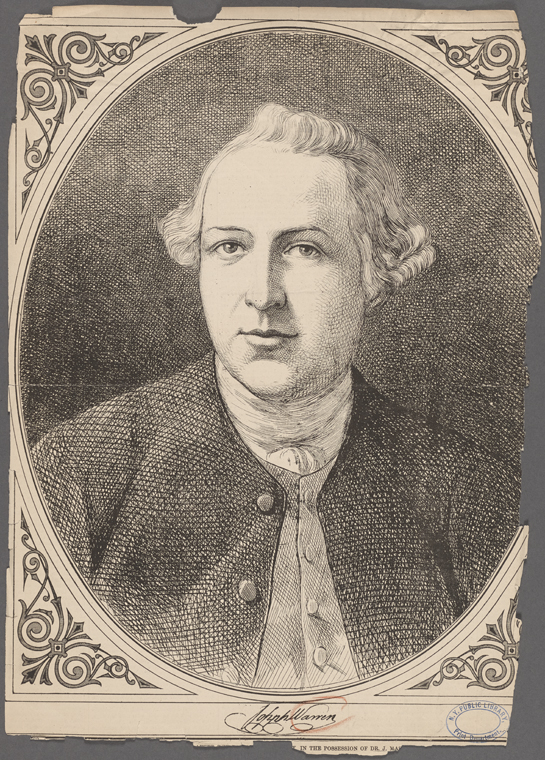
“To-morrow an oration is to be delivered by Dr. [Joseph] Warren,” Samuel Adams wrote on March 5, 1775, the fifth anniversary of the infamous Boston Massacre. “It was thought best to have an experienced officer in the political field on this occasion, as we may possibly be attacked in our trenches.”

Around every anniversary of the Boston Massacre, the people of the city and surrounding countryside sat to reflect on the events of that frigid March night and the current situation between themselves and their mother country. Chosen to deliver the 1775 commemorative oration, his second time doing so, was one of Boston’s most prominent physicians and chairman of the committee of safety, Dr. Joseph Warren. Because March 5 fell on a Sunday, the event was held the following day.

Dr. Joseph Warren. NYPL.

Warren was known to be a passionate and fiery speaker, able to invoke the raw emotion necessary to drive his listeners to action. The political climate surrounding that year’s event was never more incendiary. While no one could have known it at the time, though many anxiously anticipated something coming, the first shots of the Revolutionary War at Lexington and Concord were only a little more than a month in the future. The events on March 6 within the walls of the Old South Meeting House did nothing to ease those anxieties.

Accounts vary on the numbers and makeup of the attendees, but thousands flocked to the commemoration, including a large group of British Army officers garrisoned in the city. The presence of His Majesty’s soldiers was a sure sign that the building would be thick with rigid tension. The sight of the scarlet-coated men seated and standing around the pulpit did not deter the organizers. John Adams showed civility towards the officers, while his cousin Samuel saw an opportunity to enflame sentiments.

Old South Meeting House, Boston, MA. Courtesy of Robert Orrison.

Dr. Warren, 33 years old in March 1775, took the stage garbed in a toga, a symbol of the free men of Rome. His oration only touched upon the events five years prior, but the remainder oozed with patriotic fervor and a call to resist Great Britain’s rule until grievances were met. “I mourn over my bleeding country,” Warren lamented. “With them I weep at her distress, and with them deeply resent the many injuries she has received from the hands of cruel and unreasonable men.” As if a premonition of his own demise in battle at Bunker Hill several months later, he declared, “Our liberty must be preserved. It is far dearer than life.” The speech in its entirety can be read here.

Met with some low hisses and sighs of disapproval from the front rows, Warren’s oration was nonetheless received with emotion and the admiration of his fellow colonists. It was not until he stepped down from the pulpit that pandemonium began to ensue. Samuel Adams rose to appoint a speaker for next year’s commemoration. In doing so he also took the opportunity to reinforce the belief that the events on March 5, 1770 were not an accident, but a “Bloody Massacre.” Even Warren had refused to use this rhetoric. In response, the British officers began to jeer, shouting “Fie! Fie!” and “To Shame!” The already uneasy crowd mistook the shouts as “Fire! Fire!” and many began rushing for the windows, scrambling down the outside gutters and walls. As if this was not enough, the 43rd Regiment of Foot, returning from exercise, happened to be marching by with fife and drum. Their presence threw the crowd “into the utmost consternation,” who may have believed another “bloody massacre” was about to unfold.

Cooler heads prevailed, and any serious confrontation was avoided. Had it not been, one officer attested that it “wou’d in all probability have proved fatal to [John] Hancock, Adams, and Warren, and the rest of those Villains, as they were all up in the Pulpit together.”

March 6, 1775, proved to be another example of the swiftly deteriorating climate in Massachusetts. The influence of the “rebel” leaders continued to grow, while the image of a tyrannical monarch and his blood-thirsty soldiers was reinforced. Open hostilities seemed inevitable. Any day could bring bloodshed. As history exited the Old South Meeting House that day, it continued its accelerated journey down the road from Boston and on to Lexington Green.

On this date…The Jay Treaty

On this date in history…

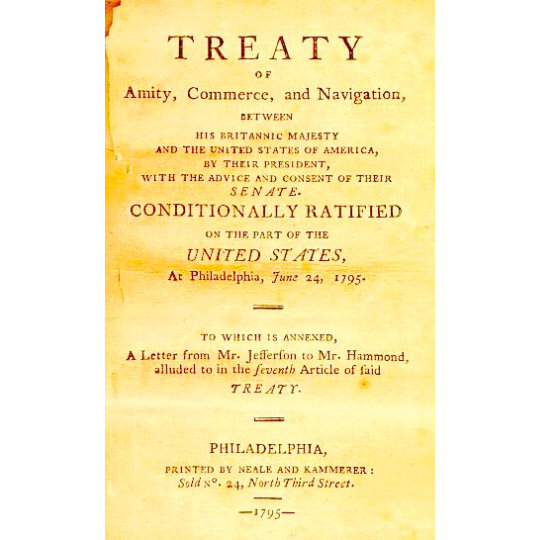
On November 19, 1794, John Jay, representing George Washington’s administration, affixed his signature to a document bearing his name in history. The Jay Treaty. Although the official name of the pact was “The Treaty of Amity, Commerce, and Navigation, Between His Britannic Majesty and the United States of America.”

The treaty’s aim was to resolve outstanding issues from the conclusion of the American Revolutionary War and facilitate economic trade. Although some of the clauses were not fulfilled completely and another war, the War of 1812, erupted because of it, the treaty did serve a purpose. The agreement ushered in a decade of trade between the two countries and gave the fledgling nation a chance to gain footing, a major concern for George Washington, as first president. The treaty also cemented the promise that Great Britain would vacate the forts in the Northwest Territory and agreed to arbitration on the boundary between Canada and the United States and the pre-American Revolutionary War debt.

Yet, the treaty was divisive. Even Jay remarked that he could find his way in the dead of night by the illumination of his own effigy. The treaty angered the French as that country was amid its revolutionary throes, and bitterly divided the nation. Out of it came the separation into two political parties, the Federalists, who supported the treaty, and the Democratic-Republicans who stood opposed to it.

The treaty was ratified by the Senate on June 24, 1795, with an exact two-thirds majority, 20 to 10 along with being passed by William Pitt the Younger, prime minister of Great Britain and his government, and took effect on February 29, 1796.

Historian Joseph Ellis wrote that the Jay Treaty was “a shrewd bargain for the United States” and “a precocious preview of the Monroe Doctrine.” As one of Washington’s most fervent wishes, the treaty “postponed war with England until America was economically and politically more capable of fighting one.”

War!

On this date, in 1812, President James Madison, the fourth president of the United States of America, signed declared war on Great Britain, to go into effect the next day. This is the date Madison signed the measure into law, after sending it to Congress on June 1.

The wording, in its entirety, is below:

BY THE PRESIDENT OF THE UNITED STATES OF AMERICA
A PROCLAMATION
Whereas the Congress of the United States, by virtue of the constituted authority vested in them, have declared by their act bearing date the 18th day of the present month that war exists between the United Kingdom of Great Britain and Ireland and the dependencies thereof and the United States of America and their Territories:
Now, therefore, I, James Madison, President of the United States of America, do hereby proclaim the same to all whom it may concern; and I do specially enjoin on all persons holding offices, civil or military, under the authority of the United States that they be vigilant and zealous in discharging the duties respectively incident thereto; and I do moreover exhort all the good people of the United States, as they love their country, as they value the precious heritage derived from the virtue and valor of their fathers, as they feel the wrongs which have forced on them the last resort of injured nations, and as they consult the best means under the blessing of Divine Providence of abridging its calamities, that they exert themselves in preserving order, in promoting concord, in maintaining the authority and efficacy of the laws, and in supporting and invigorating all the measures which may be adopted by the constituted authorities for obtaining a speedy, a just, and an honorable peace.
In testimony whereof I have hereunto set my hand and caused the seal of the United States to be affixed to these presents. Done at the city of Washington, the 19th day of June, 1812, and of the Independence of the United States the thirty-sixth. By the President:
JAMES MADISON.
JAMES MONROE,
Secretary of State.

*Transcript courtesy of the Miller Center at the University of Virginia.*

Philip Livingston’s Grave, York, PA

While driving near York, Pennsylvania, I decided to stop by Prospect Hill Cemetery to visit the grave of Union General William Franklin. The cemetery was massive, and after locating Franklin’s grave and snapping a few photographs, I continued up the hill where I saw a plot devoted to dead Union soldiers who died while being treated at the army hospital located in York during the war. They were men from all throughout the North. Many of them simply having volunteered to fight, marched away from home, got sick, and died.

An older grave caught my eye just a stone’s throw away from the Civil War graves – a notable one that I did not know was in the cemetery. It was the grave of another non-Pennsylvanian. In fact, he was a New Yorker, and died in York in June of 1778, while a sitting member of the Continental Congress. It was the final resting place of a signer of the Declaration of Independence – Philip Livingston.

Philip Livingston certainly is not one of the Founding Fathers we remember. In fact, we probably remember his brother, William, who served as New Jersey’s Governor during the war, more. But Philip had a very impressive resume and played a part in nearly every major political conference in the colonies held in the years leading up to and during the early days of the American Revolution.

Born in 1716, Livingston graduated from Yale and pursued a career in the import business. Quickly, he built on his status and influence after relocating to Manhattan. He attended the Albany Congress in 1754, and was a member of the Stamp Act Congress, New York’s Committee of Safety, and president of the New York Provincial Congress in 1775. The prior year, Livingston was appointed to the First Continental Congress and was forced to flee his Manhattan home with his family when the British occupied the city in 1776. While he participated in the Second Continental Congress, he also served in the New York Senate.

Unfortunately, Livingston would never get to see his dream of an independent American nation become a reality. Following the British capture of Philadelphia in 1777, the Continental Congress relocated to York, Pennsylvania. Livingston had been suffering from dropsy, and his health was quickly deteriorating. He died suddenly in York while Congress was in session on June 12, 1778, and was laid to rest on Prospect Hill.

Grave of Philip Livingston, Prospect Hill Cemetery, York, Pennsylvania

If you ever find yourself near York, take the time to visit the grave of a Founding Father who, far from home, died before the cause in which he pledged his life and sacred honor for could be won.

Why Tea? Events Leading up to the Boston Tea Party

As we move towards to the 250th anniversary of the Boston Tea Party, we at ERW have gotten a lot of questions with a central theme…” why was it tea that led to revolution?” Was tea so central to colonial life that it was worth risking war or was it something else? The answer is somewhere in the middle and as with most history, there is nuance to the story (and yes, tea WAS a big part of everyday live in British America).

On May 10, 1773, Parliament passed the Tea Act, this act was a way for the British government to help bail out a major corporation, the British East India Company. The British East India Company was one of the largest global companies and faced immense debt and financial trouble. Furthering their troubles, they held a large amount of tea stored in warehouses in London. The British East India Company sought a way to offload this tea, which was considered some of the best tea in the world. The company’s success was directly tied to Great Britain’s international strategy, as the company spread British influence across the globe especially in India where they basically managed the British colony. The Tea Act reduced the cost on the tea (cutting out the “middleman” in Great Britain), and now the colonists could buy the tea directly from the British East India Company.

The British colonies in North America consumed on average of 1.2 million pounds of black tea annually. In 1773, about 1/3 of the population drank tea at least twice a day. It was a common luxury among most middle- and upper-class colonists. They preferred black tea but also drank green tea. Black tea varieties included Bohea, Congou and Souchong and common green tea varieties included Singlo and Hyson. All the tea that the British East India Company sold was grown and imported from China. Tea from China was preferred by most for better flavor, but it tended to be more expensive. The North American colonies consumed a lot of smuggled tea from the Dutch, the quality of the tea was not the same but much cheaper. A large market grew for smuggled tea with most British port officials looking the other way. All of this changed when the Tea Act was passed.

Nineteenthcentury lithograph depicting a tea plantation in Qing China 

Many in Parliament believed the colonists would have little opposition to this new act. They could now purchase their preferred tea for a cheaper price than the smuggled tea from the Netherlands. Unfortunately for Royal leaders, this was not the case. As word reached the colonies Whig leaders such as Samuel Adams called it nothing more than a British authorized monopoly of the tea market, cutting into the pockets of colonial merchants (though their tea smuggling business was illegal to begin with). The Tea Act also highlighted a British policy that the colonists opposed for many years, the Townshend Acts. The Townshend Acts imposed duties on imported lead, glass, paper, paint, and tea. This “tax” was payable at ports and funded the salaries of colonial judges, governors, and other government officials. This angered many colonial leaders for two reasons. First, it levied another tax on the colonists without having their own representation in Parliament. Secondly, it made the government officials more beholden to the British government (and the tax) than the colonial governments.

Whig groups like the Sons of Liberty used local taverns as places for their meetings. The most famous being the Green Dragon Tavern in Boston. It no longer stands today.

As the news of the Tea Act reached the colonies, the reaction was mixed. Whig leaders in major cities such as Charleston, New York, Philadelphia and Boston saw it as a way to reinvigorate their cause of opposing British rule. Recently things were mostly quiet with little interest by the public for protest. But now the Whig spin machine went into full affect. The Tea Act was a direct affront to colonial self-rule and economic interest. The taxes paid for the tea went to British officials in the colonies and the cheaper priced (and better quality) tea would put many American merchants out of business. Whigs were able to control the message that the Tea Act was just another way for Parliament to make money off the colonists, who did not have representation in Parliament.

As part of the Tea Act, consignees were appointed to oversee the sale of tea and the collection of the taxes on behalf of the British East India Company. As the tea began to arrive in colonial ports, public pressure was put on consignees to resign. This pressure was successful in New York, Philadelphia and in Charleston. Each of these cities were able to either stop the tea from being offloaded or, as in the case of Charleston, they confiscated the tea and didn’t allow any duties to be paid on it. All of these were direct affronts to the law but the events in Boston proved to be the most dramatic.

Ca, 1780 view of Charleston Harbor, and the Exchange Building where the confiscated tea was locked away by Whig leaders.

Unlike in other port cities, the consignees in Boston refused to resign. Richard Clarke, leading merchant in Boston and one of consignees faced a mob at his warehouse trying to pressure him and the other consignees to resign. Encouraged by the Massachusetts Governor Thomas Hutchinson (who had two sons serving as tea consignees) to stand their ground, the consignees refused to resign. Soon news arrived that the first ship carrying the tea, the Dartmouth, was arriving in Boston soon.

Hosting several town meetings, some hosting thousands of people, Whig leaders such as Samuel Adams, Dr. Joseph Warren and John Hancock were able to organize a strong opposition to the tea. Of course, Boston was already a tinderbox due to the “Boston Massacre” in 1770 and the large contingent of British regular troops stationed in Boston. Bostonians were reminded daily of Royal influence. The Whigs protested to the Governor to order the ships to return to England, but Hutchinson refused to do so and claimed he didn’t have that authority. Many historians believed Hutchinson, who recently had resigned as Governor and was awaiting his replacement, had grown tired and frustrated with the likes of the Whigs and Sons of Liberty in Boston and was trying to press the issue.

On November 28, the Dartmouth arrived in Boston Harbor. Captain James Hall was turned away at the first wharf he sailed too and was redirected to Griffins Wharf. Everyone knew that once a ship entered the harbor, the captain had twenty days to unload the cargo and pay the custom duties. Soon two more ships arrived at Griffins Wharf with more tea. With the Governor refusing to allow the ships to leave the harbor and local patrols watching the ships to make sure the tea was not offloaded, the stage was set for December 16th, the last day the ship’s captains had to unload their cargo.

Galloway’s Foreshadowing

Joseph Galloway is best known as one of the preeminent and prominent Loyalists who remained in the American colonies through the majority of the American Revolution. Prior to the colonies declaring independence, especially during the First Continental Congress, Galloway was active in the debates that decided the path forward. Besides attending and being active in the discussions in Philadelphia he penned a pamphlet entitled A Candid Examination of the Mutual Claims of Great Britain and the Colonies.

Within the pages, he called African American slavery “the dangerous enemy within” and the “natural weakness” of the soon-to-be Southern states. If a division ensued, Galloway predicted that,

“If the colonies happen to vie and try their reciprocal strength with each other, the political force of the Northern Colonies will soon destroy the opulent force of the Southern.”

Furthermore, Galloway pointed to the colonies/states of Georgia, Maryland, North and South Carolina, and Virginia as vulnerable because of the institution of slavery. In a conflict without the overarching guidance by Great Britain, the division between Northern and Southern colonies/states would lead to a domestic civil war and the possibility that African American slaves would join the Northern effort in vanquishing their former owners.

Although Galloway was writing to prop support for remaining loyal to the British crown he foreshadowed accurately the rift that plagued the independent United States. In laying out his views, Galloway quite succinctly predicted what would happen in 78 years after independence was won by the United States.

Galloway left Philadelphia when the British evacuated the city in 1778 and left for England where he would position himself in a leading role for loyalists in exiles. He never returned to the United States. His succinct prediction of the future though proved eerily accurate.

Sources:

Disunion Among Ourselves, The Perilous Politics of the American Revolution by Eli Merritt

University of Michigan, Evans Early American Imprint Collection, click here for the link.

Rev War Revelry: “For Britannia’s Glory and Wealth” with Author and Historian Glenn Williams, PhD

Join us this Sunday night at 7pm as we welcome Glenn F. Williams, PhD to our popular Sunday night Rev War Revelry! Glenn will examine the political and economic causes of the American Revolution beginning at the end of the Seven Years War / French and Indian War through the resistance movements. He will dispel or clarify some of the popular beliefs about the grievances that eventually led the thirteen colonies to break with the Mother Country. This will be a timely discussion as we approach the 250th anniversary of the Boston Tea Party. Glenn Williams is a retired U.S. Army officer that until recently also enjoyed a “second career” as a military historian. He retired as a senior Historian after 18 years at the U.S. Army Center of Military History and 3 1/2 years as the historian of the American Battlefield Protection Program of the U.S. National Park Service.

Grab your favorite drink and tune in, we will be live so feel free to drop your questions in the live chat. If you are not able to tune in on Sunday, the video will be placed on our You Tube and podcast channels.