The Battle of Waxhaws, fought on May 29, 1780, was a lopsided British victory by Lieutenant Colonel Banastre Tarleton’s British cavalry over American Colonel Abraham Buford’s Continental forces in Waxhaws South Carolina. Buford lost 316 of 350 men with the British losing less than 20. Known popularly as “Buford’s Massacre,” Continental leaders used the battle as a propaganda tool against the Crown forces in the south. But, was it really a massacre?
Join us as we welcome historian and author Dr. Jim Piecuch as we discuss his research and theory about the Battle of Waxhaws and its aftermath. Dr. Piecuch has written several books on the Southern Campaign of the American Revolution including his book “Blood Be Upon Your Head: Tarleton and the Myth of Buford’s Massacre.” This Rev War Revelry will be pre-recorded and posted on May 28th at 7pm. Grab a drink and a good seat and enjoy this great presentation on one of the most controversial battles of the American Revolution.
The Mary Ball Washington Monument and grave site, Fredericksburg, VA
Happy Mother’s Day to all the moms out there! In honor of Mother’s Day, Emerging Revolutionary War welcomes will be welcoming historians and staff from the Washington Heritage Museums to tonight’s Rev War Revelry. WHM manages and operates the home and grave site of Mary Ball Washington, the mother of George Washington located in Fredericksburg, VA.
The relationship between George Washington and his mother has been of interest in historians. Their relationship was complicated and much debated by Washington contemporaries and historians today. Mary never remarried when her husband passed (rare for the time period) and mostly lived on her own in Fredericksburg. She also was not afraid to complain about her lack of resources and once applying to the Virginia General Assembly for financial support (to much frustration from George Washington). We will cover many of the myths and interpretations of Mary and her relationship with her son.
So grab a drink and join us as we discuss Mary Ball Washington, her relationship with her son George and what the Washington Heritage Museums are doing today to interpret and preserve her story. Our revelry tonight is previously recorded so we could spend time with the mom’s in our life, but as always we will respond to any comments and questions posted.
May 10, 2023 marks the 250th anniversary of the passing of the infamous Tea Act. Though a seemingly innocuous Parliamentary action, it had dire impacts in the British North American colonies. Parliament was known to enact various laws to provide guidance and management of her colonies across the globe. Some like the Stamp Act led to direct protest and eventual repeal. But the Tea Act was something totally different. It focused on the North American colonies and was meant to benefit a single entity, the East India Company. These two variables, plus the on going strife in North America over British influence led to various protests in the American colonies. This ultimately resulted in the Boston Tea Party on December 16, 1773 (and other lesser known “tea parties” in Charleston, Philadelphia and other port cities).
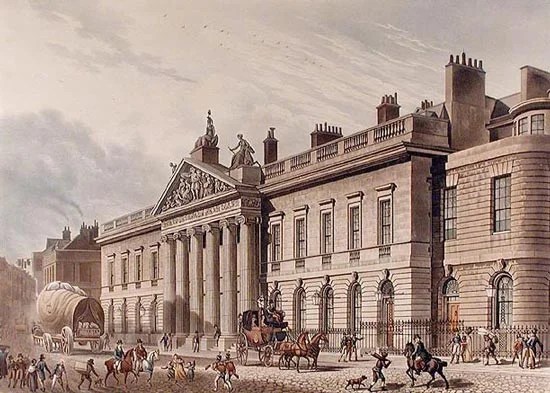
East India House in London, ca 1800
The East India Company was a joint stock company founded in 1600 and became one of the largest companies in the world. Tea was not their only commodity, however as they also traded spices, sugar, indigo, silk and much more. Parliament was heavily vested in the company’s success and began to enact laws that benefited the company. This included the Tea Act of 1773, passed to help the company divest itself of an over abundance of tea stored in its warehouses. The Crown and Parliament was worried that the prices of tea and the large supply would lead to serious financial strain on the company. The Tea Act also aimed to clamp down on the massive amounts of “illegal” tea that was being smuggled into the colonies. Some historians argued that men like John Hancock, who was deeply involved in smuggling, saw the Tea Act as his “rubicon” towards independence. He believed the act would impact his revenues via his smuggling. Now the American colonies were forced to purchase East India Company Tea (that could directly ship to the colonies) and which was taxed. Many colonial leaders saw this is as a backwards way to impose a tax without their consent and to force them to prop up a struggling East India Company
The road to revolution in the American colonies does not have a single starting point, but one could argue that 250 years ago the Tea Act was the last straw. It led to direct and open opposition (and destruction) of British rule and property in several ports along the Atlantic. These brazen “parties”, mainly the Boston Tea Party, led Parliament to pass the Coercive (Intolerable) Acts, which in turn united the various colonies like never before. Open armed conflict with Great Britain was just a year away.
Tell me I am not the only one that randomly goes on a car ride to a random town in their home state to just “see what is there?”
Regardless, that is what I decided to do on a sunny late April Sunday afternoon. I ended up in Rockville, Maryland. The town astride I-270 today was also on a major thoroughfare during both the 18th and 19th centuries that brought armies from the area, like General Edward Braddock’s in 1755 or General Jubal Early’s in 1864.
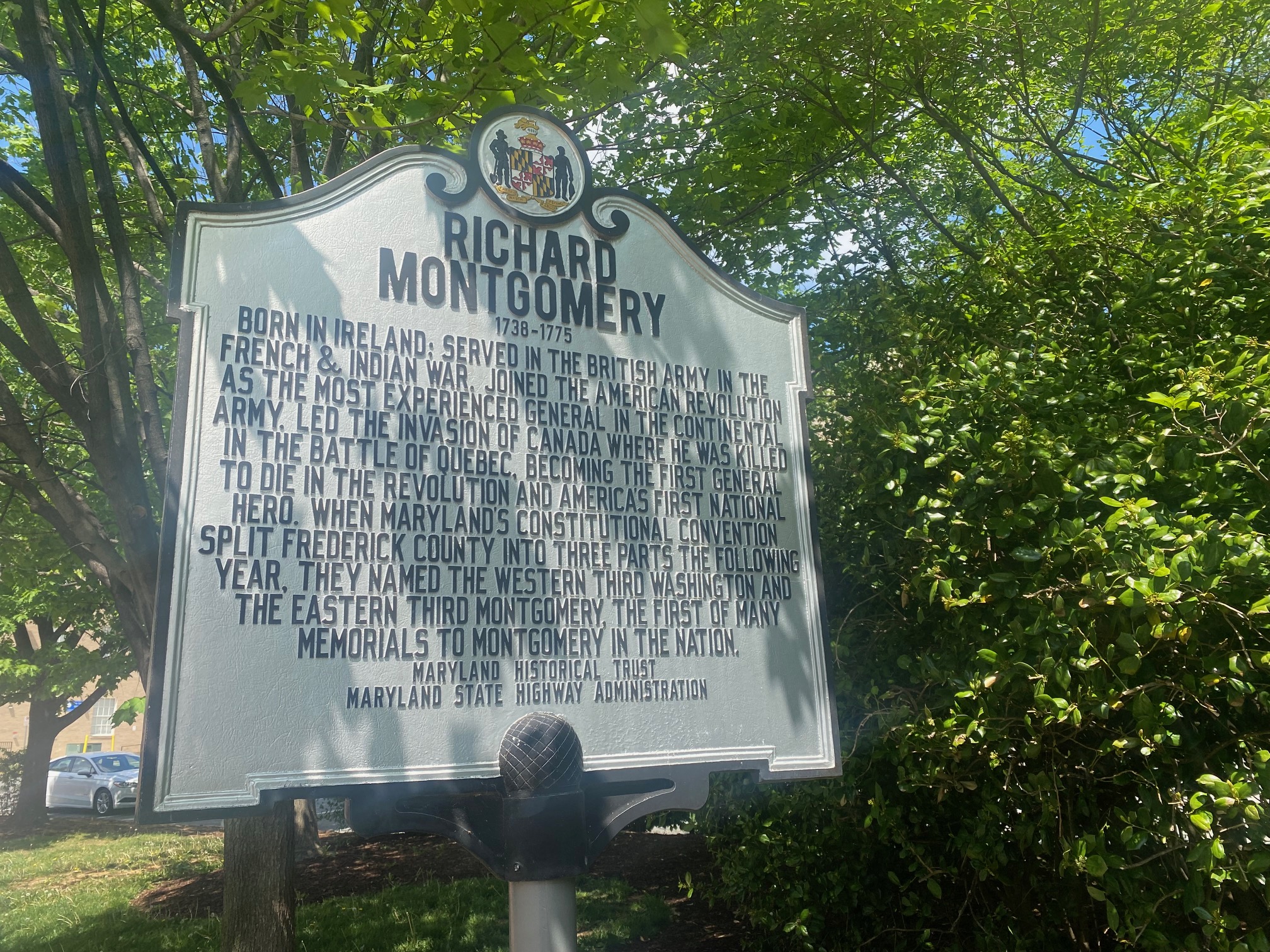
However, a different historical sign attracted my attention on this excursion.
I read the title and the first line, Richard Montgomery…Born in Ireland. Served..” Which was all I could read as I slowly drove by, since it is near the court house and county government buildings. Even though it was a Sunday still not wanting to speed through. So…Naturally, I pulled over, as evidenced by the vehicle you see in the background!
I knew Montgomery, as the sign reads, died at the Battle of Quebec in a futile attempt to take the city for the American cause. He was the first general–Continental–to die in the cause of American independence.
On September 6, 1776 Thomas Sprigg Wootton, who hailed from Rockville, introduced legislation in the Maryland Constitutional Convention to separate the Frederick County into three. The upper or most western half, to become Washington County, named in honor of George Washington and the lower half, or most eastern, to be named Montgomery, in honor of Richard Montgomery. The remaining middle portion would retain the name Frederick. This may be the first recorded instance in the rebellious British colonies of names of counties, towns, or cities that did not refer to something in British history or famous persons. Another act of defiance at the beginning of the American Revolution!
With a random Sunday excursion one never knows what one will find. History is all around us, beckoning to be explored.
Emerging Revolutionary War thanks historian Christian Di Spignafor the picture.
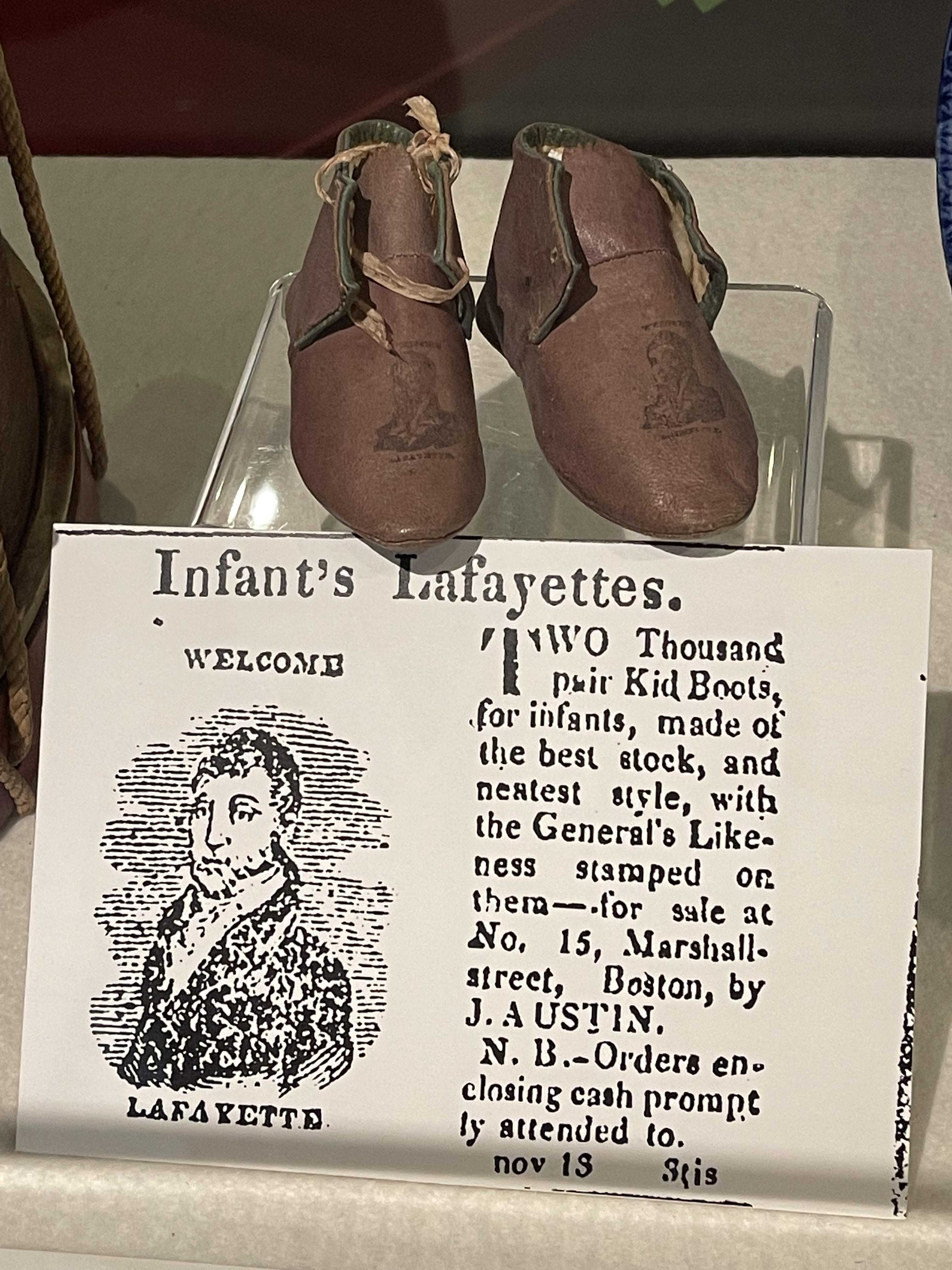
With the release of the motion picture, Air, about the recruitment to Nike of Michael Jordan in the 1980s, Emerging Revolutionary War wanted to bring our readers attention to an older model of a shoe. That predates Nike by a century and a half. But, who knows, could come into vogue again right?
The Marquis de Lafayette returned to the United States in August 1824 to September 1825 and toured all 24 states at the time. Feted as a living link to the American Revolution and the independence movement, he was dined, celebrated, and asked to speak at many, many events. Commemorative items were created in his image and likeness, including, apparently a pair of shoes.
These shoes can be viewed today at Old Sturbridge Village in Massachusetts. A link to their website and to plan a visit can be found here.
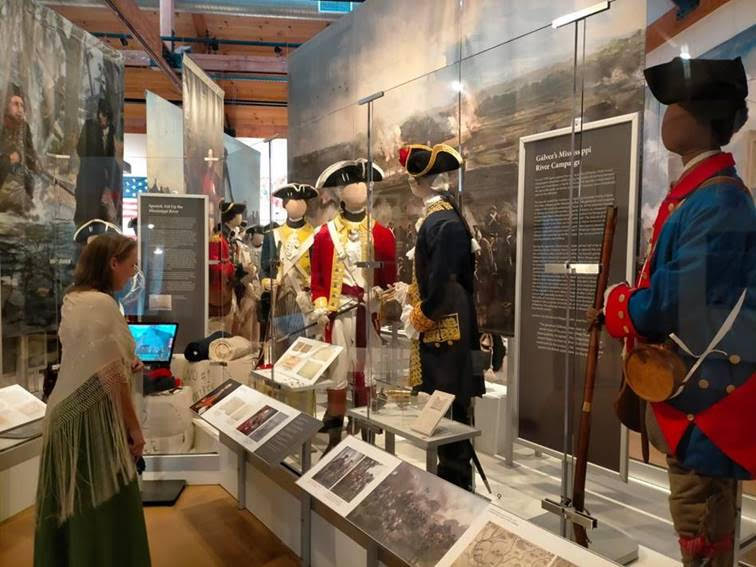
This conference will focus on the military, political, social and material culture history of the western theater of the American Revolutionary war, featuring scholars from across the U.S. and from Spain.
Location: The Sheraton Westport Plaza Hotel, St. Louis County, Missouri
Speakers and Topics:
Larry L. Nelson—”George Rogers Clark, the Illinois Campaign, and American Ambitions in the West”
Robert M. Owens – “Jean Baptiste Ducoigne, the Kaskaskias, and Pragmatic Patriotism in the Revolutionary Era”
José Manuel Guerro Acosta – “Spain and the Support for the American Revolution”
Friederike Baer – “’O, how the Mississippi is costing us many a good man!’: German Soldiers in West Florida, 1779-1781”
Frances Kolb Turnbell – “Indian Politics and the American Politics in the Lower Mississippi Valley”
Stephen L. Kling, Jr. – “An Opportunity to be Seized: The British Grand Plan to Conquer the Entire Mississippi River Valley”
Alexander S. Burns – “The Worst Looking Soldiers and the Drunkest Men to Ever Carry a Musket?: The 8th Regiment and the War in the West”
Kristine L. Sjostrom – “Valentía y Visión: Lt. Governor Fernando de Leyba and the Defense of St. Louis”
Kimberly Alexander – “O What Can These Things Tell Us: Material Culture at Revolutionary War St. Louis”
Jim Piecuch – “Fighting from Horseback: A Comparison of Revolutionary War Cavalry in the Eastern and Western Theaters”
Paul Douglas Lockhart – “For Want of a Good Musket and a Sharp Knife: Weaponry and Wilderness Warfare”
Evening Events: A cocktail reception will be held on Friday evening at 6:00pm at the Sheraton Westport Plaza Ballroom. A private party on Saturday evening at 6:30pm at the St. Charles County Heritage Museum will include a private tour of The American Revolutionary War in the West museum exhibit.
Registration: Conference registration cost including evening events: $75.00. Registration can be made through the St. Charles County Historical Society by 1) mailing a check to The St. Charles County Historical Society, 101 S. Main St., St. Charles, MO 63301, Attn: Joan Koechig; 2) credit card or PayPal by calling at (636) 946-9828 MWF, 10am-3pm; or 3) online at scchs.org. Registrations are limited and will be filled on a first come, first served basis. Questions, call Melissa at: (314)-561-5077. NOTE, online registration will be available starting April 19, 2023.
Emerging Revolutionary War welcomes guest historian Christopher of The British-American Historian blog.
Almost two years after debating a joint French-American assailment of Lord Cornwallis’ precarious position in Yorktown, Virginia over Washington’s grand plan to recapture New York long after being swept from the city and its environs as independence was officially declared in 1776, the implacable Washington prepared to reenter New York in triumph.
Eight years after making New York the center of the British war effort in the American Revolution, the massive garrison was greatly reduced and preparing for its final retirement from the new nation. The new commander in chief of North America, Sir Guy Carleton, arrived in New York on May 5, 1782[1] to relieve Sir Henry Clinton. Carleton won accolades for holding Quebec City when the Continental Army struck during a late night blizzard, an accomplishment that was all the more vaunted now that the British were losing territory that did not include Canada. Carleton lost no time in notifying Washington of his arrival in an affable letter sent on May 7th, 1782 in which Carleton wrote “if the like pacific disposition should prevail in this country, both my inclination and duty will lead me to meet it with the most zealous concurrence”[2].
A notable disruption in the growing amity was the unresolved Asgill Affair. Exasperated with wanton assailments of loyalists in New Jersey, a prominent rebel militia commander named Joshua Huddy was plucked from the provost in New York by an American member of the Associated Loyalists[3]. The Associated Loyalists were presided over by William Franklin, the loyalist son of Benjamin who had endured arduous captivity before being exchanged[4]. In response to the wanton execution of Joshua Huddy, Washington ordered a British officer to await reprise. Charles Asgill was selected, but pleas from the French along with Washington’s honorable disposition prevailed and the captain was spared[5].
The city and Long Island were swarming with thousands of loyal “Refugees” who had fled from every rebellious colony to seek the king’s protection. Ranging from itinerant tenant farmers to some of the largest landlords in America such as Beverly Robinson and Frederick Philipse, Carleton’s task of evacuating the troops could not be fulfilled until such persons were safely resettled in the empire. While many of the men joined provincial regiments that saw combat in the south (playing a pivotal role defending Savannah and being routed at Kings Mountain) and performed prodigious woodcutting on Lloyd Neck for the insatiable demand for firewood[6], flocks of women and children crowded the city. A subset of the refugees were former slaves who had flocked to the British cause for the promise of freedom under Dunmore’s Proclamation and the Philipsburg Proclamation, a promise Washington would vigorously contest in negotiations.
Charleston, South Carolina is one of the most beautiful and historic cities in the United States. Numerous sites, battlefields, and buildings from the period of the Revolution still exist.
Join us this Sunday at 7pm as we discuss ERW’s newest release “To The Last Extremity: The Battles for Charleston” by Mark Maloy. In To the Last Extremity: The Battles for Charleston, historian Mark Maloy not only recounts the Revolutionary War history of Charleston, he takes you to the places where the history actually happened. He shows you where the outnumbered patriots beat back the most powerful navy in the world, where soldiers bravely defended the city in 1779 and 1780, and where thousands suffered under occupation. Through it all, brave patriots were willing to defend the city and their liberty “to the last extremity.”
We will talk to Mark about his research, his favorite and most compelling stories and why this book is a “must have” for any history buff. Join us this Sunday, April 16 at 7pm on our Facebook page to join in on the conversation. As always, if you can not join us live you can catch the talk at any time on our You Tube or podcast channel.
Emerging Revolutionary War welcomes guest historian Werther Young.
I’m Too Sexy for My…Bavarian Fly
By Werther Young
Of all of the unique things that have managed to make it to the internet, a concise history of colonial men’s pants flies is surprisingly not one of them.
Our story begins in the Renaissance in, where else, France. King Henry III of France eschewed the old-fashioned dress and hose and embraced a new fashion, culottes, now known as “knee breeches.”
Henry III in his dress and hose
Henry III in his tony new culottes.
The fly of Henry’s pants was a simple affair, a rectangular panel sewn to the left side with buttonholes that buttoned over the right. This simple and practical design became known as the “French fly” and became almost universal in Western Europe over the next 60 years.
Ann Bonny the pirate, in French fly trousers, ca. 1721.
Over time, Ann Bonny’s “long” French fly was perfected into the “short” French fly. Anne’s fly extends from the inseam to the waistband. By merely sewing a few inches of the front seam together, the fly can be made shorter, removing a buttonhole and button or two.
These fly designs apparently did not reach into Eastern Europe, where presumably leather pants were as expensive as wool ones but lasted much longer, because they were never washed. Translating the French Fly into leather posed some problems, and so these leather pants had a different fly, essentially a hole in the center front with a panel buttoned over it that flipped or dropped up and down as necessary. This design caught on in the Alpine areas of central Europe, and especially in Bavaria under the label of “Lederhosen,” which is German for “leather pants.”
“Short” French Fly Breeches, ca. 1750.
The Bavarian fly migrated further north, as in the Deutsches Museum in Berlin can be found a pair of enlisted trousers from the mid-1700s, with a half drop front fly; that is, it opens only the right side. This is essentially a cheaper fly, because it needs only one button to close, and does the same thing.
By the middle 1700s, the French fly had been around for over 150 years, and someone in France started a different fashion (and outdoing the Huns) by putting the two -opening Bavarian fly on culottes, thus making the culottes “a la Bavarois,” French for “like the Bavarians.” This was runway level high fashion for the time, and quickly spread among the well to do as the latest thing, with a new name, the “drop front” or “fall front” fly. Unfortunately, translating the design from leather, which does not unravel, to fabric, which does, made the Bavarian fly extremely complicated and therefore expensive. This of course added to its cachet, so much so that by 1775, it had reached the aristocracy even in the backwater of Colonial America.
Lederhosen
Colonial Williamsburg has a fabulous collection of high-status men’s pants from the 18th century. A survey thereof shows the number of French flies waning into the 1770s, and the number of Bavarian drop front flies waxing beginning in 1775, reaching a height about 1800. Unfortunately, these are all very high-status garments, such as a pair of “button front breeches of cream-colored silk velvet, with repeat of small pink and green flowers self-covered buttons, those at knee embroidered with metallic silver thread. Silver galloon strap at knee.” But did the states and Continent really issue enlisted soldiers what amounts to hand made Givenchy trousers? Of course not.
The false idea that they did partially comes from a series of paintings done by Charles M. Lefferts in the early 1900s, later published as Uniforms of the Armies in the War of the American Revolution, 1775–1783. in 1926.
A Lefferts rendering of trousers a la Bavarois, 2d Maryland 1777.
Measuring this man’s height against the known length of his musket makes him about 6’4 inches tall, the height of actors Clint Walker, Chuck Connors, Clint Eastwood, and the average NBA basketball player. If you look below the point of his vest, he is wearing drop front pants over his massive thighs. Curiously, he is also wearing a 1760s style skirted vest and long regimental coat. Are we to believe that Maryland issued its men old fashioned vests and coats, but high fashion breeches? Since Lefferts was born in 1873, he had no first-hand knowledge of his subject, we must look to period images.
Alas, these are of little help. It is difficult to discern whether any of the men in period paintings are wearing French Fly pants, Bavarian drop front pants, or anything else. The most informative images, the von German drawings, are unfortunately from the side, and of no help.
Von German “American Soldier” New York Hist Soc.
Amerikanische Scharfschutz, Brown University
Since information is so scarce, we must turn to the other reason we believe that rev war soldiers wore drop front pants. Klinger’s Sketchbook ’76. Page 9 shows a pair of Bavarian drop front breeches, based on George Washington’s uniform in the Smithsonian, and Lt. Col. Tench Tilghman’s uniform from the Maryland Historical Society. This is odd, because Washington’s uniform is from the 1794, 15 years after the war and at the height of the drop front craze. Tilghman was the scion of a blue blood family, owned half of Baltimore, was an aide to Washington, and hobnobbed with Lafayette. Even if his uniform can be dated to the war years, it is not only a high-status uniform, but one of the highest status possible in America at the time; his not wearing Bavarian trousers would be of greater note. Neither are evidence that any of the 13 colonies nor the Continent paid to make their enlisted men such high fashion trousers.
On Sketchbook page11, Klinger bases his Bavarian drop front overalls on unspecified plates in “Bernard’s History of England” and the images above. While these may establish Bavarian drop front flies supplied by the King George, it certainly does not necessarily mean that the colonies were doing so.
Surprisingly, two pairs of enlisted overalls are known to exist, mistakenly labelled as “Pantaloons,” and residing in the Metropolitan Museum of Art’s Costume Department. These are exquisitely made, and probably military examples, but unfortunately European, and from 1793 and later.
No credible evidence exists that any of the 13 colonies nor the Continent issued its troops Bavarian drop front pants. This makes sense, as that design is difficult to make, does the exact same thing as the simple French fly, and fashionable pants do not really contribute much extra to Liberty. Additionally, with all but the highest status clothiers making French fly pants, retraining them to cut out and make the new design would seriously impede production, even assuming that patterns and training could be somehow provided from Georgia to Vermont at a time when the men could barely be supplied a musket or shirt. In the War of the Revolution, the colonists were by all indications wearing French fly breeches and overalls, not drop front ones a la Bavarois.
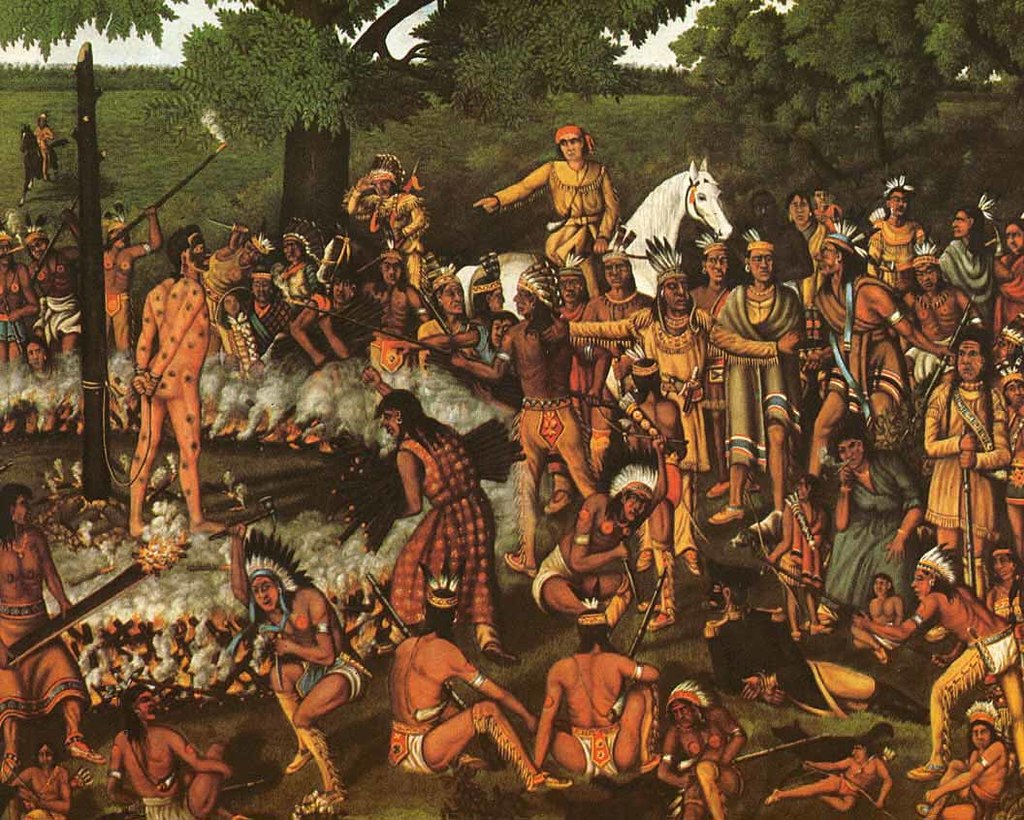
In May 1782, Colonel William Crawford led over 450 volunteers across Ohio to attack British-allied Native Americans who had been raiding the frontiers of Pennsylvania and Virginia for years. An experienced yet reluctant commander, Crawford and his men clashed with a similarly sized force of British Rangers and Wyandot, Delaware, and Shawnee Indians on the Sandusky River in early June. After three days, the Americans were routed in one of the worst defeats American arms suffered on the frontier during the American Revolution. During the retreat, Native American warriors captured dozens of men, including Colonel Crawford. Many were horrifically tortured to death in revenge for the Gnadenhutten massacre earlier that spring, when American volunteers bludgeoned nearly one hundred unarmed and unresisting Delaware Indians to death.
Join us on our Facebook page this Sunday at 7pm for a recorded talk with historian and author Eric Sterner as he discusses Crawford’s Campaign and his new book “The Battle of Upper Sandusky, 1782” due out this spring. The talk will be availble on our You Tube page next week.







 Emerging Revolutionary War Era