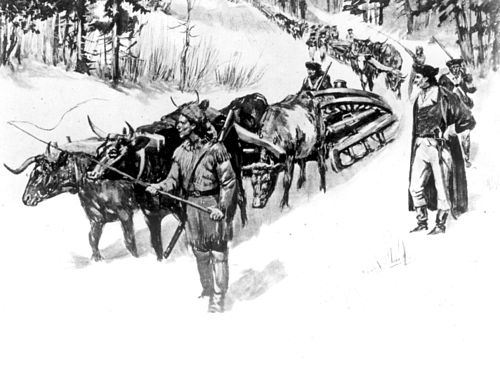
In December 1775, Henry Knox wrote to General George Washington, “I hope in 16 or 17 days to be able to present your Excellency a noble train of artillery”. However, the train of artillery would not arrive until the end of January 1776. Still an impressive feat, as Knox with his team moved 60 tons (119,000 pounds) of artillery over 300 miles from upstate New York to the environs of Boston in 70 days in the midst of winter.
This impressive feat enabled Washington to evict the British from Boston, winning the siege and giving the fledgling rebellion a victory to build momentum from.
To discuss this amazing feat and part of American military history, Emerging Revolutionary War welcomes Dr. Phillip Hamilton, a professor of history at Christopher Newport University. A historian of the American Revolutionary and Early Republican periods, he has edited and written “The Revolutionary War Lives and Letters of Lucy and Henry Knox.”
Although the program is pre-recorded, Emerging Revolutionary War hopes you still tune in on Sunday, February 22 at 7 p.m. EDT. We promise the revelry will be enlightening. If you have any questions, please drop them in the chat during the program, and we will ensure Dr. Hamilton receives them.
Emerging Revolutionary War welcomes back guest historian and park ranger Eric Olsen. Ranger Olsen works for the National Park Service at Morristown National Historical Park. Click here to learn more about the park.
What do poor health, a dead mother, a need to shop for new clothes, a pregnant wife, army business, a wife’s mental illness, family financial problems, and a desire to see family and old friends all have in common?
They are all reasons officers gave for asking for furloughs during the winter encampment of 1779-1780.
While the regulations and the various orders issued give us a general idea of the problems related to furloughs, we can get a different viewpoint by looking closer at the different Divisions, Brigades, and individuals who made up the army. The individual soldiers’ correspondence can also give us a more personal take on the furlough story. This paper will be far from comprehensive. It will just cover the furloughs that turn up in the surviving documentation. To make it easier to follow I have grouped the numbers and correspondence regarding furloughs by divisions and brigades.
Emerging Revolutionary War welcomes back guest historian and park ranger Eric Olsen. Ranger Olsen works for the National Park Service at Morristown National Historical Park. Click here to learn more about the park.
What do poor health, a dead mother, a need to shop for new clothes, a pregnant wife, army business, a wife’s mental illness, family financial problems, and a desire to see family and old friends all have in common?
They are all reasons officers gave for asking for furloughs during the winter encampment of 1779-1780.
While the regulations and the various orders issued give us a general idea of the problems related to furloughs, we can get a different viewpoint by looking closer at the different Divisions, Brigades, and individuals who made up the army. The individual soldiers’ correspondence can also give us a more personal take on the furlough story. This paper will be far from comprehensive. It will just cover the furloughs that turn up in the surviving documentation. To make it easier to follow I have grouped the numbers and correspondence regarding furloughs by divisions and brigades.
Have you ever thrown a rock into a pond? The ripple effect spreads outward for quite a distance along the surface of the water. The American Revolutionary War had the same effect in the late 18th century world as that pebble did to the body of water.
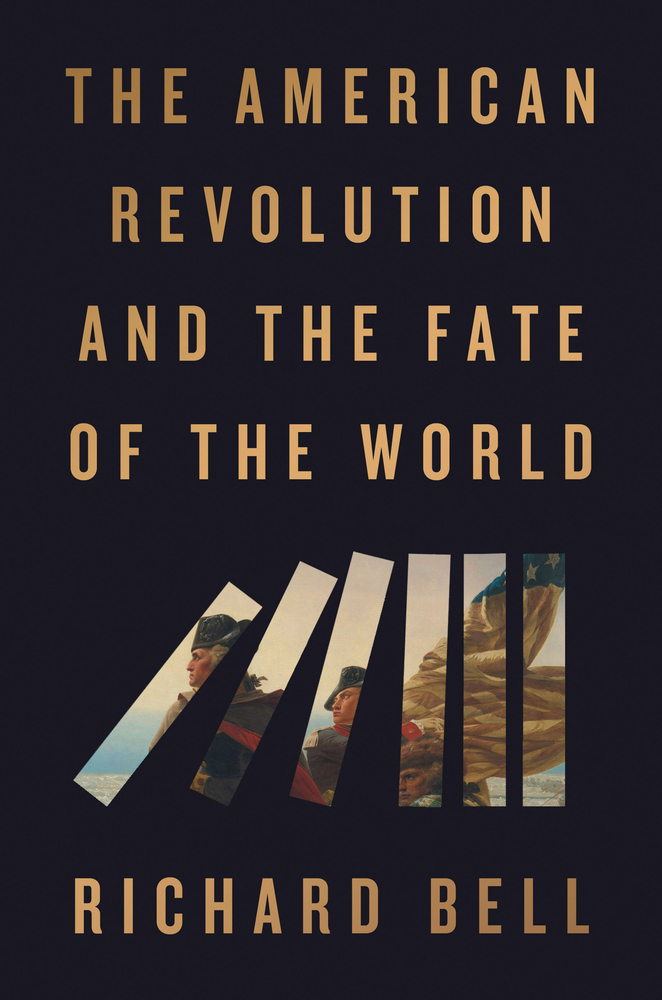
Historian, author, and University of Maryland professor of history, Dr. Richard Bell, focused on those fringes with this publication, bringing them into focus and discussion that was much needed in the historiography. Indeed, this is a new must-have addition to the bookshelf of American Revolutionary Era publications. His book, The American Revolution and the Fate of the World aim to “trace the sinews of the great war from its familiar epicenter outward to all those corners of the Earth” in which the conflict affected (pg. 9). Bell’s unique background, as he describes it, being an “English-born, American trained historian” is optimal to tackling this type of endeavor. As he elaborates, he attempts—successfully this reviewer’s estimation—to peel back the “amnesia…that has its own unique form” respectively on both sides of the Atlantic Ocean when discussing the history of the American Revolution. Between the two main antagonists, Great Britain and the rebelling thirteen North American colonies, “the ways individuals and communities, then as now, are entwined” will be the central theme running like a current through his book (pg. 2).
How does Bell aim to accomplish this approach and subsequent goal? Through seven core arguments, laid out briefly here. The American Revolution “stirred the mass migration and circulation of enormous numbers of people.” Second, the cost of the war was catastrophic, and victory was not certain for the patriots but a “highly contingent result of improbable choices and last-minute improvisations.” Naval power also played “an important key to military success” and “governments, soldiers, and civilians…often acted on the understanding that trade was power. The last two core arguments, patriot “struggle for self-determination stirred imperial authorities to increase oversight and security” on their remaining controlled territories and the American Revolution “was a conflict in which the call for liberty rang around the world as never before” (pg. 10).
Does he succeed? Admirably. By taking the reader through fourteen chapters that seem to be standalone essays but instead bring subjects usually forced to the fringes of histories of the period into focus. From female personas such as Molly Brant, the great leader for indigenous independence to using Peggy Shippen as the focal point for Loyalists and the throes of the great migration that followed the patriot victory in the American Revolution. From other exalted leaders, such as Baron von Steuben and King Louis XVI of France to ordinary citizens and the enslaved, trying to improve and sustain life during the conflict.
His astute insight and impeccable research acumen brings to life William Russell a privateer that might have some of the worst luck of any that sailed the Atlantic Ocean during the war to Bell, uncovering interesting snippets such as the twisted tale of tea. Americans are most familiar with the Boston Tea Party of December 1773, but did you know that by “the early 1800s, taxes levied on the tea trade had become a vital source of US government revenue and, ironically, “became a major contributor of funds to pay the nation’s war debts” (pg. 33).
Did you ever think of the central importance of trade to war? Maintaining colonies and trade routes that kept soldiers, sailors, and citizens fed and government coffers filled? Bell rightly traces the integral connection as “cargo vessels laden with Cuban gold, Barbadian sugar, Irish meat, and Dutch munitions bound together the conflict’s several theaters just as tightly as troops transports and naval fleets…” (pg. 360).
This was a whirlwind synopsis of Bell’s seven core arguments and a sneak peek into the dept of his research and viewpoints. He has filled in the foundation of those fringes of the American Revolutionary War era history. Like those ripples from that proverbial rock, there is still more to discover that have direct ties to the defining era of the American Revolution. One example that he discusses in need of further study is “in the 250 years since 1776, rebels, separatists, and state makers on every settled continent have crafted more than a hundred declarations of independence in imitation of the American original” (pg. 361). Another ripple, started by Bell, that can be explored more fully. The fate of the world rested with the tremors started by the American Revolution, and one can argue the fate of the world still relies on those same tremors of a 21st-century variety today.
Book Information:
The American Revolution and the Fate of the World Richard Bell Riverhead Books (Penguin Random House, INC), New York, 406 pages with images $35.00
Emerging Revolutionary War welcomes back guest historian and park ranger Eric Olsen. Ranger Olsen works for the National Park Service at Morristown National Historical Park. Click here to learn more about the park.
What do poor health, a dead mother, a need to shop for new clothes, a pregnant wife, army business, a wife’s mental illness, family financial problems, and a desire to see family and old friends all have in common?
They are all reasons officers gave for asking for furloughs during the winter encampment of 1779-1780.
While the regulations and the various orders issued give us a general idea of the problems related to furloughs, we can get a different viewpoint by looking closer at the different Divisions, Brigades, and individuals who made up the army. The individual soldiers’ correspondence can also give us a more personal take on the furlough story. This paper will be far from comprehensive. It will just cover the furloughs that turn up in the surviving documentation. To make it easier to follow I have grouped the numbers and correspondence regarding furloughs by divisions and brigades.
Emerging Revolutionary War welcomes back guest historian Evan Portman for this review.
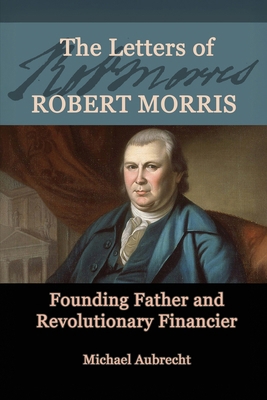
Among the pantheon of America’s Founding Fathers, Robert Morris is a name rarely mentioned beyond circles of historians. However, Michael Aubrecht sheds light on this phantom revolutionary figure with his book The Letters of Robert Morris: Founding Father and Revolutionary Financier. His work represents the first time the primary sources of Robert Morris have been compiled in print.
The Letters of Robert Morris spans the financier’s political life from his time in the Continental Congress to his time in debtors’ prison at the turn of the eighteenth century. Morris’s correspondence provides a fascinating window into his public life. His recipients often include the likes of George Washington, Thomas Jefferson, Benjamin Franklin, and Alexander Hamilton. Some of Morris’s most fascinating correspondence comes from late 1776 and early 1777, during which the financier provided Washington’s army with much needed supplies. His letters to Washington during the Ten Crucial Days reveal the anxiety and trepidation that pervaded the fledgling United States at that time.
Also compelling is Morris’s role in establishing the Bank of North America and a new national currency, which he outlined to a letter to John Hanson, the president of Congress, in 1782. His frequent exchanges with individuals like Hamilton and Franklin about the bank and its expenditures highlight Morris’s financial acumen but also how much of his own personal wealth he was willing to pledge to the American revolutionary cause.
Overall, Aubrecht’s editorial approach is sound and tactful. He adapts hundreds of Morris’s letters the National Archives’ online repository. While many of these letters are accessible on the internet, there is particular value in assembling them in print as Aubrecht has. While an online repository can sometimes feel disjointed, a printed volume can help readers to make connections and allow the editor to exert a bit more influence over the narrative.
However, Aubrecht places Morris’s voice at the center of this volume, intruding little on the language and meaning of the original texts. Aubrecht occasionally inserts a missing word or clarifies a misspelling, but his methodology essentially allows Morris to speak for himself. Aubrecht also provides useful biographical information on his subject in the introduction as well as advocates for his importance as one of the Revolution’s most prominent financiers.
The collection could, however, benefit from a bit more contextual information, particularly in between substantial time gaps between letters. While most readers need no introduction to many of Morris’s illustrious correspondents, a brief paragraph providing the context of a set of letters could prove useful in providing a more detailed picture of Morris’s life. The collection could also make more liberal use of footnotes in defining key terms and antiquated language, as well as elaborating on some of the lesser-known people Morris mentions in his correspondence.
Regardless, The Letters of Robert Morris is a welcome contribution to the existing literature on one of America’s underappreciated Founding Fathers. Aubrecht’s selection proves to be a key asset to researchers and history buffs alike.
Information:
The Letters of Robert Morris: Founding Father and Revolutionary Financier. By Michael Aubrecht. Berwyn Heights, MD: Heritage Books, 2025. Softcover, 431 pp. $43.00.
Emerging Revolutionary War welcomes back guest historian and park ranger Eric Olsen. Ranger Olsen works for the National Park Service at Morristown National Historical Park. Click here to learn more about the park.
What do poor health, a dead mother, a need to shop for new clothes, a pregnant wife, army business, a wife’s mental illness, family financial problems, and a desire to see family and old friends all have in common?
They are all reasons officers gave for asking for furloughs during the winter encampment of 1779-1780.
While the regulations and the various orders issued give us a general idea of the problems related to furloughs, we can get a different viewpoint by looking closer at the different Divisions, Brigades, and individuals who made up the army. The individual soldiers’ correspondence can also give us a more personal take on the furlough story. This paper will be far from comprehensive. It will just cover the furloughs that turn up in the surviving documentation. To make it easier to follow I have grouped the numbers and correspondence regarding furloughs by divisions and brigades.
Emerging Revolutionary War welcomes back guest historian and park ranger Eric Olsen. Ranger Olsen works for the National Park Service at Morristown National Historical Park. Click here to learn more about the park.
What do poor health, a dead mother, a need to shop for new clothes, a pregnant wife, army business, a wife’s mental illness, family financial problems, and a desire to see family and old friends all have in common?
They are all reasons officers gave for asking for furloughs during the winter encampment of 1779-1780.
While the regulations and the various orders issued give us a general idea of the problems related to furloughs, we can get a different viewpoint by looking closer at the different Divisions, Brigades, and individuals who made up the army. The individual soldiers’ correspondence can also give us a more personal take on the furlough story. This paper will be far from comprehensive. It will just cover the furloughs that turn up in the surviving documentation. To make it easier to follow I have grouped the numbers and correspondence regarding furloughs by divisions and brigades.
Emerging Revolutionary War welcomes back guest historian and park ranger Eric Olsen. Ranger Olsen works for the National Park Service at Morristown National Historical Park. Click here to learn more about the park.
What do poor health, a dead mother, a need to shop for new clothes, a pregnant wife, army business, a wife’s mental illness, family financial problems, and a desire to see family and old friends all have in common?
They are all reasons officers gave for asking for furloughs during the winter encampment of 1779-1780.
While the regulations and the various orders issued give us a general idea of the problems related to furloughs, we can get a different viewpoint by looking closer at the different Divisions, Brigades, and individuals who made up the army. The individual soldiers’ correspondence can also give us a more personal take on the furlough story. This paper will be far from comprehensive. It will just cover the furloughs that turn up in the surviving documentation. To make it easier to follow I have grouped the numbers and correspondence regarding furloughs by divisions and brigades.
Emerging Revolutionary War welcomes back guest historian Evan Portman
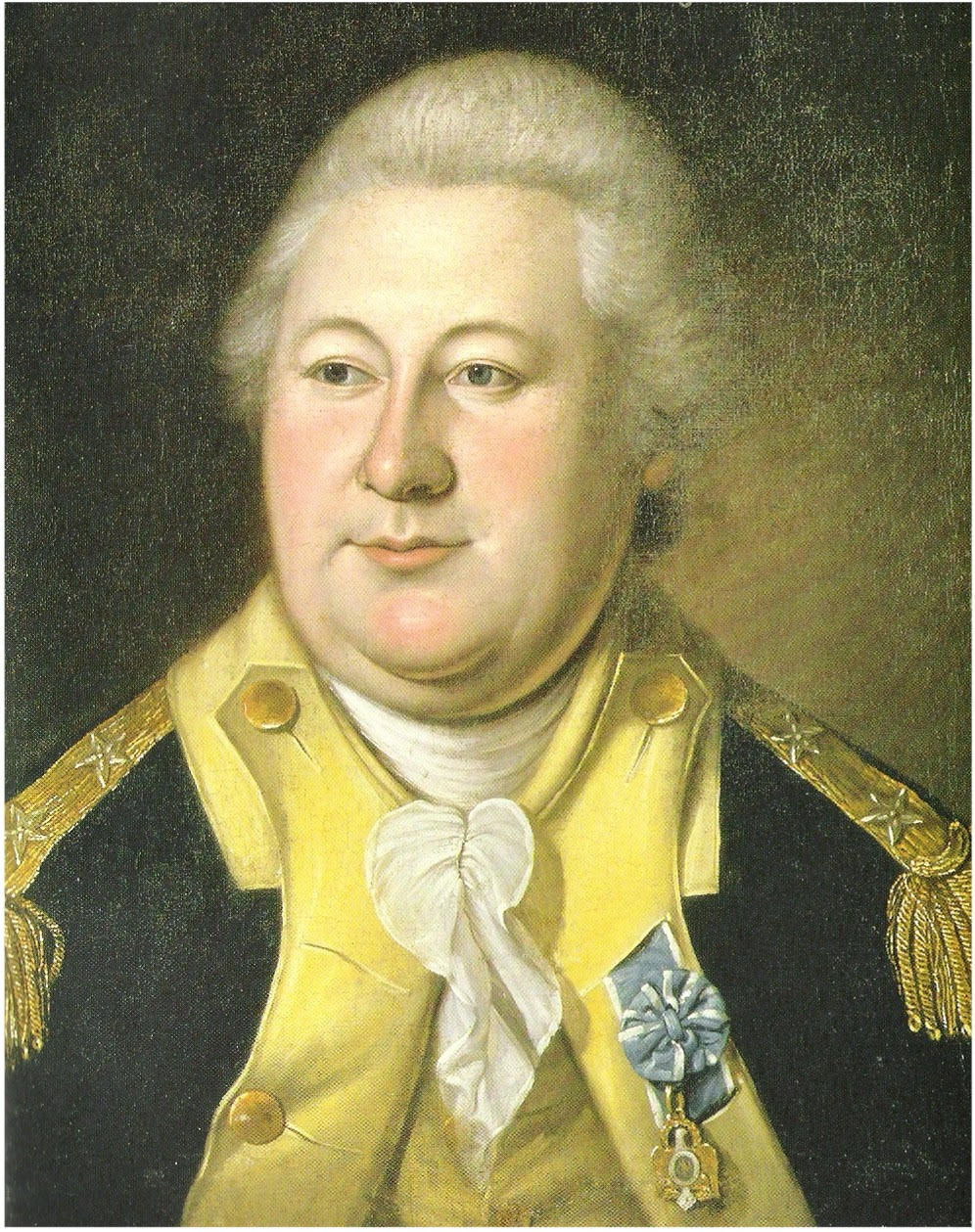
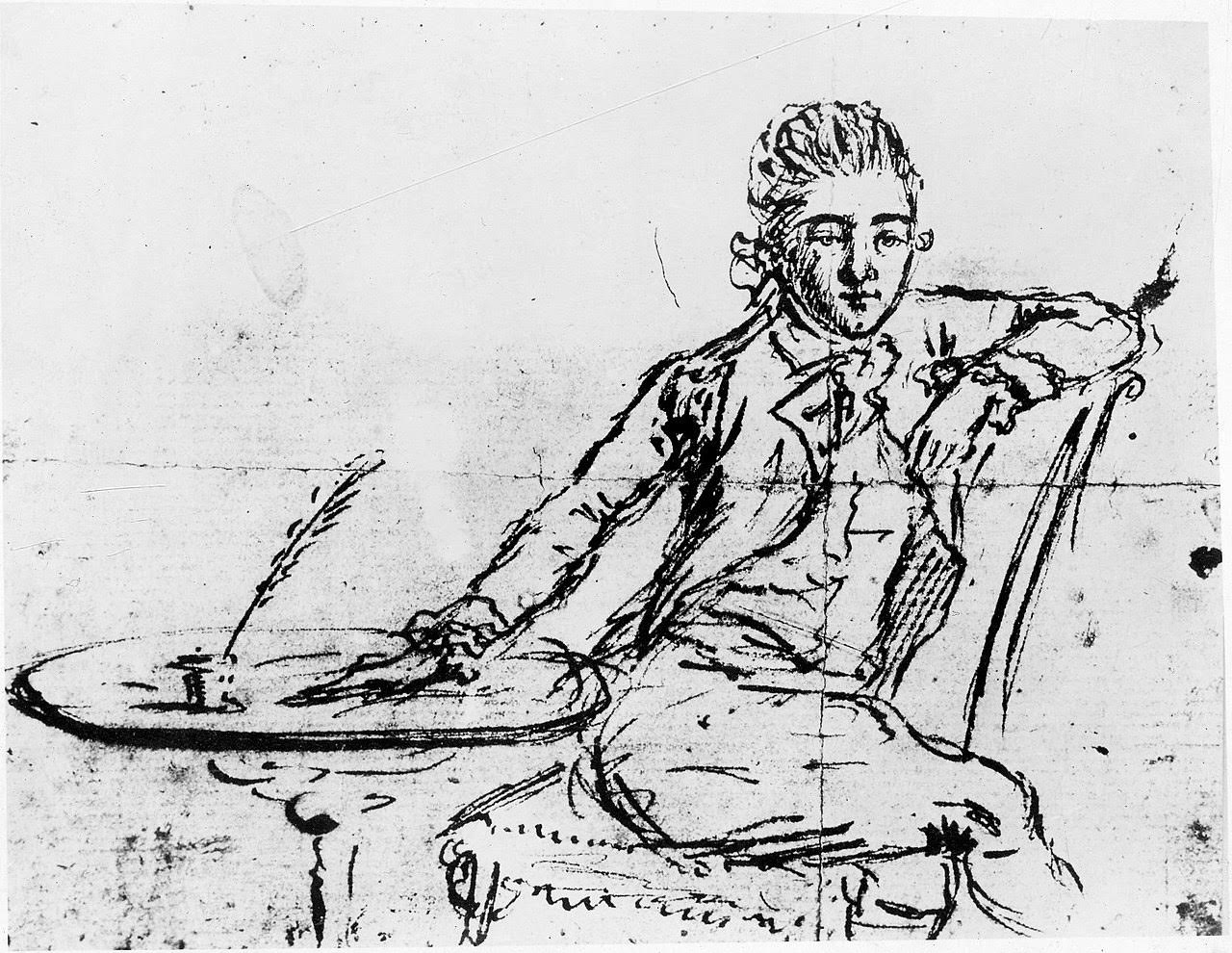
It’s often said that politics makes strange bedfellows, but that’s also true of war. On a blistering December night in 1775, Col. Henry Knox found himself sharing a cabin with the unlikeliest of people: the British officer John André.
Henry Knox
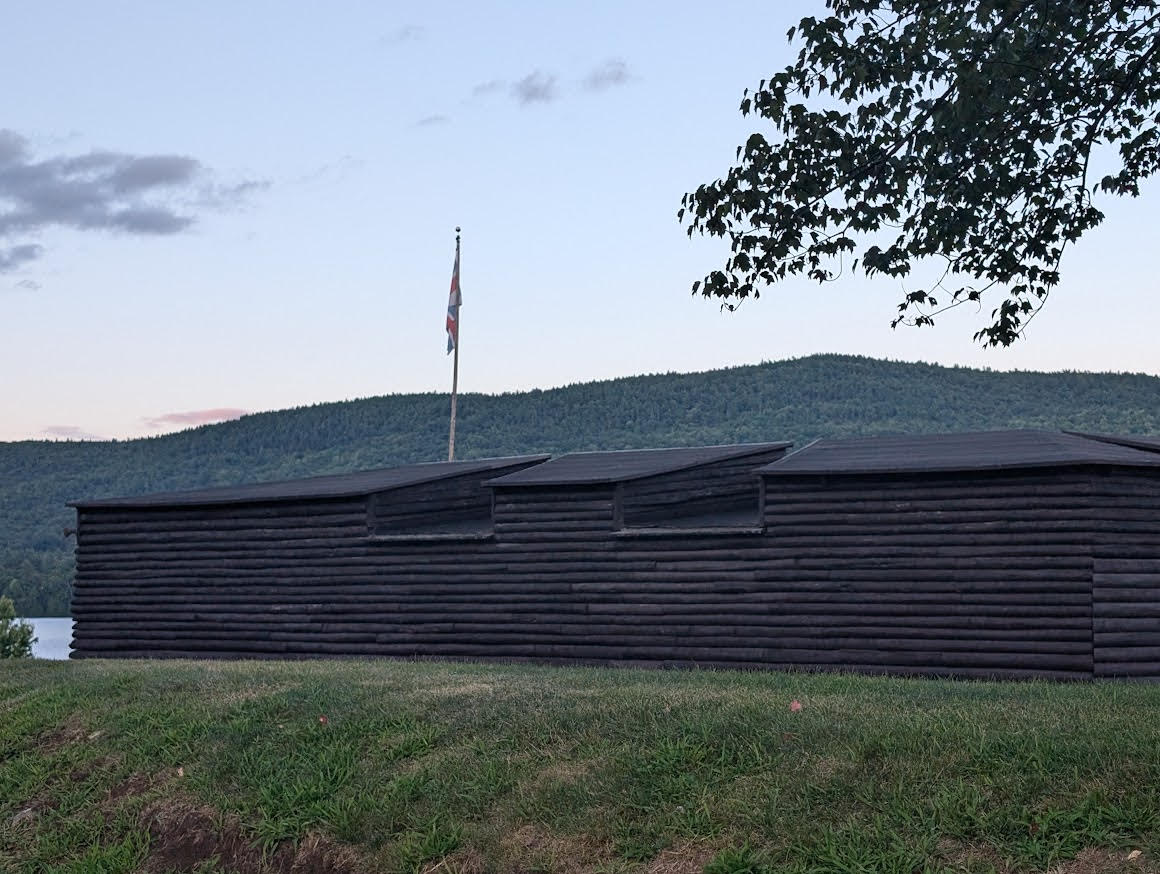
Knox was on his way to retrieve captured artillery at Fort Ticonderoga alongside his brother, William. The pair traveled up the Hudson River, facing heavy winds and harsh winter weather along the way. On December 4, a snowstorm hit just as Knox and his brother reached Fort George at the south end of Lake George, about 40 miles from Ticonderoga. Colonel Knox decided to spend the night there and sail up the lake to Fort Ticonderoga the following day.[1]
Knox received a one-room log cabin for the night, which, for lack of proper quarters, he shared with a captured British lieutenant named John André. André had surrendered during the American siege of Fort Saint-Jean in November 1775 and was being transported as a prisoner of war to Lancaster, Pennsylvania. The chance encounter sparked a brief companionship between the two men. Knox and André were the same age and shared a variety of intellectual pursuits, including a deep passion for art and literature. Both had also given up their respective trades to pursue a military career.[2]
However, Knox was careful not to betray the secrecy of his mission. The colonel, who was dressed in civilian clothes, probably did not reveal his military affiliation as a chief lieutenant of George Washington. Nonetheless, the two bedfellows passed the night by the firelight discussing their common interests. André charmed Knox, as he did most men who made his acquaintance, and the British officer’s intelligence and charisma made left a lasting impression on the artilleryman. Alexander Hamilton later recalled that “there was something singularly interesting in the character and fortunes of André” who “united a peculiar elegance of mind and manners, and the advantage of a pleasing person.”[3] The two men cordially parted ways the following day, as Knox made his way to Fort Ticonderoga and André departed for Lancaster.[4]
John André
Five years later Knox and André met again under much different circumstances. By 1780, André had risen to the rank of major and taken charge of the British spy network. It was in this role that the young officer found himself caught up in one of the great dramas of American history: the treachery of Benedict Arnold. André helped facilitate Arnold’s betrayal and eventual defection to the British army, but he was captured by American sentries in the process. Washington appointed a tribunal of 14 Continental Army officers to try André. Among them was Brig. Gen. Henry Knox.
The tribunal unanimously found André guilty of espionage and therefore ordered his death by hanging—the typical form of execution spy in the eighteenth century. Knox did not record his feelings on the matter, and André did not relate whether he recognized the portly artilleryman with whom he had once shared a cabin. Regardless, any companionship between the two men had evaporated as Knox signed André’s death warrant alongside his Continental comrades.[5]
Despite his tragic circumstances, André maintained marked civility even in the face of his execution. Knox looked on as André approached the gallows and declared, “I have said all I have to say before, and have only to request the gentlemen present to bear testimony that I met death as a brave man.”[6] With that, the cart moved out from under André’s feet, and Knox watched as his one-time companion hung.
Despite his role in André’s untimely death, Knox looked back fondly upon his one-time companion. James Thacher, who was stationed at West Point in 1780 and witnessed André’s trial, recalled that Knox “often afterward expressed the most sincere regret, that he was called by duty, to act on the tribunal that pronounced his condemnation.”[7] Though André’s life ended that October day, Knox served in the Continental army with distinction for the rest of the war. However, he never forgot his chance encounter with the charming British officer on that cold, winter night in 1775.
Fort George
[1] Mark Puls, Henry Knox: Visionary General of the American Revolution (New York: St. Martin’s Press, 2008), 37.
[2] Puls, Henry Knox, 37; Noah Brooks, Henry Knox: A Soldier of the Revolution, Major-General in the Continental Army, and Washington’s Chief of Artillery (New York: Cosimo, Inc., 2007), 42.
[3] Alexander Hamilton to Lieutenant Colonel John Laurens, 11 October 1780, The Papers of Alexander Hamilton, vol. 2, 1779–1781, ed. Harold C. Syrett, (New York: Columbia University Press, 1961), 460.
[4] Puls, Henry Knox, 37-38; Winthrop Sargent, Life and Career of Major John André (Boston: Ticknor and Fields, 1861), 85.


 Emerging Revolutionary War Era