This Sunday, at 7 pm, EST on our Facebook page, join Emerging Revolutionary War historians as they discuss “Epic Moments of the American Revolution.”
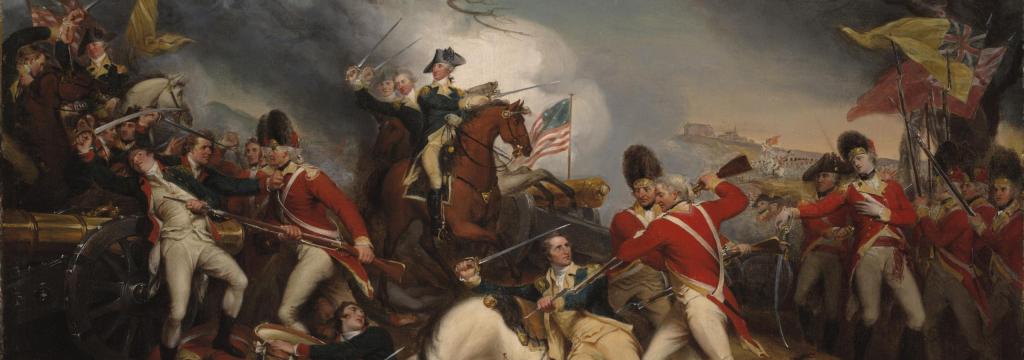
What is an epic moment? This umbrella term will be discussed by using examples from the eight-year conflict that spawned American independence. As ERW historian Mark Maloy relates, one such moment came in early 1777 at Princeton, New Jersey, as explained by a participant in that engagement:
“I saw [Washington] brave all the dangers of the field and his important life hanging as if it were by a single hair with a thousand deaths flying around him.” – Pennsylvania officer at Princeton”
Moments of bravery, of personal sacrifice, be it in a battle, skirmish, raid, siege, political moment or on a mission of importance, the American Revolution has a multitude of them. During the hour-ish long historian happy hour, the panel will describe the ones that they deem as important or noteworthy. Bring your own as well, as we encourage comments, opinions, and dialogue via the comments section of our Facebook live.
Looking forward to sharing a brew and an epic moment from the War of Independence with you, this Sunday, on Emerging Revolutionary War‘s “Rev War Revelry.”
There are important stories often hidden in the threads of our American history. It won’t be a surprise to many that these stories desperately need to come to light. But sometimes research is scarce, with limited or hard-to-find resources to fully tell these stories to their fullest. One such example are the stories of the enslaved and free African-American people who helped build the nation, starting back even before the colonies fought for independence. America’s fight for freedom from Britain is oxymoronic considering an entire population of blacks were still kept in chains after the war. But their contributions to that fight should not go unnoticed.
The history of the construction of the British defense fortifications, including the Star Fort, at Ninety Six, South Carolina, has many layers of these diverse stories that make up the fabric of the site’s history. Lt. Colonel Nisbet Balfour set up an outpost at Ninety Six after the fall of Charleston in early 1780. In terms of fortifications – specifically the stockades and protections around the town and the jail – during this initial occupation, Balfour wrote to Cornwallis on June 24, 1780, “As to this post, it is so situated, that three small redoubts, well Abbattis [sic], I think, can easily defend it…”
Balfour also encouraged using slave labor, stating that “we have carpenters enough, and ammunition.” Balfour’s plan to construct fortifications was similar to a more extensive defense system suggested by Patrick Ferguson in his “Plan for Securing the Province of So. Carolina, &c.” dated May 16, 1780. Ferguson also recommended using slaves to construct the fortifications.
In fact, in that same June 24 letter to Cornwallis, Balfour writes that most of the labor that was used to construct the Ninety Six fortifications was from roughly 200 enslaved blacks that the British took from area plantations. Who were these 200 men? Were they promised freedom in exchange for their labor? We may never know. While research is underway to uncover the stories of these 200 individuals, very little primary resources remain. But we can still acknowledge that the British defense of Ninety Six relied heavily on the forced labor of these black men.
Work continued into the fall and winter of 1780 on the defense structures at Ninety Six, this time under Lt. Colonel John Harris Curger, including several field fortifications called abatis: defensive obstacles formed by felled trees with sharpened branches facing the enemy. The trunks are put deep into the ground, usually 4-5 feet, and is typically hard manual labor in the hard red clay of South Carolina. In a letter on December 29, 1780, Lt. Colonel Isaac Allen wrote to Cornwallis’s aide, Lt. Henry Haldane, of the hard work of the men constructing the abatis. And yes, those men were enslaved men. “I… have orderd [sic] the Abattiss [sic] cut, but Kings work like Church work goes on slow. The Poor naked Blacks can do but little this cold weather.”
The Star Fort at Ninety Six, South Carolina. Photo: NPS/Ninety Six NHS
Next up in the defense plan was the Star Fort itself, a large earthen redoubt whose remains are still the best-preserved earthen fort from the American Revolution. Once again, those approximately 200 enslaved men were used in its construction. Upon the completion of the fort, additional work included a network of ditches and trenches both for communication and transport of supplies.
By spring of 1781, the defenses were ready. Lt Colonel Cruger’s military force was nearly 600 but this was supplemented by a large number of Loyalist civilians in the town as well as several hundred enslaved African Americans from the surrounding country. Most likely, though it’s not known for sure, these were the roughly 200 men who helped build those very physical defenses.
But the hidden story of the enslaved at Ninety Six does not stop there, nor is their story solely on the shoulders of the British. During the Siege of Ninety Six in May and June of 1781, there are several instances that beg for more research. The first is from the morning of May 23, when Patriot forces had been digging trenches towards the Star Fort throughout the night. An attack by Loyalist militia from the fort pushed the Patriots back and they managed to capture not only the tools the Patriots were using, but “several Negro laborers abandoned by the Americans.” (Greene, 128)
It should come as no surprise that the Patriots were also using slave labor. James Mayson, a wealthy Patriot supporter living just a few miles from Ninety Six, described later how foraging parties were dispatched to the countryside to get food and supplies for Greene’s army, which included slaves “not earlier recruited by the British.”
As the Siege dragged on into June, there is one more hidden story that deserves additional research to discover the identities of the enslaved men who risked their lives for the British military garrisoned at the Star Fort. As the heat of the early Carolina summer sapped water supplies, Lt Colonel Cruger needed to get water from a nearby stream, Spring Branch, to keep their supply up. But Patriot marksmen were at the ready to prevent this from happening. Turning to the enslaved in their midst, a handful of them were ordered to strip out of their clothing and go at night to the stream to file buckets. They apparently succeeded. A British lieutenant by the name of Hatton would later recall that their naked bodies were indistinguishable “in the night from the fallen trees, with which the place abounded.”
These are just snippets of hidden stories at just one site of the American Revolution. And that’s only during one specific time in Ninety Six’s history; additional stories exist for both before and after the war, during the French and Indian War, and during the Regulator movement, as well as stories of enslaved Natives from the time of early settlement in the region.
How many stories are yet untold? Who were these men and women who currently remain nameless? For these stories aren’t just tidbits of historical facts – they represent real people who experienced real emotions and a real existence at the time when our nation was first figuring out what it wanted to be. The stories of black Loyalists and Patriots deserve to be told and in doing so, will add a new layer of complexity and understanding to the story of America during the Revolutionary War and beyond.
Bibliography
Government Documents Greene, Jerome A. Historic Resource Study and Historic Structure Report, Ninety Six: A Historical Narrative. National Park Service: Denver Service Branch of Historic Preservation, 1978.
Manuscripts & Papers Ann Arbor. University of Michigan. William L. Clements Library. Patrick Ferguson, “Plan for Securing the Province of So, Carolina, &c,” May 16, 1780.
Ann Arbor. University of Michigan. William L. Clements Library. Nathanael Greene Papers. James Mayson to Greene, May 29, 1781.
Washington. Manuscript Division of the Library of Congress. British Public Record Office. Cornwallis Papers. Balfour to Comwallis, June 24, 1780. BPRO 30/11/2 (1)
Washington. Manuscript Division of the Library of Congress. British Public Record Office. Amherst Papers. Thomas Anderson. “Journal of Thomas Anderson’s” 1st Delaware regiment [May 6, 1780-April 7, 1782].”
Books and Pamphlets Haiman, Miecislaus. Kosciuszko in the American Revolution. New York: Polish Institute of Arts and Sciences in America, 1943. Reprint; Boston: Gregg Press, 1972.
Mackenzie, Roderick. Strictures on Lt. Col. Tarleton’s “History of the Campaigns of 1780 and 1781, in the Southern Provinces of North America.” London: Printed for the Author, 1787.
Stedman, Charles. The History of the Origin, Progress, and Termination of the American War, Volume 2. London: Printed for the Author, 1794.
Ward, Christopher. The War of the Revolution, Volume 2. New York: The Macmillan Company, 1952.
Weigley, Russell F. The Partisan War: The South Carolina Campaign of 1780-1782. Columbia: University of South Carolina Press, 1970.
With the recent events facing our nation, American Revolutionary War monuments and memorials have an important role in demonstrating pride in our shared past and the highest ideals we value. Statues and monuments to the leaders and participants of the struggle for American independence today stand on battlefields, in courthouse squares and on historic sites all across this nation. While these statues depict very flawed and imperfect human beings, they memorialize the deeds and character that contributed to the creation of the nation we now live in.
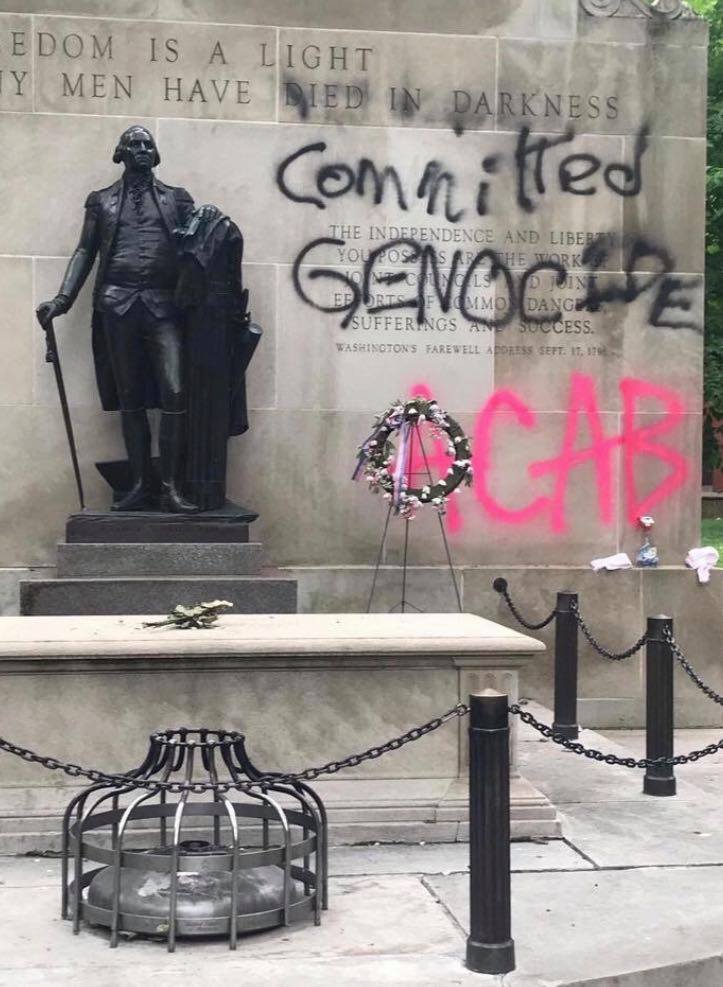
These statues and monuments not only tell an important part of the nation’s founding, they are also artifacts of the eras in which they were constructed and how we have remembered our Revolutionary struggle, and how the ideals of the Revolution continue to live to this very day. Part of what we do at Emerging Revolutionary War is connect the past to the places today. Over the past few weeks we have seen localities remove or plan to remove statues honoring Caesar Rodney in Delaware and Philip Schuyler in New York. We have also seen statues of Marquis de Lafayette, Baron von Steuben, and Thaddeus Kosciusko vandalized in Washington, DC, a statue of George Washington vandalized in Boston, statues vandalized in Philadelphia of Washington and Benjamin Franklin, and the Tomb of the Unknown Revolutionary War in Philadelphia desecrated.
We feel it is important that all of the United States’ Revolutionary War statues and monuments are protected so they can continue to demonstrate our highest values and ideals and the tell the story of the important figures who shaped our nation. Without these monuments, we lose vital resources to tell the important stories of our past and help unite us in moving forward as a country. As the 250th anniversary of the American Revolution draws near, rather than the removal of monuments, we hope more monuments and memorials will be erected, especially for overlooked populations that also played a role in the founding of our nation. With this more comprehensive view of history in mind, a broader and more accurate story can be told to the American public. Emerging Revolutionary War will continue to trace the stories of the past and tie them to the places through these challenging times and we look forward to a better tomorrow.
This Sunday, Father’s Day in the United States, join Emerging Revolutionary War for the next historian happy hour on the proverbial “Father of the Country” George Washington.
As our historians discuss, converse, and share their knowledge, the “Rev War Revelry” will not just be dedicated to one man, George Washington. But, also, to the “Fathers’ of the Father of the Country.” The generations prior to Washington who are buried in eastern Virginia, on the historic Northern Neck of Virginia, and within the boundary of George Washington Birthplace National Monument, a part of the National Park Service.
Joining the ERW crew this week will be guest historian Scott S. Hill, who is the Chief of Interpretation and Education at George Washington Birthplace National Monument and Thomas Stone National Historic Site.
So, if you are a father, we wish you a great Father’s Day. We also encourage you to share an hour and a brew, with your father, if able, and tune into our Facebook page at 7 p.m. EST to catch the discussion that ensues.
Burial Ground, George Washington Birthplace NM (courtesy of Project Gutenberg)
Emerging Revolutionary War welcomes back guest historian Dan Davis
Like my last post at Emerging Revolutionary War on the “Race to the Dan”, the origins of this post lie in a conversation with blog co-founder, Phill Greenwalt. The topic of our discussion revolved around the aftermath of the British victory at the Battle of Camden. The engagement ultimately brought two American officers to the Southern Theater: Nathanael Greene and Daniel Morgan. Greene accepted the position as the new head of the Southern Department’s co two months to the day after the battle while commanding the post at West Point, New York. Morgan’s story, however, is much more fascinating.
In the spring of 1779, George Washington created a light infantry corps within the Continental Army. Such a command fit Morgan’s skillset. He previously commanded the army’s provisional rifle corps. Additionally, Morgan, then a colonel, had compiled a record that arguably warranted elevation to brigadier general. After fighting broke out at Lexington and Concord, Morgan led a rifle company to the aid to the American army besieging Boston. Morgan participated in Col. Benedict Arnold’s Canadian Expedition and was captured during the assault on Quebec. He also played a critical role in the Battles of Saratoga. Morgan’s home state of Virginia, however, had met its quota for general officers and a vacancy was not available.
On June 30, 1779, Morgan learned Brig. Gen. Anthony Wayne received command of the new corps. With his pride devastated, Morgan traveled to Philadelphia. There, on July 19, Congress read his resignation.
Two of the above three last names are very familiar to even casual observers of American history. John Hancock, whose signature is readily apparent at the bottom of the Declaration of Independence, where it was joined by John Adams and Samuel Adams. Yet, that last name in the title, Quincy, may not be as obvious as should be at first glance.
What is remarkable about these last names? Besides, the simple fact that members with those three surnames played a major role in the road to revolution and surprisingly on both sides of the chasm of loyalties? All could trace their roots to a small town in Massachusetts; Braintree.
“The covenant of liberty that they shared would be sharpened by ambition and envy, polished through friendships and love, and fought for in a revolution fomented by these children of Braintree” (pg. 8).
In that town, from its first inhabiting European settlers, the spirit of questioning accepted decrees took root, matured, and blossomed. And until now, the intertwining vines of those family trees had not been put under the microscope of historic observation until the publication this year of American Rebels, How the Hancock, Adams,and Quincy Families Fanned the Flames of Revolution. Penned by Nina Sankovitch an Illinois native, author of several nonfiction works, and resident of New England, she effortlessly weaves the stories of these families into part biography, part family history, and part United States history. All parts equally important and very well written.
“Even as the fortunes of these children of Braintree diverged, their futures would bring them together again. A shared promise connected them, fostered by the history, the land, and the people of Braintree…” (pg. 8)
One of the highlights in the book is the emergence of the Quincy family into a popular history such as this. One of the unsung heroes of the road to revolution was Josiah Quincy Jr.
“As Reverend Hancock preached, the “solemn covenant….of their Liberty” was not obtained through faith alone but could only be realized through hard work performed by a community together. And this sacred covenant would be protected against any and all usurpers who attempted to take their liberty away.” (pg. 15).
Furthermore, Sankovitch brings to the forefront the role of women in the various families and their impact on the time. The best known is Abigail Adams who is the confidant and intellectual equal of her husband, John. Another is the aunt of John Hancock, Lydia, who constantly watches out for John’s place in society. She is the driving force that will bring to fruition the connection between the Quincy and Hancock families. Or Abigail Quincy, who had married Josiah Quincy, Jr., would never remarry but dedicated the rest of her days to raising their son and preserving his memory and contributions to the cause of America. The anguish of losing her beloved is quite evident:
“I have been told that time would wear out the greatest sorrow, but mine I find is still increasing. When it will have reached its summit, I know not.” (pg. 348).
Highlighted by the quote above, the author brings these historic personas and people to life, capturing the heartache, familial turmoil, ambition, and connections. Just as these families bred revolutionaries, there were sons that stayed loyal to the British crown, including a brother and brother-in-law of Josiah Quincy.
From weaving the families together, to connecting the threads of the evolution of political thought, and showing the personal strains of what the road to revolution looked like, Sankovitch has compiled an easily readable, insightful look into the 18th century world.
On June 12, 1781, William Pitt, referred to as the “Younger” to differentiate from his father, Lord Chatham, William Pitt, and former prime minister of Great Britain during the Seven Years’ War, stood up in the House of Commons.
Like his late father, Pitt spoke on a war, this time not in favor of a conflict but in opposition. Also like his father, he spoke with a passion and eloquence that marked him for future roles of higher prominence. He also stood to correct his father’s legacy in regards to the Americans which that day was referred to by other members in Parliament. His view on the current war, the American Revolution, is quite evident.
“A Noble Lord who spoke earlier has in the warmth of his zeal called this a holy war. For my part, although the Right Honorouble gentleman who made the motion, and some other gentlemen, have been more than once in the course of the debate reprehended for calling it a wicked or accursed war, I am persuaded, and I will affirm, that it is a most accursed, wicked, barbarous, cruel, unnatural, unjust, and most diabolical
The expense of it has been enormous, far beyond any former experience, and yet what has the British nation received in return? Nothing but a series of ineffective victories or severe defeats–victories only celebrated with temporary triumph over our brethren whom we would trample down, or defeats which fill the land with mourning for the loss dear and valuable relations, slain in the impious cause of enforcing unconditional submission. Where is the Englishman who on reading the narrative of those bloody and well-fought contests can refrain from lamenting the loss of so much British blood shed in such a cause, or from weeping on whatever side Victory might be declared?”
Approximately a year and a half later, in December 1783, the 24-year old William Pitt became the prime minister of Great Britain. His tenure as prime minister, which lasted into the 19th century, would like his father’s, be marked with a war against France.
Yet, for a brief moment, in late spring, in London, William Pitt, the Younger, stood up, without preparing, as he did not intend to speak that day, and gave a passionate but reasonable response to the issue of the war with America. His closing words ring through the centuries.
Who (in Pitt’s case Englishmen but substitute whomever you’d like) “can refrain from lamenting the loss…or weeping on whatever side Victory might be declared.”
When the idea was formulated, back in April, to do a Sunday evening Zoom/Facebook live type history hour, the emphasis behind this “happy hour” was to style it as a more informal chat. Our goal was to create a virtual adaptation of what would occur if the same historians met at a tavern/bar/pub to casually chat about American history.
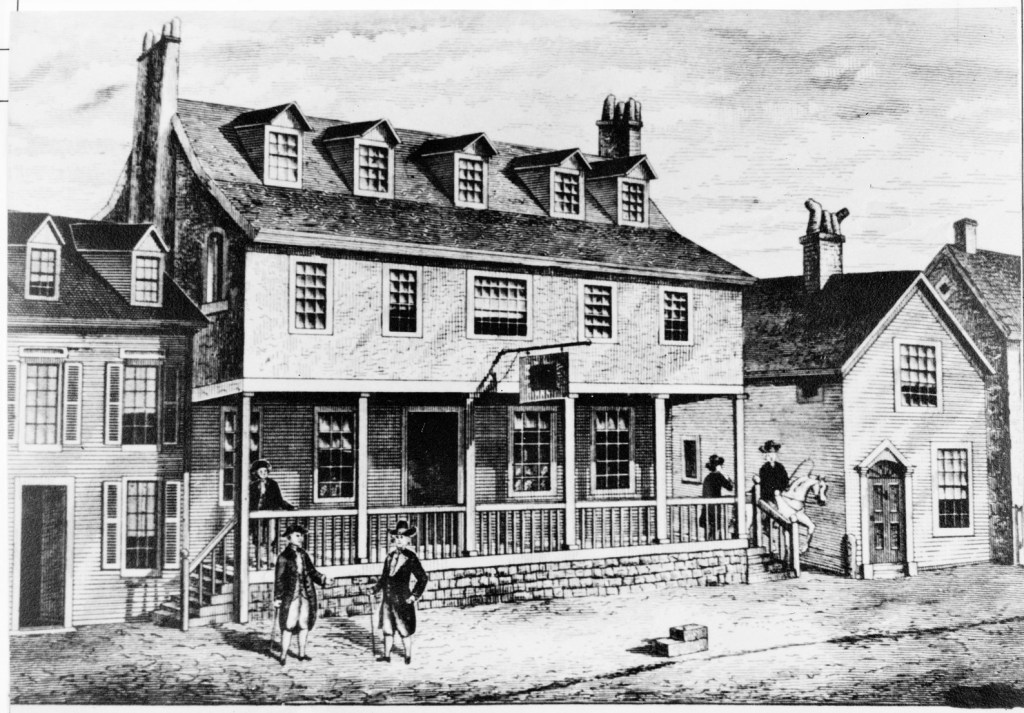
Speed up to this Sunday, June 7th, Emerging Revolutionary War will welcome three guest historians, who all have a connection to a historic tavern to join co-founder Rob Orrison on a talk about 18th century taverns. Yes, a “tavern talk about taverns.”
Joining Orrison on the hour-long happy hour chat will be:
Liz Williams, Executive Director of Gadsby’s Tavern in Alexandria, Virginia, part of The Office of Historic Alexandria, in which she has been employed with since 2004. She is a graduate of Mary Washington College in Fredericksburg, Virginia with a degree in Historic Preservation and a graduate degree in Tourism Administration from George Washington University. She has also worked at various historic sites in the Virginia and Washington D.C. area.
An ERW favorite and returning to the “Rev War Revelry” is Stacey Fraser, the Collections and Outreach Manager with Lexington (MA) Historical Society. One of the sites she oversees the collection of is Buckman Tavern, which played a role in the April 19, 1775 engagements that rolled through Lexington and Concord, Massachusetts.
The third guest historian is Sarah Kneeshaw, the Education and Public Programs Coordinator at Fraunces Tavern Museum. The tavern was built in 1719 in New York City by the De Lancey family. She joined the staff at the downtown New York City site (which is directly across from Federal Hall where George Washington was inaugurated president in April 1789) in 2016. Sarah holds a bachelor’s degree in Anthropology from Fordham University and also attained a graduate degree in Museum Studies from John Hopkins University. She is a native of Staten Island.
Thus, this Sunday, set a side an hour-ish, starting at 7pm EST, to hear these four historians discuss taverns, their importance, and roles in the 18th century social, military, and political history of the burgeoning United States. With your preferred drink, be it an 18th century tavern concoction or not, in hand, we look forward to your questions, comments and insights.
After our sojourn to the French and Indian War last Sunday, “Rev War Roundtable with ERW” returns to the American Revolution this weekend at 7 p.m. EST. Join Emerging Revolutionary War and a guest historian as they discuss, comment, and chat about the pivotal Siege of Yorktown in 1781.
Although the war did not officially end with the capitulation of Lord Charles Cornwallis’ German and British forces on October 19, 1781, the major loss reverberated in in both the colonies and the halls of Parliament. The euphoria on one side of the Atlantic will be matched in this happy hour historian discussion, with no set agenda, and your comments, toasts, thoughts, opinions, and questions will be strongly encouraged.
Joining ERW will be Kirby Smith, formerly of Colonial National Historical Park and currently a Training Instructor for the Department of Defense. He is a 16-year veteran of the United States Army and is native of the Yorktown area. Kirby is also an expert on the Battle of Green Spring that occurred during the summer of 1781 and can be considered part of the Yorktown Campaign. This last major land battle prior to the siege featured such military luminaries as Marquis de Lafayette, Anthony Wayne, Lord Cornwallis, and the infamous Banastre Tartleton.
Besides Kirby, Kate Gruber, Special Collections Curator for the Jamestown-Yorktown Foundation and Mark Maloy a National Park Service ranger will be joining the happy hour discussion.
As we bid adieu to the month of May, let’s all grab a drink and discuss the beginning of the end of the American Revolution. We invite you to join us in our virtual tavern via our Facebook page this Sunday.
Emerging Revolutionary War welcomes back guest historian Gabriel Neville.
Thirty years ago, Dutch Henderson was “stomping through the woods” near Lake Sinclair in central Georgia when he stumbled upon an old gravestone. Some might have thought it an odd spot for a grave, but Dutch knew the history of the area and it made sense. In fact, the setting told him the man six feet under had played an important role in American history.
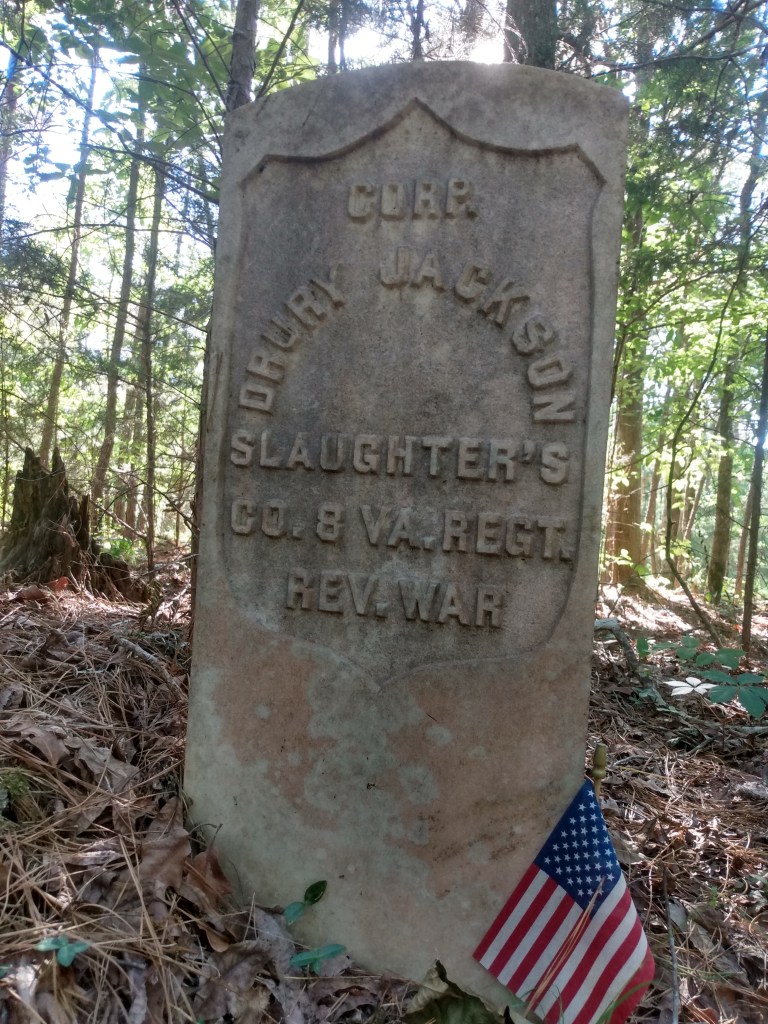
The inscription on the marker read: “CORP. DRURY JACKSON, SLAUGHTER’S CO. 8 VA. REGT. REV. WAR.” Why was this headstone for a Revolutionary War soldier all alone in the woods near a lake? Time changes things. Neither the lake nor the woods were there when Drury Jackson died. Back then the grave was on cleared ground overlooking the Oconee River. Depressions in the soil still reveal to the trained eye that Drury was buried in proper cemetery. The river became a lake in 1953 when it was dammed up to create a 45,000-kilowatt hydroelectric generating station. When Dutch found the grave, the cemetery had been neglected and reclaimed by nature. Today it is in a copse of trees surrounded by vacation homes.
The mysterious headstone for veteran Drury Jackson provides no dates to help us identify the man in the ground. (Dutch Henderson)
Dutch spends his free time studying local history and conducting archeology. He has made some important finds, including a string of frontier forts along what was once the “far” side of the Oconee. He’s pretty sure that Drury’s burial in that spot is an important clue to his life in the years following the Revolutionary War. From there, however, things get complicated.[1]
A genealogy site sporting a photo of the headstone tells us that Drury Jackson was born in Brunswick County, Virginia on February 2, 1745, married Lucy Dozier and then Nancy Ann Kennedy, and died in Wilkes County, Georgia before 1794. This seems possible, but Wilkes County is about seventy miles northeast of the grave. Another source tells us that Drury Jackson was born in 1767 in Franklin County, Tennessee, married Lucy B. Myrick, and died in Baldwin County, Georgia in 1823. This seems more likely, since the grave is in Baldwin County.
So, which of the two men is the right Drury Jackson? The easy assumption is that the stone properly belongs to the one who died nearby. The grave marker itself is of no help. It provides neither the date of his birth nor the date of his death. Moreover, it is the kind of marker that was issued after 1873 by the federal government for the graves of veterans of the Civil and Spanish-American wars (and the unmarked graves of veterans of earlier wars). It is clear that the marker was placed there long after the man’s death by descendants or others in the community.[2]






 Emerging Revolutionary War Era