

The Southwestern corner of Pennsylvania was perhaps the most isolated in the state. It was also a region claimed by both Virginia and Pennsylvania. Far removed from assistance from the eastern centers of population, they had to rely on their own resolve for defense.
Category: Uncategorized
War on the Pennsylvania Frontier: Part 3 of 5: Forts of the Southwest
The Southwestern corner of Pennsylvania was perhaps the most isolated in the state. It was also a region claimed by both Virginia and Pennsylvania. Far removed from assistance from the eastern centers of population, they had to rely on their own resolve for defense.
These settlers experienced unrelenting violence during the Revolution. Ironically, the fighting here escalated as the main war was winding down to the east. The years of 1780, 81, and 82 saw many Indian raids on the area. In taking the war to these settlers, the Indian groups were trying to stop encroachment on their lands in what become, to them, a never ending fight. A series of historic markers note the sites of forts and raids in the region.
War on the Pennsylvania Frontier: Part 2 of 5: Captain Phillips Monument
Along the wooded ridges of central Pennsylvania, a brutal war raged that was far removed from the orderly movements of large armies in the east. The attack on Phillip’s Rangers is a good example of this warfare.
Native Americans, supplied and encouraged by the British, raided far and wide on the frontier. These included Seneca, Shawnee, Delaware, and Mingo peoples. By the 1780s, many of these groups had been pushed out of their traditional homes to the east, and many viewed war with the Americans as the only way to protect what land they had left.
Thanksgiving with George Washington

Setting aside one day to give national thanks to God for the blessings of the prior year and beseech him for future blessings had been frequently practiced in England, but it merged with several Puritan traditions in New England during the 17th century. By the time of the American Revolution, Thanksgiving was a well-established custom. The Second Continental Congress turned a regional tradition into a national one when offered its first Thanksgiving Proclamation on November 1, 1777, recommending that the individual states of the new United States set apart December 18th as a day of Thanksgiving and praise. During the Revolution, Congress continued the practice, issuing its last proclamation in 1784.
ERW in the Hudson Valley: 4th Annual ERW Trip

Just over two weeks ago, ERW historians Billy Griffith, Phillip Greenwalt, Mark Maloy, Rob Orrison and Kevin Pawlak took a long weekend trip up to upstate New York. This was the fourth year that ERW authors have gotten together to take a “field trip” to see sites related to the French and Indian War and the American Revolution.
The trips not only serve as chances for research, but also to make new connections with public historians working in the American Revolution era. Along the way, we posted several videos from locations to give our followers an idea of some of the great places to visit out there. Again, our goal is to not just share this history, but to get people to visit these great sites.
Sites visited on the first day included the Stony Point Battlefield, where Americans under Gen. Anthony Wayne over ran a surprised British outpost. Reading about this action almost rings empty until you stand on the ground. Looking at the steep terrain that Wayne’s men climbed after traversing through a wetland, it is hard to imagine how the Continentals were able to take the British fort with so few casualties. Later that day we made a quick stop at George Washington’s headquarters in Newburgh. Here Washington lived from April 1782 to August 1783 and where he learned of the cease fire with the British, wrote his now famous circular letter to the colonial governors on his vision for the new government. Most importantly, here Washington responded to the Newburgh Conspiracy of his officers looking to possibly over throw the civil government. This site is also important in the history of the museum field as it is the first publicly owned historic site in the United States, opened in 1850 as a museum. A worthwhile nearby site, the New Windsor Cantonment site, preserves the camp site of the Continental Army during the 1782-1783 time period. Several of the buildings are rebuilt, including the Temple of Virtue, where Washington made his impassioned speech to his officers (with the assistance of his glasses) to diffuse their discontent with Congress.
The morning of the second day of the trip was spent visiting sites around Lake George, NY, including some much over looked French and Indian War sites. That afternoon sites along the upper Hudson including the site of the murder of Jane McCrea, Fort Edward and sites in Albany.

Early Sunday morning, a quick trip to the Bennington Battlefield State Park was highlighted with a great personal tour by Bob Hoar. The battlefield is well preserved and interpreted. Bob also shared some of his research into reinterpreting the battlefield using first person accounts and the landscape. Again, understanding the landscape of these places creates such a better understanding.
The majority of the day on Sunday was spent at Saratoga National Historical Park, posting several Facebook Live videos from various points across the battlefield. Also a special visit to the surrender site in Schuylerville which was recently preserved and opened as a memorial by the Friends of Saratoga Battlefield. A great preservation victory that adds to the overall story of Saratoga.
One of the highlights of the trip took place on Monday, where we received a behind the

scenes tour by Fort Ticonderoga staff. We started by learning about the military interpretive program by Ron Vido, Military Programs Supervisor. Anyone who has visited Fort Ticonderoga knows about their quality interpretive staff and programs. Ron also shared with us their plans to slowly restore the Carillon Battlefield (1758), which will be a great addition to the understanding of North America’s bloodiest battle before the Civil War. That afternoon we were treated to a behind the scenes tour of Fort Ticonderoga’s collections storage by Curator Matthew Keagle. The Fort has been collecting 18th century items for nearly 100 years. Their collection is one of the largest collection of 18th century military artifacts in the United States. From a Continental knapsack to an original copy of Baron von Steuben’s drill manual, the collection on display is only a small portion of what the museum owns. Matt also shared the museum’s ongoing work to digitize their collection for the purpose of research. The day was capped off by a visit to one of the best preserved battlefields in the United States, Hubbardton. Fought as part of the Saratoga Campaign, this is Vermont’s only battlefield. The landscape at the foot of the Green Mountains is amazing and the viewsheds are near pristine. A nice state park and visitor center are there to help explain the events of July 7, 1777.
Thank you to all the people that assisted us in this trip and all the sites that were nice enough to host us. We will be posting more on the blog in the future focusing on some of the stories around these amazing sites. Again, we encourage you to take the time to visit all these places. History books are great, but there is no substitute for being in the footsteps of history
To check out the Facebook Live videos and photos from the trip, please visit our Facebook page at https://www.facebook.com/emergingrevwar/ .

Slaughter at Sabbath Day Point
Last week during Emerging Revolutionary War’s annual getaway, we made our way north along the western shore of Lake George in New York’s Adirondack Mountains. Our destination was Fort Ticonderoga. The group made a quick stop at a new historical marker placed near Sabbath Day Point (about twenty miles or so north of the lake’s southern shore), which explained the military activity the site witnessed during the French and Indian War. The area was a strategic landing spot along the western shore of the lake and was constantly being utilized by the British and their French adversary. One tragic event in particular transpired here during late July 1757.
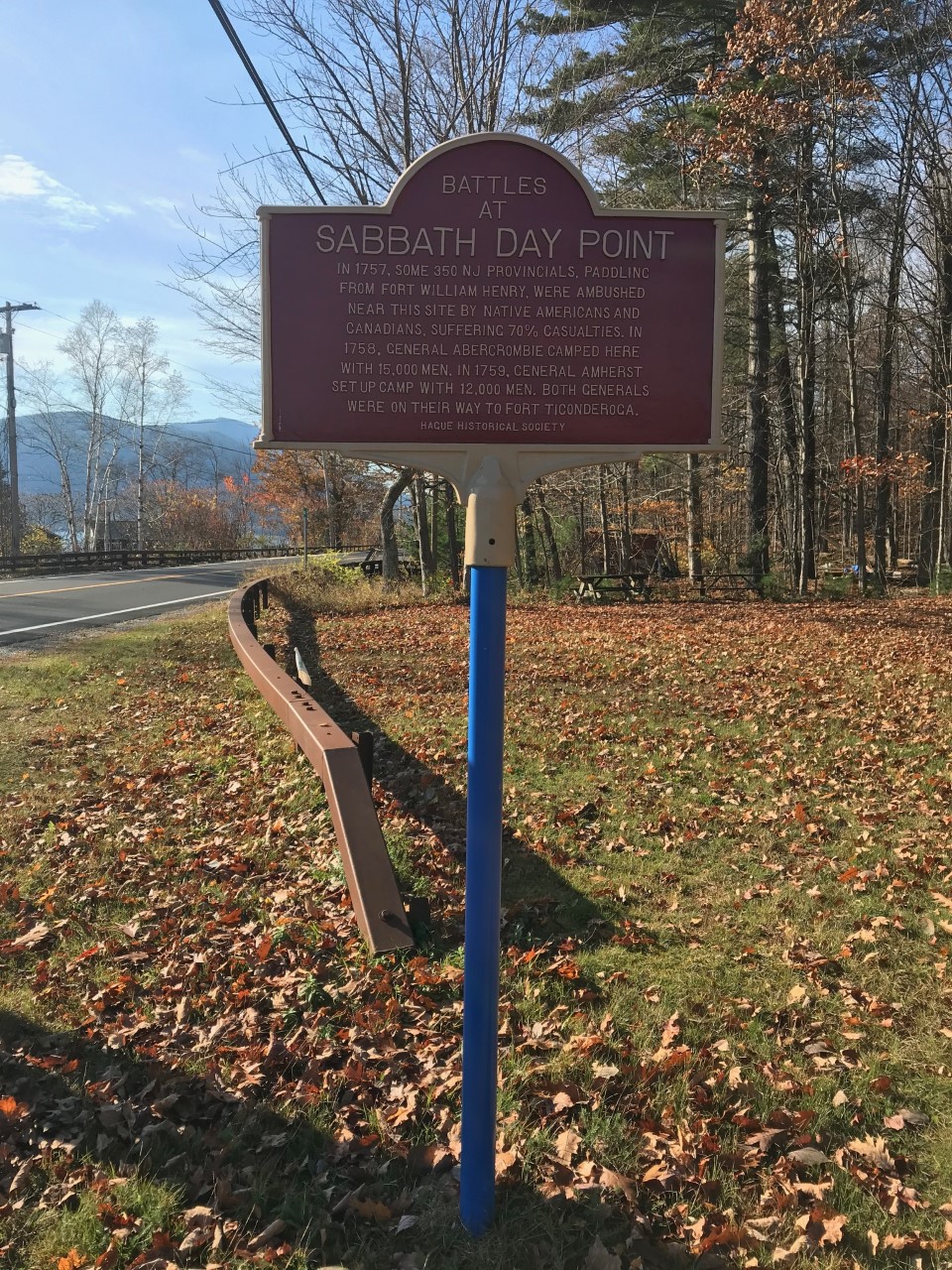
The summer of 1757 was an active month for British and French operations along the Lake Champlain-Lake George-Hudson River corridor—one of the most significant water highway systems in North America. The French and their Indian allies, under the command of the Marquis de Montcalm and situated at Fort Carillon (Ticonderoga) to the north of Lake George, were preparing to launch a campaign to besiege and destroy Fort William Henry along the southern shore. Patrols in this area were constant as both sides attempted to collect intelligence on enemy movements, numbers, and logistics.
At Fort William Henry, Lt. Col. George Monro of the 35th Regiment of Foot was in command of the British garrison of 2,500 regulars and provincials. Throughout July, word from prisoners and escapees from Canada continued to come in that Montcalm was amassing a force of 8,000 French regulars, Canadians, and Indians to march on his position. Desiring more intelligence, Monro ordered Col. John Parker of the 1st New Jersey Regiment (the “Jersey Blues”) to conduct a reconnaissance north towards Carillon with 350 men from his own unit and some from the 1st New York Regiment. The mission was simple on paper: gather intelligence on the enemy and cause as much damage to him as possible to hamper any advance.
On July 23, Parker and his detachment sailed north from Fort William Henry in twenty-two whaleboats. For many of the men, they would never step foot on land again. Waiting in ambush for them near Sabbath Day Point were hundreds of Canadians and Indians. The French were prepared to oppose any patrols along the northern end of the lake.
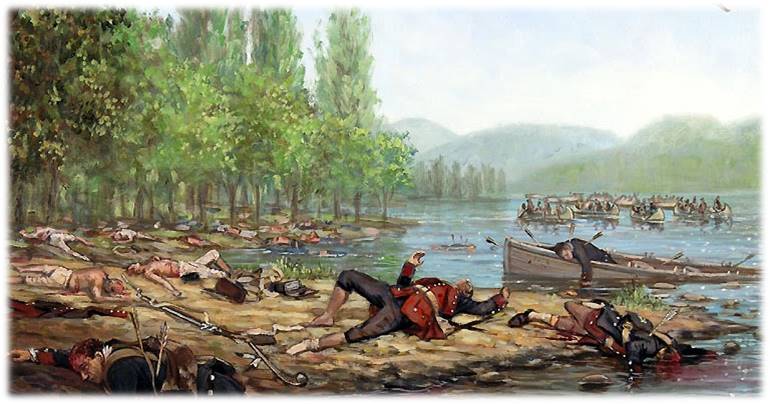
After spending the night on an island south of Sabbath Day Point, the British reconnaissance force continued onward during the morning of July 24. Sources are conflicting in regard to what happened next, but three of the boats, either separated from the group or ordered forward as an advanced party, were attacked by the Indians at the point. The boats were pulled up along the shore to serve as a decoy to lead Parker’s men closer to land. When the rest of the British column came rowing towards the ambush site, the entire shoreline was set ablaze with musket fire.
The New Jerseyans’ and New Yorkers’ fates were sealed as the French Indians began to push their canoes into the water and encircle the panic-stricken detachment, cutting off their escape. Many of the British were shot dead or pulled into the lake as their boats were overturned. “The Indians jumped into the water and speared them like fish…,” recorded Louis-Antoine de Bougainville, Montcalm’s aide-de-camp, “The English, terrified by the shooting, the sight, the cries, and agility of these monsters, surrendered almost without firing a shot.” The fighting, which was most likely over in a matter of minutes, left over 100 of Parker’s force dead. Another 150 were taken prisoner and brought to the French camps outside of Fort Carillon. Col. Parker and the men onboard four of the whaleboats managed to escape the terror and reported back to Monro the following day.
For the prisoners, the horrors of that day continued when they reached Carillon, dragged onshore by ropes tied around their necks. Along with the captured Jerseymen, the French allied Indians had also taken another prize—the detachment’s rum supply. In the Ottawa camp outside the fort, the drunken Indians performed a cannibal ritual, cooking and eating three of the prisoners. Father Pierre Roubaud, a Jesuit missionary with the Abenaki at Carillon, watched in horror as the Ottawa indulged in “large spoonfuls of this detestable broth… The saddest thing was that they had placed near them about ten Englishmen, to be spectators of their infamous repast.” Roubaud attempted to stop the horrid supper, but a young Ottawa refused and told him, “You have French taste; I have Indian. This is good meat for me.” Eventually, the wretched act ceased, and preparations were made for the prisoners to be transported to Montreal where they would be ransomed back to the British.
Nine days after the action at Sabbath Day Point, Father Roubaud returned to the site of the ambush as Montcalm’s army marched and rowed along the western shore on its way to capture Fort William Henry. Seeing the dead of Parker’s command strewn about the trees and shoreline, the priest recalled, “Some were cut into pieces, and nearly all were mutilated in the most frightful manner.” This was the true nature of warfare in North America during the French and Indian War, and a tragic chapter in New Jersey’s colonial history.
“I Have not Yet Begun to Fight!” or Words to that Effect (September 23, 1779)

During the night of September 23/24, 1779, Captain John Paul Jones led his frigate, Bonhomme Richard, into its legendary fight with Serapis. In the midst of a battle that was not going well for the Americans, British Captain Richard Pearson asked if Jones was ready to strike his colors and surrender. Jones offered one of the most famous replies in American naval history: “I have not yet begun to fight!” Or did he? Continue reading ““I Have not Yet Begun to Fight!” or Words to that Effect (September 23, 1779)”
Symposium Update
Today, our sixth and final installment of the September 28th, 2019 symposium Before They Were Americans highlights William Griffith.
William Griffith is a native of Branchburg, New Jersey and currently resides in Gettysburg, Pennsylvania. He received his BA in History from Shepherd University in 2014, and MA in Military History from Norwich University in 2018. His passion for history can be traced back to his first trip with his father to Fort William Henry along the southern shore of Lake George when he was five-years-old.
While completing his undergraduate studies at Shepherd, he spent his time as a volunteer with the Gettysburg Foundation and the George Tyler Moore Center for the Study of the Civil War, and also worked as an intern and substitute librarian at the David Library of the American Revolution. He has previously served as a historical interpreter at Fort Frederick State Park in Big Pool, Maryland, and was employed by the Gettysburg Foundation from 2017-2019. He currently serves as a full-time Gettysburg Licensed Battlefield Guide. When not indulging himself in military history, he can be found closely following his second passion – the New York Yankees.
William’s first book, The Battle of Lake George: England’s First Triumph in the French and Indian War, was released by The History Press on September 5, 2016. His next book, A Handsome Flogging: The Battle of Monmouth, June 28, 1778, will be released later this year as part of Savas Beatie’s Emerging Revolutionary War series.
He will be presenting his talk “A proud, indolent, ignorant self-sufficient set: The Colonists’ Emergence as a Fighting Force in the French and Indian War” at the September symposium.

“A Very Handsom Retreet”: Lt. Colonel Nathan Whiting and the Fighting Retreat that Decided the Battle of Lake George
This is a post from September 2016. It focuses on a critical military action that occurred during the Battle of Lake George, 264 years ago, today:
When analyzing the key actions of a military engagement in order to pinpoint a decisive moment or turning point, one does not usually come across a retreat and/or rout that actually attributed to the success of an army. However, during the late morning of September 8, 1755, roughly three miles south of Lake George in New York’s Adirondack Mountains, a contingent of men from Connecticut and Massachusetts, and their Mohawk allies conducted quite possibly the first ever organized fighting retreat in American military history – one that would turn the tide of battle and save their army from potential destruction. It is easy for a maneuver like this to be overlooked, but without the crucial time bought for William Johnson’s provincial army at its encampment along the southern shore of the lake by Lt. Colonel Nathan Whiting’s courageous New Englanders, Baron de Dieskau’s French army may well have emerged victorious during the Battle of Lake George and subsequently pushed their way to Albany’s doorstep.
Around eight o’clock in the morning, September 8, 1755, a column of men 1,200 strong was marched out of William Johnson’s camp at the southern end of Lake George. The column’s destination was Fort Lyman, roughly fourteen miles to the south located beside the Hudson River (present-day Fort Edward, NY). There, intelligence gathered by Johnson’s army had placed the 1,500 strong French force led by Jean-Armand, Baron de Dieskau, which was believed to be preparing an assault against the 500 man garrison of New Hampshire and New York provincials.
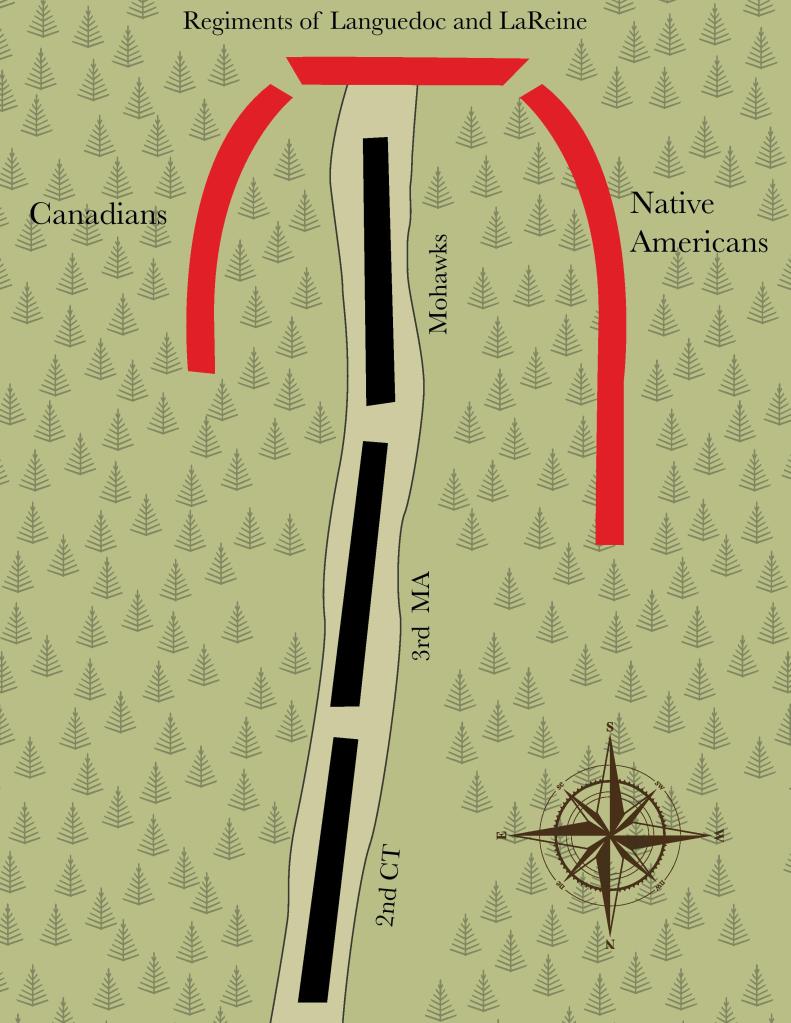
The contingent of reinforcements dispatched from the English camp was under the overall command of Colonel Ephraim Williams, 3rd Massachusetts Provincial Regiment, and was comprised of his own regiment, 200 Mohawk Indians, and another 500 men of the 2nd Connecticut Provincial Regiment led by Lt. Colonel Nathan Whiting. The column marched south down the military road with the Mohawk at its head, followed by the Massachusetts men, and Whiting’s regiment taking up the rear.
Nathan Whiting, born in 1724 and a resident of Windham, was 31-years-old in 1755 and one of William Johnson’s youngest field officers. He was a graduate of Yale and a veteran of the Louisbourg expedition during King George’s War – service which earned him a lieutenant’s commission in His Majesty’s Forces. When hostilities between England and France erupted in 1754 he was commissioned as the 2nd Connecticut Provincial Regiment’s lieutenant colonel and was sent to Albany to serve as part of the Crown Point Expedition, an offensive designed to oust the French from the Lake Champlain-Lake George-Hudson River corridor. The regiment’s colonel, Elizur Goodrich, was ill and bedridden during the Battle of Lake George, so Whiting served as the unit’s field commander during his absence. Whiting was a loyal officer and earnestly dedicated to the cause in which he was fighting for. Before reaching the southern shore of the lake on August 28, he penned a heartfelt letter to his wife that epitomized his character: “… [P]ray make your Self as easy as possible[.] I know your D[aily] prayers are for my preservation[.] Let it be an article of them that it not be obtained by any unworthy means, but in the prosecution of the Duty I owe at this time to my Self, my Country & my God.”[1]
About two hours or so and three miles into the march to Fort Lyman, the forward ranks of Ephraim Williams’s column of reinforcements were ambushed by Dieskau’s native allies, Canadian militia, and regular grenadiers of the Regiments of Languedoc and La Reine. The French outside of Fort Lyman had earlier uncovered dispatches from a dead courier that was sent to inform the English outpost that reinforcements were going to be sent from the lake encampment to assist it in case of an attack. Using this intelligence, Dieskau marched his army up the military road towards Lake George and prepared an ambush to surprise the oncoming party of reinforcements. Although the ambuscade was initiated prematurely before the entire column could march into Dieskau’s hook-like formation, it still succeeded in throwing the English force into confusion and sent it scurrying back up the road to Lake George. Both Ephraim Williams and Chief Hendrick (commanding the Mohawk contingent) were killed during the confrontation and all order was lost, leaving Whiting, who was now the highest ranking officer on the field, to try to prevent a disaster.
George Washington’s Hometown: Alexandria, Virginia
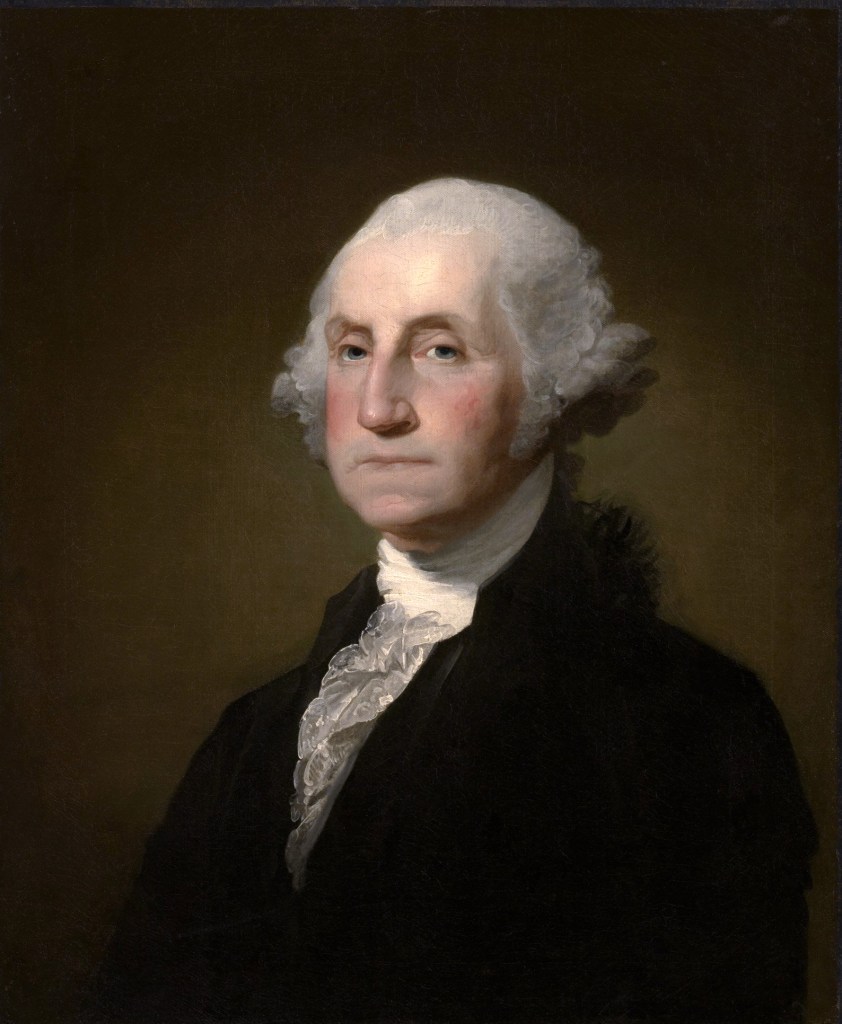
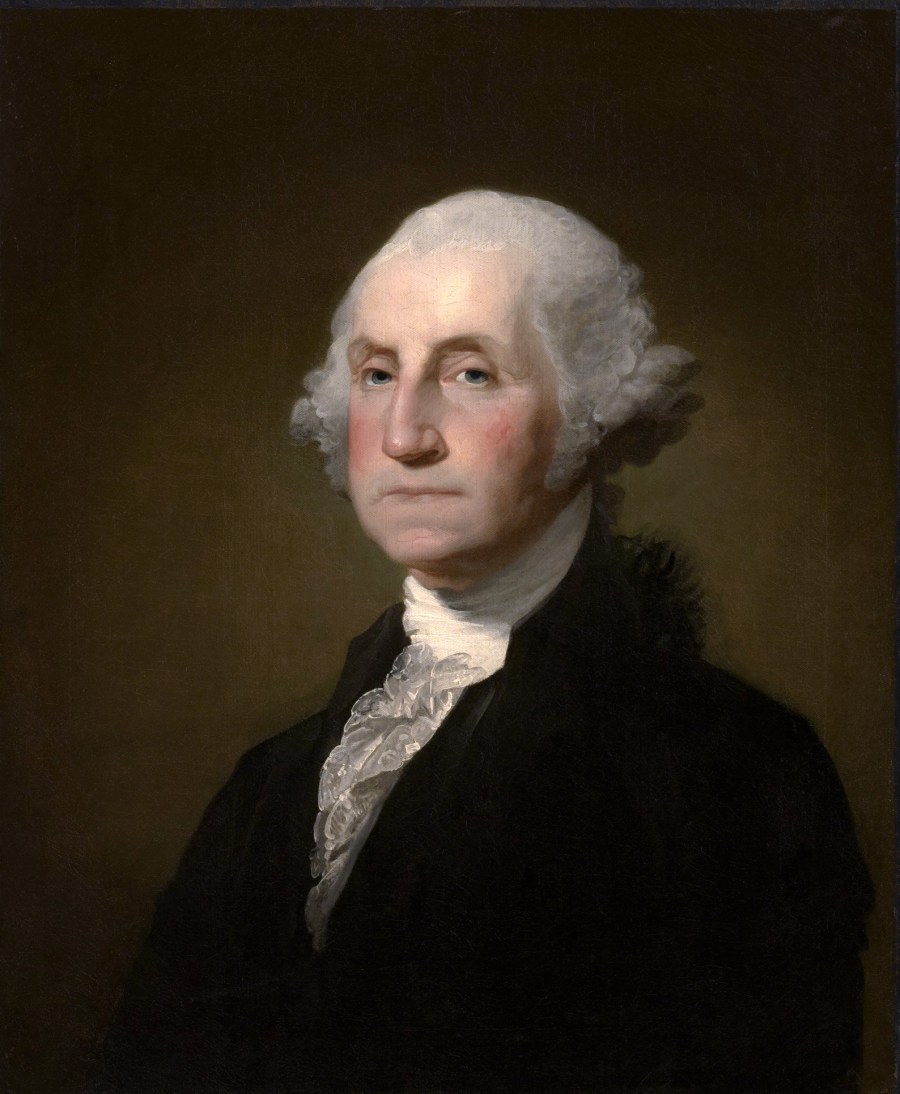
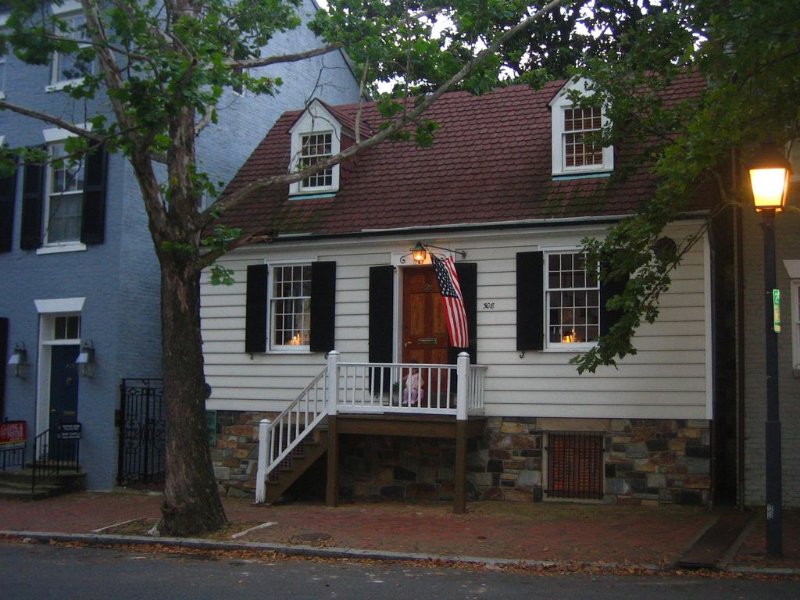
Alexandria, Virginia, often thought of as merely a suburb of Washington, D.C., is actually one of the most historic towns in the United States. The town, founded in 1749, predates the nation’s capital and the nation itself. While most towns and cities (such as Charleston, Philadelphia, New York or Boston to name a few) set aside museums, parks, and houses where George Washington may have spent an evening or had a meal, Alexandria, Virginia has the distinction of being Washington’s hometown. Washington’s home, Mount Vernon, is only nine miles south of Alexandria. Washington literally helped survey and lay out the very streets of the town in 1748. Washington spent a considerable amount of time of his life with friends and family at Alexandria and became a leading citizen in the town.
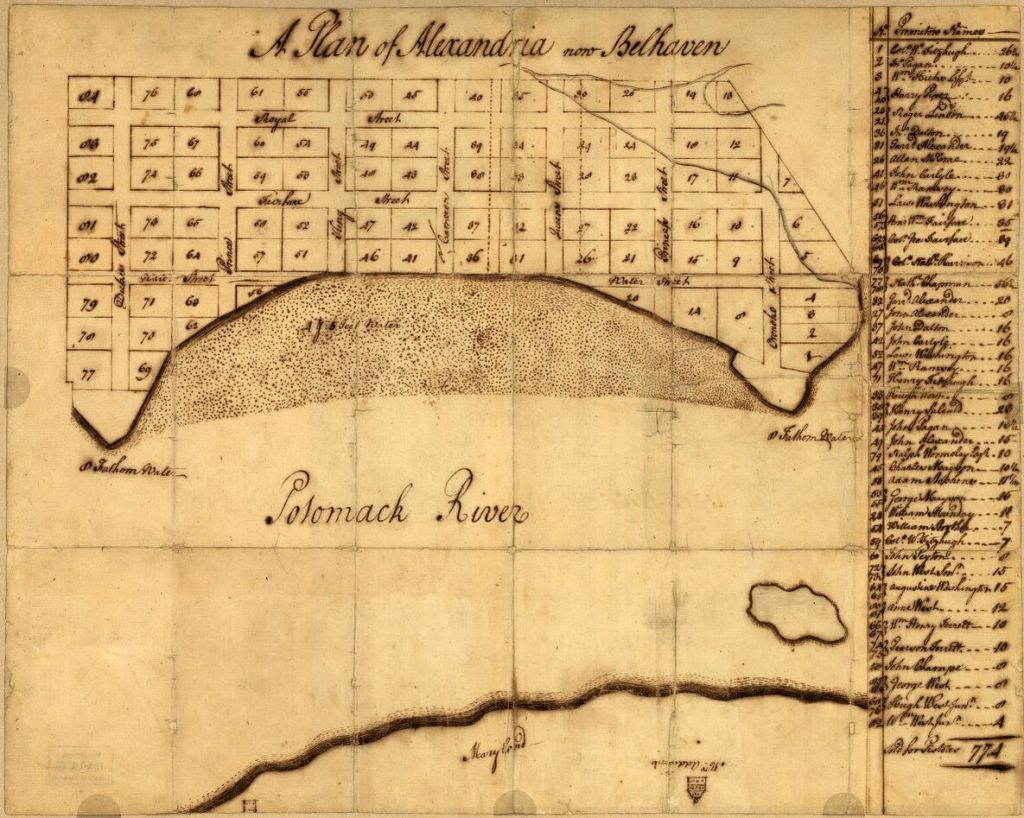
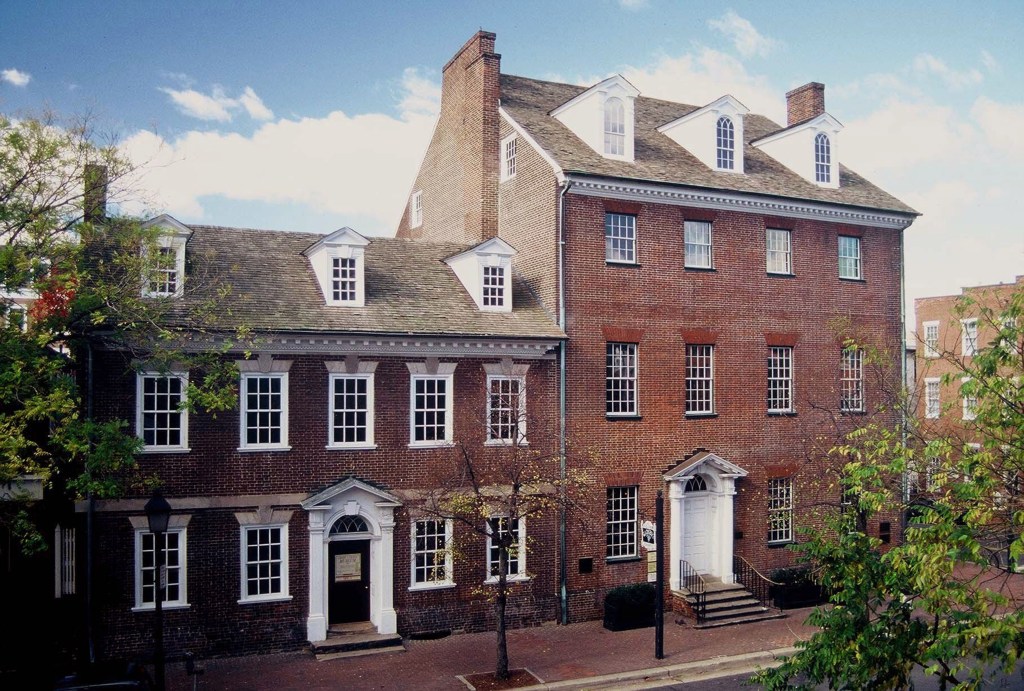
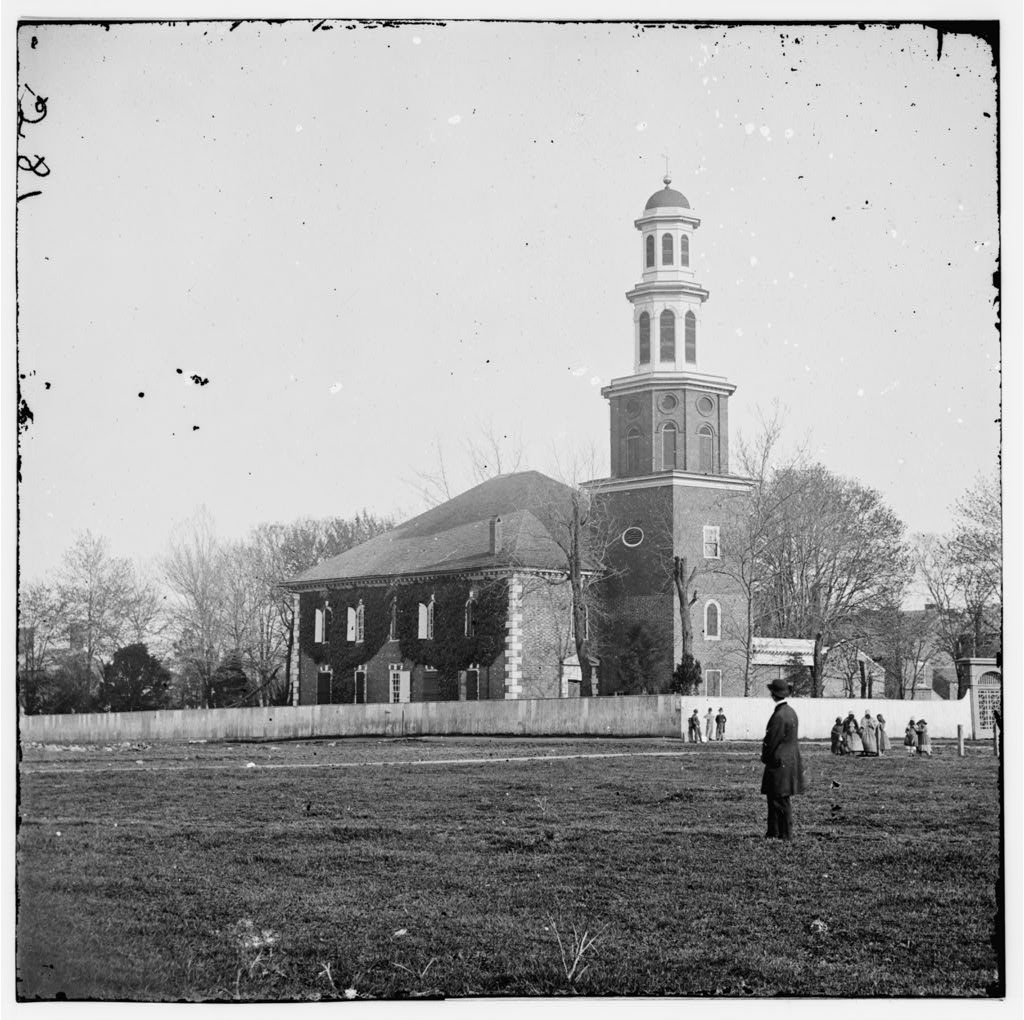
Today, visitors can see numerous places that had a close association with George Washington and the American Revolution there. Gadsby’s Tavern was where Washington dined frequently throughout his life and where he celebrated his birth night ball, a tradition that continues to this very day. Nearby, a replica of George Washington’s townhome sits today on Cameron Street where his original townhome once stood. Just two blocks from there is Christ Church, where Washington worshipped and was a vestryman. Despite the fact that this is a beautiful and historic building where Washington worshipped, the modern congregation there has sought to distance their association with Washington (because he was a slaveowner) by moving a plaque located in the church.
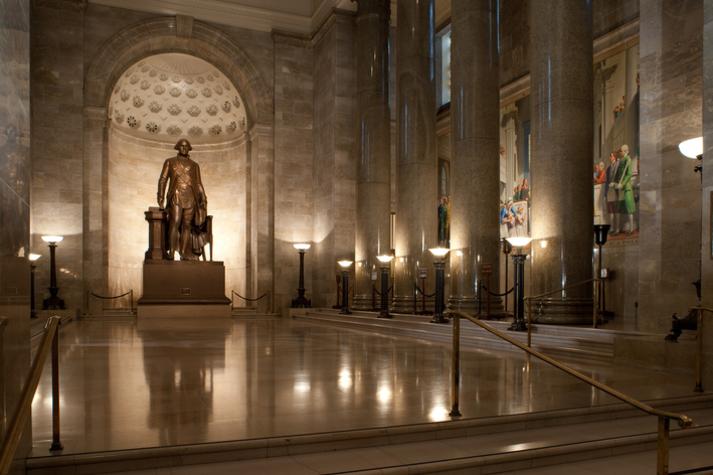
Washington was also a member of the local Masonic lodge. Today, the entire town of Alexandria is anchored on the west end by a massive Masonic Temple dedicated to memory of George Washington. Inside is a large statue of Washington and museum that includes many Washington relics and mementoes, including the trowel Washington used to lay the cornerstone of the U.S. Capitol building.
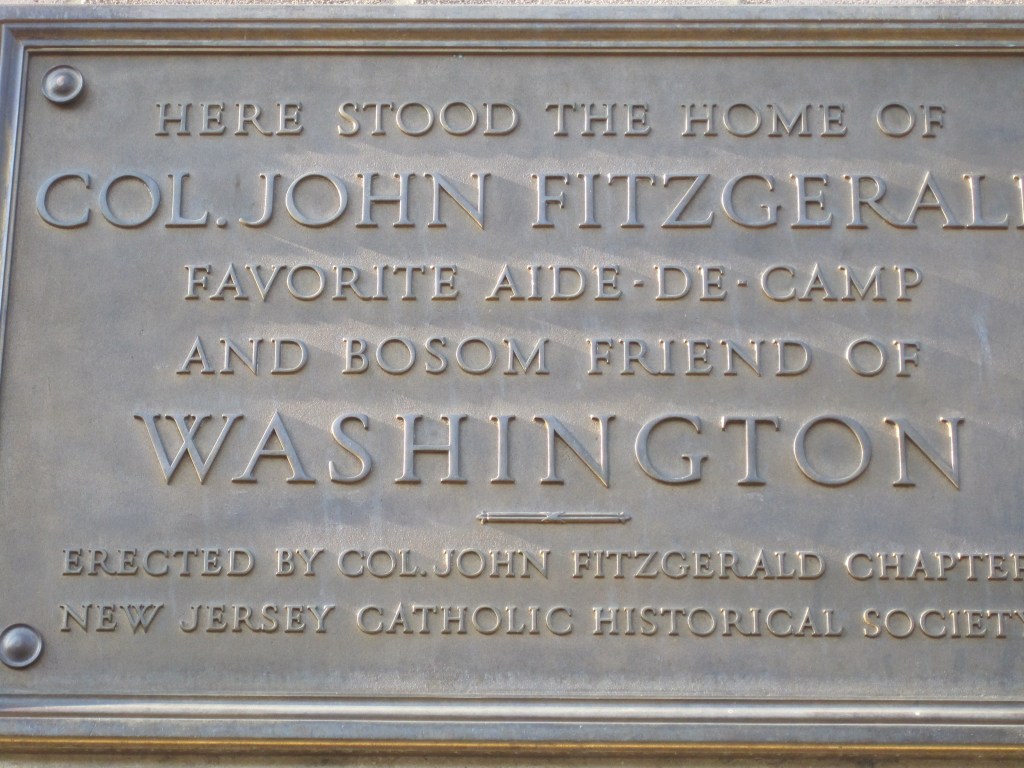
In addition to all of these Washington sites, the town of Alexandria has even more Revolutionary War history. The men from Alexandria largely joined the 3rd Virginia Regiment in 1776 when the war broke out. One of the town’s most prominent citizens was a “broad-shouldered Irishman” named John Fitzgerald. Fitzgerald would become a captain in the 3rd Virginia Regiment. In November of 1776, Fitzgerald was promoted to Lieutenant Colonel and joined Washington’s headquarters as an aide-de-camp. Fitzgerald would be by Washington’s side at Trenton, Princeton, Brandywine, Germantown, Valley Forge, and was wounded at Monmouth. While many Alexandrians would go on to fight in the war across the country, the war came to Alexandria in 1781. In April of 1781, a British raiding party was sailing up the Potomac River towards Alexandria. Col. John Fitzgerald rallied the local Virginia militia soldiers and marched down to Jones Point to scare off the British. The British never landed and sailed away. Later in life, Fitzgerald would become famous for founding the first Catholic Church in Virginia (St. Mary’s) and became mayor of the town. Today, multiple plaques in the city honor Col. Fitzgerald. While John Fitzgerald was undoubtedly a true hero of the Revolutionary War, the town has chosen to remove his name from a square on the waterfront because he was a slaveowner.
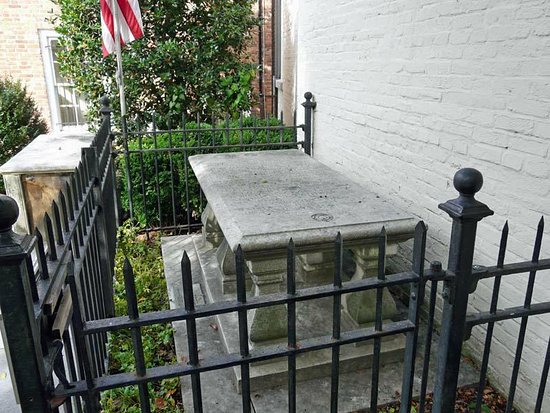
On the northern side of the town, a state historic marker denotes the location of where part of Washington’s army encamped while marching to Yorktown in 1781. In addition to Christ Church, you can also visit the First Presbyterian Church, where memorial services were held for Washington in 1799 and where his personal physician who attended to him all his life, Dr. James Craik is buried. In the Churchyard you can also see the Tomb of the Unknown Revolutionary War Soldier.
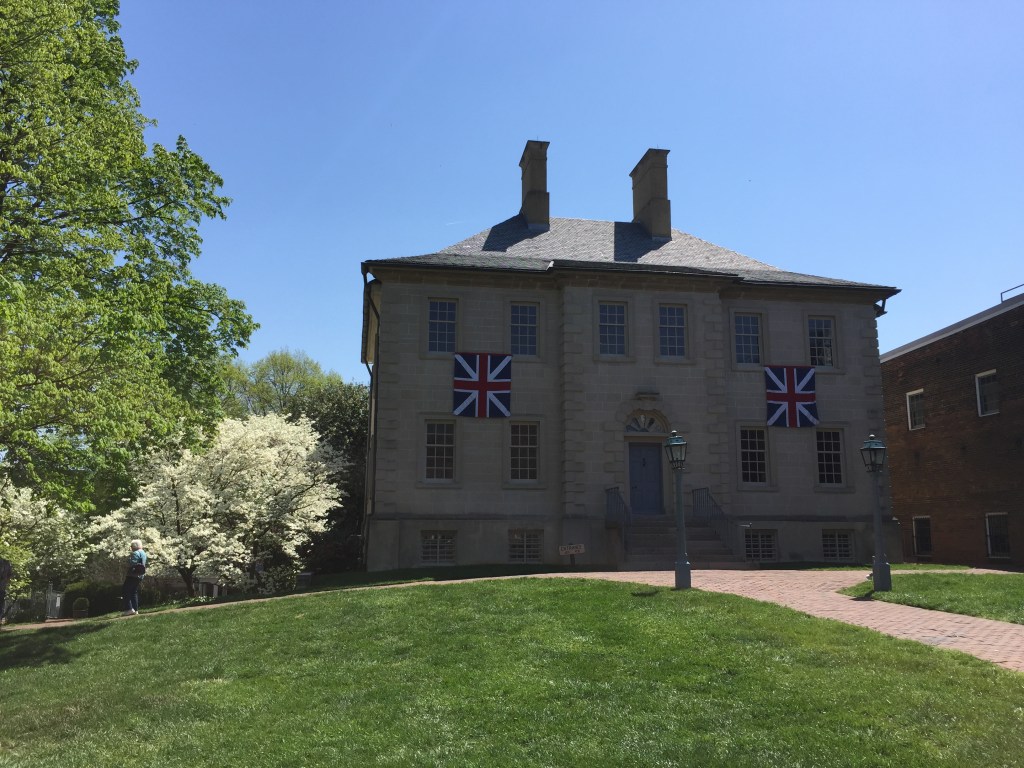
In Alexandria also stands Carlyle House, where General Edward Braddock launched his ill-fated expedition into Pennsylvania during the French and Indian War in 1755. It was also the home of George William Carlyle, a 17-year-old boy who valiantly died during the Revolutionary War in South Carolina at the Battle of Eutaw Springs in 1781. Another person who called Alexandria home, Light-Horse Harry Lee, served with Carlyle at the battle and described him as “the gallant young Carlyle of Alexandria.” Today, Light-Horse Harry Lee has a bar named after him today in Alexandria. In addition to his important service as an officer in the Revolutionary War, Lee became famous as the man who eulogized his fellow Alexandrian George Washington as “first in war, first in peace, and first in the hearts of his countrymen.” He was also the father of Robert E. Lee, who would grow up in Alexandria.
Robert E. Lee would attend the same church as Washington and married into Martha Washington’s family, making his home at nearby Arlington House (which was not only a home, but the nation’s first memorial to George Washington). Robert E. Lee said of Alexandria: “There is no community to which my affections more strongly cling than that of Alexandria, composed of my earliest and oldest friends, my kind school-fellows, and faithful neighbors.”
Alexandria’s expansive history associated with George Washington and the Revolutionary War is only rivaled by its important history during the American Civil War. Alexandria was the scene of the first deaths of that war in 1861 and was the longest occupied town in the war.
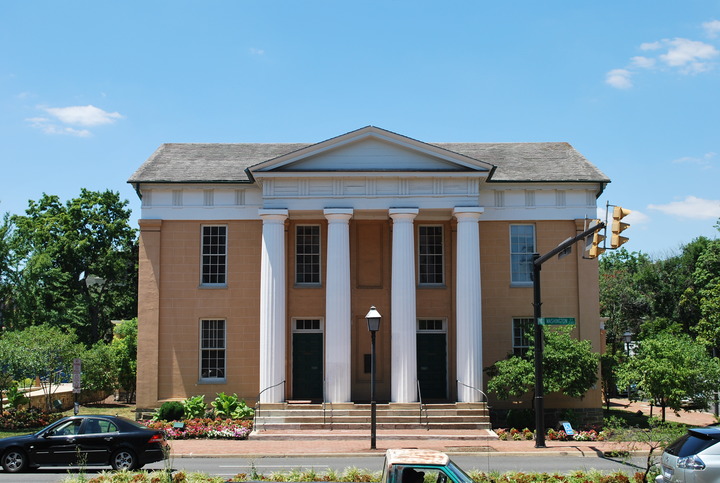
With such an extensive George Washington and Revolutionary War history, the town makes the perfect location for the inaugural Emerging Revolutionary War Symposium later this month. We hope you make the effort to come to this historic town and learn about how these men and women transitioned from colonists to Americans. While you are in town, we hope you get a chance to visit some of the numerous Revolutionary War and Washington sites!
 Emerging Revolutionary War Era