For nearly five years we have been bringing you our Rev War Revelry podcasts every other week. In the beginning, these podcasts were just our ERW team chatting about topics in early American history. We thought it be good to get the band back together again and catch up on all our projects, debate history and make fun of Mark Maloy’s love of the movie Patriot. Grab a drink and join in the discussion via the chat.
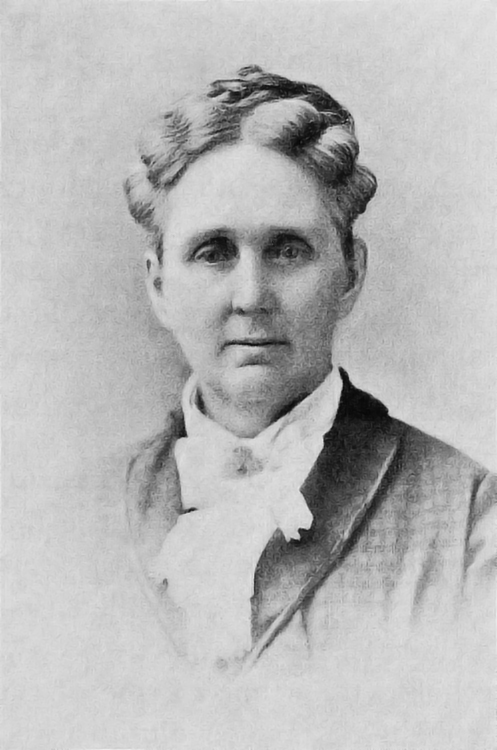
Valley Forge consists of acres of undulating countryside where General George Washington and some 11,000 Continental Army troops spent the winter of 1777-1778. Today, it is one of the nation’s most hallowed shrines. Few, if any, modern visitors recognize the woman who fought to save it, nor her heroic work as a nurse during the American Civil War.
Anna Morris Ellis was born in Muncy, Pennsylvania, on April 9, 1824. On September 26, 1848, she married William Hayman Holstein. At 38 years old, Anna became involved in the Union army’s war effort during the American Civil War after the battle of Antietam in September 1862. Her husband returning home after serving a 90-day enlistment, told of wounded men lying in barns and fields around Sharpsburg, Maryland because there weren’t enough medical corpsmen. Despite an overhaul to the Union Army of the Potomac’s Medical Department by Dr. Jonathan Letterman earlier that summer, the combined evacuation of the Virginia Peninsula from their failed late spring and summer campaigns and the Second Manassas campaign outside of Washington, D.C. in August had left this medical department in a state of chaos, confusion, and wholly unprepared to meet the medical needs of such another large scale engagement as Antietam. Anna and her husband William immediately left for the Antietam battlefield in response to the distressing scenes he had painted for her.
Anna Morris Ellis Holstein
The Holstein’s served for months around the Antietam battlefield, caring for the sick and wounded. Their role as post-battle caretakers continued just a month after the battle of Gettysburg when the large army field hospital of Camp Letterman opened just east of the borough on the York Road. This time, however, Anna was already numbed to the scenes of shattered limbs and the despondently ill wearied from disease. By this time her husband had secured a position with the U.S. Sanitary Commission which also setup at Gettysburg to aid the wounded and sick in the wake of the battle. That agency, along with the U.S. Christian Commission, offered supplies and personages to aid in the aftermath of not only Gettysburg, but other battles in the final years of the war.
Anna’s role for caring for those soldiers left behind by both armies was significant. She was made matron-in-chief of Camp Letterman by Dr. Cyrus Nathaniel Chamberlain, which, under her and Chamberlain’s care, attended to over 3,000 wounded soldiers. Anna continued to work at Camp Letterman until it closed on November 19, 1863. Later that day, both her and her husband sat on the platform near Abraham Lincoln while he delivered the Gettysburg Address. Following her work at Gettysburg, Anna continued to nurse the sick and wounded back to health. By the end of the Civil War in 1865 and into 1866, she worked as a matron in a hospital in Annapolis, Maryland, caring for returned prisoners of war that were sick or wounded.
In the post Civil War years, Anna turned to the preservation of the places and material culture from America’s first war for independence. She was no stranger to the importance of this era and the necessity of keeping the memory of those that served during that turbulent era alive for future generations. Anna’s great-grandfather was Capt. Samuel Morris. Morris was the captain of the First City Troop of Philadelphia when it served as George Washington’s body guard. Captain Morris was with Washington during the Ten Crucial Days and was on the field him at the battles of Trenton and Princeton. Morris even earned the sobriquet as leader of the “fighting Quakers.” Anna’s grandfather, Richard Wells, also served the American cause. He was commissioned to provision the U.S. fleet on the Delaware River during the revolutionary war.
One of her first missions was to save and restore George Washington’s Virginia estate, Mount Vernon. The home had fallen into significant disrepair, with the recent war years only aiding to its material decay. Both Anna and her husband, who also had strong ancestral ties to the War for Independence, were among the first to promote the struggles at Mount Vernon, the necessity for saving it, and the fundraising to back those plans. It was her skills in fundraising so successfully for Mount Vernon that led her to be named as regent for the Valley Forge Centennial and Memorial Association. Anna also was one of the founders, and also named regent as well, of the Valley Forge Chapter of the D.A.R.
By 1878, The Centennial and Memorial Association of Valley Forge, was incorporated in Montgomery County, Pennsylvania. Once incorporated, she led the charge as regent to save, acquire, restore and preserve General Washington’s Valley Forge Headquarters and surrounding acreage as parcels became available. Much needed funds for this charge would be needed, however. On June 19, 1878, to commemorate the 100th anniversary of the Continental Army marching out of Valley Forge, the Association held a large, organized event. With the funds generated from the anniversary commemoration, the Association was able to not only purchase General Washington’s Headquarters, but also additional acreage around the farm complex. They were also able to purchase original artifacts to place in the home, begin renovations to restore the home back to its 1777-78 appearance, and plant a tree from Washington’s Mt. Vernon on the property.
By 1893, when the Commonwealth of Pennsylvania assumed control of the camp sites and headquarters at Valley Forge, with Anna credited as the person “to whom the Nation is indebted more than any other” for her tireless efforts to ensure this national shrine was preserved and protected in perpetuity. Decades later, the National Park Service would assume ownership and operational leadership of the park from the state of Pennsylvania.
Anna and William’s home still stands in King of Prussia, Pennsylvania today at 211 Henderson Road. In 2021 the Pennsylvania Historical and Museum Commission placed a marker at the entrance drive to the home. Anna’s work at saving material culture from the Revolutionary War and ensuring the legacy of the veterans of that conflict lived on was vast. Hopefully this small summation of her activities inspires others to dig deeper into her efforts.
For this week’s “Rev War Revelry” Emerging Revolutionary War ventures to the west to discuss the recently published book, “Till the Extinction of this Rebellion, George Rogers Clark, Frontier Warfare, and the Illinois Campaign of 1778-1779.” The author, Eric Sterner, is a contributor to the Emerging Revolutionary War, along with the author of An Anatomy of a Massacre: The Destruction of Gnadenhutten, 1782. When not writing history, Sterner had a career in government and public policy besides contributing to the literature and study of the American Revolutionary War era.
This book, published by Westholme Publishing, examines the viewpoints of the American, British, and Indigenous perspectives and illustrates the wide impact of the American Revolution on the peoples west of the Appalachian Mountains. What happened with Clark’s movements and campaign will lay the foundation for American expansion and the “opening of the West” following the American Revolution.
We hope you can join us for this historian happy hour this Sunday at 7 p.m. on our Facebook channel. If you miss it, we will post the revelry on our YouTube channel. Just search “Emerging Revolutionary War” to subscribe.
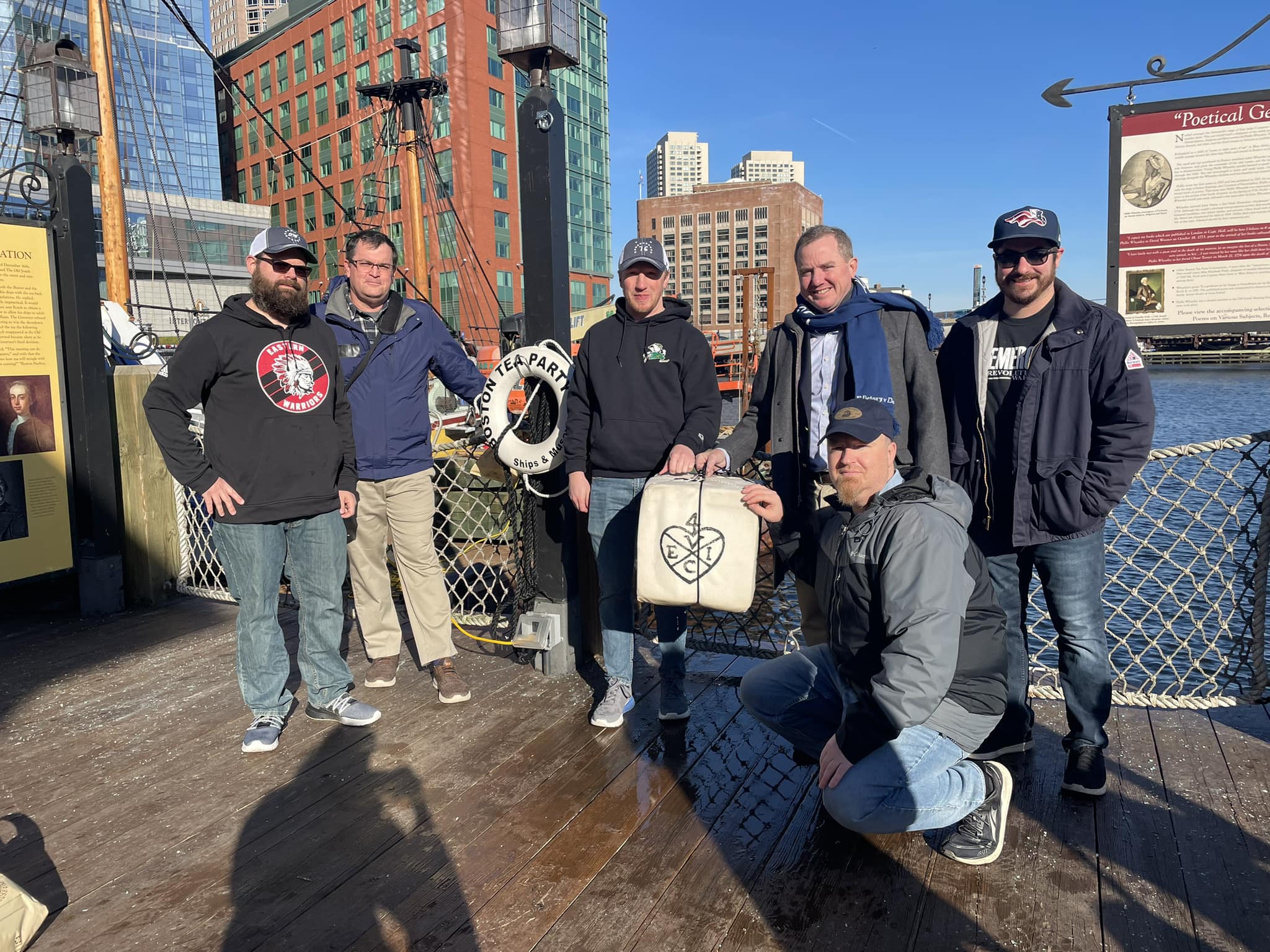
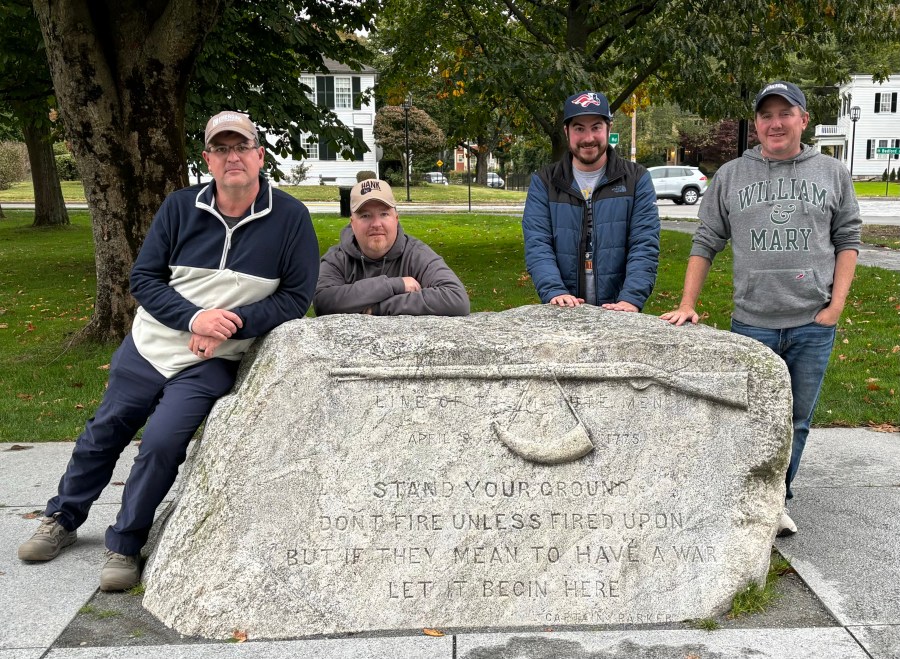
Last weekend, Emerging Revolutionary War wrapped up our fourth annual bus tour. Our previous tours covered Trenton, Princeton, Monmouth, Valley Forge, and Charleston. This year we went to where the whole war started: Lexington and Concord on the eve of the 250th anniversary of the battles. We had a jam-packed weekend with a fully sold out 56 passenger bus. As most places close down in November in Massachusetts, we chose to move this year’s tour from our usual Veterans Day weekend, to Columbus Day weekend. Here is a brief overview of how the weekend went:
We are excited to announced our FIFTH annual ERW bus tour will be on November 7-9, 2025 and will cover the 1777 Philadelphia Campaign.
Author and historian Michael Harris will join us as we cover the fall of 1777 campaign. The British Army under Gen. William Howe made a concerted effort to take the American capital of Philadelphia. George Washington and the Continental Army fought major actions at Brandywine and Germantown in an effort to hold and take back the city. The tour will cover sites associated with the Philadelphia Campaign, such as Brandywine, Germantown, Paoli and others.
Tickets are $250 per person and will include Friday night lecture at the host hotel, all day bus tour on Saturday and half day bus tour on Sunday. A lunch is included for Saturday.
Our host hotel is the Holiday Inn Express and Suites – King of Prussia. Lodging is NOT included in the registration fee. A room bloc has been established under the name of “Emerging Revolutionary War.” A link will be provided in the future for hotel lodging.
Join us for our FIFTH annual tour as we take on the beginning of the American Revolution just a few months before the 250th anniversary. Learn about the dramatic events that led to some of the bloodiest days in the American Revolution. There is no better way to experience history than to stand in the footsteps of where it happened!
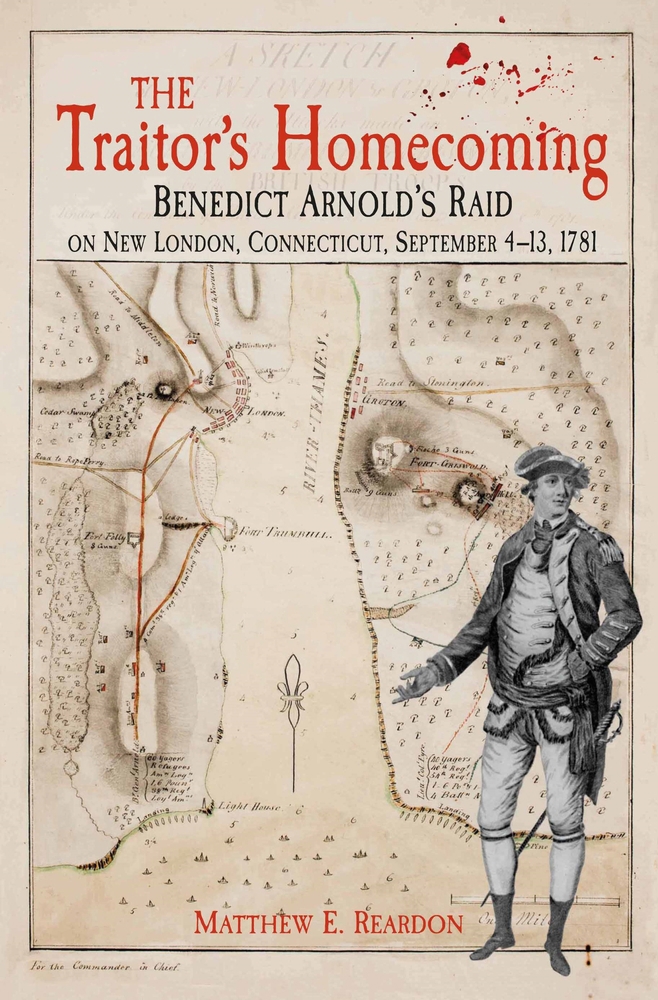
Although 1781 is most known for the pivotal and successful victory at Yorktown, action in the American Revolution unfolded throughout the eastern seaboard. In early September 1781, Benedict Arnold returned to the land of his birth to lead a raid on New London and the port that harbored preying privateers.
During this raid, the American militia under Lieutenant Colonel William Ledyard especially, stoutly defended Fort Griswold until overcome by superior numbers. The town of New London was also torched and saw a rarity like the battle of Trenton, in that combatants fought through the very streets of the town.
Capturing all this and uncovering new primary sources, Matthew Reardon weaves a narrative that balances military history, from the fighting to the strategies, with the impact on New London and Connecticut. His book, “The Traitor’s Homecoming, Benedict Arnold’s Raid on New London, Connecticut, September 4 – 13, 1781” was recently published by Savas Beatie, LLC. Matthew is a native of northeastern Connecticut and is a public educator along with being a command historian for the Connecticut Military Department. He can be reached for inquiries on speaking engagements or how to purchase the book here.
The book will be the focus of this week’s “Rev War Revelry.” We hope you can join us on our Facebook page on Sunday, 7 p.m. EDT.
*Note* This “Rev War Revelry” will be recorded in advance as the Emerging Revolutionary War crew will be in Lexington and Concord, Massachusetts for the 4th Annual Emerging Revolutionary War bus tour.
Emerging Revolutionary War welcomes back guest historian Evan Portman
Two future presidents walk into a Catholic church.
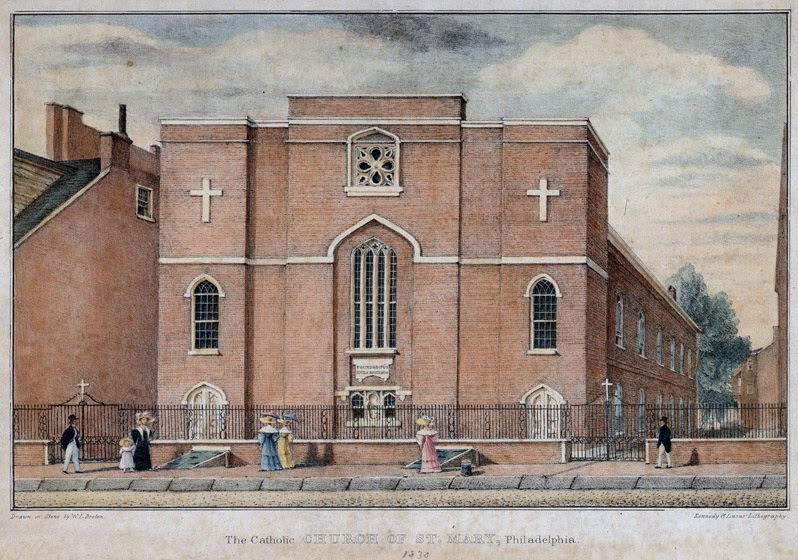
No, that’s not the beginning of a bad historical joke. It’s what happened on October 9, 1774, when George Washington and John Adams wandered into Old St. Mary’s Catholic Church while serving as delegates to the First Continental Congress in Philadelphia.
In September 1774, delegates from twelve of the thirteen colonies convened in Philadelphia for the purpose of discussing a response to Parliament’s recent Intolerable Acts. But after a month of debating (and bickering), Adams wrote that “the Business of the Congress is tedious, beyond Expression.”[1] Seeking a break from the monotony, Adams and Washington ventured to one of the oldest Catholic churches in the colonies. Established in 1763 by parishioners of Old St. Joseph’s, St. Mary’s Church grew from the need for a Catholic cemetery.
“[L]ed by Curiosity and good Company I strolled away to Mother Church or rather Grandmother Church, I mean the Romish Chappell,” Adams wrote to his wife Abigail that day.[2] The church stood just a few blocks south of the Congress’s meeting place at Carpenters’ Hall and starkly contrast anything the Protestant Adams had seen before. A descendant of some of America’s early Puritans, Adams was raised in the Congregational church of Braintree, Massachusetts, where “unfettered daylight through clear window glass allowed for no dark or shadowed corners, no suggestion of mystery.”[3] Old St. Mary’s could not have been more different. Light poured through several stained-glass windows before a large, ornate altar, behind which hung a dramatic depiction of Christ’s passion while burning candles and incense lit the nave.
Adams’s puritanical upbringing taught him to abhor such pageantry in the house of the Lord. He looked with pity upon “the poor Wretches, fingering their Beads, chanting Latin, not a Word of which they understood, their Pater Nosters and Ave Maria’s.” Even “their holy Water—their Crossing themselves perpetually—their Bowing to the Name of Jesus, wherever they hear it” appalled the young lawyer from Boston.[4]
Despite his disdain, some elements of the mass impressed and even moved, Adams. He described the priest’s homily as a “good, short, moral Essay upon the Duty of Parents to their Children, founded in Justice and Charity, to take care of their Interests temporal and spiritual.” Its brevity stood in stark contrast to the long-winded sermons of the Great Awakening, with which Adams would likely have been familiar. Even the priest’s flashy garments were noteworthy to the future president. “The Dress of the Priest was rich with Lace—his Pulpit was Velvet and Gold,” Adams noted.[5]
But most noteworthy of all was the “Picture of our Saviour in a Frame of Marble over the Altar at full Length upon the Cross, in the Agonies, and the Blood dropping and streaming from his Wounds.” That combined with the organ music, which Adams described as “most sweetly and exquisitely” was enough to move him. “This Afternoons Entertainment was to me, most awfull and affecting,” he confessed. But in the eighteenth century, the word “awful” did not mean what it does today. Adams quite literally meant that he was “full of awe” in observing the mass. He was so moved, in fact, that he wondered how “Luther ever broke the spell” of Catholicism.[6]
Perhaps Adams’s experience that day, 250 years ago, is indicative of the Revolution at large, as it brought together men from disparate backgrounds and regions. As a young man in Braintree, Adams likely never imagined he could be moved by a “papist ceremony,” nor could he probably have imagined signing his name on a document securing independence from his former country. In this way, the American Revolution made fantasy a reality, and the impossible, possible.
[1]“John Adams to Abigail Adams, 9 October 1774,” Founders Online, National Archives, https://founders.archives.gov/documents/Adams/04-01-02-0111. [Original source: The Adams Papers, Adams Family Correspondence, vol. 1, December 1761– May 1776, ed. Lyman H. Butterfield. Cambridge, MA: Harvard University Press, 1963, pp. 166–167.]
[3] David McCullough, John Adams, (New York: Simon & Schuster, 2001), 84.
[4] “John Adams to Abigail Adams, 9 October 1774,” Founders Online, National Archives, https://founders.archives.gov/documents/Adams/04-01-02-0111. [Original source: The Adams Papers, Adams Family Correspondence, vol. 1, December 1761– May 1776, ed. Lyman H. Butterfield. Cambridge, MA: Harvard University Press, 1963, pp. 166–167.]
Fredericktown, Maryland, August 1, 1775, a gentleman on business wrote to his contact in Philadelphia the following observation of a company of volunteers answering the call to head north to Boston to join what would become the Continental Army
“Notwithstanding the urgency of my business, I have been detained three days in this place by an occurrence truly agreeable. I have had the happiness of seeing Captain Michael Cresap marching at the head of a formidable company of upwards of 130 men, form the mountains and backwoods, painted like Indians, armed with tomahawks and rifles and dressed in hunting shirts and moccasins, and though some of them had travelled near eight hundred miles from the banks of the Ohio, they seemed to walk light an easy and not with less spirit than at the first hour of their march. Health and vigour, after what they had undergone, declared them to be intimate with hardships and familiar with danger. Joy and satisfaction, were visible in the crowd that met them. Had Lord North been present, and been assured that the brave leader could raise thousands of such to defend his country, what think you, would not the hatchet and block had intruded upon his mind? I had an opportunity of attending the Captain during his stay in Town, and watched the behavior of his men, and the manner in which he treated them; for it seems that all who go out to war under him do not only pay the most willing obedience to him as their commander, but in every instance of distress look up to him as their friend or father. A great part of his time was spent in listening to and relieving their wants, without any apparent sense of fatigue and trouble. When complaints were before him he determined with kindness and spirit, and on every occasion condescended to please without losing is dignity.”
esterday the Company were supplied with a small quantity of powder from the magazine, which wanted airing, and was not good for rifles ; in the evening, however, they were drawn out to show the gentlemen of the town their dexterity at shooting. A clap board, with a mark the size of a dollar, was put up ; they began to fire at it off band, and the bystanders were surprised, few shots being made that were not close to or in the paper. When they had shot for a time in this way, some lay on their backs, some on their breast or side, others ran twenty or thirty steps, and firing, appeared to be equally certain of the mark. With this performance the company were more than satisfied, when a young man took up a board in his hand, not by the end, but by the side, and holding it up, his brother walked to the distance, and very coolly shot into the white ; laying down bis rifle, he took the board, and holding it as it was held before, the second brother shot as the former had done. By this exercise I was more astonished than pleased. But will you believe me, when I tell you, that one of the men took the board, and placing it between hia legs, stood with his back to the tree while another drove the centre. What wonld a regular army of considerable strength in the forests of America do with one thousand of these men, who want nothing to preserve their health and courage but water from the spring, with a little parched corn, with what they can easily procure in hunting ; and who wrapped in their blankets, in the damp of night, would choose the shade of a tree for their covering, and the earth for their bed.”
Although a depiction of the 1st Maryland at Guilford C.H in 1781 some of these men are dressed similar to the riflemen mentioned above (wikipedia)
*Account is in “Papers Relating Chiefly To the Maryland Line During the Revolution” Thomas Balch, editor. pgs. 6-7.
The ground fog was thick off the Ohio; the air was chilly on that early October morning. Two groups of hunters moved north along the river in the pre-dawn darkness, hoping to shoot a deer for their breakfast. Instead, they stumbled across something unexpected: Shawnee warriors! The battle of Point Pleasant was on.
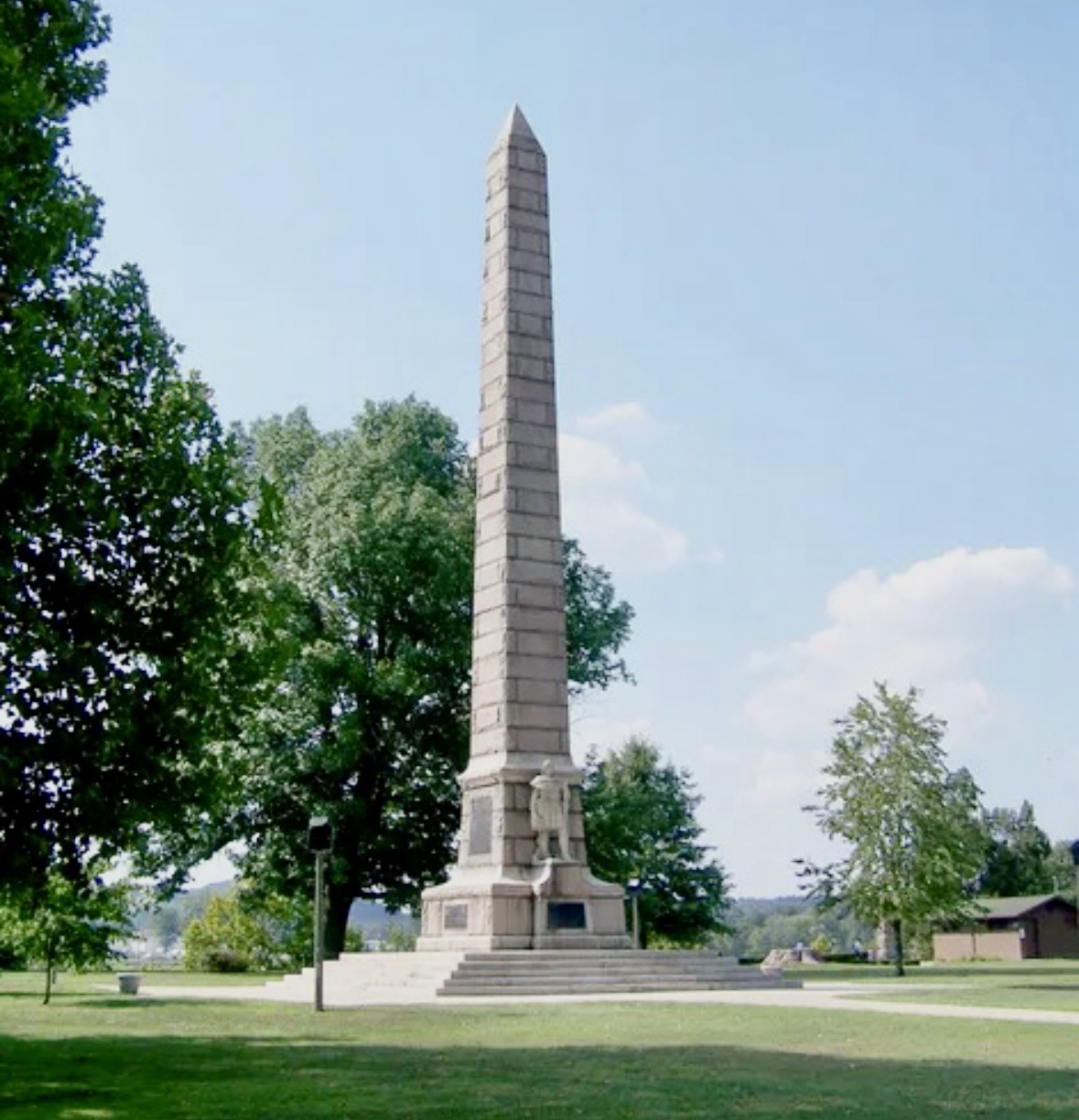
Point Pleasant Monument
In the summer of 1774, exactly 250 years ago and on the very eve of the American Revolution, the Virginia Colony went to war, but not with the British. In fact, the colonists at this stage still considered themselves to be British. Virginia went to war that summer against the Shawnee, Mingo, Wyandot, and other Native American tribal nations west of the Appalachian Mountains. As wars go, this wasn’t much of one, lasting barely six months and with only one decisive battle.
It stemmed from what one side called emigration and what the other considered encroachment. Bodies of English settlers, in ever increasing numbers, were crossing the mountains in hopes of settling land in the Ohio River Valley. This was territory that had been claimed by the French and transferred over to the British at the end of the Seven Year’s War. To the tribal nations in the Ohio Valley, like the powerful Shawnee, it was an affront. The settlers were looked upon as invaders, encroaching upon ancestral hunting grounds. Inevitably, the stage was set for violent and bloody clashes between these two peoples.
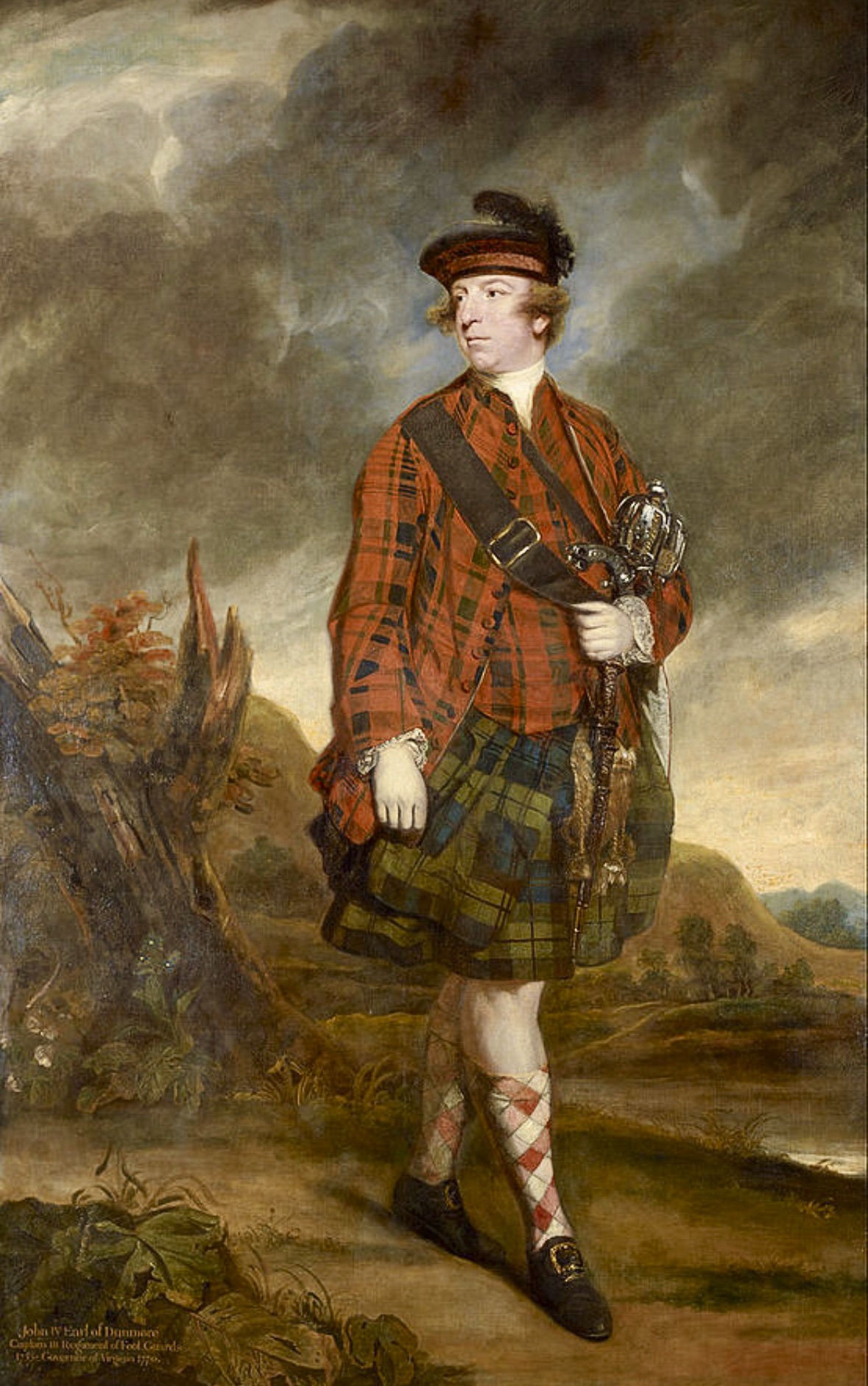
Hoping to pacify the frontier and establish once and for all Virginia’s jurisdiction over the Ohio Valley, the colony’s royal governor, John Murray, 4th Earl of Dunmore, asked the House of Burgesses to declare war and he called out the Virginia militia. In the years to come, many of the men serving in these militia companies would go on to distinguish themselves as officers and soldiers in the Continental army during the Revolution. For them, the fighting on Virginia’s frontier, in what came to be called Dunmore’s War, would serve as a dress rehearsal. This would be the last time in our nation’s history that a colonial American militia would march to war under the banner of the British crown.
John Murray, 4th Earl of Dunmore
At the Treaty of Fort Stanwix in 1768, the Iroquois peoples of the powerful Six Nations sold lands south of the Ohio River to the British, from Fort Pitt (modern-day Pittsburgh) down to the Louisa River (now the Kentucky River). This was territory the Iroquois believed to be part of their domain. For money and gifts totaling around £10,000, the Six Nations ceded to the Crown lands making up the modern states of Kentucky and West Virginia. The Shawnee and other western tribes in the Ohio Valley were outraged as white hunters, surveyors, land agents and settlers began to pour over the mountains. A trade-off of terror began, with both sides viciously attacking the other.
In the late summer of 1773, the first planned emigration into the new territory of Kentucky was undertaken. A prominent leader of this enterprise was Captain William Russell, a substantial landowner in southwestern Virginia and a magistrate of the newly created Fincastle County. Another organizer and the man who would act as guide for this first emigration attempt, made up of his and several other families from the Yadkin River Valley in North Carolina, was an obscure hunter named Daniel Boone. Boone led a party of 50 men, women and children through Powell’s Valley in southwestern Virginia, hoping to pass through Cumberland Gap into Kentucky. On October 10, just three miles behind Boone’s main party, his 17-year-old son James, 17-year-old Henry Russell, and a small group of young men, bringing up cattle and other supplies, were attacked by 19 Shawnee, Cherokee, and Delaware warriors. Both Boone and Russell were shot and hideously tortured to death. Word of the attack spread, causing the elder Boone’s party to turn back, abandoning all hopes of settling in Kentucky.
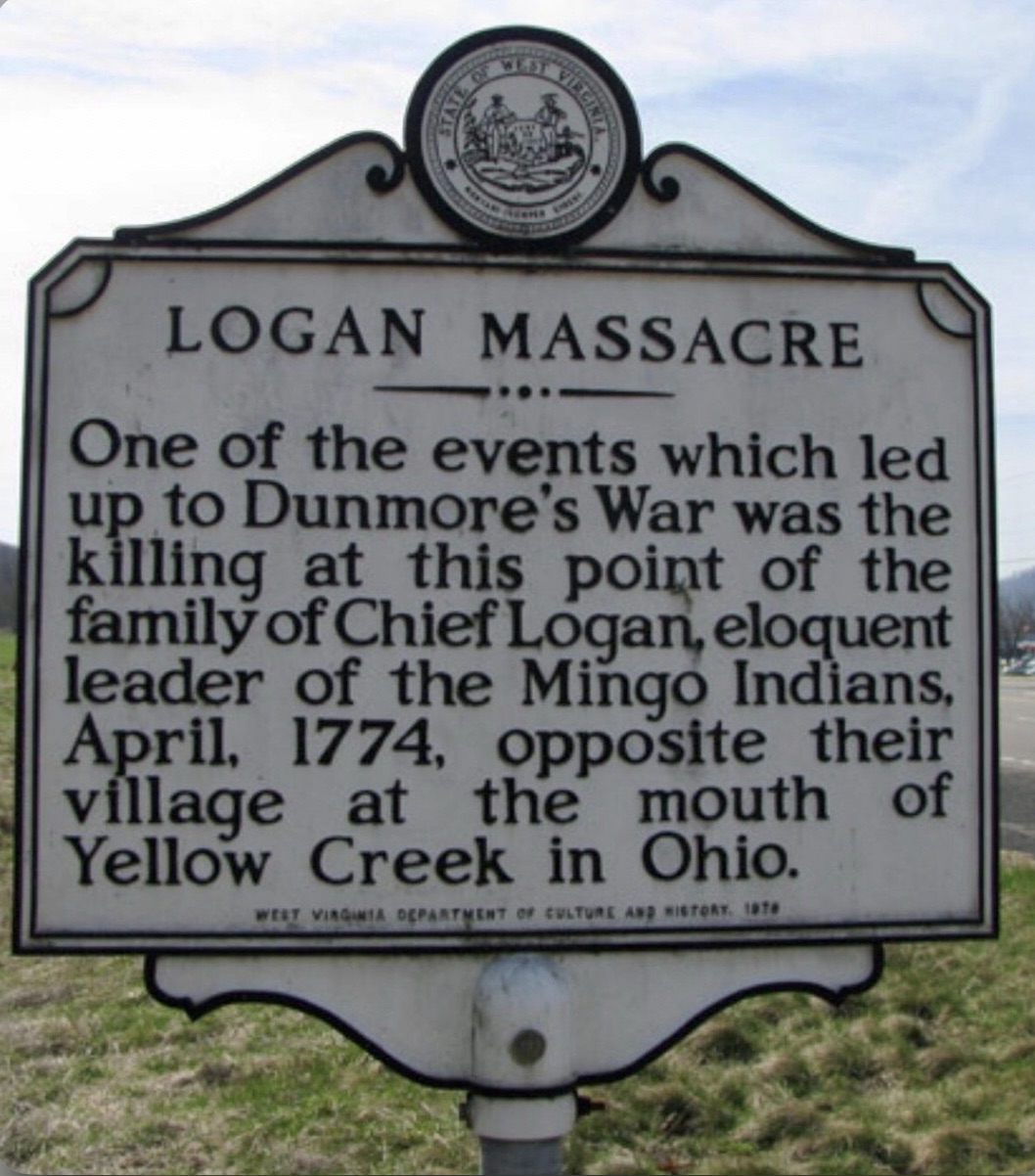
In late April of 1774, at a white trading post on the south bank of the Ohio River called Baker’s Bottom, several peaceful men and women of the Mingo tribe were murdered and scalped by white settlers believed to be under the leadership of a man named Daniel Greathouse. Among the victims were family members of a Mingo leader named Talgayeeta; he was known to the English as John Logan. As a result of the attack, the once peaceful Logan swore vengeance and, accepting help from the Shawnee, began indiscriminately attacking isolated white farmsteads along the Monongahela River throughout the summer.
With word of the atrocities reaching Williamsburg, Governor Dunmore sent out a circular letter to all county lieutenants to be on the alert, build small forts and blockhouses for more security and to send out rangers to watch the trails. He was growing frustrated with the Virginia House of Burgesses for not creating regular, provincial military units to defend the frontier. The burgesses were preoccupied with the political unrest in the east, mainly due to parliamentary taxation. They passed a resolution to observe a day of humiliation, fasting, and prayer in response to the Boston Port Bill, which had resulted from the Boston Tea Party in December 1773. On May 26, Lord Dunmore dissolved the House of Burgesses and under his authority as royal governor, mobilized the Virginia Militia.
In late July came the first action of the militia. An expedition against an important Shawnee village on the Muskingum River, Wakatomika, was led by Major Angus McDonald. At Fort Fincastle, near modern-day Wheeling, WVA, McDonald’s battalion of 400 men pushed off in canoes and small boats on the Ohio River. Among his company commanders were two future Patriot leaders of the Revolutionary War, George Rogers Clark and Daniel Morgan. Combat with the Shawnee was minimal, although McDonald’s force did suffer some casualties. Wakatomika was plundered and burned, along with several other villages before the militiamen returned to Fort Fincastle. On the whole, the expedition had accomplished very little and, instead of curbing the Native American attacks on settlers, actually caused the attacks to increase. Lord Dunmore now knew that overwhelming force would be needed.
In the late summer of 1774, Dunmore authorized the creation of two divisions of his militia, north and south. At Winchester, he mustered around 700 men from Virginia’s eastern counties. The Governor was disappointed, however, to learn that his invitation to join the division, made to a retired British army officer living in Berkeley County, was turned down. He was Horatio Gates, future major general in the Continental army, victor at the battle of Saratoga in 1777, and the man who suffered a devastating loss to the British at Camden in August 1780.
To the south, at Staunton, VA, militia Colonel Andrew Lewis, a future brigadier general during the Revolution, mustered ultimately around 1,100 men from the western counties of Augusta, Botetourt, Fincastle, Bedford, and Culpepper. With negotiations failing, by late August, Lord Dunmore put the Northern and Southern Divisions into motion. Their plan was to rendezvous on the Ohio River and march on the upper Shawnee villages on the Scioto River, in modern-day Ohio. Dunmore’s Northern Division marched west from Winchester to Fort Pitt, then down the Ohio to Fort Fincastle. There, 500 more men joined the division. Many of Dunmore’s troops had no weapons so he sent back to Williamsburg for 300 stands of arms. Dunmore’s second-in-command was Colonel Adam Stephen, another future major general in Washington’s Continental army. On October 2, the division moved farther south down the Ohio, to Fort Gower on Hockhocking Creek.
Colonel Andrew Lewis
From Staunton, Andrew Lewis marched his Southern Division west to a place called Great Levels, on the Greenbriar River. He named it Camp Union, on the site of modern-day Lewisburg, WVA. He then headed south, hitting the Kanawha River and following it west to where it empties into the Ohio at a place called Point Pleasant. Lewis’ lead elements arrived there on October 6 and began building barricades from the Ohio River on their left around to the Kanawha, which was at their backs. They also built pens and corrals for the livestock that would feed Lewis’ companies.
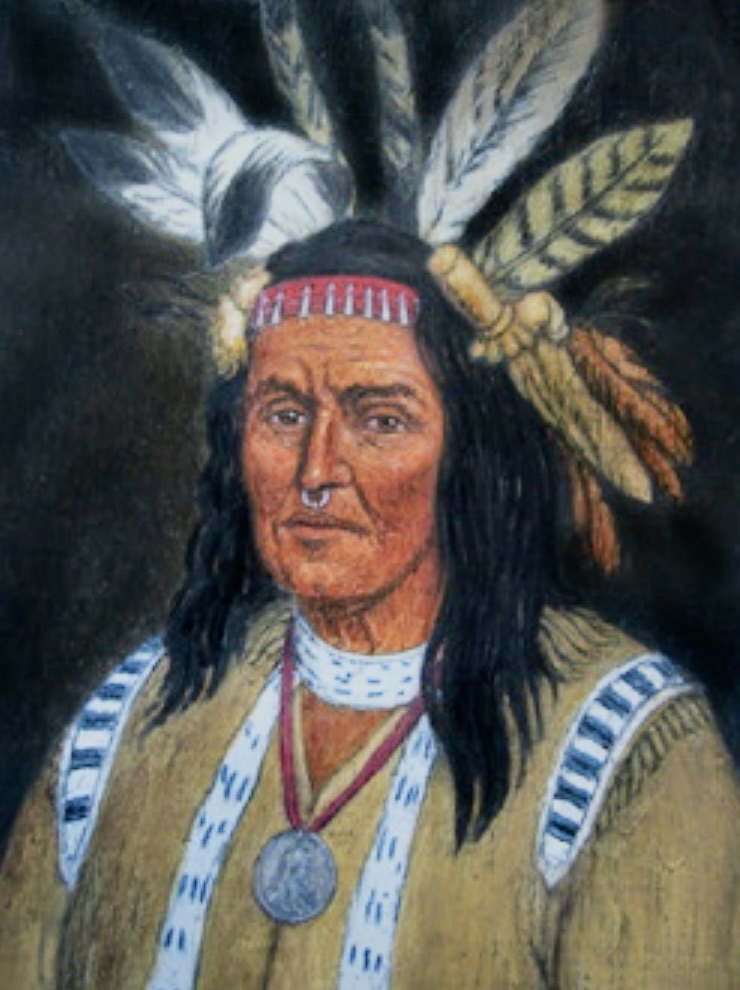
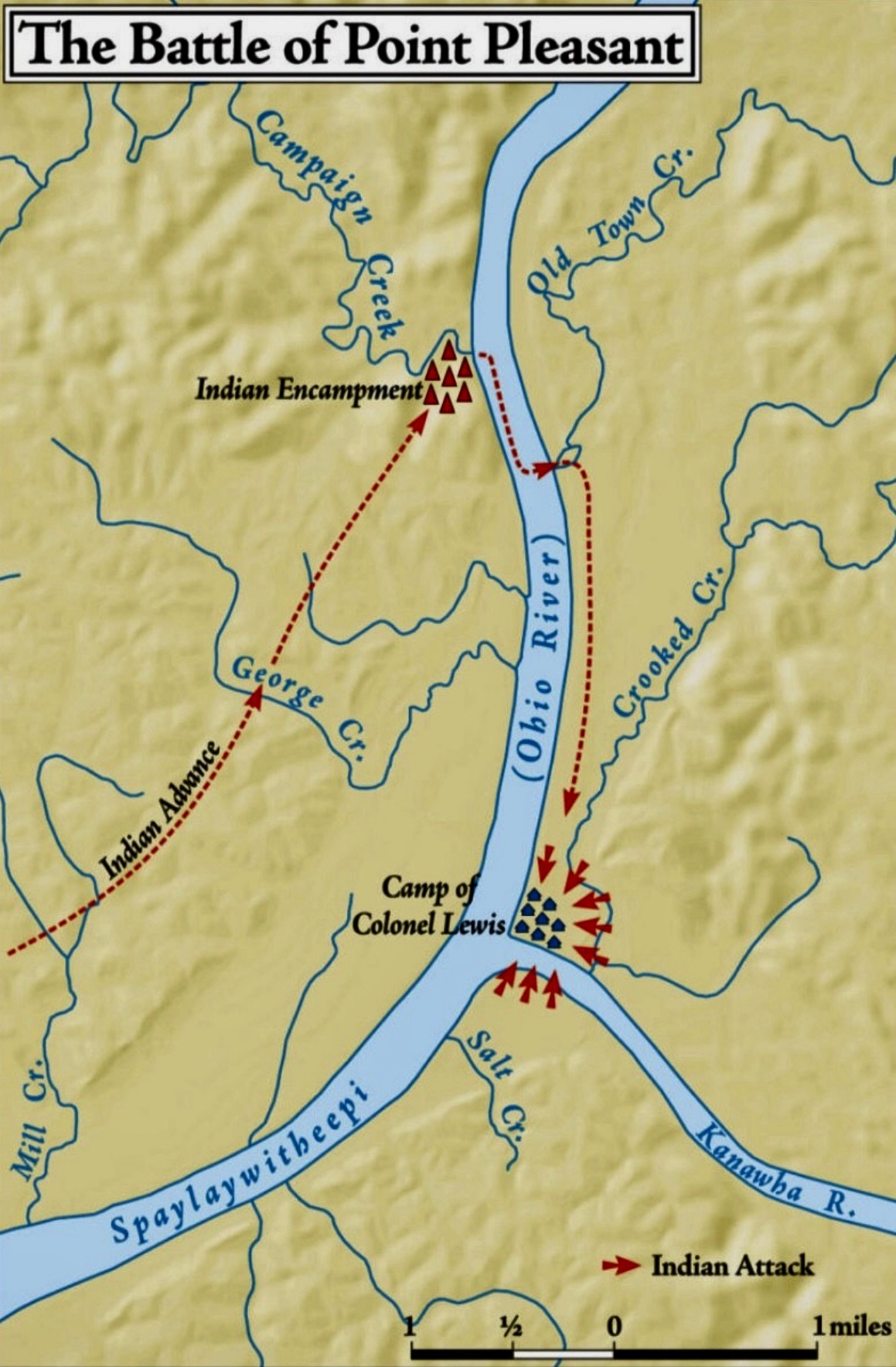
Leading the Shawnee and several other allied tribes as head war chief was a man named Hokoleskwa, also called Cornstalk. He commanded a force of around 1,000 warriors, which possibly included the future Shawnee war chief, Blue Jacket. Though his army was equal in size to both of the Virginia militia divisions individually, Cornstalk would be greatly outnumbered were those divisions to rendezvous, as planned. He decided, then, to attack each division separately and destroy them in detail. Being closer to the Southern Division, he chose to attack it first. On the night of October 9, Cornstalk rafted his army across the Ohio River at Old Town Creek, about five miles above Col. Lewis’ encampment. They then marched south to within two miles of the militia.
Shawnee Chief Cornstalk
In camp, Lewis issued a rather unpopular order. Feeding his troops from the livestock he had brought along from Camp Union, Lewis ordered the oldest and poorest quality beeves butchered first. Not having a taste for stringy beef, two separate, two-man hunting parties set out before dawn on the foggy morning of October 10, moving north along different paths, looking for deer. After walking nearly two miles, both hunting parties stumbled upon Cornstalk’s warriors. Shots were fired and one of the hunters, Pvt. Joseph Hughey of Fincastle, was killed. The other three made their escape and brought news of the enemy presence back to Col. Lewis.
Thinking this was possibly a large scouting party, Lewis ordered two detachments of 150 men each to move up and reconnoiter. On the left, close to the Ohio River, were men from Botetourt County, commanded by Col. William Fleming. On the right, farther inland, were Augusta County militiamen commanded by Lewis’ own brother, Col. Charles Lewis. Around sunrise, Cornstalk’s warriors attacked, opening a brisk fire on the Virginians. Charles Lewis was hit almost immediately, in the abdomen. While being helped back to the encampment, he called to his men: “I am wounded, but go on and be brave.” Fleming’s Botetourt men also came under fire. The militiamen were outnumbered and the Shawnee attack was so fierce that both Virginia detachments faltered and were forced to fall back, ultimately around 200 yards. William Fleming was likewise hit, with wounds to the head and left arm. He continued to direct his men, though, until weakening from his wounds. Under his own power, he walked back to the encampment. A gap in the line separated the militia detachments. Warriors began rushing forward to exploit that breach. Directing the battle from the encampment, Andrew Lewis ordered Col. John Field of Culpepper forward with 200 men to assume command on the right, with orders to extend his left flank to link up with the Botetourt contingent. Lewis sent another 200 troops to join the Botetourt men, with orders for Captain Evan Shelby to assume command on the left. With more Virginia troops becoming engaged, Cornstalk’s initial superiority in manpower was starting to fade. The tide was turning.
Battle Map – Point Pleasant
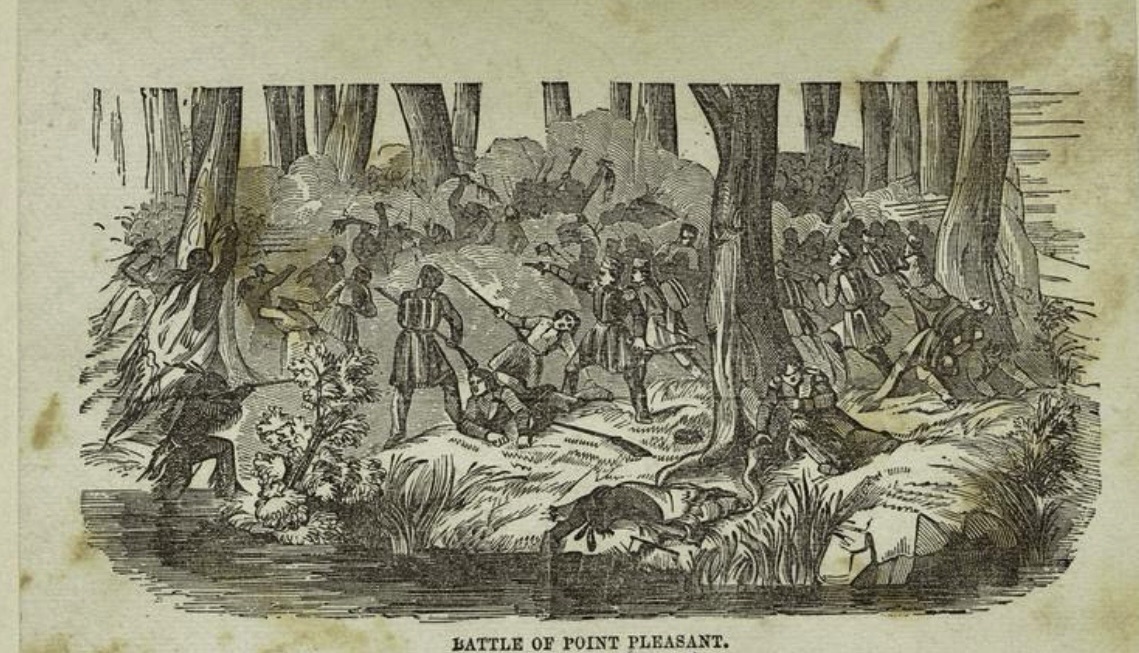
Under sustained fire, the militia detachments were finally able to link up. With their flanks no longer in the air, the battle line now stretched from the Ohio River over to Crooked Creek, making a flanking maneuver by the warriors next to impossible. John Field was killed; Evan Shelby took command of the entire line of battle. The fight had turned hand-to-hand. For several hours the bloody contest continued. Those Virginians who understood the Shawnee dialect afterwards claimed they had heard the sound of Cornstalk’s voice over the din of battle encouraging his warriors to “Fight and be strong”. Hand-to-hand combat, by its very nature, can be brutal and bloody. Both sides were suffering severe losses as the contest continued but Cornstalk made the decision to stay in the fight at Point Pleasant in order to inflict more damage to Lewis’ men. Withdrawing from the battle in order to fight another day put Cornstalk’s forces under a decided disadvantage. It would allow the wings of the Virginia militia to combine, closer to the Shawnee villages. He had to continue to fight as long as possible. But after so many hours, the allied warriors were beginning to falter, falling back under the pressure from the militia. The long rifles of the Virginians were now taking a heavy toll.
Battle of Point Pleasant, October 10, 1774
Col. Lewis sent orders to Capt. Shelby to advance his troops. With this surge, Cornstalk’s braves began to give more ground. Lewis earlier had ordered three companies of Augusta militia to move to the right, along the heights above Crooked Creek in order to flank the enemy. Now they opened fire, surprising the warriors on Cornstalk’s left. With knowledge that more militiamen were coming up from Camp Union, Cornstalk had no choice but to disengage at this point. Close to sunset, after hours of bloody combat, Cornstalk’s army began to withdraw, hoping to get back across the Ohio. They largely carried off their dead, throwing some of the bodies into the river to hide their losses. They were successful, however, and made the north bank of the river but Chief Cornstalk’s attempt to destroy the Southern Division had failed.
The Virginia militia had won the field, but at a terrible cost. Andrew Lewis lost around 75 men killed in the engagement with 140 more wounded. It’s believed that Cornstalk’s casualties were similar. Just before the battle, Lord Dunmore had moved his division inland, closer to the Shawnee villages, and established Camp Charlotte at Pickaway Plains. With his allied warriors not willing to engage further, Cornstalk had no choice but to initiate peace talks. His decision did, however, save the upper Shawnee towns from destruction.
With the subsequent Treaty of Camp Charlotte, Lord Dunmore’s War came to an end, but peace on the frontier would be fleeting. Within six months, shots were fired at Lexington and Concord, plunging America into war with Great Britain. More settlements were established in Kentucky and Shawnee raids would continue throughout the next twenty years.
With the coming of the American Revolution, Lord Dunmore himself would eventually be forced out of Virginia, pursued by some of the same militia officers he had commanded in the war that took his name.
For more about Point Pleasant and Dunmore’s War, check out our Rev War Revelry with Dr. Glenn Williams on our Facebook page or You Tube Channel.
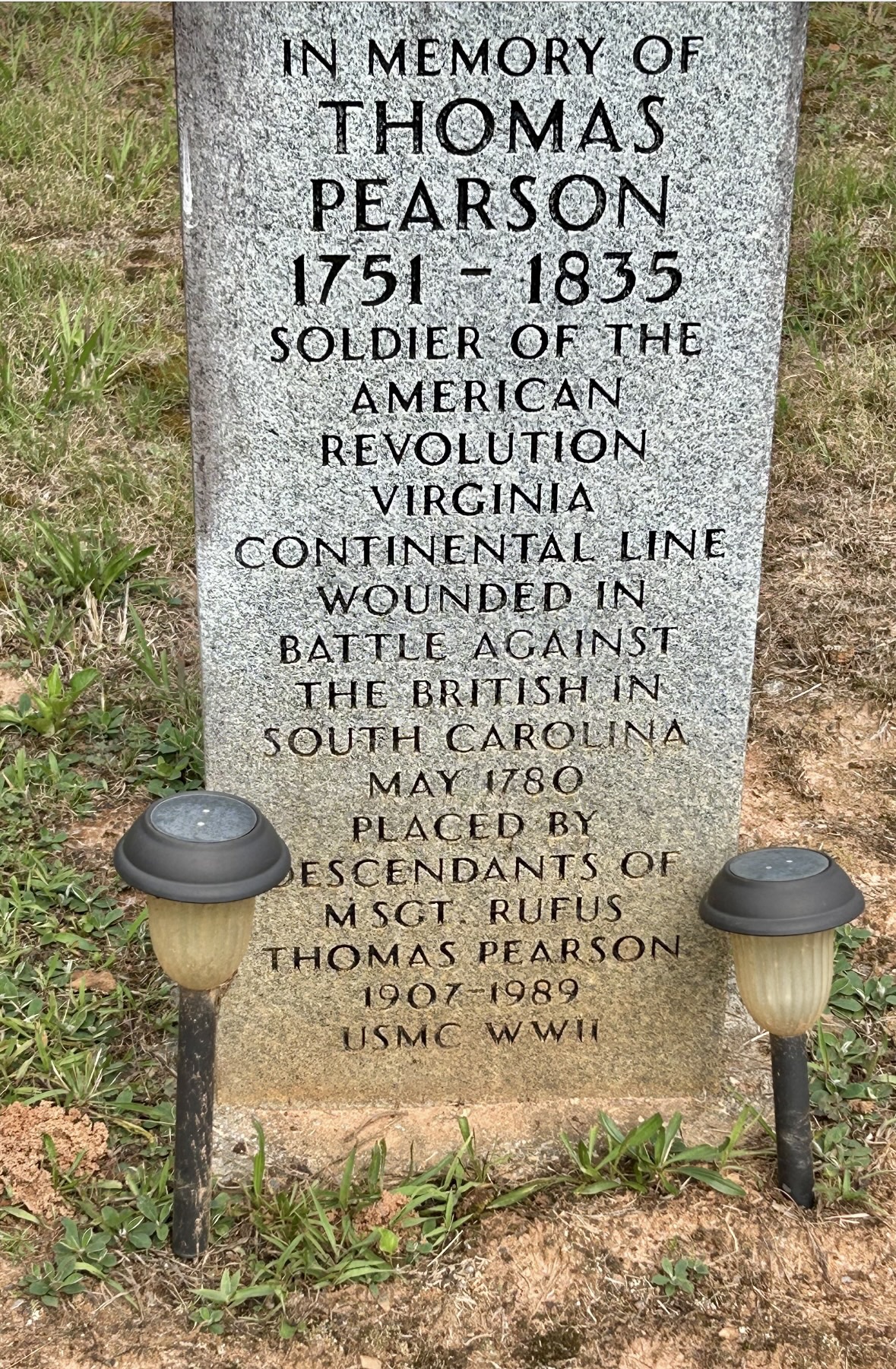
Not long ago, a good friend of mine found himself in Henry County, Va. Located southwest of Richmond, the county was named for the patriot, Patrick Henry, in 1777. Touring a local cemetery there, my friend came upon a very interesting headstone. It was the grave marker for a soldier of the American Revolution; a man named Thomas Pearson.
Grave of Thomas Pearson
According to the headstone, Thomas Pearson had served in the Virginia Continental Line and in May 1780, was wounded in battle against the British in South Carolina. My friend sent me a photograph of the headstone. Based on the place and date, he was hoping this Thomas Pearson had perhaps served at the battle of Camden. As a co-author of a book on Camden, I have to admit that I was quite intrigued myself.
But, based on my research for the book, I knew immediately that certain pieces of information on the man’s epitaph didn’t correspond to details of the Camden fight. First off, it indicates that Thomas Pearson served in the Virginia Continental Line. The Virginians engaged at Camden were actually not part of the Continental Line but, rather, state militia forces commanded by Gen. Edward Stevens. In fact, most of the troops of the Virginia Continental Line were captured by the British at the fall of Charleston on May 12, 1780.
The epitaph also reads that Pearson was wounded in May 1780, in South Carolina. The battle of Camden occurred later, on August 16, so most likely this gentleman wasn’t there. Still, the gravestone intrigued me. I decided to do a little research into Thomas Pearson and sadly, I was to discover that his story was a tragic one.
On November 30, 1812, at the age of 61, Thomas Pearson applied for a pension for his services in the Revolutionary War from the Commonwealth of Virginia. According to his application, he was “a soldier in the revolutionary war, belonging to the VA Line on continental establishment, and attached to the regiment commanded by Col. Abraham Buford.” Clearly, he was a veteran of the southern campaign.
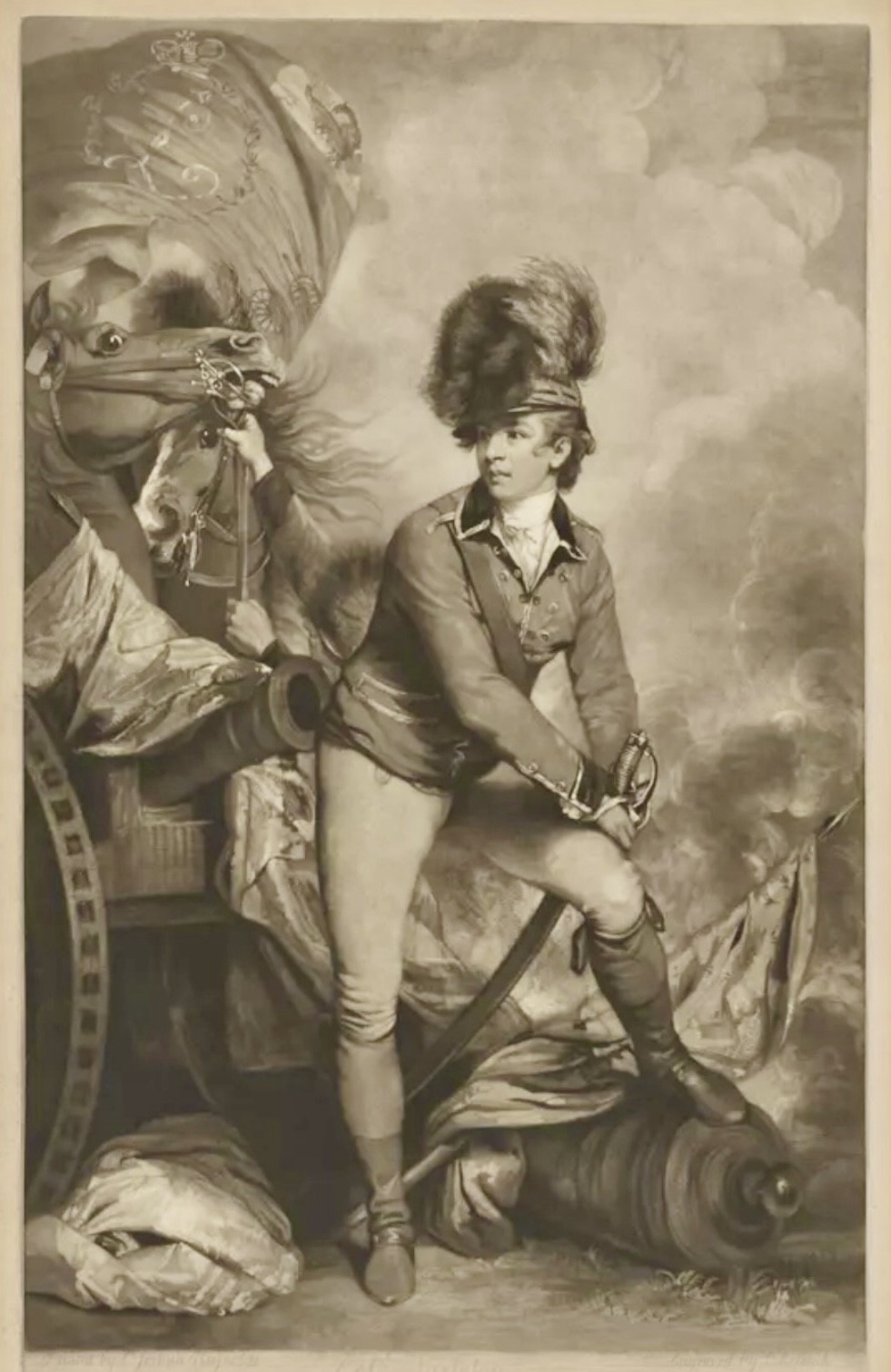
In May 1780, he was indeed serving in the Virginia Continental Line, as an officer of the 3rd Virginia Detachment of Scott’s Virginia Brigade. Commanded by Col. Abraham Buford of Culpepper County, VA, the 3rd Detachment, nearly 400 strong, was marching into South Carolina to the relief of the City of Charleston, which was under siege by the British. The city fell before Buford’s column could reach it, however. Afterwards, Buford received orders from Brig. Gen. Isaac Huger to fall back to Hillsborough, NC. In Charleston, British Lt. Gen. Charles, Earl Cornwallis, who would soon assume command of all British forces in the south, learned of the existence of these Patriot reinforcements. On May 27, he sent troops in pursuit. They were mounted troops of the British Legion, mostly loyalists under the command of the infamous Lt. Col. Banastre Tarleton. Throughout the southern campaign, the 26-year-old Tarleton would establish for himself a reputation for cruelty and blood lust that was unsurpassed. Some of the acts attributed to him during this period were true and some were not, but his dubious reputation would become cemented in the minds of many Americans during this episode.
Lt. Col. Banastre Tarleton
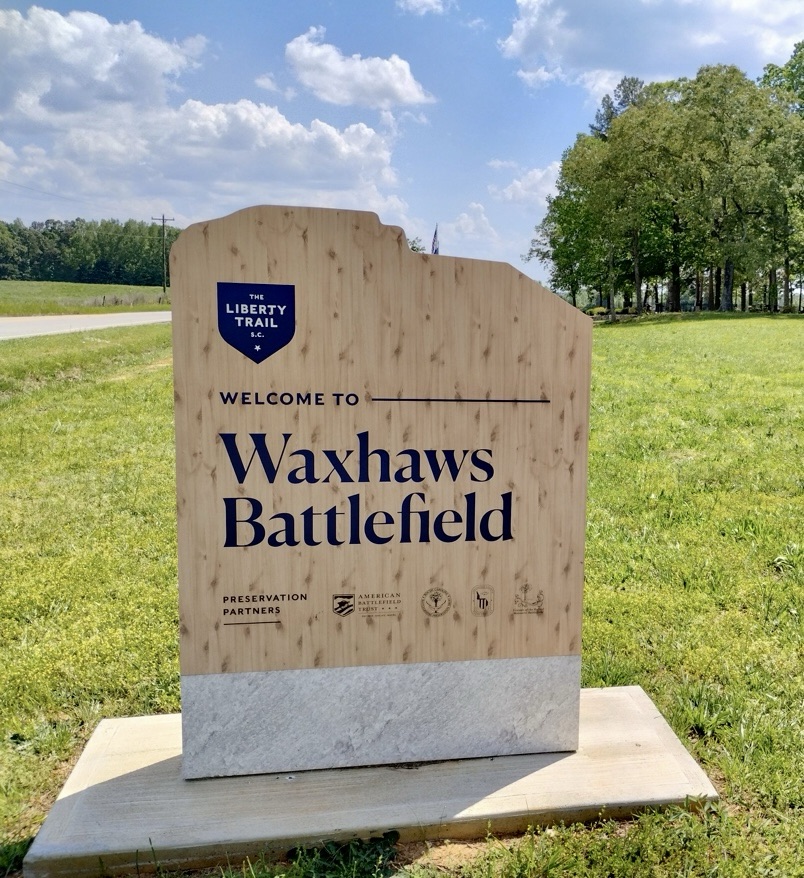
Tarleton set out in pursuit of Abraham Buford’s troops on May 27, leading around 300 of his Legion dragoons, some mounted infantry, and a detachment of the 17th Light Dragoons. Having a reputation for driving his forces unmercifully, Tarleton’s troops were able to quickly catch up, and closed in on Buford’s Virginians on May 29, on the border of North and South Carolina. It was farming country here, known as the Waxhaws.
When the two forces were still some miles apart, Tarleton issued a call for surrender, under a white flag of truce. In his message he wrote: “Resistance being vain, to prevent the effusion of human blood, I make offers which can never be repeated.” After conferring with his officers, Col. Buford made the decision to refuse Tarleton’s offer. He replied: “I reject your proposals, and shall defend myself to the last extremity.” The Patriot force then continued its march north towards Hillsborough, with Tarleton’s troopers continuing the pursuit.
By mid-afternoon of the 29th, Tarleton’s lead elements caught up with Buford’s column, attacking and destroying the small rear guard. Commanding that rear guard was Lieut. Thomas Pearson. Witnesses said that Pearson was sabered and knocked from his horse. While he lay on the ground, he continued to receive wounds; his face was mangled and there were cuts across his nose, lips, and tongue. Col. Buford halted his column, deploying his infantry in a single line across an open field, east of the Rocky River Road. He then issued a questionable order: his men were told to hold their fire until the dragoons were almost on top of them and then unleash a volley at point-blank range. When the charge came, the Virginians followed orders; they held their fire until the British were about 10 yards away. While their one volley did manage to empty a few enemy saddles, it wasn’t nearly enough and now the Virginians had no time to re-load their muskets. In a flash, Tarleton’s troopers were in among the Continentals, hacking men down with their sabers, wholesale.
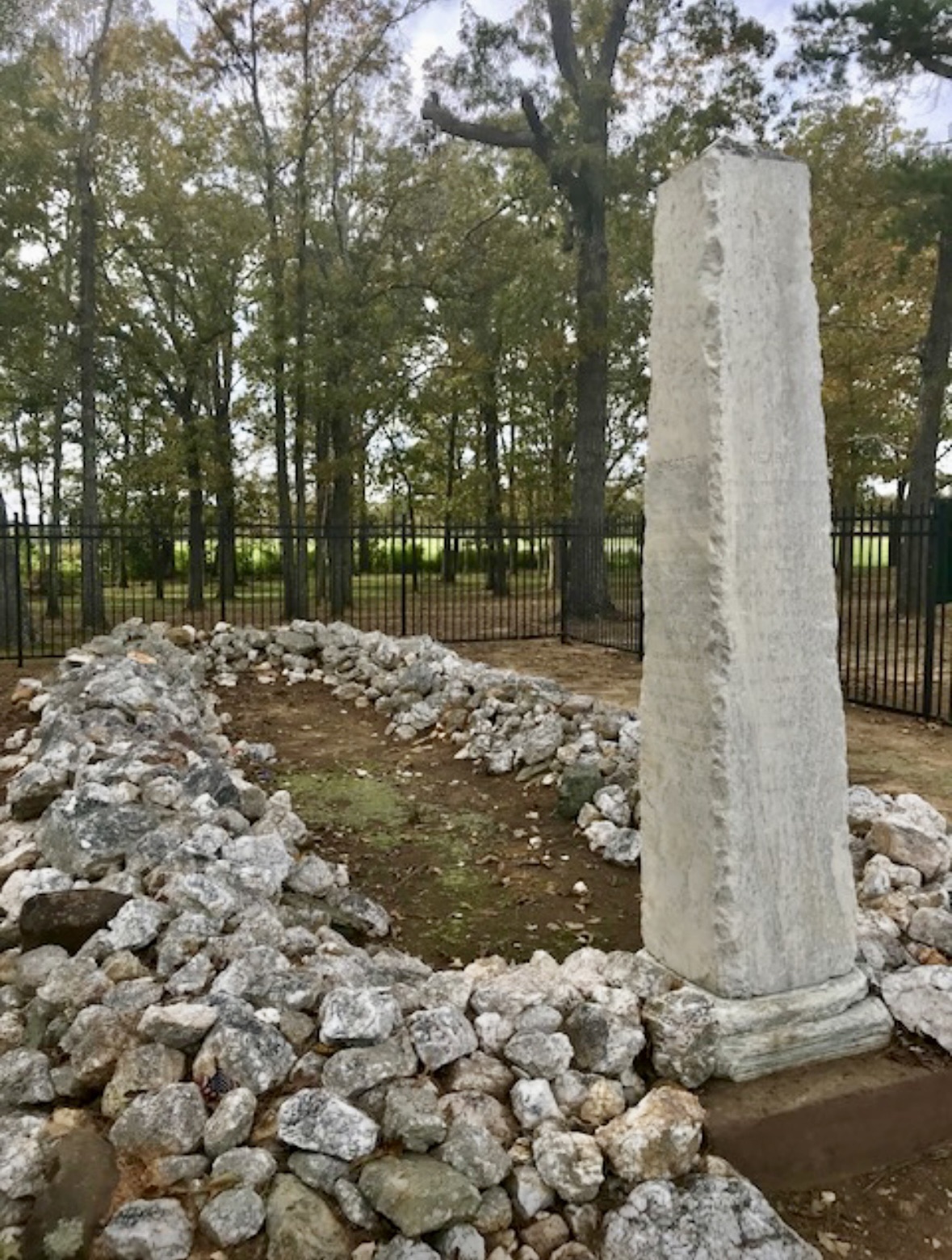
Quickly realizing the battle was lost, Buford sent forward a white flag of surrender. About this time, Tarleton’s horse was killed, going down and momentarily trapping its rider. Some of his nearby troops became enraged, believing the Patriots were not honoring their own white flag. These troops are said to have continued sabering Patriot soldiers as they tried to surrender. Abraham Buford and some of his troops did manage to escape the field but his command was destroyed. Continental casualties totaled around 113 killed, 147 wounded, and 50 captured. Two Patriot 6-pounder artillery pieces and 26 baggage wagons were likewise captured. Compared to this, Tarleton’s losses were negligible. The battle would long be remembered as “Buford’s Massacre” and many of the Patriot dead lie today in a mass grave at the battlefield site.
Mass Grave at the Waxhaws battle site
Banastre Tarleton’s reputation for cruelty was established at the Waxhaws. Nicknames like “Bloody Ban” and “Bloody Tarleton” began to be used to describe him and the phrase “Tarleton’s Quarter” would become a Patriot battle cry.
Even though severely wounded in this action, Lieut. Thomas Pearson managed to survive his injuries, living until 1835. He was 84 when he died; his last years were hard on him. According to his pension application, he “received sundry wounds in his head and arms, which have rendered him, in his present advanced stage of life, incapable of maintaining himself by labour (sic).” On January 12, 1813, the Commonwealth of Virginia granted Pearson’s request for relief. He received an immediate payment of $50, with an annual pension payment of $60.
Today, this Revolutionary War veteran lies at rest in a quiet cemetery in Henry County, VA.





 Emerging Revolutionary War Era