“The Line of Splendor” Guest Book Review

Emerging Revolutionary War welcomes guest historian Nicholas Benevento.

“The Line of Splendor: A Novel of Nathanael Greene and the American Revolution” is a historical novel written by Salina Baker.  In her novel, she brings to life a figure who deserves more fame and recognition for his pivotal role in the Revolution.  Nathanael Greene was a selfless general and leader who fought valiantly to defend his country and provide for his troops. He was a man who defied the odds and was placed in a position of power and leadership, a favorite of General George Washington.   He was a man willing to put everything on the line for the independence and freedom of the United States. 
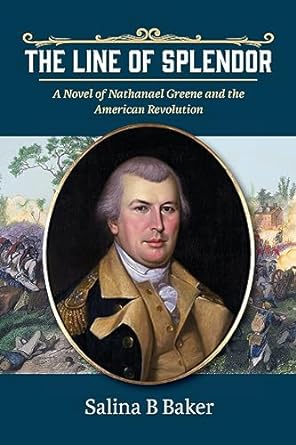
Baker’s book picks up with Nathanael Greene’s life early in the 1770s when Nathanael is about the age of thirty.  At this time, there were growing tensions in the American Colonies with Mother England.  Shortly before the war broke out, Nathanael married his wife Caty in 1774, and Baker does a masterful job weaving their relationship into the story of his time in the war. 

Baker’s work is a fascinating depiction of Nathanael Greene and the American Revolution.  Readers of history often read facts and descriptions of events, which Baker provides.  But she also takes the reader into the thoughts and conversations of Nathanael Greene, as well as other key figures in his life.  Therefore, while this is a fiction novel, enthusiasts of this time period in American history would love this novel.  Baker weaves in the history of the war, while also providing us with dialogue and feelings of Nathanael.  Baker’s novel is a reminder to the reader that the generals and soldiers who fought in the Revolutionary War were not mythical figures who fought a war that would inevitably end in an American victory.  These were real men with real emotions carrying their insecurities and flaws, while experiencing the highs and many lows of the war.  Greene was central to many of the key battles early in the war, from the siege of Boston, to the debacle of New York, to the triumph of Washington’s crossing of the Delaware, to the trying times at Valley Forge.  Greene held a tremendous weight on his shoulders throughout the war, especially when he led the Southern Army late in the war during the Southern Campaign.  

Continue reading ““The Line of Splendor” Guest Book Review”
Rev War Revelry: Saratoga 1777: The Turning Point

Join us on our YouTube page this Sunday at 7:00 p.m. for the latest installment of our Rev War Revelry series. We will sit down with producer Mark O’Rourke, to discuss an important film project focusing on the battles of Saratoga.

“Saratoga 1777: The Turning Point” is a noble, veteran-owned independent feature film project dedicated to bringing the compelling story of how the victories at Bennington and Saratoga kept the sacred flame of liberty from being extinguished during one of the darkest hours of the American War for Independence.

Washington’s First Headquarters

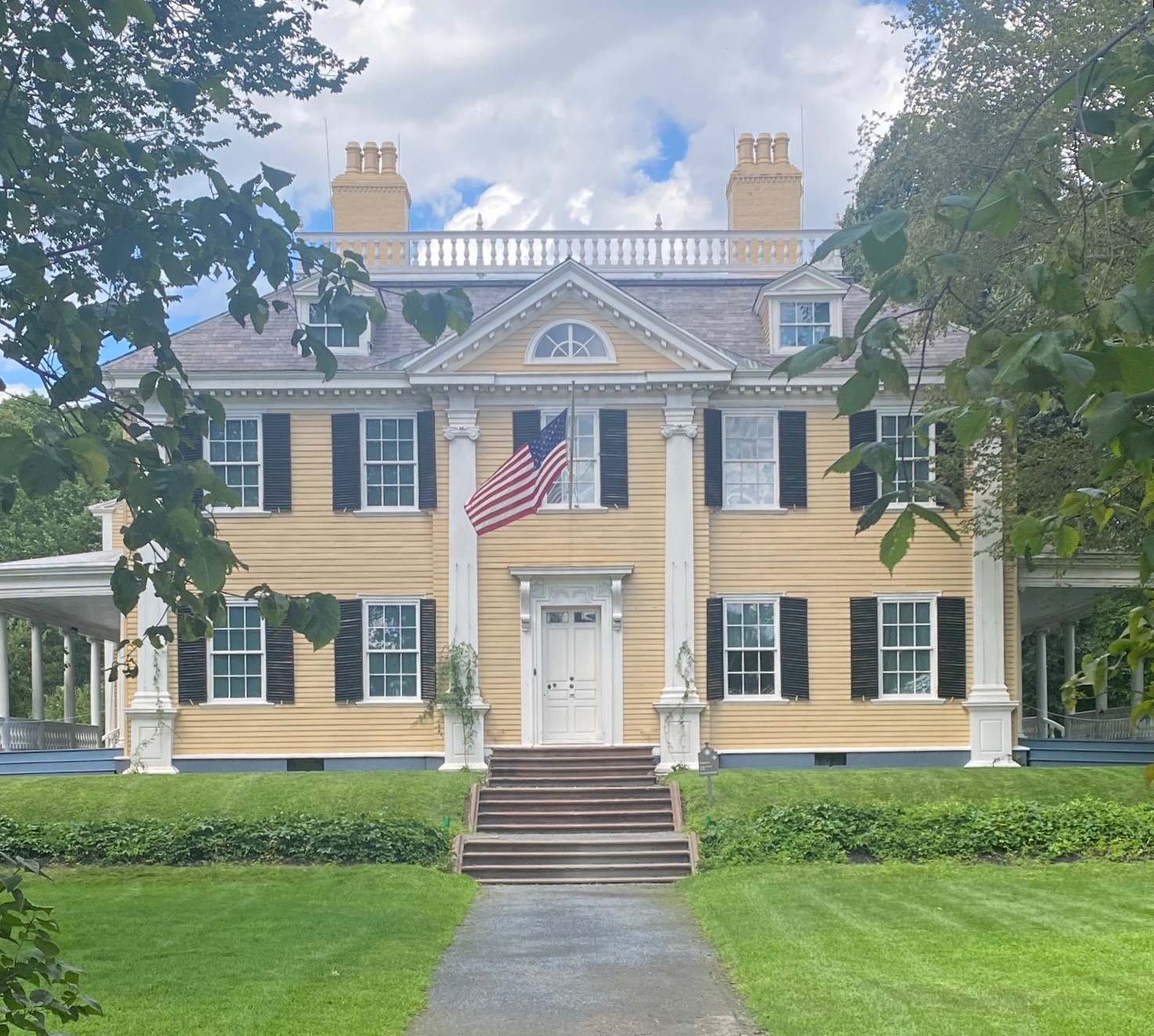
On June 15, 1775, George Washington was appointed by the Second Continental Congress as commander-in-chief of the Continental Army. Approximately a month later he rode into Cambridge, Massachusetts, to the house below, to assume command over that army. After he met the officers at Jonathan Hastings House near Harvard College campus, learning about operations and the siege. He was then directed toward an opulent residence standing about a mile away. Named the Vassall-Craigie-Longfellow residence, this place would become the focal point of the effort against the British in Boston. Washington moved in. He spent the next nine months in residence, overseeing the Siege of Boston and the British evacuation.

From this house, Washington began putting his footprints on the army and met some of the officers that became instrumental in securing American independence. This included the Rhode Islander Nathanael Greene and Massachusetts native and bookseller Henry Knox among others. Martha Washington, in December 1775, traveled over 440 miles from Mount Vernon to Cambridge to winter with her husband in this house. The making of Washington, the general, started here.

The power of place.

Today, the house preserved by the National Park Service today can be toured, click here for information.

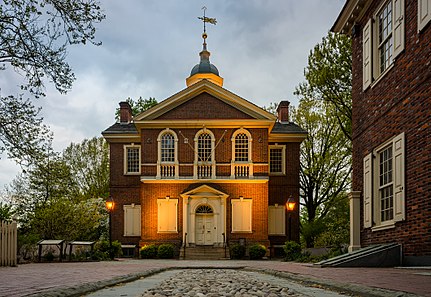
Rev War Revelry: Carpenters’ Hall and the First Continental Congress

Join us this Sunday, July 7th at 7pm for our next Rev War Revelry as we continue to commemorate the 250th anniversary of the events that led to the American Revolution. We welcome Executive Director Michael Norris to discuss the historic Carpenters Hall in Philadelphia and the role it played in hosting the First Continental Congress. The First Continental Congress convened in Carpenters’ Hall in Philadelphia, Pennsylvania, between September 5 and October 26, 1774. Delegates from twelve of Britain’s thirteen American colonies attended. The Congress was a direct result of the Parliament’s reaction to the Boston Tea Party (December 1773). This gathering of colonial leaders intended to create a united front in their response to what they believed was Parliamentary over reach in the “Coercive Acts.”

Grab a drink and join us on our You Tube Channel: https://www.youtube.com/@emergingrevolutionarywar8217 Feel free to interact with the discussion by adding questions in the video chat. Once the video is over we will repost the video to our Facebook page and our Spotify account. We hope to see you then!

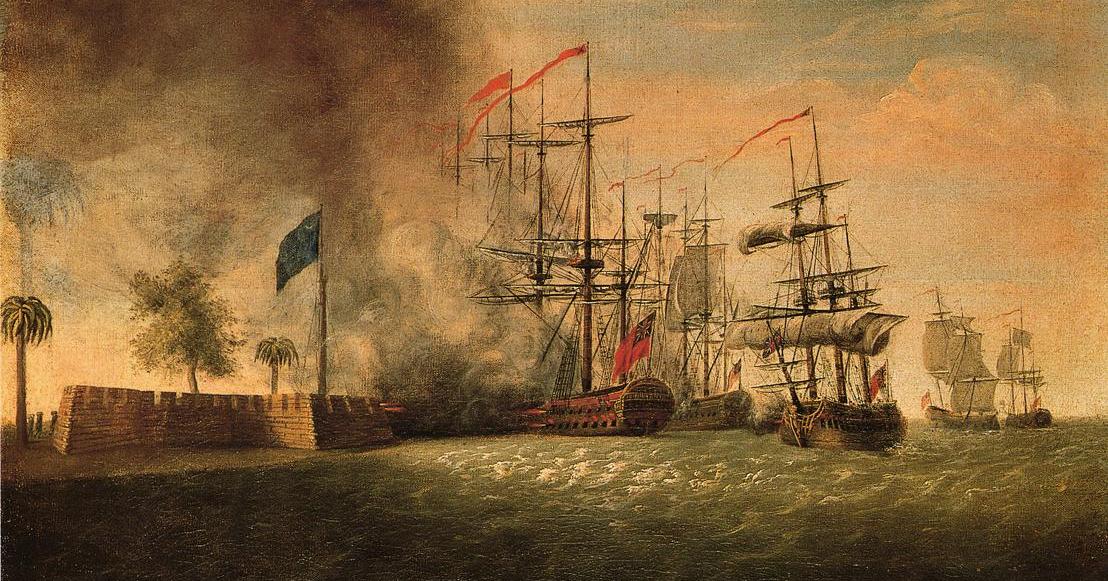
Honor and Victory: The Battle of Sullivan’s Island, June 28, 1776

On June 28, 1776, nine British warships under the command of Sir Peter Parker weighed anchor and began moving toward Sullivan’s Island outside of Charleston, South Carolina. Col. William Moultrie, commanding the 2nd South Carolina Regiment in an unfinished palmetto log fort, ordered his men to their posts to prepare for a defense. The first four British ships moved into position and anchored 400 yards from the fort. In an amazing display of British firepower, the British ships began to fire broadsides, simultaneously firing all the cannon from one side of the ship. The broadsides were deafening as hundreds of British cannonballs screeched through the air and slammed into the palmetto walls of the fort. Local newspapers later described the cannonade as “one of the most heavy and incessant cannonades perhaps ever known.”

As the walls of the fort shook violently, Moultrie’s men coolly manned their cannon and returned the fire as best they could. A continuous roar of cannon fire from hundreds of artillery pieces belched forth, quickly filling the harbor with the sight of white smoke and the smell of burning sulfur. The crash of the cannonballs mixed with the screams of wounded men filled the air.

As the British cannon boomed away, their solid shot hit the walls of the palmetto fort. But the soft, spongy wood of the palmetto (and the 16 feet of sand behind them) absorbed the shock and the balls either buried themselves into the wall or bounced off and fell harmlessly to the ground. Meanwhile, the British ships endured terrible damage from the American shore batteries. American cannonballs smashed into the oak of the British ships, causing havoc and bloodshed.

Continue reading “Honor and Victory: The Battle of Sullivan’s Island, June 28, 1776”

Alcohol in the American Revolution

Emerging Revolutionary War welcomes guest historian, Nathaniel Parry, a brief bio follows this post.

The American Revolution was a victory of liberty over tyranny made possible by a mixture of courage, grit, and virtue. It was also, however, a morally ambiguous affair with some of the main participants motivated as much by ambition as they were by idealism. While many of the founding generation prided themselves on their virtue, vice also played an important role in their rebellion against the British, and to fully appreciate this reality, it is useful to examine the role of alcohol, which turns up at many of the revolution’s key moments.

In ways sometimes subtle and often quite important, alcohol provided the impetus for the nation’s founding, belying the pristine image of an honorable rebellion of virtuous patriots against liberty-hating tyrants. From John Hancock celebrating the repeal of the Stamp Act in 1766 by “treat[ing] the Populace with a Pipe of Madeira Wine,” as one newspaper reported,[i] to militiamen wetting their whistles at Buckman Tavern before the Battle of Lexington and Concord,[ii] to General George Washington ordering “an extra ration of liquor to be issued to every man”[iii] in celebration of Britain’s recognition of America’s independence in 1783, alcohol pops up again and again during the revolutionary era. This was a reflection of the fact that drinking was an integral part of daily life in early America.     

John Hancock and the Liberty Affair

With heavy drinking habits widespread among all classes and regions, the rum distillery industry flourished in the colonies, made possible by cheap imports of molasses from the West Indies. By one count, there were more than 150 rum distilleries in New England before the revolution, and throughout the colonies some five million gallons of rum were being produced.[iv] In order to ensure access to the cheapest molasses available and to bypass restrictive English regulations such as the Navigation Acts and 1733 Molasses Act, smuggling became rampant in the colonies, a problem that Parliament sought to address with the adoption of the Sugar Act in 1764. An attempt to crack down on smuggling and increase revenue, the Sugar Act had the effect of increasing the price of manufacturing rum and negatively affected the exporting capacity of New England distillers, leading to consternation among merchants. It also heavily taxed the formerly duty-free wine from Madeira, Portugal, which was popular throughout the colonies. This angered both merchants and consumers.[v]

Continue reading “Alcohol in the American Revolution”

Rev War Revelry: BRPA

Join us Sunday, June 23, at 7:00 p.m. on our YouTube page (https://www.youtube.com/@emergingrevolutionarywar8217), for a chat with Doug Cubbison, Board President of the Braddock Road Preservation Association. We will discuss all things involving the group’s work to preserve and educate the public about the story of the French and Indian War in Western Pennsylvania.

The Braddock Road Preservation Association is an advisory organization that seeks to research, develop, interpret and promote the French and Indian War history of Jumonville, Dunbar Camp, and the Braddock Road. A secondary purpose is to research, develop, interpret and promote the history of the Pennsylvania Soldiers’ Orphans School. The Association functions in an advisory capacity to the Board of Directors of Jumonville, Inc. 

War!

On this date, in 1812, President James Madison, the fourth president of the United States of America, signed declared war on Great Britain, to go into effect the next day. This is the date Madison signed the measure into law, after sending it to Congress on June 1.

The wording, in its entirety, is below:

BY THE PRESIDENT OF THE UNITED STATES OF AMERICA
A PROCLAMATION
Whereas the Congress of the United States, by virtue of the constituted authority vested in them, have declared by their act bearing date the 18th day of the present month that war exists between the United Kingdom of Great Britain and Ireland and the dependencies thereof and the United States of America and their Territories:
Now, therefore, I, James Madison, President of the United States of America, do hereby proclaim the same to all whom it may concern; and I do specially enjoin on all persons holding offices, civil or military, under the authority of the United States that they be vigilant and zealous in discharging the duties respectively incident thereto; and I do moreover exhort all the good people of the United States, as they love their country, as they value the precious heritage derived from the virtue and valor of their fathers, as they feel the wrongs which have forced on them the last resort of injured nations, and as they consult the best means under the blessing of Divine Providence of abridging its calamities, that they exert themselves in preserving order, in promoting concord, in maintaining the authority and efficacy of the laws, and in supporting and invigorating all the measures which may be adopted by the constituted authorities for obtaining a speedy, a just, and an honorable peace.
In testimony whereof I have hereunto set my hand and caused the seal of the United States to be affixed to these presents. Done at the city of Washington, the 19th day of June, 1812, and of the Independence of the United States the thirty-sixth. By the President:
JAMES MADISON.
JAMES MONROE,
Secretary of State.

*Transcript courtesy of the Miller Center at the University of Virginia.*

Philip Livingston’s Grave, York, PA

While driving near York, Pennsylvania, I decided to stop by Prospect Hill Cemetery to visit the grave of Union General William Franklin. The cemetery was massive, and after locating Franklin’s grave and snapping a few photographs, I continued up the hill where I saw a plot devoted to dead Union soldiers who died while being treated at the army hospital located in York during the war. They were men from all throughout the North. Many of them simply having volunteered to fight, marched away from home, got sick, and died.

An older grave caught my eye just a stone’s throw away from the Civil War graves – a notable one that I did not know was in the cemetery. It was the grave of another non-Pennsylvanian. In fact, he was a New Yorker, and died in York in June of 1778, while a sitting member of the Continental Congress. It was the final resting place of a signer of the Declaration of Independence – Philip Livingston.

Philip Livingston certainly is not one of the Founding Fathers we remember. In fact, we probably remember his brother, William, who served as New Jersey’s Governor during the war, more. But Philip had a very impressive resume and played a part in nearly every major political conference in the colonies held in the years leading up to and during the early days of the American Revolution.

Born in 1716, Livingston graduated from Yale and pursued a career in the import business. Quickly, he built on his status and influence after relocating to Manhattan. He attended the Albany Congress in 1754, and was a member of the Stamp Act Congress, New York’s Committee of Safety, and president of the New York Provincial Congress in 1775. The prior year, Livingston was appointed to the First Continental Congress and was forced to flee his Manhattan home with his family when the British occupied the city in 1776. While he participated in the Second Continental Congress, he also served in the New York Senate.

Unfortunately, Livingston would never get to see his dream of an independent American nation become a reality. Following the British capture of Philadelphia in 1777, the Continental Congress relocated to York, Pennsylvania. Livingston had been suffering from dropsy, and his health was quickly deteriorating. He died suddenly in York while Congress was in session on June 12, 1778, and was laid to rest on Prospect Hill.

Grave of Philip Livingston, Prospect Hill Cemetery, York, Pennsylvania

If you ever find yourself near York, take the time to visit the grave of a Founding Father who, far from home, died before the cause in which he pledged his life and sacred honor for could be won.

Rev War Revelry: The Long 1774 in Massachusetts with Historian and Author J.L.Bell

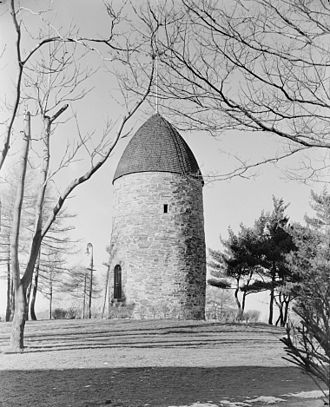
The Charlestown, now Somerville, Powder Magazine was the focus of the September 1, 1774 Powder Alarm. The historic structure still stands today.

Join ERW this Sunday at 7pm as we welcome back historian and author J.L Bell. We will discuss the events in Boston and Massachusetts in 1774 after the passing of the now popularly called “Intolerable Acts” in response to the Boston Tea Party. A time of political, social and economic upheaval for everyone in the colony, the events that transpired had big impacts across all the colonies and set the stage for April 19, 1775. J.L. Bell is a renowned historian who operates a very comprehensive blog focused on Boston 1775 (https://boston1775.blogspot.com/ )

Grab a drink and sit back and learn about the events that rapidly progressed during 1774 towards warfare and bloodshed. J.L. Bell will provide a great insight into how things quickly deteriorated in Massachusetts and how that impacted all the colonies as a whole. Unlike previous revelries, this revelry will run live on our You Tube channel at: https://www.youtube.com/@emergingrevolutionarywar8217 . Due to new rules and regulations with Facebook, we can no longer stream our revelries live on Facebook. We hope that will change in the future. We will post the You Tube video to our Facebook page after the live broadcast. We hope to see you this Sunday, June 9, 2024 at 7pm on our You Tube Channel!